

225 Winchester
Thirty Loads for a Classic Cartridge
feature By: Stan Trzoniec | April, 16
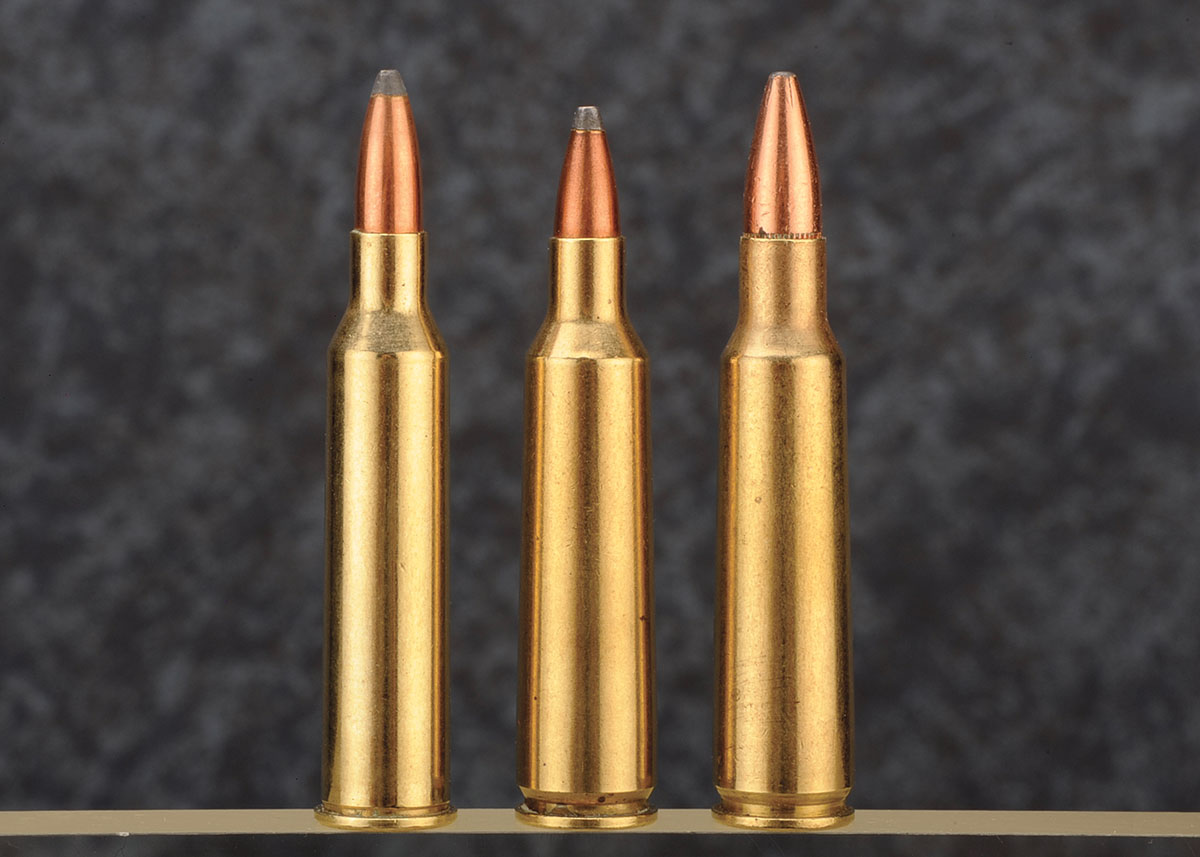
From then to the 1950s, there was not much activity from Winchester regarding small, .22-caliber cartridges. Competition arrived that decade with the 222 Remington Magnum. The 223 Remington (circa 1963) followed, along with the 224 Weatherby Magnum. Winchester countered in 1964 by introducing the 225 Winchester.
At the time, it seemed like a good idea, as the 220 Swift was starting to get a bad rap for barrel erosion – due to the use of mild steel in the barrels combined with the advent of modern powders and higher velocities. By injecting the 225 Winchester into the marketplace, the company hoped the cartridge’s slightly slower velocities would help its sagging varmint rifle sales. The Swift was on the way out and was no longer chambered in the Model 70 rifle. At about the same time, Remington decided to commercialize the 22-250 with great fanfare and with the opportunity to combine it with the Model 700 rifle. The 225 Winchester was starting to lose ground, and within a short period, it was dead commercially.
The 225 Winchester is actually a good cartridge for serious varmint shooters. It is easy to reload, and even though it headspaces on the shoulder and not on the rim, it is a semirimmed case with a rim diameter of .473 inch, the same diameter as the 220 Swift.
Winchester still shows 225 un-primed brass (as of 2015) on its list of available components, and a single 55-grain Pointed Soft Point factory load is listed at over 3,500 fps. In my rifle, velocity was 3,404 fps with a 1.23-inch group. Since the 225 Winchester uses .224-inch bullets, many bullets, primers and powders are available.
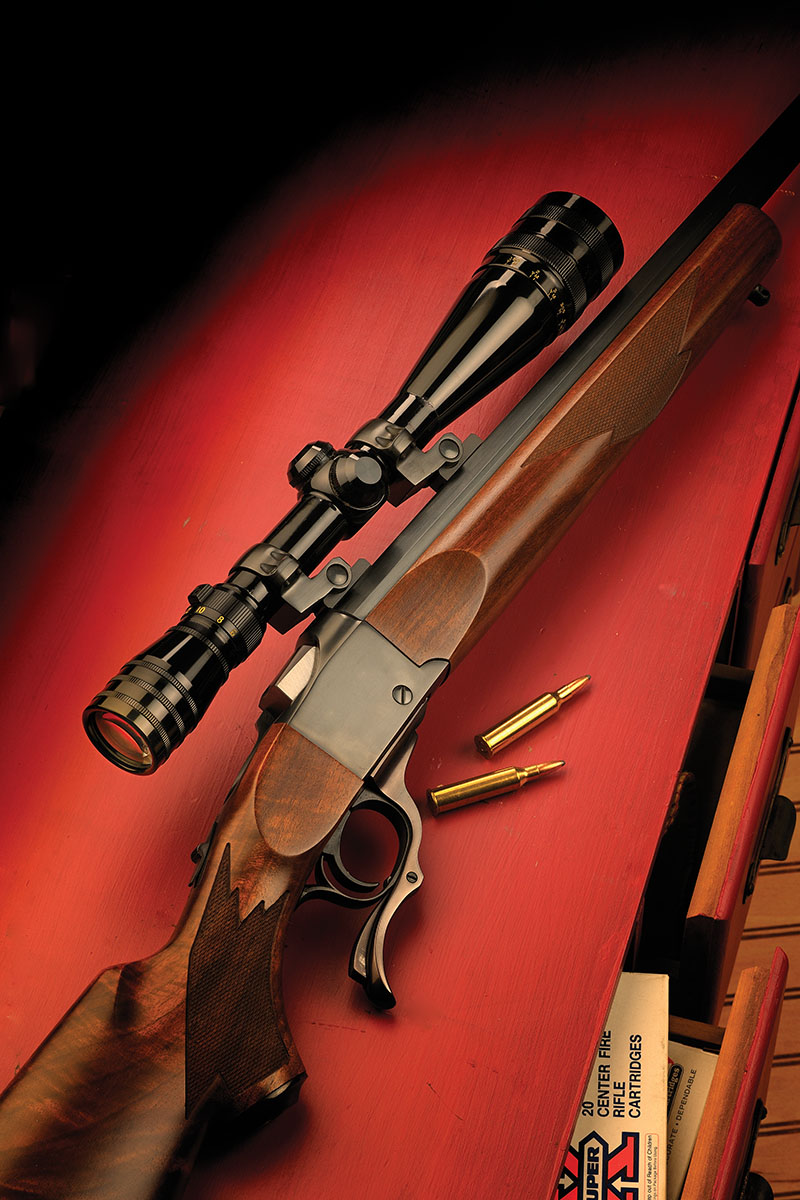
A few years ago, I had a heavy, 26-inch octagonal 225 Winchester barrel put on a Ruger No. 1. When the rifle was complete, I had mixed feelings after mounting a Redfield 6-18x Five Star scope atop it, because it checked in at a hefty 10 pounds. For a guy who likes to walk around the periphery of large farm pastures, this seemed a little out of line, but for short hunts it works fine.

After the cache of brass was sized and loaded, it was taken to the range for the initial fireforming and getting the scope sighted in for fine-tuning later. For this part, a mild load of 31.0 grains of BL-C(2) with a 50-grain bullet over a CCI 200 Large Rifle primer was used. Fired brass easily formed to the chamber. I did not lose a single case to splits around the neck or body, which I’m sure is because I try to make up fireforming loads of about 80 to 90 percent of the maximum loads that will be used later for accuracy.
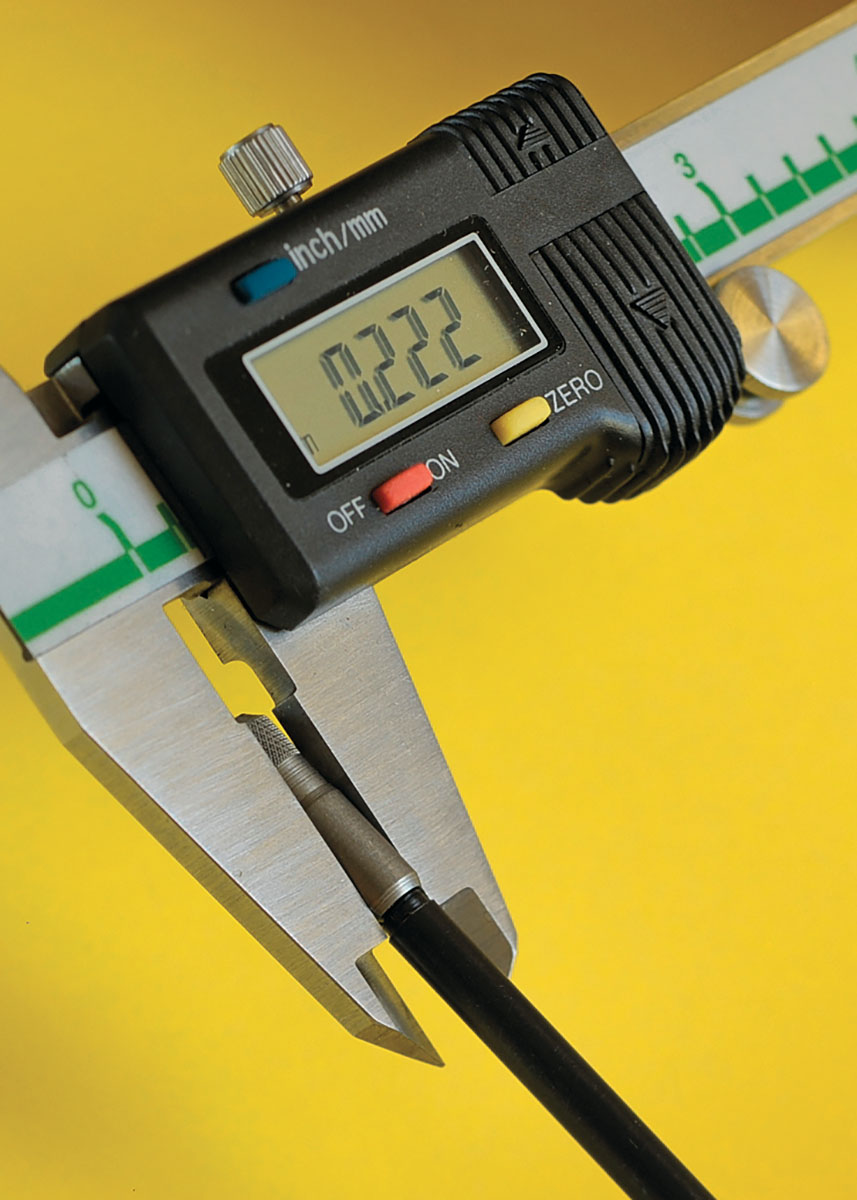
From here a few of the cases would be blackened on the neck and shoulder to make sure the neck-sizing die does not touch the shoulder before loading. Checking the ball expander within the Redding neck-sizing die, it came out to .222 inch – perfect for my needs. After neck sizing, which helps eliminate case stretching, all cases were checked for overall length and nothing was out of line. For the record, new brass measured 1.928 inches, and that length never changed during testing. Checking the dimensions from the chamber in the rifle indicated there was no need to turn the necks, and refreshed cases fit into the Ruger with just a slight amount of pressure and a resounding click on the operating lever of the No. 1.
Bullets, like powders, represent a large amount of time in research to expand the versatility of the 225 Winchester over a large selection of game and shooting distances in the field. I am not partial to one brand so tried to use a large selection here. Bullets from Berger, Nosler, Speer, Hornady, Barnes and Sierra were used with various powders to find the best combinations that can be used repeatedly for clean kills downrange. In addition, many configurations (i.e., hollowpoint, softpoint, boat-tail) were tried to suit a majority of needs.
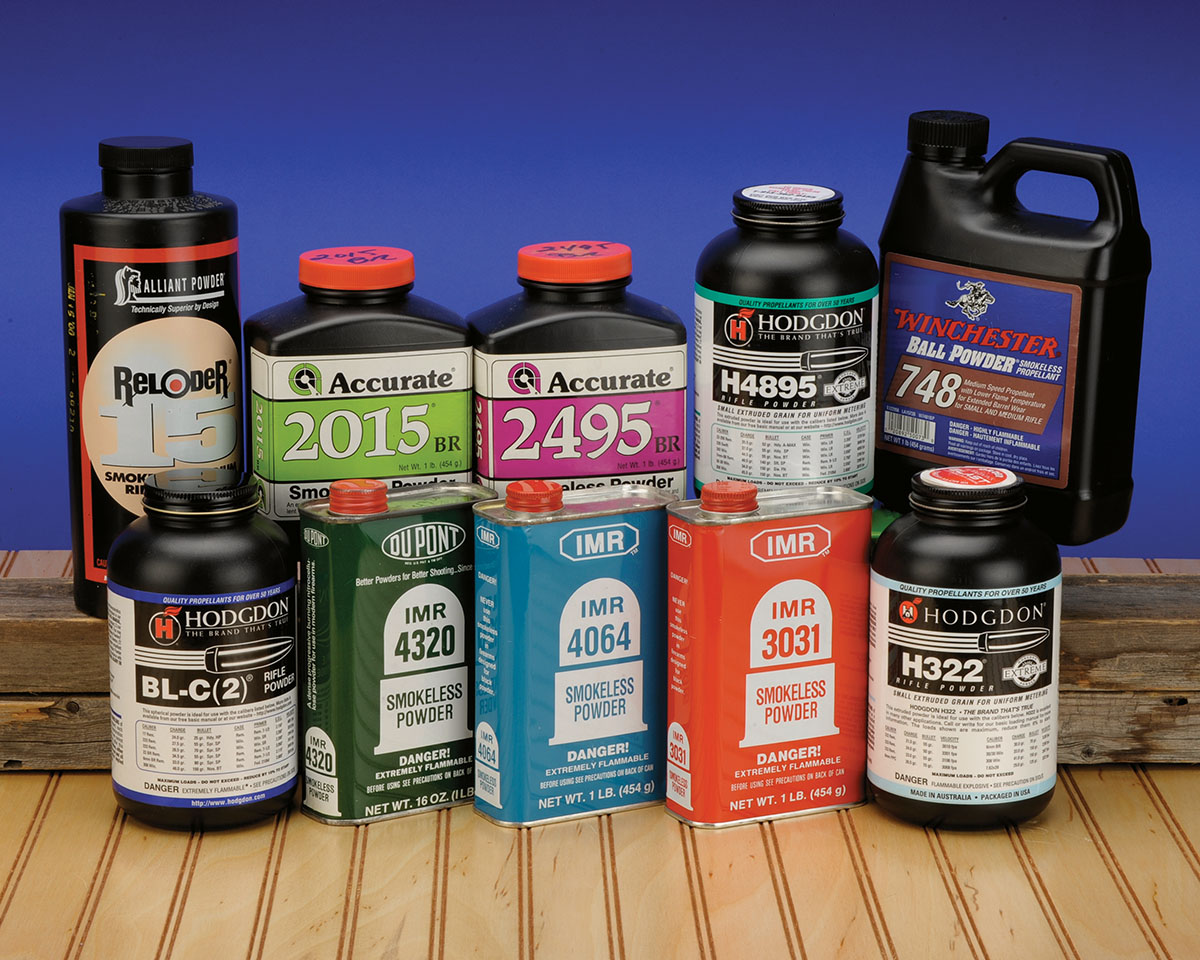
The choice of powders is extremely broad today. Sitting by the wood stove last winter, I researched propellants for the 225 Winchester that would be cost-effective in terms of yielding the best results in accuracy and velocity. In the end, I came up with a baker’s dozen (with a few reduced loads) that, with a few exceptions, should be useful to a handloader (see Table I).
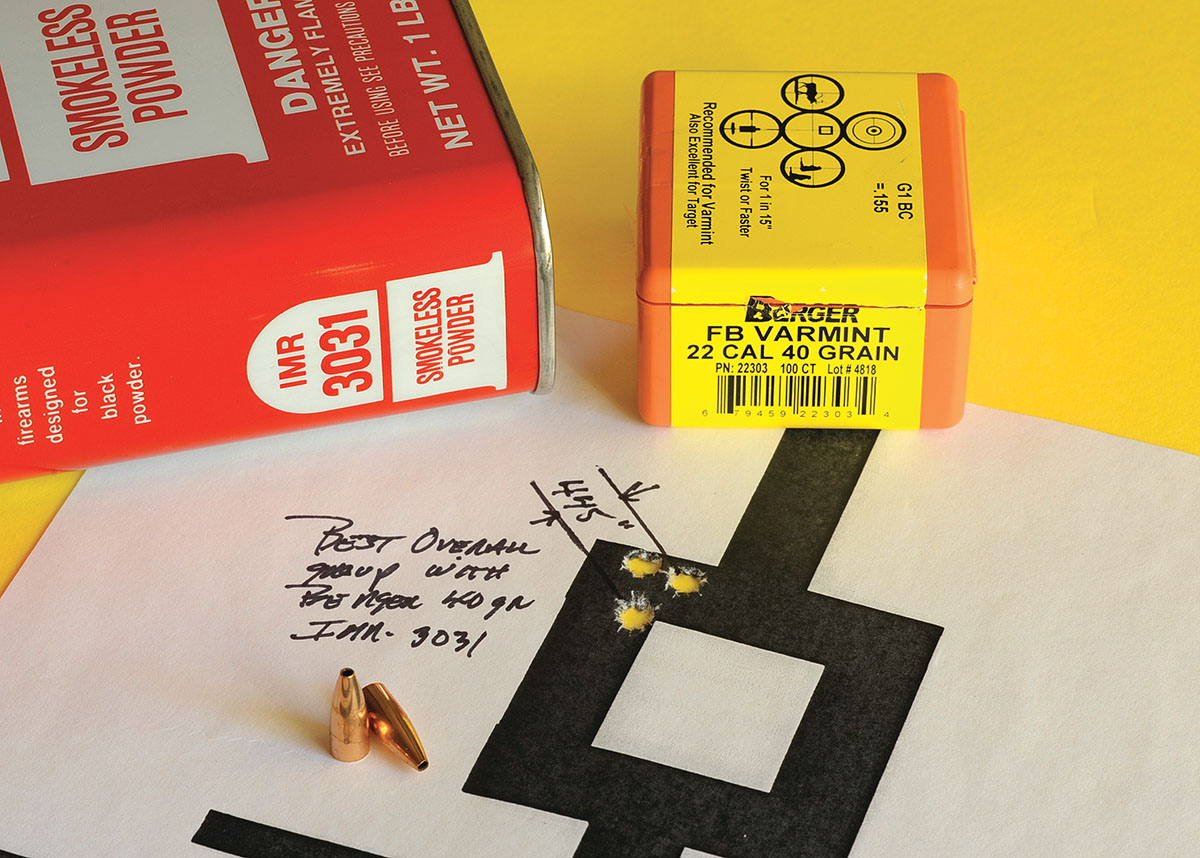
Here is the breakdown in making good loads for the 225 Winchester. Looking at all the data, the 225 Winchester is still an impressive cartridge to have in one’s varmint battery. Starting out with 40-grain bullets, the best groups overall went to the Berger FB Varmint over 32.0 grains of IMR-3031 for a .445-inch group. Long a favorite among .22-caliber shooters, IMR-3031 still leads the pack in many of the bullet (regardless of weight) combinations in my testing. Using a different powder, the highest velocity in this category was 4,142 fps with A-2495BR. The average velocity for all 40-grain bullets tested was 3,895 fps with a mean group of only .747 inch.
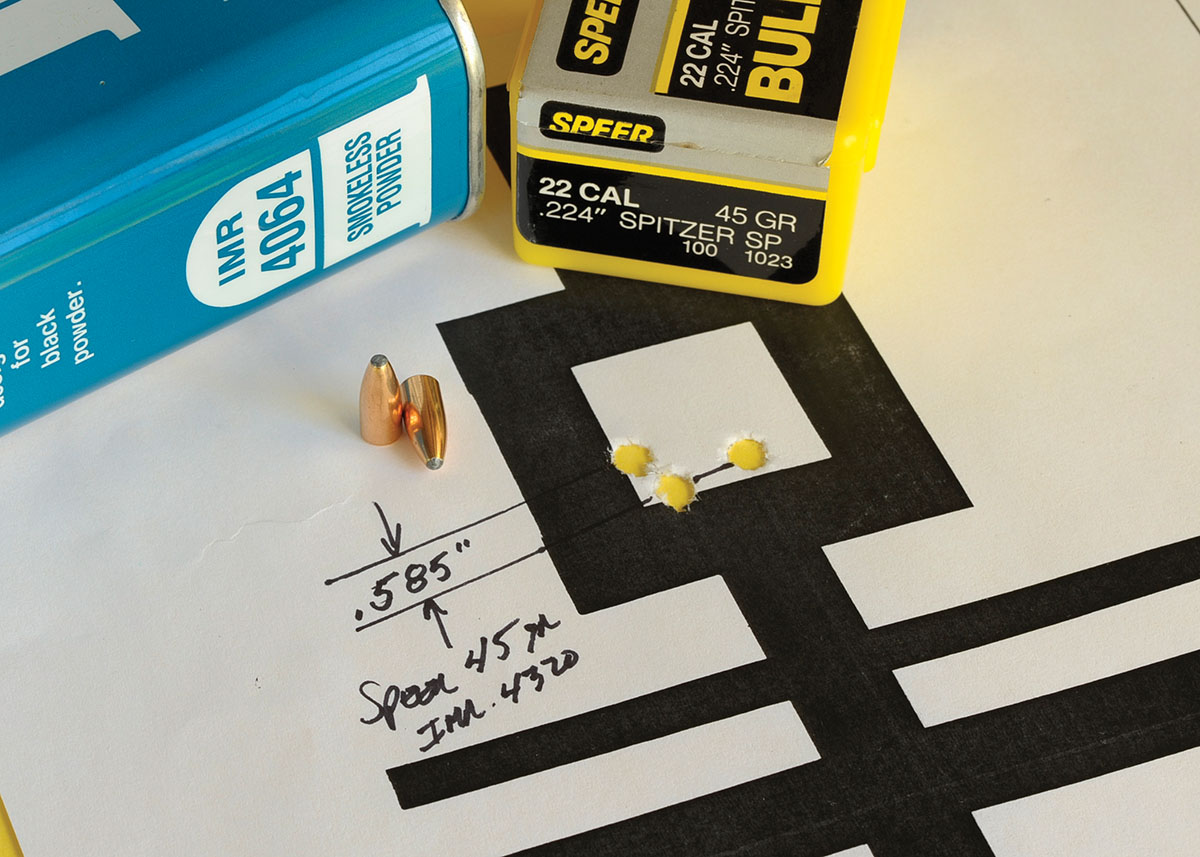
The Speer 45-grain spitzer has always been a favorite, especially with 34.0 grains of IMR-4320. I have used this combination before, and with the Ruger managed to squeak out groups around .585 inch at 3,749 fps. If looking for the best velocity, the Barnes 45-grain spitzer with IMR-3031 reached 3,822 fps, but groups were nothing to write home about with this particular bullet. The average of all groups with 45-grain bullets was .930 inch with a velocity average of 3,747 fps.
Also tested were 52- and 53-grain bullets, and although not as popular as the workhorse 50- and 55-grain projectiles, they gave decent results. The Berger 52-grain FB Varmint bullet over 31.5 grains of IMR-3031 gave impressive results in both group size (.635 inch) and a velocity of 3,615 fps. Averaging everything in the 52-grain category resulted in a mean group of .845 inch with a velocity of 3,572 fps. For some reason the Barnes 53-grain X-Bullet did not group as well but looked good in velocity readings.
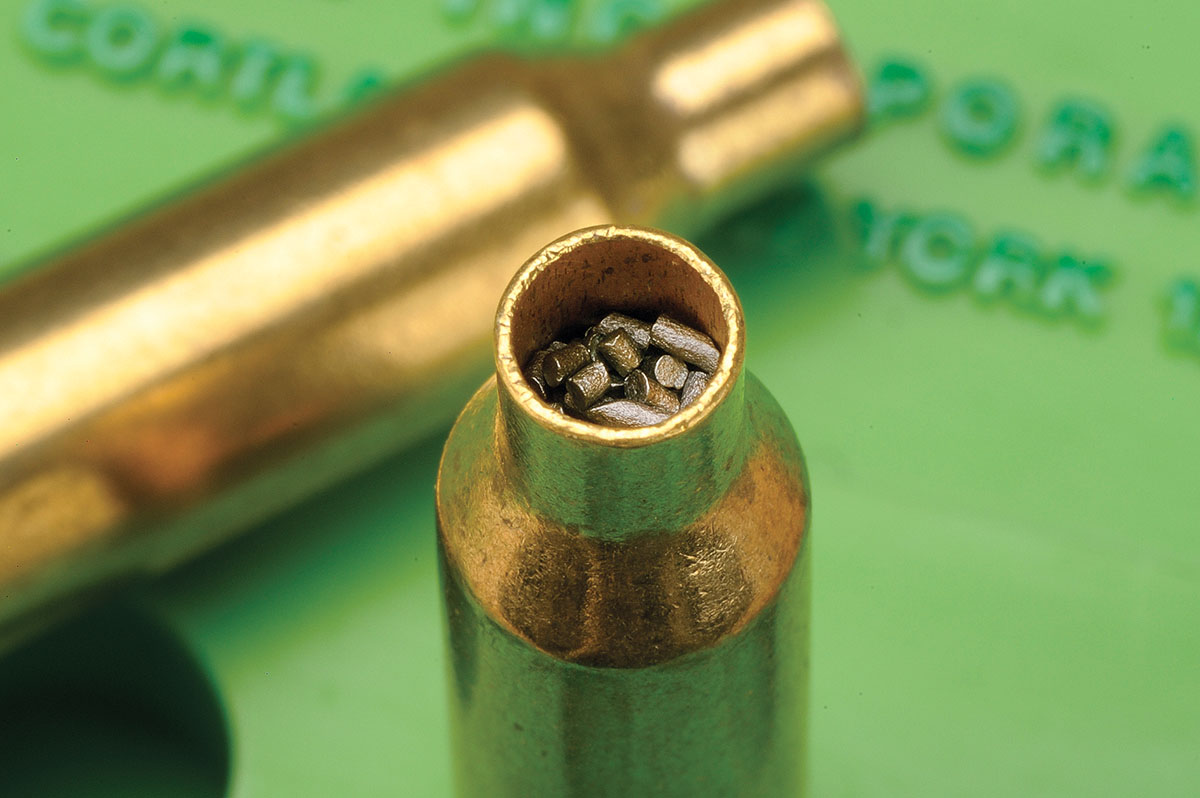
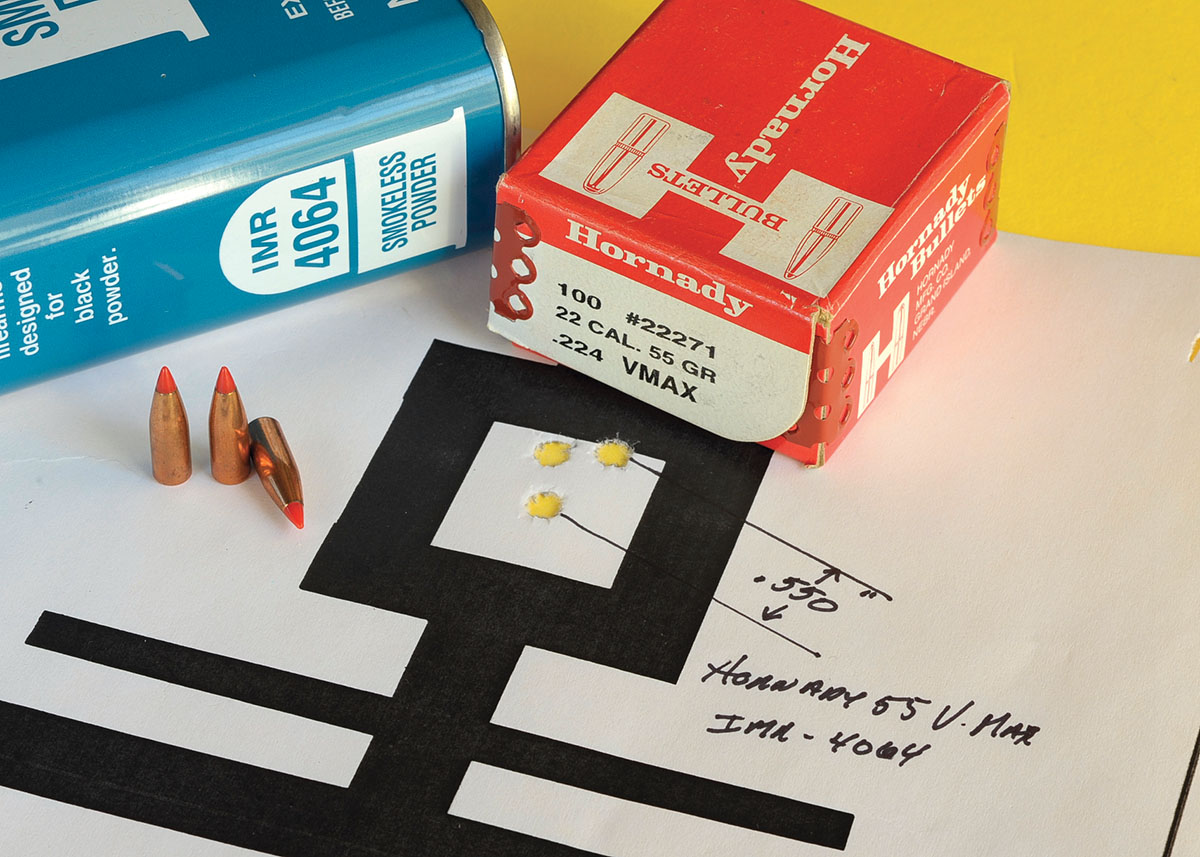
Finally, my all-time favorite bullet weight for the eastern woodchuck is 55 grains. Hard to ignore, the Hornady V-MAX over 32.0 grains of IMR-4064 hit almost 3,500 fps with a three-shot group of .550 inch at 100 yards. Just a little larger (.652 inch), the Sierra boat-tail reached the highest velocity – 3,583 fps with 36.3 grains of Hodgdon’s H-380 powder. All groups averaged .658 inch with an average velocity of 3,457 fps. Lastly, I ran a check of all cases loaded with 55-grain bullets and found nothing out of the ordinary in the way of cratered primers, split cases or excessive overall length. I only came across one compressed load – that of RL-15 powder – that filled the case neck halfway up to the mouth.

When it comes to favorite bullets and powders, I like the bullets from Berger, Nosler, Speer and Hornady loaded in the 225 Winchester, and for powders, my vote goes to IMR-3031, A-2495BR and especially IMR-4064. SR-4759 is great for reduced loads. With these, some patience and a good rifle, the 225 Winchester really shines.
