

Swarovski X5(i) Riflescopes
Testing New Optics and a Pair of Varmint Rifles
feature By: John Haviland | April, 16
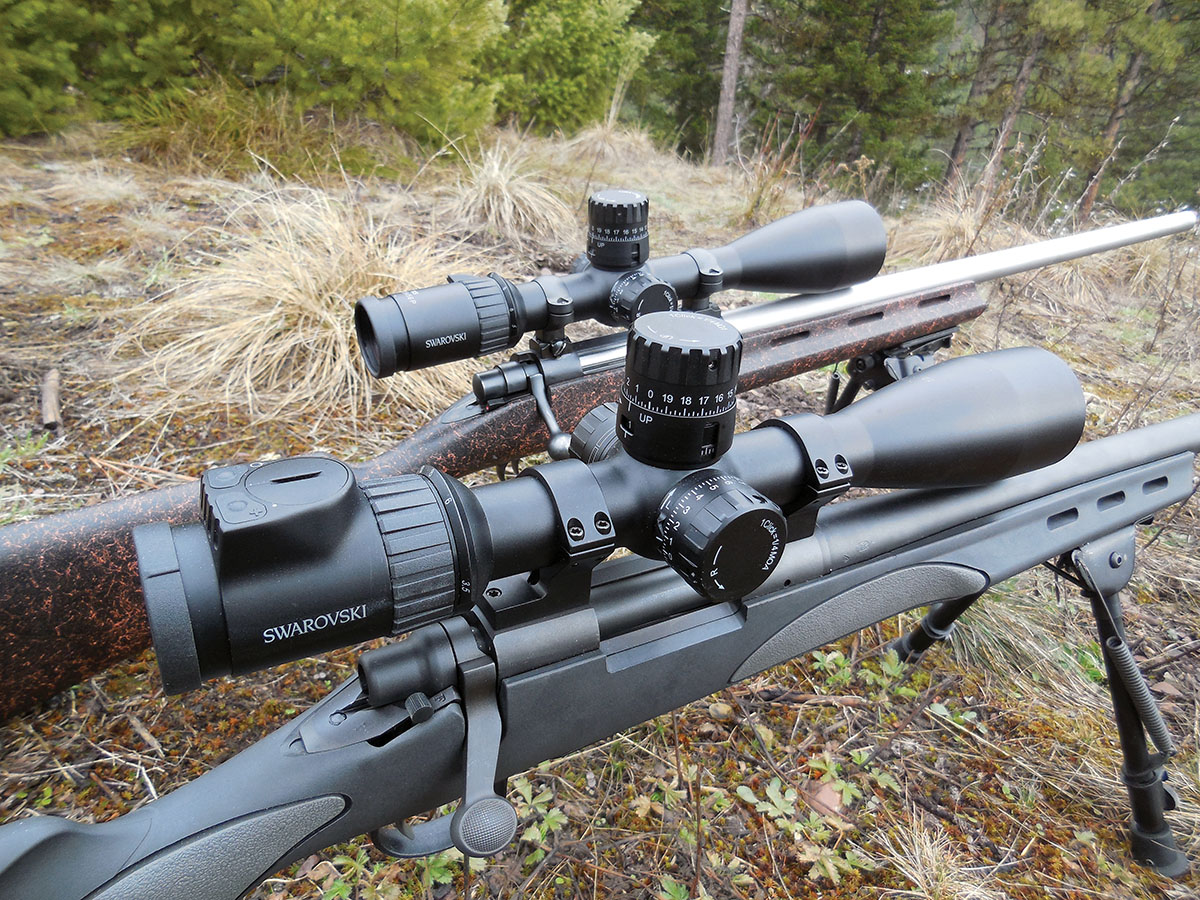
The interior of a scope is always a mystery. A collimator was put into the muzzles of the rifles mainly to roughly align the scopes but also to take a peek to confirm all the parts meshed inside the scopes. The reticle crosshairs remained stationary while I repeatedly turned the magnification ring from one end to the other and the parallax adjustment dial back and forth. The reticles returned to the same place after I twisted the elevation and windage turrets from one end to the other several times and finally back to their original settings. Eye relief remained at a constant 3.75 inches throughout the magnification range.
The scopes are offered in four reticle options, including battery-illuminated. The X5(i) 5-25x scope had a plain W4 reticle. That reticle is marked with spacing on the horizontal wire but no marks on the vertical wire, as elevation correction is intended to be dialed in with the turret. Click adjustments are available in either 1⁄4 or 1⁄8 minutes of angle (MOA). The X5(i) 3.5-18x tested had an illuminated Ballistic Reticle MOA (BRM), which is a Christmas tree-shaped lower reticle with holdover dots and lines and windage lines. The 4WX reticle has spacing lines on both crosswires. A plex-type reticle with no marks on its crosswires is a fourth option.
To make those holdover and windage lines applicable on the BRM reticle and windage lines on the 4W reticle, I logged onto the Swarovski Optik website ballistic program (www.ballisticprograms.swarovskioptik.com) and selected the “subtension dimension program” for the reticle for the X5(i) 3.5-18x and 5-25x scopes. A picture of the reticle appeared showing spacing of the marks in either inches, MOA or milliradians (milrads) with the scopes set on all of their magnification settings.
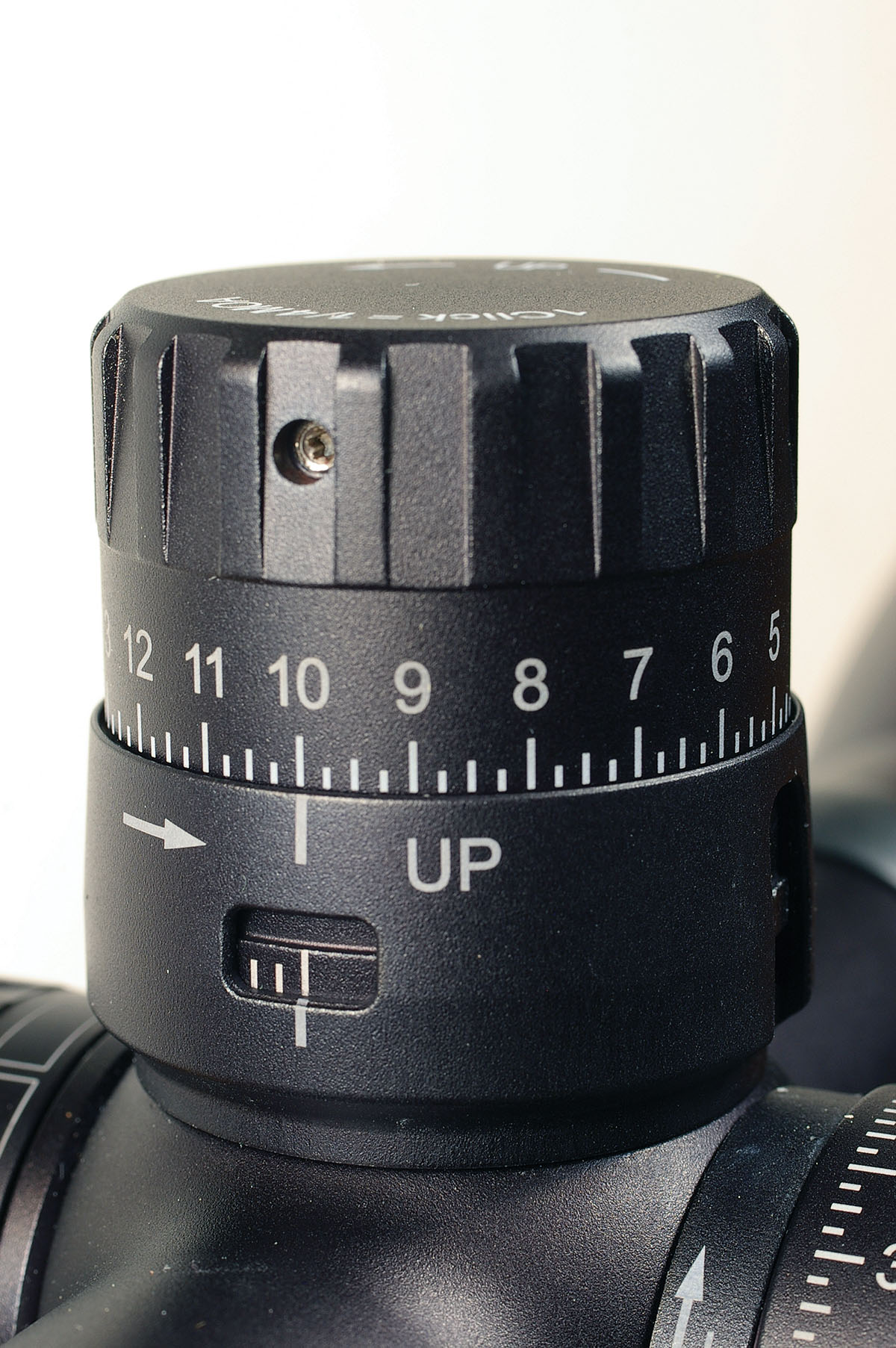
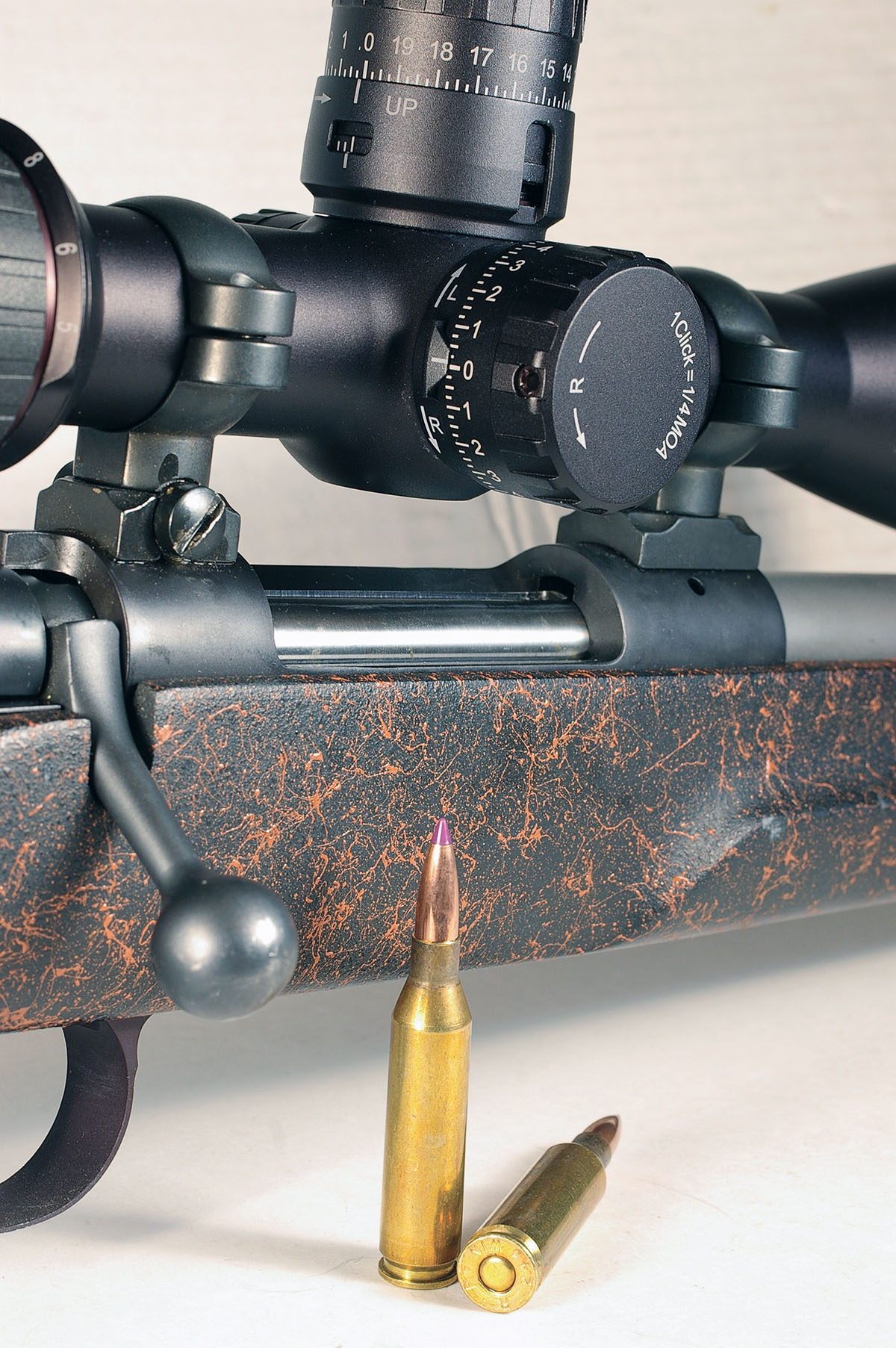
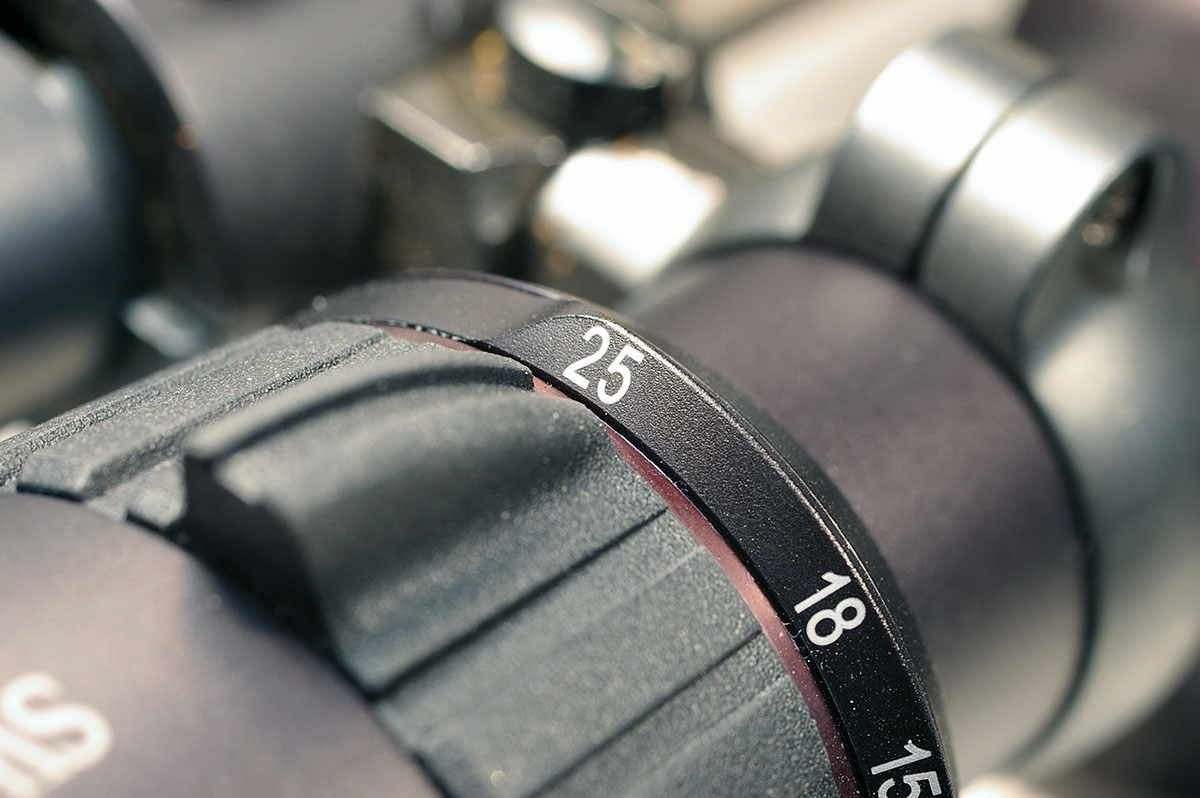
X5(i) scopes are intended primarily for long-range shooting, so their elevation turrets will be constantly twisted back and forth. There is 20 MOA of adjustment per revolution of the scopes’ elevation turrets and a total of 82 MOA for the 5-25x and 116 MOA for the 3.5-18x. The new spring retention system for the erector tube ensures reticle adjustments remain precise. A spring-pressured lever opposite the turrets applies constant pressure on the inversion system no matter how far in or out the turrets are turned. The ocular end of the erector system is held in place by, for the lack of a better term, a ball in a socket.
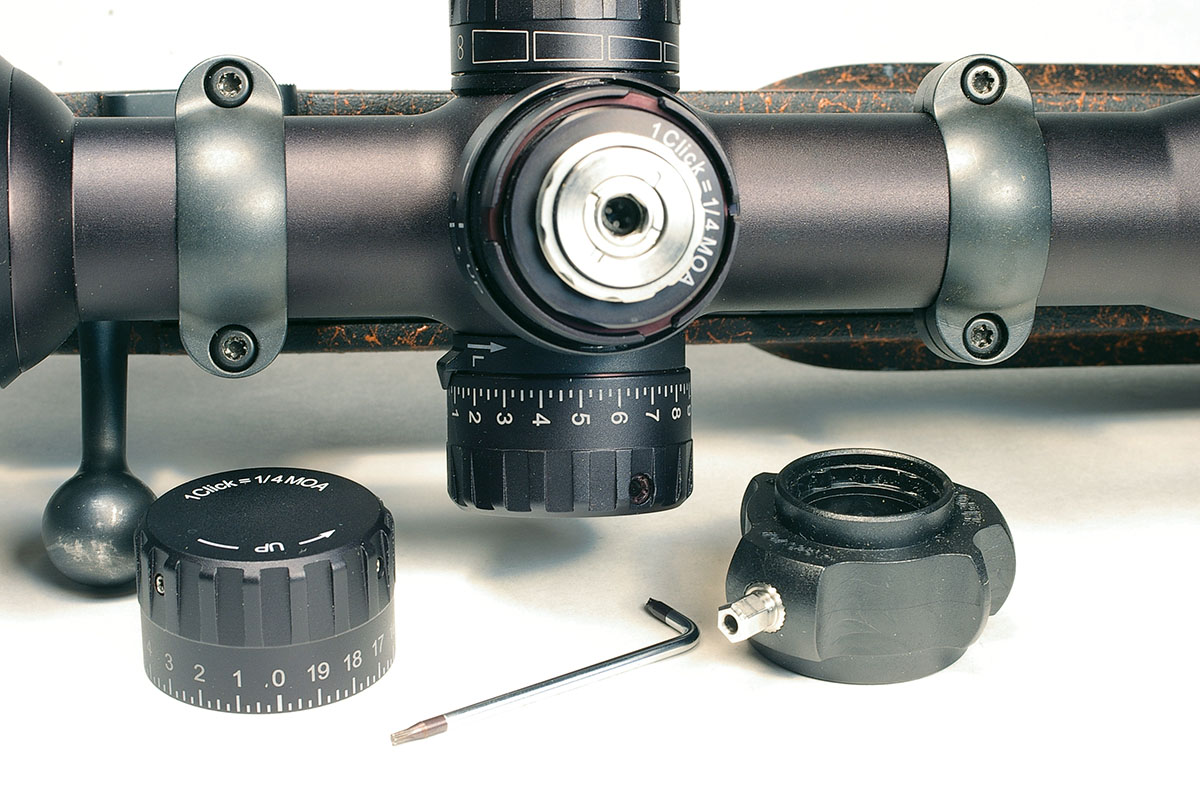
The X5(i) scopes have a zero stop on their elevation turrets. To keep that stop relevant, the scope is sighted in by first loosening setscrews on the turret cover and removing the cover to expose the turret. Three screws are loosened on the turret to release it. A supplied multitool contains a hex key that is inserted into the top of the turret and turned clockwise to lower bullet impact or the other direction to raise impact. The side of the tool fits on the top of the turret, the tool is turned clockwise until it stops and the three setscrews are retightened. The turret cap is reinstalled with the “0” aligned with the mark on the base of the turret.
The 243 Winchester was sighted in with its 70-grain bullets hitting on aim at 100 yards. If the rifle was sighted in at a longer range, however, say 300 yards or farther, the scope’s “Subzero” setting could be used to aim at shorter distances. It is engaged by lifting the rotation indicator ring on the side opening of the top turret. The turret can then be turned clockwise to lower bullet impact up to 10 MOA. Turning the turret back to “0” and pushing the rotation indicator ring back down reengages the zero stop. The rotation indicator ring has a window at the rear base of the turret that shows a 0, 1 or 2 to indicate on which revolution the turret is set.
It was a blue-sky day when I sighted in the X5(i) 5-25x 56mm scope on the Cooper. The wind blew a fair pace. At 100 yards, two bullets cut the right edge of the half-inch aiming square, and the third bullet hit the top of the square. The three bullets landed in .79 inch. The wind raised its ugly head while I was shooting at 200 yards. The ballistic chart indicated one MOA of elevation was required to hit on at that distance. Three bullets landed even with the aiming square in a 1.35-inch group. They were a bit to the right, most likely from the wind. Shooting at 300 yards, the wind blew toward the rifle from every which way, like a snake slithering through the grass. I dialed up 2.75 MOA, and three bullets hit right for elevation but 2.0 inches right of the bullseye. I aimed to the left about a third of a 2 MOA hash mark and shot twice. The bullets hit an inch to the left of the bullseye, good enough to knock a prairie dog off its mound. A few minutes later the wind kicked bullets 4 inches to the right with the same hold; wind is the bugaboo of long-distance shooting.
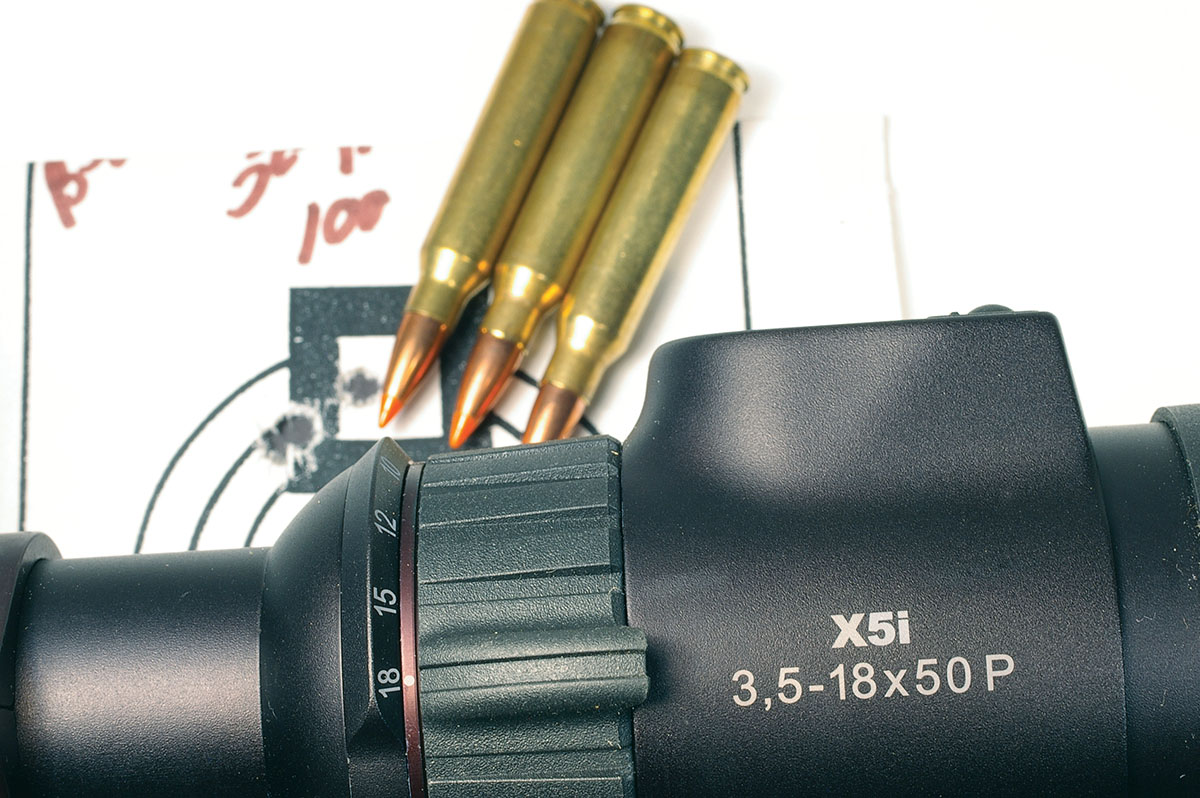
The same drill was used to sight in the 3.5-18x scope on the Remington SPS Varmint 223 Remington with a 26-inch barrel shooting Nosler 50-grain Ballistic Tip bullets 3,558 fps. The Remington was a brand-new rifle and showed great promise shooting three-shot groups from .44 to .74 inch.
Shooting at 300 and 400 yards, her groups opened up some, but with a glance at the drop chart and twist of the elevation turret, she was quickly ready to shoot. Turning down the power for the wider field of view helped her find and line up on targets. With a target in view, she turned the power back up and shot.
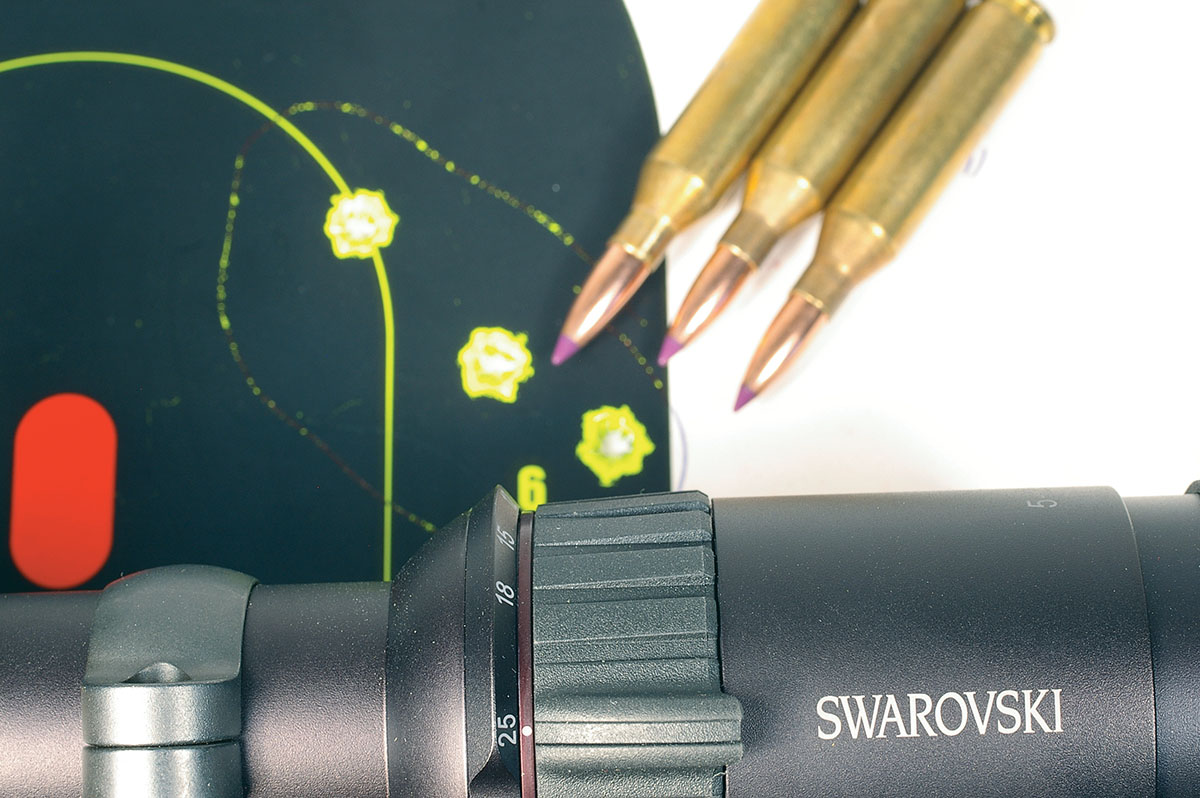
Mikayla had dialing the elevation turret to compensate for bullet drop well in hand and took right to the X5(i) 5-25x scope on the Cooper 243 Winchester. Wind was not a factor as she marched from one target to the next right down the range. She did set magnification on 20x, as it seemed to provide the brightest view during the dreary day. To end the day, she twisted the turret back to 0 and took her final shots at 100 yards. The bullets formed an arc like a three-leaf clover.
The X5(i)s are big, heavy scopes – the 3.5-18x weighs 28.5 ounces and the 5-25x, 30 ounces. They are certainly not for carrying around very far, but they are worth their weight for their brilliant view, dependable adjustments and easily adjusted turrets that add confidence to those long shots.