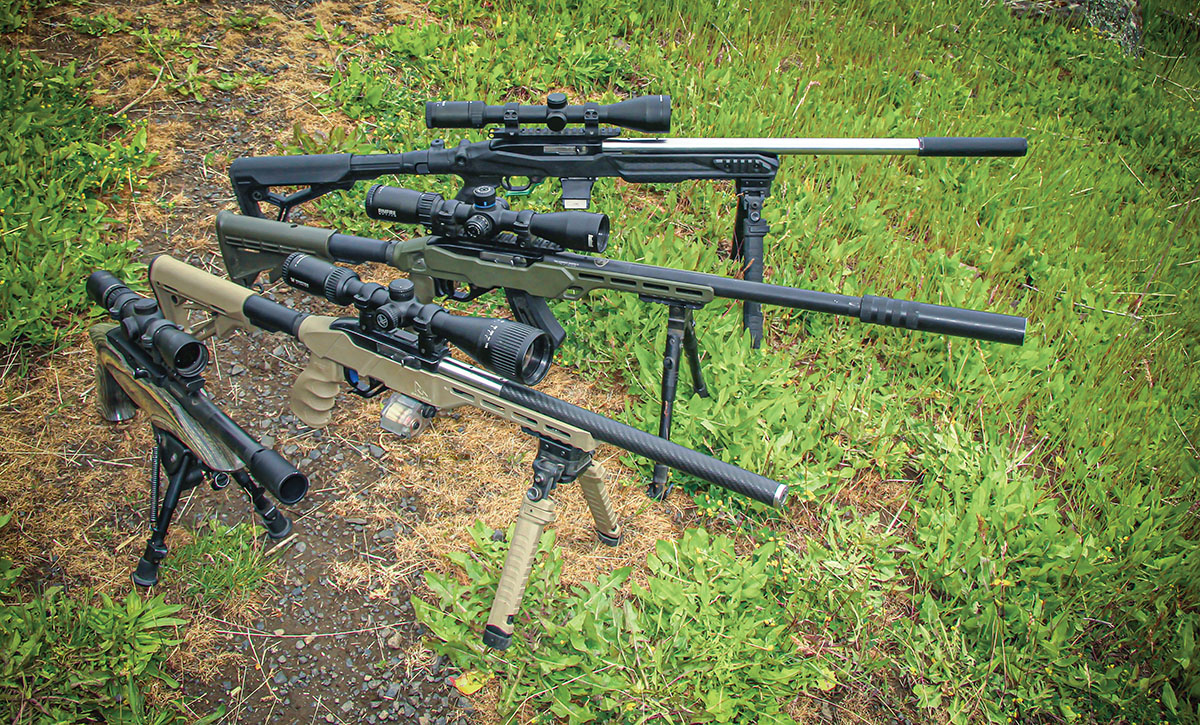
Patrick owns four Ruger 10/22 builds, each built to address specific shooting conditions, such as bench shooting, private-lands/truck-based shooting and hiking areas. The Ruger 10/22 Charger pistol holds a 10½-inch Adaptive Tactical Tac-Hammer barrel.
There are things in life that reach so deeply and successfully into first principles that your trust in them becomes absolute. For me, these include Sancho Panza cigars, Sitka Gear Grinder pants, Area 419’s ZERO Reloading Press, Puma knives, Bell’s Two-Hearted IPA, Toyota Hilux trucks, Gransfors Bruk axes, Led Zeppelin and Ruger 10/22 rifles.
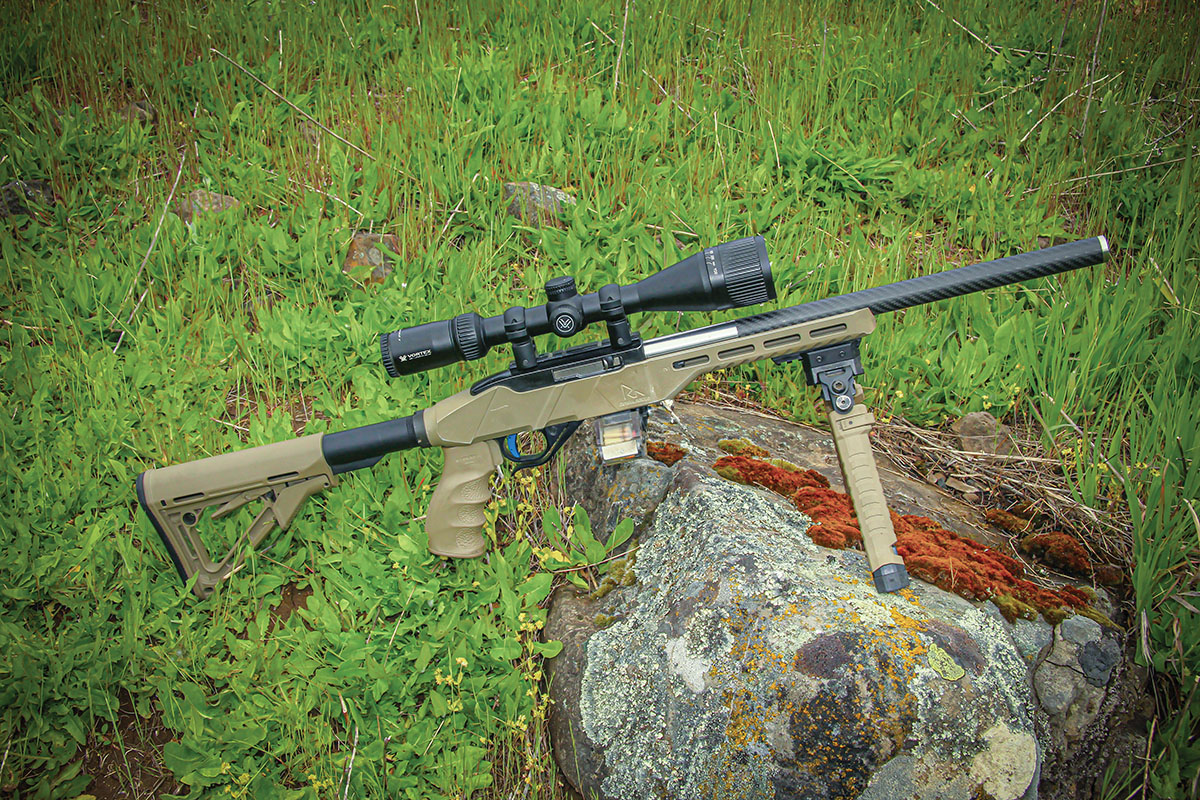
This is Patrick’s lightweight walkabout Ruger 10/22 build. Based on a Rival Arms R-22 chassis with F.A.B. Defense pistol grip and MagPul CTR Carbine Stock, Volquartsen carbon tension barrel, Timney Trigger group and clear-mag, 30-round, Tri-Mag system.
One could argue that Sturm, Ruger & Company’s semiautomatic 10/22 is the most iconic 22 Long Rifle (LR) firearm of all time. This stems largely from an affordable price tag and incredible reliability. The 10/22’s compact 10-round rotary magazine comes as a bonus. I purchased my first 10/22 during the Reagan administration, using it on the trapline and for general small-game hunting, which typically left it covered in dust or rain or snow according to season, and without a single thorough cleaning I can recall. It never failed to cycle even the cheapest bulk 22 LR fodder.
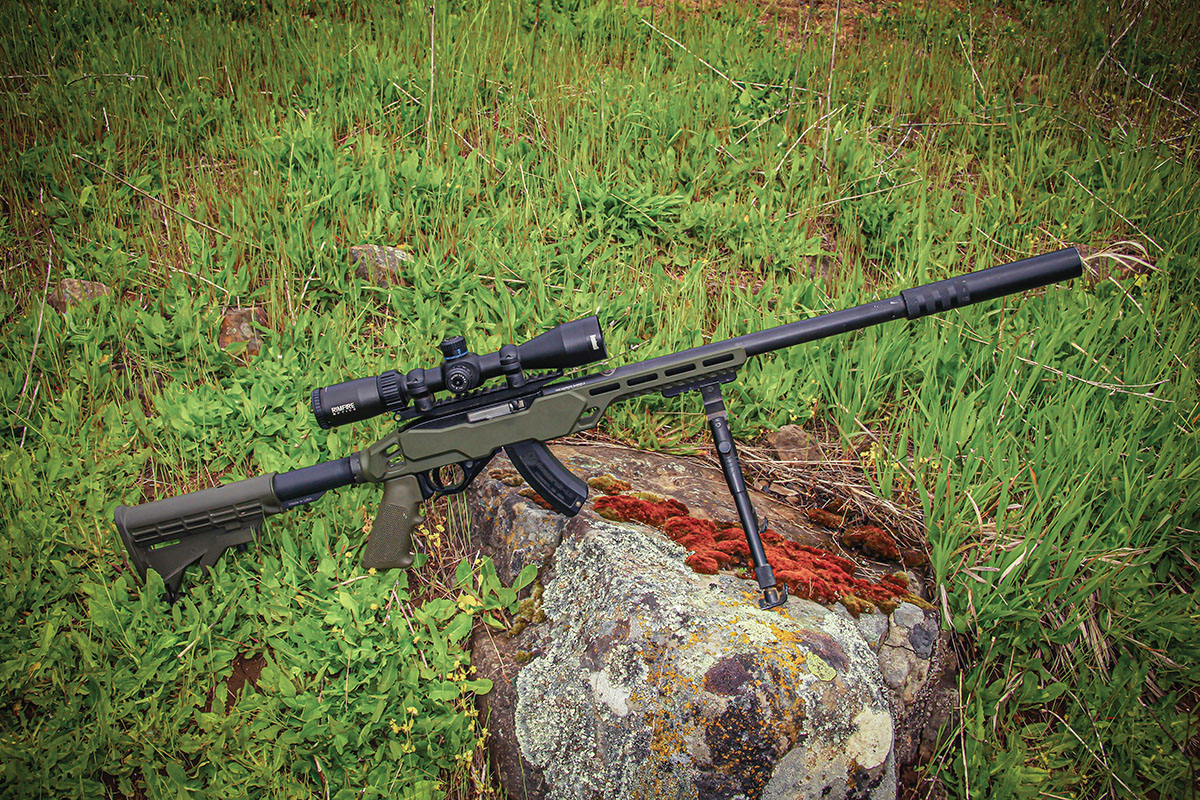
For this Ruger 10/22 build, Patrick chose a Timber Creek Outdoors Enforcer Chassis with Mil-Spec hardware, Adaptive Tactical Tac-Hammer tension barrel and Timney Trigger group. The outfit pairs well with Ruger’s BX-15 magazine.
More recently, the 10/22’s highly modular design has made the 10/22 wildly popular for another reason entirely, which has absolutely nothing to do with affordability. An entire industry exists to supply aftermarket parts for the 10/22, rivaled only by the marketplace for AR-15 parts and accessories. With more than 5 million Ruger 10/22s produced during nearly 60 years of continuous production, there are plenty of used rifles available to base “builds” on.
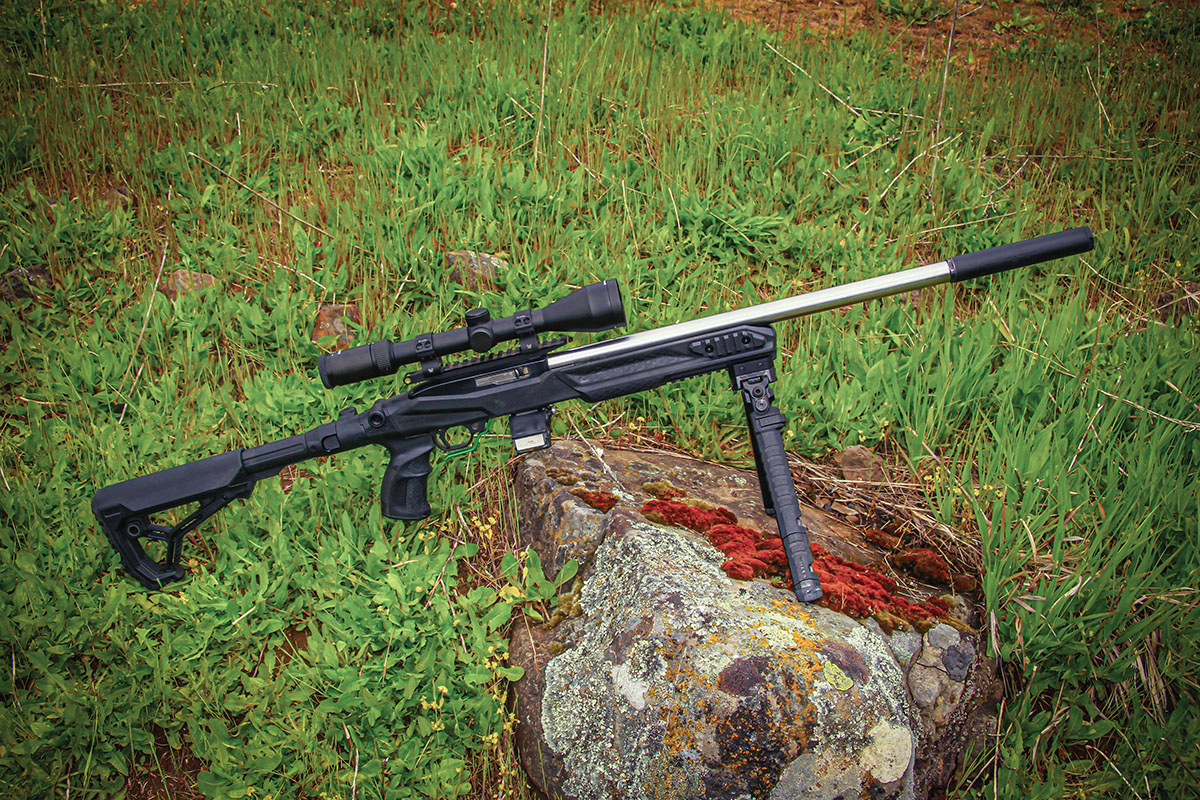
This Ruger 10/22 build is based on a F.A.B. Defense UAS-R Chassis with a highly adjustable and folding stock, a heavy Volquartsen stainless steel bull barrel and a Ruger BX trigger group. It is compatible with Patrick’s preferred 30-round, Tri-Mag system.
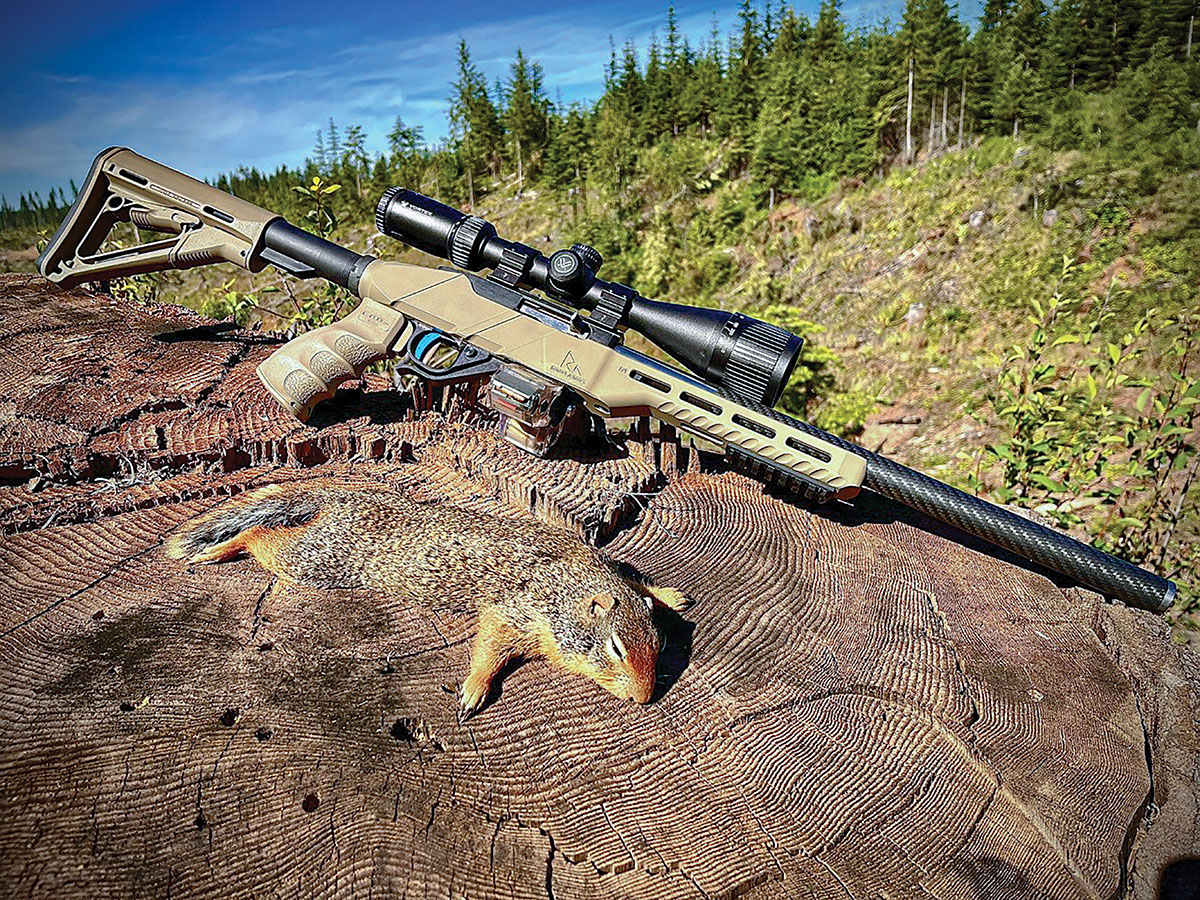
Rival Arms R-22 is the first milled-aluminum chassis system for the Ruger 10/22 that Patrick tried. It proved not only extremely accurate, but also lightweight and well-balanced between the hands.
Customizing Ruger 10/22s has become something of an obsession of mine, taking a $200 pawn shop rifle, giving it a thorough cleaning, and then adding $500 to $750 worth of parts to turn it into something truly exciting. These “ultimate” 10/22s are then used to pursue my spring varmint-shooting passions, each assembled to serve specific duties. I’ve built heavy 10/22s for steadiness atop portable benches, compact builds for private-land/truck-based shooting and featherweight numbers for walkabout hunting.
Each receives trigger, stock and barrel upgrades, but before I start, a Little Crow Gunworks’ GRX recoil lug replaces the factory barrel-retention V-block. This $39.95 part, and some minor gunsmithing, solves an inherent weakness of the 10/22, an entire barreled action anchored by a single rather thin bolt and pressure fitting into the stock. A GRX and corresponding glass-bedded lug recoil slot introduce substantial accuracy improvements. Little Crow promises a 20-25 percent group reduction. I’m able to install one in about an hour, plus cure time for bedding compound. Little Crow Gunworks’s website (LittleCrowGunworks.com) provides step-by-step instructions, or you can pay the company $125 plus return shipping to conduct the work.
I’ve realized greater gains than the company’s promised 20-25 percent on several builds, turning 1½ rifles into one rifle and shooting less than an inch. This was established by shooting five 5-shot groups at 25 yards using 15 different types of ammunition, so it is pretty definitive. This is especially pronounced on the hotter hollow-point ammunition I deem mandatory for burrowing rodent work. My best results involved a 10/22 Charger pistol, the GRX cutting group sizes by half.
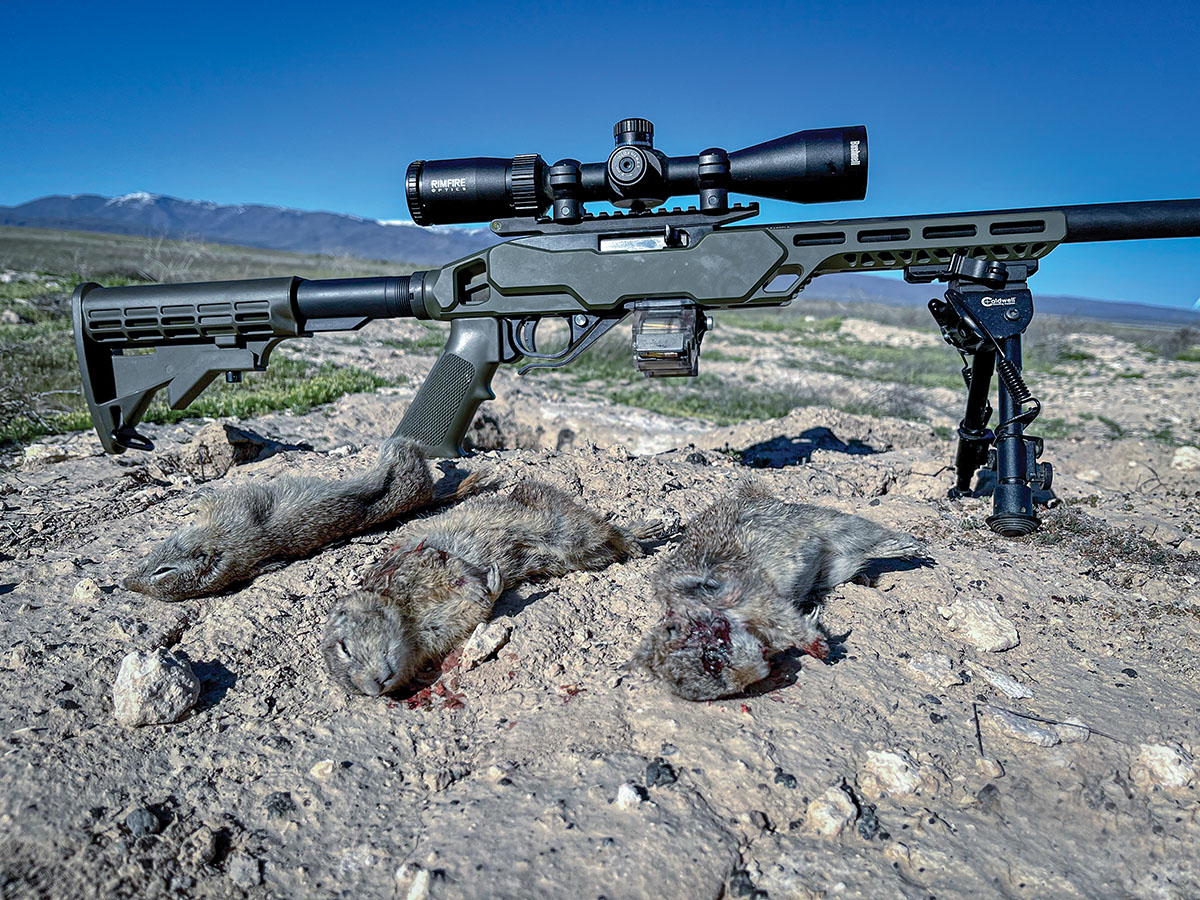
Patrick’s Adaptive Tactical Tac-Hammer-equipped Ruger 10/22 was recently changed up to include a Timber Creek Outdoors Enforcer Rifle Chassis for the Ruger 10/22. The chassis design requires adding the AR parts of your choice.
I also prefer Precision Hardcore Gear’s Tru Level Pic Rails to the cheap factory rails provided with factory 10/22s. They are far superior and include an integrated bubble level. Cantilever rails anchored to certain barrel brands, Adaptive Tactical and Volkquartsen for instance, are another excellent choice,
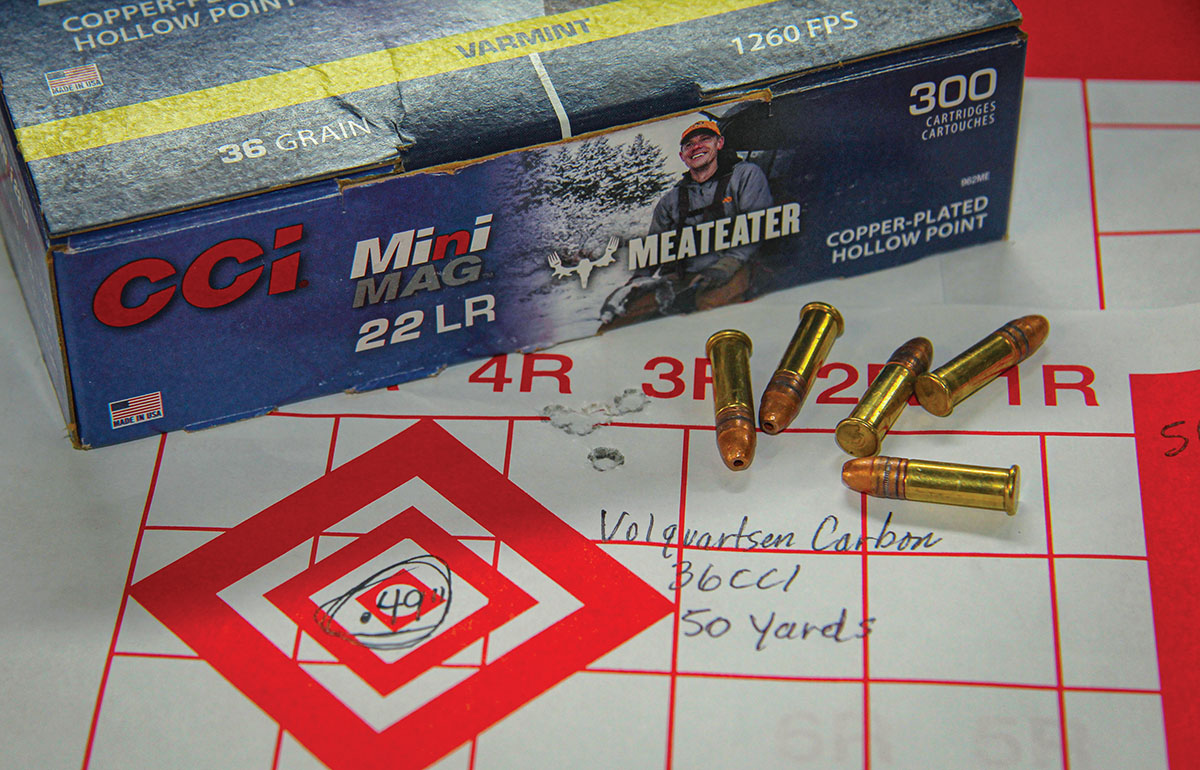
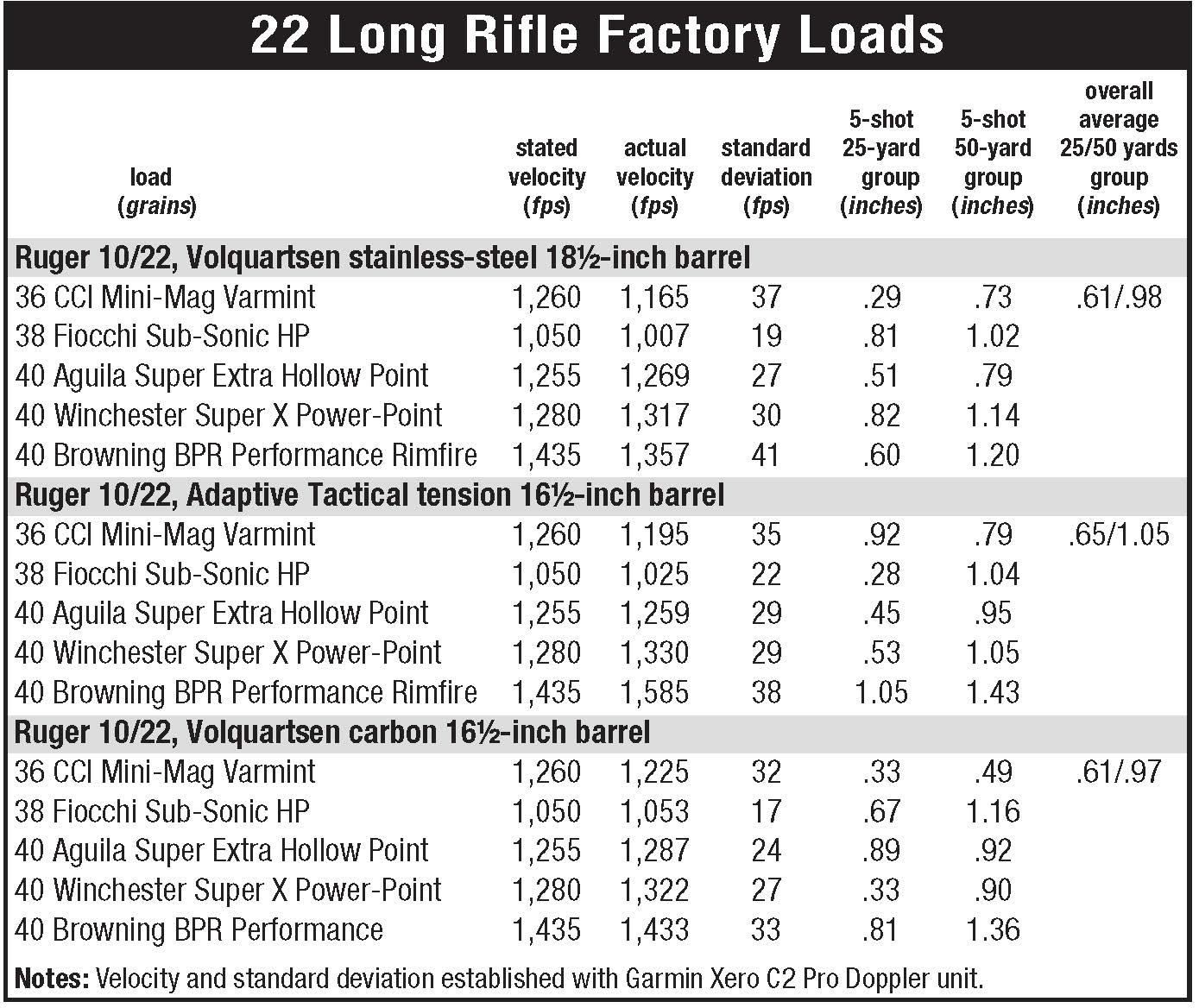
At 50 yards, the Volquartsen carbon tension barrel shot a remarkable sub-½-MOA group with five shots. The Volquartsen carbon tube also showed slight velocity gains over the other barrel options.
solving another weakness of the 10/22 - base taps threaded into the top of the thin aluminum receiver. These cantilever mounts tap into barrel steel, removing any worry of stripping the softer aluminum.
Next, an aftermarket 10/22 trigger automatically helps to make smaller groups. My own 10/22 builds include anything from $90ish Ruger BX triggers with 3½-pound trigger breaks, to $270 Timney trigger groups breaking closer to 2½ pounds. Volkquartsen, Tandemcross and others also offer excellent drop-in 10/22 trigger groups.
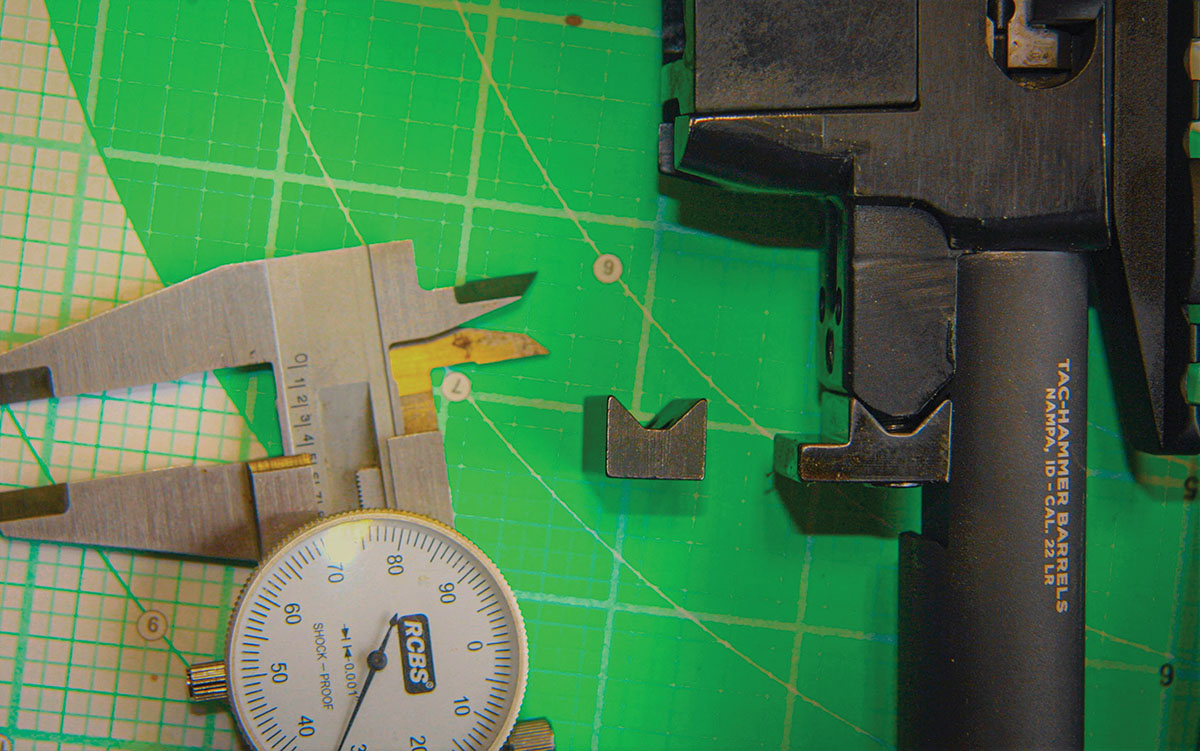
Little Crow Gunworks’ GRX recoil lug is mandatory for any serious Ruger 10/22 shooter. It replaces the 10/22 barrel-retention V-block and creates a mid-action recoil lug that improves accuracy. Proper installation requires about an hour.
The next obvious upgrade is a purpose-driven aftermarket stock. There are many options to choose from: from laminated wood to synthetic to milled-aluminum chassis, from racy to subdued, and classic to tactical. My first was a Hogue rubber-overmolded Thumbhole stock, which was not only affordable but ergonomically pleasing. I’d call this a mid-weight option and a great all-around design. On my next build, I choose ProMag’s hugely adjustable Archangel stock to help accommodate my lanky frame. This stock includes a screw-based adjustable length of pull and a fully-adjustable cheek piece. The adjustability adds a bit of weight, but nothing hugely substantial, and it certainly adds a
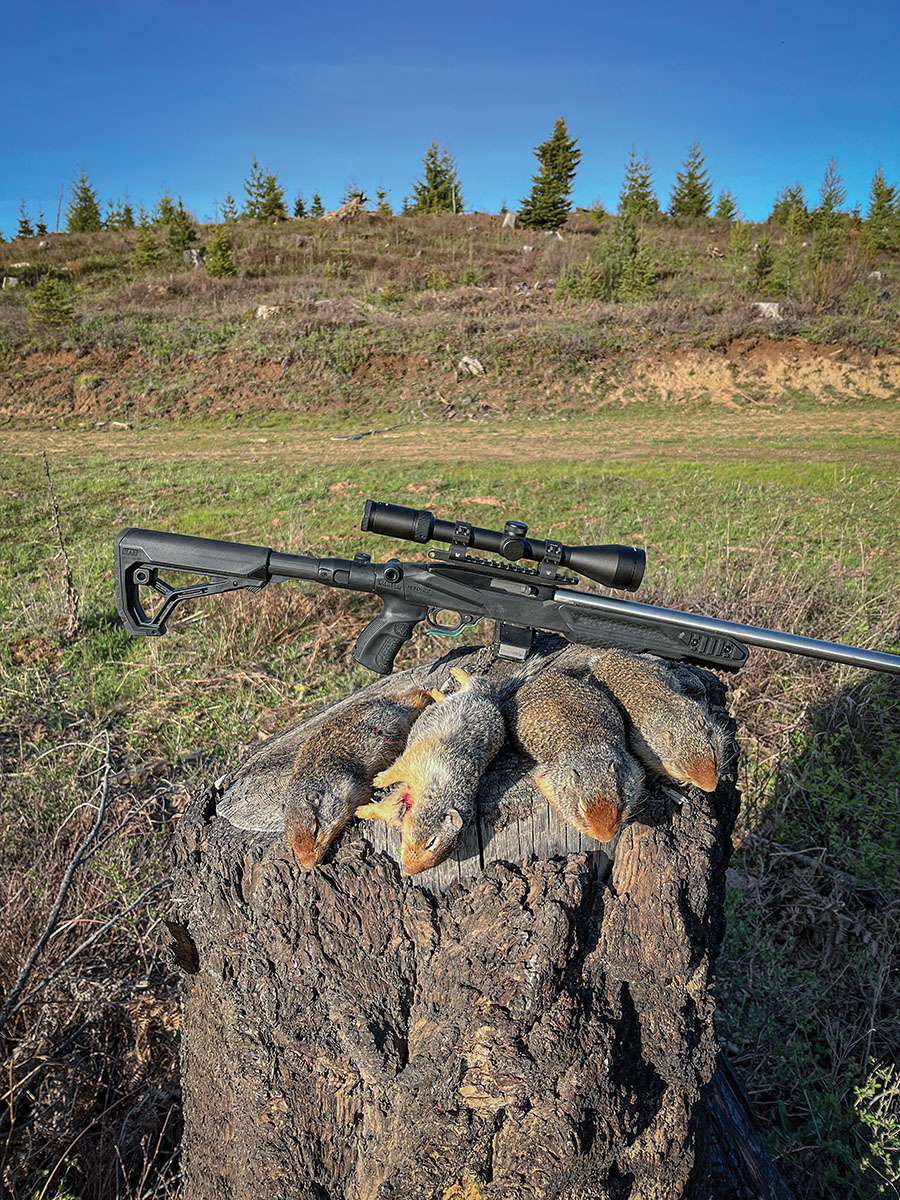
Patrick recently changed from a Hogue Thumbhole to a F.A.B. Defense UAS-R Chassis for Ruger 10/22 stock. The F.A.B. is adjustable for fit and includes a folding butt section for more compact transport.
tactical wow factor to any build. More recently, I’ve built a couple 10/22s on billet aluminum chassis - Rival Arms’ R-22 and Timber Creek Outdoors’ Enforcer Rifle Chassis. These require adding an AR buffer tube, buttstock and pistol grip of your choosing. Both of my examples include M-LOK attachment points to add a weapon light, laser, or bipod, and are extremely lightweight. Adding a GRX recoil slot requires gunsmithing, and they are more costly than the other options (besides the need to purchase additional parts).
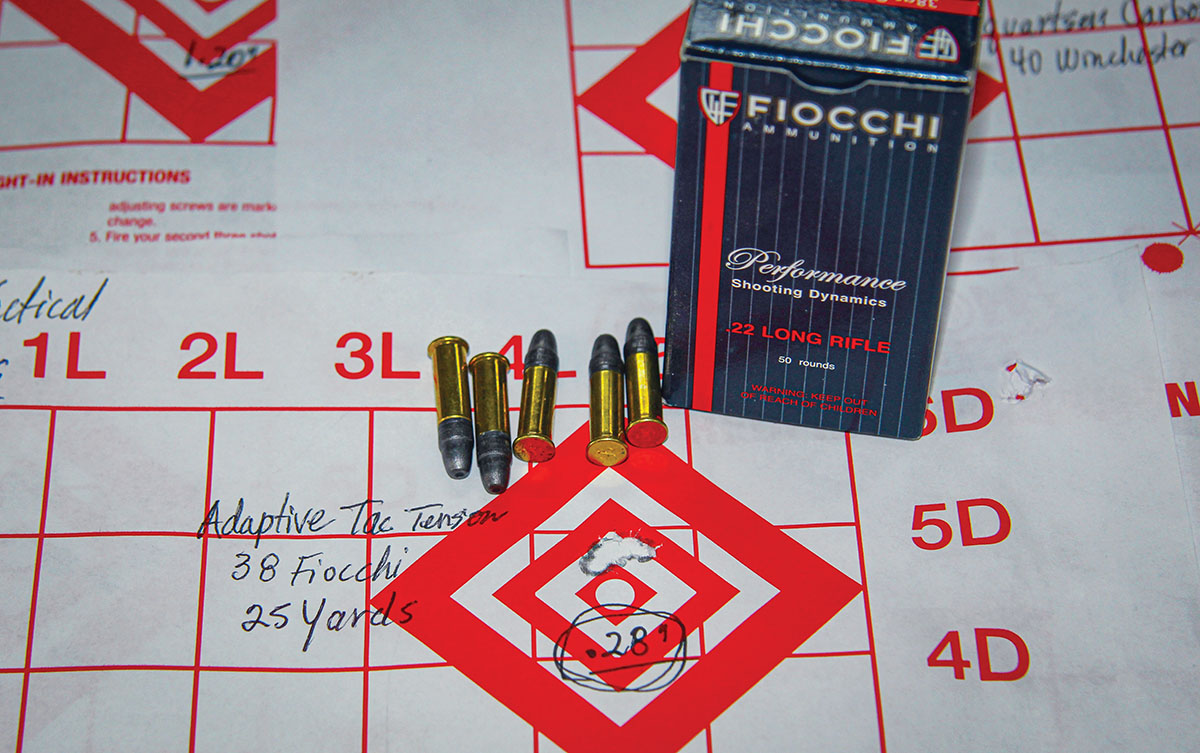
From the 16½-inch Adaptive Tactical Tac-Hammertension barrel, Fiocchi’s 38-grain Subsonic HP ammo shot best by far - in fact, producing the smallest 25-yard group of the entire test. That group measured .28-inch center to center, with a muzzle velocity of 1,025 fps.
My latest 10/22 stock might be labeled a hybrid. The F.A.B. Defense UAS-R Chassis for Ruger 10/22 offers a combination of classic bench-rest functionality and tactical style. The forend holds 1913 MIL-STD Picatinny side and lower rails for accessory attachment, and the buttstock is not only click-adjustable for length of pull, like an AR, but includes a left-side folding option for storage or to make it handier in a vehicle. A five-position adjustable cheek piece allows perfect eye alignment behind any scope or ring height, and an ergonomic pistol grip with finger grooves is a big part. QD sling swivel sockets are provided on both sides. Durable fiberglass reinforced polymer makes it relatively lightweight, and tough enough to carry a 25-year limited lifetime warranty. A removable barrel channel insert makes it compatible with standard or bull barrels.
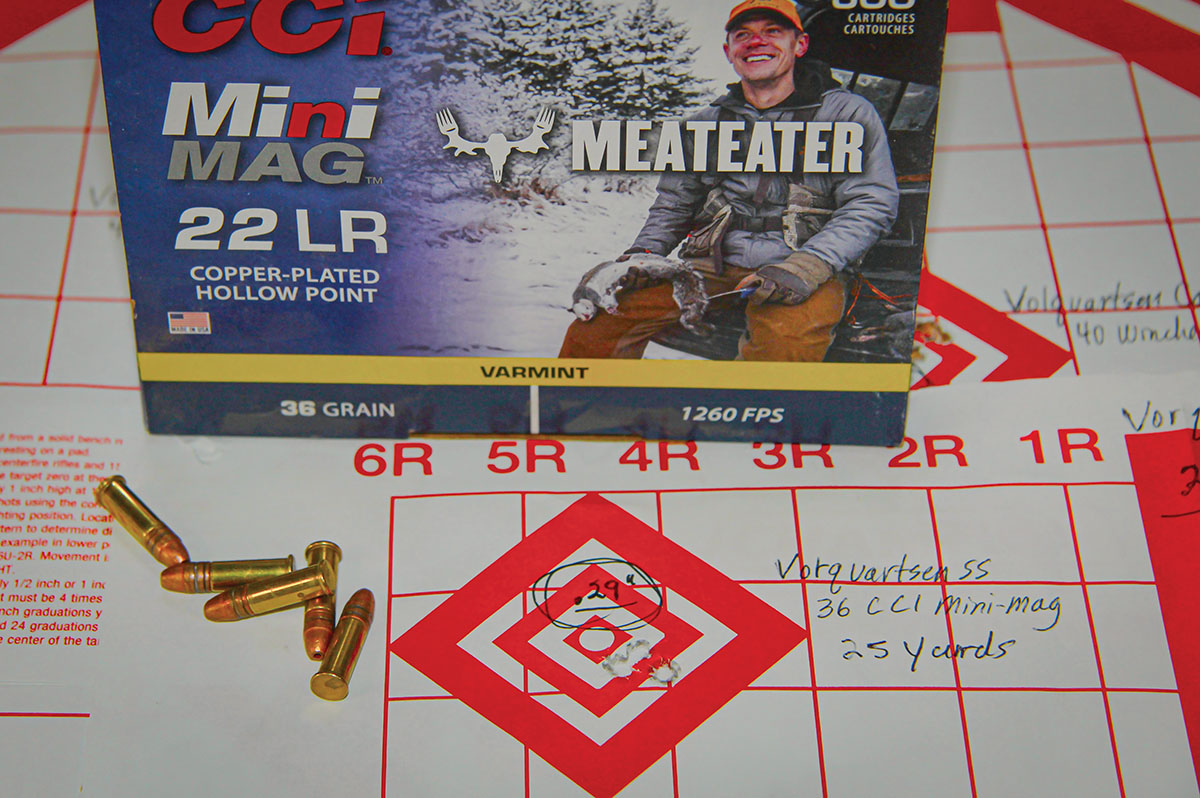
CCI’s 36-grain Mini-Mag Varmint hollow point ammunition proved most accurate from Patrick’s 18½-inch Volquartsen stainless-steel bull barrel at 25 yards. This five-shot group measured .29-inch and included a muzzle velocity of 1,165 fps.
The final hugely popular upgrade on any Ruger 10/22 is an aftermarket barrel – usually something with a substantially larger diameter – .920- to .930-inch, the usual options. Certain 10/22 barrels can also add a touch of pizzazz through various fluting styles. Barrel options can be roughly broken into solid steel, tension barrels and carbon, with each including its own pros and cons.
Heavy steel bull barrels are likely the most popular 10/22 choice, as they are generally accurate, as well as usually being the most affordable. Some come with fancy fluting of various designs, which is nothing more than aesthetic decoration on a 22 LR, but there’s nothing wrong with that. My own is a threaded, 18.5-inch Volquartsen stainless-steel tube. Being a Volquartsen, it wasn’t exactly cheap as far as steel goes, but it is certainly accurate, likely something to do with including a match-grade bore digitally tested to tolerances of +/- .0001-inch from breech to muzzle. The 18½-inch length is an ideal compromise between the promise of additional velocity provided by a 16½-inch barrel (really dependent on the ammunition’s starting velocity and bullet weight) and the accuracy advantage of longer tubes.
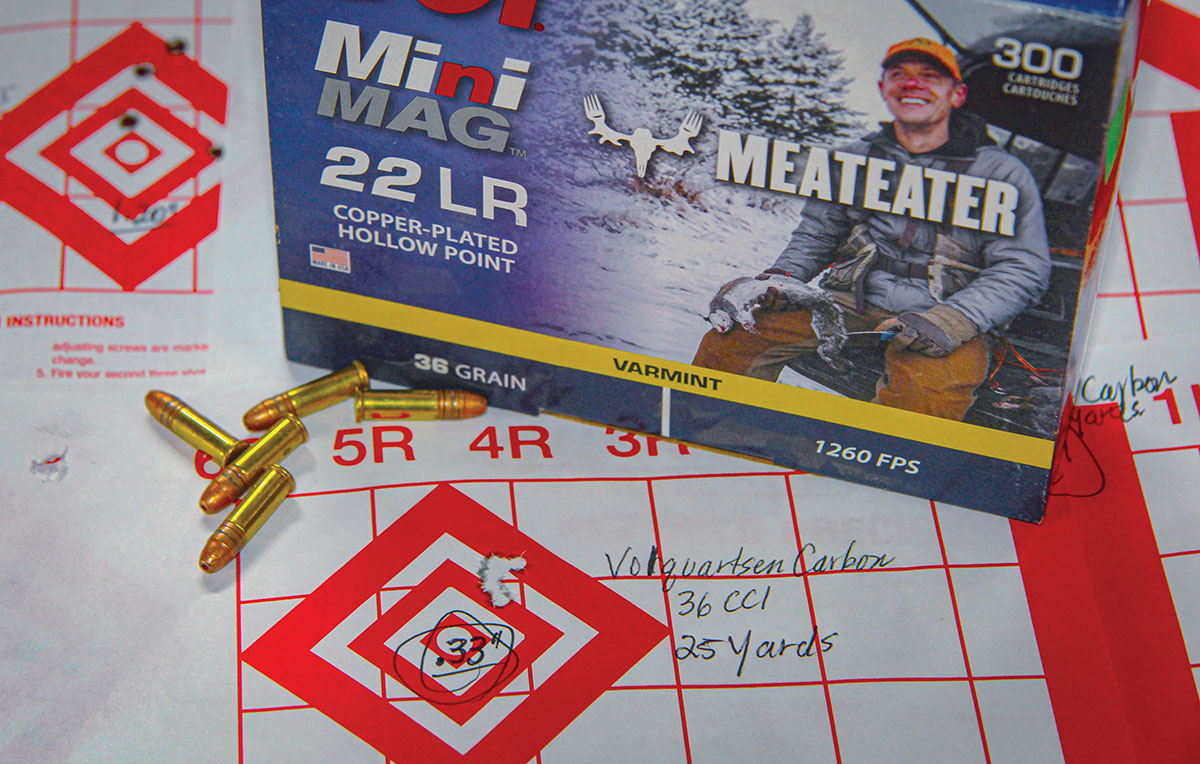
Volquartsen’s 16½-inch carbon tension barrel shot the smallest overall group average of the three 10/22 rifles tested. CCI Mini-Mag Varmint loads clustered into .33 inch at 1,225 fps from 25 yards.
The 10/22 I built around this barrel weighs a steady 11¾ pounds, including a fully-loaded 30-round Tri-Mag magazine, Huntertown Arms rimfire suppressor, Ruger BX trigger group, Weaver 4-16x 44m scope in steel Warne rings atop Precision Hardcore’s Tru Level Pic rail and F.A.B. Defense chassis. This barrel is forgiving to a wide variety of ammunition. This test was shot exceptionally with CCI 36-grain Mini-Mag Varmint and Aguila Super Extra 40-grain HP ammunition. This is my preferred private-lands truck and bench rifle.
My mid-weight 10/22 (once based on the described Archangel stock, now set in a Timber Creek Enforcer chassis) holds a 16½-inch, .920-inch-diameter Adaptive Tactical Tac-Hammer tension barrel. The tension design offers the stiffness and accuracy benefits of a bull barrel, but at half the weight of a solid steel tube. This provides an excellent balance between the hands and easier carrying, while also warming slowly and cooling quickly. Adaptive Tactical calls their tension design a Rigid-Core, Post Tension barrel, the center stepped barrel milled from P4140 Chromoly steel with heat and rust-resistant coating, and tensioned inside a 6061-aluminum shroud that was given a durable CERAKOTE finish. It also includes a tighter Benz chamber, which provides good accuracy without being completely allergic to hotter hollow-point ammunition. However, the Benz chamber will not accept CCI Stinger and other hyper-velocity 22 LR ammunition with longer-than-standard cases.
To the ½x28 threads, I added a Little Crow Gunworks Boom Tube, which funnels shot noise away from the shooter (a $50 investment that doesn’t require federal paperwork) and helps extend the muzzle of the short barrel past truck antennas and rear-view mirrors. With its Timber Creek chassis, Timney trigger group, fully loaded BX-15 magazine, MIL-Spec pistol and buffer tube/buttstock, and Bushnell Rimfire Optics 3-12x 44mm scope in basic Vortex rings on a Precision Hardcore rail, this rifle weighs 7½ pounds, making it a great all-around varmint rifle. Interestingly, this rifle really got along with Fiocchi’s 38-grain Sub-Sonic HP ammunition but also likes the Aguila option and Winchester’s 40-grain Super X Power-Point loads. My only gripe with this option is that after leaving the Boom Tube in place for a while, care must be taken to avoid unthreading/loosening the barrel-tension internals while removing it.
As a side note, Tactical Solutions (Tac-Sol) offers X-Ring barrels with low-diameter stainless steel bores embedded in milled aluminum. The aluminum is deeply fluted to save weight, with X-Ring and X-Ring Performance HD options 16½ inches long, and X-Ring SBX barrels with suppressor cages, including shorter working lengths. My father owns an original X-Ring barrel and swears by it. They are also anodized in various hues to create color-scheme builds.

Patrick Meitin (left) holds a 10/22 build including an Adaptive Tactical Tac-Hammer tenson barrel, ProMag Archangel stock and Timney Trigger. Phil Hance (right) holds a build including a Green Mountain carbon steel bull barrel, Hogue rubber-overmolded Thumbhole stock and Ruger BX trigger.
My carbon-barreled 10/22 was built to address the frequent walk-about shoots I conduct behind locked gates on private timberlands open to hunting but not motorized traffic. This barrel is a short 16½-inch, .923 inch in diameter, and unthreaded. It is a Volquartsen carbon-tension design and is as light as they come. Carbon-wrap barrels, like those offered by Proof Research, will weigh slightly more. Combined with a Rival Arms chassis, fully loaded 30-round Tri-Mag, F.A.B. Defense pistol grip, buffer-tube-based/minimalist MagPul CTR buttstock and Vortex Crossfire II 6-18x 44mm scope set in high Vortex rings and original base, this rifle weighs only 6½ pounds. This makes it perfect for walking miles of northern Idaho logging roads in search of Columbia ground squirrels. The light barrel and chassis base also created a well-balanced rifle, so while it weighs little, it remains steady in the hands during off-hand shots. The pistol grip also allows comfortable one-hand carrying with the butt resting in the crook of my elbow, my off hand free to carry shooting sticks. This barrel provides the best overall accuracy of all my 10/22s, but especially likes CCI 36-grain Mini-Mag Varmint and Winchester 40-grain Super X Power-Point loads. The only real disadvantage of carbon - particularly wrapped carbon - is cost.
Of note, high-grade aftermarket barrels often come with tighter “match” chambers. True match-grade chambers, like those found on, say, Vudoo Gun Works or Anschutz target rifles, do not pair well with high-energy hollow-point varmint ammunition. The Benz option is a compromise, a chamber that is tighter, but not much so as to shun small-game/varmint HPs. Even so, you will find these chambers foul more quickly. A couple of pulls of a bore snake every 50 rounds keeps things running smoothly.
I’ve not developed a particular favorite amongst my 10/22 builds, though I do choose which one I will shoot in relation to the specific conditions and shooting approaches anticipated. All my builds have resulted in improved accuracy over the factory’s original, and none seem to provide any huge accuracy edge over the other, other than the usual ammunition preferences exhibited by every 22 LR. Each was purpose-built, choosing accessories to manipulate weight and the ergonomics preferred for a particular shooting style, i.e., bench versus off-hand shooting. I have my bases well covered, but you can bet as soon as I discover another used 10/22 at a reasonable price, my gears will begin turning, contemplating the next ultimate Ruger 10/22!