The Complete 22 Creedmoor
Load Development for Varmints
feature By: Layne Simpson | October, 25
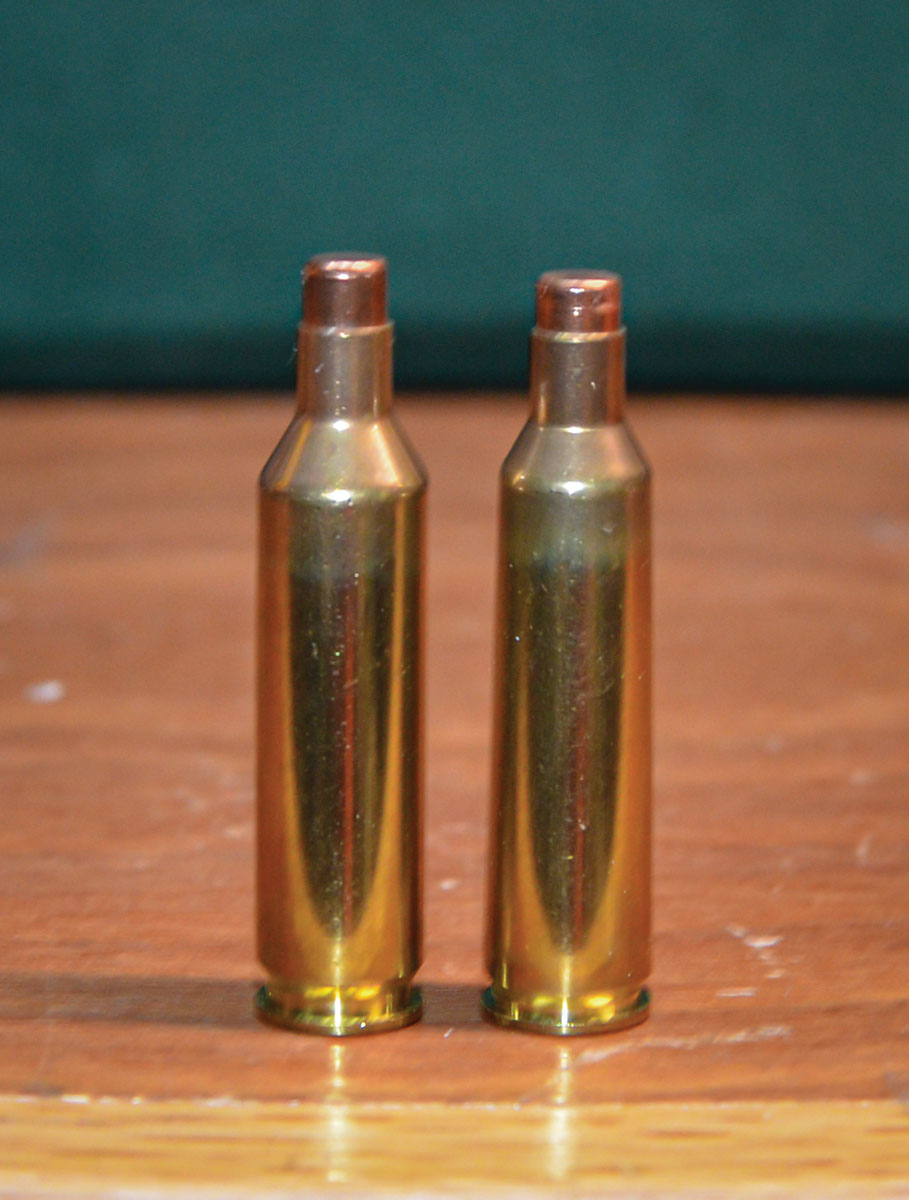
Heavy bullets, with their extremely-high ballistic coefficients, are just the ticket for some applications.
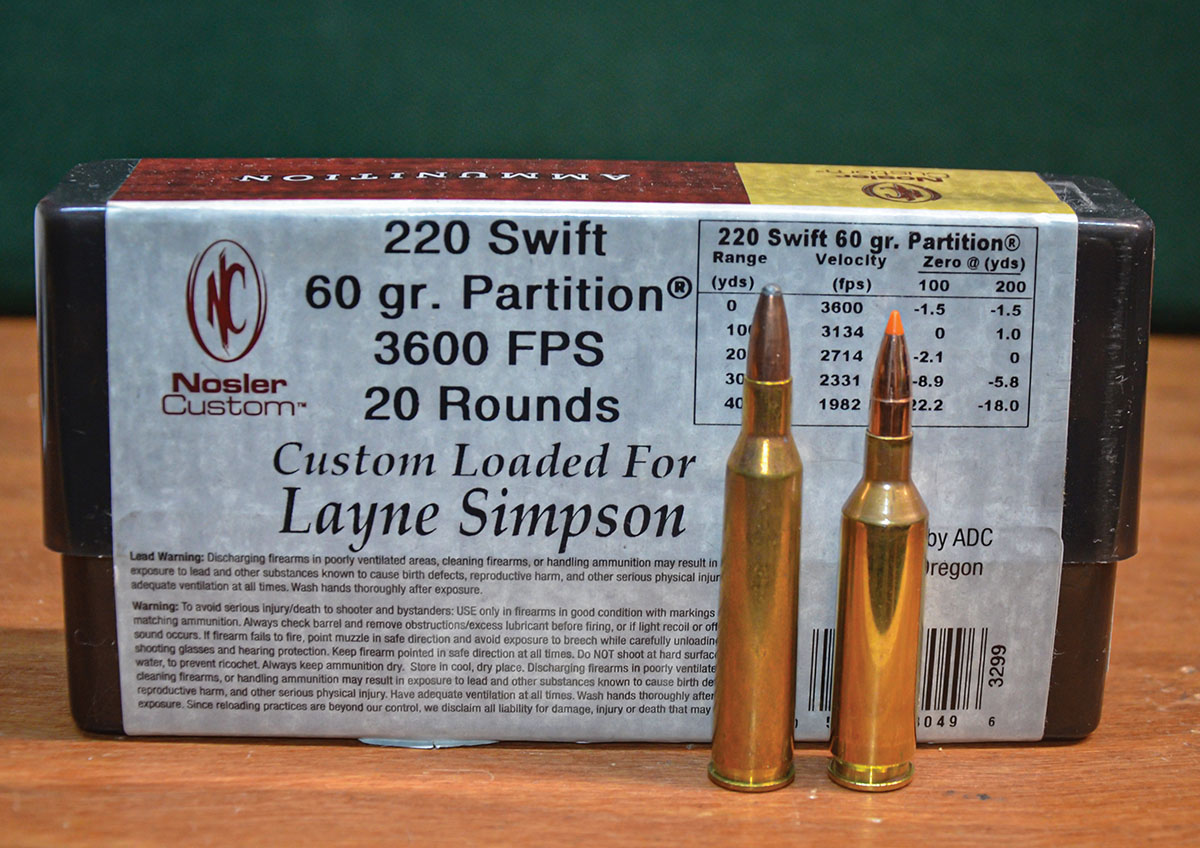
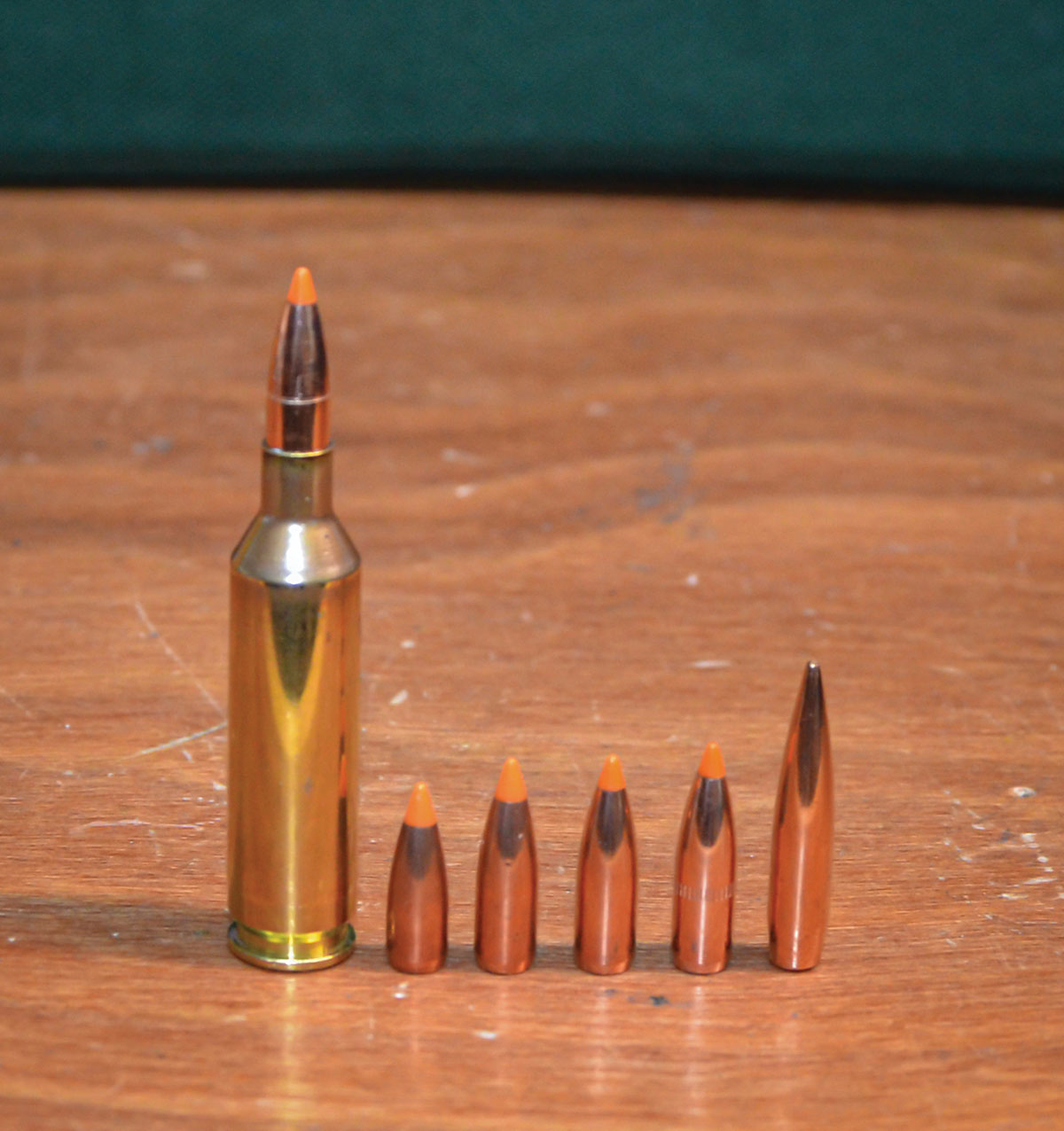
The standard rifling twist rate for rifles in 22 Creedmoor is 1:8 compared to a much slower 1:14 for the 22-250 and 220 Swift. The quicker the twist, the greater the centrifugal force a bullet is subjected to. Some bullets cannot withstand the strain and will fly apart long
The condition of a barrel matters. When the Sierra 50-grain Blitz departed the 26-inch barrel of my Winchester Model 70 in 220 Swift at 3,900 fps, very few made it to a target. How did the two rifles differ? The bore of the Remington 40X barrel was as smooth as a baby’s bottom while a few tool marks here and there in the bore of the Model 70 barrel dug into the thin jacket of the Blitz bullet, making it weak. That, along with the increase in centrifugal force applied by 220 Swift velocity, caused the bullet to
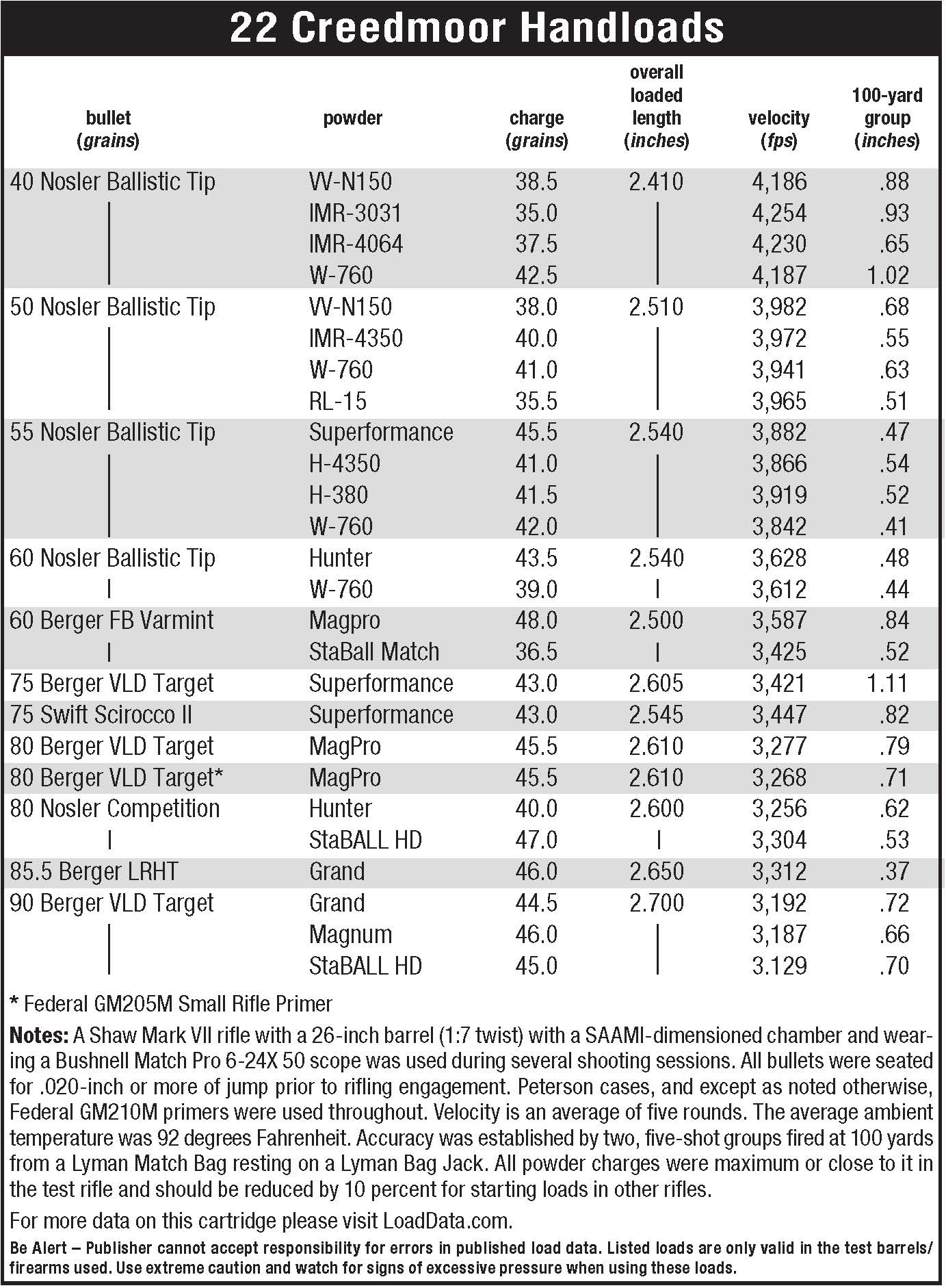
The throat of the 22 Creedmoor chamber was made long enough to handle extremely long bullets, and for this reason, shorter bullets would have to leap through more space prior to engaging the rifling than in the shorter throat of the 22-250 chamber. This free travel is minimized by seating those bullets as far out of the case as is practical, and I seat them one caliber or .224-inch deep in the case. The 22-250 and 22 Creedmoor cases are quite close to the same length. In the 22-250, Nosler recommends the same loaded cartridge length of 2.350 inches for the 40-, 50-, 55- and 60-grain Ballistic Tip bullets. To minimize the jump of those bullets in the longer chamber throat of the 22 Creedmoor, I load them to respective cartridge lengths of 2.410 inches for the 40-grain bullet, 2.510 inches for the 55-grain bullet, and 2.540 inches for the 55- and 60-grain bullets. That puts the two heavier bullets .015 inch off the rifling when a round is chambered.
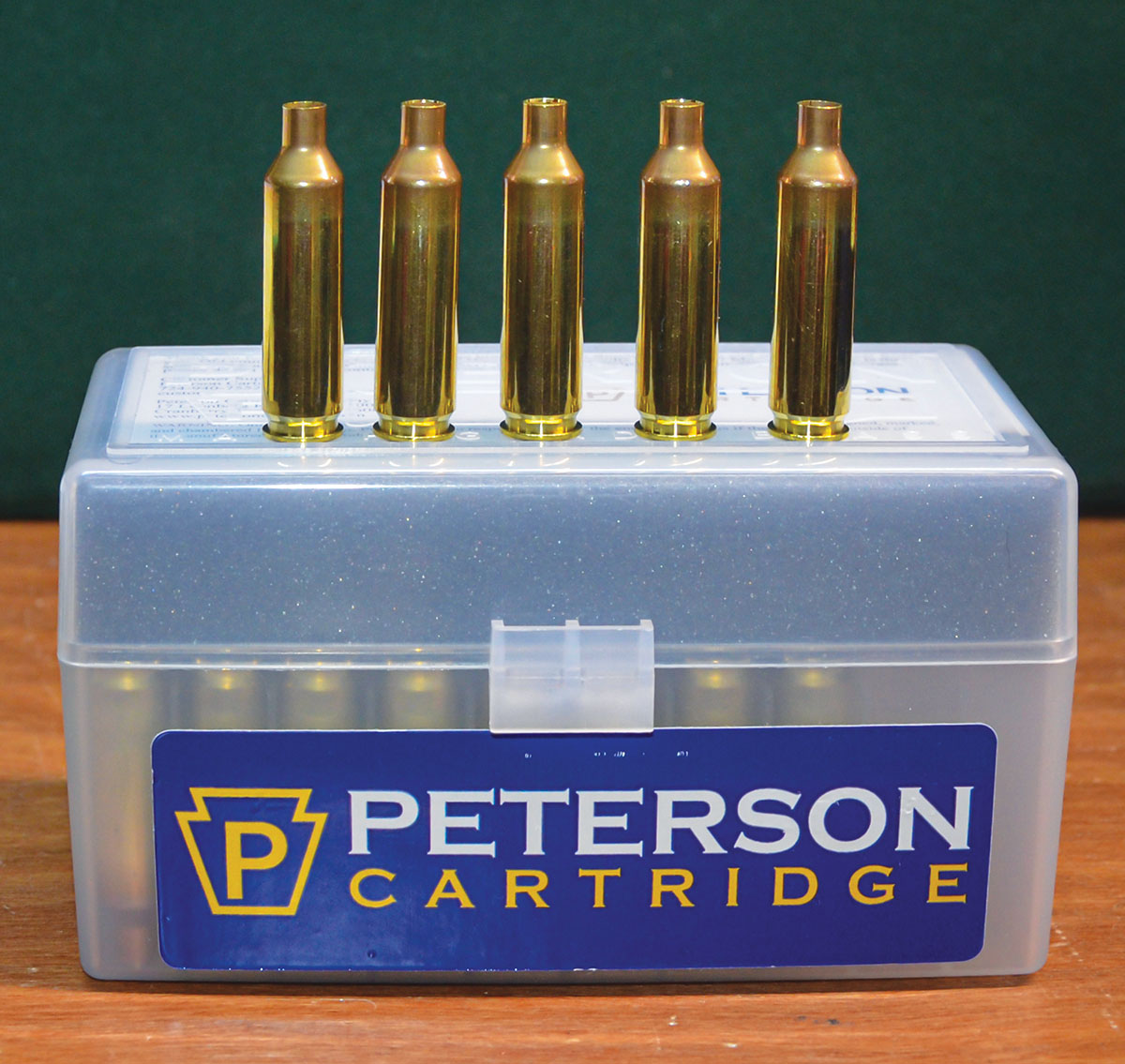
Unable to find pressure-tested load data for light bullets in the 22 Creedmoor, I decided to see how the gross capacities of my Peterson 22 Creedmoor cases compared to Lapua 22-250 cases, Nosler 220 Swift cases and 22-250 Improved cases (Federal fire-formed case). This was accomplished by weighing each case and then weighing again after they were filled to the brim with water. Capacities were 44.3 grains for the 22-250, 49.1 grains for the 220 Swift, 49.3 grains for the 22 Creedmoor and 50.2 grains for the 22-250 Improved. Since the capacities of my 22 Creedmoor and 220 Swift cases are close enough to being the same, pressure-tested starting loads with light bullets published by various reliable sources for the 220 Swift was the place to start in my Peterson 22 Creedmoor cases. As examples, for 40-, 50-, 55- and 60-grain bullets in the 220 Swift, Hodgdon lists start charge weights of W-760 powder to be 42.5, 40.5, 40.5 and 38.5 grains, respectively. That’s no typo; the start charge of W-760 for Hornady 50- and 55-grain bullets is the same. Keep in mind the fact that the discussion here is of propellant starting charge weights and not maximum charge weights.
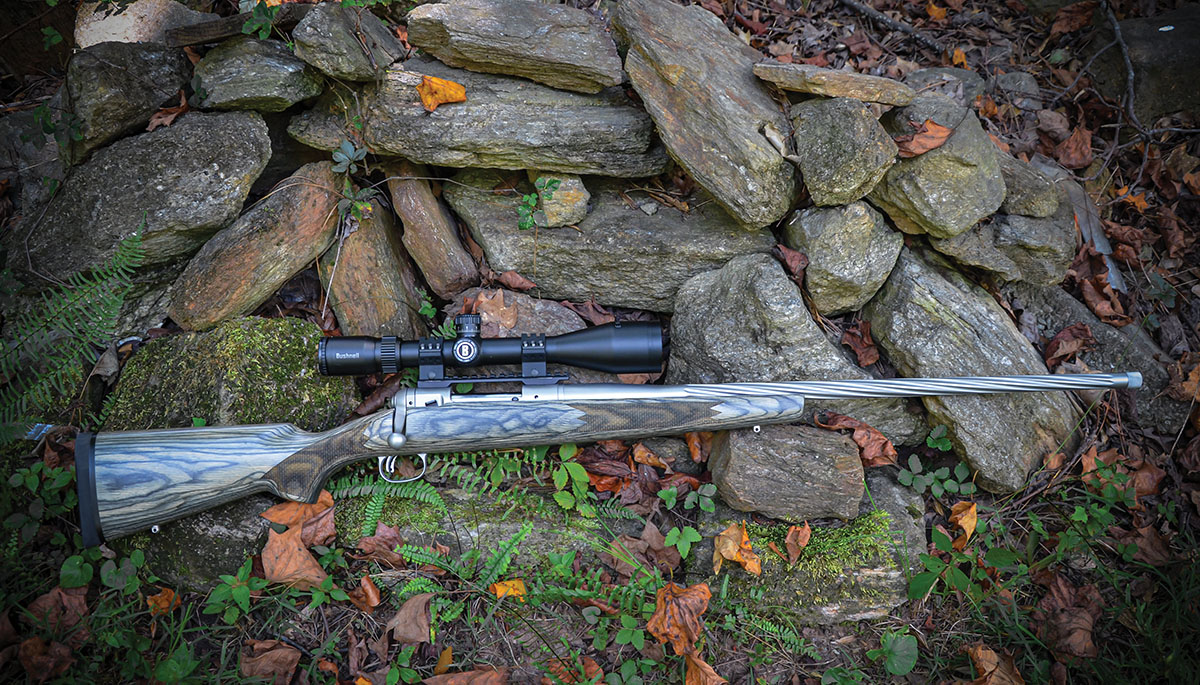
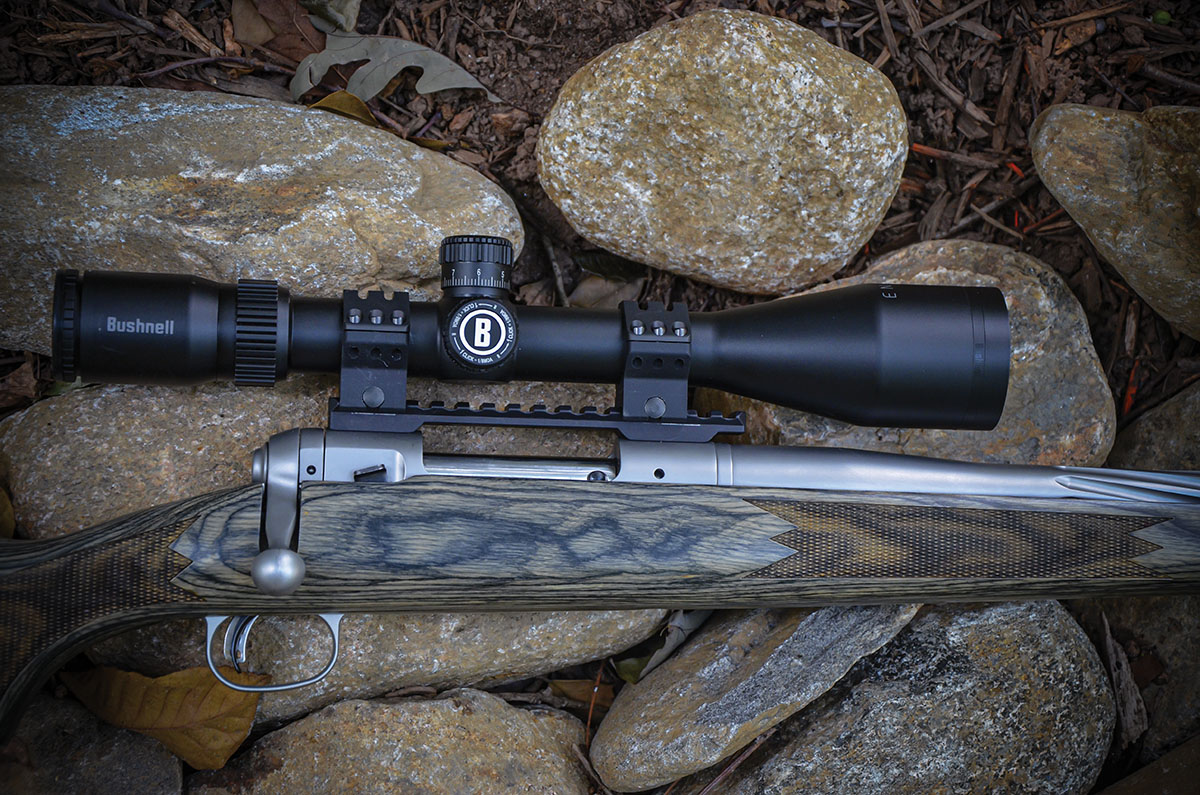
I wanted a varmint rifle heavy enough to deliver tack-driving accuracy while not being too heavy to carry on long treks in hilly groundhog country. The 26-inch, button-rifled barrel has helical fluting, measures 1.250 inches at the receiver and .720 inch at the muzzle where it has a target crown. I would be shooting the rifle with a Nosler SR-30ALTi suppressor and chose 5⁄8x24 threads rather than the usual 1⁄2x28 commonly seen on rifles chambered for .22-caliber centerfire cartridges. Doing so allowed direct attachment to the barrel and eliminated the need for a 5⁄8x24 to 1⁄2x28 adaptor. A varmint rifle I shot during my youth had a Bishop stock of laminated wood, and I still enjoy the looks and stability of that type of stock. Shaw purchases laminated blanks from one source and has them shaped at another. The coloration of my stock is listed as Nutmeg. The receiver of the Mark VII rifle rests on synthetic pads in the stock, while the barrel free floats. My digital scale indicated a weight of 8 pounds, 10 ounces. A great varmint rifle deserves a great varmint scope, and a Bushnell 6-24x 50mm Match Pro with the Deploy Mil reticle attached to a Talley Picatinny rail by Weaver 30mm and 6-screw rings filled the bill perfectly. That increased head-for-the-hills weight to eight pounds, 10 ounces.
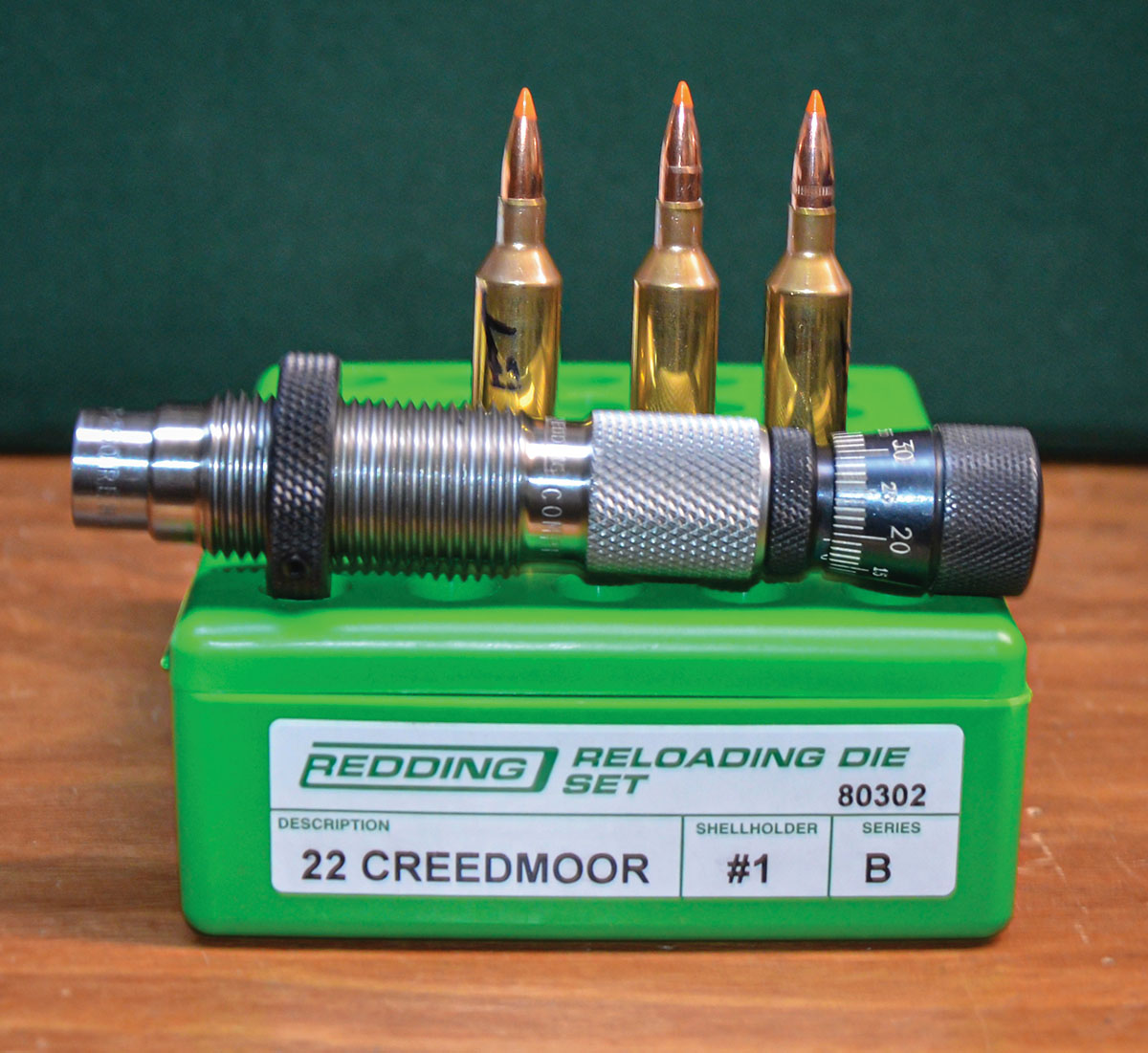
When putting together test loads for the Shaw rifle, I used a Redding die set. Powder charges were thrown with a Redding Competition PR-50 measure, and bullets were seated with Redding’s Competition die with the precision-ground alignment sleeve and floating seating stem system. At the bench, the rifle was snuggled into a Brownells leather bunny-ear sandbag at the rear and a Lyman Match Shooting Bag resting on that company’s quick-adjust Bag Jack at the front. Graham wind flags were used. It is extremely important to note that the powder charge weights listed in my test results table were maximum or close to it in the test rifle and should be reduced by 10 percent for starting loads in other rifles. Ambient temperature reached 106 degrees during my testing, and the barrel was water-cooled after each five shots.
Peterson offers the 22 Creedmoor case pocketed for Large Rifle or Small Rifle primers. Since some long-distance competitors commonly use magnum-force primers in the 22 Creedmoor and other relatively small cartridges such as the 6mm Dasher and 6.5x47mm Lapua, I tried the Federal GM210M and the GM205M with the MagPro/Berger 80 VLD combination. From my Shaw rifle on an extremely hot day, there was very little difference in accuracy and velocity.