Updated 225 Winchester Loads
An Old Classic Thrives with Modern Bullets and Powders
feature By: Patrick Meitin | October, 25
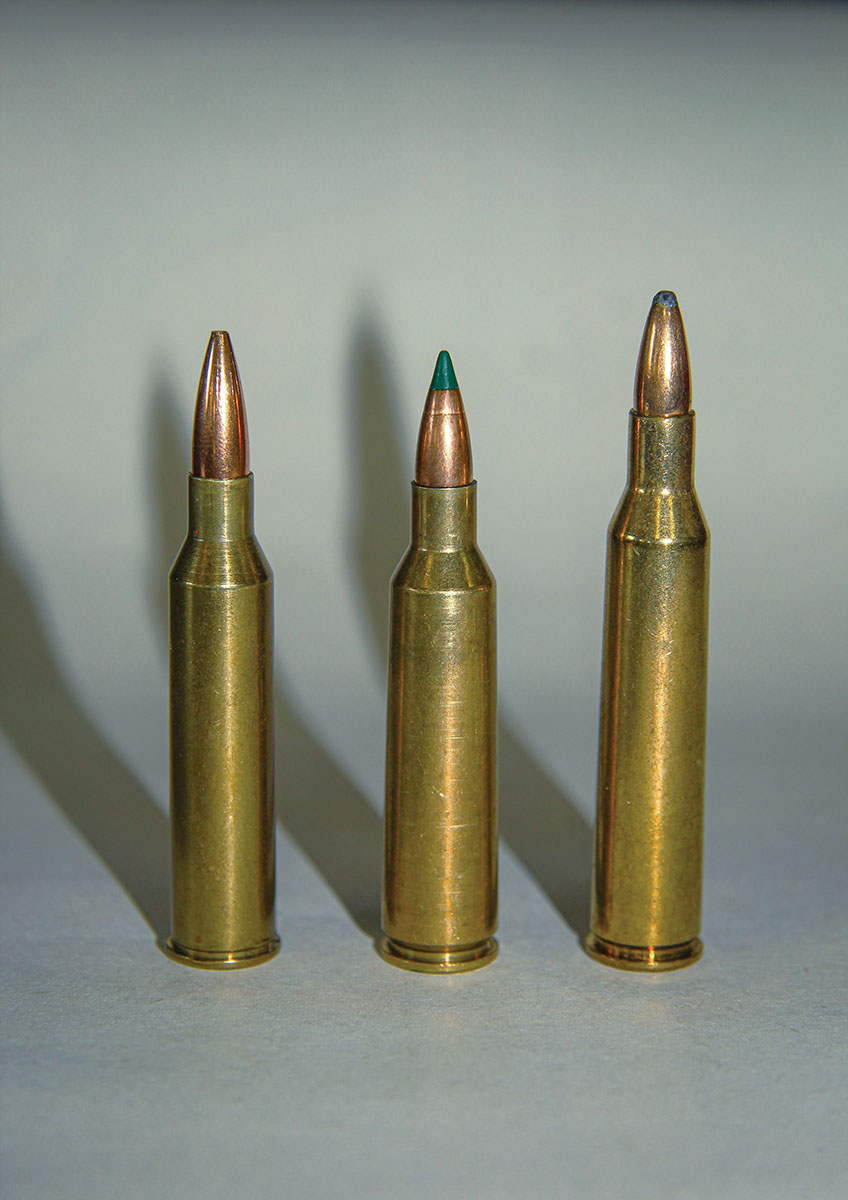
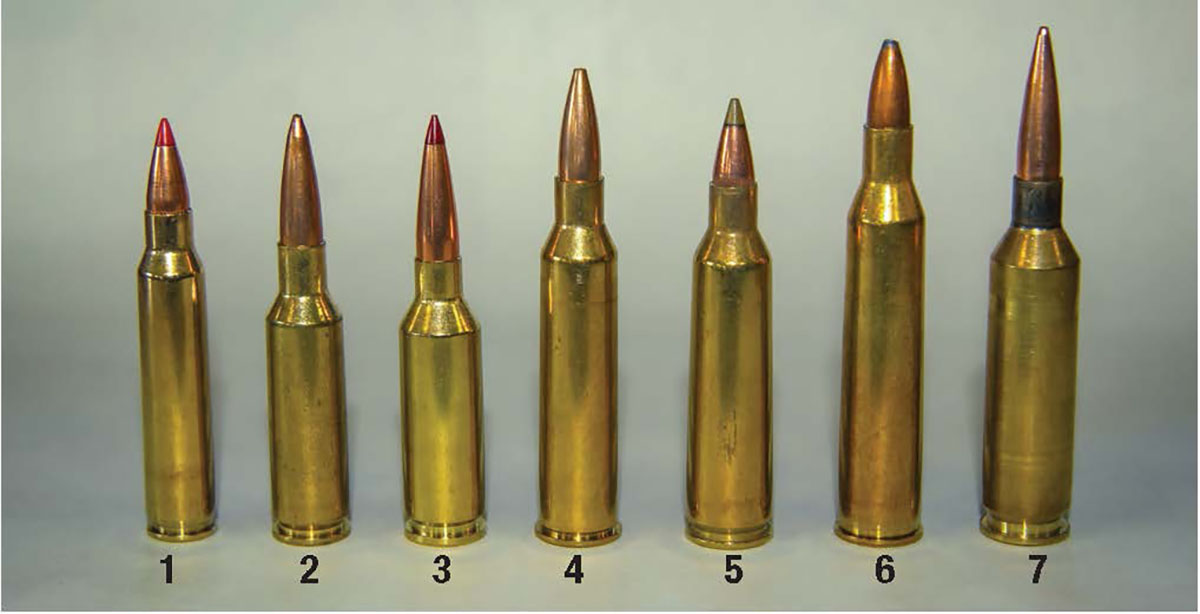
Waters pointed to the 225 Winchester’s exceptional accuracy potential, combined with a respectable level of useful velocity, as reasons for his admiration. Still, the 225 Winchester occupies an odd no-man’s land for being less than the 22-250 Remington and 220 Swift but too much of a good thing for those who prefer mild-mannered rounds in the Remington 222 and 223 class. It also holds an odd “semi-rimmed” case, though the cartridge does headspace off the shoulder. Within seven years of the introduction of the 22-250 Remington, Winchester discontinued 225 Winchester rifles, with ammunition and brass offered only sporadically today. This has only been exacerbated by recent component shortages.
So, we have a factory round that has been pushed into handloading territory. Another riddle I’ve encountered concerns load data. While certainly available, it generally includes only dated powder options that aren’t temperature-stable.
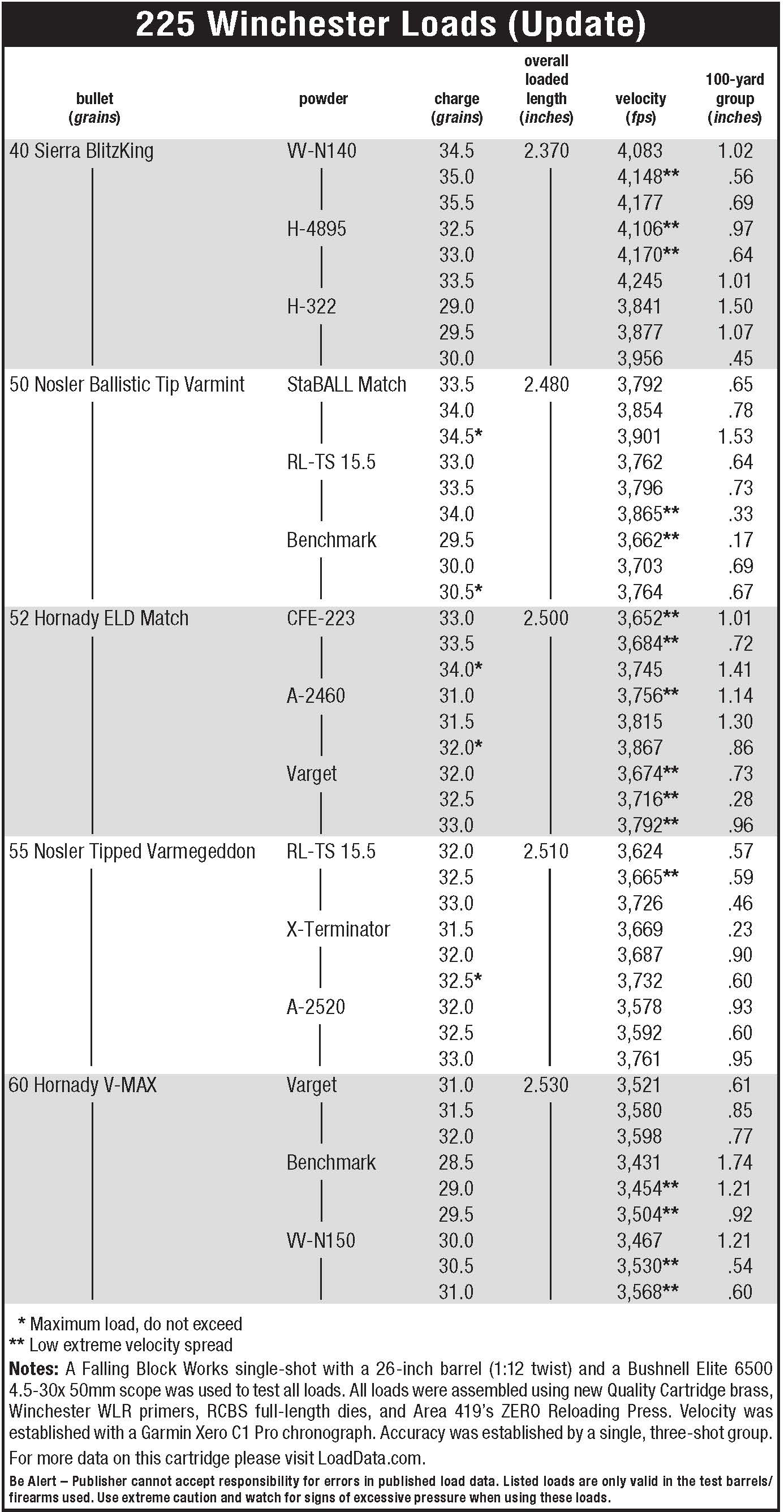
Top velocities for 40-grain bullets, for example, can vary from 3,500 to 4,000 feet per second (fps), Sierra Rifle & Handgun Reloading Data, Edition VI, (slowest), Western Powders Handloading Guide Edition 1, Hornady’s Book of Cartridge Reloading Tenth Edition (fastest) and Lyman’s 50th Edition Reloading Handbook and Speer’s Handloading Manual Number 15 (sitting somewhere in the middle). Listed barrel lengths vary from 22 to 24 inches. The conservative loads are difficult to understand, given the cartridge was introduced in the stout Winchester Model 70 bolt-action rifles.
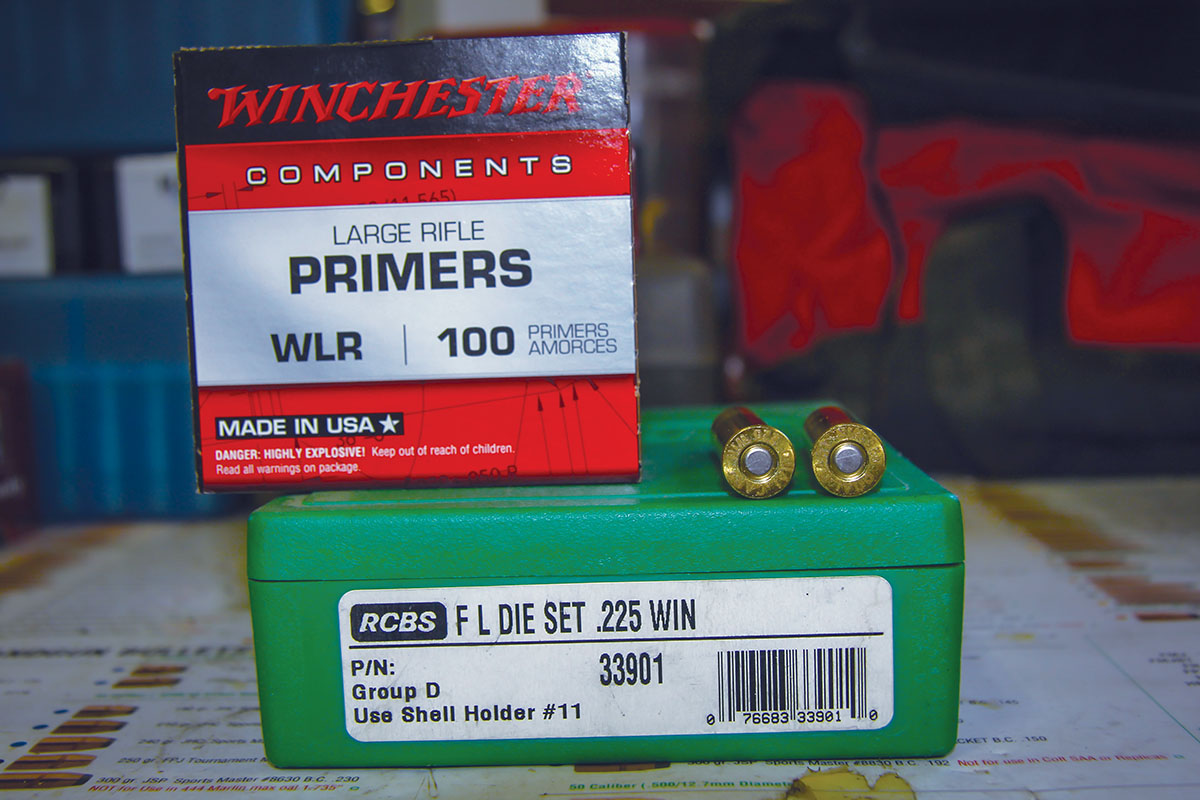
I’ve discovered that several modern powders and my rifle’s 26-inch barrel allow the 225 Winchester to match published 22-250 Remington velocities, though this isn’t necessary. The 225 Winchester provides all the usable velocity any varmint shooter could ask for. My determination to introduce modern temperature-stable, de-coppering powders became an exercise in extrapolation based on published 22-250 Remington data. In at least a few cases, this required returning to the loading bench, de-milling loaded ammunition, and throttling things back a touch. Several of the listed maximum loads are still pretty spicy, so as always, start with the listed start loads and work up cautiously. Again, there is no real reason to push velocity as far as I did in many cases; loads a grain or two under even my start loads are quite viable. There is no trouble finding dies, an RCBS full-length sizing set was used here.

The 225 Winchester holds an average of 44.3 grains of water to the 22-250 Remington’s 49.9 grains and the Swift’s 52.5 grains. The test rifle’s classic 1:12 rifling twist should stabilize bullets from 40 to 60 grains, with 40-grain bullets sent from 3,900 to 4,200 fps, 50-grainers at about 3,800 to 3,900 fps and 55-grain bullets at around 3,700 fps, all with maximum loads and shot from my rifle’s 26-inch barrel. These velocities pretty much mirror published 22-250 Remington numbers, in large part due to my long barrel.
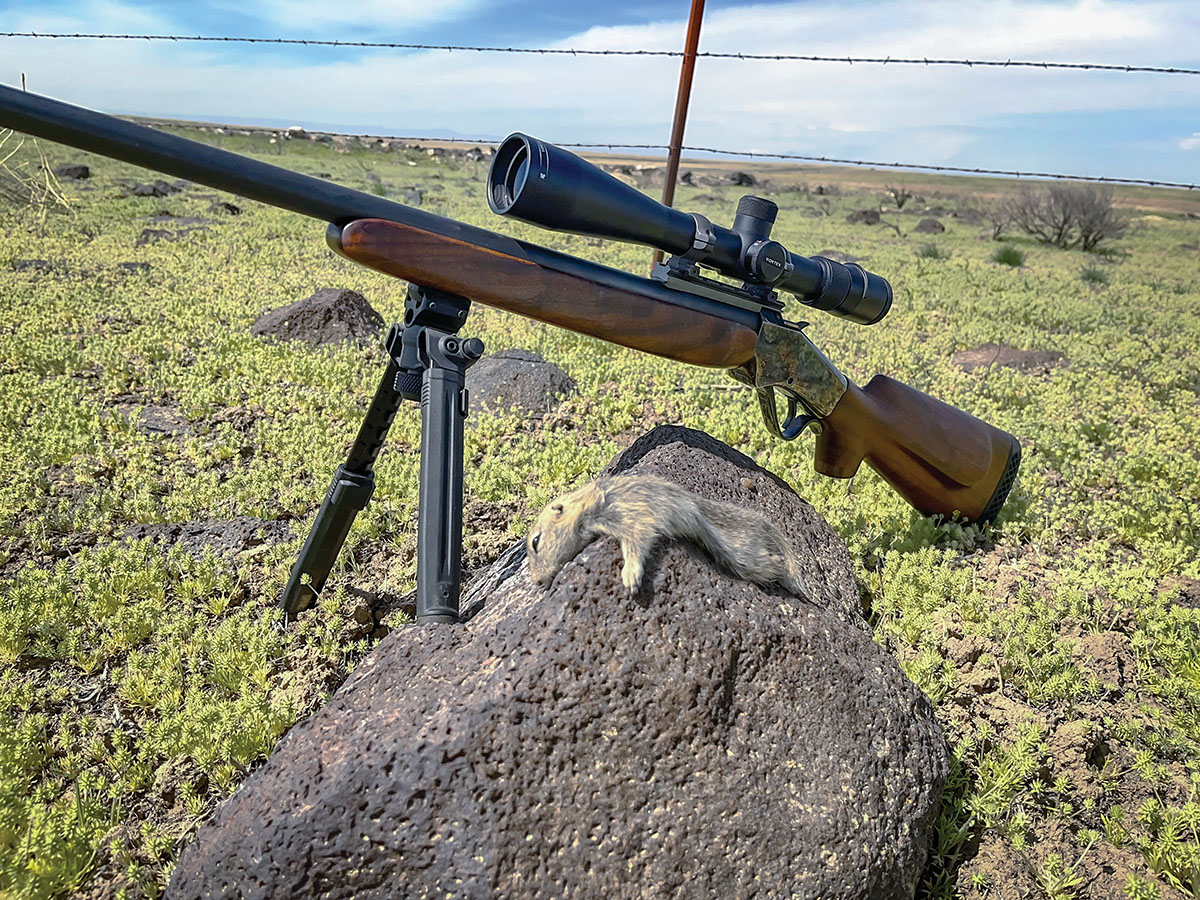
The semi-rimmed 225 Winchester actually made perfect sense in relation to the test rifle in question – a Rochester, Michigan-made, Falling Block Works single shot. This might be labeled a poor man’s falling block. Its 26-inch barrel measures .67 inch across at the muzzle. It includes an action, investment cast from 4140 steel and heat-treated to Rc35-40, which was advertised to withstand chamber pressures of up to 100,000 pounds per square inch (psi). My example includes an aesthetically pleasing case-hardened finish. The breech block moves perpendicular to the chamber and is fitted with a Mann-Niedner-style firing pin bushing. These actions utilize coil mainsprings and coil springs for lever tension, firing pin and trigger. The action includes a through-bolt for buttstock anchoring. The trigger breaks crisply at 1¾ pounds. To this classic rifle, I mounted a contemporary Bushnell Elite 6500 4.5-30x 50mm scope atop a Picatinny rail. As shot, the rifle weighed a solid 12 pounds.
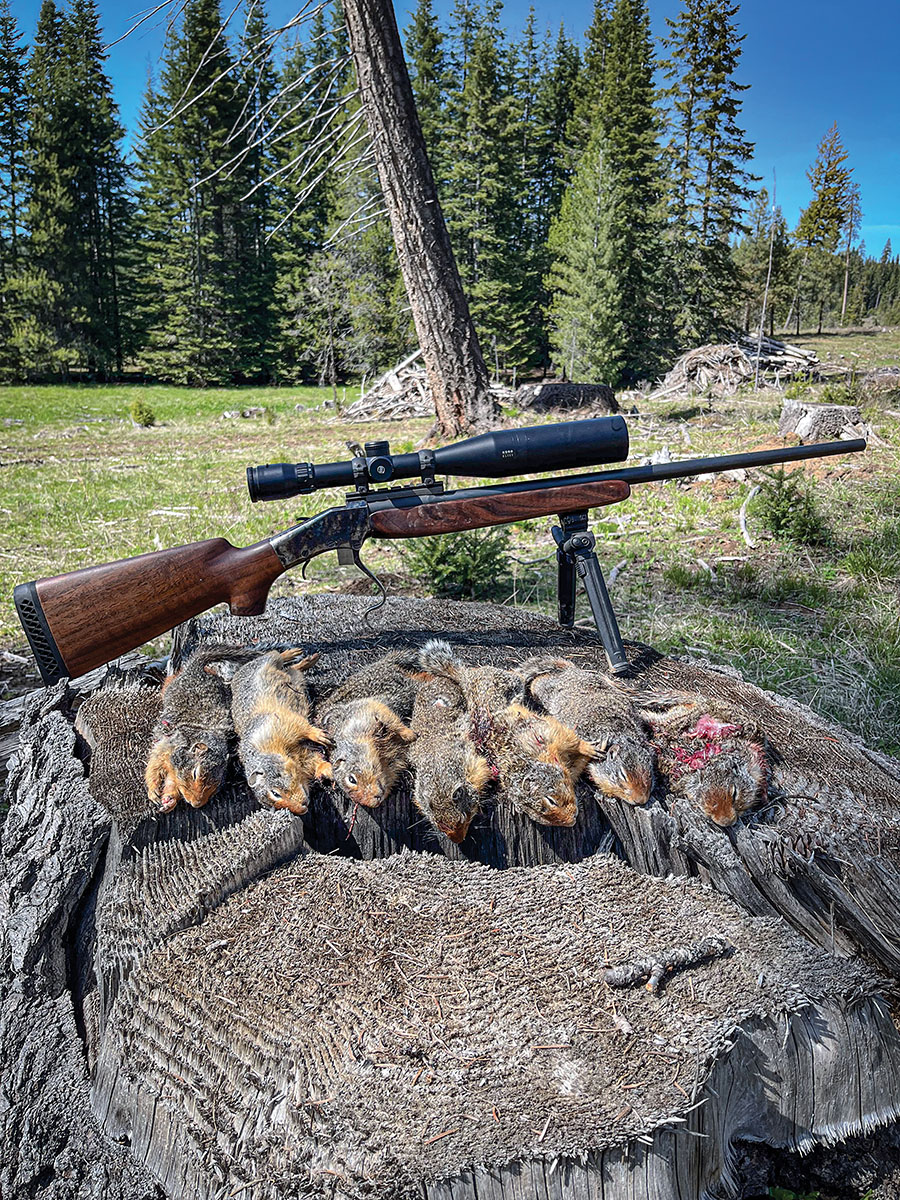
Once upon a time, I borrowed this handsome rifle for a Rifle magazine review, but I recently talked the rifle’s original owner out of it. Along with it, I acquired that gentleman’s proven handloads. All involved Accurate 2520 and 2460 powders and classic 50- and 55-grain hollow point (Speer TNT) and spitzer soft-point (Midsouth Varmint Nightmare) bullets. As a serious varmint shooter who spends a lot of time under a warm sun, I was determined to modernize my powder selection to include formulas that are temperature stable, with those including de-coppering agents seen as a bonus. I also wanted to introduce modern polymer-tipped bullets with their superior aerodynamics. I was particularly curious to see how the classic cartridge handled contemporary projectiles, and in particular, how well the available rifling twist would stabilize the heavier modern bullets.
This time behind the 225 Win Falling Block Works rifle proved both pleasant and highly productive. I shot a handful of tiny Richardson’s ground squirrels in southern Idaho during a prolonged rest stop while returning from a family emergency in Texas. But mostly I belabored our local northern Idaho mountain Columbia ground squirrels. As I became more familiar with the rifle and the loads I had on hand, I was able to confidently pick off ground squirrels to 250 yards - with a handful of 300- to 350-yard shots made. Terminal performance was impressive, blowing ground squirrels to pieces on frontal shots, and sending them cartwheeling after sniping them from atop snags and stump perches.
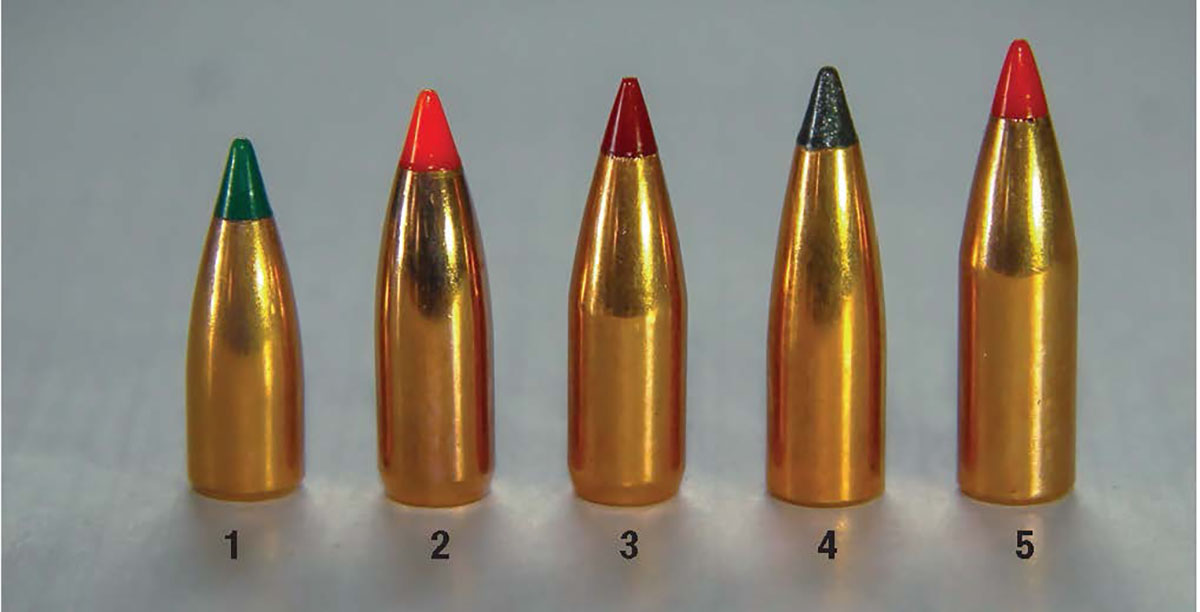
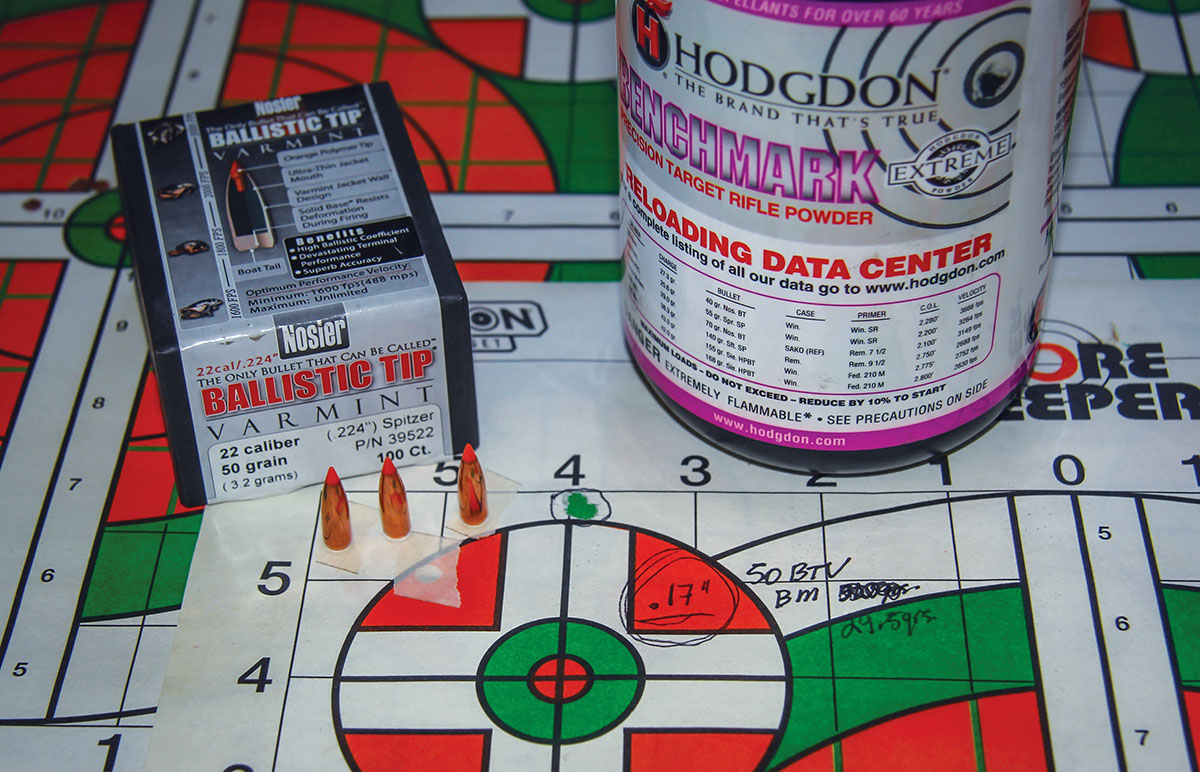
When modern load testing began, I chose Sierra’s flat-based, green-tipped BlitzKing for the 40-grain slot. It includes an unimpressive G1 ballistic coefficient (BC) of .196, but generates some serious velocity and provides explosive terminal performance. The 50-grain slot, which I consider optimum for this cartridge, was held by Nosler’s Ballistic Tip Varmint. An orange polymer tip and boat-tail give this bullet a .238 G1 BC, and of course, this design results in dismantling impacts on burrowing rodents.
My 22-250 Remington loves Hornady’s 52-grain ELD Match bullets, so I naturally wanted to see how it would do in this cartridge. Its red polymer Heat Shield Tip, sleek ogive and boat-tail give it a .247 G1 BC, and it has provided impressive expansion on small varmints. Nosler’s 55-grain Tipped Varmageddon is a flat-base bullet with a black polymer tip and a G1 BC of .255. An ultra-thin jacket and larger expansion cavity make it slightly longer for weight than comparable-weight bullets. Hornady’s 60-grain V-MAX might be pushing the limits of the Falling Block Works’ 1:12 rifling twist, but this is a flat-based bullet, so it was worth auditioning. It carries a red polymer tip, giving it a .265 G1 BC, and of course, the V-MAX design is dependably explosive.
For the 40-grain bullet, I chose Vihtavuori N140, Hodgdon 4895 and H-322, with relative burn rates of 112, 99 and 85, respectively. All are temperature stable, the Vihtavuori example also including a de-coppered agent. The Hodgdon examples are part of the company’s consistent Extreme lineup. All allowed running the lighter bullets to impressive speeds with no obvious pressure signs. It is worth mentioning that extraction is a larger problem with single shots than with flattened primers. The action is stout enough to handle the hottest loads, but lacks the camming action of a turn bolt to help dislodge fired brass. So “hot” became a matter of sticky extraction more than excess pressure. I experienced no extraction issues with the listed 40-grain loads, and primer pockets remained conspicuously tight on subsequent loadings throughout the test.
For the 50-grain slug, Winchester StaBALL Match (115 on the relative burn chart), Alliant Reloder TS 15.5 (119), and Hodgdon Benchmark (90) were auditioned. StaBALL Match and Reloder TS 15.5 both include de-coppering agents and extreme temperature stability. Benchmark is a temperature-stable Extreme series powder. StaBALL Match produced some scorching velocities, but be warned, the maximum listed load should not be exceeded. Reloder TS 15.5 showed no pressure signs even with the maximum listed load, while producing noteworthy accuracy and lower extreme velocity spreads. My initial Benchmark loads proved too hot out of the gate, so all had to be throttled back before returning to the range.
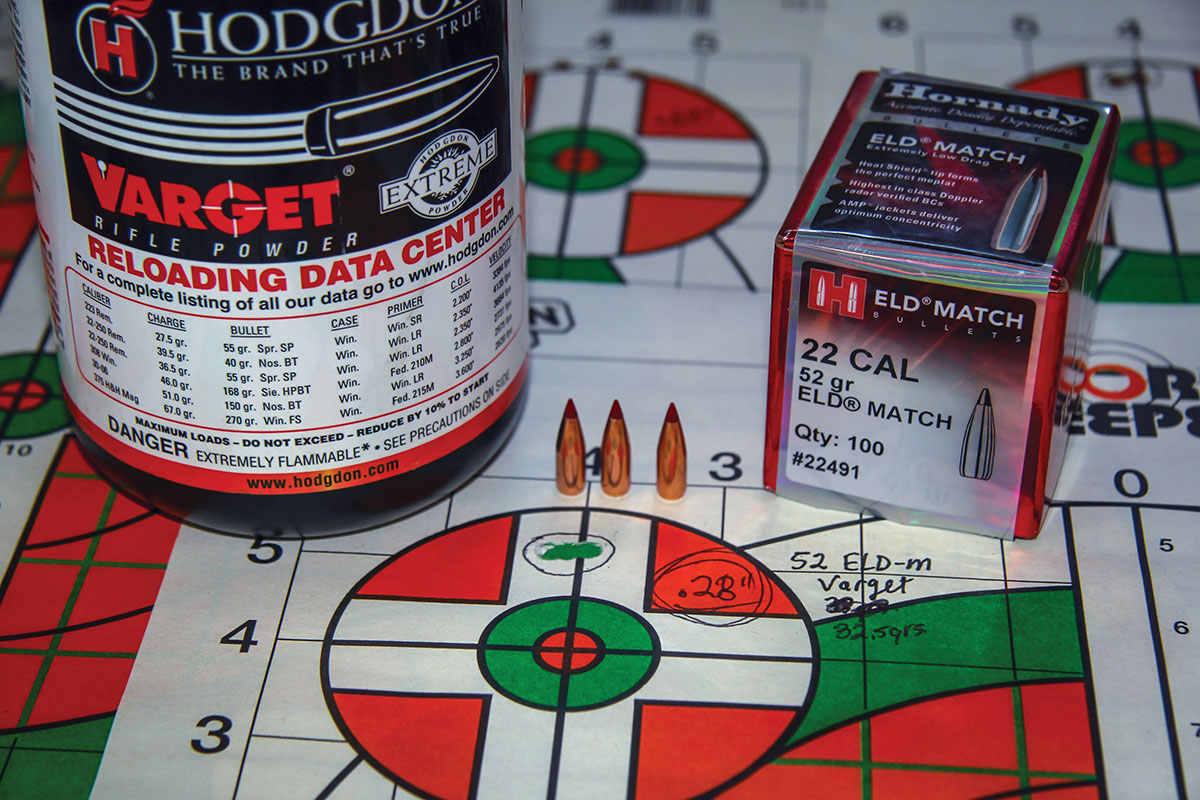
Hornady’s 52-grain ELD Match was paired with Hodgdon CFE 223 (118) and Varget (113), and Accurate 2460 (94). CFE 223 is the original de-coppering powder, and like Extreme series Varget, it is temperature stable. A-2460 was included as a control group. CFE 223 again required pulling initial loads and reducing charges, but the lower charges proved right on the money. A-2460 performed as expected, but the listed maximum load should not be exceeded.
The 55-grain Nosler Tipped Varmageddon was set up with Alliant Reloder TS 15.5, Ramshot X-Terminator (92) and Accurate 2520 (109). X-Terminator (interchangeable with Accurate 2230) makes no specific claims for temperature stability, but it is clean-burning and quite consistent. A-2520 is, again, part of the original loads and another control group.
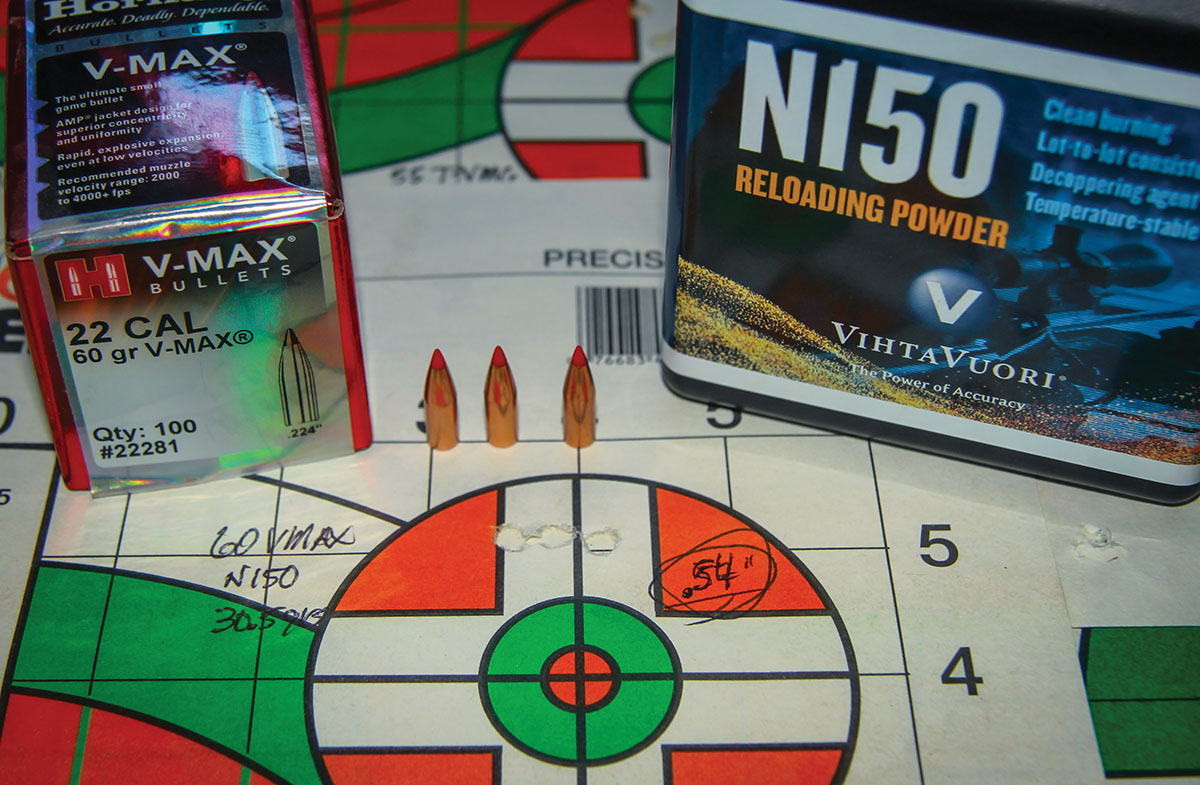
I wasted a lot of time coaxing an acceptable degree of accuracy from Hornady’s 60-grain V-MAX. I tried Shooters World AR Plus (with a burn rate similar to Ramshot X-Terminator/A-2230), Winchester StaBALL 6.5 and Ramshot TAC, which produced patterns instead of groups. I was ready to write this bullet off for lack of rifling twist stabilization, but then Vihtavuori N150 (124) finally assembled some worthwhile groups. N150 is extremely temperature stable and includes a de-coppering agent. I then returned to what had worked with previous bullets, introducing Hodgdon Varget and Benchmark. This improved things considerably, but still came up short of N150.
Ken Waters was right – the 225 Winchester is certainly capable of fine accuracy, as seen in this test with most bullet weights. It can do everything the 22-250 Remington does, if that is what you want, though again, there is no real reason to push this round to that extent. Chambered in the falling block single shot, this old cartridge proved a lot of fun to shoot, while lending any outing a bit of classic romance.