The 17 Remington Fireball
The Forgotten Fireball
feature By: Zak May | October, 25
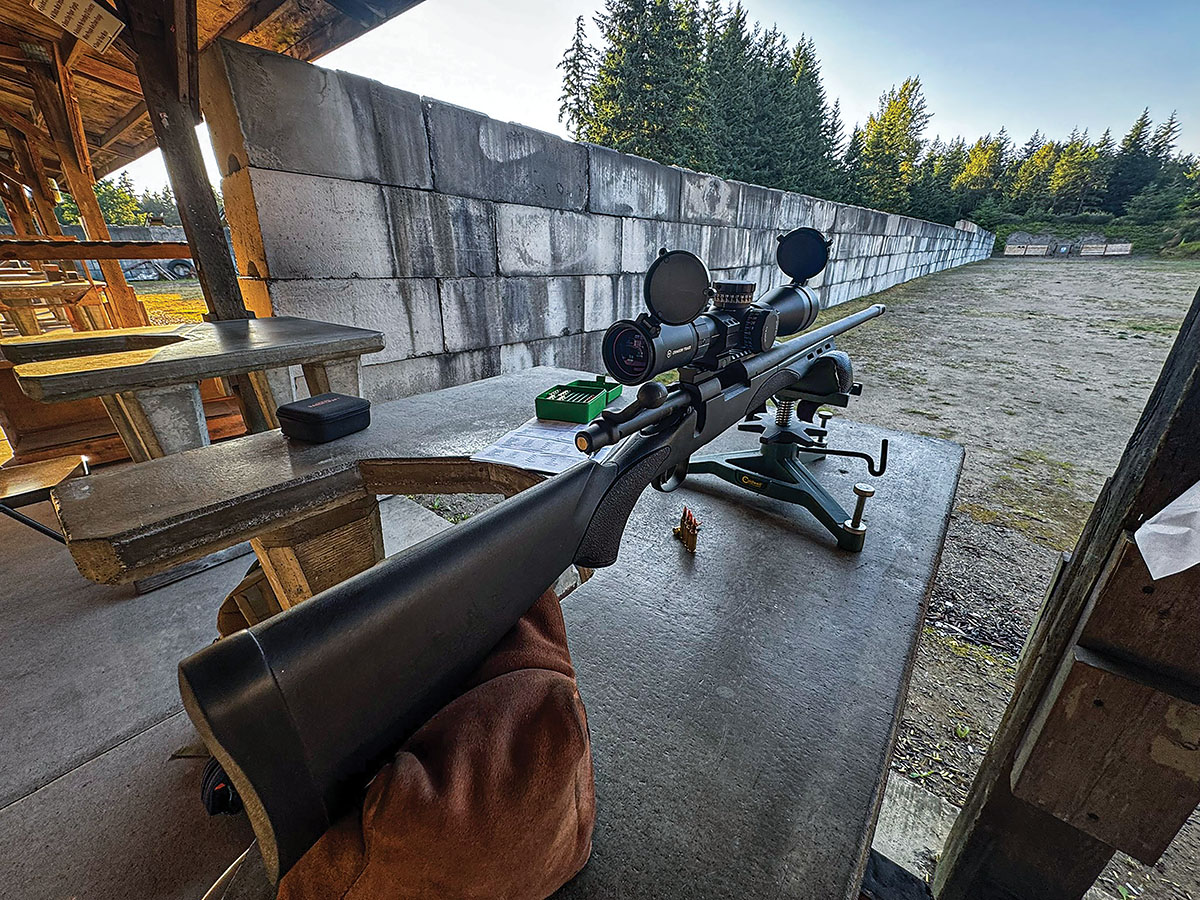
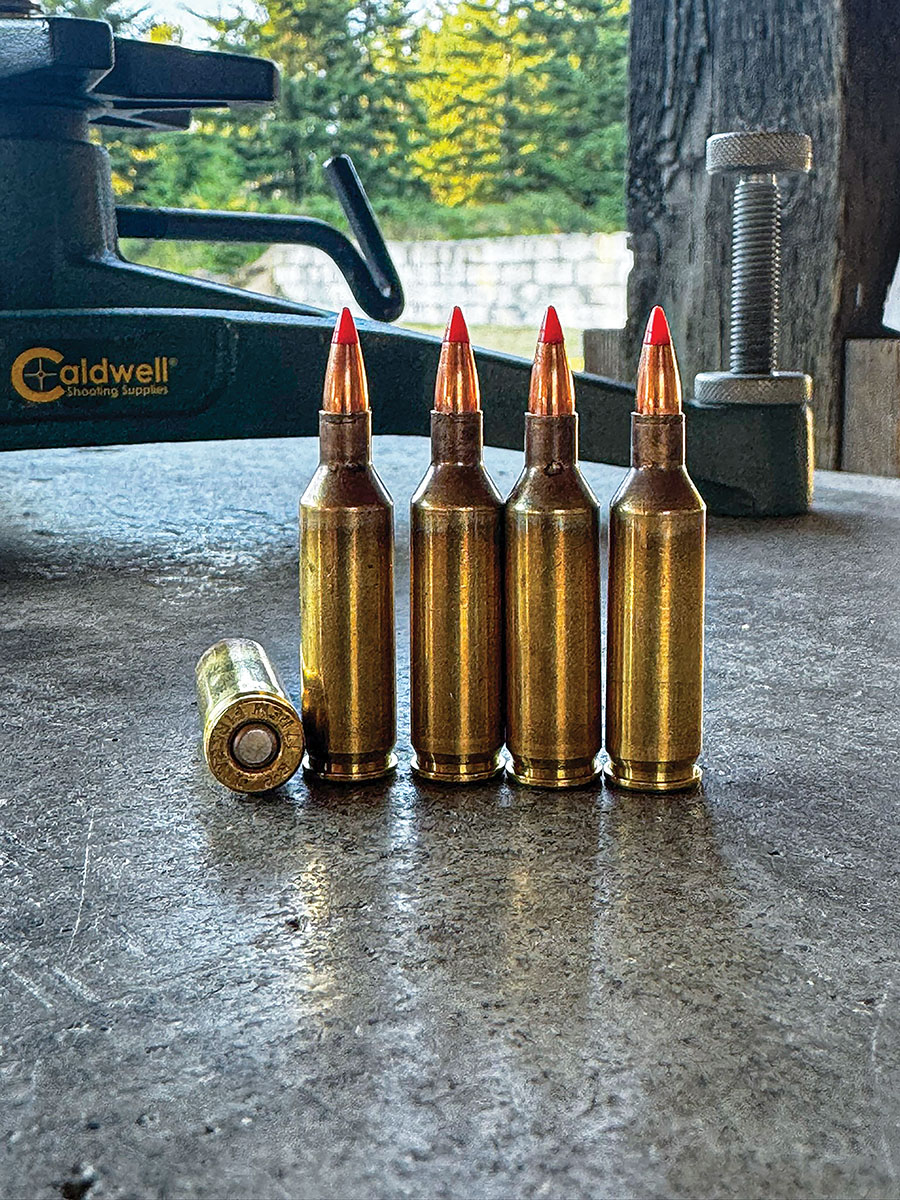
One of my favorite parts of testing cartridges and writing reviews about them is finding awesome cartridges like the 17 Remington Fireball. When looking for a ground squirrel getter that’s handloadable, this one is fun, inexpensive on components and offers little to no recoil. Before diving in too far, let’s take a look at its beginnings.
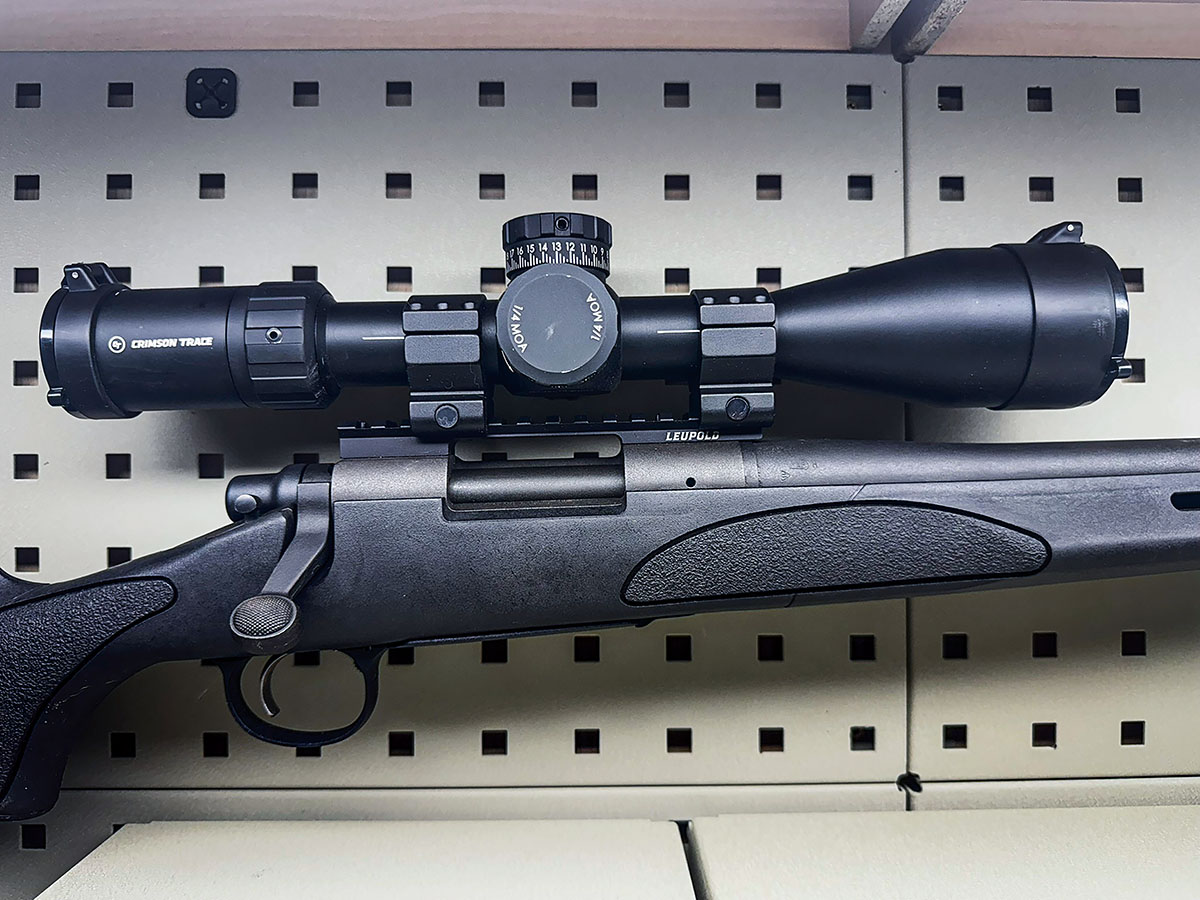
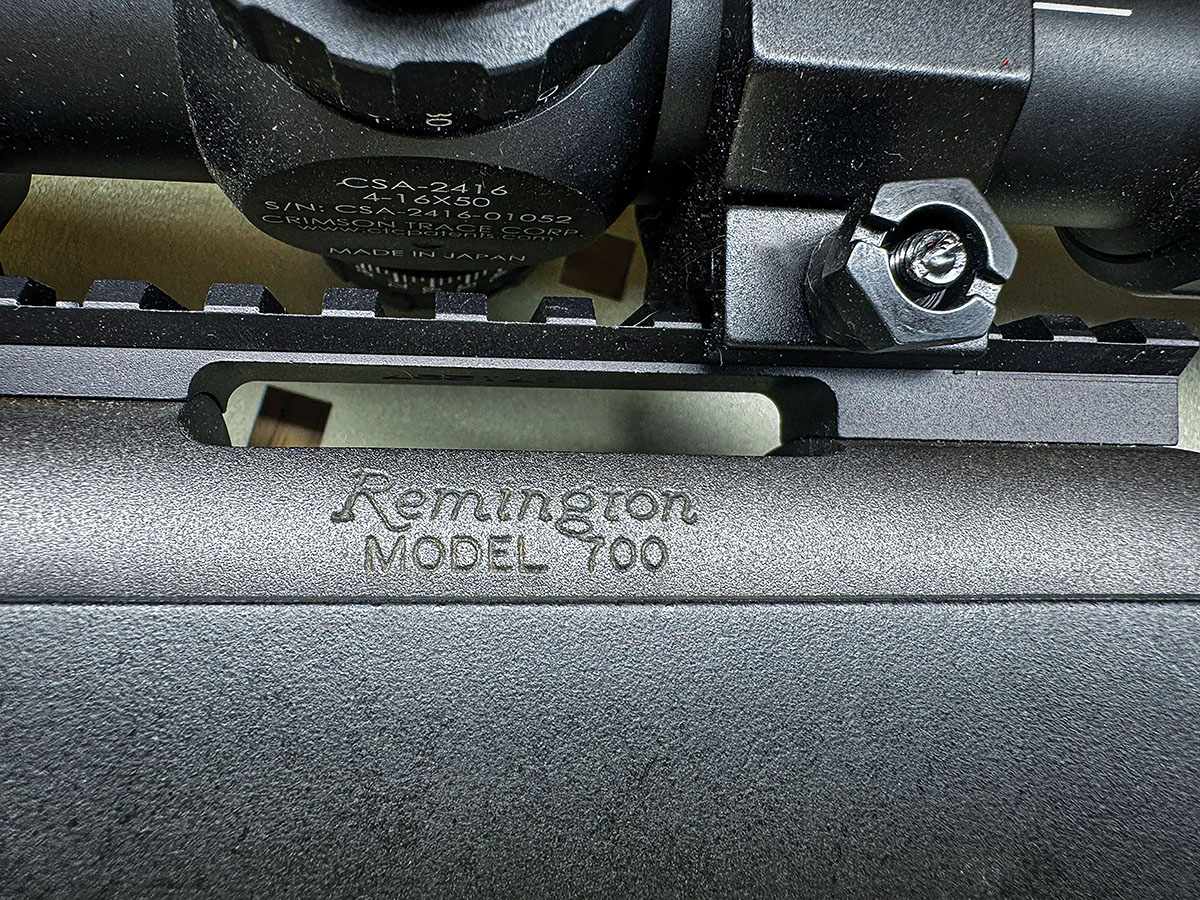
The 221 Fireball came first, and as wildcats often do, it was necked down to shoot a 17-caliber projectile. With the 221 Fireball being a success, Remington Arms introduced the 17 Fireball in 2007 in the Model 700 and Model Seven. The Model 700 was offered in two versions: the SPS Varmint (the rifle tested in this article) and the stainless VSSFII with a 26-inch heavy-contour fluted barrel. The Model Seven was offered as a sporter CDL in a wood stock. I am not sure how rare the Model Sevens are, but I have only ever seen one, and it was a very nice rifle that shot well.
The Model Seven is excellent for packing around in the woods or while coyote hunting on the plains. It weighs six and a half pounds without an optic. By comparison, the 700 SPS Varmint is heavier and suited for bench shooting in a dog town. That rifle weighs eight and a half pounds without an optic and has a 26-inch, heavy-contour barrel. The downside to the SPS is the hinged floorplate magazine. I prefer a detachable magazine when bench or prone shooting.
Remington brought the 17 Fireball to life to compete with the popular 17 Mach IV wildcat. The two are very similar, both based on the 221 Fireball, but they do have minor dimensional differences. The 17 Mach IV has a slightly longer and narrower case body along with a longer neck. Both are very
close ballistically.
Remington introduced the 17 Fireball to the Sporting Arms and Ammunition Manufacturer’s
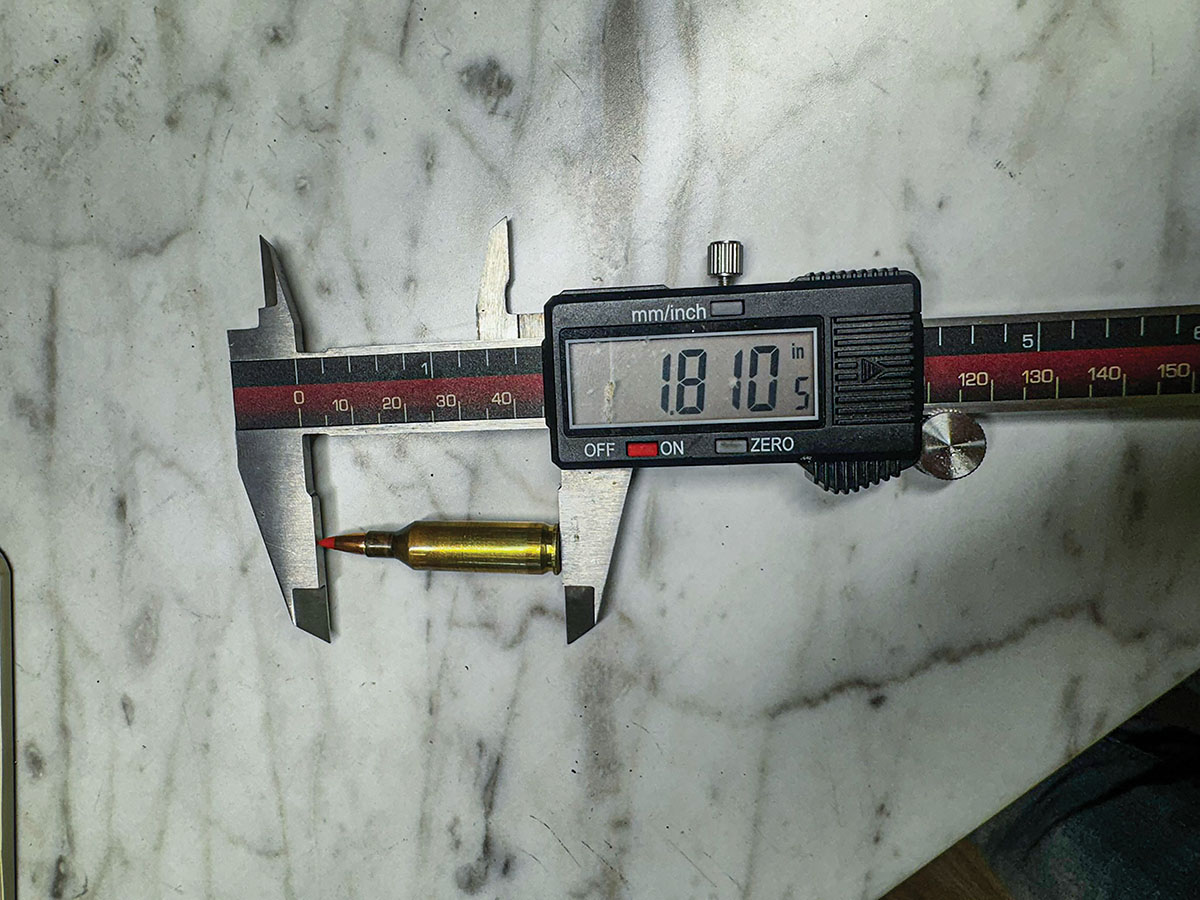
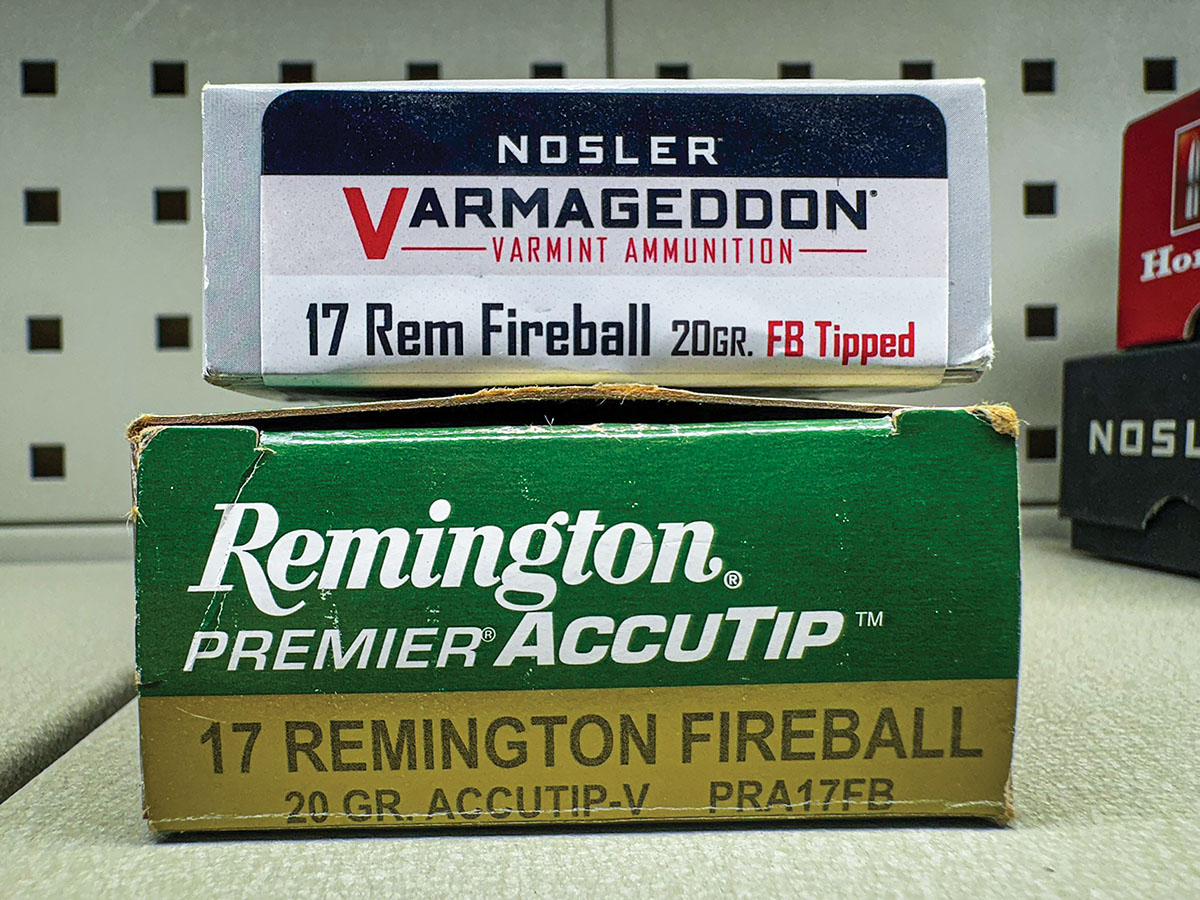
Institute (SAAMI), making factory ammunition available for those who do not handload. Remington offers the Premier Varmint 20-grain AccuTip Polymer Tip. Another popular option is Nosler’s 20-grain Varmageddon Polymer Tip. HSM also makes two loads, but as of this article, they were out of stock everywhere I looked. HSM loads the Varmint Gold 25-grain Berger Varmint Jacketed Hollow Point and the 20-grain Hornady V-Max Polymer Tip. While I was not able to test the HSM options, I did handload Hornady’s 20-grain V-MAX.
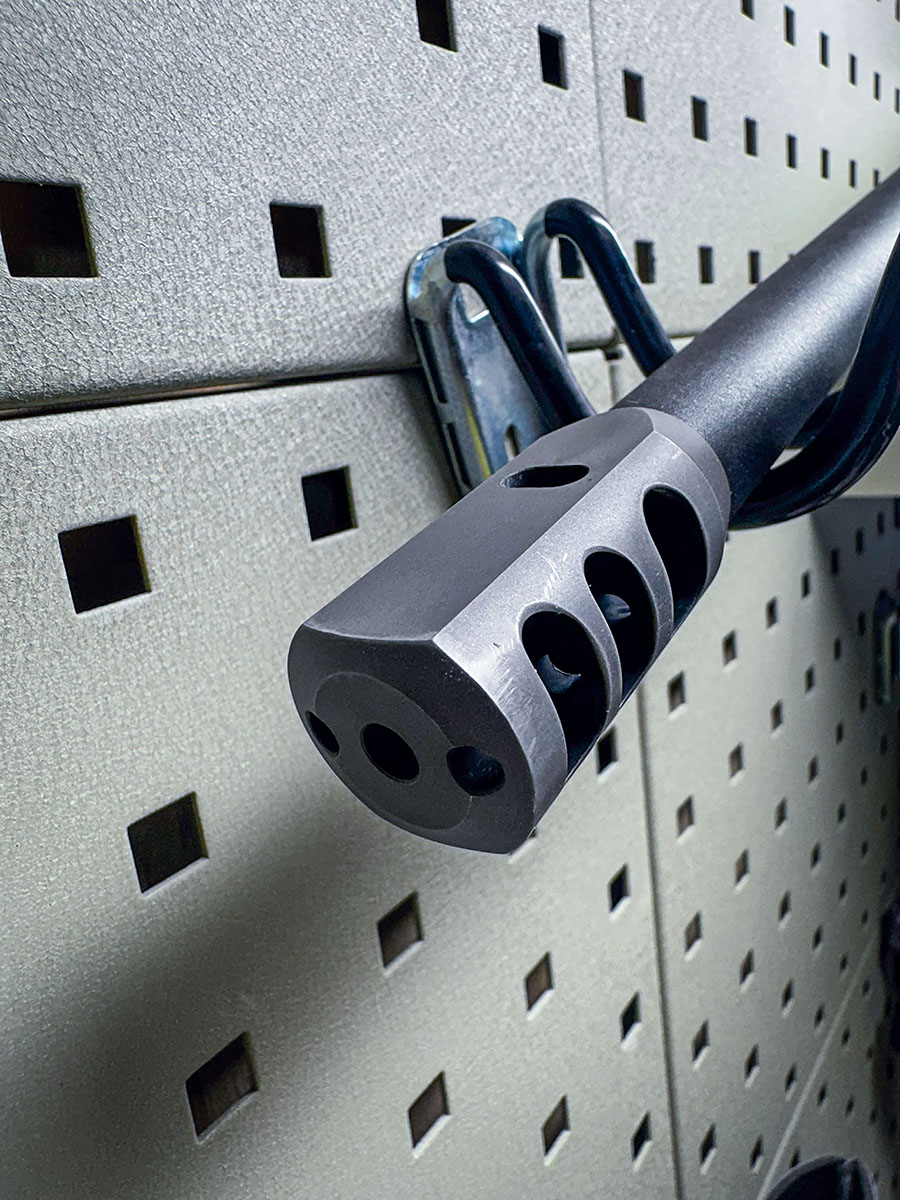
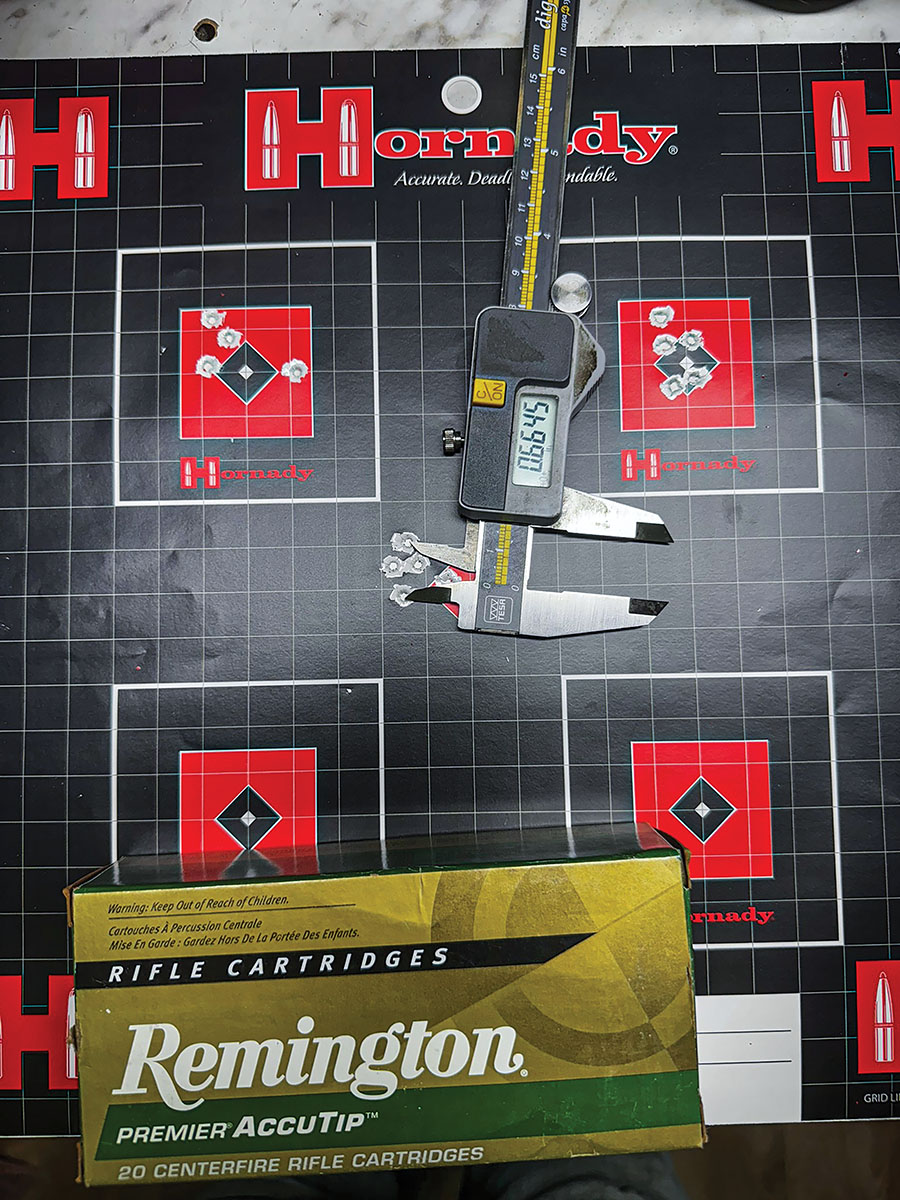
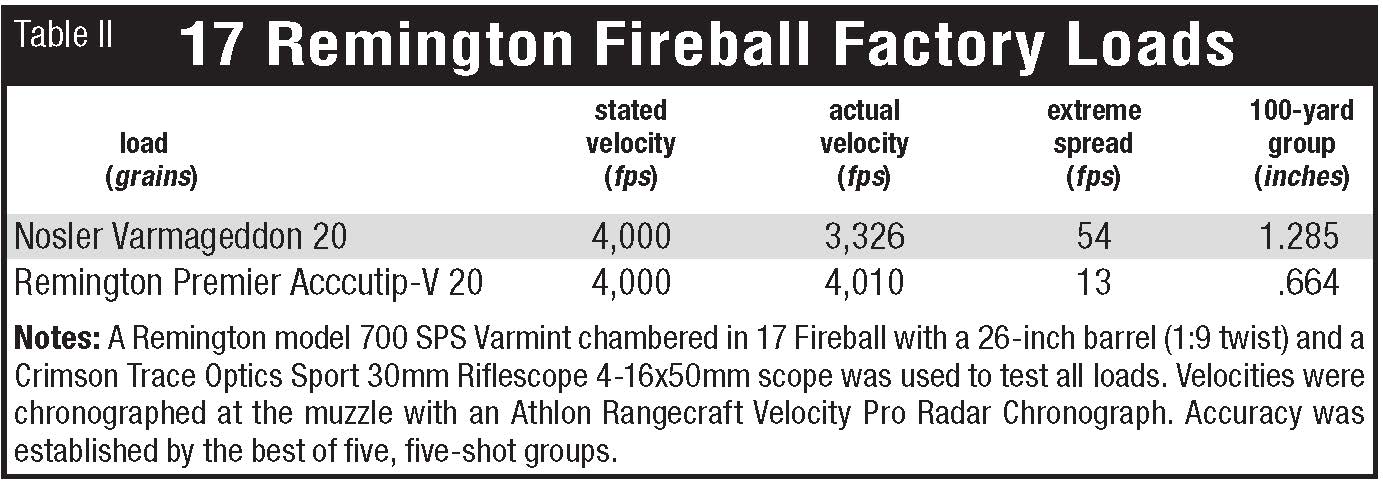
While testing these two factory loads, the Remington stood out significantly as the best performer in my rifle. I was limited on how many rounds I had to test, so I fired three, five-shot groups. The first group measured 0.664 inch, the second 1.07 inches and the third 0.834 inch for an average of 0.856 inch, which is excellent for factory ammunition. The Remington AccuTip bullet has always shot well in my other tests, so whenever it is available, I make sure to test it.
The Nosler 20-grain Varmageddon Polymer Tip was less impressive in group size, standard deviation (SD)
and extreme spread (ES). I fired four, five-shot groups. The first measured 1.285 inches, the second 1.409 inches, the third 1.590 inches and the fourth 1.665 inches for an average of 1.487 inches. This is not a result I would settle on, so it was good to have two options on the factory side.
The 17 Fireball is known for being fast and flat, which is exactly what you want in a varmint round. It does face competition from the 17 Hornet, 17 Remington and 17 HMR, all of which are excellent cartridges.
The 17 Hornet fires lighter bullets, such as the 15.5-grain Hornady NTX, at about 3,900 feet per second (fps) and can go up to a 25-grain bullet at around 3,200 fps. It runs a few hundred feet per second slower than the 17 Fireball, but allows lighter bullets that cause less damage on small game, helping to preserve pelts.
The 17 Remington fires the same bullet weights as the 17 Fireball but at about 200 fps faster. For some reason, it never gained much popularity. Barrel life is shorter, and it tends to foul more quickly.
The 17 HMR is the most popular of the three among varmint hunters. Ammunition is easy to find online or at local gun shops and is relatively inexpensive. Its limitation is being a rimfire cartridge. Once fired, the brass is not reloadable, but for non-handloaders, it is still a great choice. The 17
HMR pushes a 17-grain bullet at about 2,600 fps and a 20-grain bullet at about 2,300 fps. While slower and less flat shooting, it is highly effective inside 75 yards, though wind drift becomes a greater factor past that distance.
This is where the 17 Remington Fireball stands out as a great, all-around, 17-caliber cartridge. It offers a good selection of 20- and 25-grain bullets with excellent speed, without burning throats or heating barrels too quickly. In my hunting experience, the 17 Fireball performs well on everything from ground squirrels to coyotes with proper shot placement. For me, it is the ultimate prairie dog round. It offers the speed to make up for the lower ballistic coefficient, light recoil and a lower cost per shot than most other cartridges. The main drawback is that it can be hard to spot misses with such a lightweight bullet.
While factory ammunition is solid, the 17 Fireball really shines with handloading. Many excellent bullets are available, and handloading allows you to tune loads specifically to your rifle. With factory ammunition, you buy a box and hope your rifle likes it.
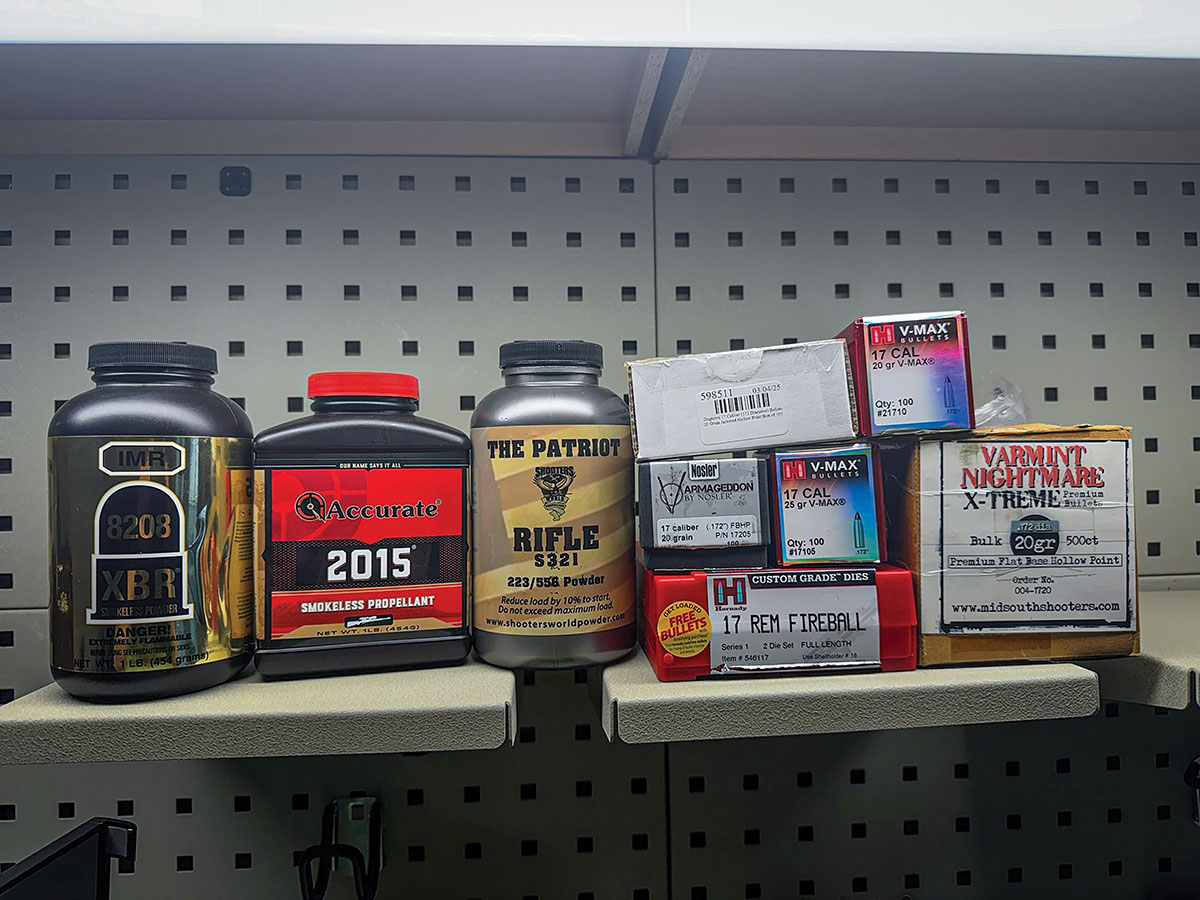
To find what my rifle preferred, I tested five different bullets and three powders. One of the powders was Shooters World’s new The Patriot Rifle powder, which is very close to H-335 in
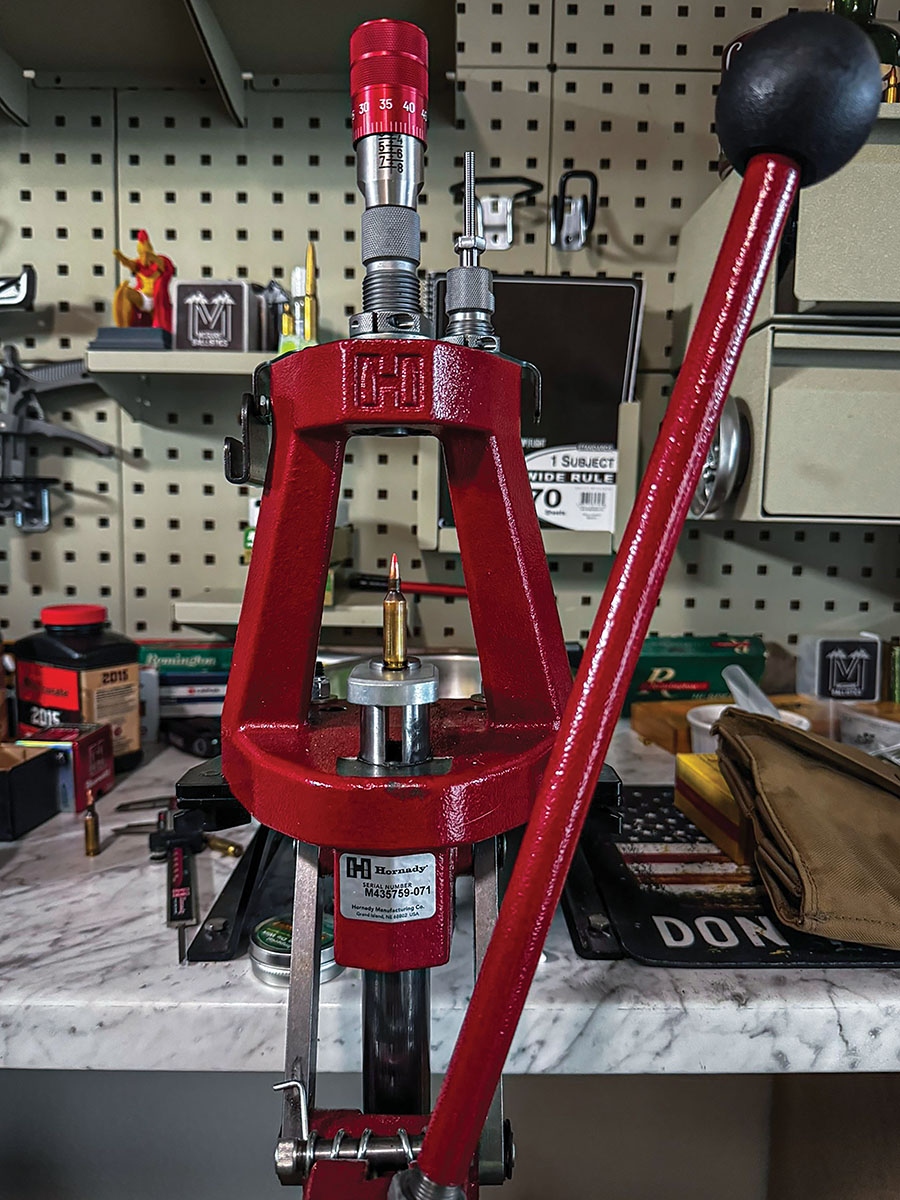
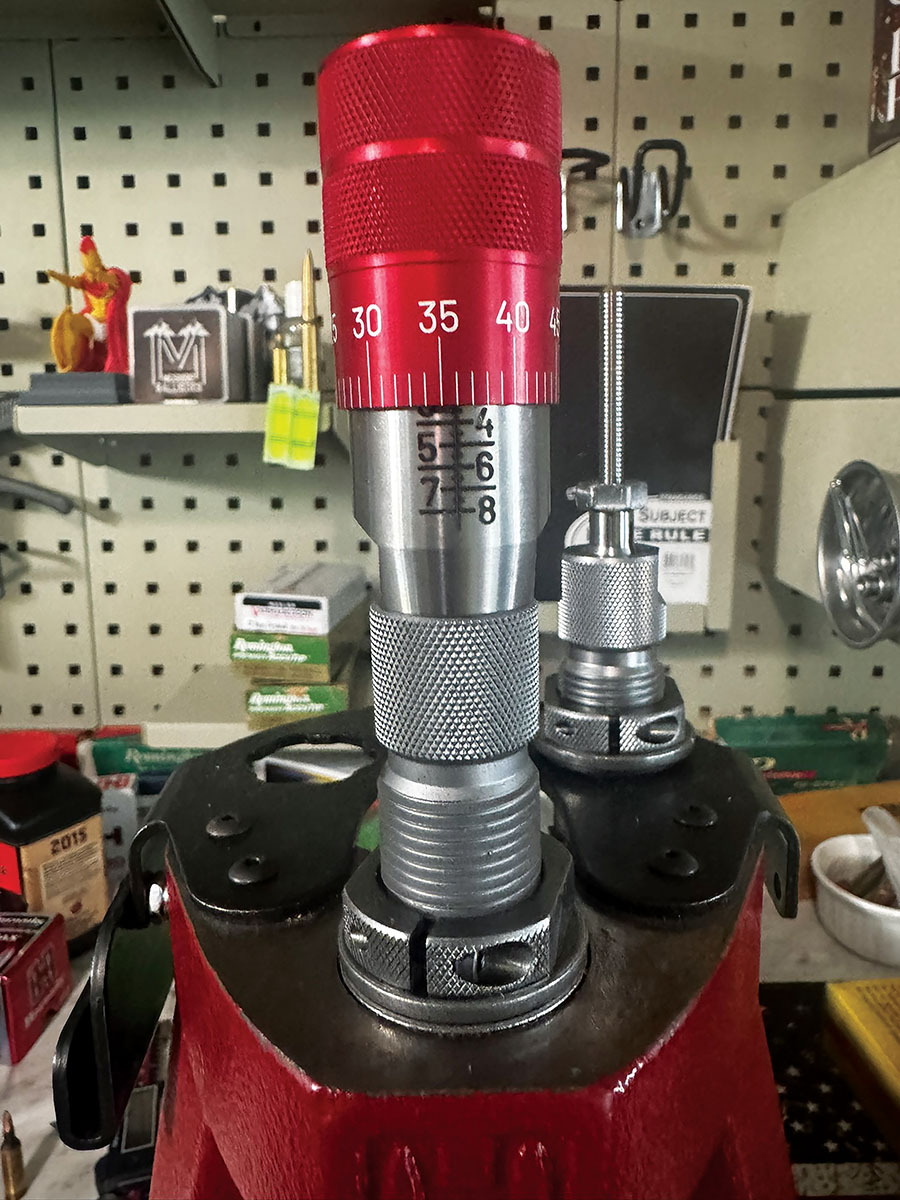
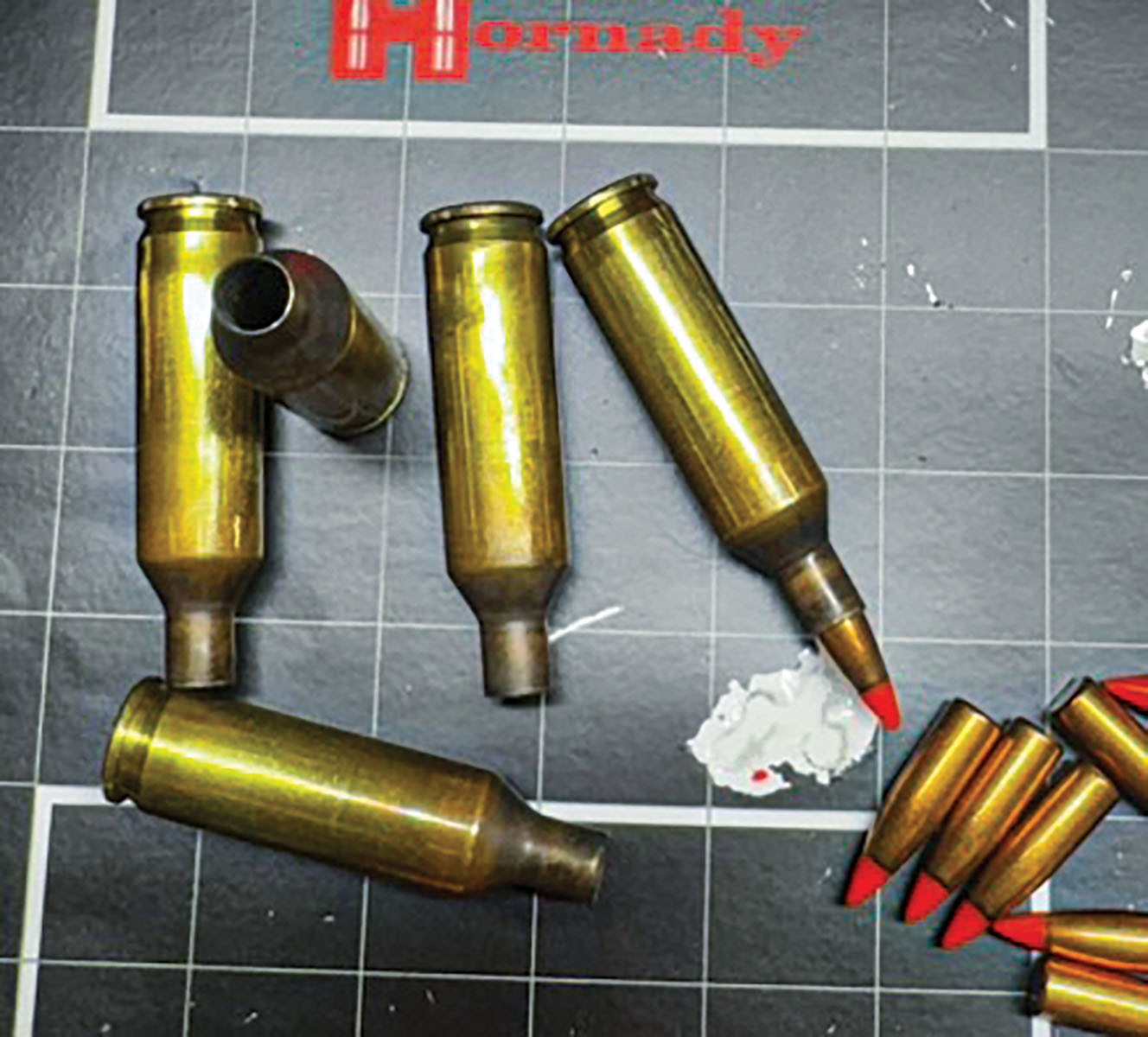
Handloading components included three-times-fired Remington brass and CCI 200 small rifle primers. All handloads were assembled on the Hornady Iron Press, with powder charges dispensed by the Hornady Auto Charge Pro Powder Measure accurate to 0.1 grain. The dies used were Hornady Custom Grade New Dimension with the Click Adjust Micrometer Seating Stem. All brass was annealed on the AMP machine using pilot 02 and analyze code 002D.
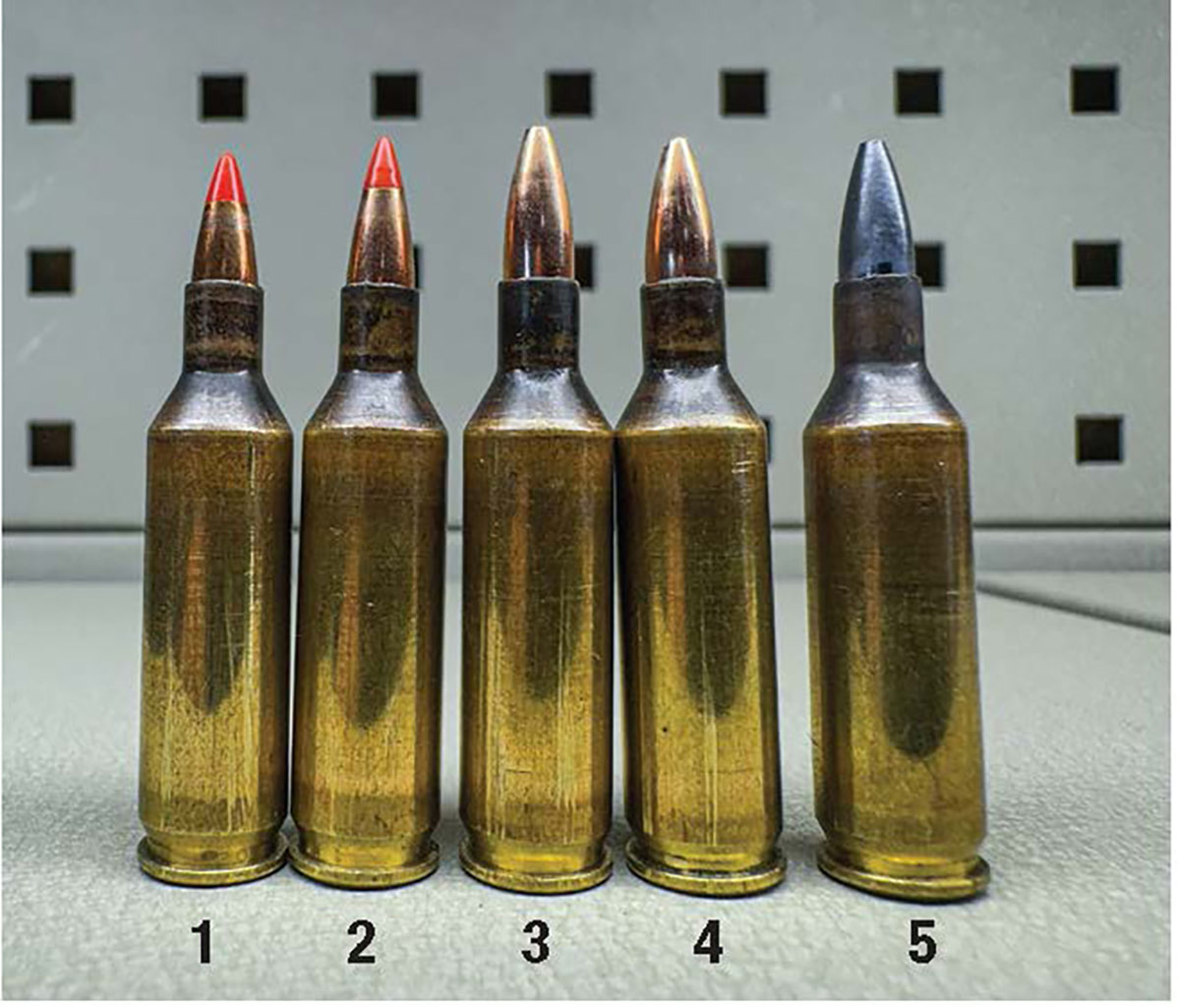
Powders tested were Shooters World The Patriot, IMR-8208 XBR and Accurate 2015. Bullets tested were Hornady 20-grain V-MAX, Hornady 25-grain V-MAX, Nosler 20-grain Varmageddon, Varmint Nightmare X-Treme 20-grain Premium Flat Base Hollow Point and Dogtown 20-grain Jacketed Hollow Point.
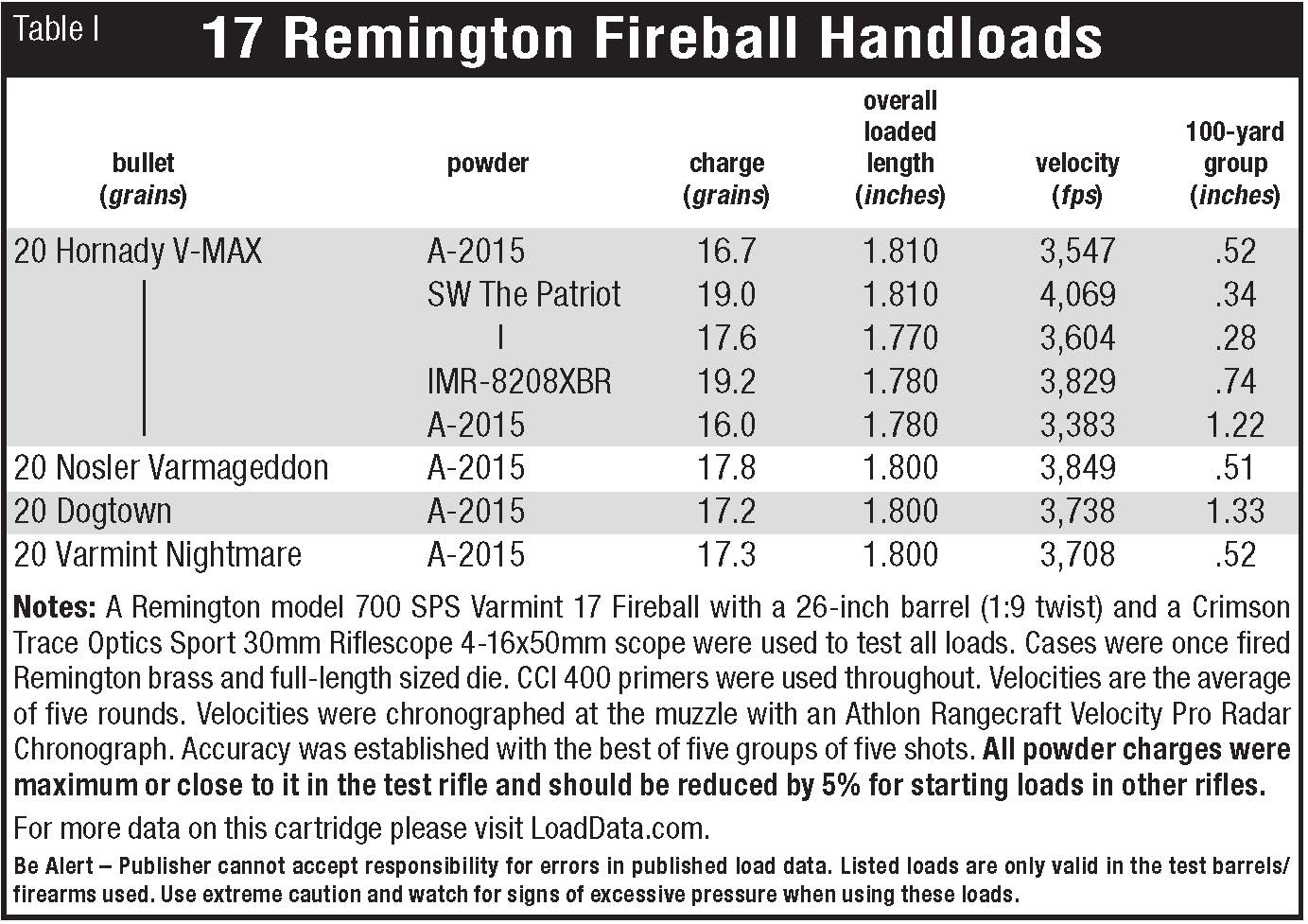
The top-performing load was Hornady’s 25-grain V-MAX with 17.6 grains of The Patriot Rifle
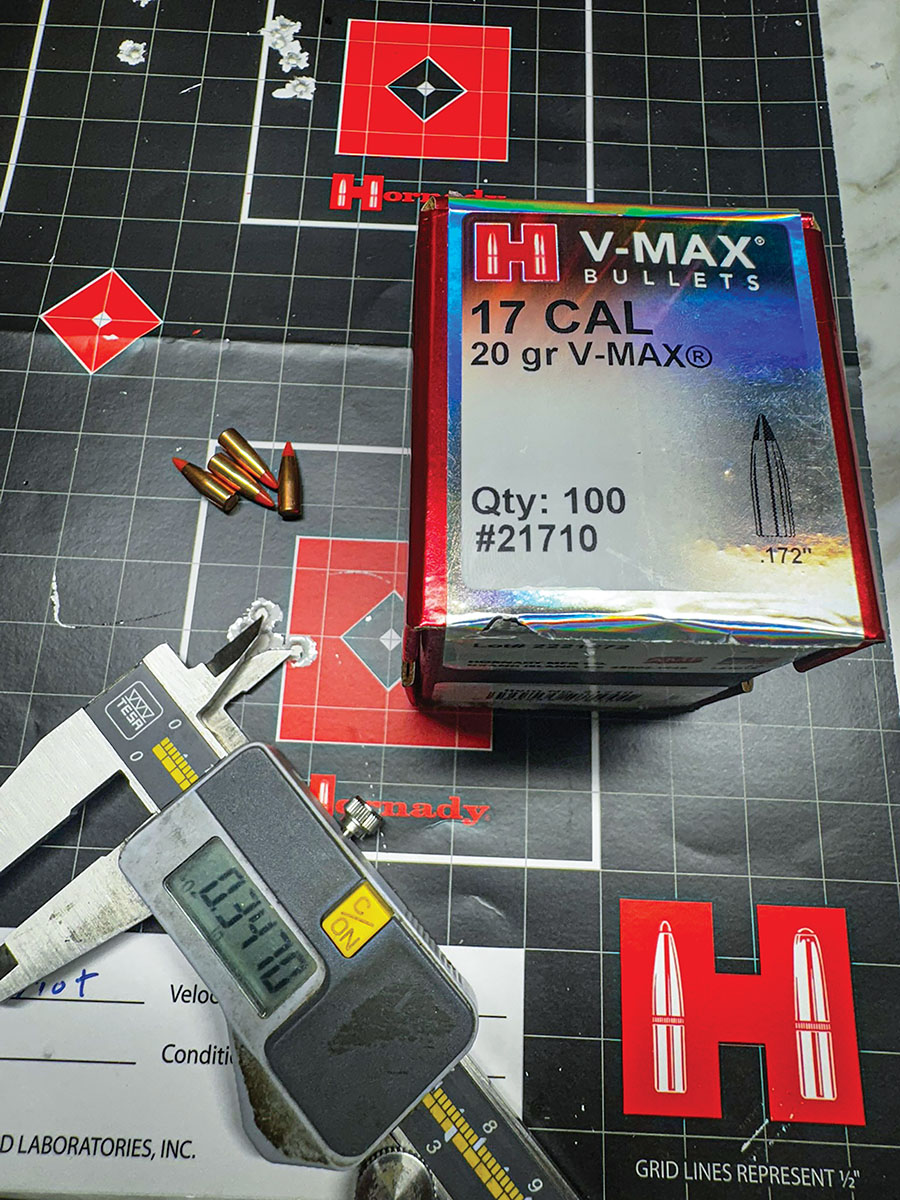
powder. This load produced a five-shot group of 0.284 inch, an average of 3,604 fps, SD of 8.3, ES of 21 and a G1 BC of 0.230, measured with an Athlon Rangecraft Velocity Pro radar chronograph.
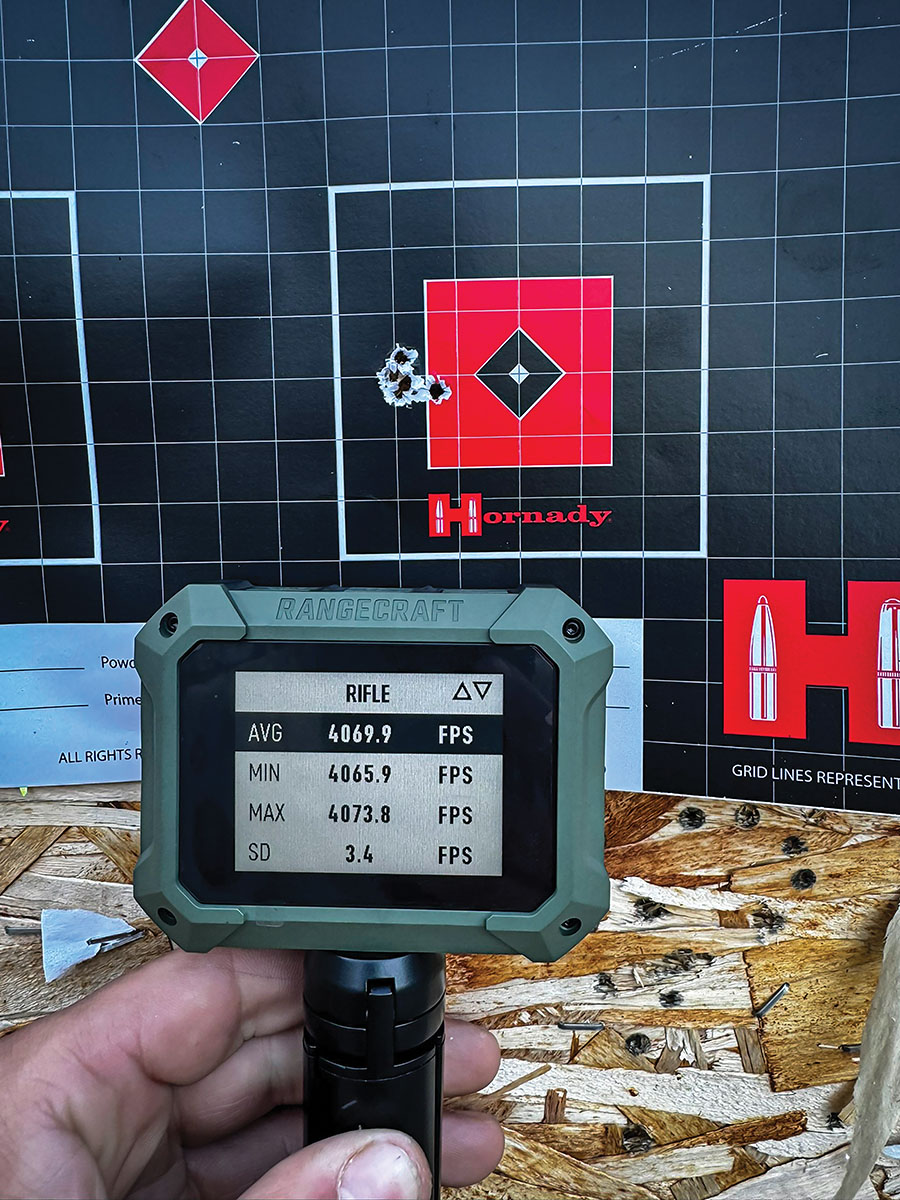
The second-best load was Hornady’s 20-grain V-MAX with 19.0 grains of The Patriot Rifle. This load grouped 0.347 inch, averaged 4,069 fps, with an SD of 3.4 and ES of 9. The G1 BC measured 0.185.
The third was Nosler’s 20-grain Varmageddon with 17.8 grains of Accurate 2015. It grouped 0.515 inch at 3,849 fps, with an SD of 10.1 and ES of 30. The G1 BC was 0.183.
The fourth was Varmint Nightmare X-Treme’s 20-grain hollow point with 17.3 grains of Accurate 2015. It grouped 0.523 inch at 3,708 fps, with an SD of 16.9 and ES of 46.9. The BC was unknown.
The fifth was Hornady’s 25-grain V-Max with 19.2 grains of IMR-8208 XBR. It grouped 0.743 inch at 3,829 fps, with an SD of 5.2 and ES of 13. The BC was 0.230.
These results show that the 17 Fireball is very handloader friendly and easy to tune. Ballistically, let’s take the top load above and apply it at 230 yards in a 5-mph right-to-left wind. Using the Hornady 4DOF app, the adjustment is up 0.43 MOA and right 1.19 MOA. At 500 yards, the same load requires 7.23 MOA up and 3.0 MOA right, where the low BC begins to show.
For comparison, the 223 Remington with Hornady 53-grain V-Max Superformance (3,465 fps, G1 BC 0.290) requires 1.06 MOA up and 0.95 MOA right at 230 yards. At 500 yards, it requires 7.31 MOA up and 2.28 MOA right. The elevation is nearly identical, but the wind drift difference of 0.72 MOA is significant.
The 17 Remington Fireball holds its own in the varmint hunting world.