20 Nosler
Handlaods for a New Pistol
feature By: R.H. VanDenburg, Jr. | April, 19
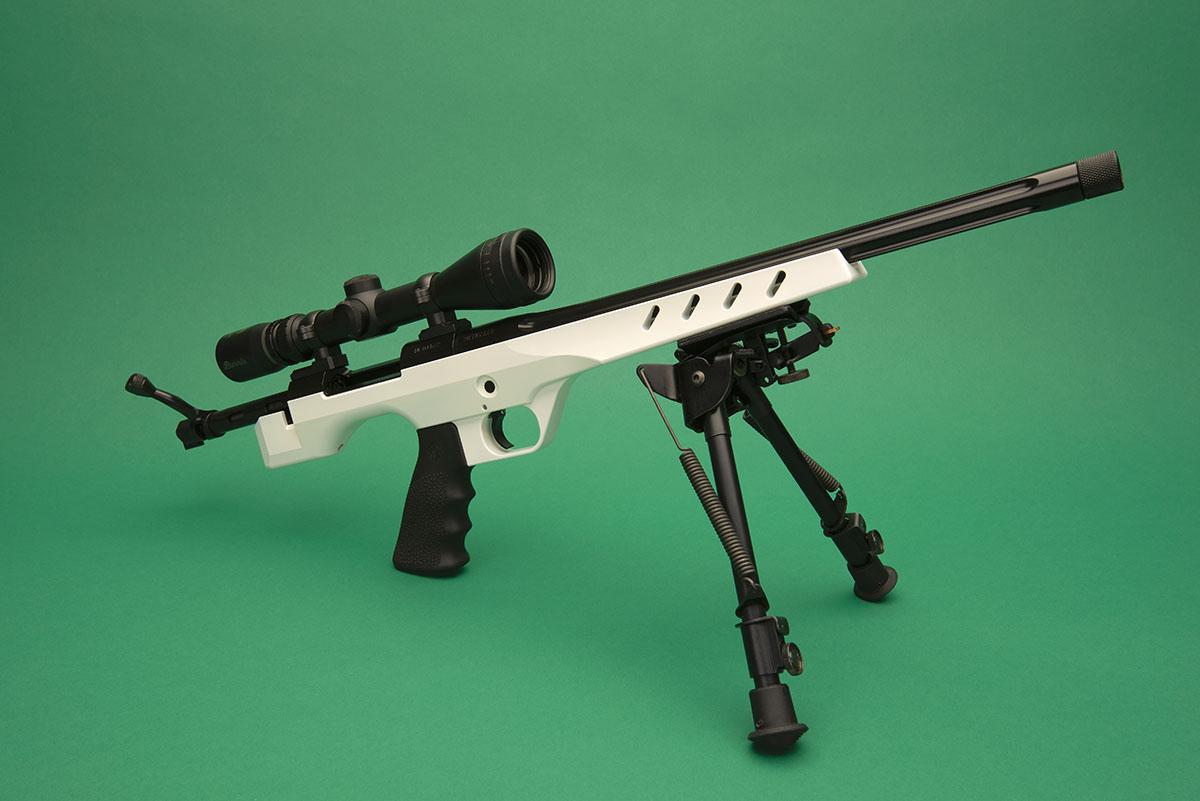
Discussions with Zach Waterman, Nosler’s director of public relations, led to my receiving a Nosler Model 48 Nosler Custom Handgun (NCH) chambered for the new 20 Nosler cartridge.
Let’s start with the gun. The Model 48NCH is a bolt-action, single-shot pistol with a 15-inch barrel based on the Model 48 Nosler bolt-action rifle. The barrel is threaded at the muzzle for mounting a suppressor or muzzle break. The test sample came with a protective knurled cap covering the barrel threads. The barrel is fluted with six, deep, longitudinal flutes about 13 inches in length. Internally, there are six lands and grooves in a right-hand, 1:12 rifling twist. The bolt has six shallow flutes. The barrel is free-floated and mounted to a stock made of 6061-T6 aluminum. The stock is a mid-grip design. The grip itself is from Hogue, is easily removed and can be replaced with others from the same manufacturer.
Near the stock forend tip is a sling swivel stud for mounting a bipod or sling swivel. Actually, there are three threaded holes on the bottom of the forend to provide some latitude in mounting accessories. There is also a threaded hole on the left rear of the stock for mounting a sling swivel stud so a sling can be attached.
The pistol has no sights. A long eye-relief scope is anticipated, and the receiver is contoured to accept Remington Model 700 scope bases. The test sample came equipped with a Burris 3-12x 32mm handgun scope mounted with Leupold rings and bases. Weight without sights or accessories is about 6.5 pounds; with scope and bipod it tips the scales at about 8 pounds.
Options abound for barrel length and fluting. All surfaces are CERAKOTE coated with several color options. My barrel and receiver are black, and the stock is white. The Hogue grip is black. The handbook accompanying the pistol has a color photo on the cover of a pistol with a light gray barrel and receiver, and a blue stock. A pistol in another publication shows a dark gray receiver, barrel and stock with a muzzle break attached. The barrel is unfluted.
I’m not certain of the list of available chamberings, or even if such a list has been finalized, but there are several options for varmint and big-game hunting up to the 308 Winchester. All in all, the pistol is impressive. As to be expected from Nosler, the action is blue-printed and the barrel is hand-lapped, as are the two locking lugs. Given that most serious handgun hunters have gravitated to a rear-grip design, I was a bit surprised by the mid-grip choice but, at least in a varmint configuration, it works well. I did ask Mike Lake if a rear-grip configuration was possible, and he said yes, but as far as I know that is not an option.
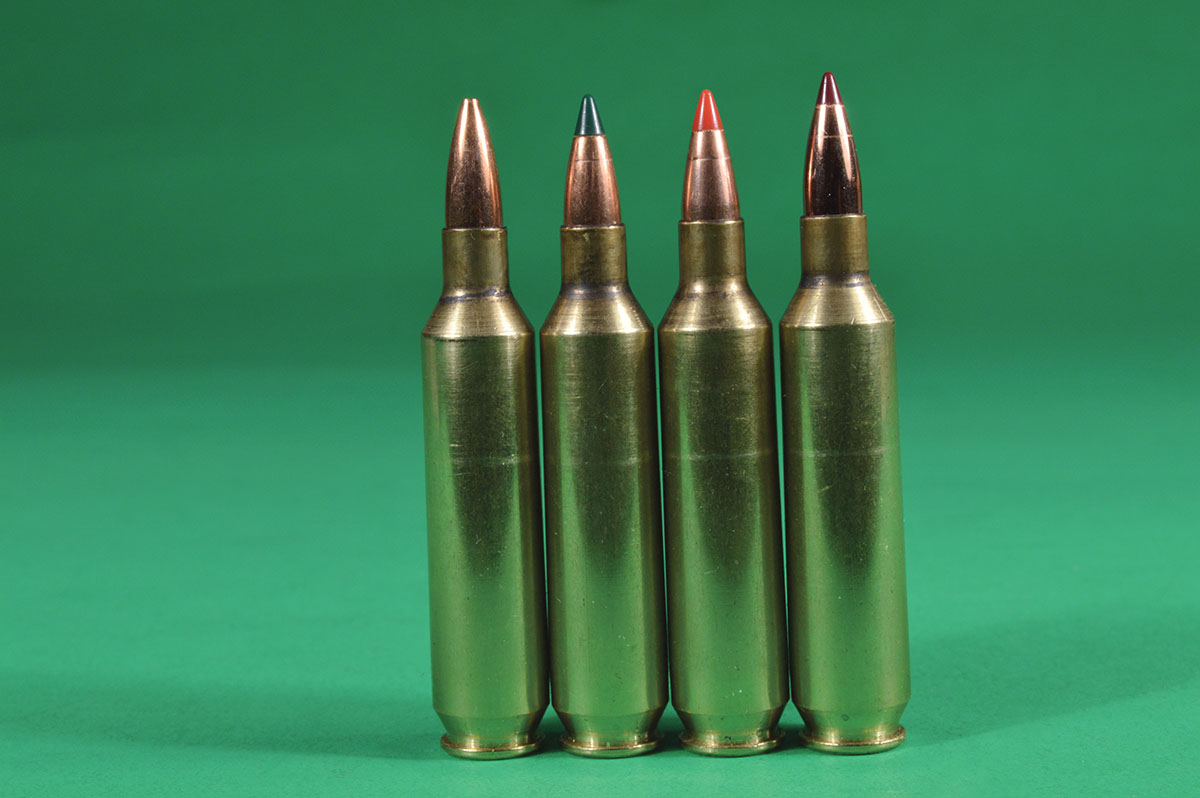
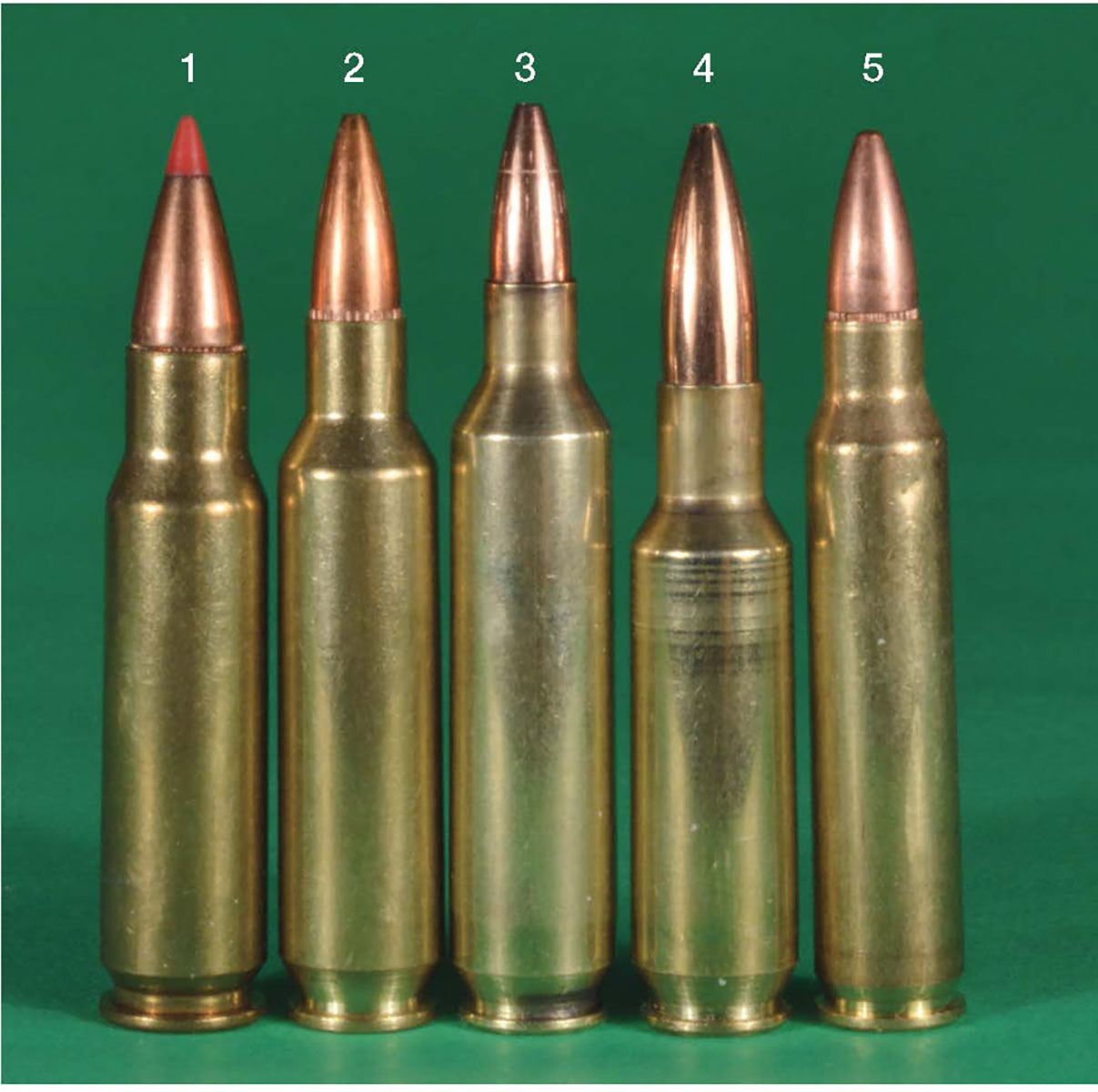
Now to the cartridge. To step back a bit, in 2017 Nosler introduced the 22 Nosler cartridge designed for use in an AR-15. This imposed certain restrictions, calling for a case head the same diameter as the 223 Remington; an overall cartridge length of 2.260 inches and a pressure limitation of 55,000 psi. To justify its existence, however, it had to produce considerably more velocity than the 223. To accomplish that, case volume needed to be increased. The result was a rebated rim cartridge with the body diameter of the 6.8 Remington SPC, a 30-degree shoulder angle, a small rifle primer and a case length of 1.760 inches. When chambered in an AR, a standard 6.8 Remington SPC magazine is used. The cartridge has been offered in several manufacturers’ AR-15s. Nosler also offers the cartridge in its Model 48 bolt-action rifle.
In 2018, Nosler introduced the 24 Nosler. It was derived from the 22 Nosler, retaining the rebated body design and 30-degree shoulder angle but with the shoulder set back. Overall case length was 1.600 inches. Overall loaded length remained 2.260 inches, and the maximum average pressure stayed at 55,000 psi. So far, the 24 Nosler is available only in bolt-action rifles.
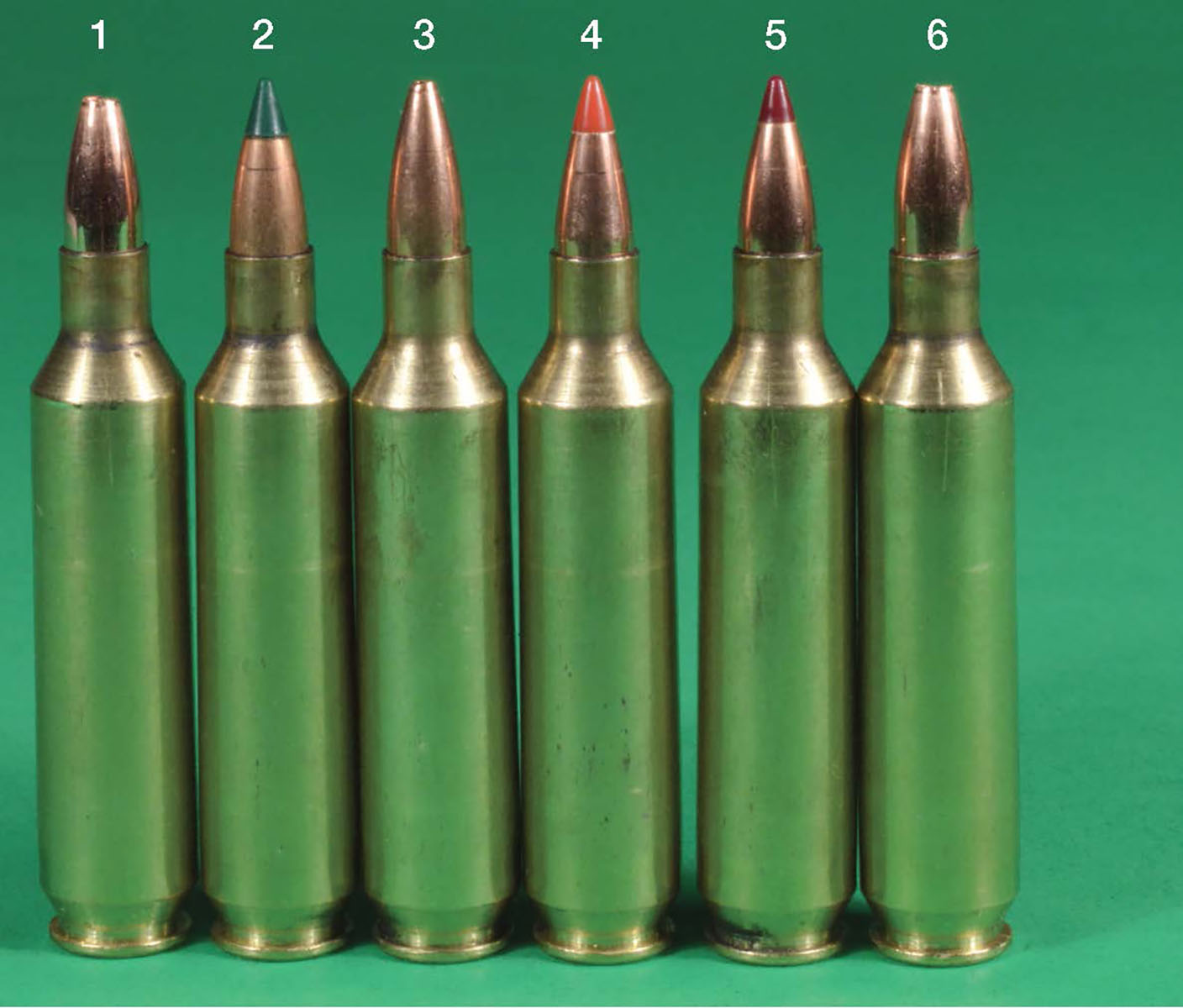
The 20 Nosler cannot be made from either the 22 or 24 Nosler cases. It is longer with an overall case length of 1.850 inches. The 30-degree shoulder angle is retained, as is the rebated rim design with its 223 case head diameter and the 6.8 Remington SPC body diameter. Case body length is the longest of the three, and case water capacity with a bullet seated varies from 37.6 grains with a 32-grain bullet to 36.0 grains with a 40-grain bullet, both seated to a cartridge overall length of 2.260 inches. By comparison, the 204 Ruger holds 30.6 grains and 29.9 grains, respectively. The maximum average pressure remains 55,000 psi.
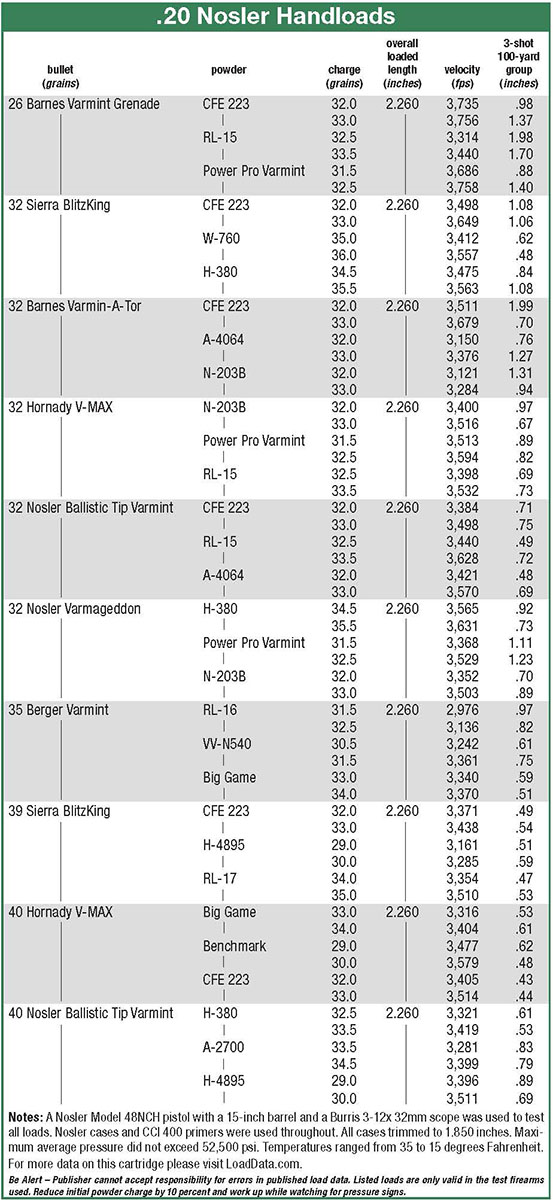
For each powder, Nosler listed three or four charges separated by one grain. Data was developed in a 24-inch test barrel. What the company identifies as “Load Max” is actually 95 percent of the maximum average pressure for the cartridge, or 52,500 psi. If the higher charge, or charges, developed more than 52,500 psi, the “Charge to Yield Load Max” was ascertained. The “Rounded Max Charge” was then listed along with its velocity and load density.
In my tests, I stayed with the Nosler recommended “Load Max” as my maximum and tried one or more lesser charges as well. In some instances, especially with spherical powders, I stayed away from maximum loads with load densities that exceeded 100 percent. Because 55,000 psi is not particularly high for modern cartridges or powders and 52,500 psi is even lower, it came as no surprise that the best accuracy was usually obtained with the heaviest charge weight. Based on my experience with other .20-caliber cartridges, I expected the best accuracy to come from the heavier bullet weights. It proved to be true here, too, with the 39- and 40-grain bullets producing excellent groups.
With Nosler’s 32- and 40-grain bullet data as a guide, I was in good shape with bullets of similar weight from other manufacturers, but beyond that I was on my own. All things considered, this did not present a problem. Not wishing to develop barrel-stretching loads, I followed Nosler’s 95 percent guidelines as much as I could.
The first bullet used was a Barnes 26-grain Varmint Grenade. This is a flatbase, hollowpoint bullet with a copper/tin powdered metal core. I did not expect top accuracy from such a light bullet, nor did I get it, but this was the first bullet from the new barrel and my first day at the range with the new gun. Still, there were some sub-one-inch groups. I used Nosler’s 32-grain load data. Perhaps I could have used a bit more powder in each case, but the 32-grain Nosler data was developed with a boat-tail bullet, and this one was a flatbase, so a bit of caution was exercised.
Next were a host of 32-grain bullets – five in all. The Sierra 32-grain BlitzKing is a polymer-tipped, flatbase, lead-core bullet. Hornady’s 32-grain V-MAX is also a flatbase, polymer-tipped, lead-core bullet. The Nosler 32-grain Ballistic Tip is a polymer-tipped boat-tail, lead-core design, and the Nosler 32-grain Varmageddon is a traditional flatbase, lead-core bullet with a wide hollowpoint. All performed well, with perhaps the Hornady V-MAX and Nosler Ballistic Tip taking top honors.
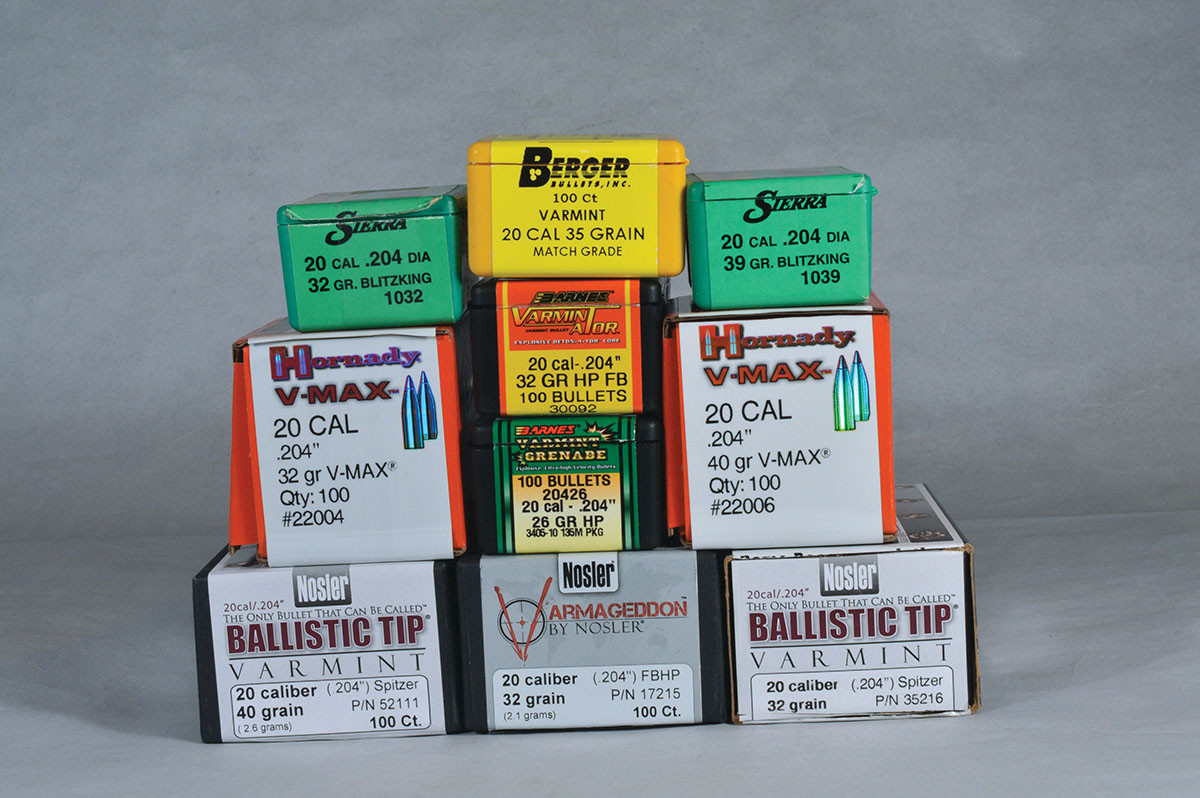
Berger Bullets contributed a 35-grain Varmint hollowpoint bullet with a flat base. The Sierra 39-grain BlitzKing is a tipped boat-tail lead-core bullet I’ve used in other .20-caliber cartridges. It is a very accurate bullet.
A pair of 40-grain bullets rounded out the selection. The Hornady 40-grain V-MAX has a boat-tail, lead core and a polymer tip, as does the Nosler 40-grain Ballistic Tip. While all of these bullets were used in this series of tests, I have used most of them in other .20-caliber cartridges on varmints. None of them ever let me down. At that, I still prefer the heavier bullet weights for improved consistency, smaller extreme velocity spreads and better accuracy.
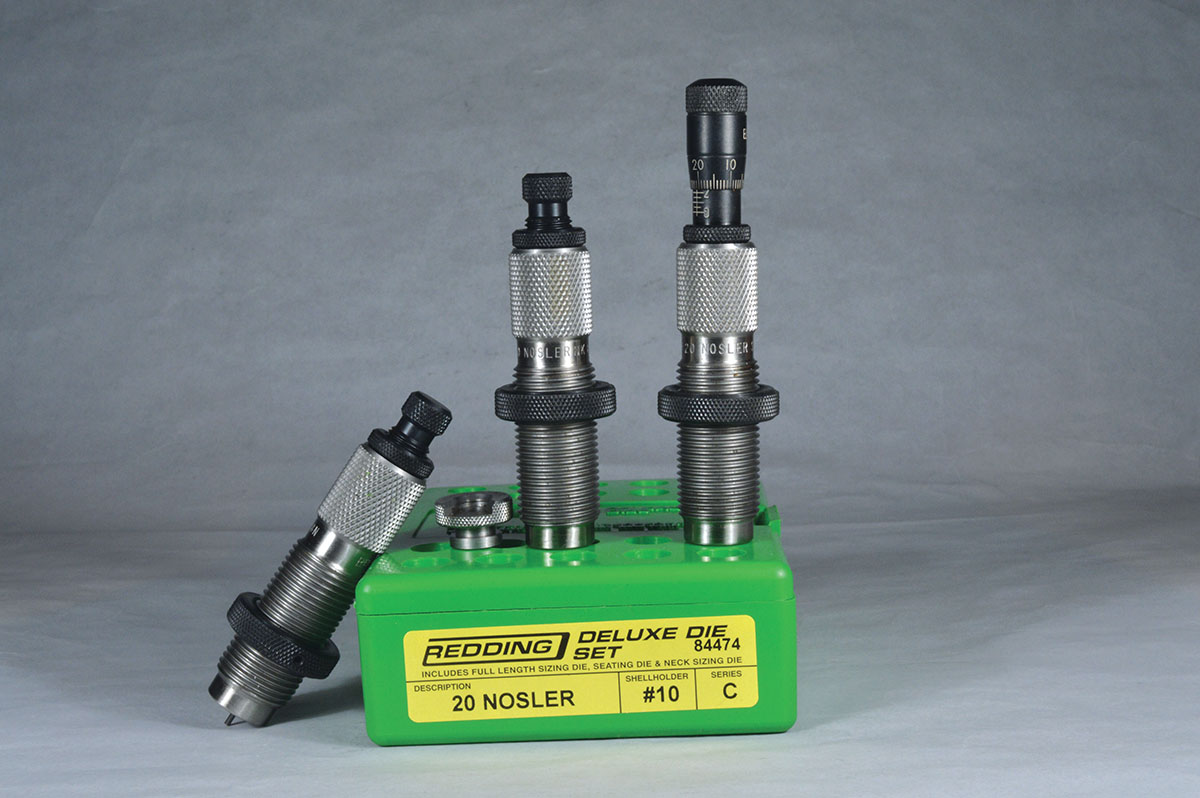
Reloading was done with a Redding Deluxe die set which included a full-length sizing die, a neck-sizing die and a bullet-seating die. An optional micrometer-adjustable seating stem was added for improved repeatability and ease of use. All powder charges were weighed. All cases were full-length sized to begin with and neck sized only for all subsequent reloading.
When shooting, everything went without a hitch. The pistol was fired from sandbags. (The Harris bipod didn’t arrive until after the range work was completed.) As would be expected from a gun of this weight, recoil was very mild, but there was some twisting in the hand which prevented me from seeing bullets hit. In spite of the barrel fluting and some very cold weather, the barrel got quite hot under prolonged firing.
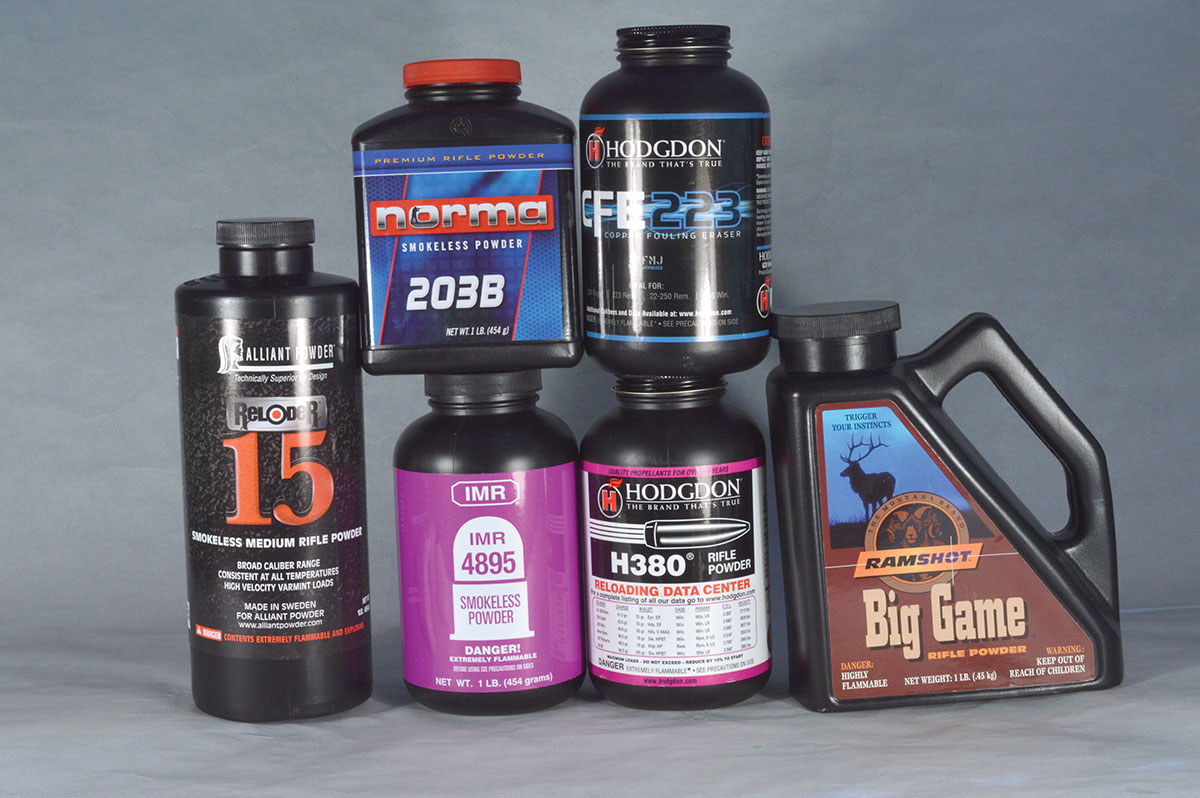
Of the 18 powders Nosler included in its load data, I worked with 12. While I made no attempt to use each powder with each bullet – nor did Nosler – some order seemed to come from my efforts. The powder that produced the most consistent results was Hodgdon CFE 223. Just behind it was Hodgdon H-380 followed closely by Alliant’s RL-15, Norma 203B, Ramshot Big Game and Hodgdon 4895.
Breaking them down further, with 26- to 32-grain bullets, CFE 223, RL-15 and N-203B get the nod; for 35- to 40-grain bullets, CFE 223, Big Game and H-4895 proved best in my limited testing. To this I must add that I kept all cartridge overall lengths to 2.260 inches – as did Nosler. Some minor adjustments to this length might improve performance.
In the end, I have to conclude the 20 Nosler cartridge and the Nosler Model 48 NCH pistol are fine additions to our varmint hunting options.