223 Remington Ackley Improved
Loads for a Classic Wildcat
feature By: Stan Trzoniec | April, 19
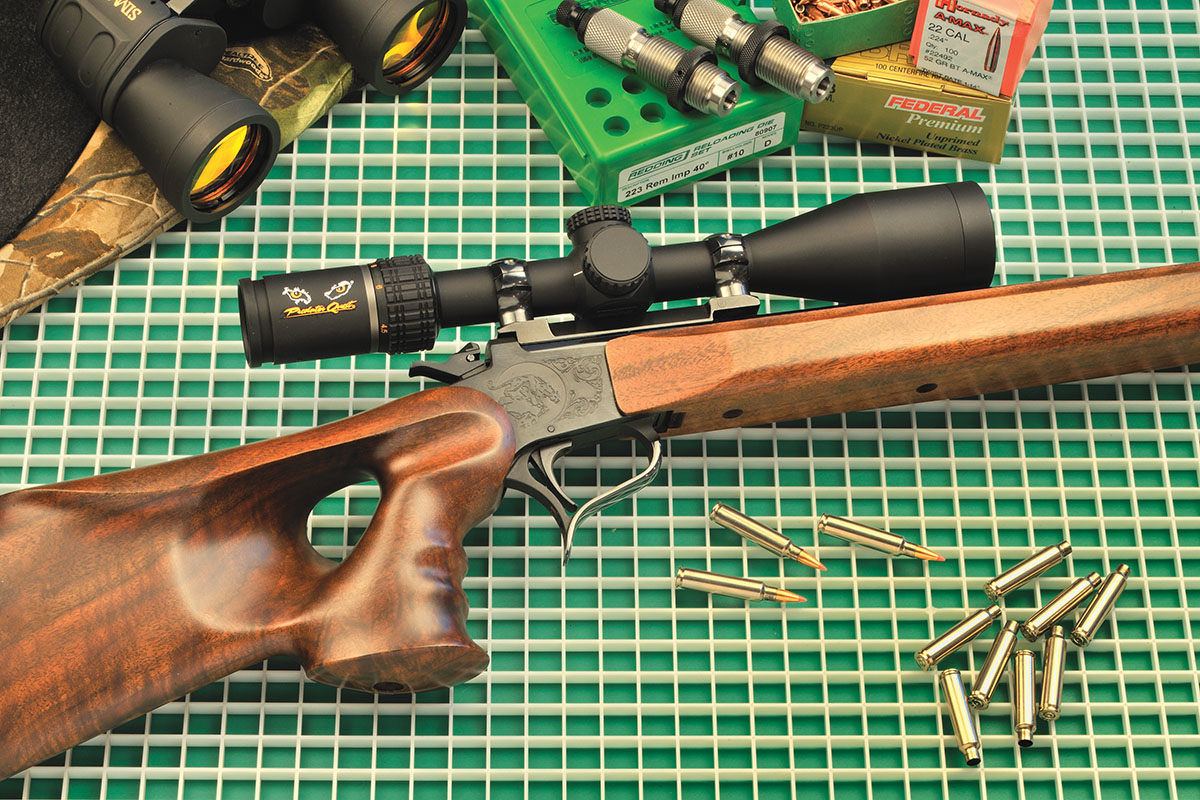
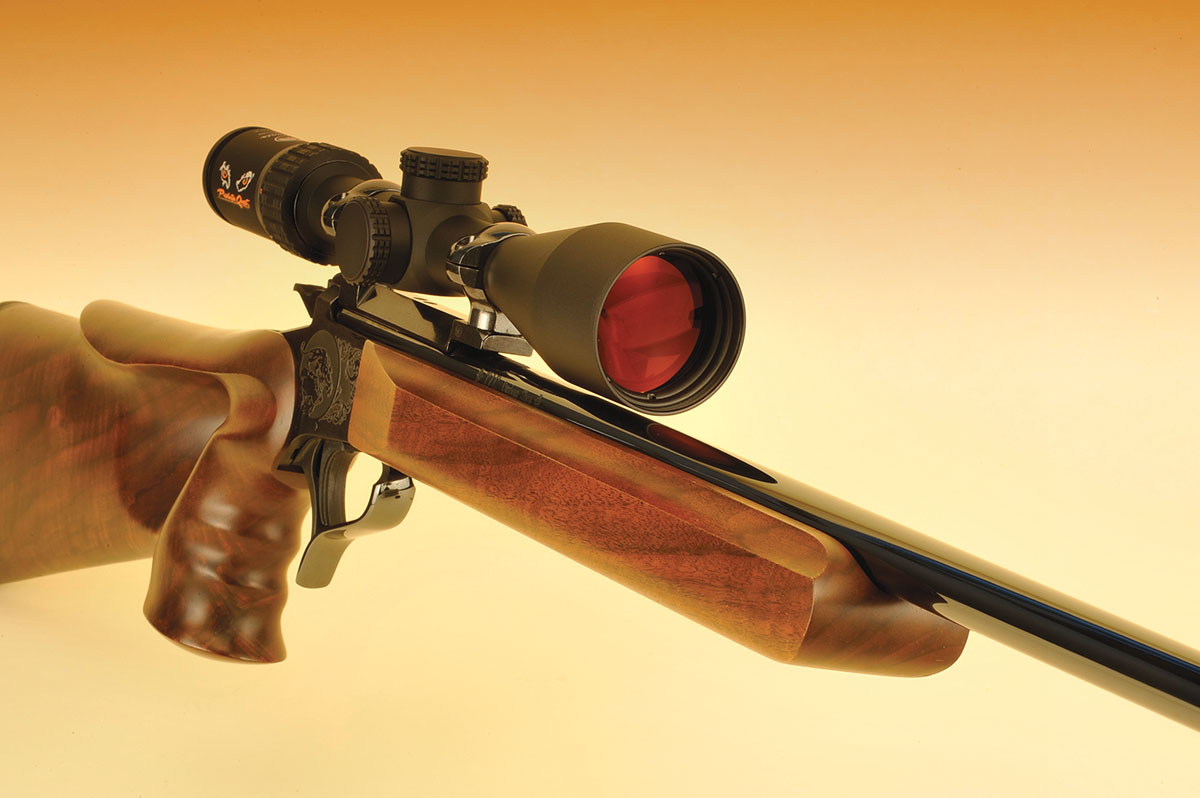
The barrel was brand new in the box, had a bright blue finish, and at 24 inches in length it would allow a reasonable comparison to the standard 223 Remington. Already on hand was a Contender frame and a thumbhole stock.
Wildcats are nothing new to me, especially when it comes to .22-caliber cartridges. In the past, I’ve experimented with a list of cartridges too long to mention here.
In all honesty, the 223 Remington never did anything for me. While it is a popular cartridge today in AR rifles, to me it was lackluster for my type of longer-range varmint shooting. I gravitated to the wildcats for more fun in the field. While the 223 AI is not a cure-all for my needs, I did find it interesting to work with recent powders – even with a small gain in velocity – and testing a “new” cartridge.
Credit for many “improved” cartridges has to go to P.O. Ackley. A native of New York, he attended college, got married and moved to Roseburg, Oregon, during the Great Depression. Establishing a gunsmithing business in 1936, he helped the war effort by working for the Ogden Arsenal in 1942. He later moved to New Mexico, then to Trinidad, Colorado, where he took the position as an instructor in gunmaking at Trinidad State Junior College. Finally moving to Salt Lake City, Utah, he settled down, opening a gun shop where his improved cartridges got their start.
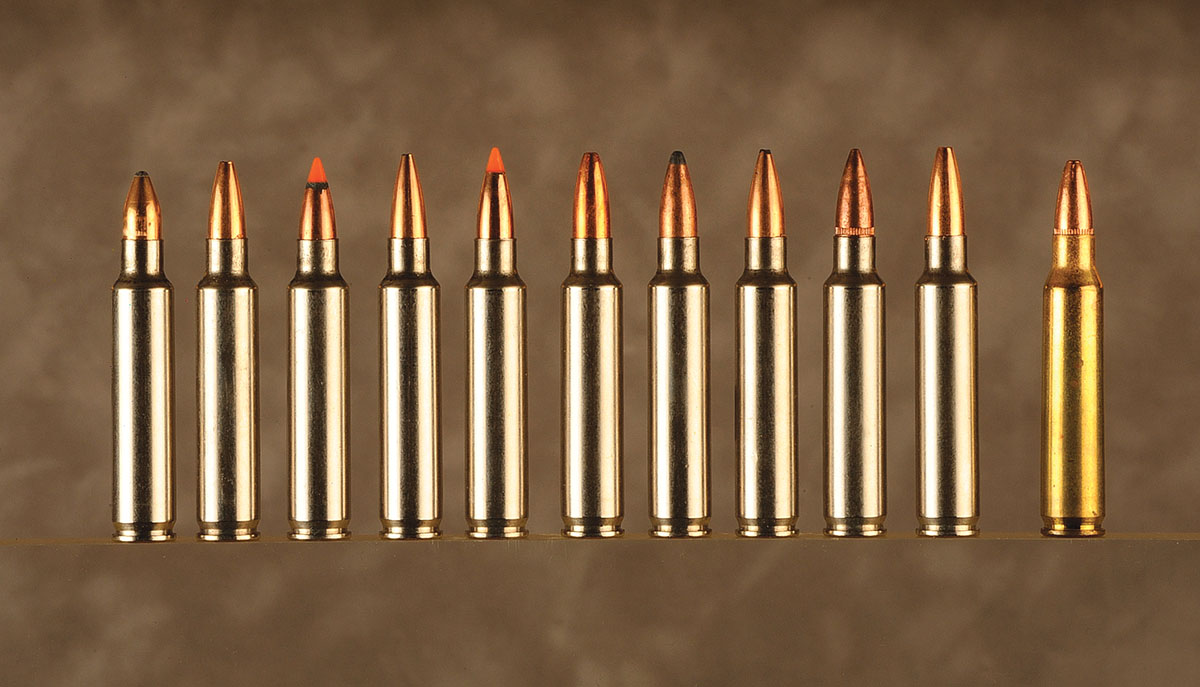
So why would a handloader want or need to improve the 223 Remington? First, there are those of us who love velocity from our cartridges and will experiment to get it. Another good reason is that with the popularity of the 223 Remington, a lot of shooters have more than one rifle in that caliber, and the 223 Ackley Improved might provide an interesting change.
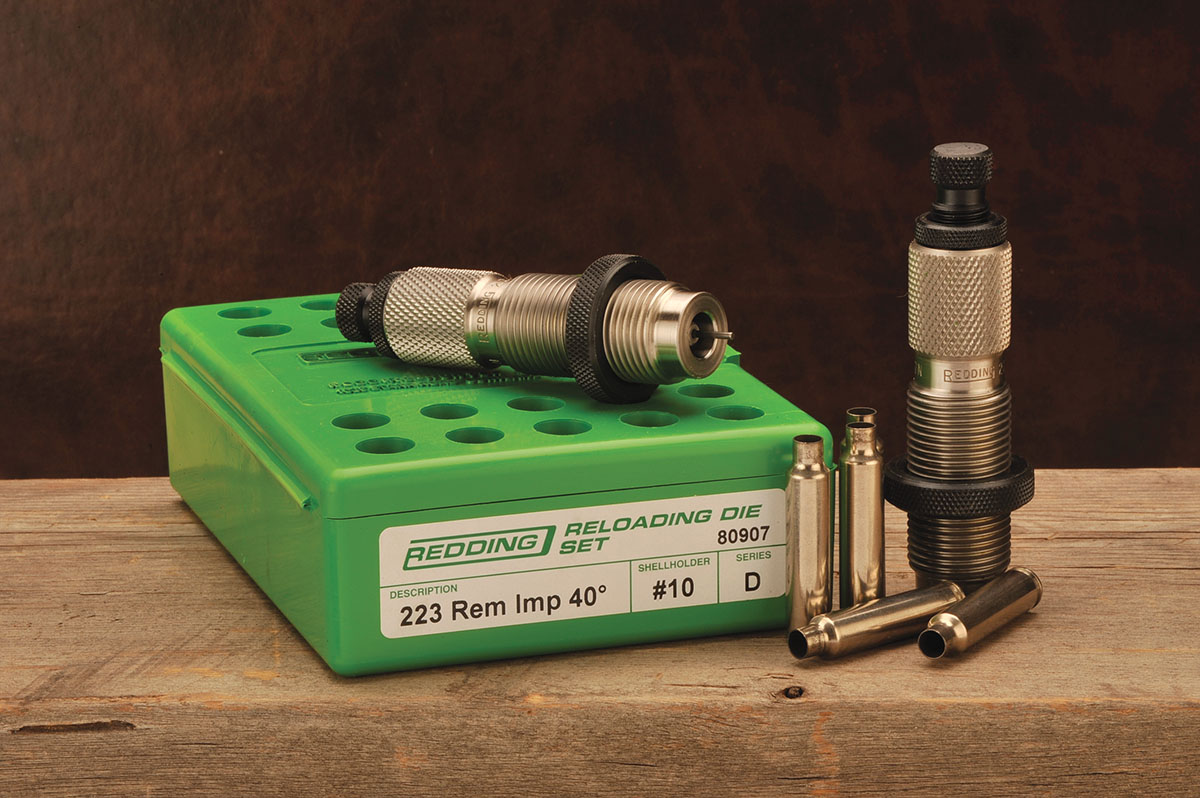
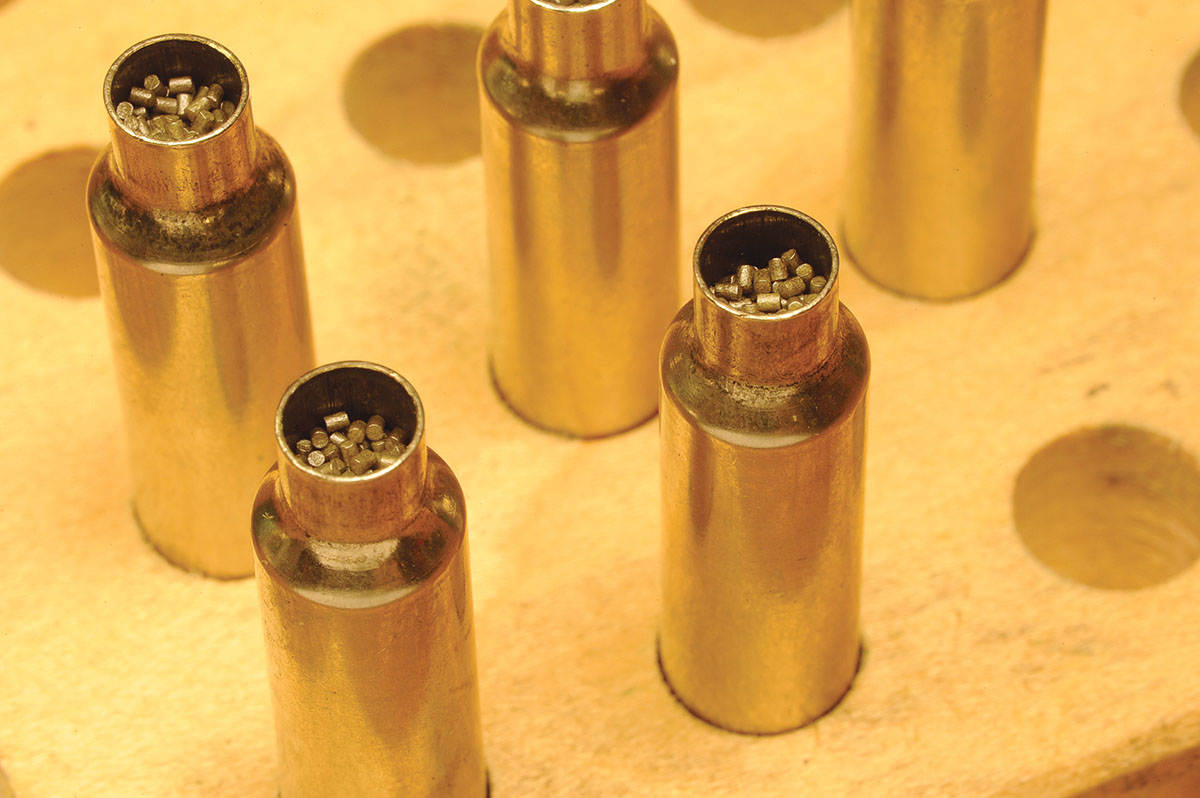
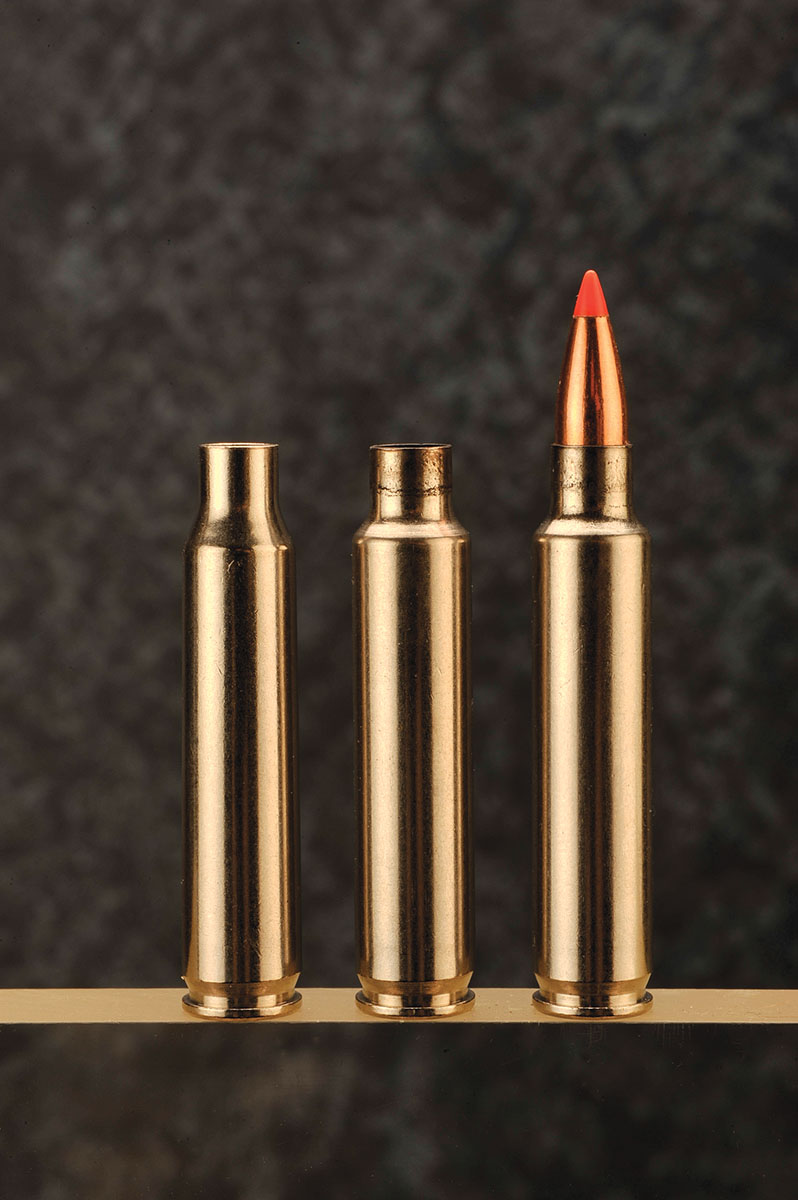
To make the transition easy, components are available. The 22 is one of the most used calibers around, and replacement barrels, bullets, powders, cases and primers are widely available. Cases for the 223 are plentiful and cheap, and purchasing them in 1,000-piece lots will keep a hand-loader shooting for a long time. Add the almost instant accessibility of dies today, and a handloader can go from thinking about the 223 AI to shooting it in no time. The 40-degree shoulder on the new case adds to its longevity and results in less time at the case trimmer. A handloader can expect to add roughly 2.0 to 2.5 extra grains of powder, depending on case capacity and the burn rate of the propellant. With Winchester cases, I came up with around 30 grains of water capacity for the 223 Remington case, and about 32.1 grains with formed 223 Remington AI cases.
Of course, in order to load and test, fireformed cases are necessary, which is what Ackley was trying to do when he invented the “improved” case. Probably one of the major things that bother most shooters working with wildcats is how to segregate brass so it’s not mixed up with other loads. Brass can be separated by headstamp, but that is a time-consuming task. For wildcatting, I use (when I can find them) nickel-plated cases that are easy to recognize. On the same note, the best brass to use is always in question. My choice here was Federal’s 223 nickel-plated brass.
There are numerous ways to fireform a case, including using factory ammunition and firing it off in the rifle. To some shooters, this is too costly, so I used a stout load for the 223 Remington and fired away. My favorite powder for this is Benchmark, of which I load 23.0 grains under a 52-grain bullet for around 3,000 fps. It is easy to do, and loading moves along at a brisk pace. Bullets are seated to touch the lands to ensure proper case expansion.
A side benefit to this is that while fireforming cases, you can work on getting your scope sighted-in close before you get serious with the AI loads. If you are on a budget, cornmeal and Bullseye is another way to fireform cases without a bullet. I would rather stick to powder and go from there.
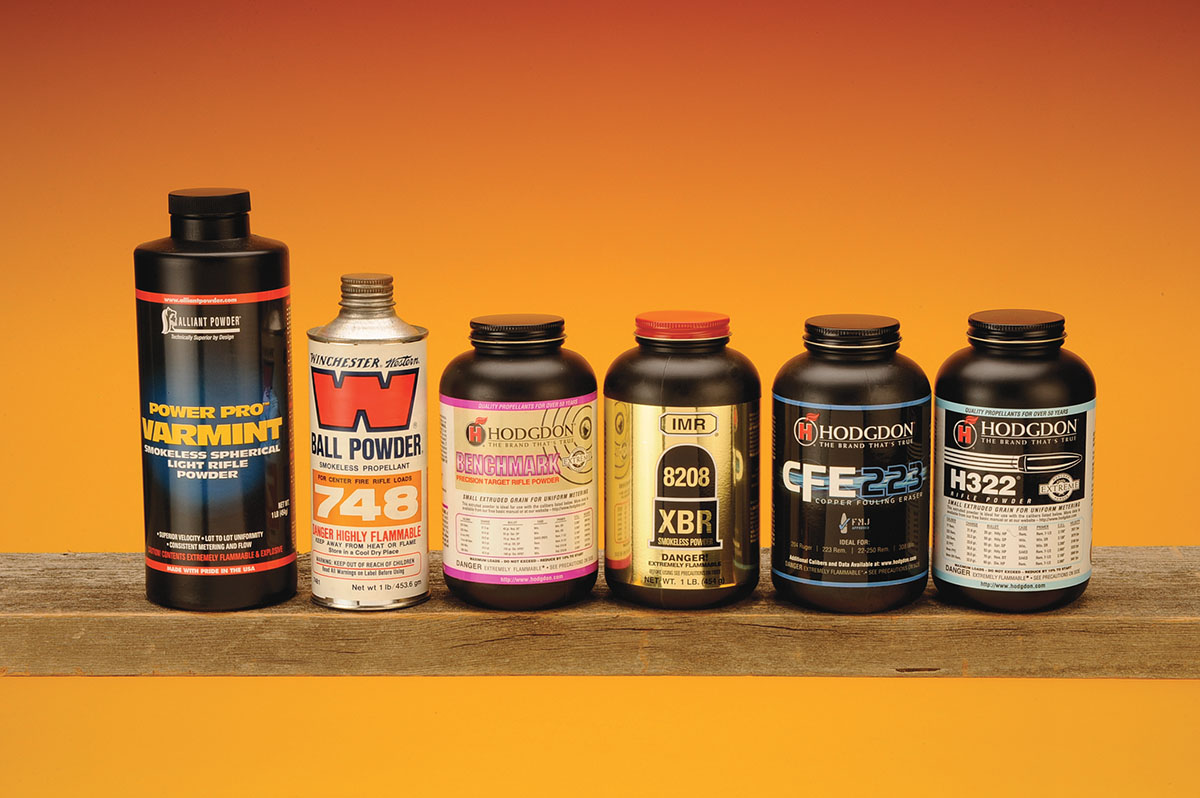
I have used Sierra, Hornady, Nosler and Berger bullets for the most part, but that doesn’t mean they are the best choices for other handloaders. Small rifle benchrest primers are suggested for squeezing out the best in accuracy.
Once the cases are formed, loading goes on without a hitch. For a varmint round, the 223 Remington AI was easy to load, pleasant to shoot, and above all, it proved accurate with a wide range of bullets. Keep in mind that all cases, after fireforming and throughout subsequent loadings, were neck sized only. Setting up the neck-sizing die is easy. Smoke the neck/shoulder area with the soot from a candle to monitor die adjustment on the neck to a point where it doesn’t touch the shoulder. Secure the sizing die, finish all the cases, clean them and prime. Charge cases with powder and seat bullets to a suggested overall length.
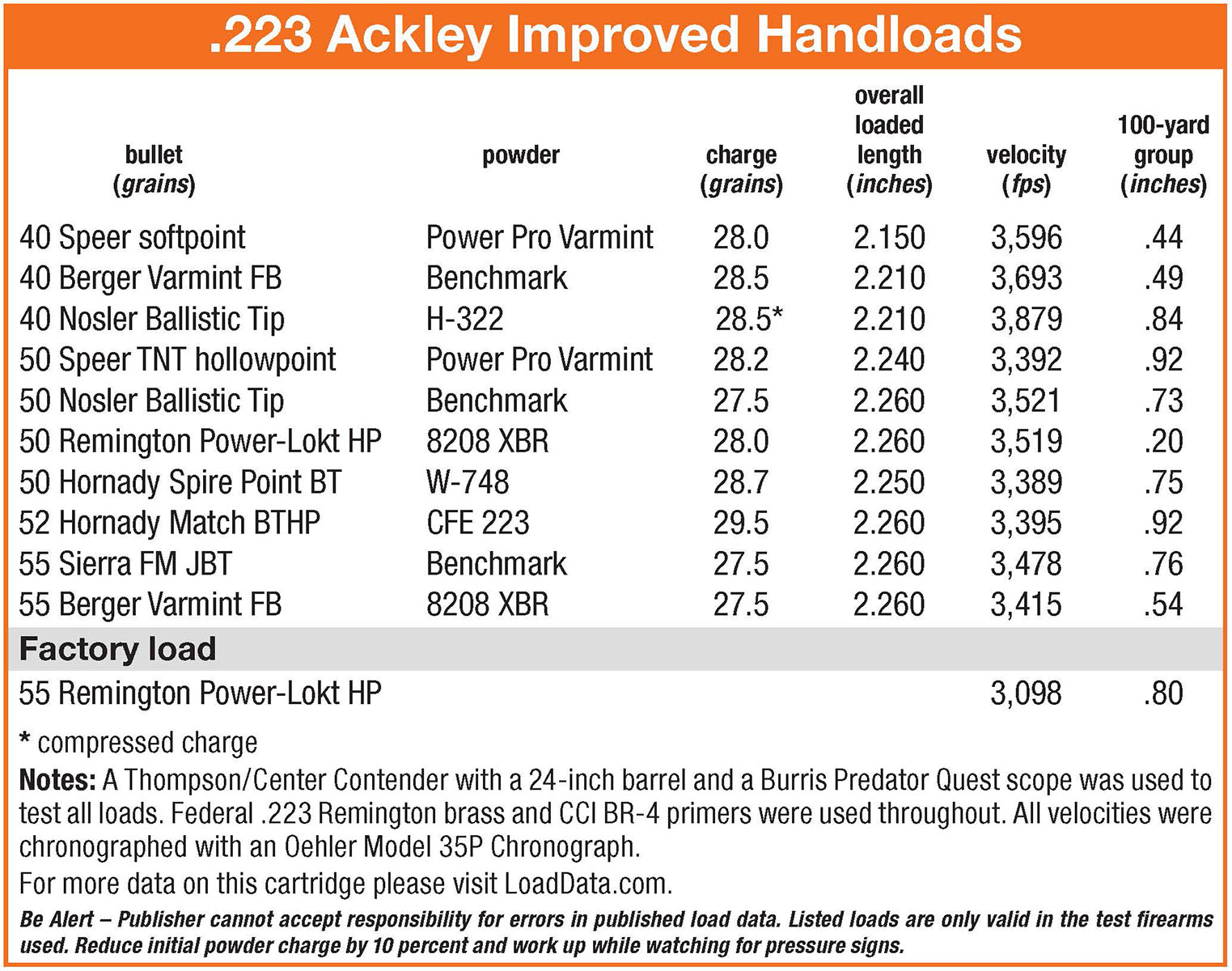
As for powder, while I had my own thoughts in mind, Sierra was a big help in completing the list. First on the list was Alliant’s Power Pro Varmint, which is specifically designed for varmint calibers while still useful for light rifle loads. The only drawback I found with this powder is that it delivered 300 to 400 fps less velocity than stated in various manuals and online. For example, with a 40-grain bullet and 27.9 grains of Power Pro Varmint, Alliant shows 3,700 fps for the 223 Remington. In my testing, 28.0 grains only provided 3,596 fps. On the plus side, it is one of the smoothest powders ever to slip through my powder measure.
Benchmark, according to Hodgdon, was developed for precision cartridges including the 222 and 223 Remingtons, so it fits nicely into the scheme of things. I also tried H-322, which provided good velocity and accuracy. IMR-8208 XBR was also used and produced the smallest groups with the improved cartridge. Winchester 748 was also tested, which according to many handloaders is the choice as a well-rounded powder for the 223 Remington. Its comparatively low temperature has been reported to extend barrel life, and I still keep it in stock and ready for use in my .22-caliber rifles. Finally, I tried Hodgdon CFE 223 with good results, and for those who shoot a lot and load a lot, this powder slips through your measure, providing consistent charge weights.
Through research, other powders emerged that will work as well. Varget, for example, is a good powder for the 223 AI. I have used it in other small-game cartridges with good results, and it shines in the 22-250 Remington. Hodgdon 4198 is another good example, as are Accurate 2015 and Reloder 7. So with the 223 AI, a handloader has his work cut out in finding a load for a specific rifle and shooting requirements.
Using a Remington 50-grain softpoint over 28.0 grains of IMR-8208 XBR, the best group out of all the testing was a three-shot example that measured only .205 inch! When I looked downrange and saw two shots in one hole, the jitters took over. The group turned out to be a perfect cloverleaf that I believe was the smallest group I have ever shot.
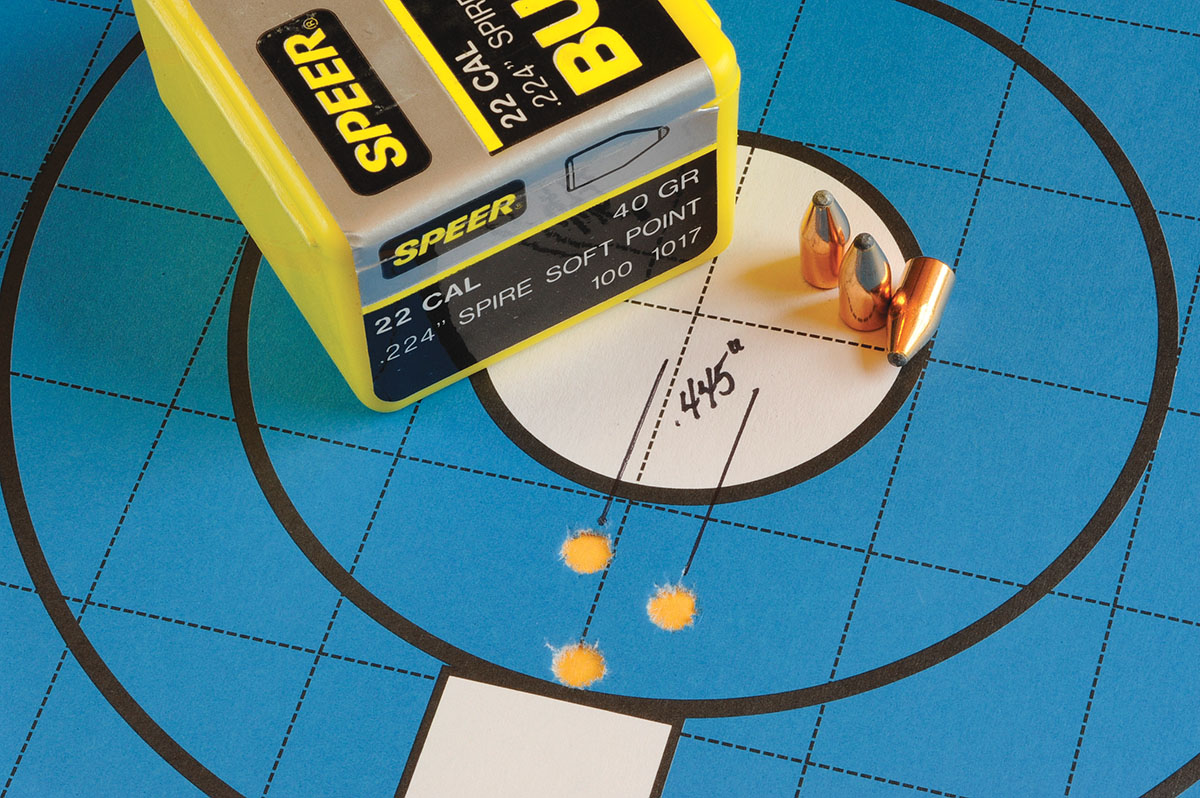
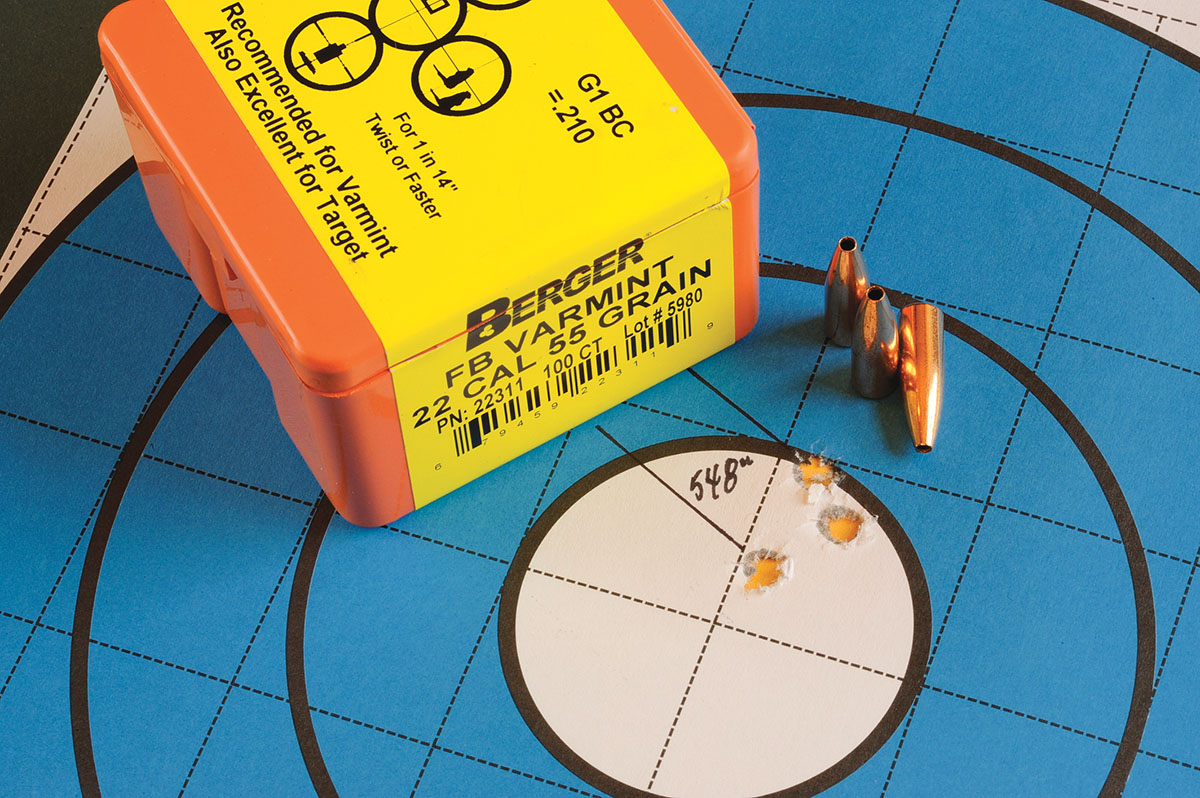
Next up was the Speer 40-grain softpoint with 28.0 grains of Power Pro Varmint powder for 3,596 fps that provided a .445-inch group at 100 yards. For smaller game, this bullet weight is a good choice. The Berger 55-grain Varmint FB with 8208 XBR grouped into .548 inch at 3,415 fps. These examples are the smallest groups shot with the powder, bullet and primer combinations listed here.
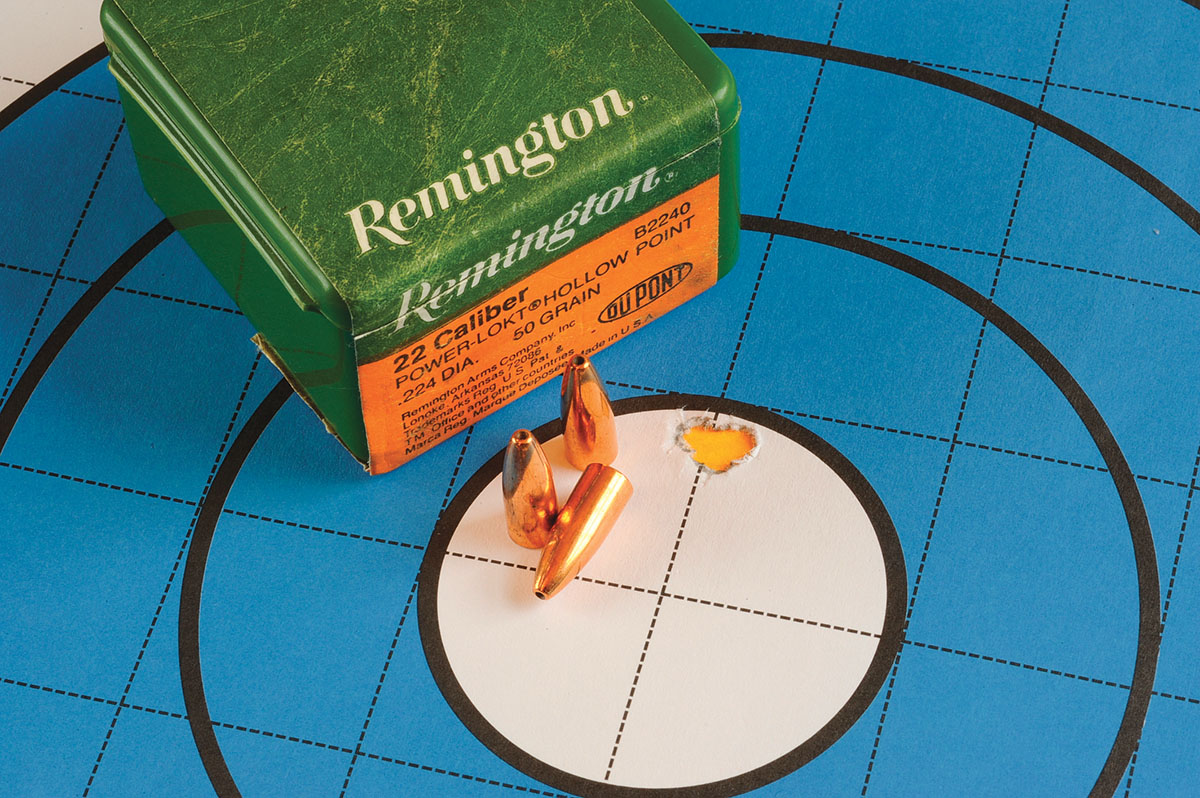
As an interesting side note, if you run out of handloads in the field, just run down to the general store and pick up a few boxes of factory 223 ammunition. Shooting Remington Power-Lokt hollowpoint factory loads in the AI chamber netted me groups under an inch.
In the end, is the improved version worth of all the work and expense of a new rifle or barrel? It depends on how you look at it: If a handloader is happy with the minor increases in velocity, then go for it. Just keep in mind that if you go overboard trying to increase everything up and down the scale, you might as well go for a true wildcat cartridge or move up to something else like the 22-250 Remington or one of my favorites, the 224 Weatherby Magnum.
When it comes to bullet drop, a little trajectory is gained, but maybe not enough to be worth the conversion. For example, with the 223 Remington at 3,200 fps with a 100-yard zero, drop at 200 yards is 3 inches; at 300 yards, drop is roughly 12 inches. From the 223 AI with the same 100-yard zero, at 200 yards the drop is 2.2 inches and 9.3 inches at 300 yards. For small game, trajectory may be a factor; for my eastern woodchuck hunting, it’s hardly worth mentioning considering the size of the animal.
Now the question is, of course, do you want to jump in and go with a 223 Remington AI? I did it because I was curious; I had the barrel and action ready to go and am always looking for something new to try. In the long run, however, larger cartridges like the 257 Roberts Improved offer a greater velocity boost and represent more of a challenge than the smaller 22 “improved” centerfires.
Whatever your choice, working with any improved or wildcat cartridge still offers a new dimension in handloading, regardless of the outcome.