Enduron Powders
Loads for Popular Varmint Cartridges
feature By: Phil Massaro | April, 19
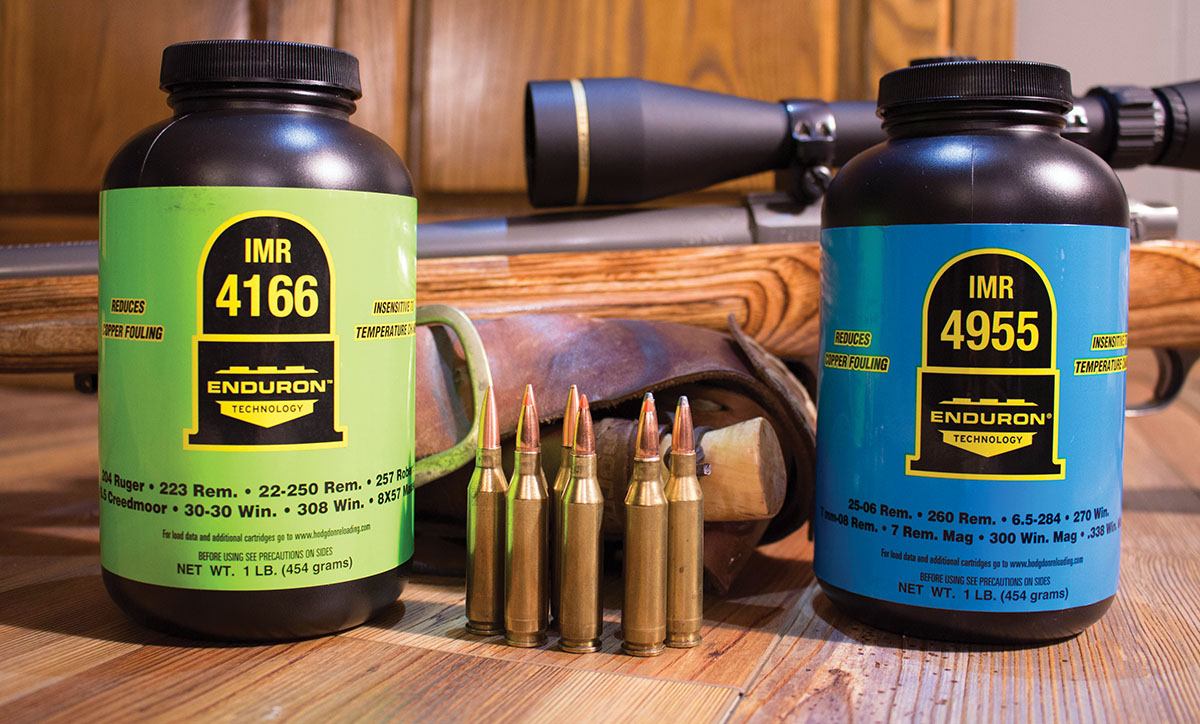
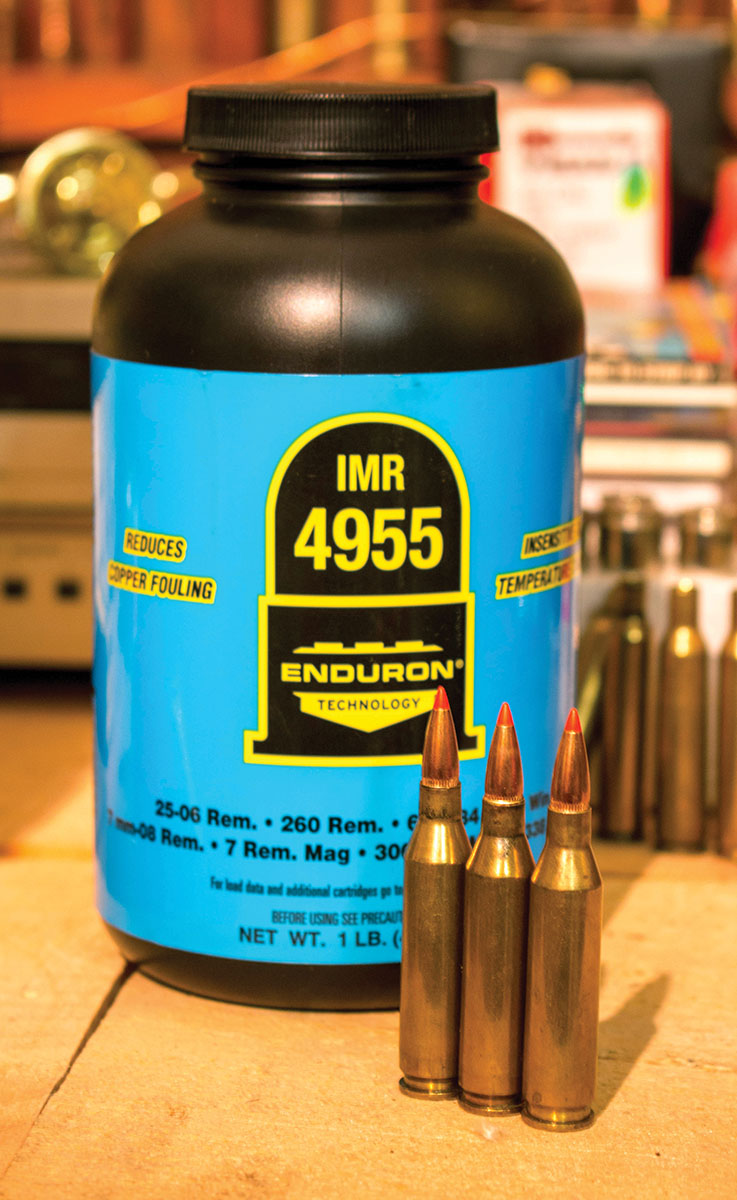
Now, I have used IMR’s “standard” powders for as long as I’ve been reloading – over a quarter century now – and have always had good results, but I must say I’ve found the Enduron Powders to be a worthwhile investment. Among the design points of the new line is a copper fouling eliminator. I hate, loathe, despise and abhor cleaning rifles. I know some handloaders find solace in the task and take their cleaning routine very seriously, but I do not. Therefore, I greatly appreciate a powder that will burn cleanly, and if using it results in less copper fouling, well, that’s even better. I have noticed a significant reduction in copper fouling when using Enduron powders, especially with softer bullets at high velocities.
What I appreciate most about the Enduron series is the consistency of the powder and its insensitivity to temperature change. My first experience with these powders was at the tail-end of 2015, when I took handloads with IMR-4451 for a 300 Winchester Magnum on an African safari late in the season. That year, South Africa was going through a terrible drought, and I was headed to the Waterberg District primarily for kudu and some other plains game species. In addition to the handloaded ammunition, I was testing a new rifle that arrived in mid-October, just two weeks before departure. The weather in Upstate New York in mid-October is not exactly on par with what the African sun can generate, and the load I developed was not exactly on the lighter end of the spectrum. Long story short, the 114-degree Fahrenheit heat didn’t pose an issue for IMR-4451 – though it most certainly did for me – and the ammunition worked perfectly, maintaining the same point of impact and showing no pressure signs whatsoever.
All the Enduron powders are extruded “stick” powders, with a grain structure on the shorter side, so load density will be more manageable than with the longer grain powders.
Cartridges best suited for varmints and predators are usually on the smaller side, starting with the 17s and running up through the 6.5mms. Because the fastest-burning powder in this line is IMR-4166 – with a burn rate similar to IMR-4064 – those cases on the smaller side won’t work well with this line. The 17 and 22 Hornet, the 221 Fireball and cartridges of similar capacity require faster-burning powders, but the 223 Remington, 22-250 Remington and 243 Winchester – all very popular choices for varmint and predator work – will run very well on one or more of the Enduron options.
I grabbed cartridges and rifles that I felt were well-suited to both the Enduron powders as well as varmints/predators and sat down at the reloading bench to develop loads. Among the candidates were a Ruger 77 22-250 Remington with a 24-inch barrel, a Savage 110 223 Remington with a 24-inch barrel, a sweet pre-’64 Winchester Model 70 220 Swift Mashburn Improved (26-inch barrel), a Browning A-Bolt 243 WSSM (22-inch barrel), a vintage Remington 722 244 Remington (26-inch barrel), and a Ruger Target/Varmint 243 Winchester with a 26-inch barrel, for a blend of modern and vintage rifles. Most of these cartridges will run on IMR-4166, and the larger cases will accommodate some of the other Enduron powders.
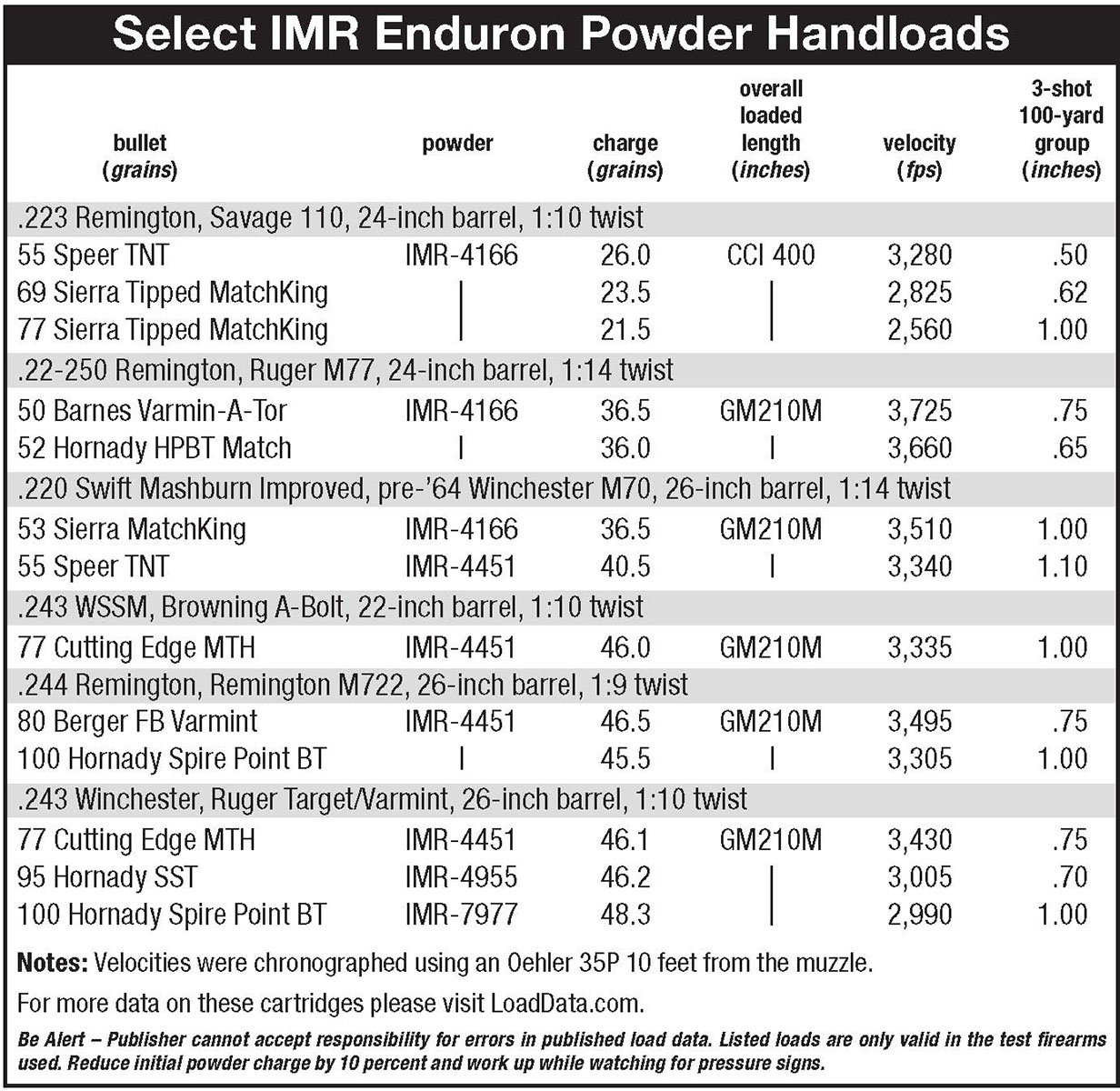
Starting with the smallest, the 223 Remington shot well with IMR-4166. Using once-fired Hornady brass and a set of Redding Match dies, the cases were primed with CCI 400 Small Rifle primers. I tried different bullets for this exercise. All gave acceptable accuracy, and a few were remarkable. The Speer 55-grain TNT hollowpoint over a near-maximum charge of 26.0 grains of IMR-4166 provided a .5-inch group at a velocity of 3,280 fps. Extreme velocity spread was 15 fps. The Sierra 69-grain Tipped MatchKing provided a .62-inch group; 23.5 grains of IMR-4166 gave a muzzle velocity of 2,825 fps. With a G1 ballistic coefficient of .375, this makes a solid choice for longer ranges in windy conditions. The 77-grain Tipped MatchKing also gave acceptable results, with 21.5 grains of IMR 4166 driving the long bullets at 2,560 fps into a one-inch group.
The 22-250 Remington also liked IMR-4166; Norma cases were primed with Federal Gold Medal Match GM210M Large Rifle primers. The 22-250 has been plagued with a very slow twist rate, 1:12 usually, restricting the large case to bullets of 55 grains or lighter. Like so many classic cartridges, I wish the 22-250 would receive an update, offering a one-in-9-inch or even 1:8 rifling twist so the case capacity could be used to drive the heavier .224-inch diameter bullets. Alas, that is not the case – at least with my test rifle – so I loaded up Barnes 50-grain Varmin-A-Tor and the Hornady 52-grain BTHP Match bullet. I got the best results from the Barnes bullet with a charge of 36.5 grains of IMR 4166, producing a muzzle velocity of 3,725 fps and a .75-inch group – not exactly stellar for a 22-250, but this particular rifle is not known for .25-inch groups, so I consider this load a winner. The Hornady 52-grain bullet over a charge of 36.0 grains of IMR-4166 gave a muzzle velocity of 3,660 fps and a three-shot .65-inch group. Either load would suffice for just about any predator hunt. Both those bullets are more than capable on both prairie dogs and woodchucks.
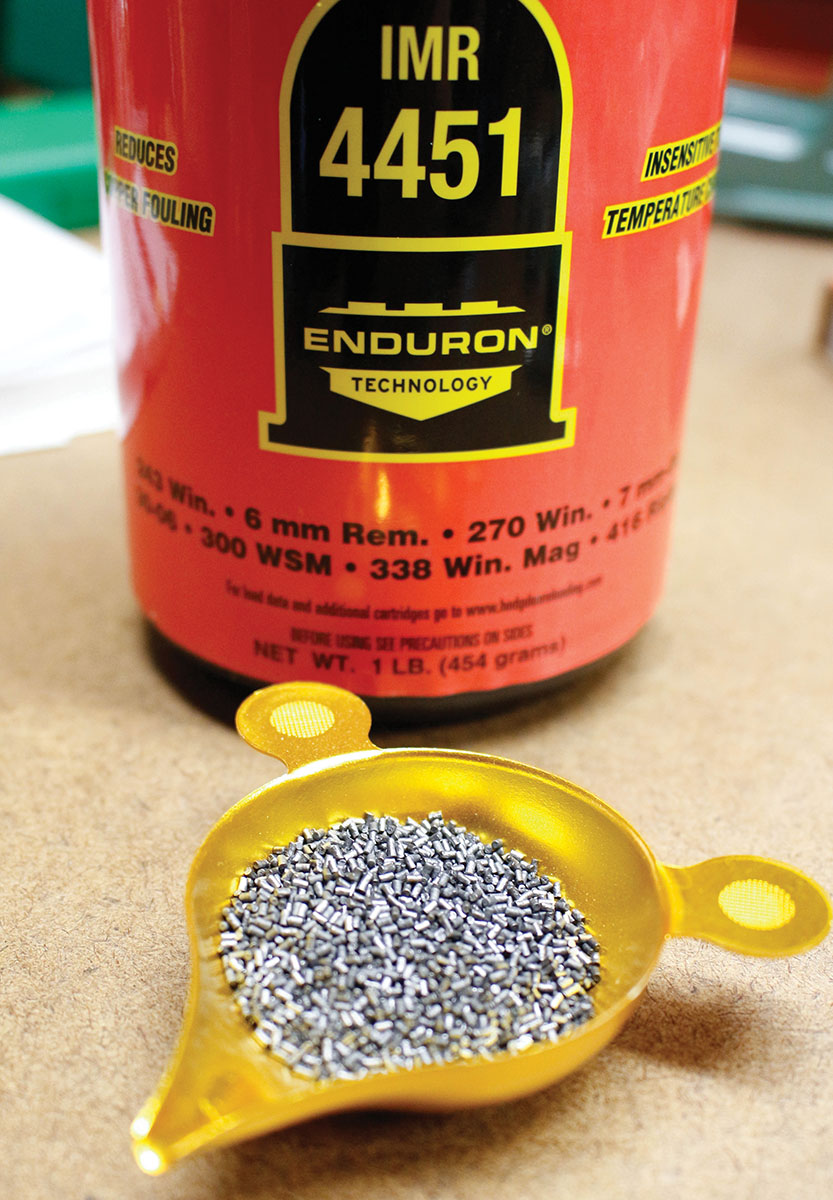
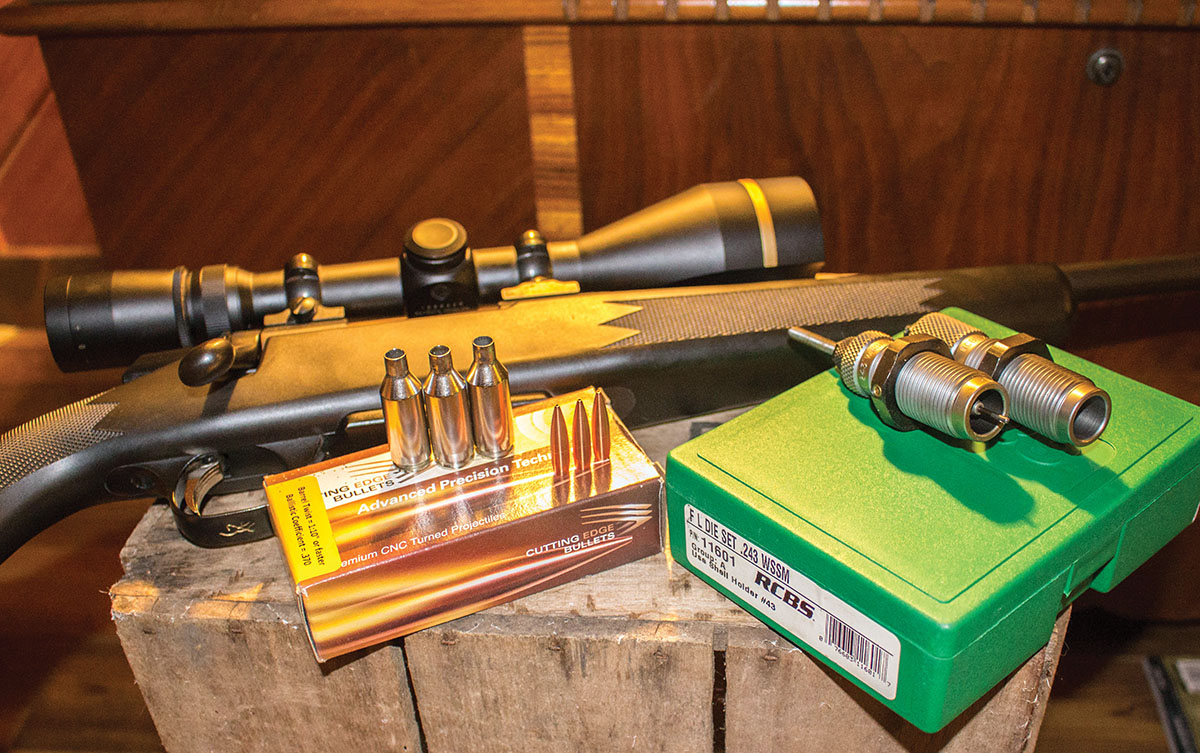
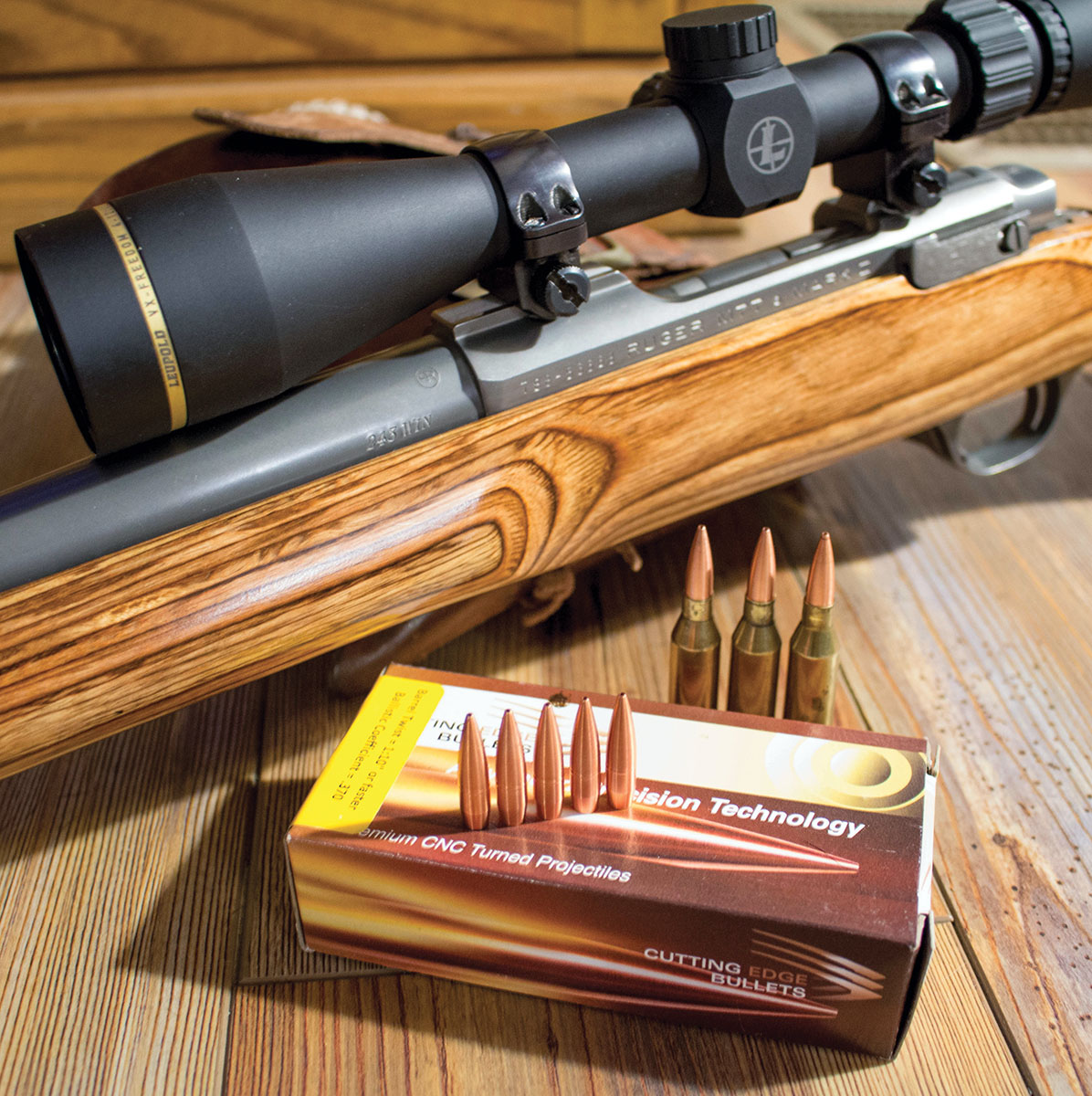
Moving on to 6mm cartridges, I found several promising combinations, with some of the slower-burning Enduron powders coming into play. The rarest of the lot, the 243 Winchester Super Short Magnum (WSSM), has proven to be a screamer in the velocity department, but like the rest of the WSM and WSSM cartridges, I find them to be extremely finicky to load for. I loaded the Cutting Edge 77-grain Match Tactical Hunting (MTH) bullet over 46.0 grains of IMR-4451 for an average muzzle velocity of 3,335 fps, but I believe barrel heat played a major issue in accuracy. The first three shots printed just about one MOA, but things went haywire after that. Groups opened up to 2 or 3 inches. Velocities were uniform with an extreme spread of 32 fps, but more experimentation is obviously required. I won’t say this load isn’t a good one, but I would look to another load if planning a prairie dog shoot.
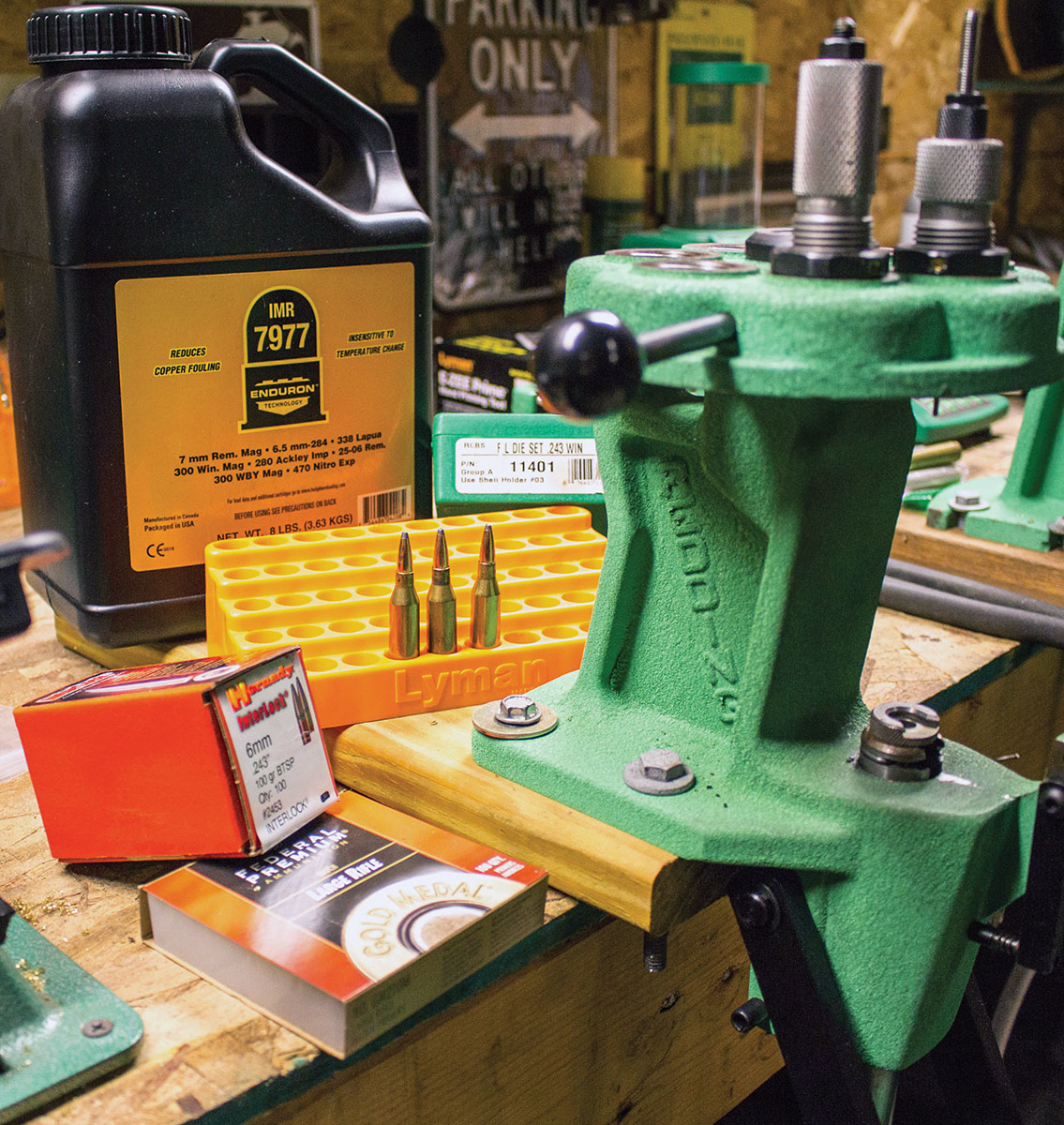
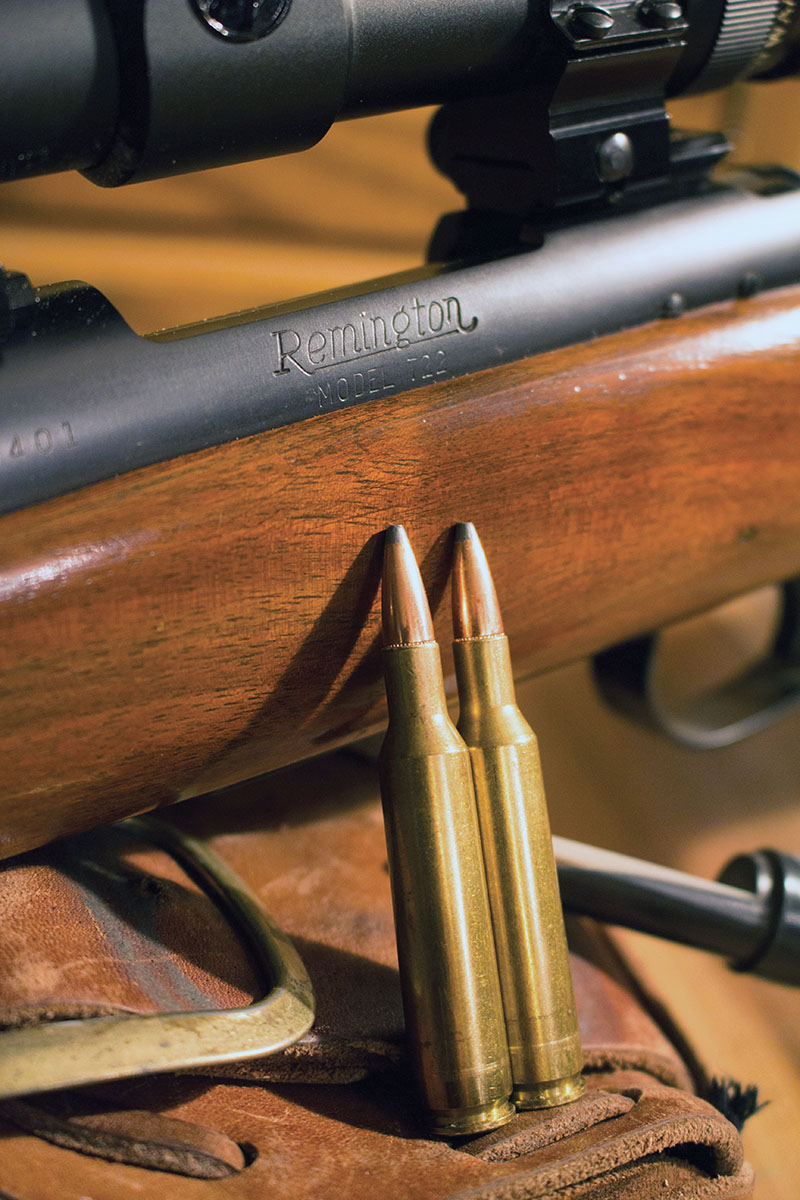
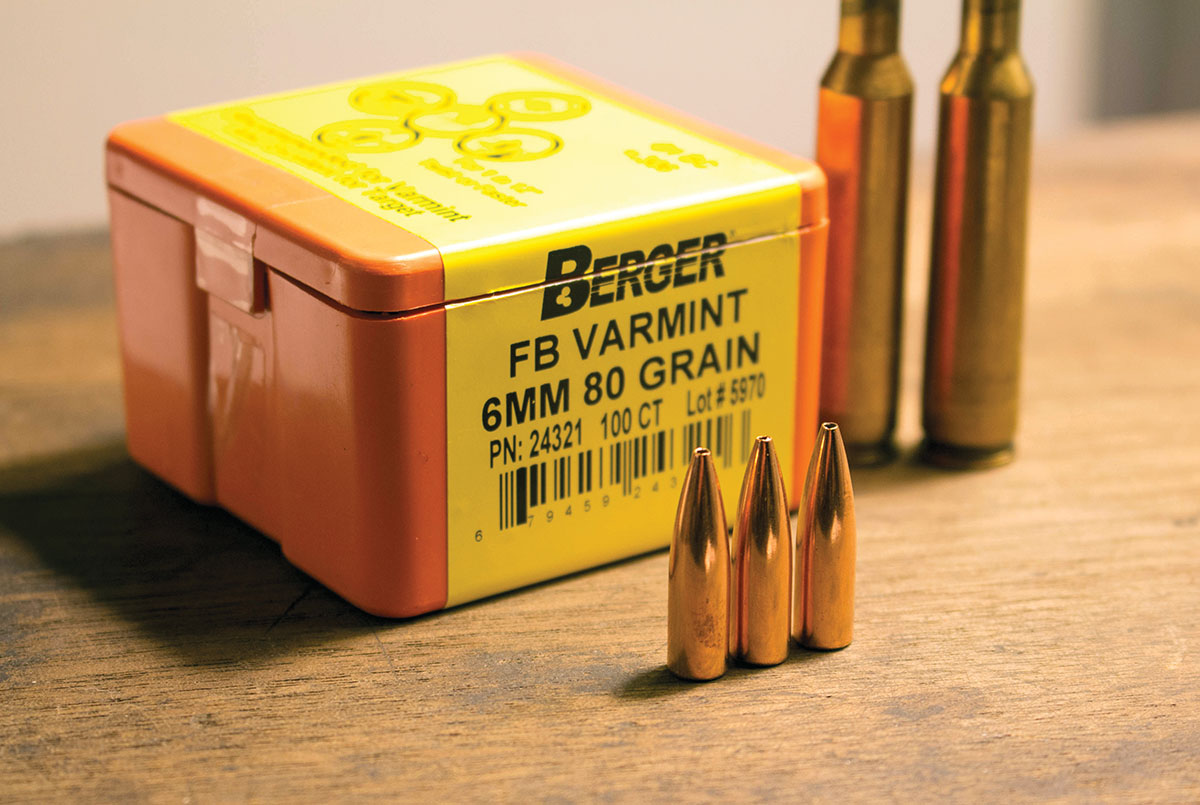
The 244 Remington was based on the 7x57mm Mauser case necked down to hold .243-inch diameter bullets, though its 1:12 twist rate limited the bullet weight to 90 grains, depending on bullet configuration. Released in 1955, that twist rate would lose a popularity contest to the 243 Winchester, which could push the heavier 100-grain bullets, making it a potentially better choice for the deer hunter. Though Remington revised the twist rate to 1:9 in the late 1950s, the cartridge was renamed the 6mm Remington when it was re-released in the Model 700 in 1963. I believe the test rifle I used had the revised 1:9 rifling twist, as it stabilized 100-grain bullets. The big case is well-suited to slower-burning powders, and I had good results with IMR-4451. Using Remington brass and Federal GM210M primers, I worked up a powder charge of 46.5 grains with the Berger 80-grain FB Varmint and found both the best accuracy and a reasonable pressure limit for the rifle. Hornady’s 100-grain InterLock over a load of 45.5 grains of IMR-4451 provided good accuracy at 3,305 fps.
Is the IMR Enduron line a complete game-changer? I’d say it is, especially for handloaders who have relied on some of the older powders for years. Hodgdon’s Extreme line – including H-4350, H-4831sc and Varget – has shown a definite reduction in velocity change from one temperature extreme to another, and the IMR Enduron line shows the same type of performance. If you’ve not experienced a shift in point of impact with your loads, it might not warrant the investment in these new powders, but if you are beginning your load development for a new cartridge, I would definitely recommend giving one of the suitable Enduron powders an audition.