Login


Wolfe Publishing Group
    Menu

    Rifle Talk

    Varmint Cartridges

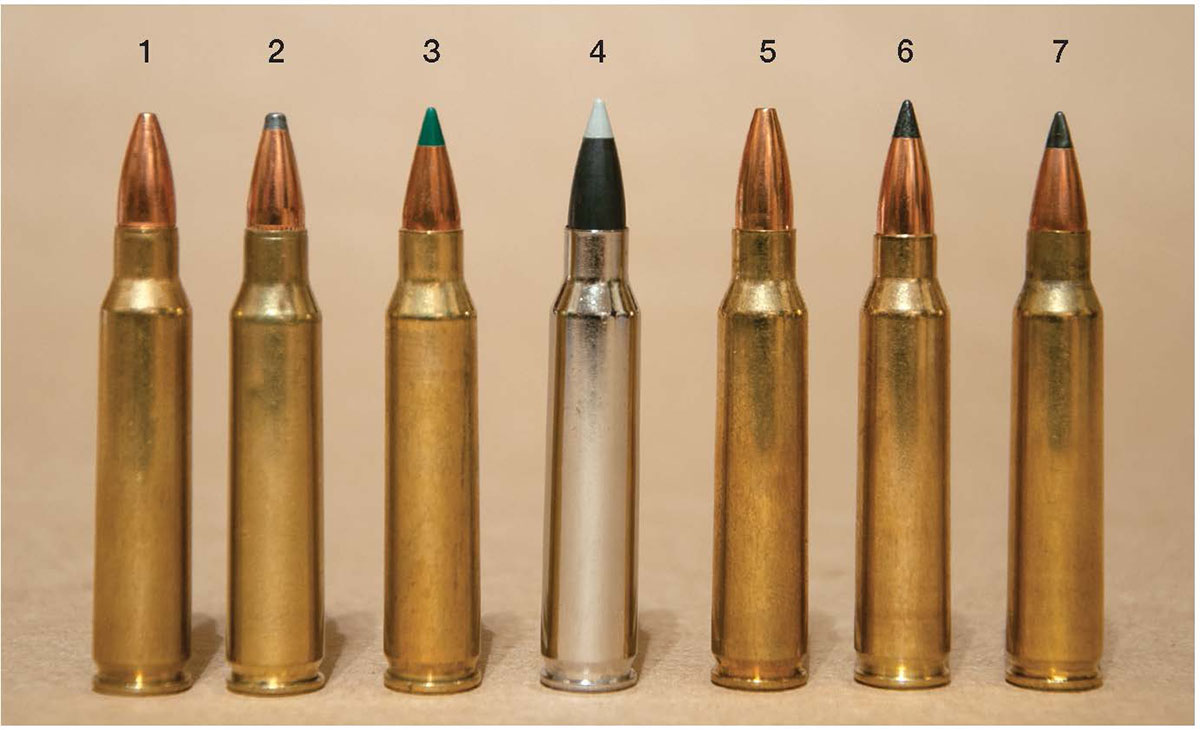
    These 223 Remington loads feature bullets that include a (1) 55-grain Barnes TSX FB HP, (2) 55-grain PSP, (3) 55-grain Sierra BlitzKing, (4) 40-grain Ballistic Silvertip, (5) 36-grain Barnes Varmint Grenade, (6) 55-grain Nosler Varmageddon FB and a (7) 40-grain Winchester Polymer Tip Rapid Expansion.
    These 223 Remington loads feature bullets that include a (1) 55-grain Barnes TSX FB HP, (2) 55-grain PSP, (3) 55-grain Sierra BlitzKing, (4) 40-grain Ballistic Silvertip, (5) 36-grain Barnes Varmint Grenade, (6) 55-grain Nosler Varmageddon FB and a (7) 40-grain Winchester Polymer Tip Rapid Expansion.
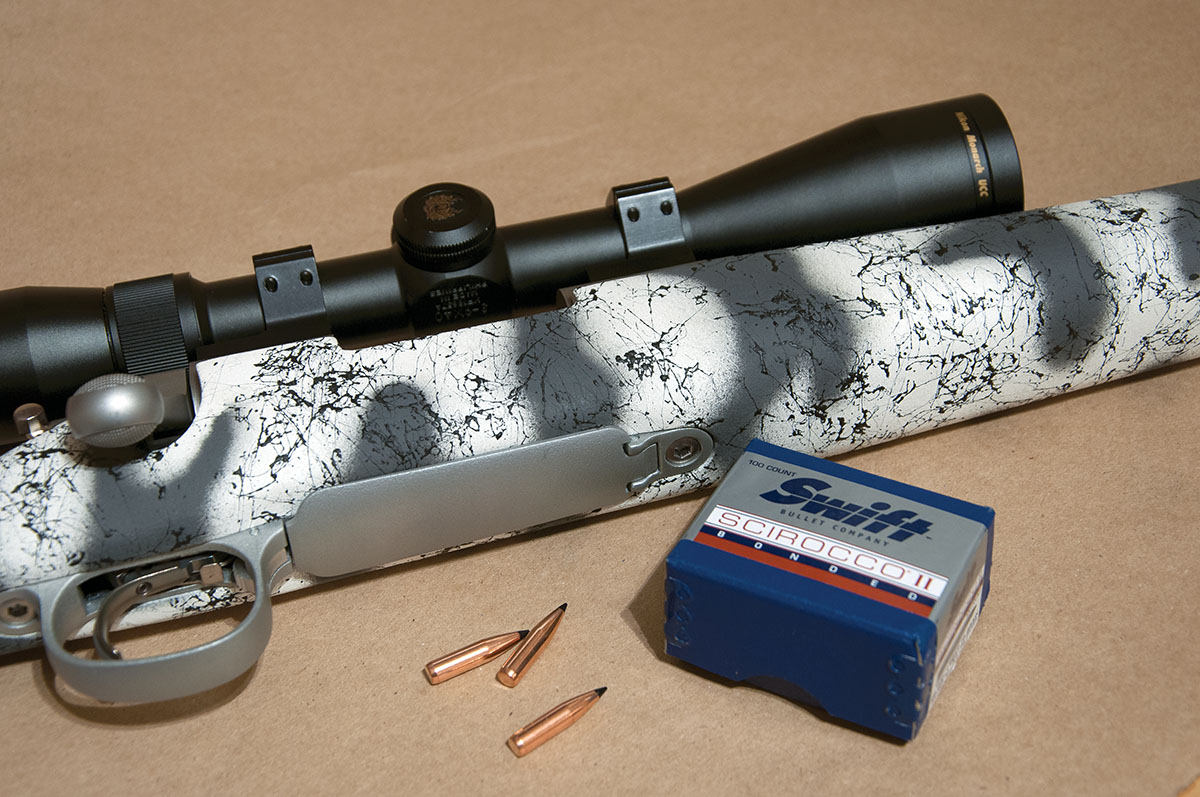
    Though built as a coyote rifle, this 22-250 Remington with a 1:8 twist shoots 75-grain Swift Scirocco II deer bullets very well.
    Though built as a coyote rifle, this 22-250 Remington with a 1:8 twist shoots 75-grain Swift Scirocco II deer bullets very well.
    Origination of the word “varmint” is somewhat difficult to track to a specific time and location of origin. That is to say, dictionaries I’ve searched through, including hardbound versions and various online examples, do not pin the term down too clearly. However, like most words in the English language, varmint is a derivative of a Latin term, in this case, vermis, or worm. Vermis became “vermin” (plural), and by the mid-1500s, varmint or varmints (an undesirable animal, troublesome).

    In the context of this magazine, “varmint” is most commonly used to describe the small game and rodents “varmint hunters” pursue; the rifles used in this sort of pursuit; even the cartridges and the bullets used. Here again, there is some minor mixing of words.

    A Winchester Model 54 30-06 or customized Remington Model 700 270 is not necessarily a varmint rifle, but big-game hunters often use them on game such as coyotes, the occasional jackrabbit and even ground squirrels. The same could be said of an old lever-action 30-30. Some hunters consider a wolf a predatory “varmint” – no different than a coyote. I once shot a wolf during a moose hunt in British Columbia while carrying a lightweight 300 Remington Ultra Magnum made by Rifles Inc. Certainly, no one would consider that rifle a varmint rig. Perhaps this is a long-winded way of saying the best varmint rifle is the one a hunter is holding when vermin show up.

    Conversely, on hand is a very accurate 8.5-pound Remington Model 700 22-250 Remington with a Classic Barrels & Gunworks custom cut-rifled barrel of “varmint contour” that measures 24 inches in length with a muzzle diameter of .720 inch. Conceived as a long-range coyote rig, I’ve shot it little due to biweekly publishing deadlines, but so far it seems to handle plastic-tipped, lead-core bullets up to 60 grains at velocities up to and just faster than 3,400 fps, which perhaps leaves room for increased performance.
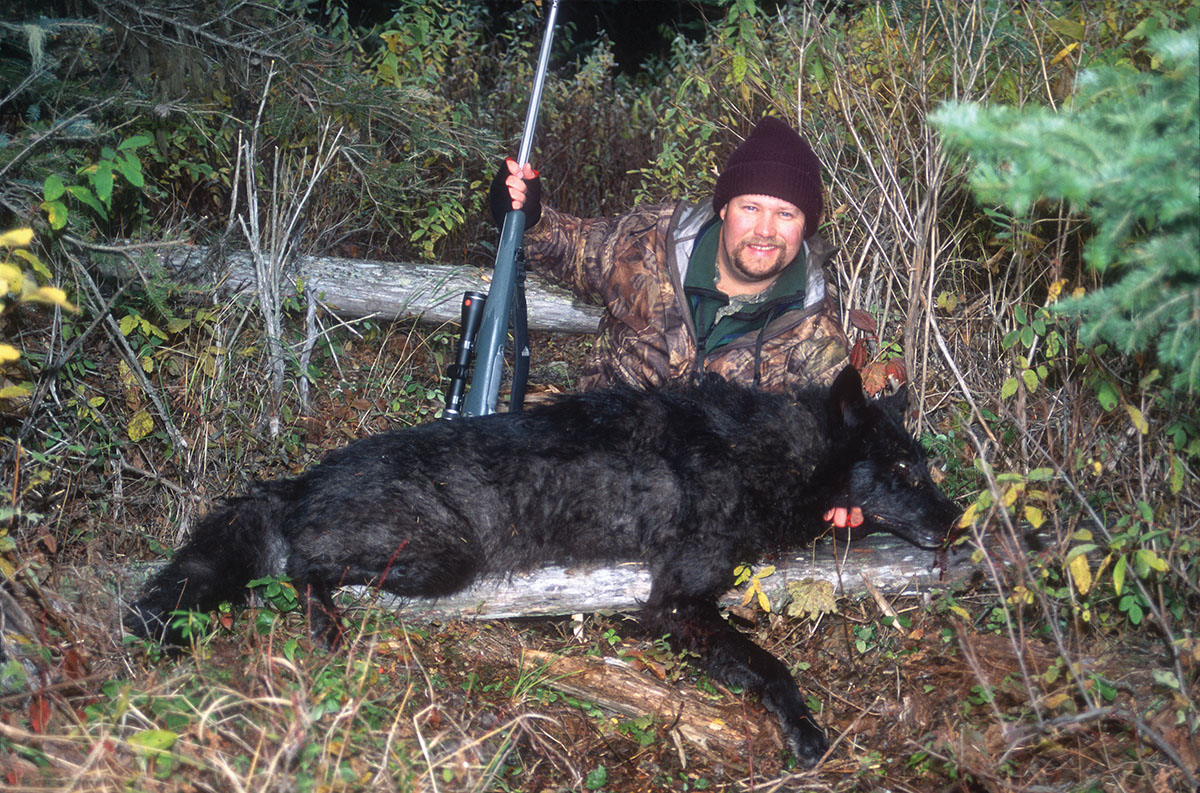
    Some varmint hunters consider wolves to be no different than coyotes. This one was shot with a lightweight .300 Remington Ultra Mag in British Columbia, Canada, while hunting moose.
    Some varmint hunters consider wolves to be no different than coyotes. This one was shot with a lightweight 300 Remington Ultra Mag in British Columbia, Canada, while hunting moose.
    The rifle’s 1:8 twist also allows the use of deer bullets. When shot from a Stukeys Sturdy Shooting Bench, to my pleasure this “coyote rig” will group three 75-grain Swift Scirocco II bullets into sub-minute-of-angle groups at 100 yards when loaded over 36.5 grains of Reloder 19 powder for a velocity average of 2,948 fps. According to the Swift Bullet Company Reloading Manual Number Two, this charge is 2 grains under maximum for the bullet, but I see no great reason to change it for this rifle. So “varmint rifles,” given a proper twist rate, can serve doubly on game up to the size of deer.

    Dedicated varmint calibers typically begin at 17 and stop at 25. Examples include a broad range of options from the 17 Hornady Magnum Rimfire on the small-caliber end to the 25-06 Remington at the top end. However, due to the recent (and growing) interest in new and older .26-caliber cartridges such as the 6.5 Creedmoor and the 6.5-284 Norma, or even the earlier 6.5-284 Winchester wildcat, the sky appears to be the limit when shooting the occasional groundhog in the Northeast, or thinning colonies of ground squirrels and/or prairie dogs in Montana, Idaho, Wyoming, New Mexico, Colorado and other states.
    Rifles chambered in 223 Remington have been used by coyote hunters and varmint shooters for more than 50 years.
    Rifles chambered in 223 Remington have been used by coyote hunters and varmint shooters for more than 50 years.
    Even California – which used to be a hunting mecca for all sorts of game – has its dedicated rodent shooters who, unfortunately, are now required to use lead-free bullets for game. Friend Jim Matthews is a regular contributor to this magazine. Before I had the opportunity to move from the state, the two of us often spent hours thinning out ground squirrels on a large cattle ranch just north of Los Angeles, using all sorts of cartridges ranging mainly from the 22 Long Rifle to the 243 Winchester. Prior to deer season, we practiced offhand shooting on ground squirrels with cartridges such as the 30-06 (Jim has a vintage Model 54 with an old peep sight), 270 Winchester and 7mm WSM, to name a few. Jim even shot the little rodents using 350- and 410-grain cast bullets from a heavy-barreled Howa chambered in 416 Taylor while fireforming cases with moderate powder charges. When those large, lumbering bullets hit the dirt near the feet of a squirrel, a dust cloud erupted. It was all good fun.

    Back then, I had a Model 700 Classic 223 Remington that was eventually traded away after moving to Arizona. But the cartridge has remained a favorite for occasional varmint shooting, so there is always one or two on hand. One I’ve been neglecting is a Savage Model 12 Palma-style rifle with a 1:9 twist rate.

    Following its 1964 introduction as a civilian sporting cartridge after years of military testing, the 223 Remington’s popularity took off and has never been higher than it is today. There are several reasons.

    Most notable is the fact that every ammunition manufacturer now offers a variety of factory loads, and rifles from which to shoot them are equally abundant, from single shots to bolt rifles and ARs. Handloading components are readily obtainable and comparatively inexpensive, and accuracy can be quite good. The 223 is one of those varmint rounds that will not wear out a shooter’s shoulder on the longest day afield. Its report is mild, and the cartridge is capable of reaching out to distant prairie dogs or coyotes.

    Last year, Wolfe Publishing put together a newsstand-only special edition titled Top 10 Reloaded Rifle Cartridges (still available at wolfeoutdoorsports.com). Those covered were selected based on reloading die sales provided by five manufacturers. As expected, the 223 Remington was the most reloaded cartridge. I suspect that’s been the case all along – and it’s probably true of factory ammunition sales, too.


    Wolfe Publishing Group