250 Savage
Shaw's New Mk. X Custom Rifle
feature By: Stan Trzoniec | April, 19
On the other hand, for anyone looking for something easy to design for their hunting or shooting needs, Shaw Custom Rifles makes it easy with an online pick list that includes many options desired in a custom rifle. To make it all sweeter, Shaw has just introduced its new Mk. X rifle with prices starting at $1,400, opening the door to uncountable combinations including right- or left-hand actions. Intrigued by the possibilities, I scouted the company’s list of options so I could place an order. Wanting the new Mk. X as the foundation, I checked out the company’s website for options.
Many shooters likely remember that when Shaw entered the rifle-making business, it used a Savage action as the basis for its Mk. VII rifle. The company improved the appearance of the gun by getting rid of Savage’s barrel lock nut/headspacing system. The receiver had a round top for which there are dozens of after-market ring and base sets for scope mounting. Along with the dozens of options, the rifle was (and still is) a good seller with prices starting under $1,000 with laminated or wood stocks and dozens of cartridge choices that range from the 17 Remington to the .458 Lott.
Since everyone likes “new,” the Shaw Mk. V is the next step up with its own proprietary receiver design combining the best features of the more popular brands like Savage, Sako, Ruger and Winchester. Classic-looking in every way, the receiver is machined with square sides and fitted with an integral Picatinny rail for easy scope mounting. Looking at the long- and short-action specifications, there are 10 choices of receiver options ranging from stainless to carbon steel. Bolts include helical or straight fluting, no fluting or just polished with various bluing options and built for either right- or left-hand shooters.
When it came to this project, I had the 250 Savage in mind. Classic cartridges have always been a favorite of mine, and the 250-3000 Savage with its unique history is still interesting. While 3,000 fps does not seem like a big thing today, back in 1915 when introduced, it was a milestone in ballistics. Granted, it was realized with only an 87-grain bullet, but it still was an accomplishment, especially when used as a varmint or medium-game round. While the 257 Roberts gave the Savage some competition, it was the popular 6mm cartridges that overshadowed it in the mid-1950s. Reloading the 250 Savage is easy, and although a handloader might find it challenging to locate new brass or even factory ammunition, bullet and powder selection make it an easy cartridge to load and shoot.
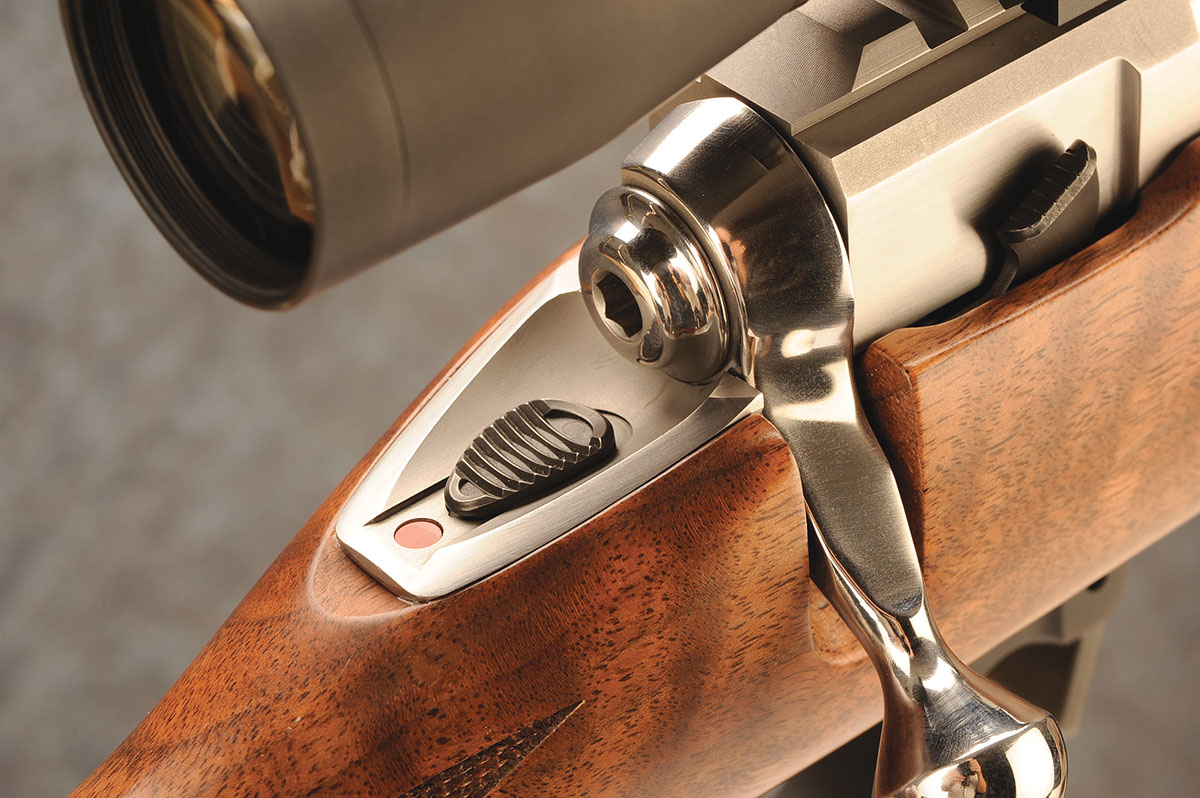
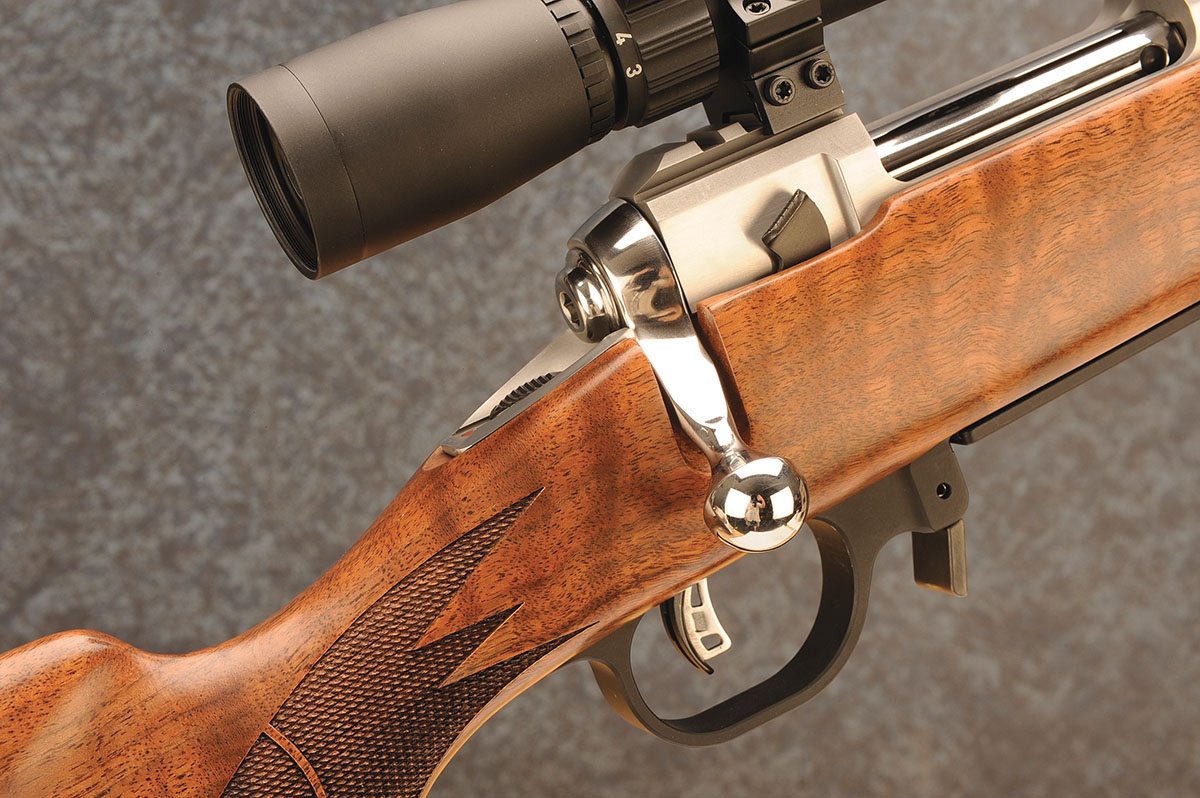
The tang-mounted safety features three positions. All the way back is full “safe” – nothing moves including the bolt or the trigger. The mid-position allows the bolt to be opened to unload or replace a round. Full forward is the “fire” position. When the rifle is cocked, the cocking indicator on the receiver is at its highest position; firing the rifle drops this lever almost level with the stock.
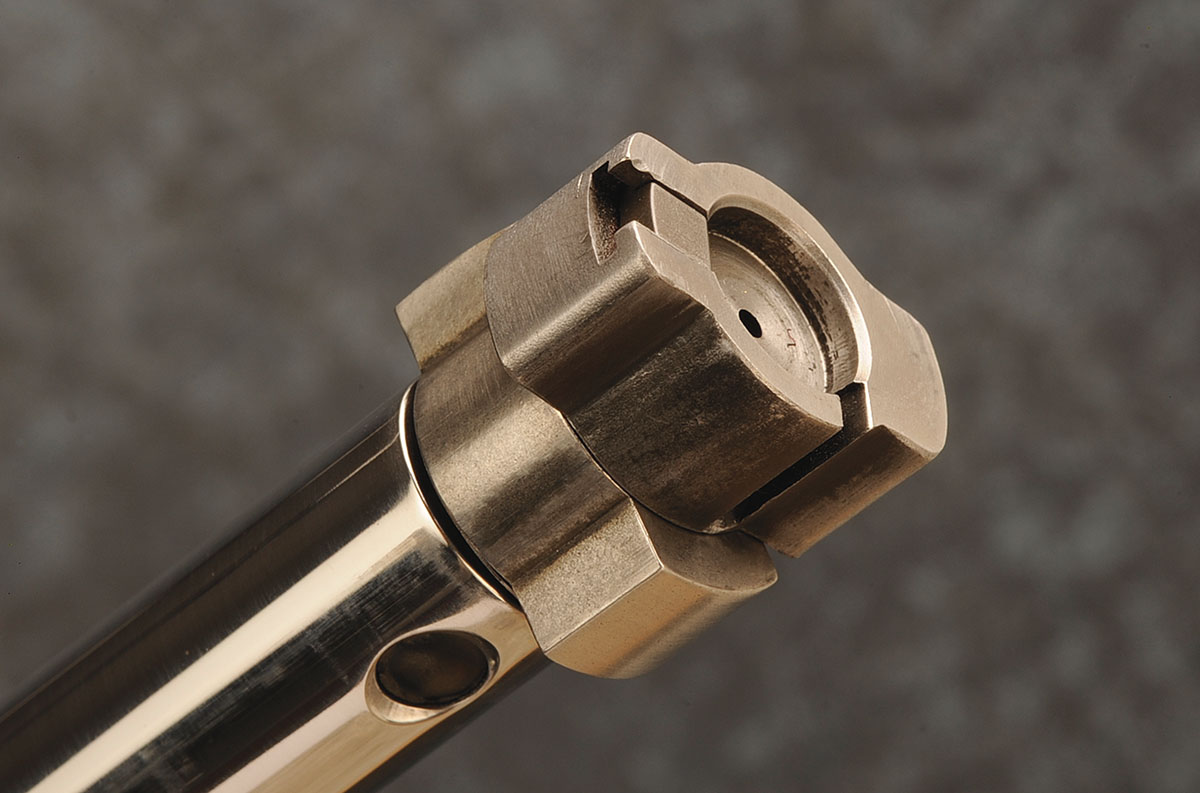
To remove the bolt, make sure all ammunition has been removed and move the safety fully forward. Pull the bolt to the rear, push down on the cocking indicator on the right side of the receiver while pulling the trigger to the rear. The bolt will follow to the rear and out of the receiver.
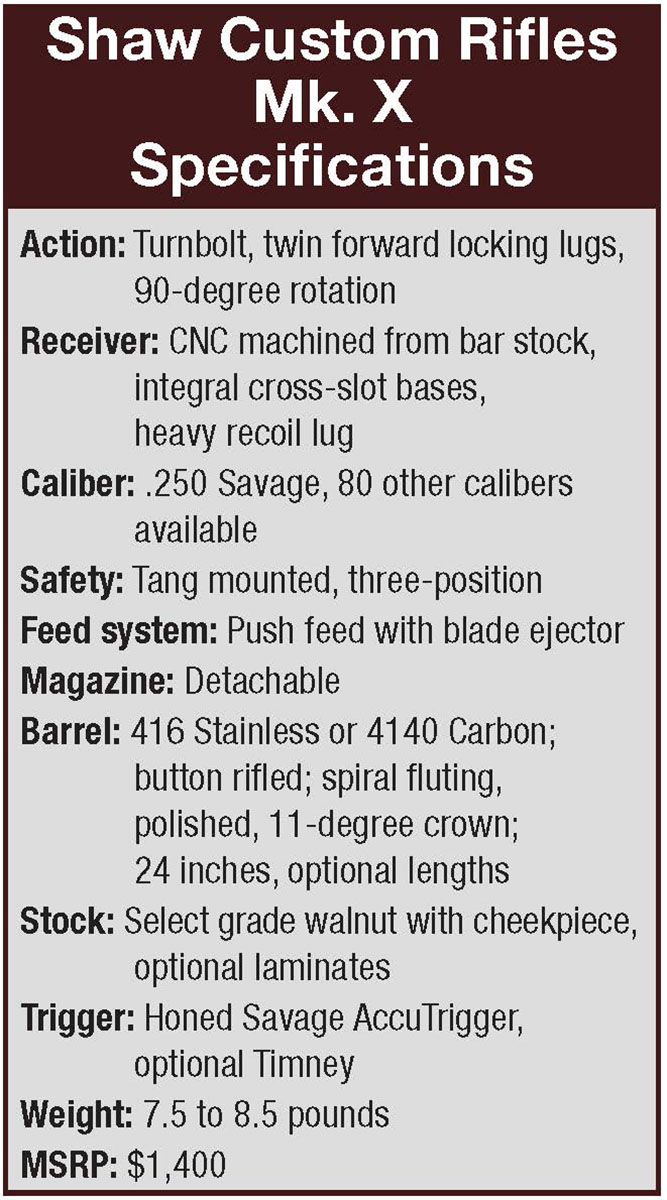
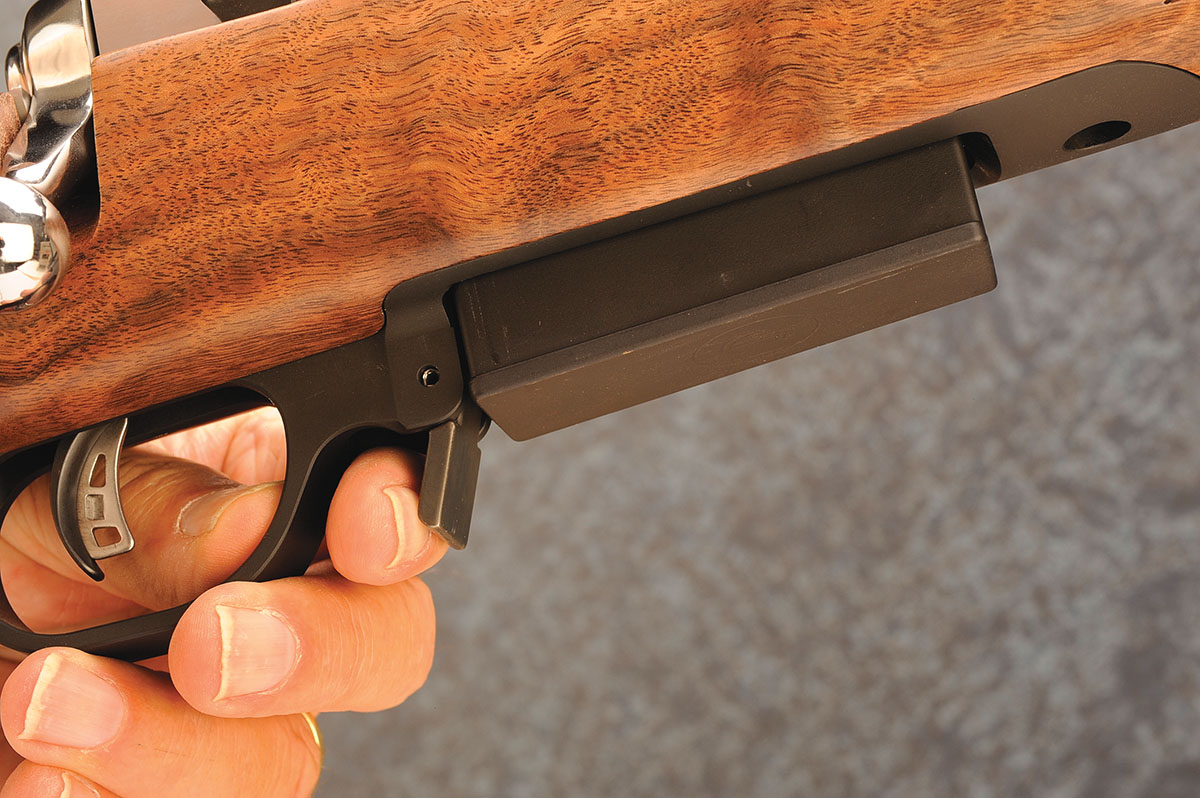
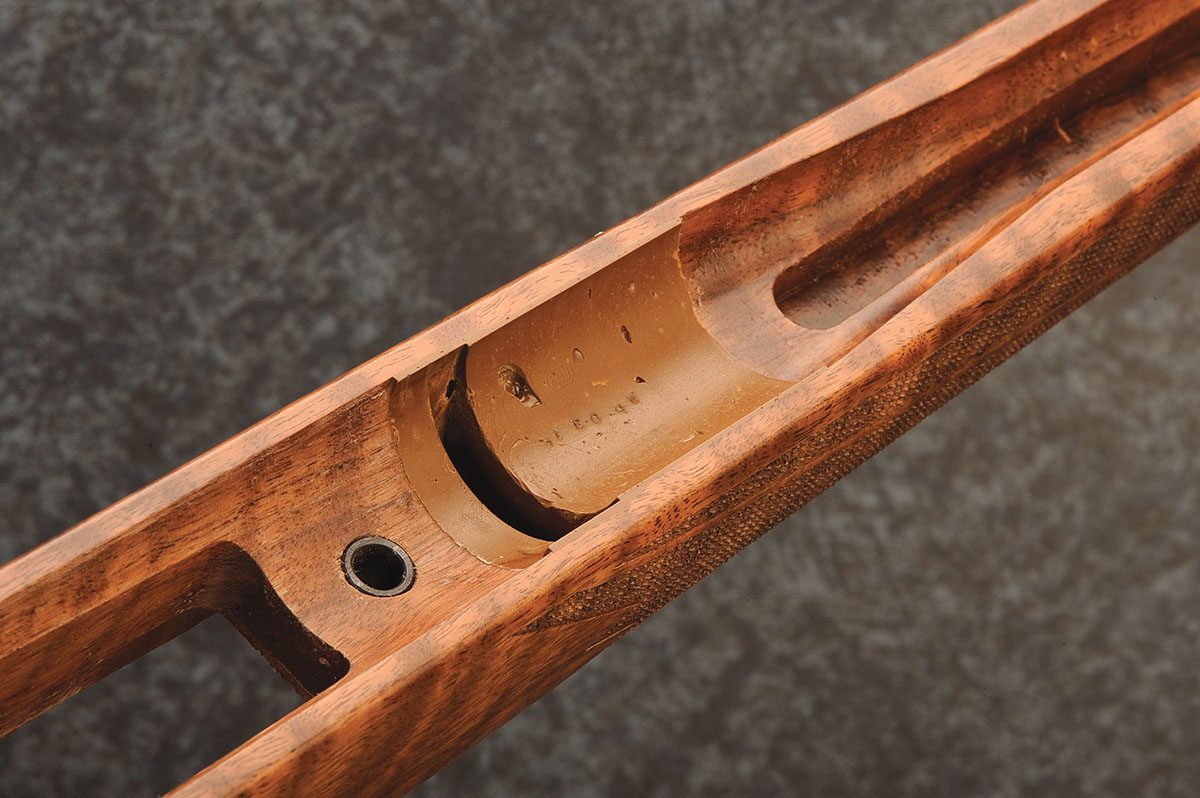
The AccuTrigger is standard, but a Timney trigger can be ordered as an upgrade. Pull weight of the AccuTrigger was 3.5 pounds. With a little tweaking, I turned it down to an even 3 pounds without any play. The trigger and magazine are housed in one-piece “bottom metal” made from an aluminum alloy for weight reduction, and it fits into the inletting with uncanny precision.
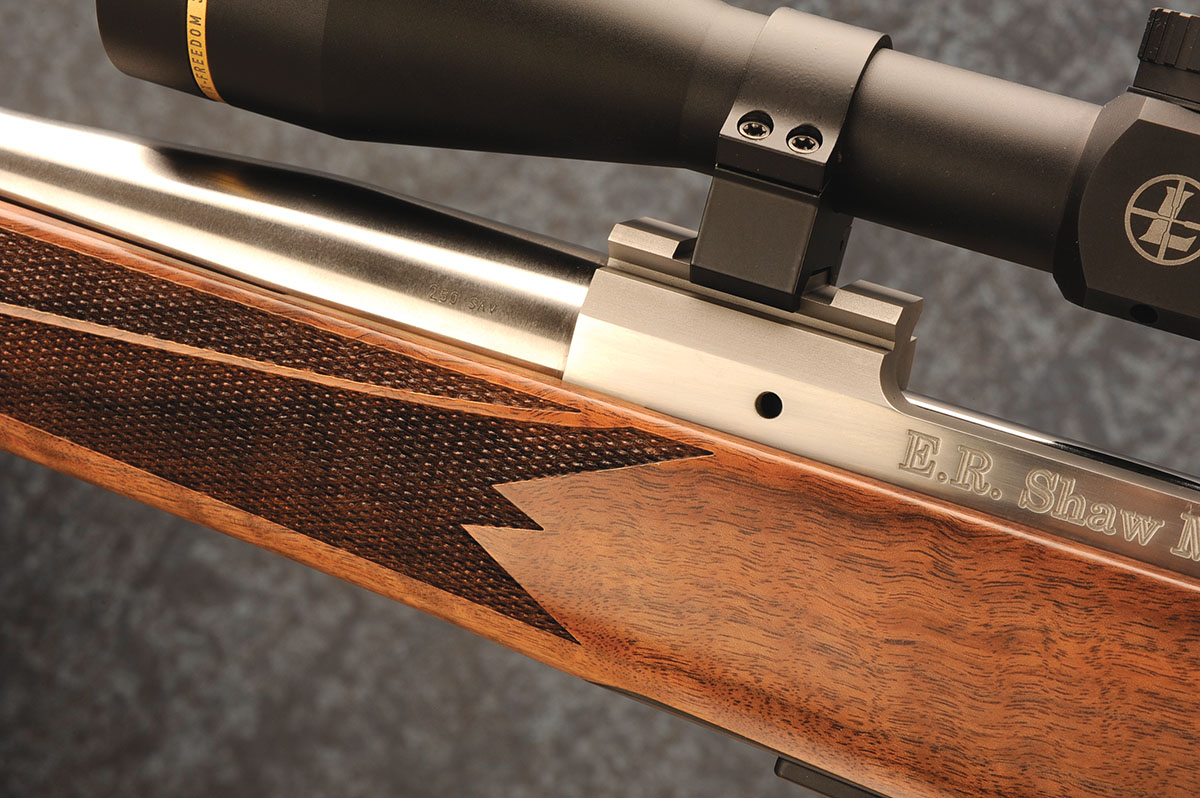
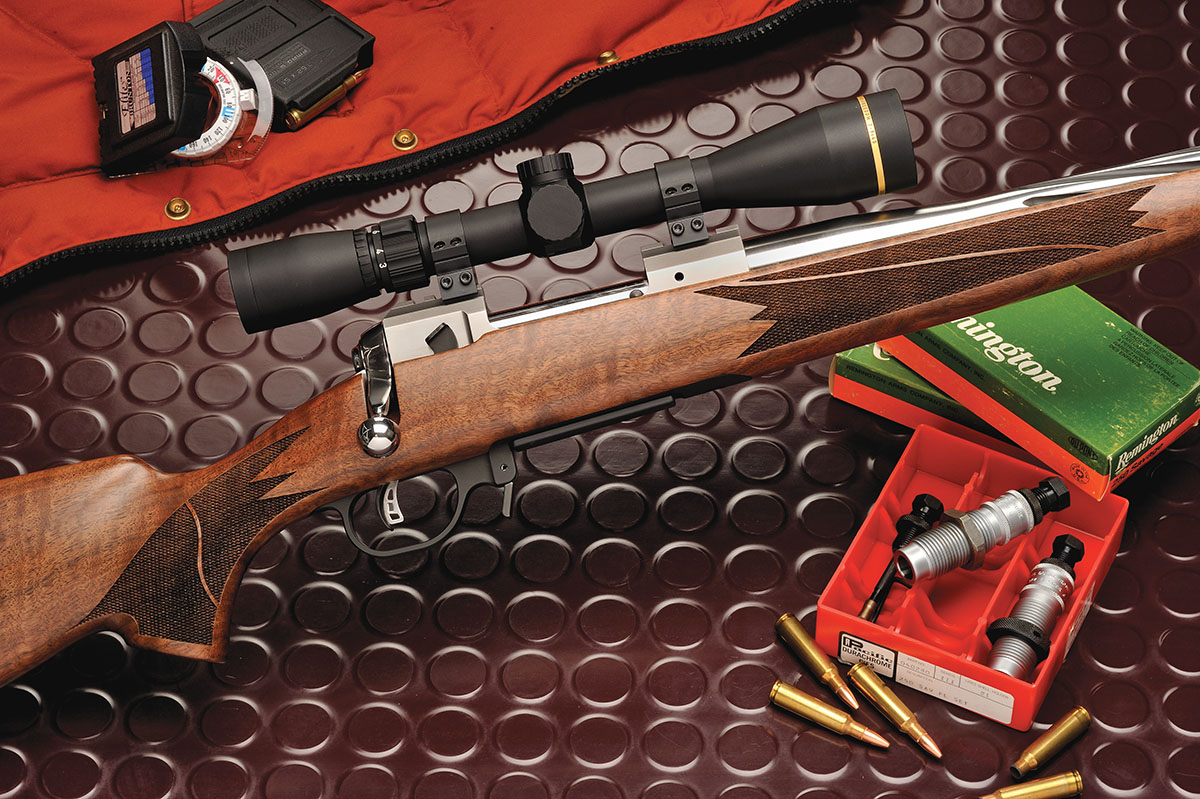
Shaw Custom Rifles offers only three stocks – Grade 5 walnut or a choice of pepper or nutmeg laminate. As a holdout for wood over synthetic or laminates, I was happily surprised when my rifle arrived. The wood is certainly high grade – complete with crotch feathering worthy of the $100 upgrade over the laminated stocks. It is finished with a semigloss coating that brings out the grain, color and figure of the wood.
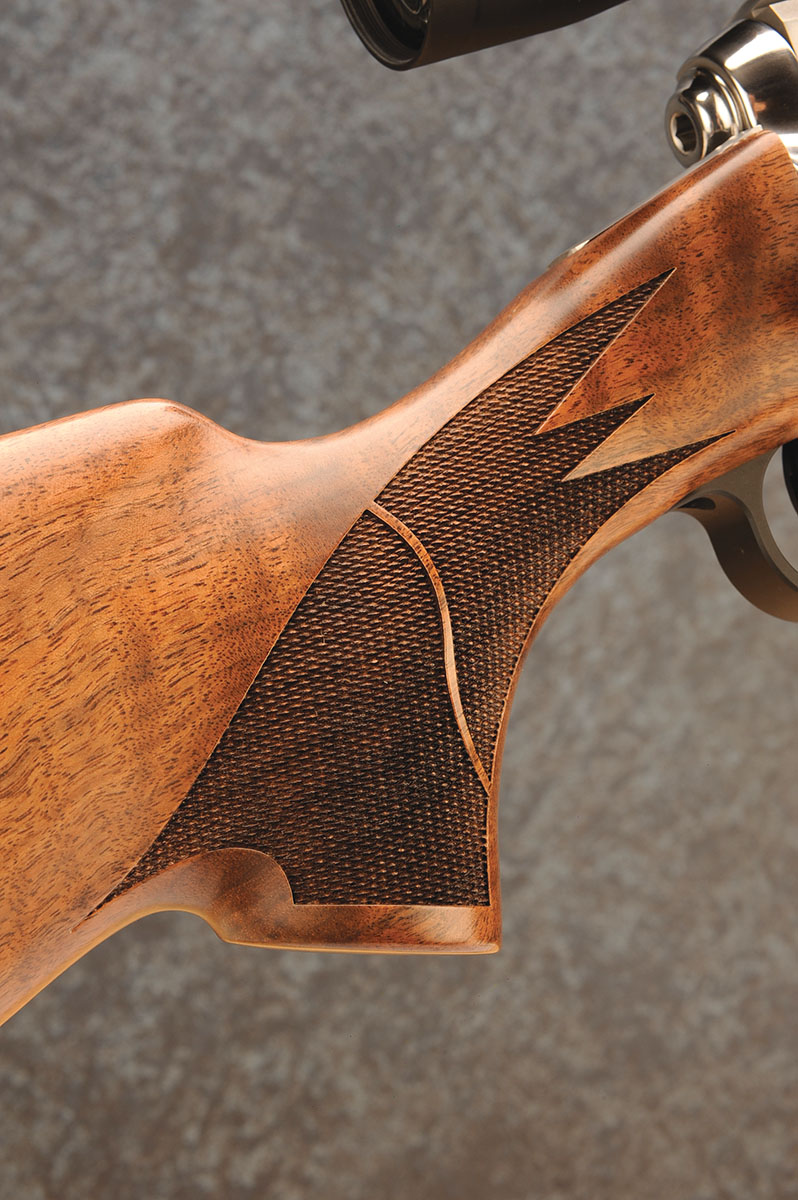
The point-pattern checkering looks to be 22 lines per inch and is complete with a ribbon running through the design from one end to the other. There are no overruns, and the diamonds are crisp and sharp. I would estimate the checkering was cut after the stock was complete, and then filled to match the finish of the completed rifle. There is no forend tip, nor is there a pistol-grip cap; something I would add as an option or upgrade for a truly custom look. The pistol grip has a palm swell, there is a cheekpiece, and the stock is profiled in the now-traditional classic look with a straight comb. Sling swivel studs and a Pachmayr classic-style Decelerator pad with a black spacer complete the stock.
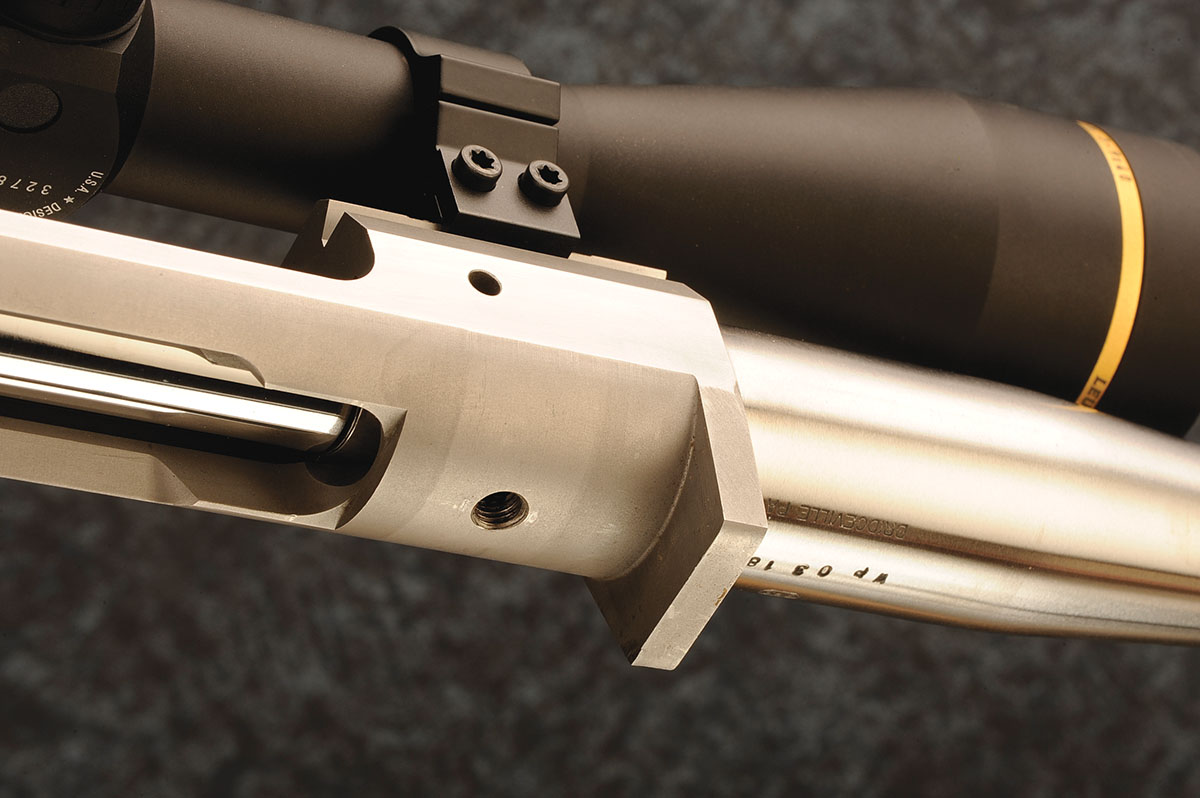
To complete the rifle, I placed a new Leupold VX-Freedom scope in the mounts on top of the rifle for range testing and hunting. With a retail price of under $300, this scope is machined and assembled in the U.S. Both windage and elevation adjustments can be made without the aid of a coin and even with gloves on. As a commercial photographer, the glass in any optic is a prime concern to me, and this scope fills the bill.
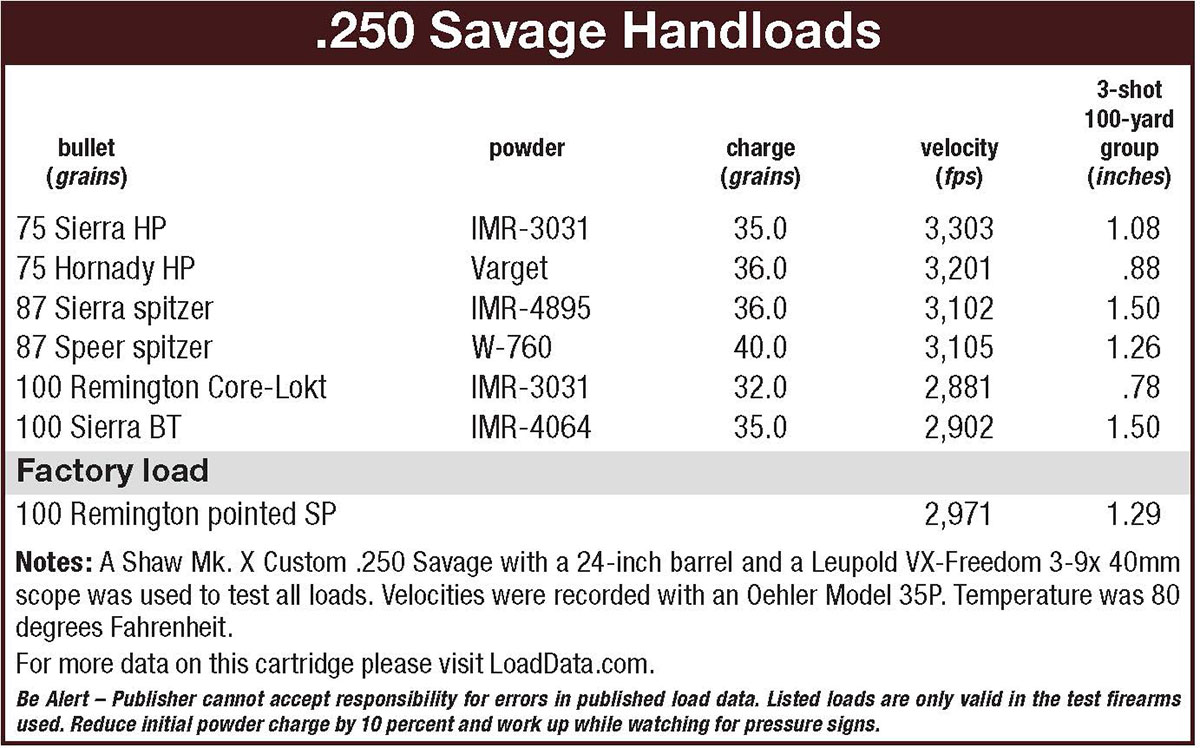
The weight of the rifle with the scope attached is a hefty 8 pounds; just right for the 250 Savage cartridge. At the range, I had planned to test the rifle with factory ammunition, but to my disappointment, most ammunition makers today have ceased to make 250 Savage ammunition, or they do it on a very limited basis. Calling around to the various sporting goods stores did not show any promise, but checking my supply, I did come up with some Remington 100-grain pointed soft points. In this rifle, these factory loads gave me average groups under 1.5 inches, so I resorted to handloads that I had used successfully in other rifles in the past.
With a mixture of bullets, weights and powders from various manufacturers, I settled in for some testing. For small game, my choice was 75-grain bullets, with Sierra and Hornady options leading the way. While the Sierra grouped just over an inch, the Hornady hollowpoint came in at .885 inch at 3,201 fps; the second-best group of this shooting session.
The bullet weight that made the 250 Savage a hit by going over 3,000 fps weighed 87 grains, and here the Sierra spitzer was beaten out slightly by the Speer 87-grain spitzer; both came within a few feet per second of each other in velocity. With heavier deer-size bullets, the Sierra 100-grain boat-tail cut average groups of around 1.5 inches while the Remington Core-Lokt trumped that with groups around half that. This bullet and 32.0 grains of IMR-3031 has been my all-time favorite for the 250 Savage, with consistent accuracy to boot. It is a great load and at almost 2,900 fps is the perfect load for the whitetail hunter who hunts in the eastern part of the country.
During testing, there were no problems with feeding, extraction or ejection of spent cases. In every regard, operation was sure and crisp, and the trigger – with its small amount of take up – was pleasant to use and reminded me of a two-stage trigger used in some of my other rifles.
I like the new Shaw Mk. X Custom rifle. With an almost unending list of cartridge choices, fine workmanship and accuracy, this rifle is surely going to be one of my favorites. The company has been in business for a long time and knows what a premium rifle is. For more information, visit shawcustombarrels.com.