Bulk Bullets and the 223 Remington
Cost-Cutting Performance
feature By: Patrick Meitin | April, 19
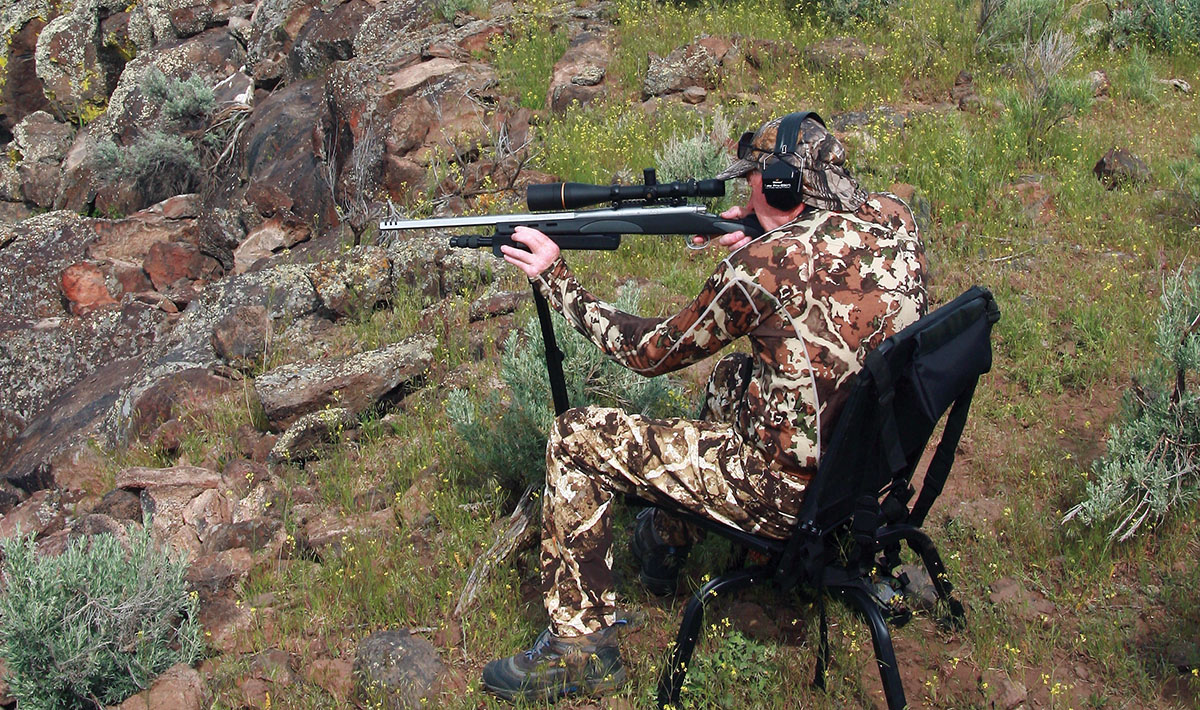
I’ll be lucky to make it into late June with the loaded ammunition on hand. There will be several 1,000-plus-round weekends in eastern Oregon thinning Belding’s ground squirrels at the behest of a landowner friend. We’ll trek down to southeastern Idaho for some rockchuck sniping. My father and I normally plan at least one major road trip into prairie dog territory. Occasionally we push through to West Texas to cull jackrabbits while assisting my long-time chum Steven Tisdale with his wild-hog problem. Once festivities begin, I’d really rather not return to the loading bench.
More pressing is the matter of financing all this loading. Since the obsession really took hold, these carefree trips to varmint-shooting meccas have begun to cost real money. I’ve become a varmint-shooting penny pincher out of economic necessity.
To be completely honest, for 90 percent of small-varmint shooting, cartridges in the 22-250 Remington/220 Swift to 243 Winchester/25-06 Remington class aren’t exactly mandatory. Such cartridges boost powder consumption measurably. I certainly pull out the big boomers occasionally to stretch my legs or cheat wind, but the brunt of shooting occurs between 150 and 300 yards – well within 223 Remington capabilities. A case for even smaller varmint cartridges could be made, but free/cheap 223 brass pretty much clinches the deal.
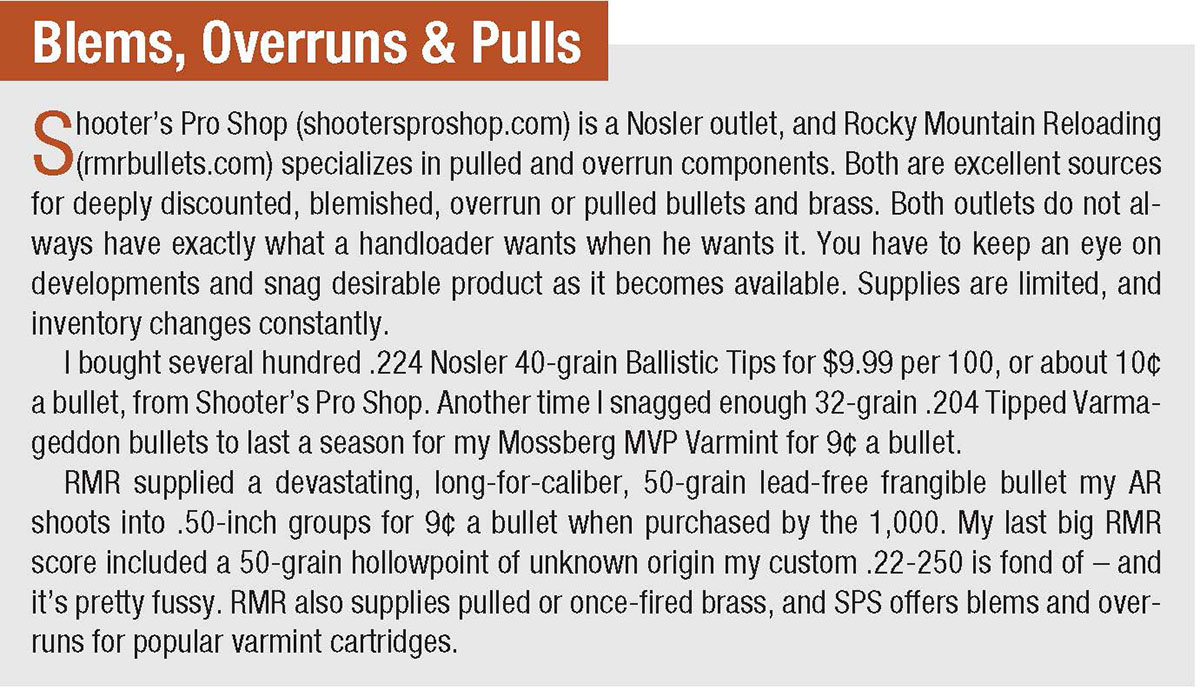
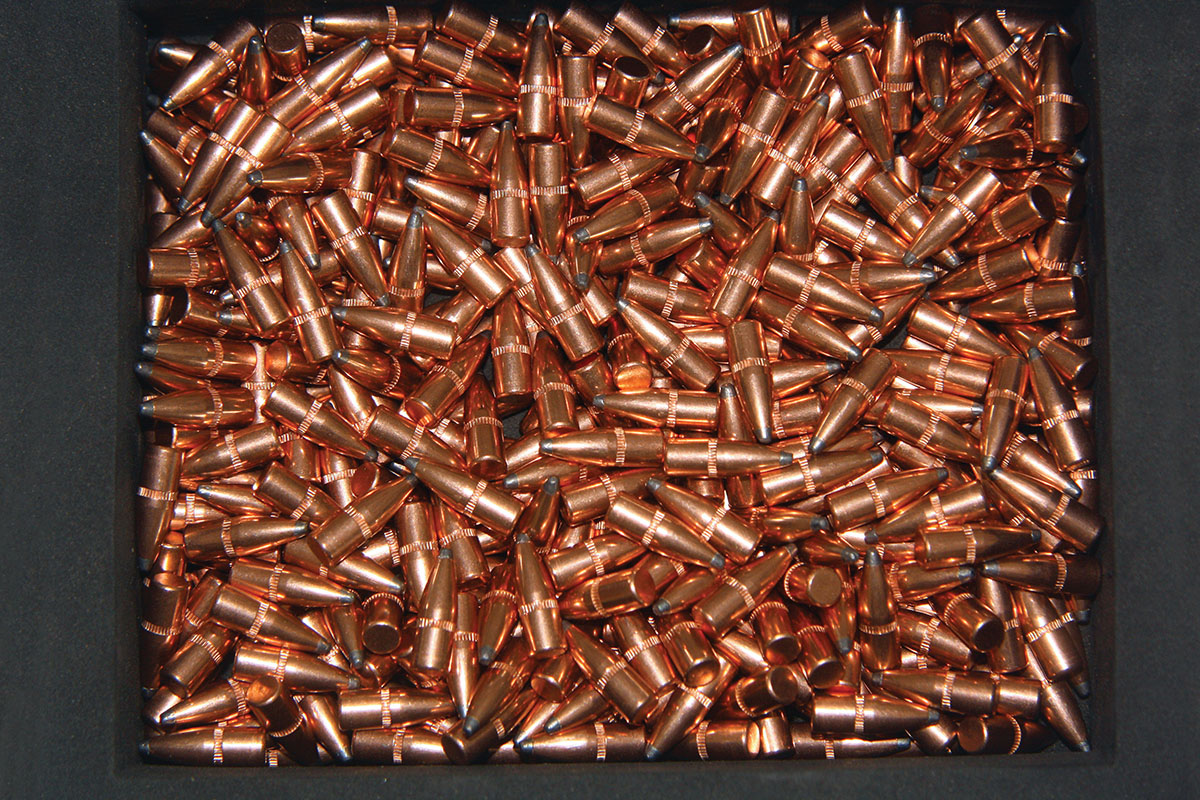
While I’ll submit that polymer-tipped bullets (Hornady’s V-MAX, Sierra’s BlitzKing and Nosler’s Ballistic Tip) and specialized hollowpoints (Barnes Varmint Grenade and Speer TNT Green) are super accurate, ballistically exceptional and terminally dramatic, more affordable generic softpoints and hollowpoints hold their own. Prime examples from those companies already mentioned include Hornady’s traditional softpoint (especially cost effective when bought in bulk from sources like Natchez Shooters Supplies), Sierra’s venerable Varminter SPs and HPs (also offered in bulk from Natchez), Nosler’s Varmageddon and the Barnes Varmin-A-Tor. They are cheaper than “modern” bullets while offering excellent terminal performance.
Still more savings is found through private-label bullets from outlets such as Midway USA, Midsouth Shooters Supply and Rocky Mountain Reloading (RMR) – in addition to blemished, overrun or pulled bullets offered at deep discounts by certain outfits (see sidebar). These bullets cost 13¢ to 15¢ apiece purchased in 100 packs, pennies per bullet less when 1,000-count orders are made from outlets such as RMR. This is in contrast to name-brand or boutique bullets running from 25¢ to $1 each.
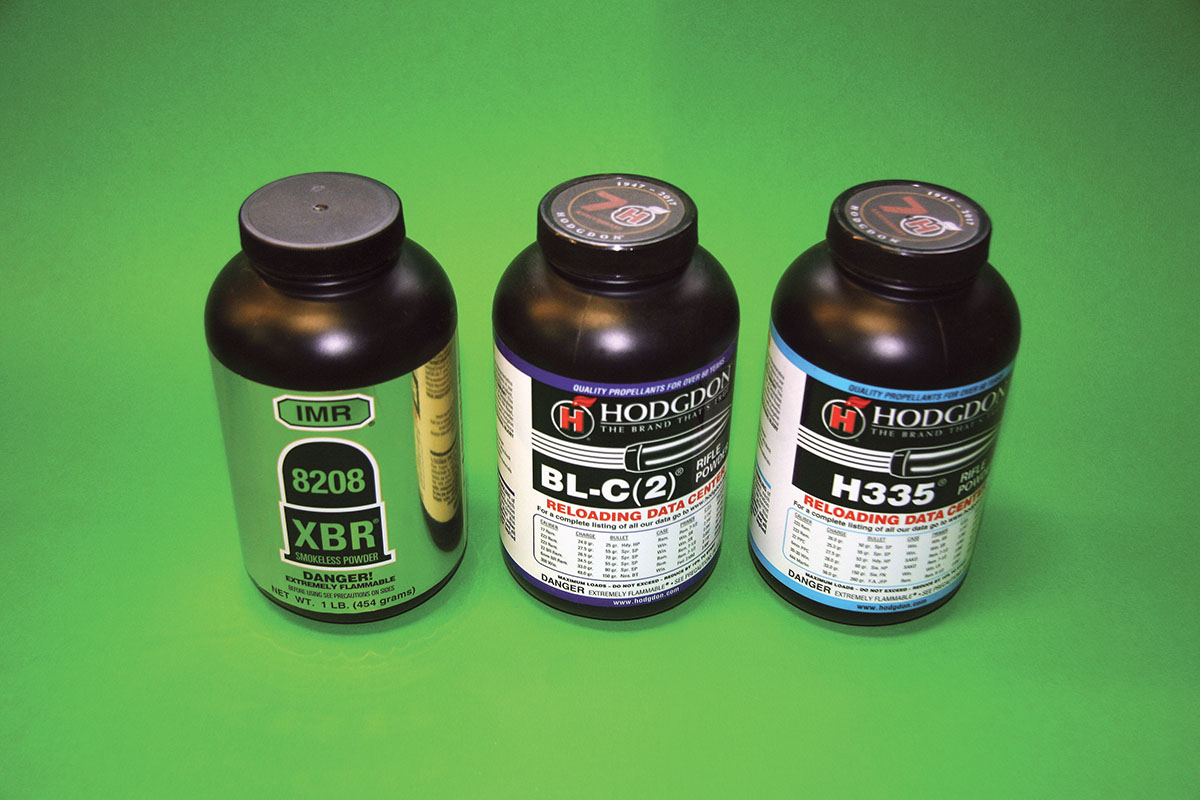
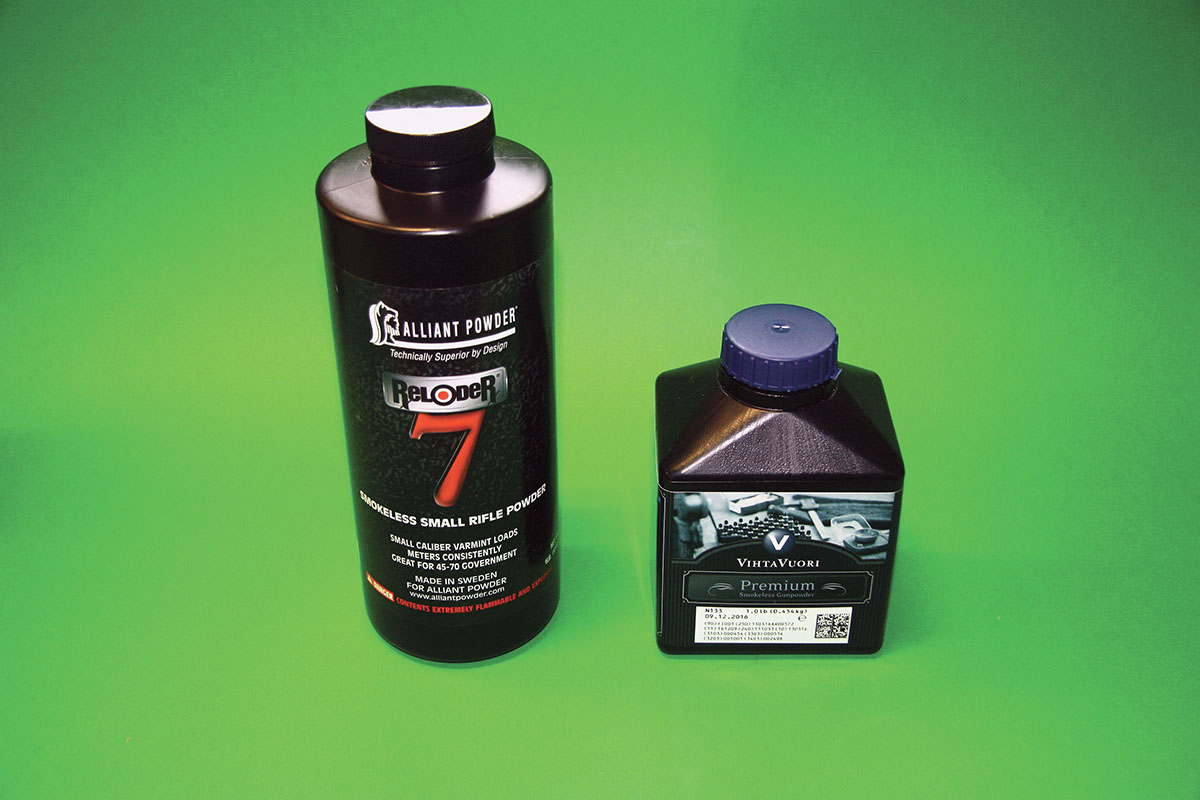
As such, I’ve mixed things up, choosing some of the newest propellants along with time-tested standbys that have been getting the job done since the 223’s introduction. Many handloaders assume newer is always better, and in some cases slight velocity boosts are realized. But established powders gained that status by reliably delivering the goods and shouldn’t be ignored. Old standbys are included, like Hodgdon’s H-4895, H-322, Benchmark, Varget and CFE 223, Winchester’s 748, Ramshot’s TAC, Alliant’s Reloder 7 and Vihtavuori’s N140. But I also took the opportunity to test powders new to me – in relation to the 223 at least – including Ramshot X-Terminator, Accurate LT-32 and A-2230, Alliant Reloder 10x and Vihtavuori N133. I also made a point to try time-tested propellants that appear in load data consistently, but for whatever reason I’ve not tried. These include BL-C(2), H-335 and IMR-8208 XBR.
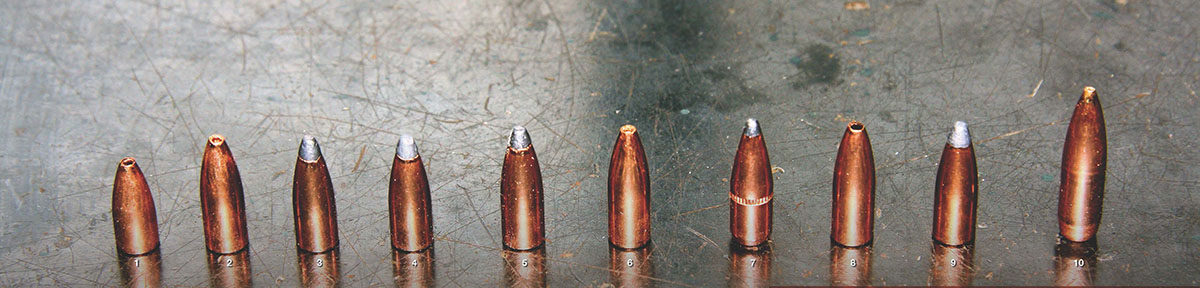
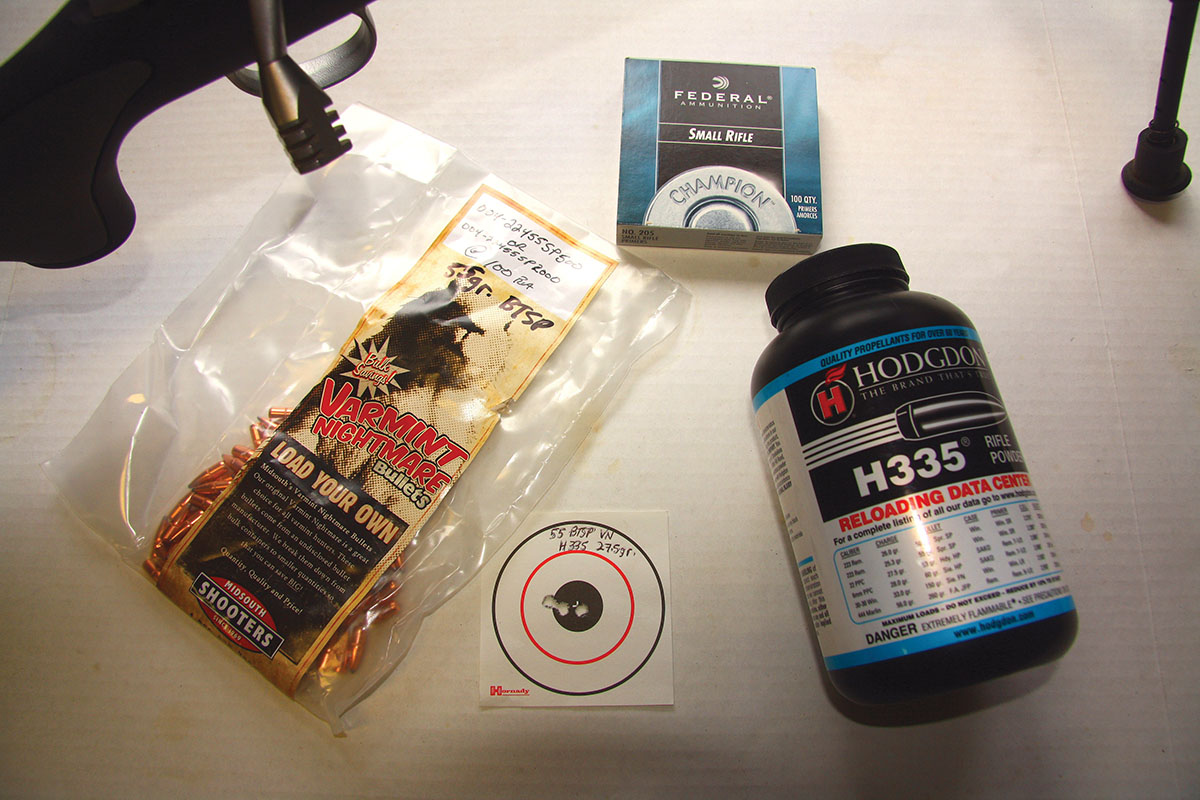
I have several hundred prepped and primed, once-fired Lake City brass on tap (sorted freebie pickups), cases that have traditionally proven to be reliable. They hold 30 grains of water on average; comparable with Hornady, Remington, Federal and Winchester brass. Bullets consisted of four Midway Dogtown selections in 50- and 55-grain hollowpoints and softpoints, five Midsouth Shooters Supply Varmint Nightmare X-Treme and Varmint Nightmare offerings, including 34-grain hollowpoints, 50- and 55-grain HPs and softpoints, plus Rocky Mountain Reloading’s new 69-grain BTHP 3-Gun Hunter. The latter successfully mimics Sierra MatchKing ballistic characteristics, but with an explosive tip and internal crimp that checks expansion. A sufficient supply of CCI 400 primers was on hand.
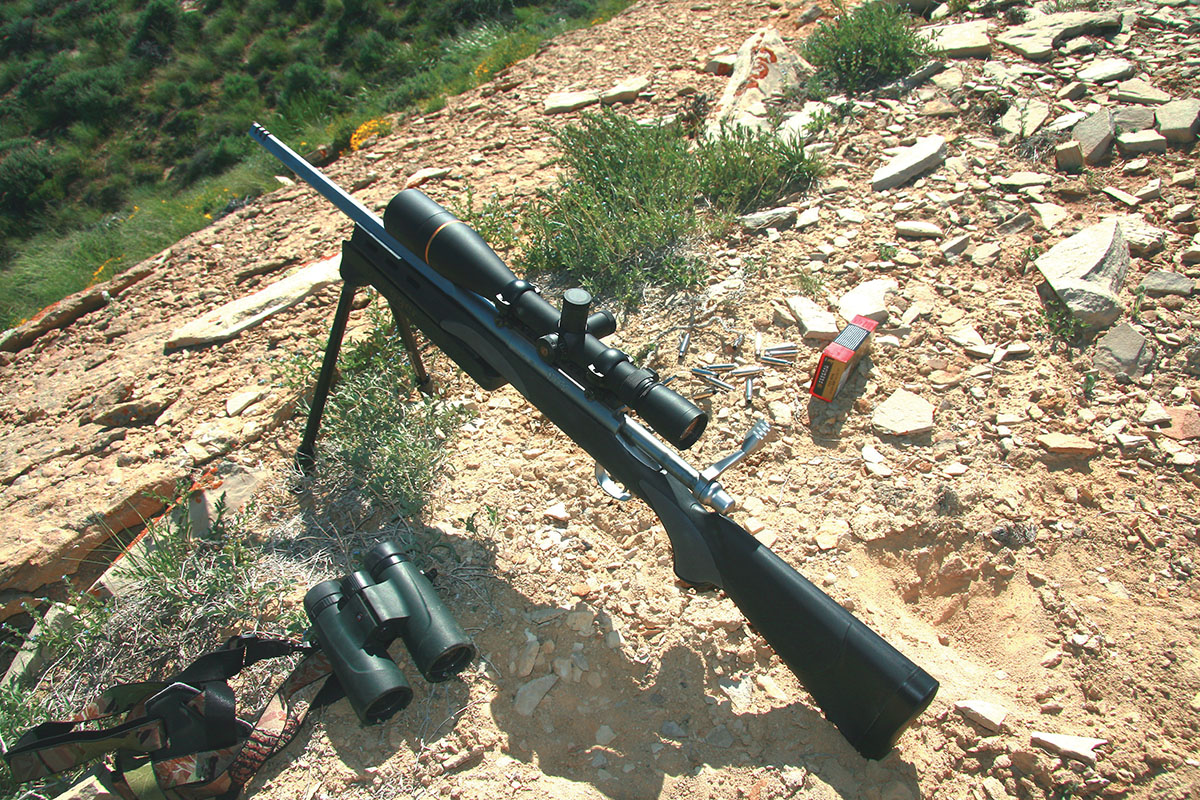
The test rifle was a thoroughly broken-in Remington Model 700 Varmint Target Rifle (VTR SS) with a “triangle” barrel profile and integral three-slot muzzle break. This tactical/varmint hybrid includes a 22-inch barrel with a 1:9 twist, oversized tactical bolt handle, integrated Picatinny rail, vented stock, X-Mark Pro externally adjustable trigger and a factory bipod. It is made from 416 stainless for low maintenance.
The rifle shot well right out of the box and has accounted for scads of rockchucks, ground squirrels and prairie dogs in various states. Of note is the rifle’s lack of substantial free bore, a situation encountered with another recent tactical-model Remington 223. This necessitates seating bullets to AR-magazine lengths for proper chambering. Its Leupold VX-3i 8.5-25x 50mm CDS Target scope is a relatively affordable long-range optic with turrets covered by screw caps, gin-clear glass and ultra-fine crosshairs.
Due to the nature of magazine deadlines and because I live in the Northwest, I must take advantage of any sunny day provided to operate a chronograph. I was also forced to deal with gusting wind during load testing. So I approached the shooting as I would a hot ground-squirrel colony or prairie-dog town – allowing the barrel to cool only while changing targets after each 15 slow-paced/single-feed shot string. I also ran a bore snake through the barrel after every 30 shots, as is my habit while afield.
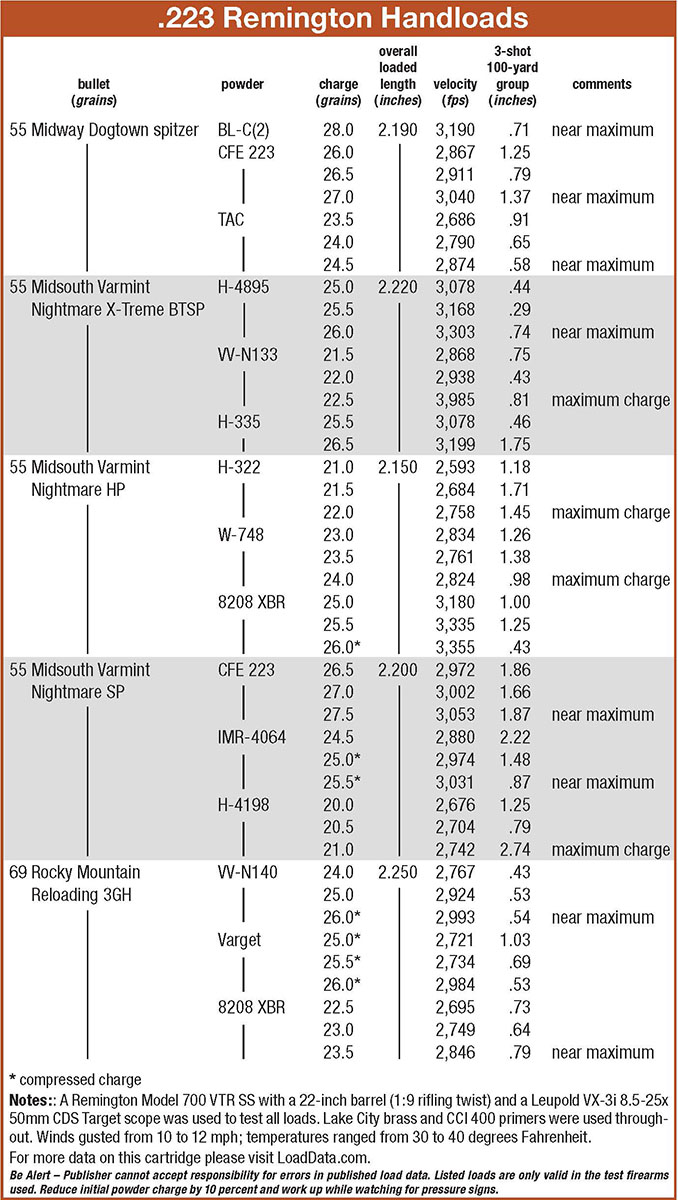
Some of my old powder favorites like W-748, H-322 and copper-erasing CFE 223 proved somewhat disappointing in this test, surprising only because my other 223s (a Savage Model 10 with a slower rifling twist and an AR with a faster twist) consume these powders happily. Go figure. IMR-4064 was too slow burning for the 223, even with heavier bullets.
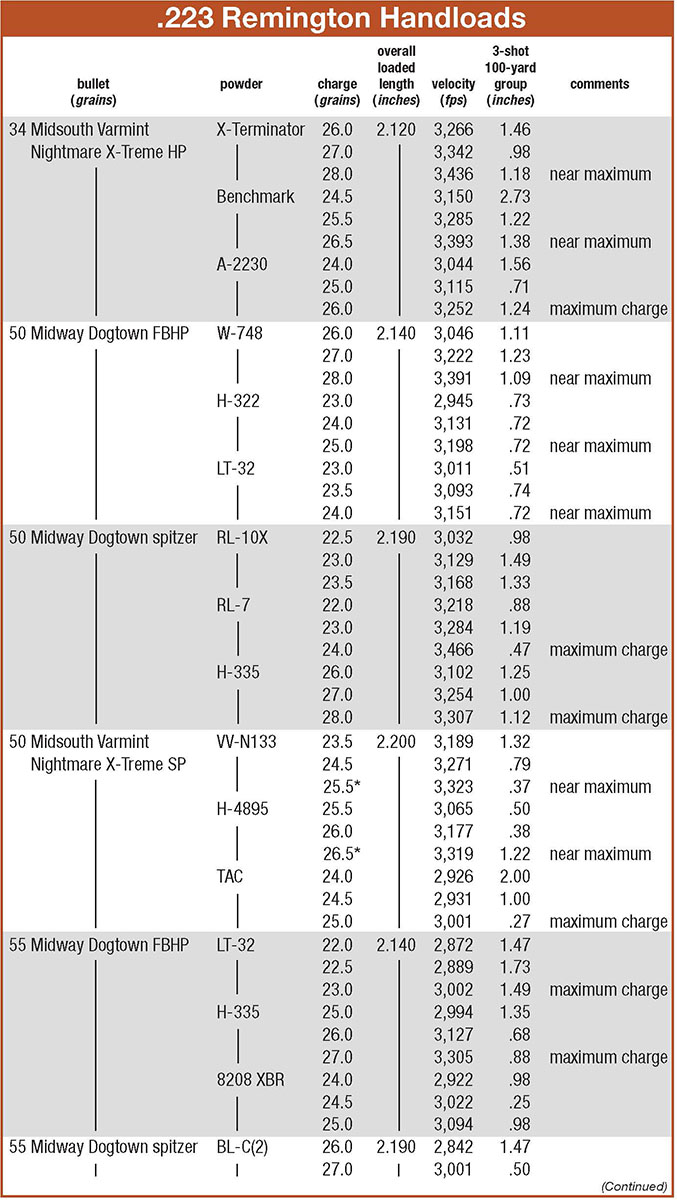
The Remington VTR, with its 1:9 rifling twist, also didn’t perform up to expectations with the lightest bullets, especially the 34-grain Midsouth Varmint Nightmare X-Treme hollowpoint. The best I could coax out of this rifle with this bullet was just under .75 inch with 25 grains of Accurate 2230. I’d bet my Savage with its 1:12 twist would produce tighter groups with these bullets.
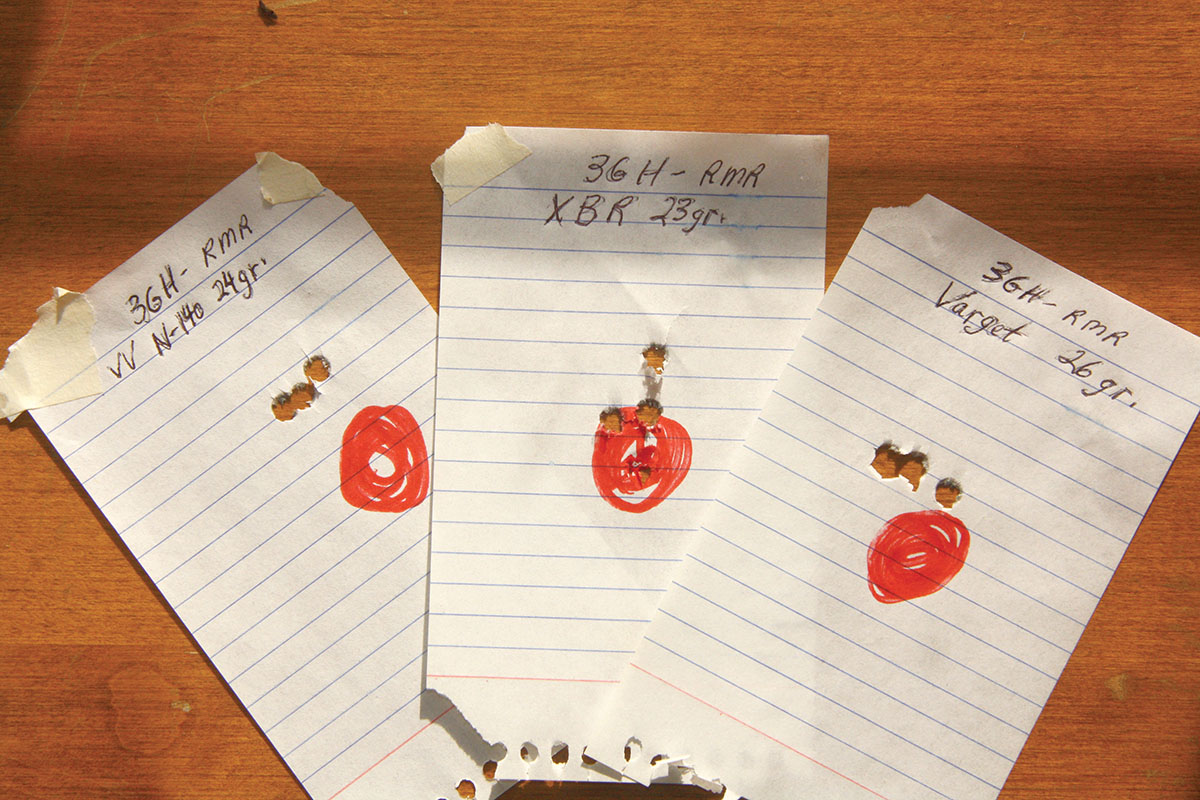
Western Powders’ Accurate LT-32 and Ramshot TAC, Vihtavuori’s N133 and Alliant’s Reloder 7 delivered good results with 50-grain bullets. Twenty-three grains of LT-32 produced a .51-inch group with Midway’s Dogtown 50-grain FBHP; 24 grains of RL-7 provided a .47-inch group with Midway’s Dogtown 50-grain Spitzer; 25 grains of TAC a .27-inch group with Midsouth’s 50-grain softpoint Varmint Nightmare X-Treme, and a compressed load of 25.5 grains of N133 provided a .37-inch group with the same bullet.
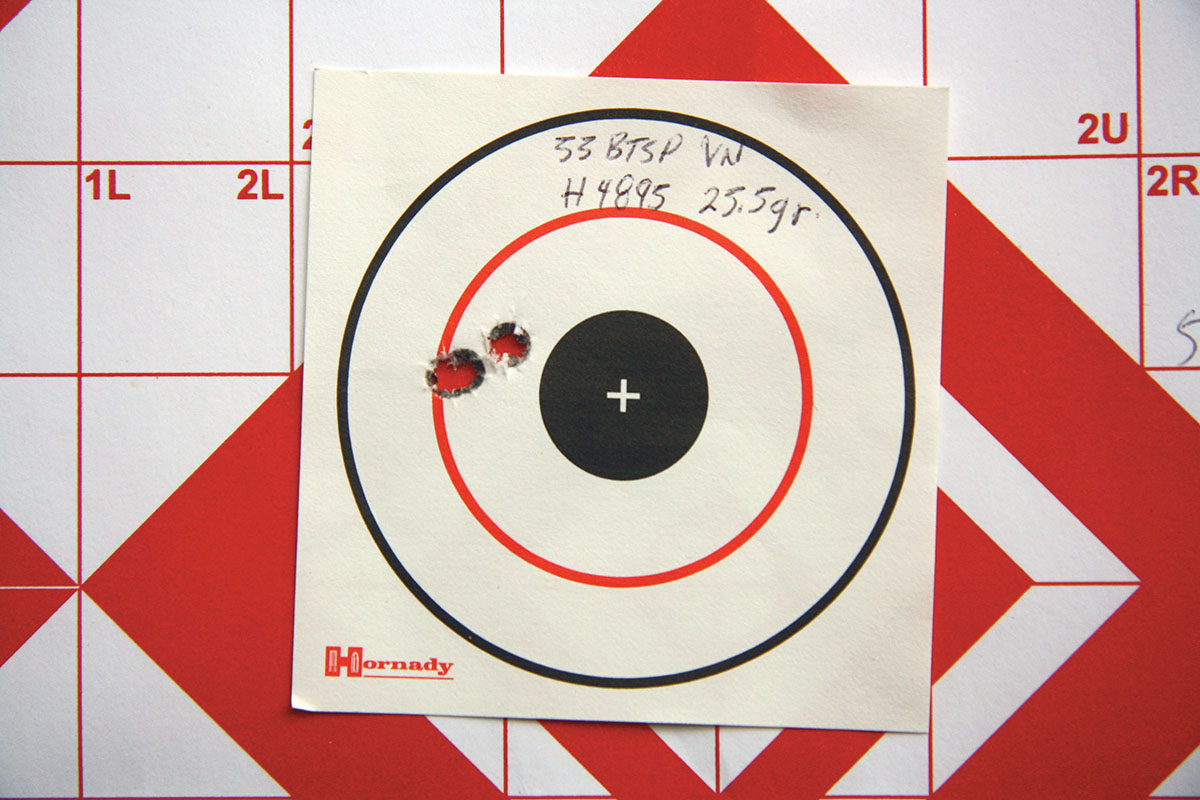
The VTR’s fast rifling began to show more consistent results as bullet weight approached 55 grains. IMR-8208 XBR produced a true one-hole group with Midway’s Dogtown 55-grain FBHP loaded over a 24.5-grain charge, IMR BL-C(2) broke .50 inch with 27 grains under a 55-grain Dogtown spitzer. Hodgdon 4895 came very close to producing another one-hole group with 25.5 grains and a 55-grain BTSP Varmint Nightmare. That group measured .29 inch. Midsouth’s BTSP Varmint Nightmare did quite well all around, producing four groups of .50 inch or less. In 55-grain hollowpoints, Midsouth’s Varmint Nightmare paired well with 26 grains of IMR-8208 XBR, producing a sub-.50-inch group.