22 Nosler
Versatility in Both a Rifle and a Cartridge
feature By: Stan Trzoniec | April, 22
The way I understand it, the 22 Nosler was originally designed for the AR-15 frame. The idea was that this type of rifle limits the overall length of a cartridge to around 2.26 inches, which then of course, limits the power of the cartridge that in the past played host to the more common and the granddaddy of the military scene, the 223 Remington. It is common knowledge that since everyone is trying to increase the power of the 223 Remington with a new design fitting the popular AR rifle, there was a niche here to be filled, and the 22 Nosler seems to be doing a good job at it. Since the 22 Nosler was designed to fit the existing bolt face of the AR-15, any conversions are accomplished with just a simple barrel swap and a magazine suitable for the 6.8
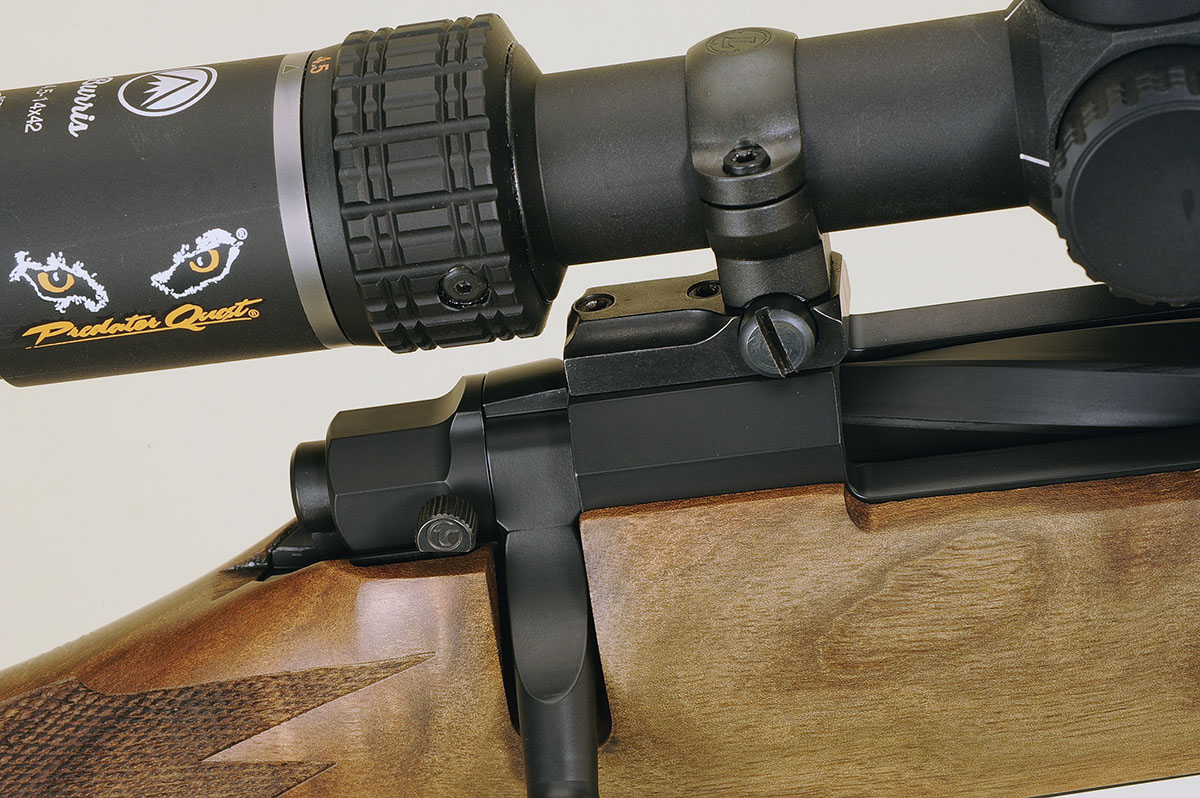
In any event, I’m an old-fashioned guy and I like my varmint rifles made in the classic form with a wood stock, forend tip and a pistol grip cap if the rifle warrants. To this end, since the 22 Nosler is proprietary to this company, and they also make rifles in many calibers, their M-48 was introduced as a companion to the 22 Nosler. Now with a cartridge that will deliver up to 300 percent in muzzle velocity, we have a ready-made combination ready to go.
First, the rifle. Starting in 2005, Nosler entered the centerfire rifle field with the Model 48 Custom Sporter. From there, it branched out into the Heritage, Patriot and the Outfitter using the same action but with different stocks and cartridge options. For my use, the Heritage got the nod and complete with fancy grade wood all put together in a classic-styled stock, it certainly deserved a closer look.
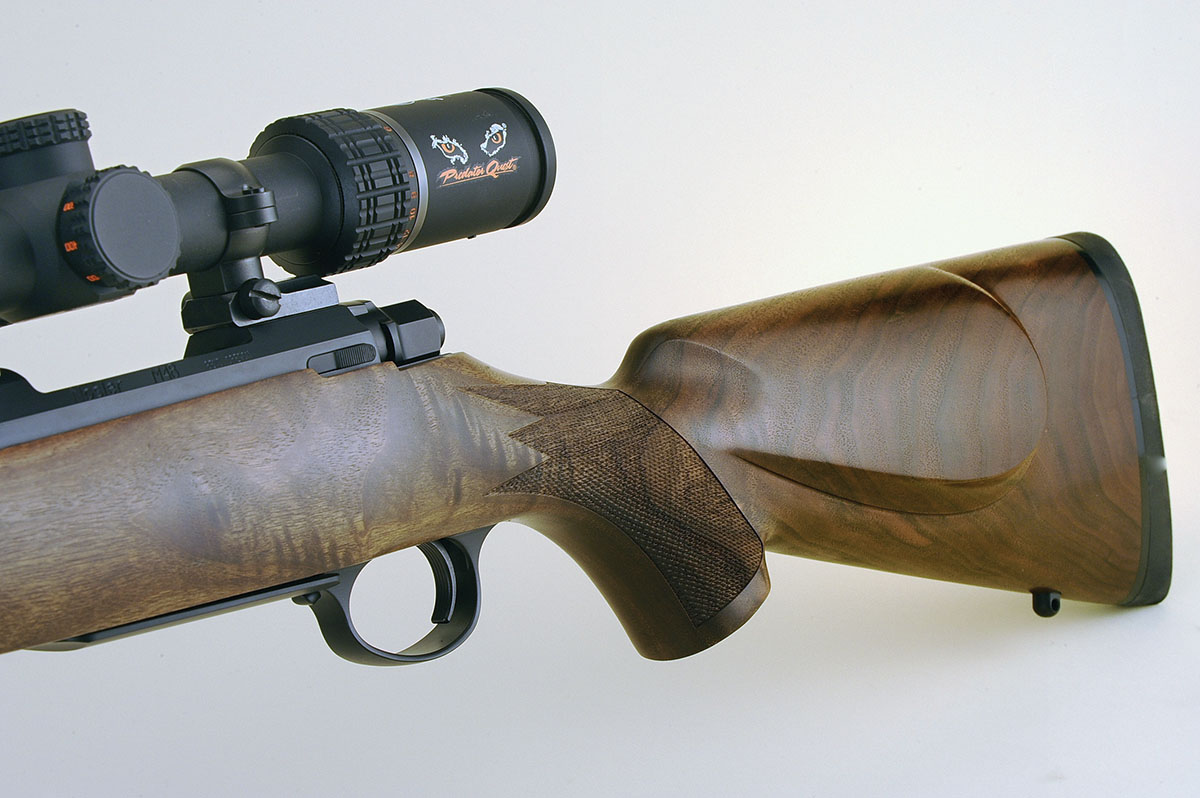
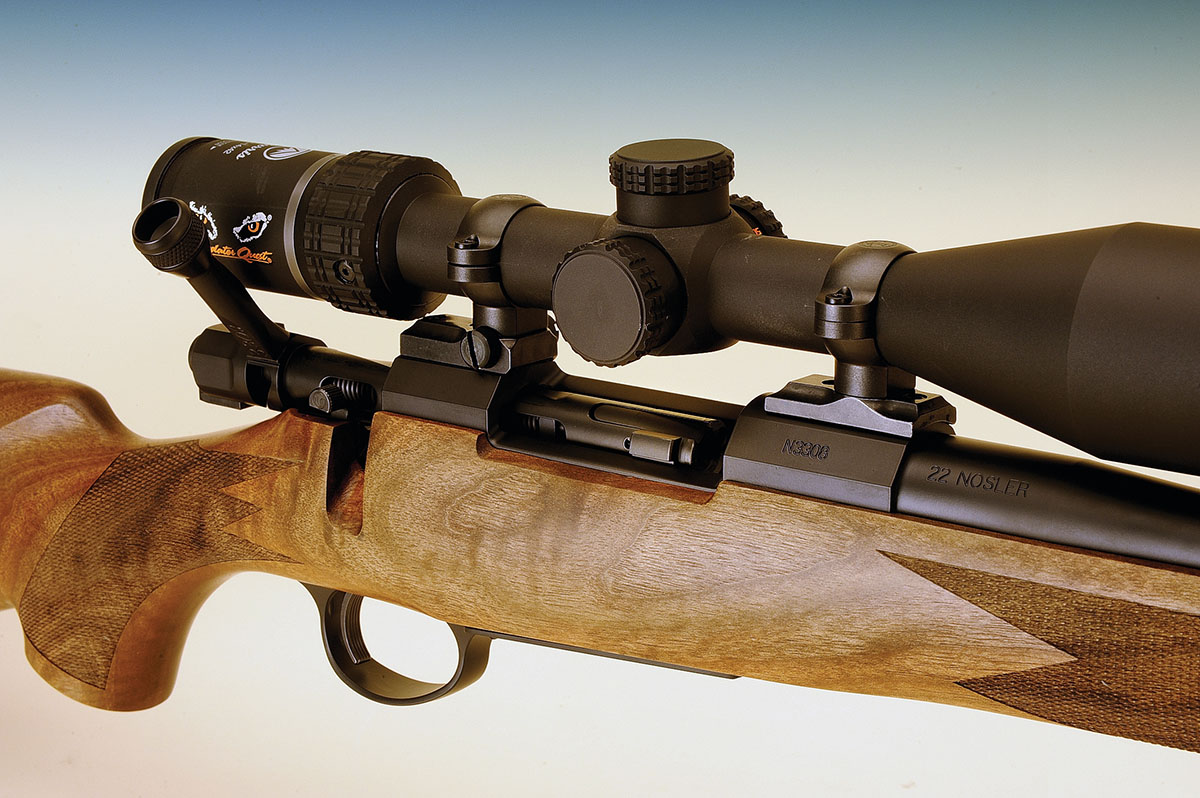
Overall, the rifle is well thought out and priced right. In line with traditional bolt-action rifles, the receiver is 6 inches long, less the bolt shroud. The sides are machined flat, which extends into the receiver bridges, both front and rear, that accept Remington Model 700 scope bases. There is a gas relief port on the left side with the bolt release on the same side, but to the rear of the action and is quick to respond to release the bolt for maintenance or travel. The bolt itself is massive for a .22-caliber cartridge, machined to a .685-inch diameter front-to-back with a spiral-fluted body. Twin-locking lugs support the bolt at the breech and there is an anti-bind cut on the right lug with a plunger ejector and an extractor within the bolt face. The bolt knob is checkered around the circumference and hollowed out to possibly save some weight. The bolt shroud was designed to blend in with the outline of the receiver with the two-position safety directly behind the bolt handle in typical operating fashion – forward to fire, back for safety while allowing the bolt to cycle in the safe position.
The barrel is 24 inches long, finished in CERAKOTE as is the receiver and related parts and cut with a 1:18 twist. The bottom metal consists of the floorplate and trigger guard, with the trigger breaking at 3 pounds with a very crisp trigger.
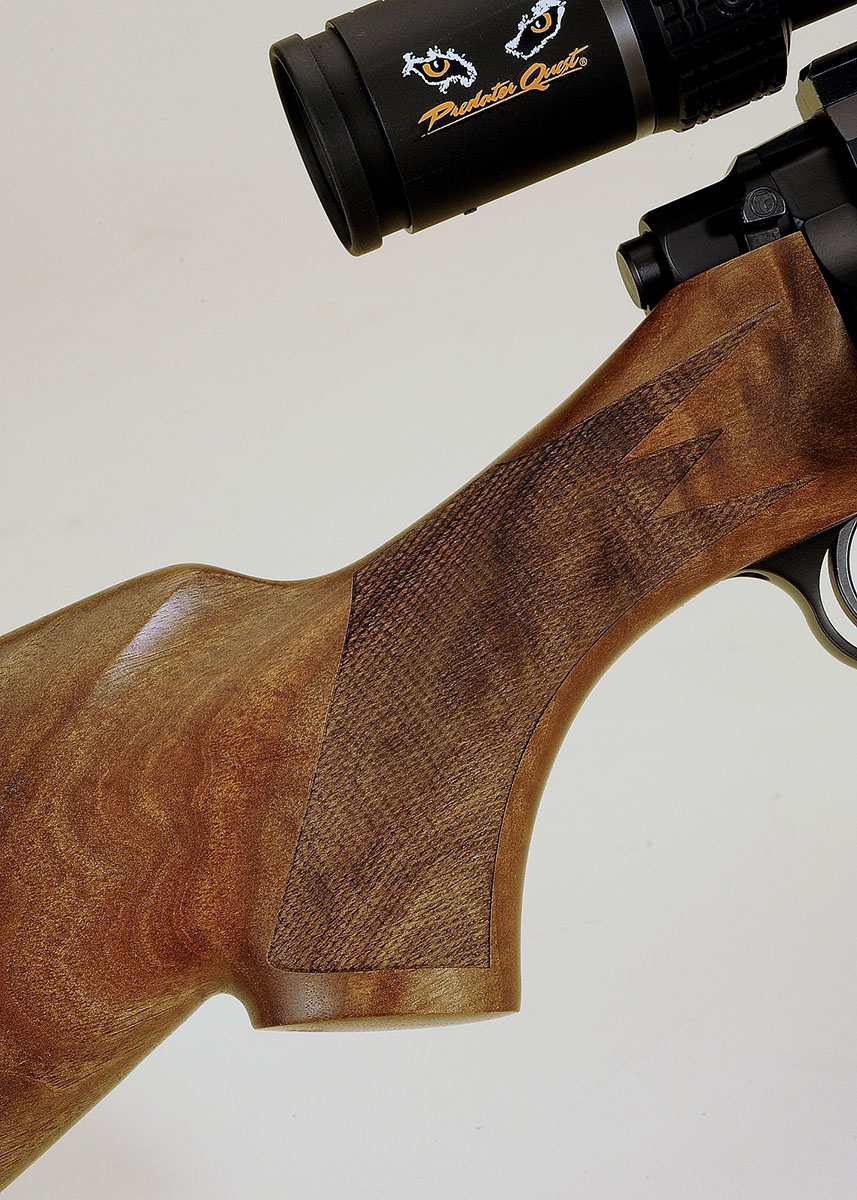
Along with the thinking that went into the action, the stock follows suit. Classic in design, the nicely figured high-grade stock has a straight comb and a cheekpiece with a shadow line giving it that custom look. There is more than enough checkering on both the forearm (completely around) and on the pistol grip (cut flawlessly in a traditional point pattern). I would have liked to see forend and pistol grip caps checkered, but that’s my opinion. The barrel is free-floated, the stock is fully inletted to modern standards and finished in an oil-type patina. Sling swivel studs are included with a Pachmayr pad, completing the rifle.
With my pile of components growing and with the rifle arriving, I was ready for some handloading. Checking the water capacity of the 223 Remington as compared to the 22 Nosler, I found the latter has about a 25 percent more capacity, which should put it ahead of the 223 and slightly below the 22-250 Remington with the right powder and bullets seated to the respective lengths. According to Nosler data, with a 40-grain bullet seated in the case, it will take 35.9 grains of water. With a more popular 50-grain bullets, it took 33.7 grains with Nosler bullets seated to 2.260 inches.
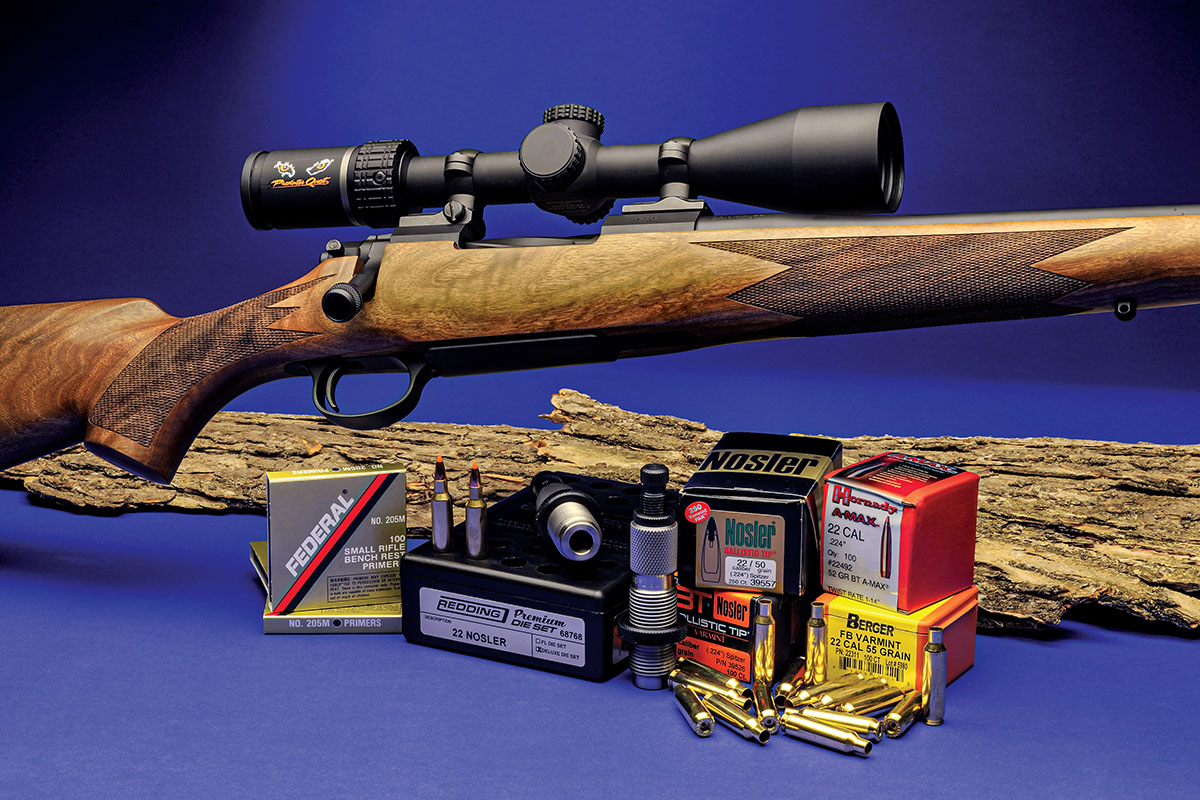
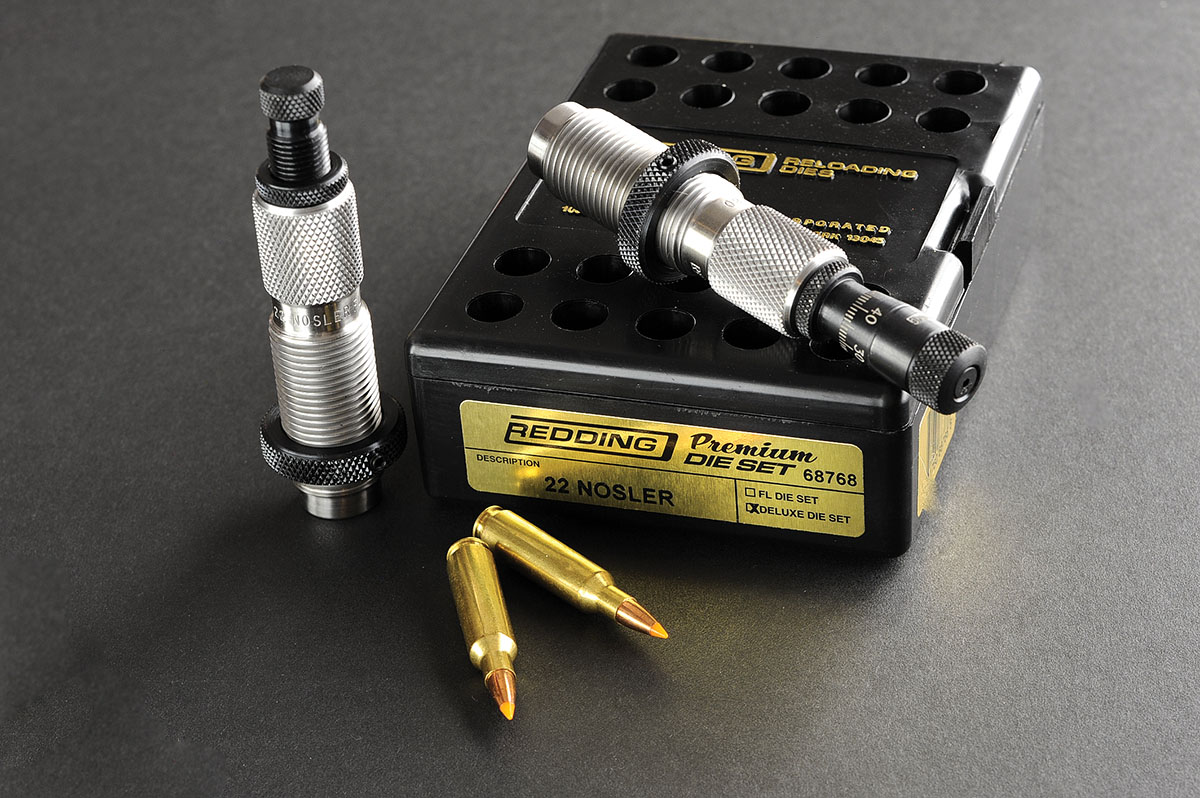
With just enough lube between my fingers, I lube the neck of the case and put a little on the inside of the neck. With my Redding die set, I set the full-length sizing die to just neck size all the cases right down to the neck/shoulder junction. Naturally, a neck sizer is the perfect tool for this and should be considered when any die set is purchased. Smoking this part of the case with a candle will show exactly how far down to turn so it barely touches the shoulder. After cleaning, chamfering both the inside and outside of the neck, checking for the overall length of 1.760 inches, I then prime with Federal’s 205M Benchrest Small Rifle primers. For bullet seating, the micrometer equipped die has an advantage of just “setting and forgetting” when going to load the next time, providing that the handloader keeps a record of the settings and locks the ring down for his specific press.
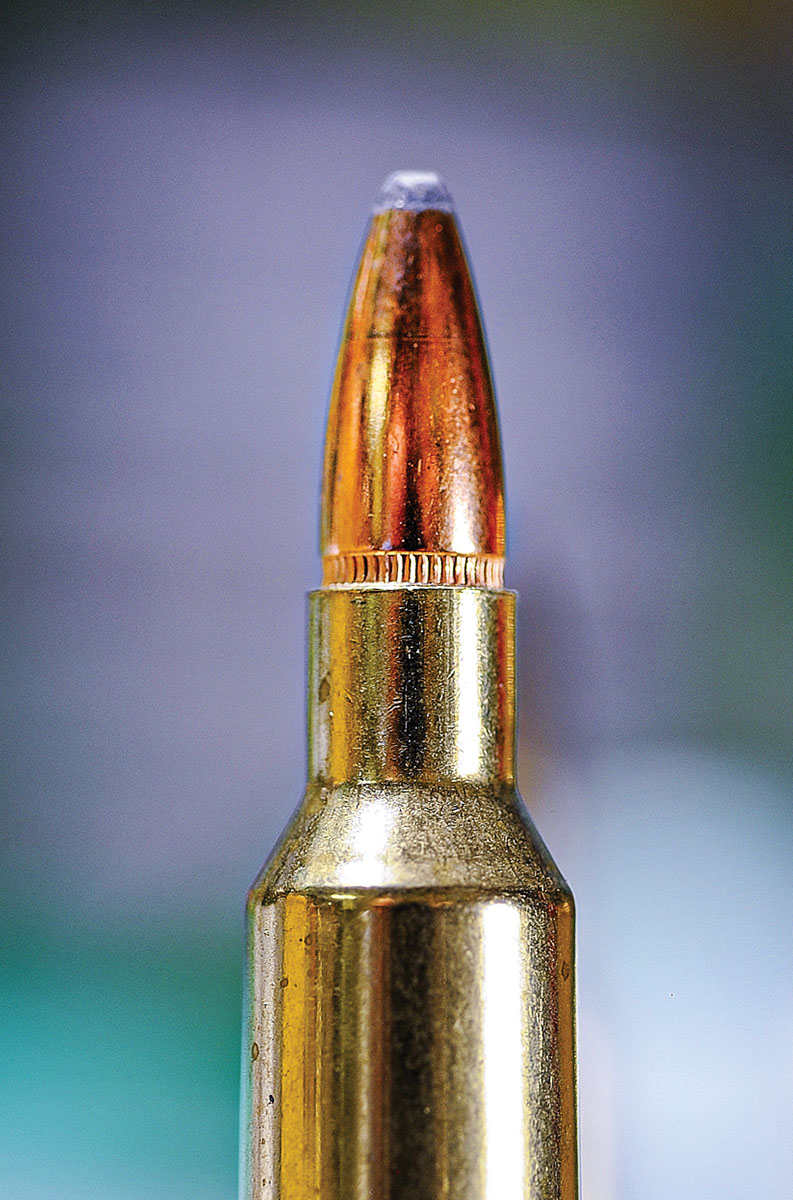
Bullet choice was next, and to me, this determines what powder to use when working with 22-caliber varmint guns. I like anything around 52 to 55 grains, with the latter preferred for late season, heavier woodchucks. Just for the record, I did shoot the Berger 64-grain bullet, but since I never favored that weight for 22-caliber varmint hunting because of the lower velocity, I only used one sample. With modern technology, I find it hard not to use any .224-inch bullet that does not group well, and if it doesn’t, a little tweaking will put it right on target with smaller groups. For my use, and which turned out to be the most accurate, were bullets from Hornady, Berger, Speer and Nosler (I wonder why!) filling the bill, with every group coming in under an inch at 100 yards.
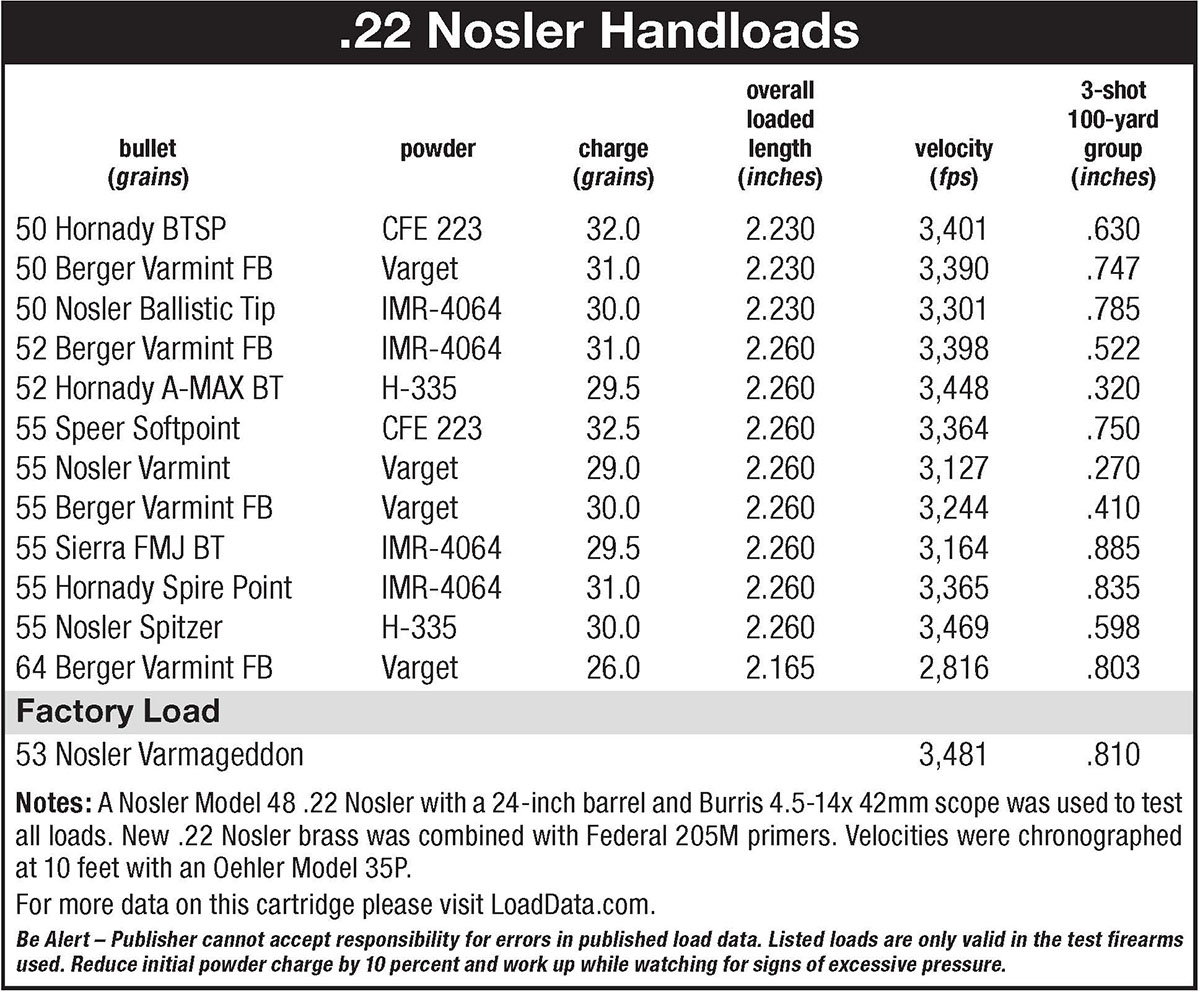
Aside from bullet selection, as noted in the table, looking for the right powder is paramount when developing accurate handloads. While there are many powders to deal with, getting them down to a reasonable number is the best way to zero in on a good load. Working with the .22 caliber for years, it was easy for me to pick out the powders I thought were suitable for the 22 Nosler. In the end, IMR-4064 just has to be one of the best – if not the very best – powder to use for a majority of .22-caliber cartridges. I’ve read and I quote, “it is the most versatile propellant in the IMR spectrum,” which includes the 223 Remington, 22-250 Remington and the 220 Swift, to name a few. With the 22 Nosler, I found IMR-4064 filled the case almost to the point of compression, which is a good thing as the groups proved. In burning rate, most reloaders place it somewhat just over halfway in the long list of powders on the market today.
Hodgdon H-335 came on the scene as a military-grade powder perfectly suited for the .5.56 NATO (aka 223 Remington) and other cartridges in the .222 list of varmint choices for extensive prairie dog shooting. If a handloader has a precision powder dispenser, he only needs to check one in every 10 cartridges loaded. It’s that handy to use. Handloaders need to have Varget on the shelf, as this easy-metering powder again is well suited to the smaller cases. Its noted for its insensitivity to hot or cold temperatures and is clean burning with a good velocity range. For the slowest burning of the group, I picked Hodgdon CFE 223, as this would be a good choice for the prairie dog shooter expending hundreds of rounds downrange within a day, as it contributes to longer shooting times when dealing with accuracy, with less barrel time cleaning. These are all powders well suited for the 22 Nosler and its case capacity, with every load trickled into the case for uniformity.
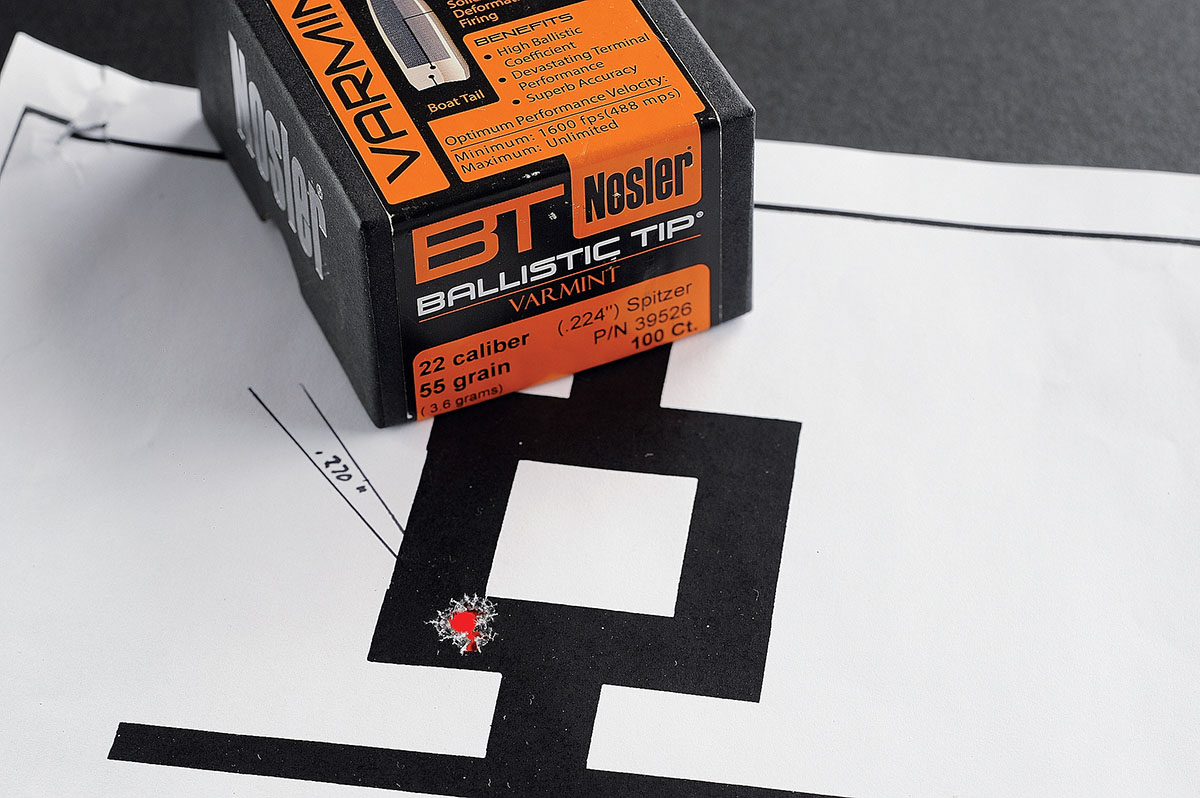
With bullets loaded and range testing completed, I tallied up the results. If a handloader is looking to the best all-around load with the powder recommended by Nosler as “the most accurate” and taking its cue, I loaded Nosler Ballistic Tip Varmint 55-grain bullets over 29 grains of Varget. The velocity reading averaged 3,127 fps, with a three-shot group that measured a curt .270 inch, which as you might note, is just a bit larger than the 224-inch bullet diameter itself.
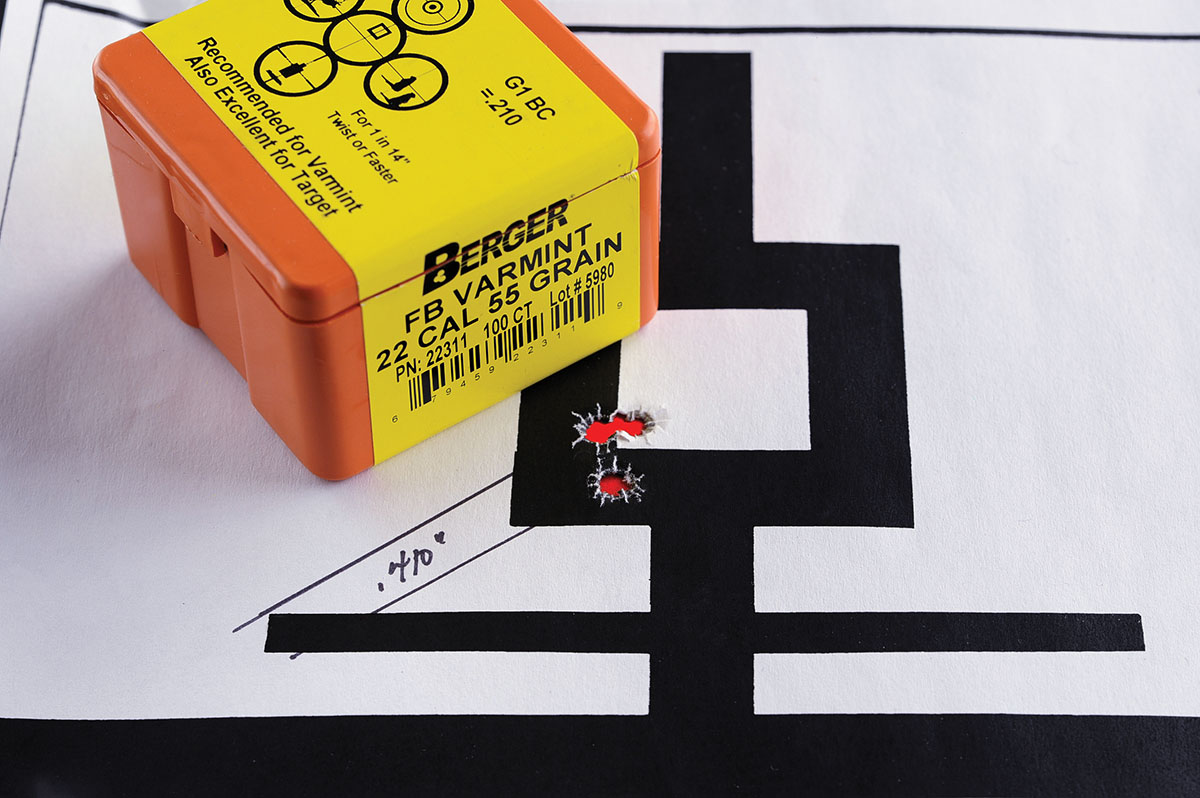
Third place went to a Berger 52-grain Berger flatbase bullet with IMR-4064 powder nearly compressed into the case. The charge came to 31 grains of this bulky powder for a mean of 3,398 fps, with the best group hitting just over a half inch at .522. If you are into factory loadings for your initial fireforming loads, the Nosler Varmageddon flat base showed me the company’s best effort at 3,481 fps, with groups circling around .810 inch. When it came to the accuracy potential of each powder, I got the best all-around accuracy from CFE 223, followed by Hodgdon Varget, IMR-4064 and finally Hodgdon H-335.
In short, and especially for small-game hunters, Nosler now offers a fresh look at another .22 caliber entry. To me, it’s worth your consideration and purchase.