22 Winchester Magnum Rimfire
Shooting Revolvers
feature By: Dick Williams | April, 22
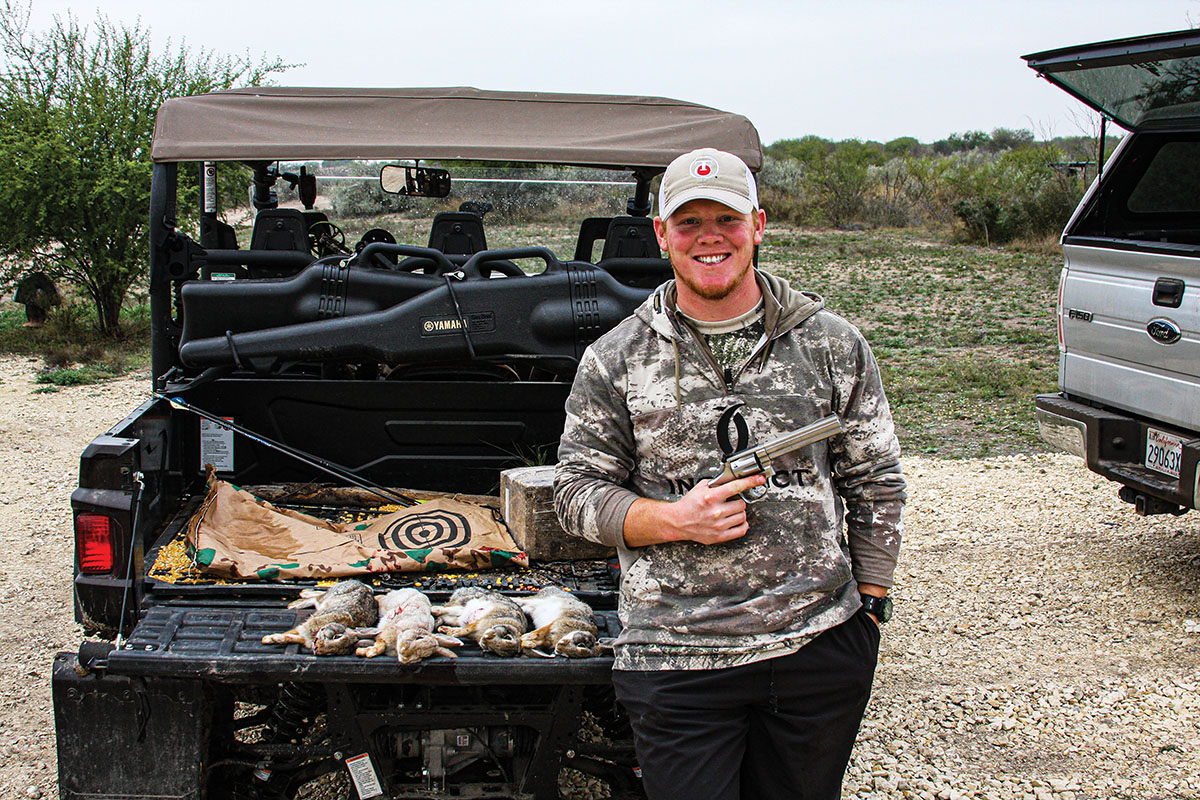
My first “serious” hunting handgun was a Ruger Single Six acquired in 1957. Just about anything that wasn’t a protected species and weighed no more than a couple of pounds was fair game, whether it walked, crawled or flew. By the time I reached my thirties, I had gone through a few .357 Magnums, working my way up to the pursuit of bigger game with the big-bore revolvers. In my late forties, I began writing and started looking at the super big-bore handguns for hunts in Alaska, Africa and Australia. As more time passed and my enthusiasm for climbing mountains, following Cape buffalo herds and prowling the vast tundra of Alaska decreased, so did my tolerance for recoil, and I started working my way back down to medium-caliber centerfire cartridges and rimfires. But as a dedicated handgun hunter, I was still interested in the enhanced terminal ballistics delivered by “magnums.” When I got all the way back down to rimfires, I became fascinated with the 22 Magnum.
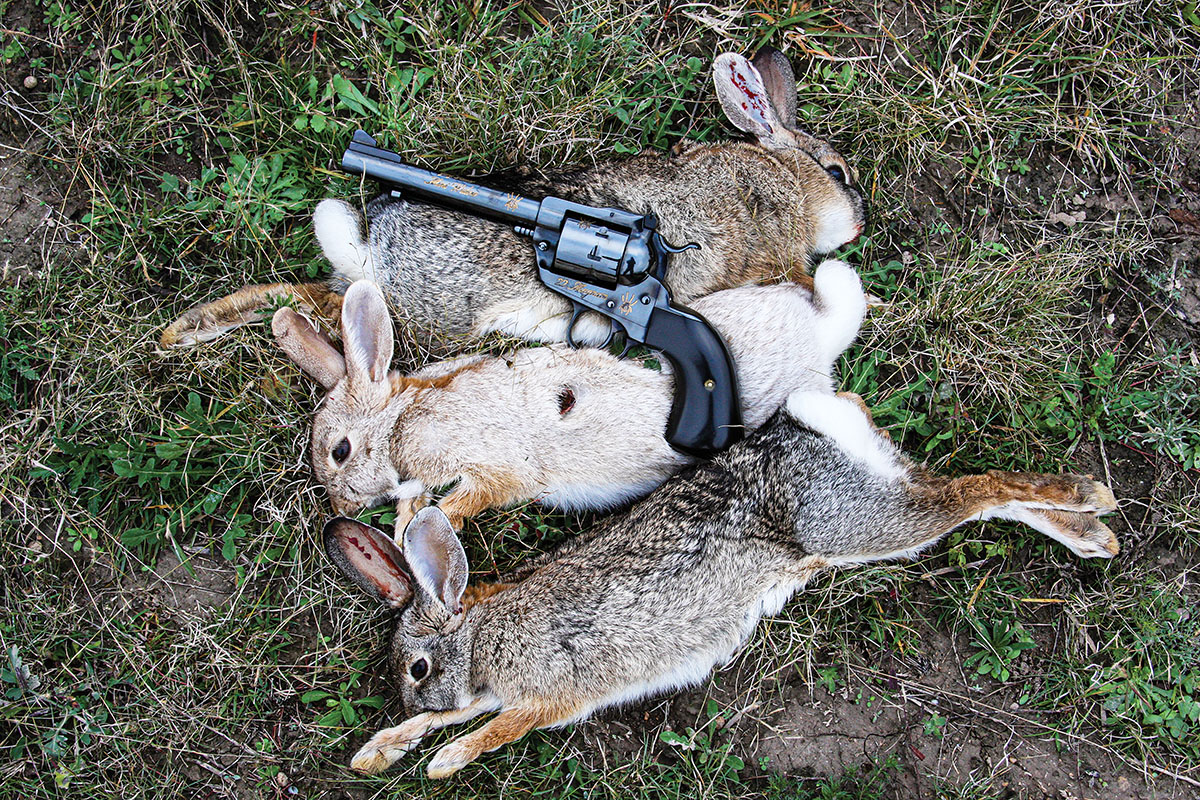
The second 22 Winchester Magnum was totally an impulse purchase and, quite frankly, a gun that duplicated the capabilities of the Model 648. It was a Ruger Single Six spotted in the display case at Reeder’s Pistol Parlor in Flagstaff, Arizona. The gun had received Gary Reeder’s full custom treatment, including his spectacular polish and blue/black finish, the Gunfighter grip alteration with custom black Micarta grips and a “hi-cap” eight-round cylinder. Barrel length was 6 inches, which is pretty much a standard option on unaltered factory guns, but it had a recessed crown to help protect the rifling at the muzzle from damage. Just for “show and tell,” a gold spider and the words “Black Widow” were etched on the sides of the gun. I doubt it would have occurred to me to order an eight-round cylinder, but reloading a single-action .22 revolver while bouncing across the plains is not easy for someone as naturally clumsy as I am, so I happily accepted the extra two rounds of ammunition. With its preferred load of 34-grain Winchester jacketed hollowpoints, the new diva was every bit as effective as the Smith & Wesson.
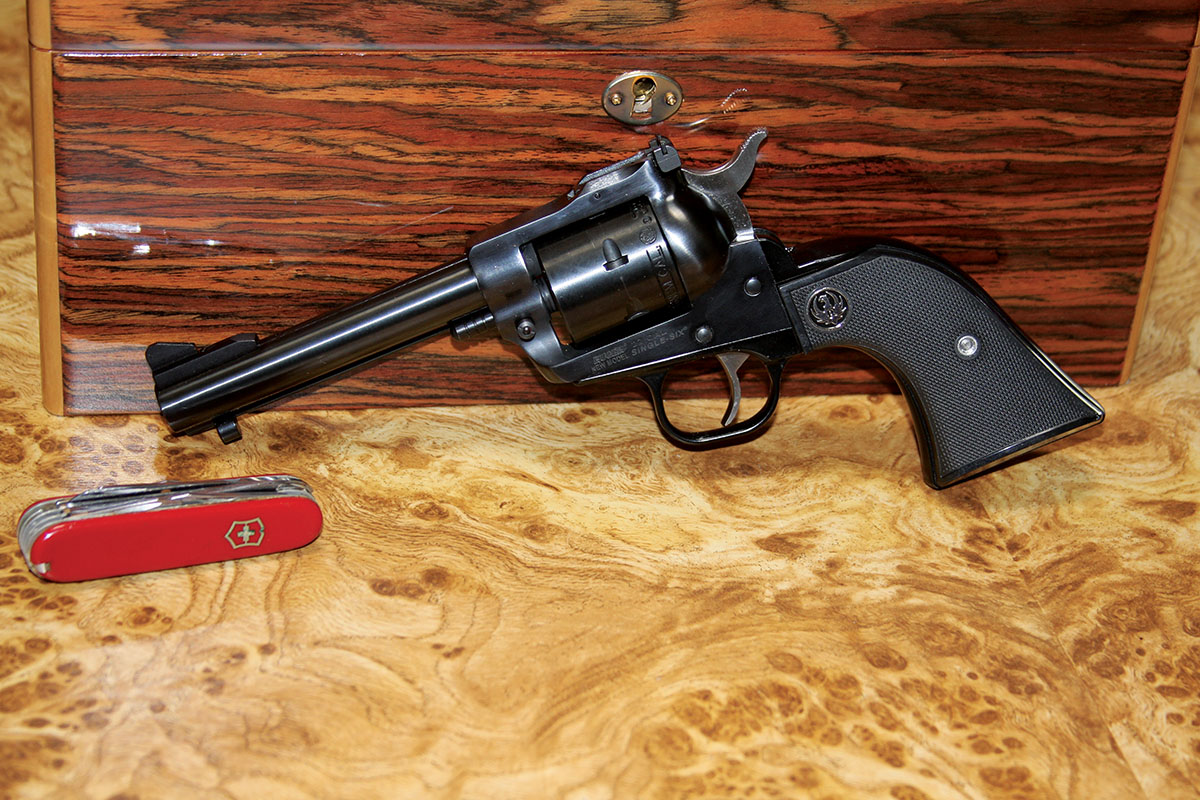
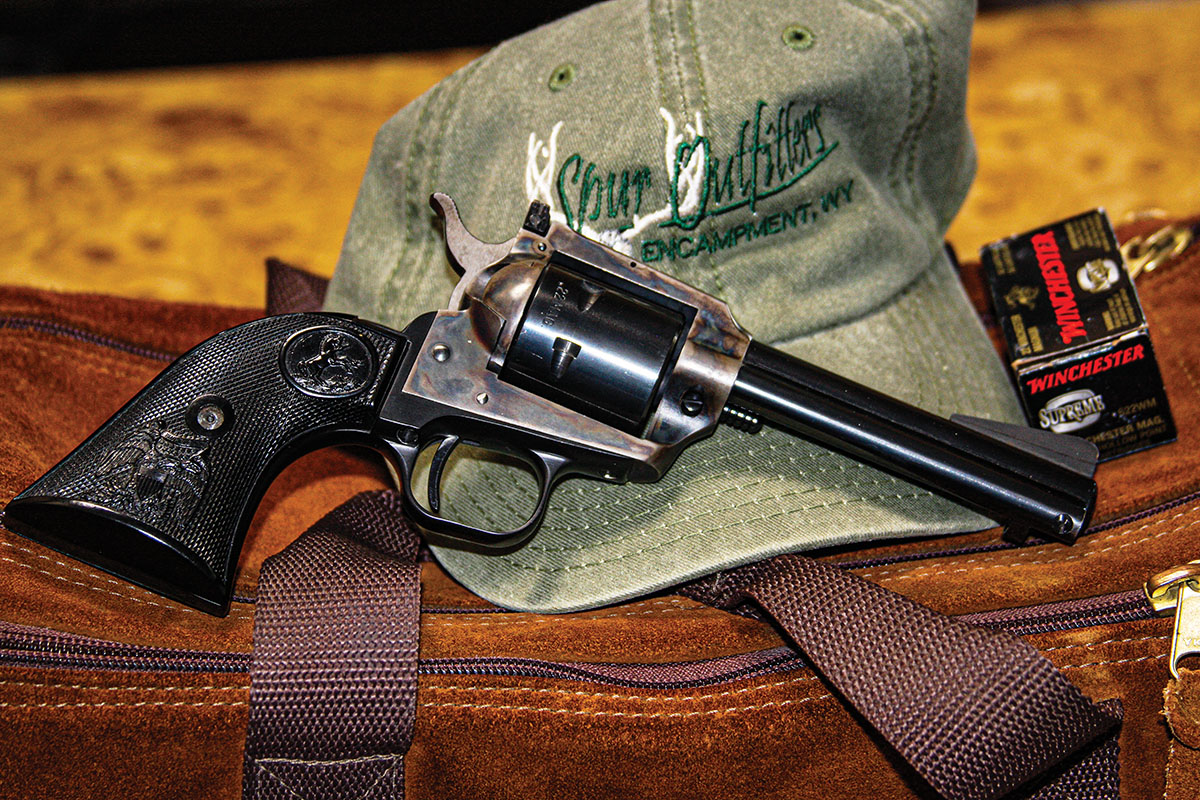
It struck me that I had nothing of comparable size to the discontinued New Frontier Scout. An inquiry to Ruger produced a current Single Six fitted with both 22 Long Rifle and 22 Magnum cylinders, equipped with adjustable sights and having a 4.75-inch barrel. A cry for help to Rob Leahy at Simply Rugged holsters yielded a perfect holster for trail use that fits the Ruger perfectly and was only slightly oversized for the smaller framed Colt.
With the extra weight of its full underlug and thicker barrel, the S&W provides a more stable platform when shooting offhand, and no matter how adamant a person is about trying to take a rest with a handgun, at some point in his hunting endeavors, there will be opportunities that necessitate an offhand shot. Likewise, the extended sight radius of the 6-inch barrel can prove helpful in slight alignment, allowing more precise shot placement. The custom Reeder/Ruger doesn’t have the muzzle weight of the S&W, but it does offer the longer sight radius. In my years of handgun silhouette competition, I preferred the 8-plus-inch barrel Smiths for shooting freestyle/prone but performed better using the 6- to 6.5-inch Smiths for standing class. Working in and out of a vehicle using a variety of rests, I find the mid-length barrels easier to use than the extra-long barrels. When moving in the vehicle, I tend to keep the revolvers in a pistol rug on the seat, or on the floor rather than wearing them in a holster. I think it makes for safer gun handling when using the gun for action or returning it to the carry position. I’ve seen too many hunters muzzle themselves or another passenger when working from a holster in the vehicle. You’ll need to choose which style handgun and handling technique works best for you.
I like the idea of carrying a handgun on my person because it’s so American! But there are a variety of people who suggest solutions other than a belt holster. I’m not sure I would last an hour in my truck carrying a long barrel revolver in a belt rig. Not so with the little Ruger or Colt. Either of them can ride my on my right hip all day long with little or no concern or discomfort, and it keeps the handgun immediately available should I step out of my vehicle for a walk around. Both the small Ruger and Colt are safe to carry loaded as long as I remember to keep an empty chamber underneath the hammer on the Colt. It’s the more traditional single-action design with no modern transfer bar. You can fully load all six chambers in the Ruger, since its transfer bar prevents the hammer from striking the firing pin unless the transfer bar is moved up by pulling the trigger all the way to the rear.
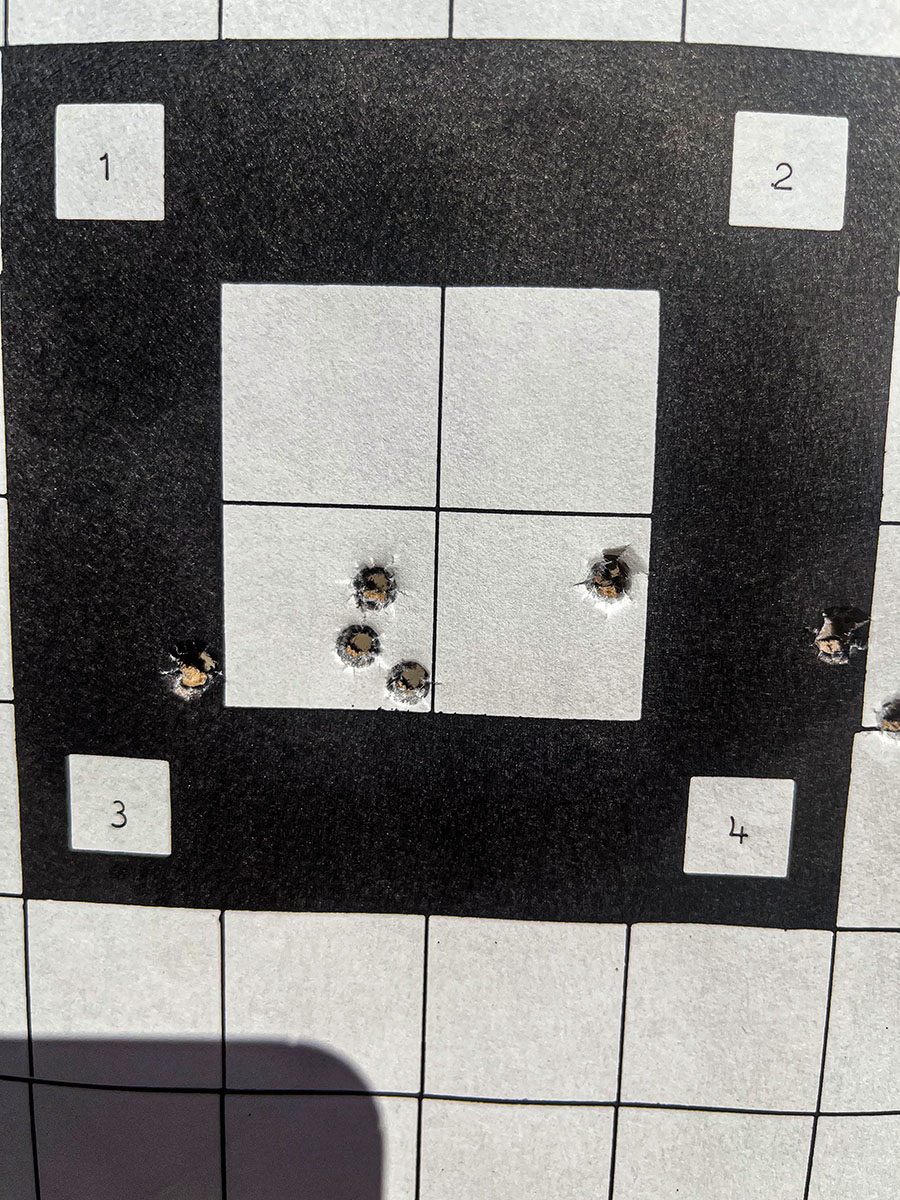
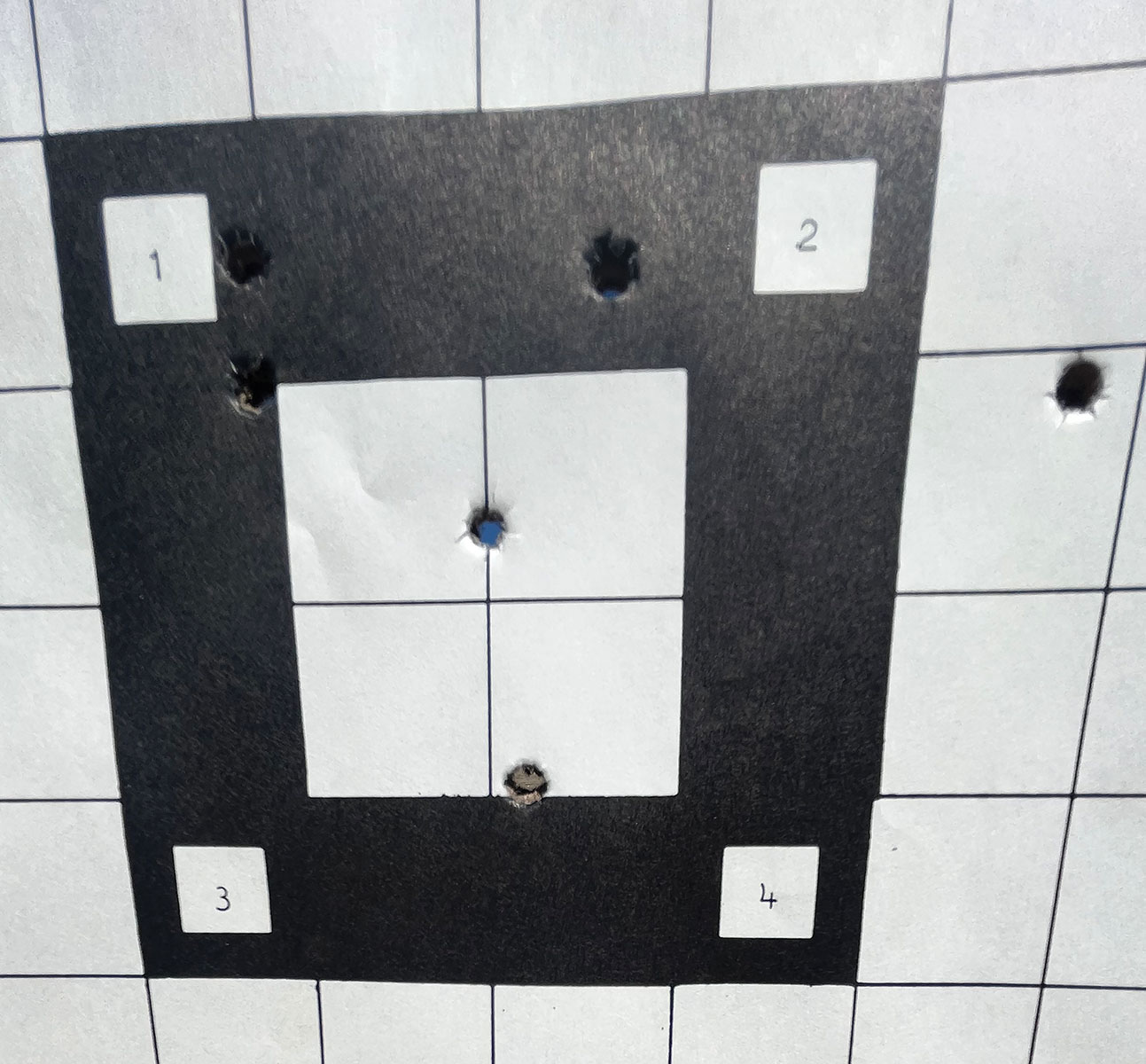
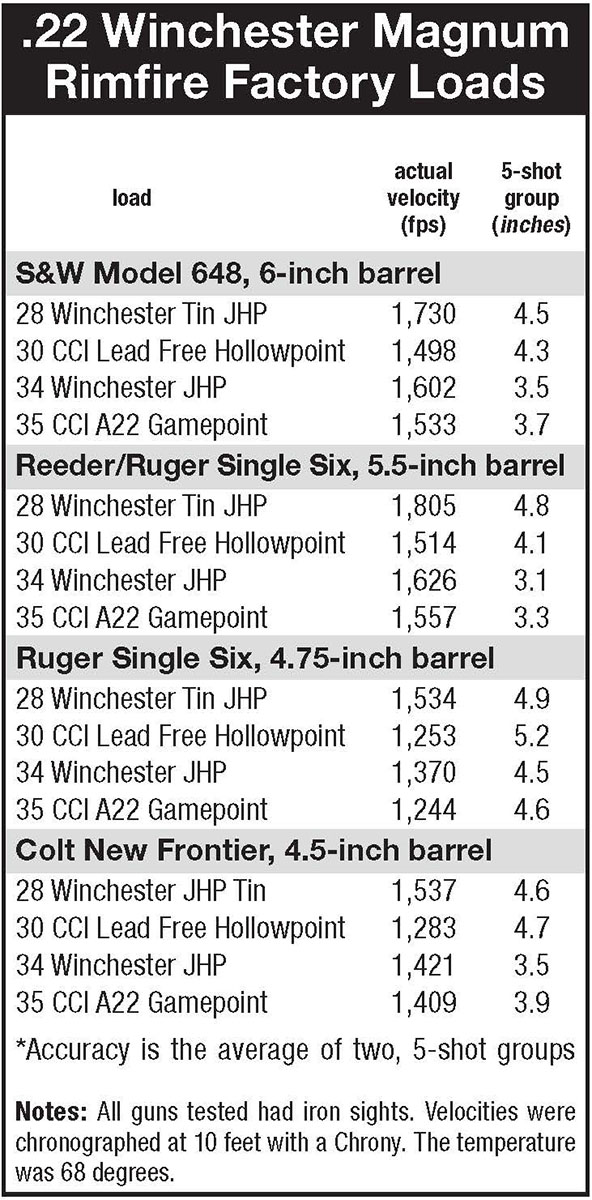
A few comments and thoughts on range results are in order. Keep in mind that I am talking about four small firearms all equipped with iron sights. These are not the kind of guns and accessories from which you would expect minute of angle performance. Also, these test results were generated by a senior citizen whose vision has not been 20/20 for more than three decades and I was shooting with my forearms resting casually on a half-empty range bag. A glance at the 25-yard groups might suggest that none of these guns (nor the shooter and his technique) are adequate for varmint shooting. Keep in mind that while handgun hunting is a close-range activity compared to hunting with rifles, iron sights are quite crude and lack the precision capabilities of high-power rifle scopes. But it’s that extra degree of difficulty that has always appealed to me and other handgun hunters. When I venture out, I don’t expect a 100 percent success rate on every round fired. There will be misses, but if I can keep half my shots inside 2 inches at whatever range I’m shooting, that tells me that I have a 50 percent possibility of a hit every time I pull the trigger. For me, that makes for a higher level of excitement and enhanced degree of satisfaction!
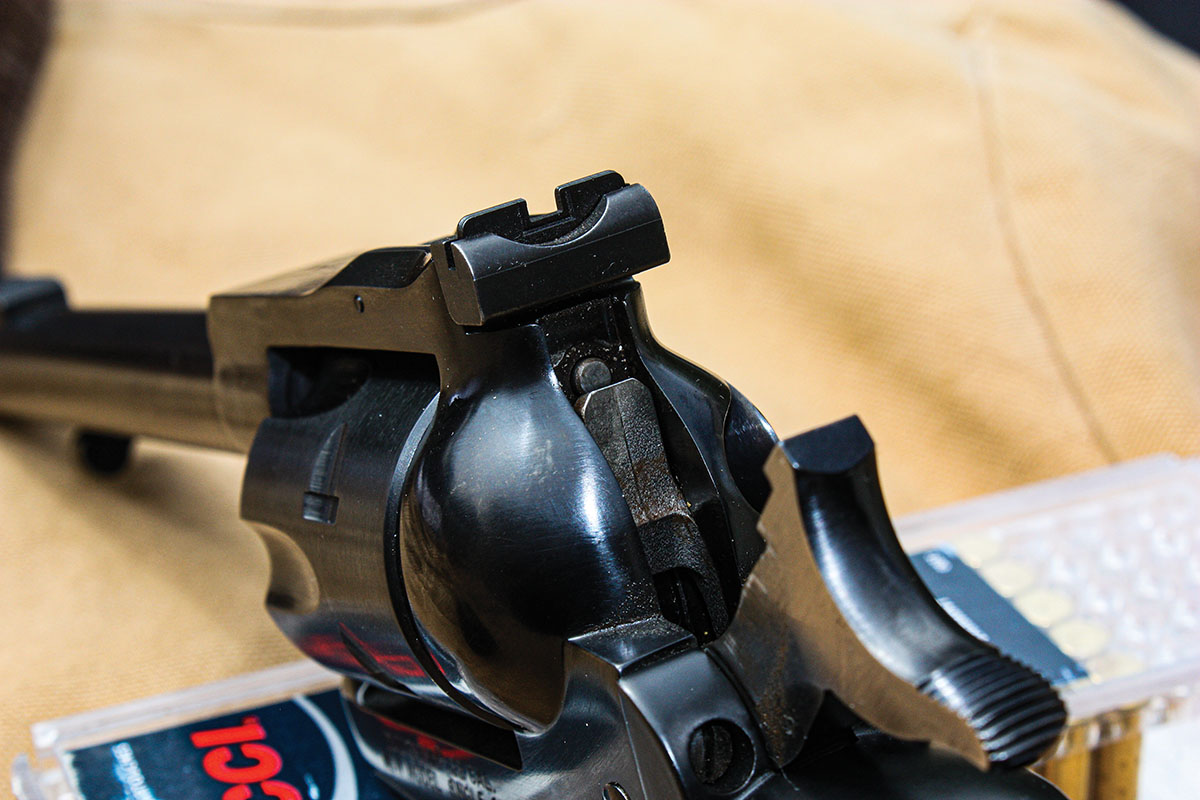
We’ve all had to deal with the lack of ammunition over the last two years. Although manufacturers appear to be catching up with demand, we can all remember the empty ammunition shelves in hardware and sporting goods stores across the nation. Factor in the current events in Ukraine and we could easily experience another adverse impact on the availability of commercial ammunition. Even when I could find 22 rimfire ammunition in the stores, it wasn’t always the right caliber or preferred load for my gun. If it was 22 LR, I was probably required to adjust the sights on my rifle or handgun. Ruger still makes single action .22s that are fitted with both regular and magnum cylinders. Having a gun and both cylinders on a varmint hunt doubles the chances of finding useable ammunition, particularly at a remote country gas station that carries a minimal selection of sporting good accessories. When I head for Wyoming in the summer, I always take a good supply of rimfire ammunition, and yet there is always a dual-cylinder 22 rimfire handgun tucked away somewhere in my truck.