Loads for a 22 TCM
New Powders and Bullets
feature By: Patrick Meitin | April, 22

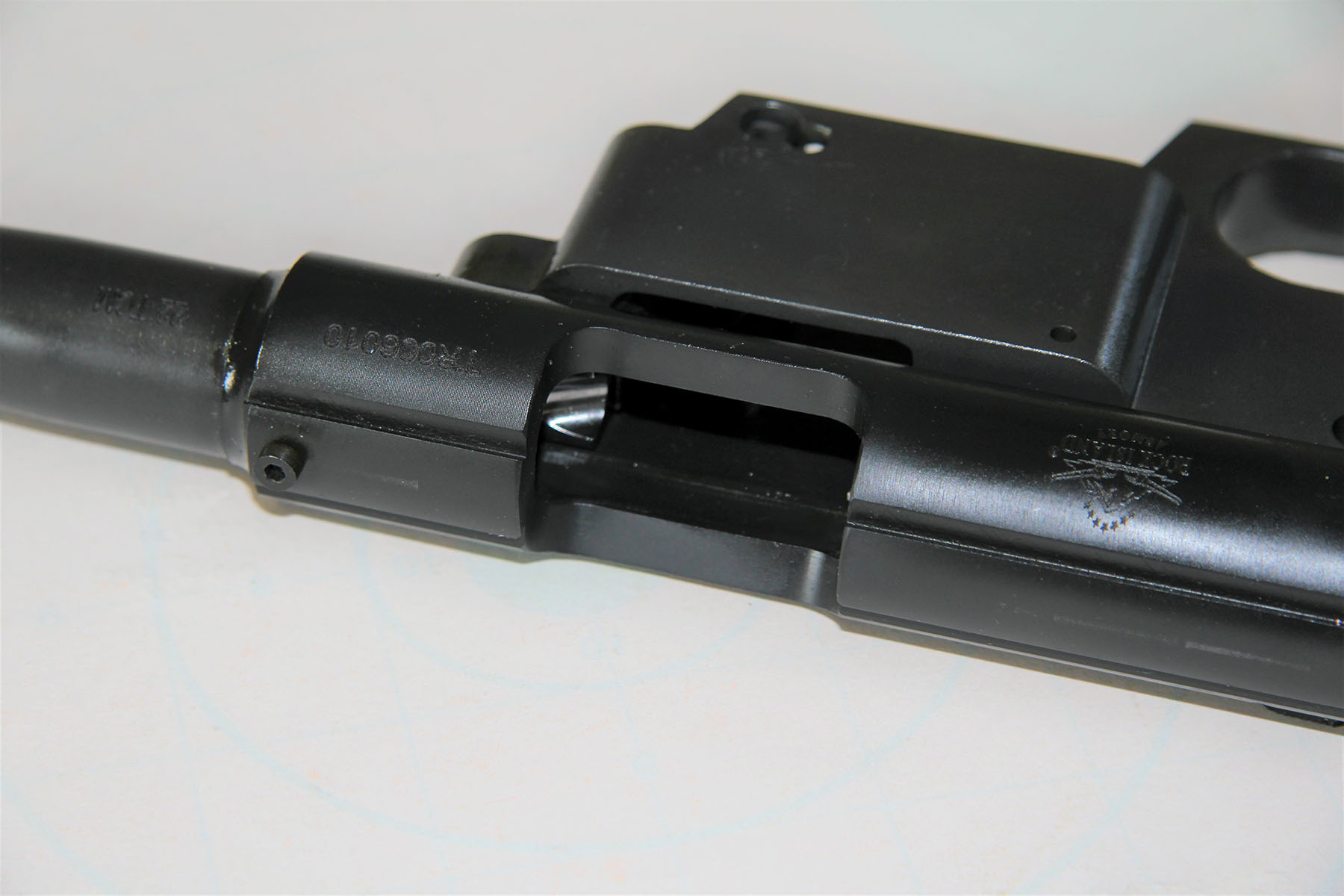
The 22 TCM is a squat, bottlenecked cartridge based on a shortened/necked-down 223 Remington case and created to run from a 9mm Luger magazine. It is an Armscor International propriety cartridge originated by gunsmith Frederick Craig (a former Armscor consultant) and backed by Armscor President Martin Tuason. Tuason Craig MicroMag (TCM) became it’s tag, and it was advertised to send 40-grain bullets at 2,000 feet per second (fps) from a 1911 pistol with a 5-inch barrel. Armscor factory ammunition (two options labeled “pistol ammo”) include 39-grain and 40-grain jacketed hollowpoints with a stated velocity of 1,875 fps, so I’m not sure where the 2,000 fps number originated.
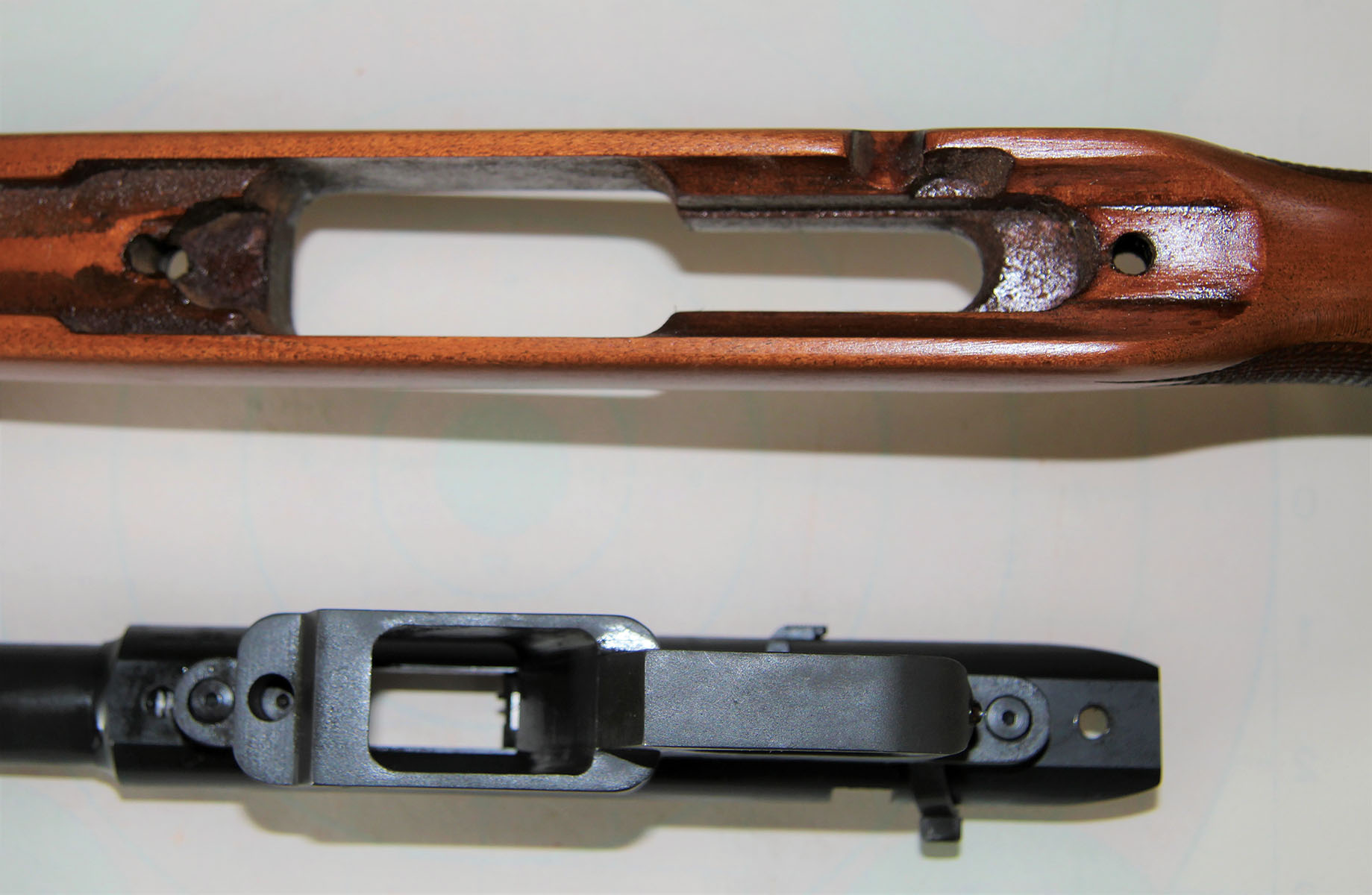
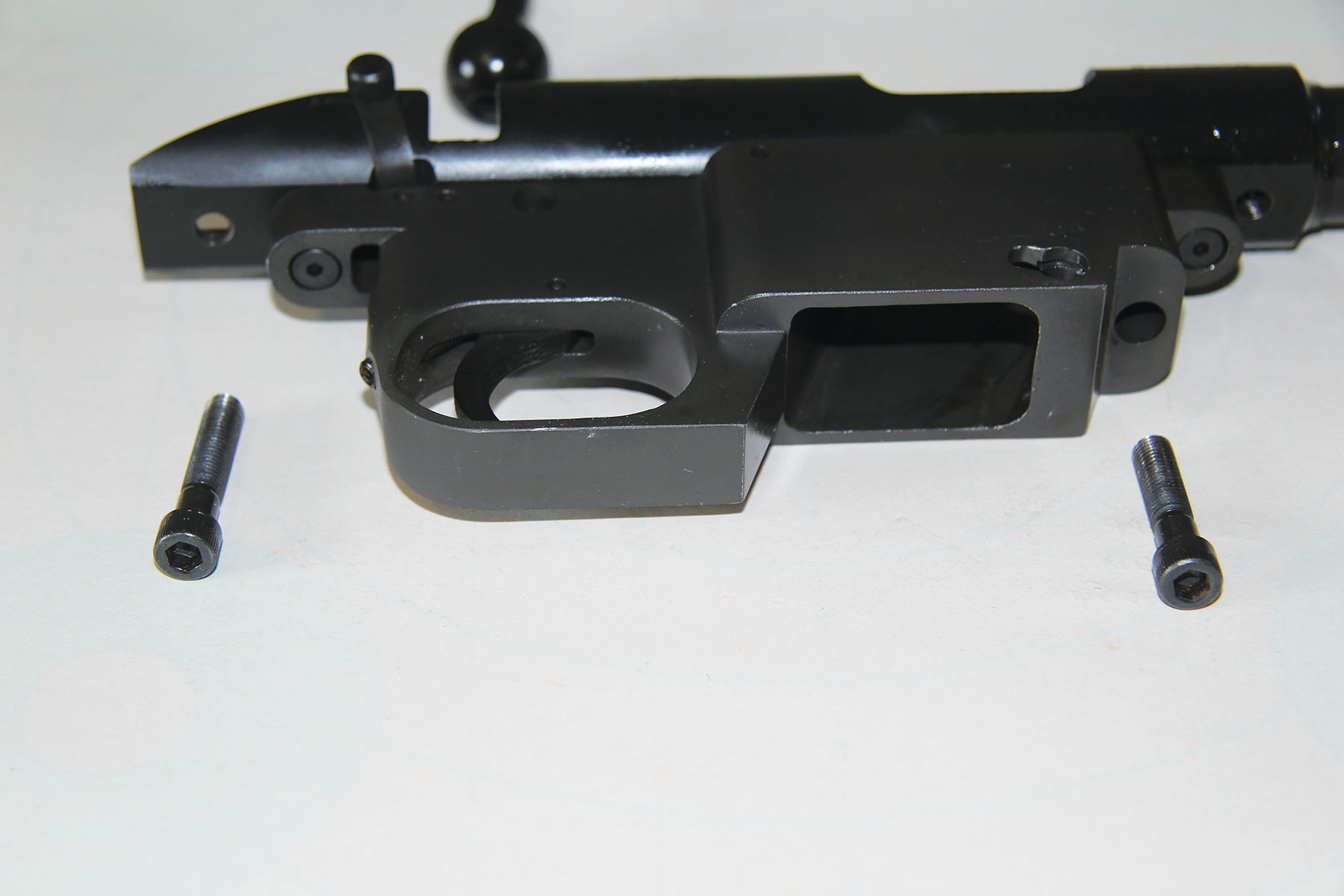
The Rock Island Armory 22M TCM BA rifle includes a 22.75-inch barrel with a 1:16 rifling twist and a heavy profile (.75 inch just behind the muzzle). The trigger is user adjustable from 4 to 6 pounds via a set screw located behind the milled-aluminum trigger guard, which is also part of the blocky magazine well. The Italian-made, five-shot magazine pops in and out slickly via a 1911-style magazine
The stock includes a 13.5-inch length of pull and is made from some sort of tropical hardwood, no doubt native to the Philippine country of manufacture. The black grip cap is synthetic, but the black forend “cap” was painted on. The grip and forearm machine checkering was nicely done. The used rifle had received a few dings and the painted cap was beginning to flake, so I decided to refinish the stock. I taped the checkering, took the stock down to raw wood, gingerly sanding out minor dings and working the edges of the thin, rubberized buttplate to provide a more streamline fit. I also opened the barrel channel. The resulting wood was so pleasing that I chose to skip staining before applying three coats of durable oil-based polyurethane and lightly sanded between applications. The stock that emerged was, to my eye, much more aesthetically pleasing than the original factory finish, including a reddish hue with some figuring. I glass bedded the action and bolt areas before reinstalling the action. A Vortex Crossfire II 6-18x 44mm AO scope with a Dead Hold BDC (MOA) reticle was installed atop a DIP, Inc. Picatinny rail to allow the use of steel Burris Zee rings. Finished weight was 8.33 pounds.
As a proprietary cartridge, the 22 TCM has not received the Sporting Arms and Ammunition Manufacturers’ Institute (SAAMI) standardization, meaning published load data is also somewhat sketchy. Western Powders’ Handloading Guide Edition 1 (Wolfe Publishing, 2017) was the only source of pressure-tested data (this for pistols) using that company’s Accurate TCM, A-4100, No. 11 FS and Enforcer handgun propellants, with maximum pressures held to around 38,000 psi or a touch more (factory loads are said to be loaded to 40,000 psi). I noticed Hodgdon recently added TCM pistol data, which mirrors Western data. Accurate TCM was developed specifically for this cartridge, so it was heavily favored during testing. Armscor seems to be the sole source of handloading brass (though range brass appeared on several internet sites) as well as the proprietary bullets already mentioned. All sites I checked were currently out of stock.
Both pistol and rifle loads are limited in length by the confines of the detachable magazine. The rifle holds a quality, five-round magazine that is a shortened version of the 17-round, double-stack 9mm Luger pistol magazine, which is also compatible with the rifle. (Barrels can be switched between 22 TCM and 9mm rounds in some Rock Island pistols.)
A short case neck and especially the compact magazine, seriously handicap this cartridge in the rifle. As far as I am concerned, the 22 TCM has the potential to replace the ancient 22 Hornet, but the overall loaded length (OAL) limitations ensure that won’t happen. These factors limit bullets to stubby 30- to 45-grain options, as pointed bullets must be seated so the beginning of the ogive rests inside the neck, and in many cases the neck loses its grip altogether and the bullet falls into the case. A top-loading magazine allowing longer OALs could elevate this cartridge to new heights, or the handloader can load single rounds and bypass the magazine altogether.
Loading for the TCM rifle then became an OAL juggling act. A maximum OAL of around 1.29 inches (give or take .005-inch, depending on nose shape) seemed to work, with single-feed loads chambering at around 1.73 inches. Western Powders lists a 1.025-inch trim-to case length, while once-fired cases measured around 1.07 inches.
I chose Winchester Small Rifle primers, as available loading information was tailored for a 5-inch barreled pistol – and because Armscor offers the same factory ammunition for pistols and rifles and I was curious to see how these loads would fair in a 22.75-inch rifle barrel. Reduced 22 Hornet handgun loads, for instance, function flawlessly in my 22-inch barreled 22 Hornet rifle, but not the other way around. Western Powders’ TCM and A-4100 do not show up in Hornet data, though No. 11 FS and Enforcer do. Rock Island stated that 2,800 fps is possible from the 22.75-inch rifle barrel while firing Armscor factory ammunition.
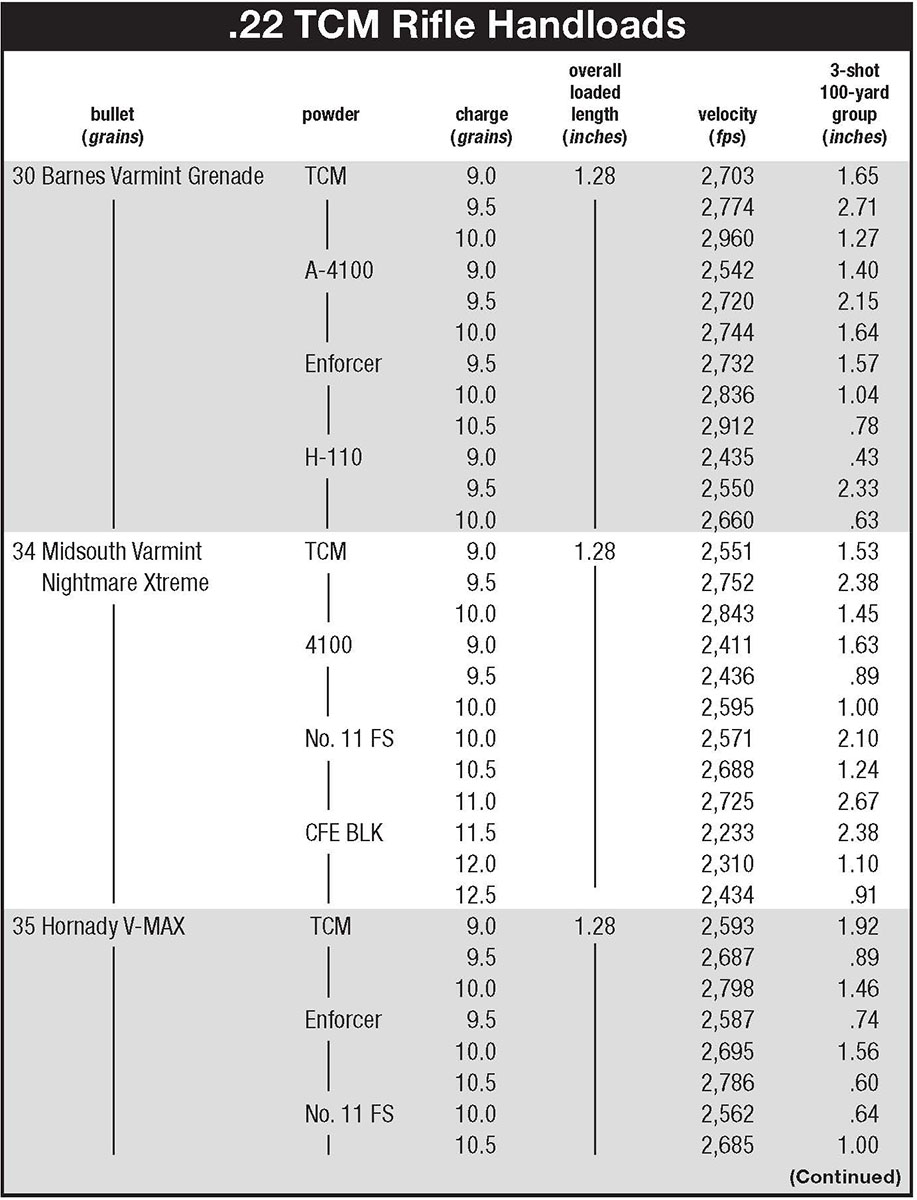
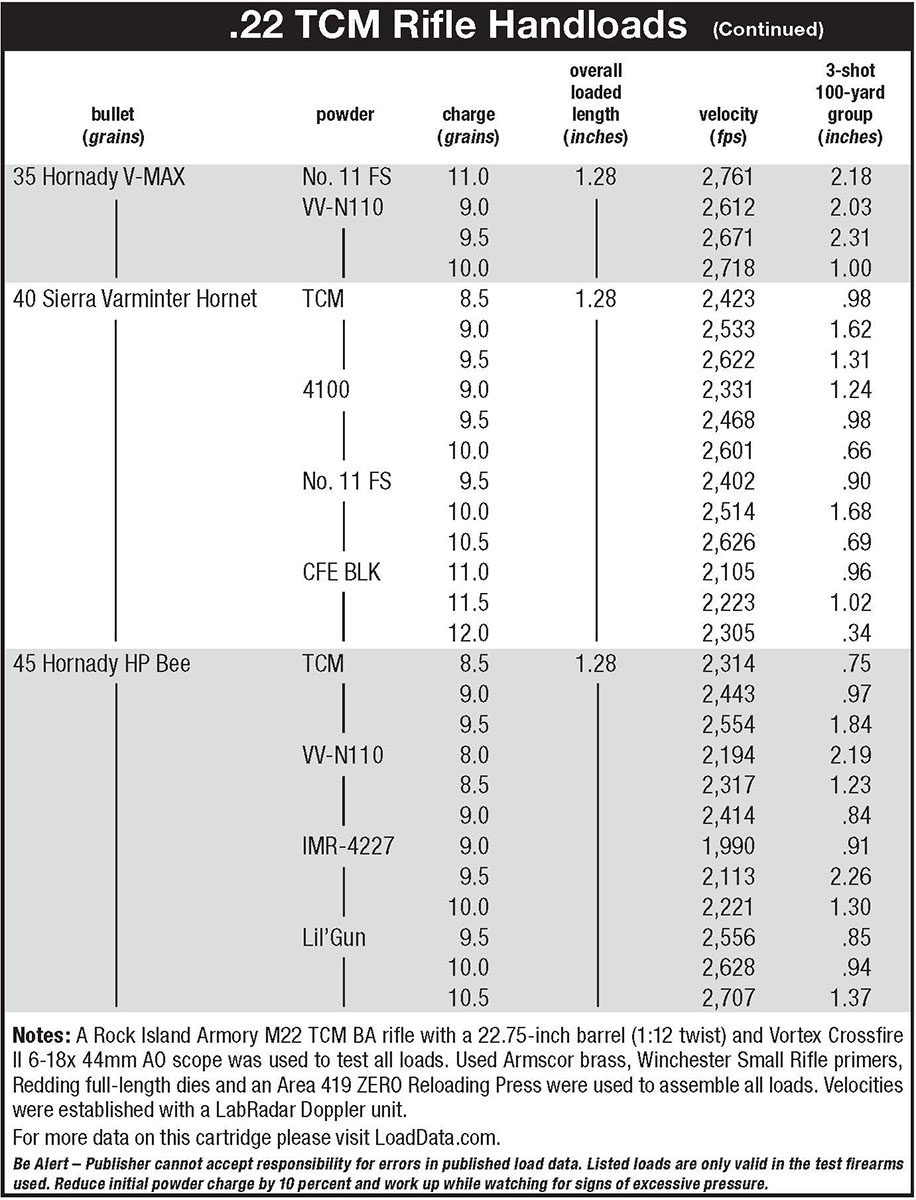
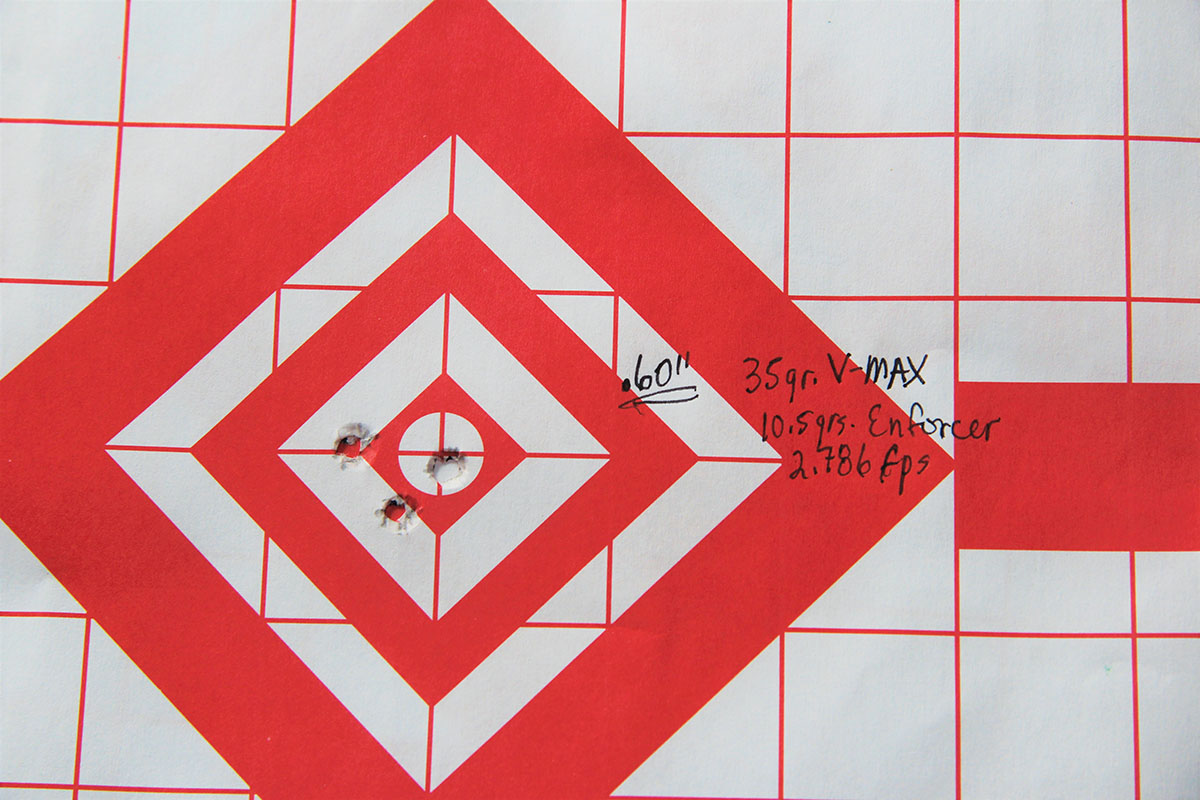
Besides the Accurate TCM, A-4100, No. 11 FS and Enforcer powders listed in Western Powders’ data, I cautiously added Hodgdon; Vihtavuori H-110; N110; Hodgdon CFE BLK, Lil’Gun and IMR-4227; the latter two paired with the heaviest bullet. Squat or flatnose bullets were chosen, including Barnes’ 30-grain Varmint Grenade Hornet, Midsouth Shooters Supply’s 34-grain Varmint Nightmare X-Treme hollowpoint, Hornady’s 35-grain V-MAX, Sierra’s 40-grain Varminter Hornet softpoint and Hornady’s 45-grain HP Bee.
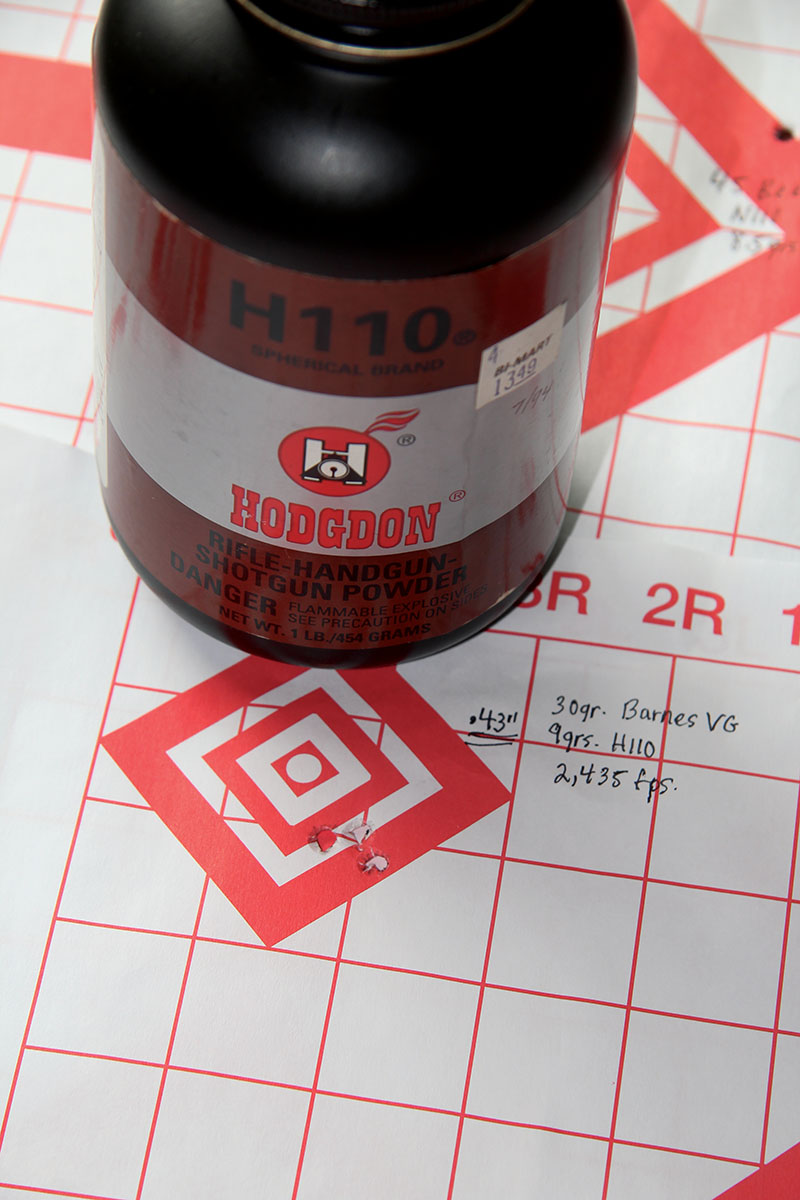
The 30-grain Barnes Varmint Grenade was designed specifically for the 22 Hornet, a nontoxic hollowpoint legal in places like California. They have proven acceptably accurate from my Hornet revolver and are quite explosive on small varmints. Powders were narrowed for all bullets after some fairly extensive preliminary testing. The Barnes 30-grain bullet was ultimately paired with Accurate TCM and A-4100, Ramshot Enforcer and Hodgdon H-110 powders. Considering any group breaking an inch exceptional from this rifle, only Enforcer and Hodgdon H-100 made the cut. Enforcer turned in a .78-inch group at 2,912 fps using 10.5 grains of powder. Hodgdon H-110 truly shined, making me regret not including it in more load combinations. Nine to 10 grains resulted in .43-, .78- and .63-inch groups at 2,425, 2,435 and 2,441 fps, respectively. This was the obvious winner and deserves additional experimentation.
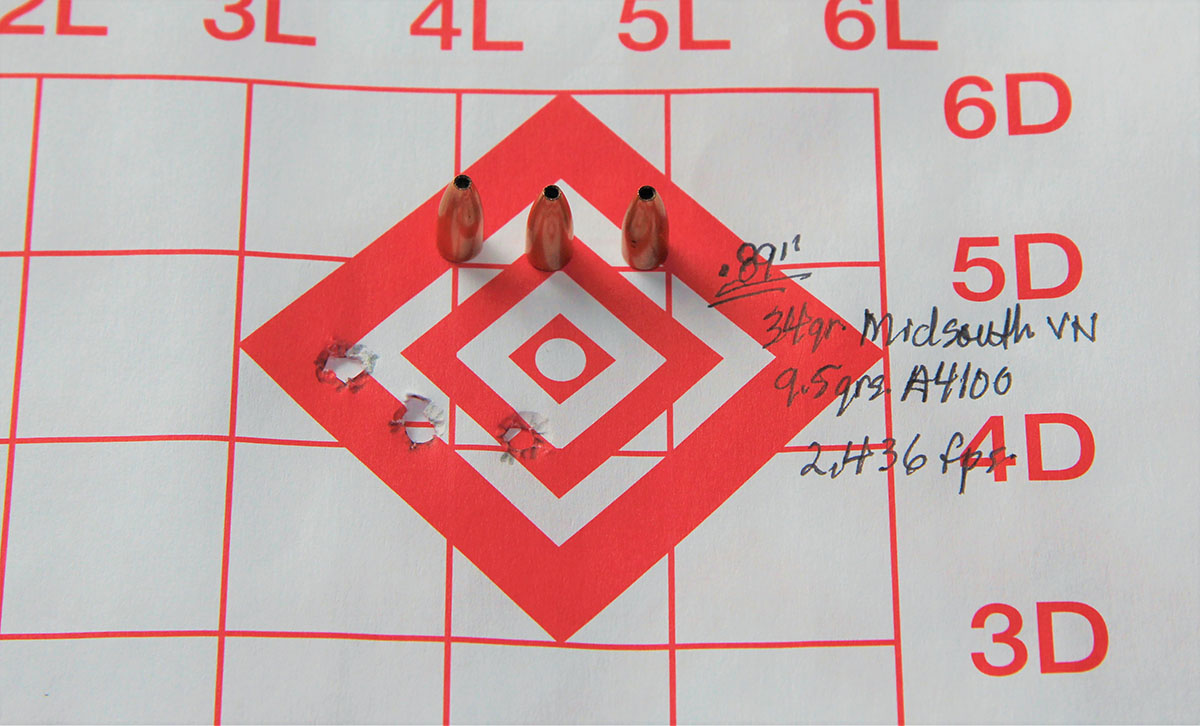
Midsouth Shooters Supply’s 34-grain Varmint Nightmare X-Treme is my go-to bullet for my Hornet revolver. The squat hollowpoints are affordable and create short OALs required of the revolver cylinder, while also expanding well on small varmints at slower velocities. Accurate TCM, A-4100 and No. 11 FS, and Hodgdon CFE BLK were chosen for this bullet. Sticking to the 1-inch minimum, Accurate 4100 and Hodgdon CFE BLK were the only contenders. An .89-inch group sent at 2,436 fps resulted from 9.5 grains of A-4100, and a .91-inch group at 2,434 fps was created by 12 grains of CFE BLK.
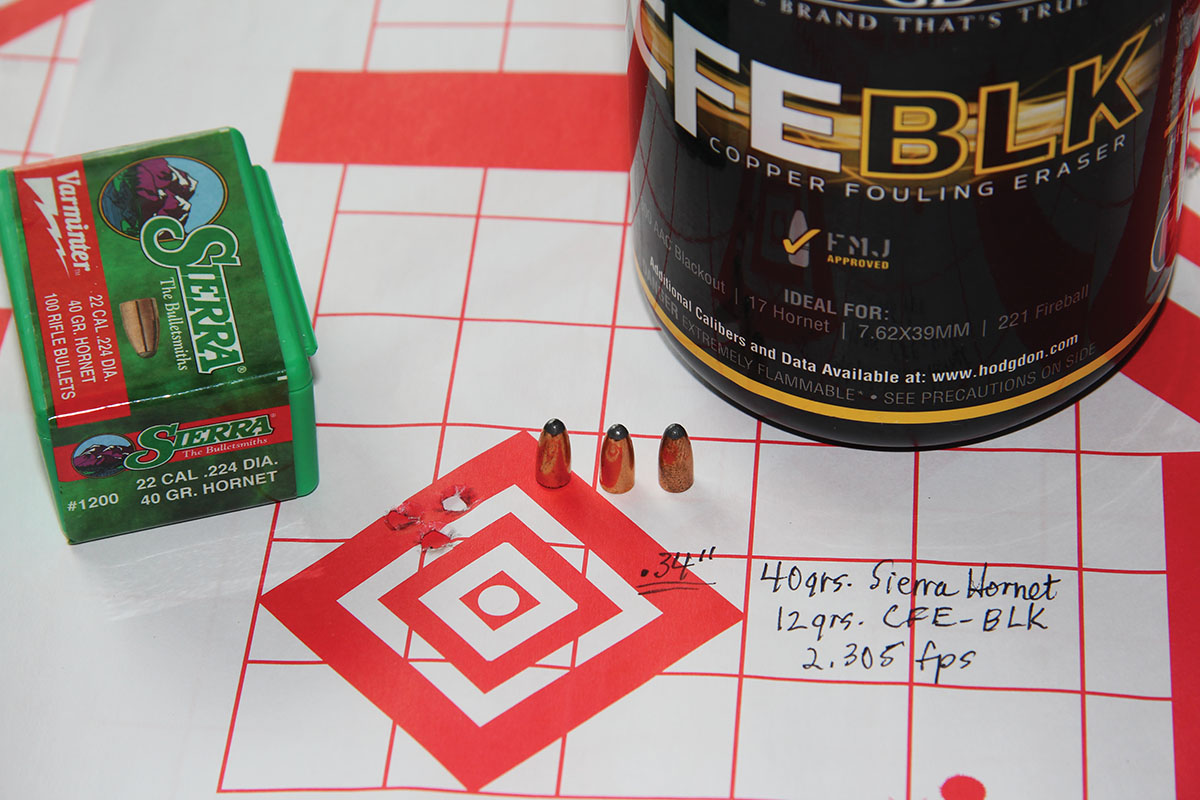
The Sierra 40-grain Varminter Hornet made a natural choice for the TCM, closely mirroring Armscor factory bullets in shape and function. They quickly brought things around accuracy-wise. Accurate TCM, A-4100 and No. 11 FS, and Hodgdon CFE BLK, all produced sub-1-MOA groups. TCM’S best showing included a .98-inch group at 2,423 fps with 8.5 grains of powder. The others each produced two sub-1-inch groups. Accurate 4100 assembled a .98-inch group at 2,468 fps and a .66-inch group at 2,601 while burning 9.5 and 10 grains of powder. Accurate No. 11 FS produced .90- and .69-inch groups at 2,402 and 2,626 fps with 9.5 and 10.5 grains of powder. Finally, there is CFE BLK, which edged over the line with a .96-inch group at a pokey 2,105 fps using 11 grains of powder. The best group of the entire test resulted from 12 grains of CFE BLK with a .34-inch group at 2,305 fps.
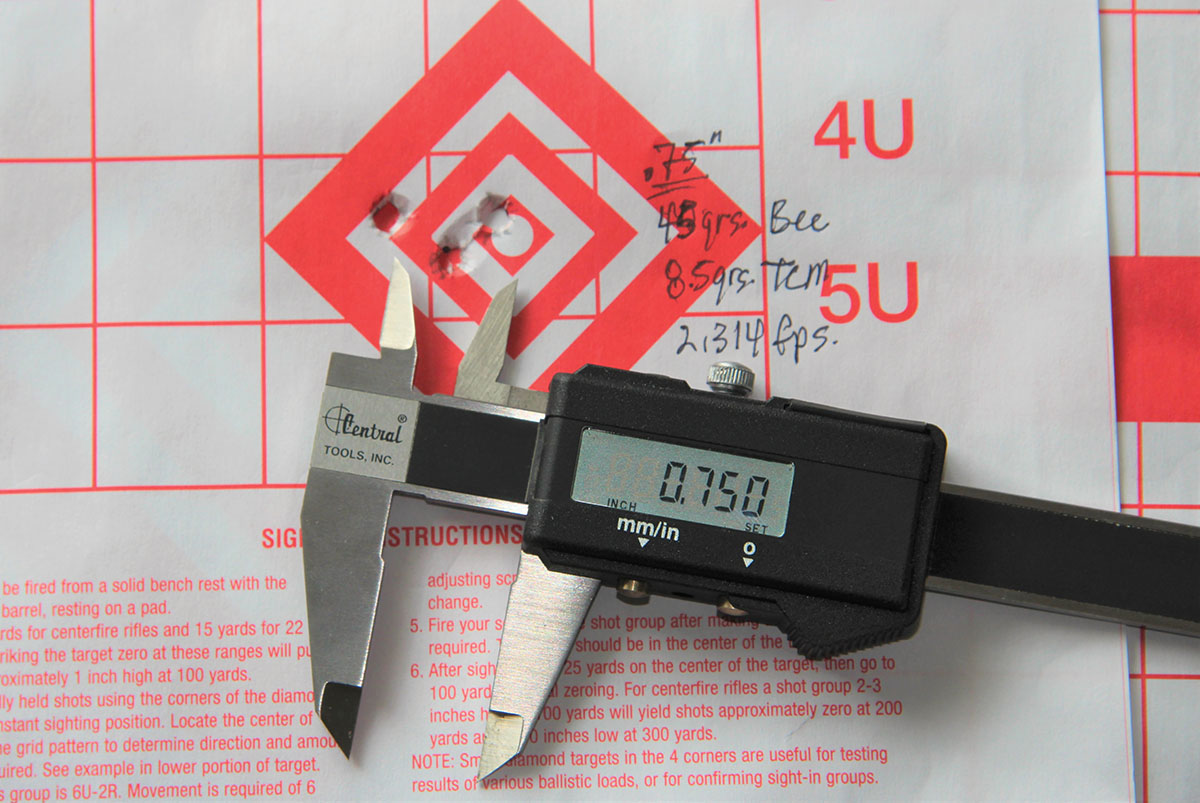
The Hornady 45-grain HP Bee was a shot in the dark, chosen due to its flatnose profile meant for 218 Bee lever-rifle tubular magazines. This allowed creating a compatible OAL with a heavier bullet. Accurate TCM, IMR-4227, Vihtavuori N110 and Hodgdon Lil’Gun fueled this experiment. The heavy bullet did quite well in the accuracy department. A .75-inch group at 2,314 fps resulted from 8.5 grains of TCM, and a .97-inch group at 2,443 fps from 9 grains. IMR-4227 produced a .91-inch group with 9 grains of powder, but at an unimpressive 1,990 fps. Nine grains of Vihtavuori N110 beneath the Bee bullet grouped into .84 inch at a worthwhile 2,414 fps. Hodgdon Lil’Gun proved a surprise, printing .85- and .94-inch groups at quick 2,556 and 2,628 fps velocities. Those groups resulted from 9.5- and 10-grain charges, respectively. Like Hodgdon’s H-110, Lil’Gun likely deserves a more thorough exploration in the 22 TCM.
The 22 TCM is a cartridge with huge appeal chambered in a rifle with major pitfalls. I’d love to see Armscor do more with this round, namely a top-loading bolt rifle with a proper magazine to freebore ratios. The cartridge could solve many of the 22 Hornet’s inherent accuracy problems. We have the 223 Remington, the short 222 Remington and still shorter 221 Remington Fireball. The squat 22 TCM would round that lineup out perfectly.