Coyote Bullets
What is Best for You?
feature By: Phil Massaro | April, 22
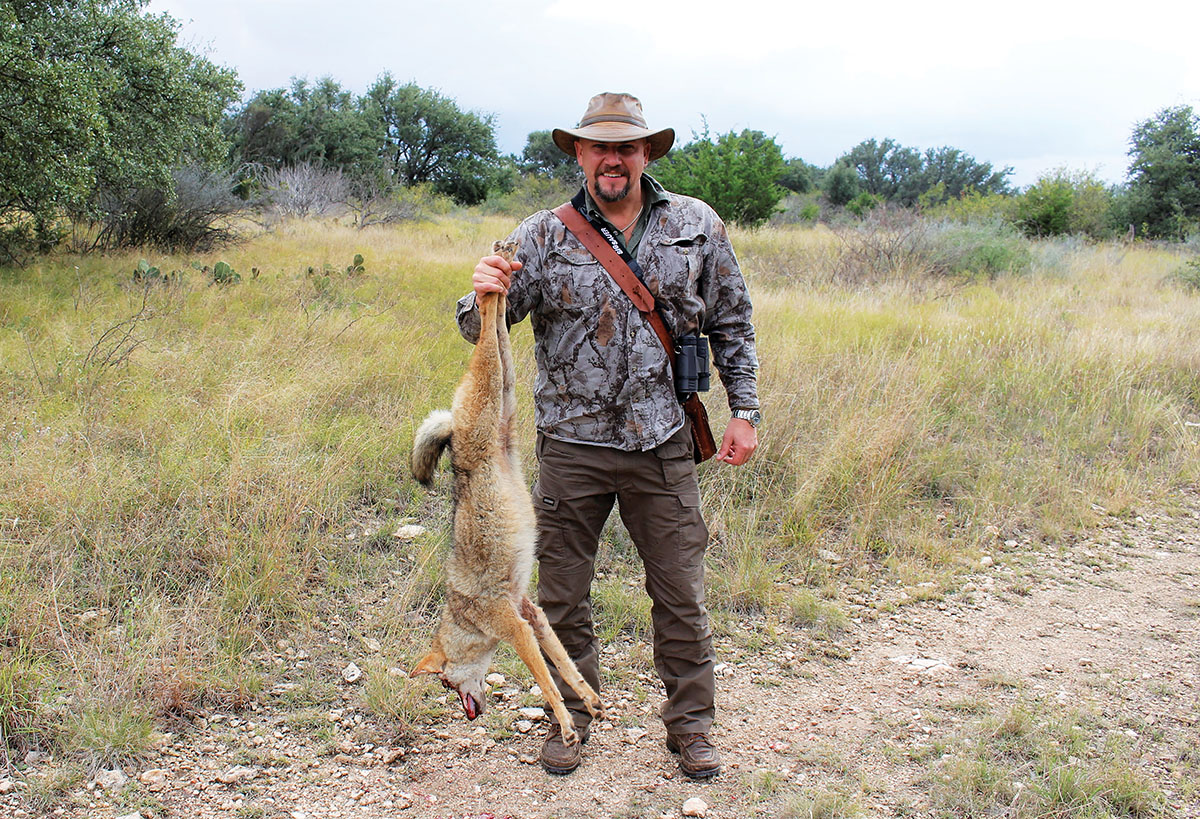

I hunt deer in an area where the possibility of a black bear isn’t a rarity, so I tend to use 7mms and .30 calibers, and many coyotes are taken during deer/bear season as the opportunity presents itself, with the serious coyote hunting usually taking place in January, February and March. As a result, there have been some horrific wounds inflicted, resulting in a very dead, but very messy coyote. Trust me, a 405-grain softpoint from a .45-70 Government at woods velocities will make a mess on a coyote’s shoulder.
So what makes the ideal coyote bullet? Ask my father, and he’d reply with a curt, “Whatever I’ve got in my hands.” He hates coyotes. I can’t exactly say I feel much different, but have always tried to match the rifle/cartridge/bullet combination to the game at hand. I won’t shy from killing a coyote with any deer rifle I’ve got with me, but when pursuing coyotes in the winter, I have a completely different mindset. I usually find myself with my well-worn Ruger M77 MKII in 22-250 Remington in hand, though there are other rifles I use as well. Choosing the best bullet for hunting coyotes can depend on the cartridge, the area you hunt, and conditions where you hunt. Eastern coyotes are generally larger than western coyotes, but the hunting in western states tends to be at longer ranges overall, so bullet choice may differ for the two scenarios.

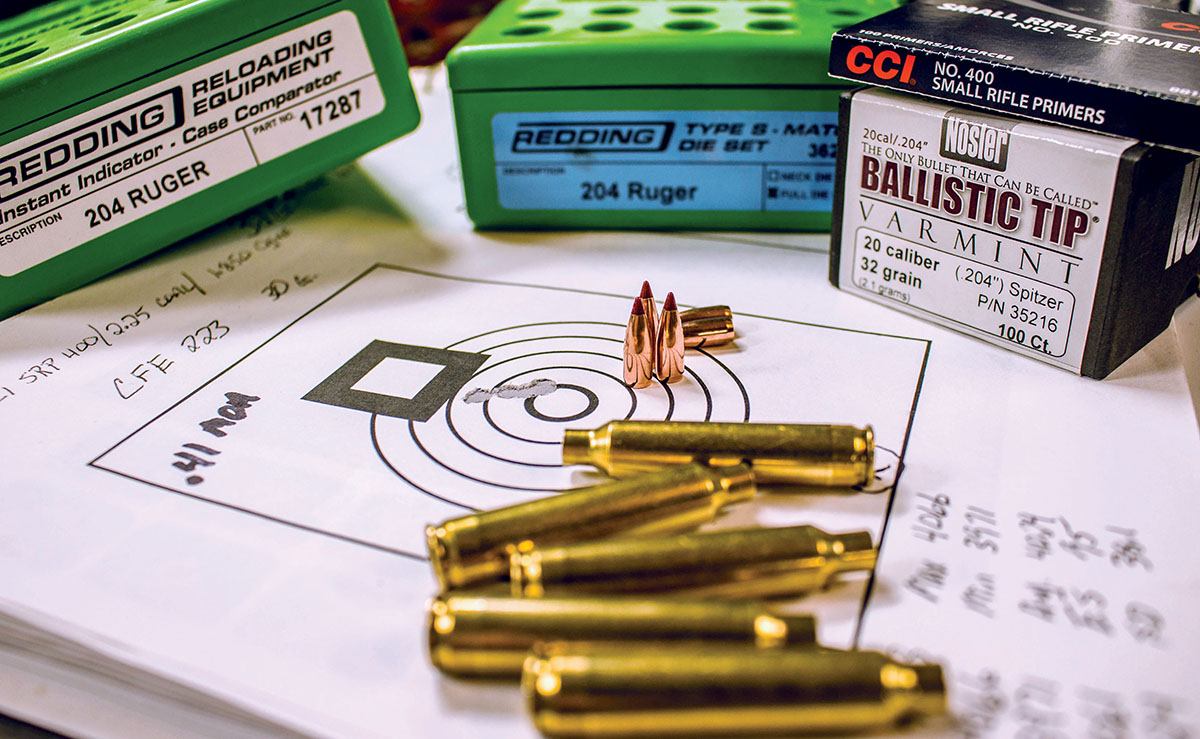
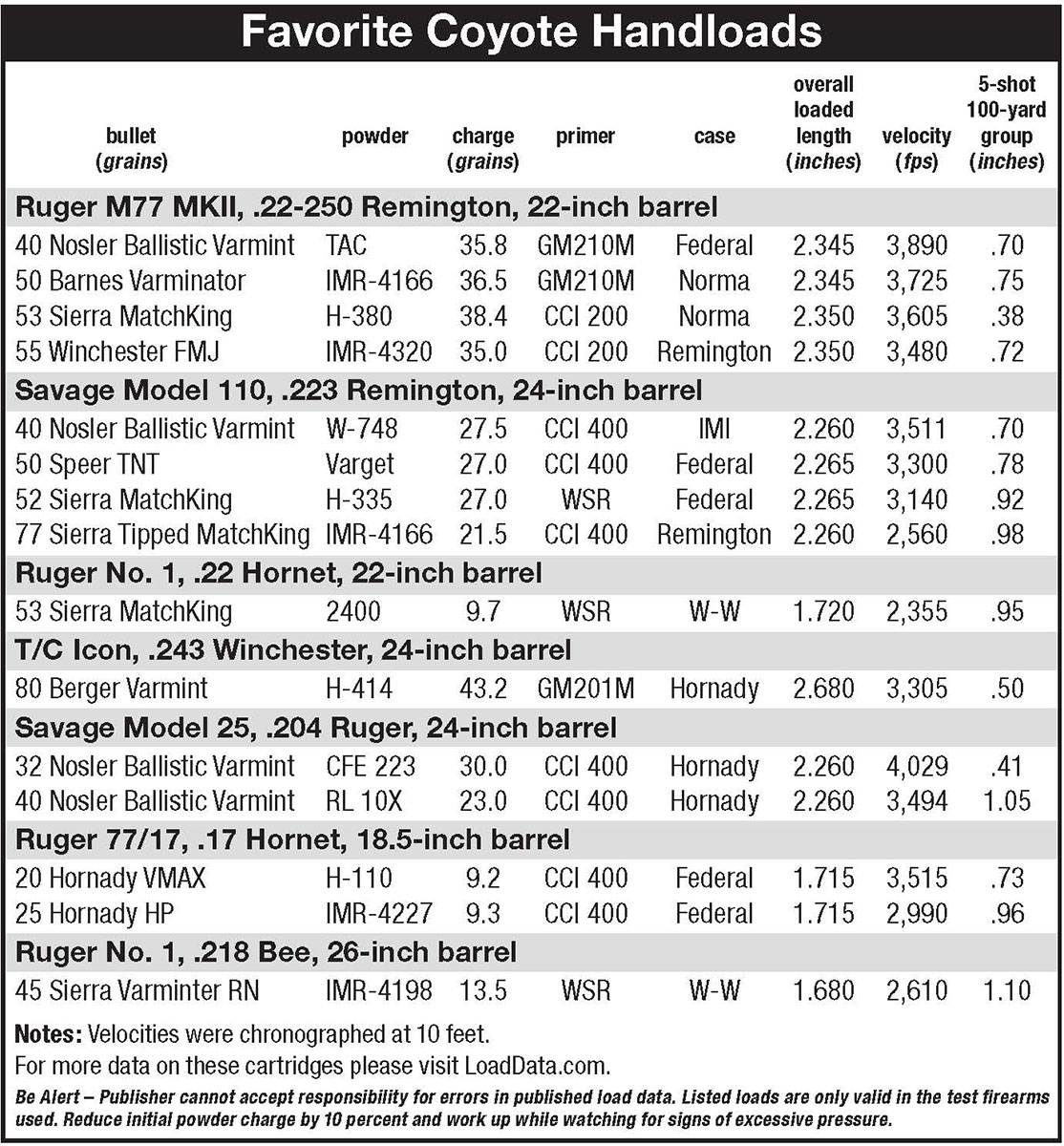
Starting with bullet conformation, those guys who seem to be really serious about fur tend to be fans of the full metal jacket, non-expanding bullet. They are affordable, can be very accurate and will simply zip through a coyote, most often entering and exiting in a caliber-sized hole, minimizing pelt damage. I have long relied on bulk Winchester 55-grain FMJs in my 22-250 Remington, which I purchased at a local gun show almost 20 years ago. Loaded over the soon-to-be-gone IMR-4320 and sparked by a plain CCI 200 Large Rifle primer, this combination will give 0.75-MOA accuracy and doesn’t destroy much fur at all. These projectiles also work in the 223 Remington, pushed by Hodgdon H-335 powder. Speer’s TMJ bullets are a similar concept, as are the Sierra FMJs and the Hornady FMJs loaded in its attractively affordable Frontier ammunition line; these are all essentially a copy of the military projectiles with no exposed lead at the nose, which would adhere to the rules of the Hague Convention. While the full metal jacket bullet won’t damage the pelt, it doesn’t do a whole lot of internal damage either. A coyote shot through the lungs with an FMJ will run, as the wound will be much like that of an arrow with a field point. Because there is a lack of bullet expansion, there is little hydraulic shock, though the FMJ bullets do tend to exit base first. Head shots are an option, as are shoulder shots, and I use both when using FMJs if I have to stop a coyote. Sadly, fur prices are not as high as any of us would like, and trying to turn any sort of a profit selling coyote pelts could be an exercise in futility.


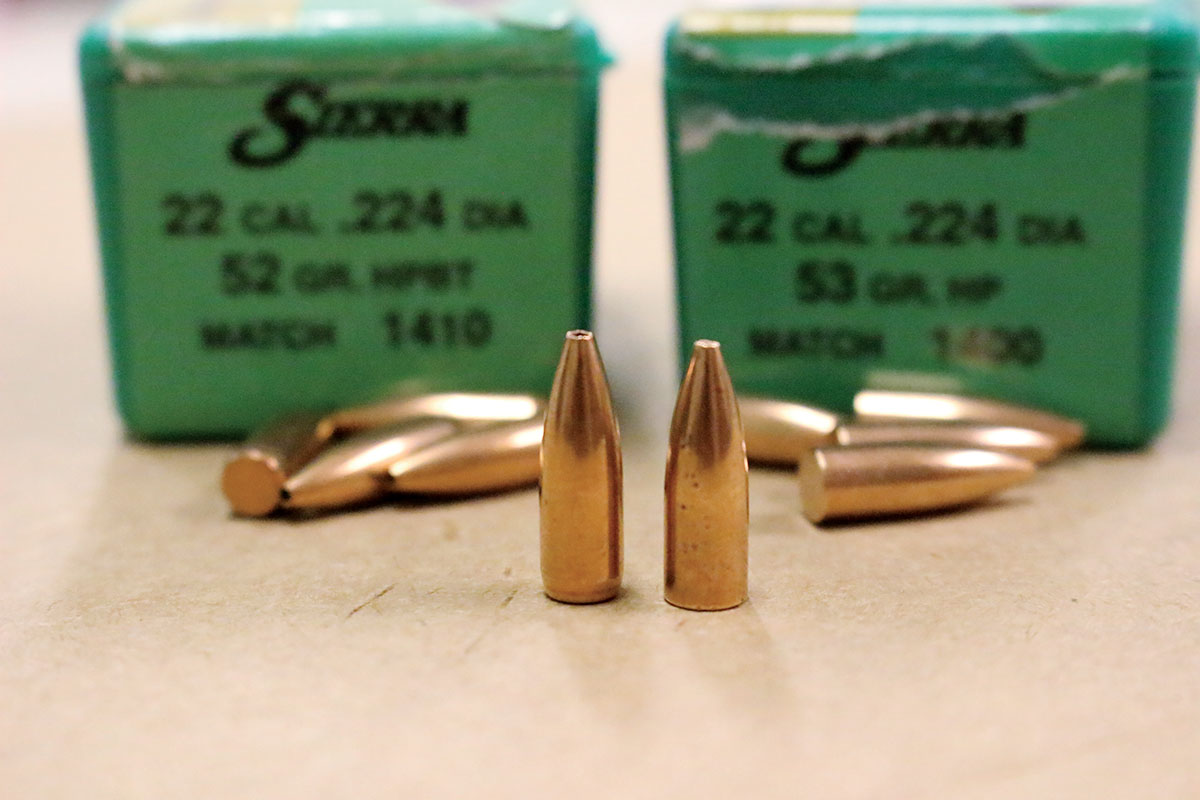
Starting with those hollowpoint bullets, I like to bend the rules here a bit when it comes to coyotes. While almost all the bullet companies will recommend that we never use match-grade target bullets on game animals, I have absolutely no qualms using match bullets on coyotes, foxes, bobcats or any varmint. The Sierra MatchKing has an impeccable reputation as a target bullet, but is hell on coyotes. My Ruger 22-250 shows a definite preference for flatbase bullets, and Sierra’s 53-grain MatchKing is my go-to target/furbearer/varmint bullet choice in that rifle. Propelled by Hodgdon’s H-380 – literally named for the incredible performance of this powder when driving a 55-grain spitzer in the 22-250 – this is the most accurate bullet I’ve found out of my rifle. Terminally, it works just about perfectly. It has enough mass to reach the vitals, yet doesn’t usually exit on a coyote, though I’ve made a mess out of smaller gray foxes with it. This combination is also good on groundhogs. My father’s Savage 110 in 223 Remington prefers the Sierra 52-grain MatchKing hollowpoint boat-tail, driven by Hodgdon’s BL-C(2) powder, and is wonderfully accurate. With a semi-bull barrel and a black synthetic stock, the rifle might not be much to look at, but the way it shoots those MatchKings makes up for it all.
There are some fantastic hollowpoint bullets especially designed for hunting performance, but with the tight tolerances and hair-splitting accuracy of the match bullets. Berger’s Varmint line comes quickly to mind, as the company uses its famous J4 bullet jackets, which are thinner at the nose. This produces the violent expansion that both varmint hunters and furbearer hunters have come to appreciate. Berger’s Varmint line runs from the 25-grain .17-caliber to two offerings in .20 caliber and up through the more traditional .22- and 6mm-caliber bullets. Maybe somewhat against the grain in today’s bullet market, Berger’s Varmint line of projectiles are flatbased, with exception of the 40-grain .20-caliber boat-tail bullet. My pal Christian Johnson has a T/C Icon chambered in 243 Winchester that absolutely loves the Berger 80-grain FB Varmint, putting five shots into 0.5-MOA groups, and they’ll absolutely flatten coyotes.

Barnes is famous for its lead-free X Bullet line and has its Varmin-A-Tor bullet, using a lead core and thin, tapered jacket, which is scored at the nose for violent expansion. In my experience, these function just as advertised. These are flatbase hollowpoints and are perfect for “entrance-wound-only” performance on foxes and coyotes.
For those hunters who I described earlier as using “a simple, conventional bullet,” there are plenty of quality choices for the coyote hunter. Hornady’s Varmint bullet line is comprised of cup-and-core bullets in common caliber/weight combinations, which will deliver the goods just as they would have half-a-century ago. Within this product line, there are choices specially designed for the 22 Hornet and the 218 Bee, both of which have been traditionally loaded with roundnose bullets in deference to tubular magazine rifles, as well as some of the classic profiles for the 222 Remington, 223 Remington and 219 Zipper. Sierra has some similar designs with similar purpose in mind in its Varminter line; its 45-grain Hornet bullet worked very well in a single-shot 218 Bee I spent a few seasons with when loaded over a healthy charge of IMR-4198.
I would argue that the polymer-tipped bullet is not only here to stay, but is taking over the market. From the big-game bullets to the varmint projectiles and rimfire loads, and even into the target community. Sierra’s Tipped MatchKing is a fantastic bullet. For coyotes and other furbearers, the polymer-tipped bullets are excellent choices, as the tip is designed to act as a wedge to initiate expansion, and will certainly help to maintain a uniform ballistic coefficient. Combine that tip with a thin jacket, and a hunter has a wonderfully frangible bullet that will rapidly expand and impart its energy. I can think of no better examples than the Hornady V-MAX, Nosler Varmageddon and the Nosler Ballistic Tip Varmint. All are cup-and-core designs with thin, tapering jackets, and their respective tips will give violent expansion at close to medium ranges, yet both will expand reliably even at velocities in the 1,600 to 1,700 feet per second (fps) range.

The Hornady V-MAX is an undeniably popular bullet among varmint and predator hunters, to the point where even Federal loads this bullet in its ammunition line. With a red polymer tip set into a hollow cavity in the swaged lead core, and the famous AMP bullet jacket, this product line begins at .17 caliber and has several offering in .17, .20, .22 and 6mm calibers, the line has one offering in .25, 6.5mm, .270, 7mm and .30 caliber; all of the latter group being very light for caliber. For explosive results, load up some Hornady V-MAX and grab a good predator call; odds are you’ll dump the coyote in its tracks. I’ve always appreciated the accuracy of the Hornady V-MAX, even in the rimfire cartridges, but especially in the .22-caliber centerfires.
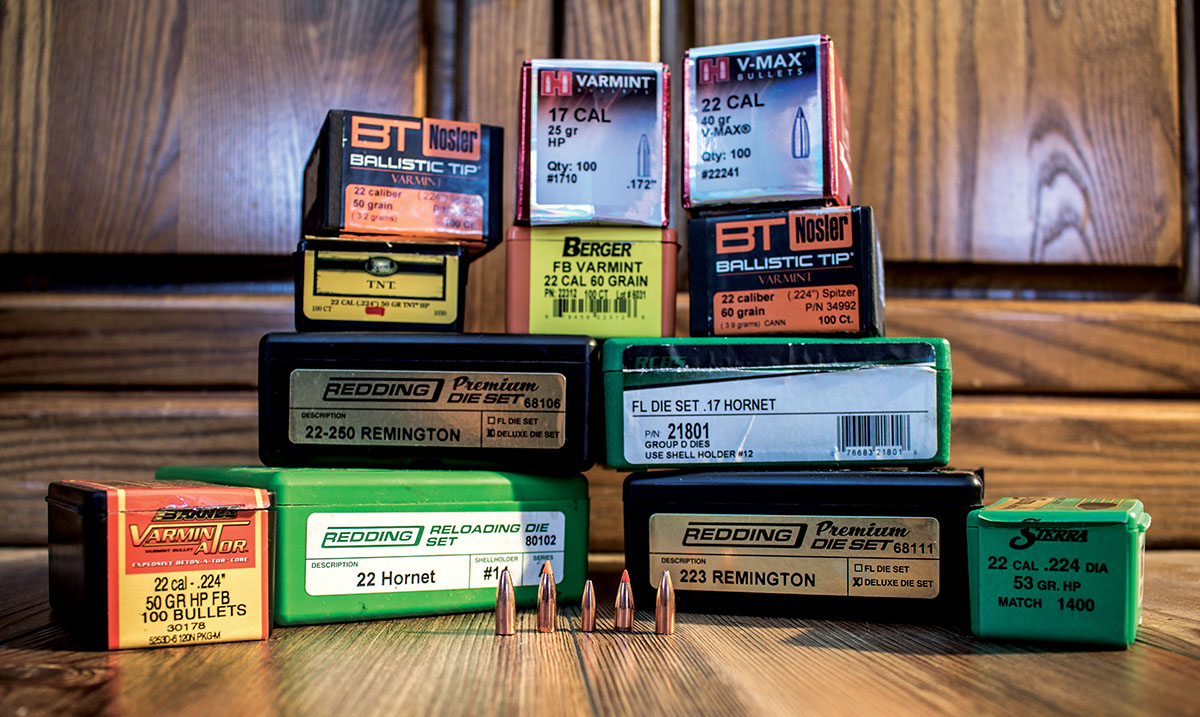
There may not be a single ‘perfect’ coyote bullet, or perhaps it’d be better said that there are many correct answers to the one question. While I’d never want to see the coyote eradicated, I can say that my region of New York has an overpopulation of coyotes. I can hear them from my house almost nightly. They offer great sport to those who enjoy calling them. In fact, I think the coyote might be one of the wariest animals I’ve ever hunted. They’re smart, wily and have the senses to avoid being taken, so make your shot count, and use a bullet your rifle likes best.