

Winchester's New Wildcat
The Ultralight Rimfire Varmint Rifle
feature By: Randy Bimson | April, 22
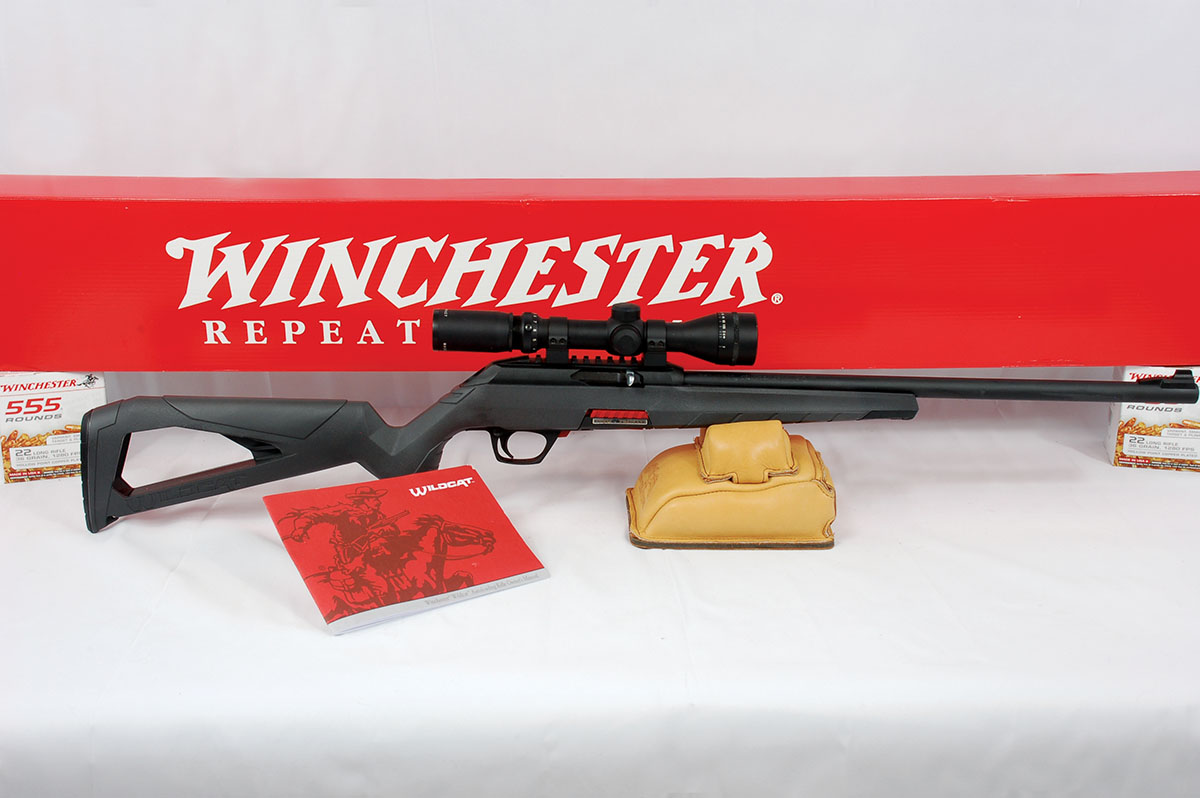
In my opinion, it has been a lot of years since Winchester Repeating Arms last gave us a great .22 rimfire rifle, and that rifle was the exceptionally well-built and accurate Model 9422 lever action, let alone a great self-loading .22 rimfire rifle that could compete head-on against the Ruger 10/22 Carbine. The Ruger 10/22 may meet its match in the Winchester Wildcat autoloading rifle.
When I was introduced to the Wildcat at the 2019 SHOT Show by then head of the research and development group, Joseph Rousseau, my first thought was, “Here is another Ruger 10/22 takeoff.” I know Joseph and some of his team very well and I should have known better of them. The words “imitation” and “mediocrity” are not in their vocabulary. The Wildcat is unique unto itself. The Wildcat shows innovation in design and in the use of the most modern manufacturing technologies and materials. This is no copycat 10/22, it is a Wildcat!
Every varmint hunter needs a good .22 rimfire varmint rifle in their repertoire of varmint rifles and spring is a good reminder of that. My wife, Cathy, and I are preparing to hook our travel trailer to our truck and head up to western Canada for the month of May to visit family and friends and partake in the prairie varmint hunters’ spring ritual, gopher or Richardson’s ground squirrel hunting.
With that in mind, Cathy has a new Winchester Wildcat that needed setting up prior to the western Canada trip, and what better opportunity then showcasing it here in the Varmint Rifles and Cartridges Spring 2022 edition and let readers in on our assessment of the Wildcat .22 rimfire varmint rifle.
If I had to characterize the Wildcat, I would say it is best described as combining the best traits, and none of the bad, of the Ruger 10/22 Carbine and, for those old enough to remember, the groundbreaking Remington Nylon 66, with a big dose of innovative design and use of new material and manufacturing technologies.
Like the Remington Nylon 66, the fire-control system, action components and barrel of the Wildcat are incorporated into polymer main assemblies, including the stock and the upper receiver assembly.
The highly-ergonomic, ambidextrous stock, which houses the “lower receiver assembly,” the fire-control system, other action components and magazine retention systems, are molded using fiberglass-reinforced polypropylene. Polypropylene was chosen because, unlike other polymers that tend to absorb moisture, polypropylene is non-hygroscopic, meaning it absorbs virtually zero moisture and is extremely stable as a material used for a stock. The upper receiver, which secures the barrel in place and offers stability and cover to the action components, is precision-molded using a proprietary polyamide composite chosen for its dimensional stability, strength and durability. Given my experience of years past with the Remington Nylon 66, the natural friction-reducing characteristics of the polymer housings will require minimal lubrication and the Wildcat should prove to perform extraordinarily well from the dry and dusty southwest to the worst winter conditions that Alaska and northern Canada can throw at it.
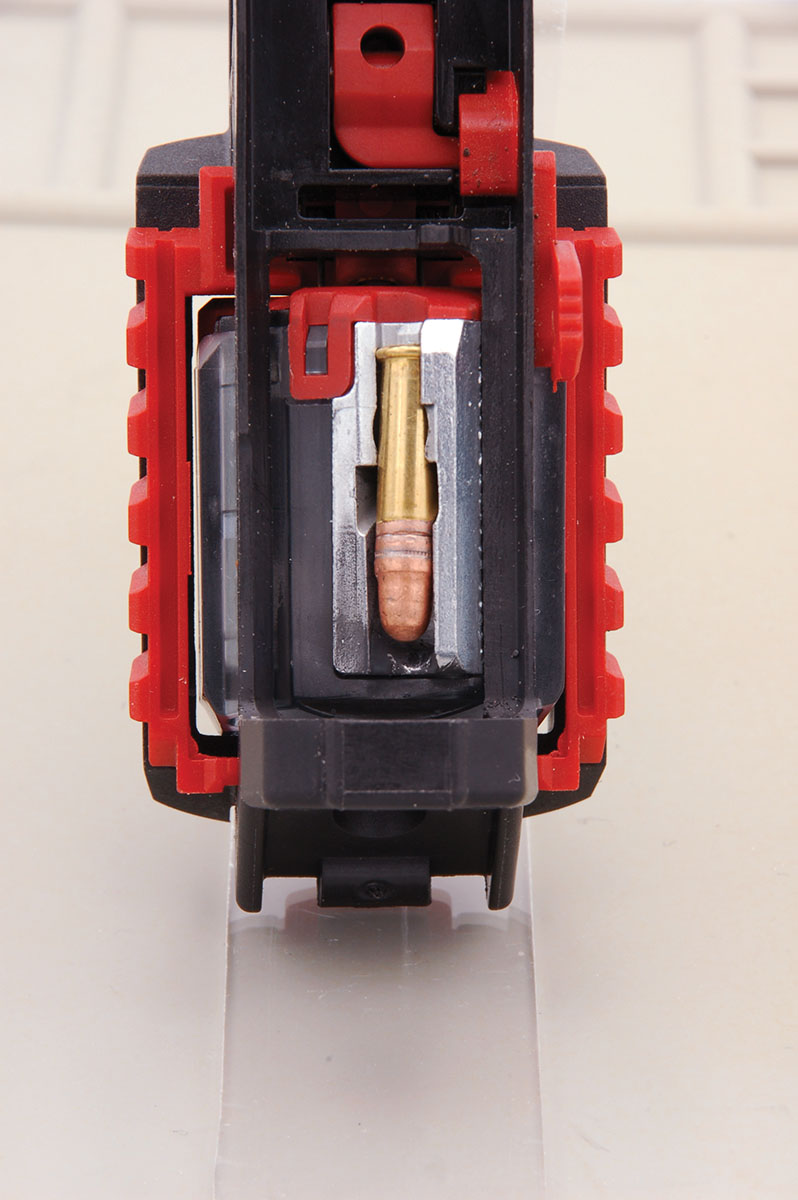
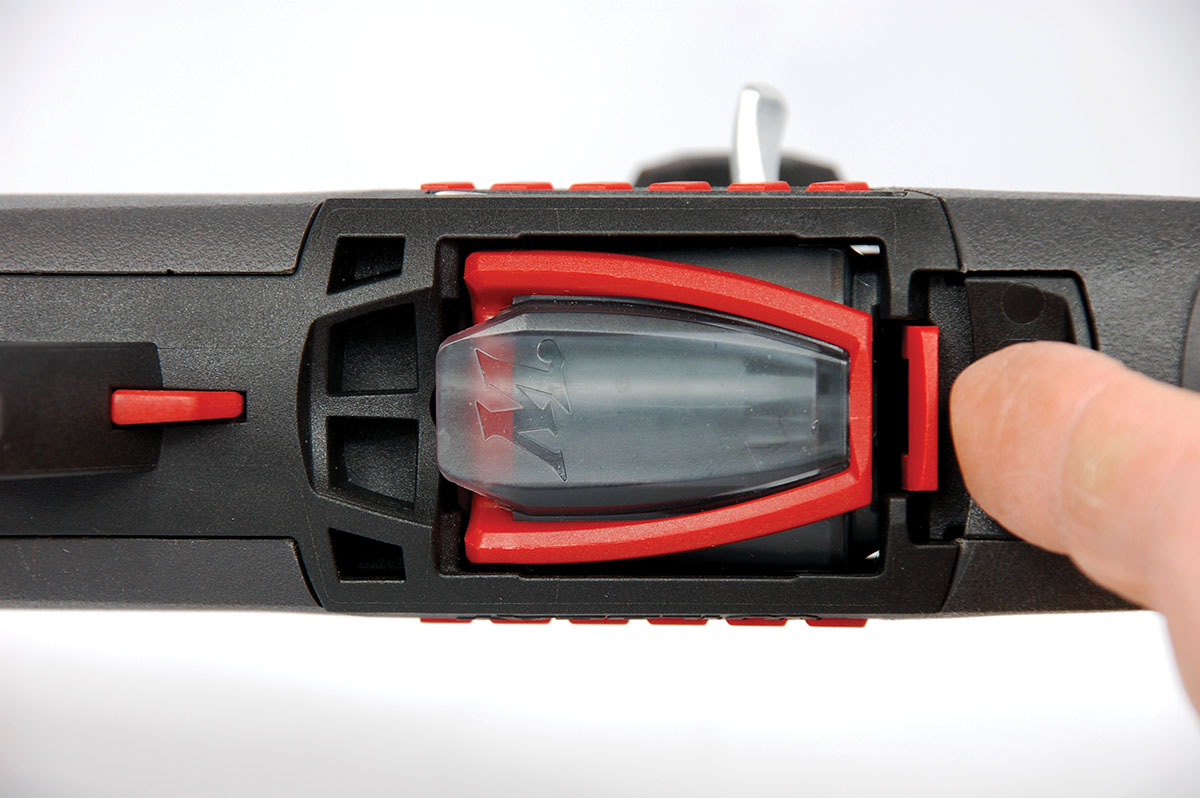
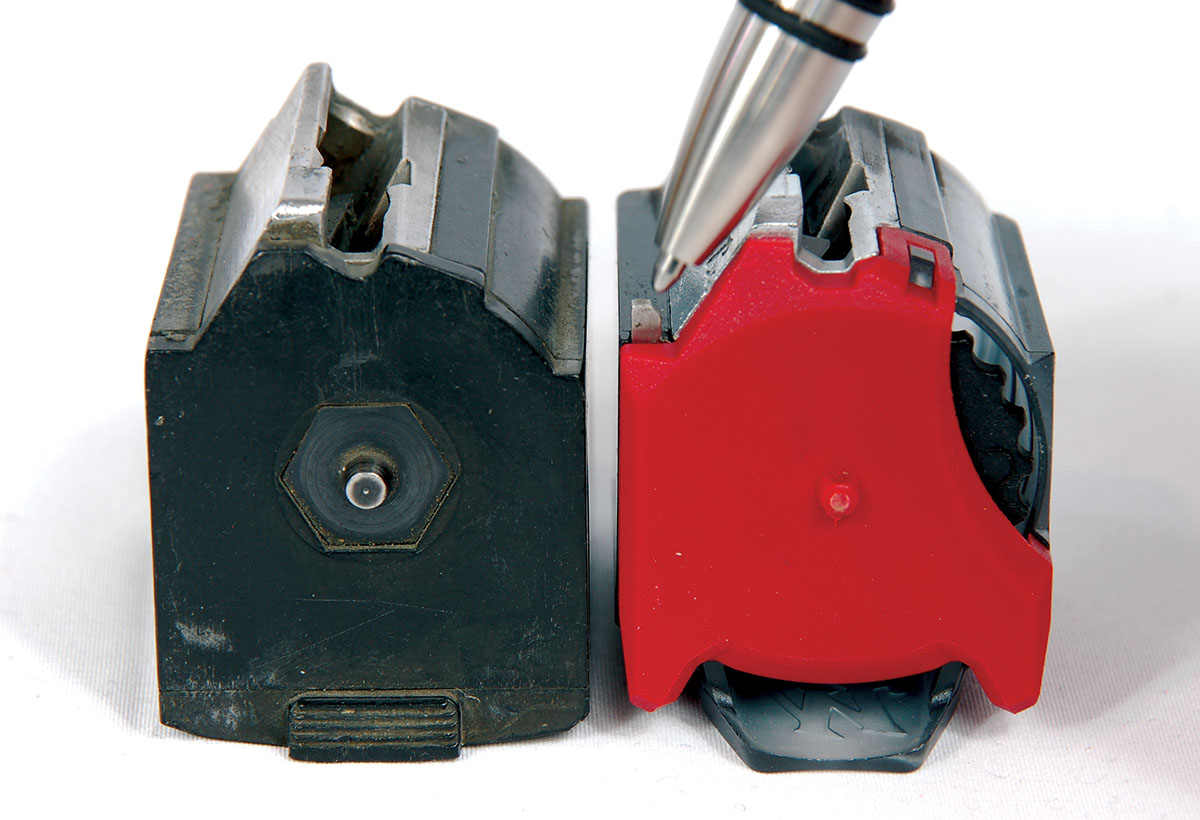
The Winchester design team had the forethought to make the 10/22-pattern magazines compatible with the Wildcat, while at the same time, addressing the commonly heard complaints regarding the 10/22 magazine system: 1) The Wildcat magazine is easily released with a gloved hand using the fully ambidextrous, red-ridged release rails located on the right and left sides of the magazine well, or by using the finger tab release immediately forward of
If there is not an empty Wildcat magazine in the rifle, or if generic 10/22-type magazines without last-shot, hold-open capability are used, the breech bolt can be easily locked open by retracting the bolt and an upward push on the red blade-like button located in the front of the trigger guard. The bolt can be manually released by either depressing the red trapezoidal-shaped release button on the left side of the rifle opposite the ejection port or by pulling rearward on the cocking handle slightly.
Now to the heart of the matter, the barrel. Cathy’s rifle features an 18-inch, chrome-moly button-rifled barrel with the Sporting Arms and Ammunition Manufacturer’s (SAAMI) standard 22 LR rifling twist of 1:16, finished with a recessed target-style muzzle crown. Winchester also offers several Wildcat SRS (suppressor ready) models with the same barrel except in a 16-inch length and threaded ½-inch x 28 threads per inch at the muzzle. The SR models include a knurled thread protector.
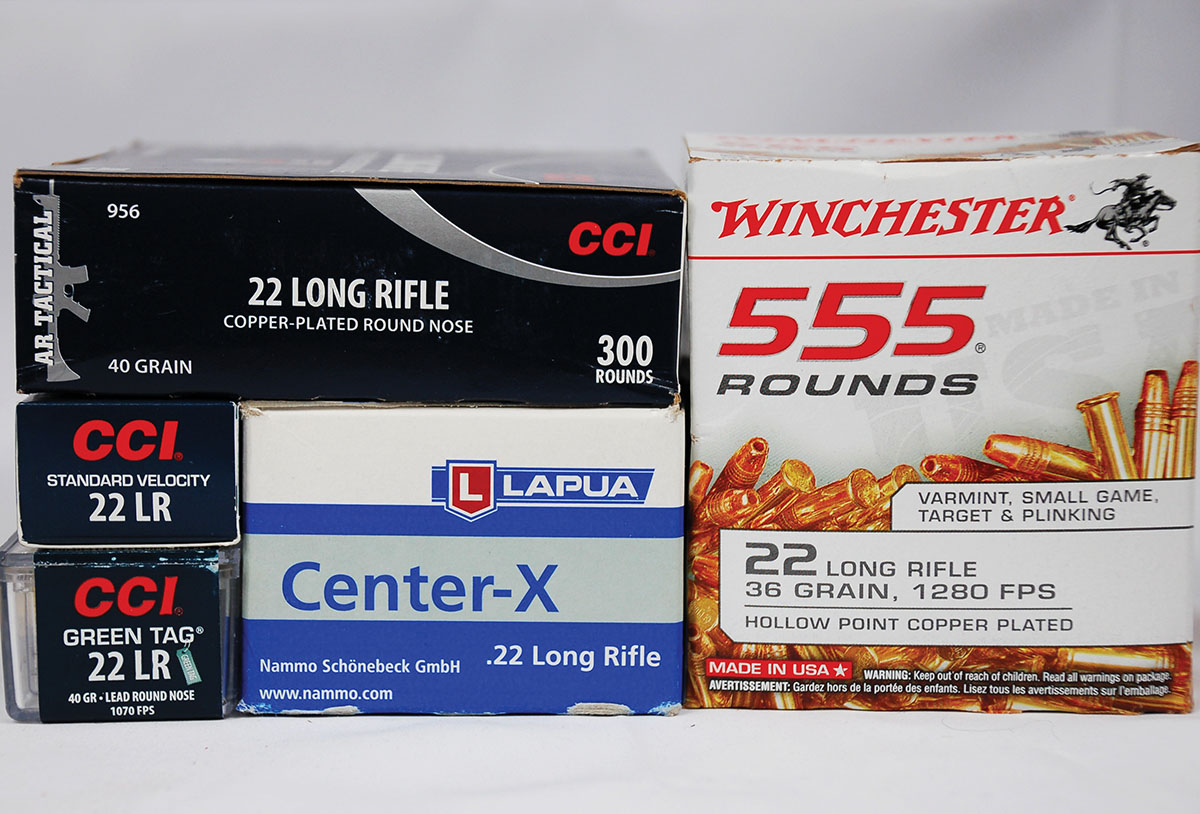
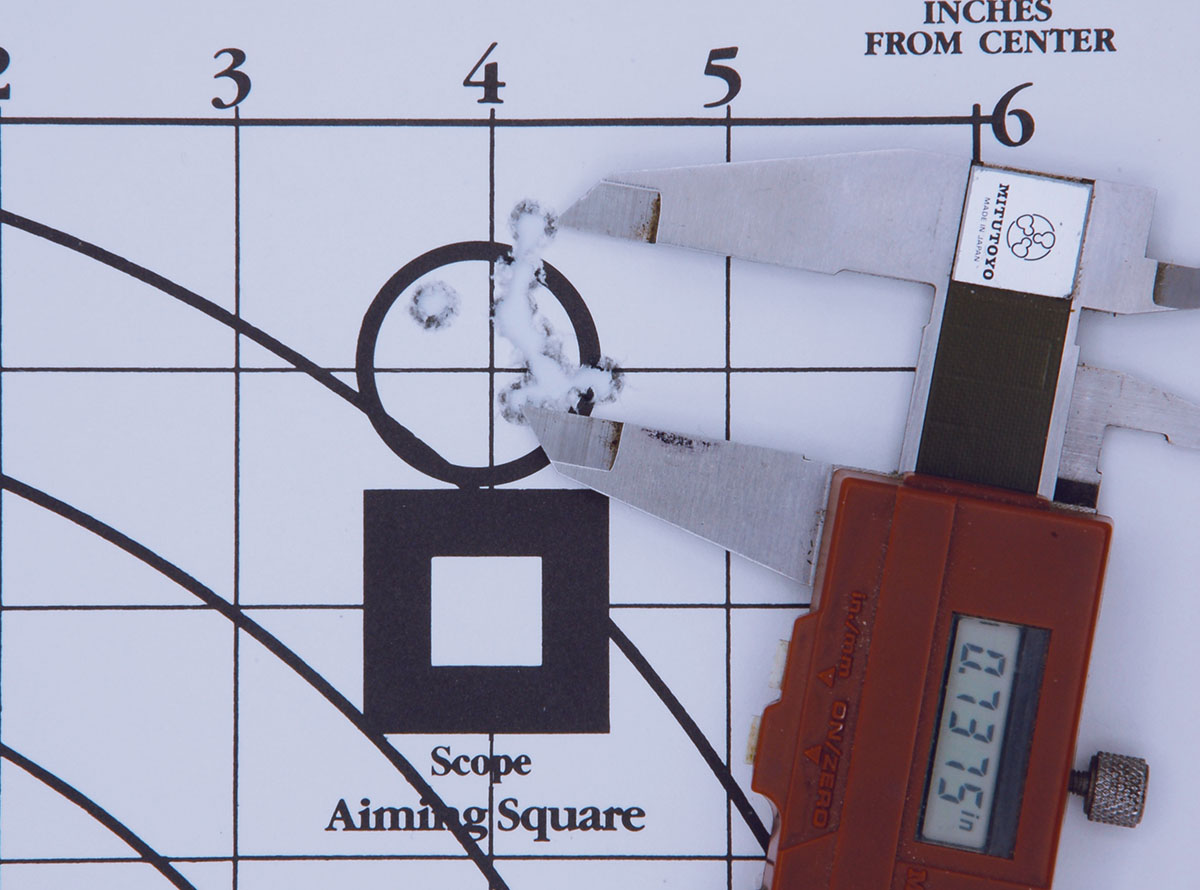
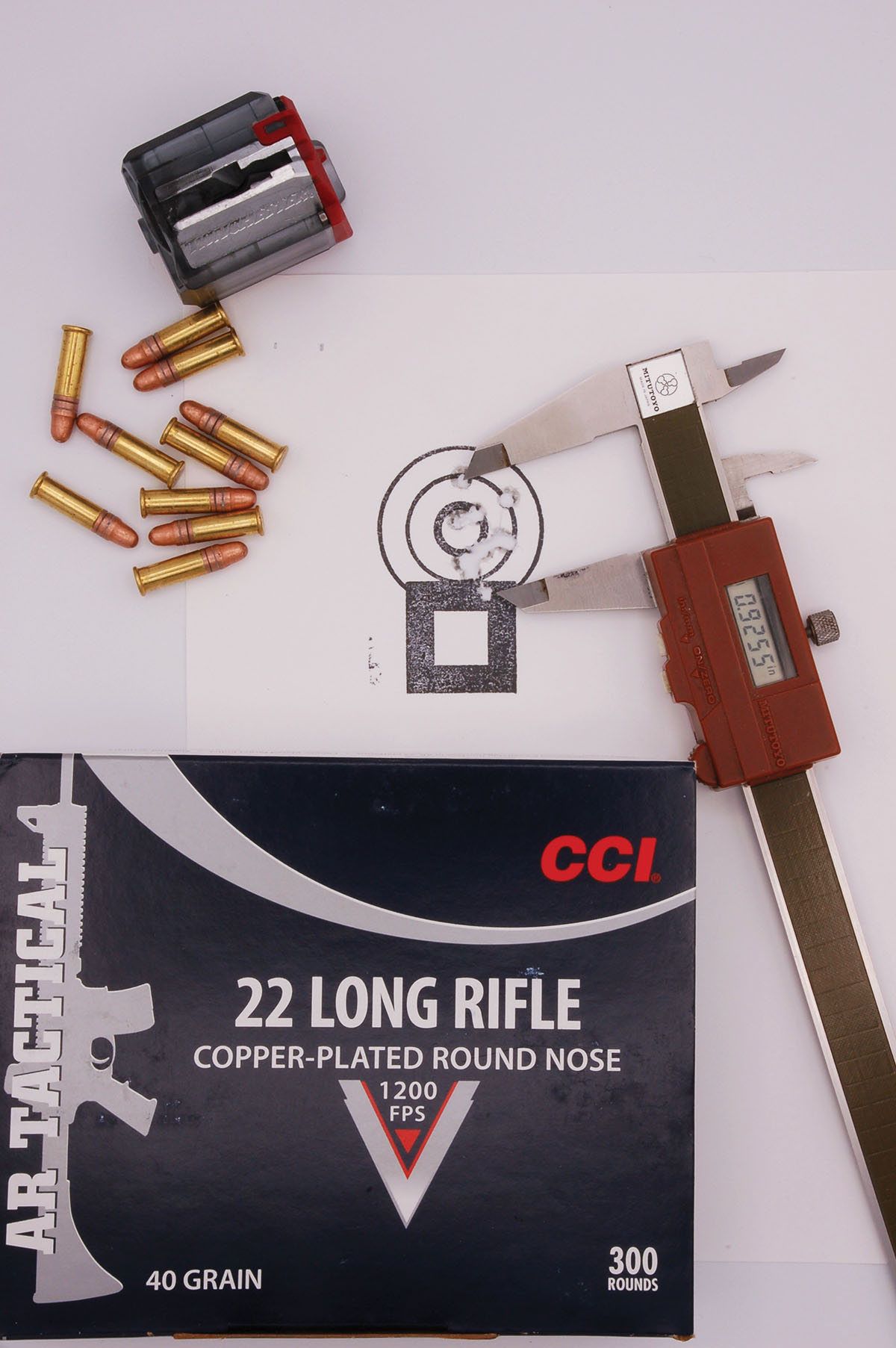
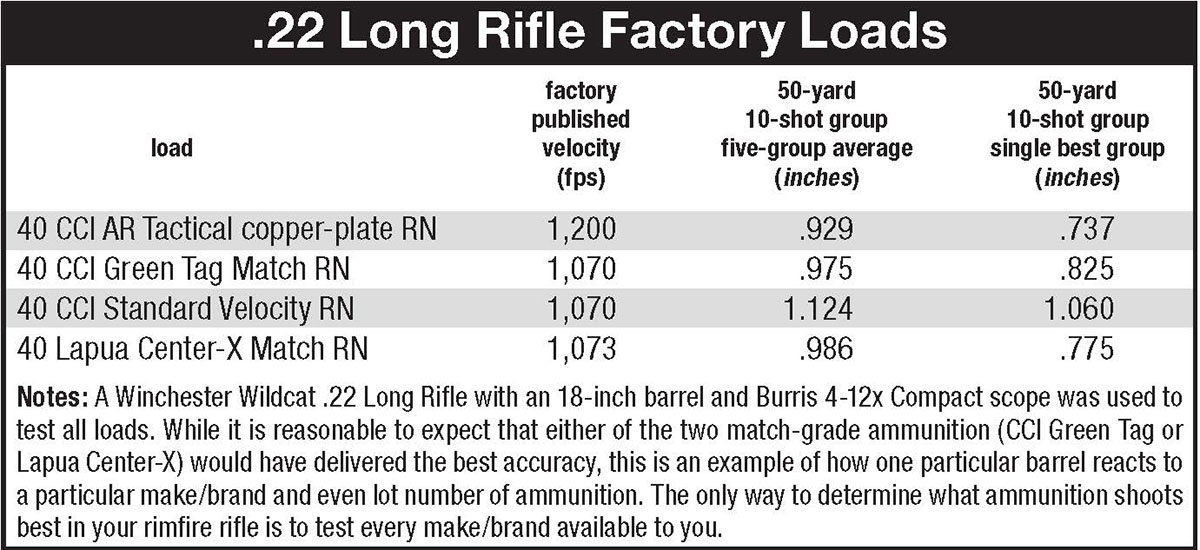
My Lyman borescope revealed very smooth lands and grooves the entire length of the bore, which must contribute to the exceptional accuracy this Wildcat was capable of. How well does this ultralight rimfire varmint rifle shoot? The Wildcat shoots great! I pulled several varieties of ammunition from our stash of 22 LR ammunition, two match-grade and three standard-grade loads, to see if I could find one the Wildcat would thrive on. I fired five, 10-shot groups with each load, bench rested on our club’s 50-yard outdoor range. The barrel was thoroughly cleaned between different makes/brands of ammunition using Sharp Shoot R’s Wipe-Out Brushless Bore Cleaner in conjunction with Rigel Products Triangle Patch cleaning patches. After cleaning, the barrel was conditioned by firing 10 rounds of the next selected ammunition prior to shooting the five, 10-shot groups. This is a critical step in determining which rimfire ammunition will be most accurate in a particular barrel, as the residue from a previous make/brand of ammunition can have an adverse effect on accuracy.
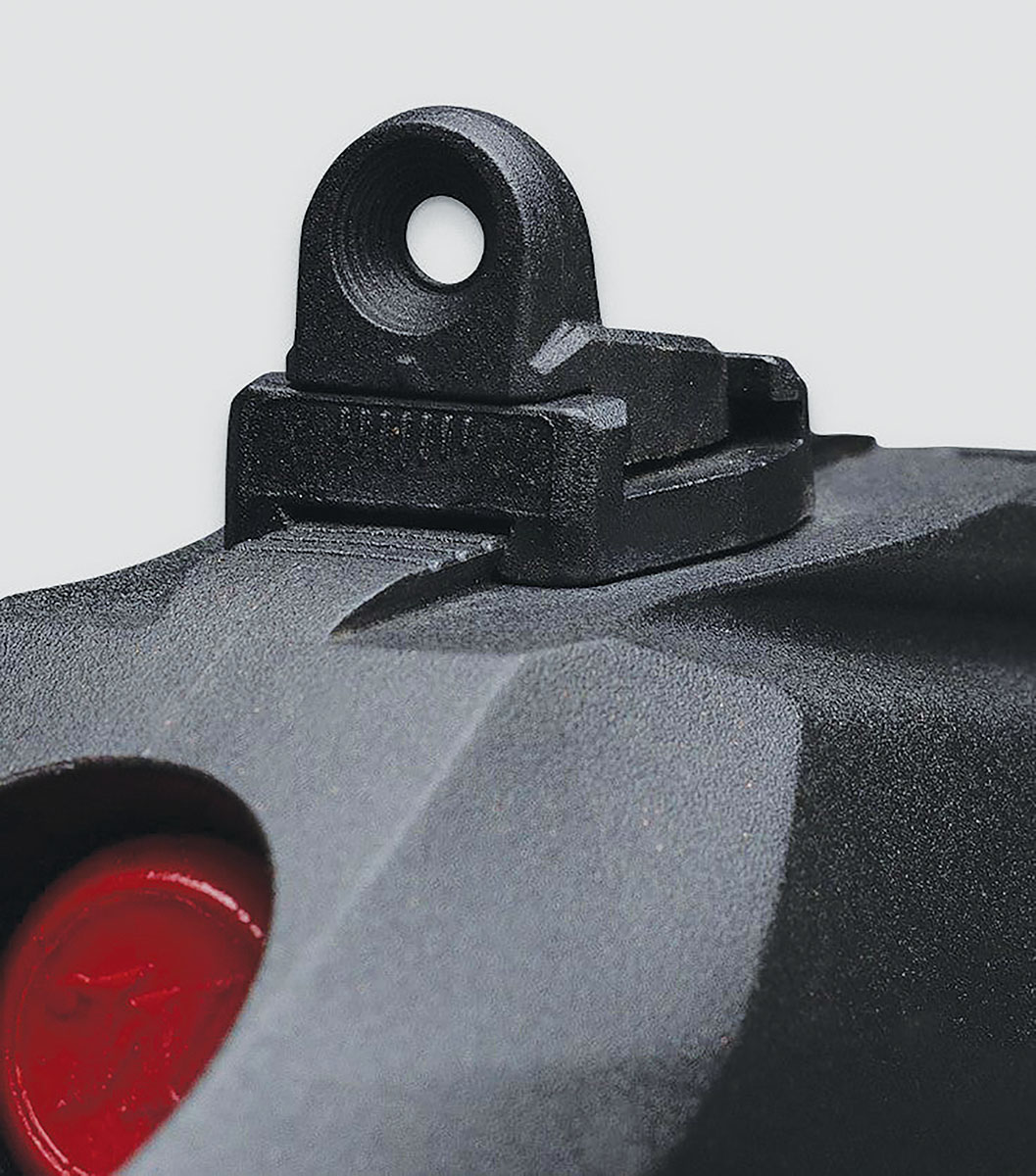
The Wildcat gets high marks in the sighting department, forgoing the typical barrel-mounted, open-rear sight found on most rimfire rifles in favor of the more accurate and useful factory-supplied windage and elevation adjustable “ghost ring” aperture rear sight and ramp-mounted front sight. Winchester wisely opted to drop the 3⁄8-inch dovetail-type scope mount receiver cut typically found on most rimfire rifles in favor of incorporating a much more useful integral Weaver/Picatinny-type optics mounting rail molded into the upper receiver. Given that I am talking about the Wildcat’s potential as a rimfire varmint rifle, my personal preference would call for a scope like the Burris 4-12x Compact. Its size, parallax adjustable objective and excellent optics make them my personal choice for an ideal rimfire varmint rifle scope.
I am happy to report that there were no malfunctions of any kind with the Wildcat during the targeting sessions or the 1,000-round mix of all the five ammunition types I fired on rimfire silhouettes to finish up my day at the range.
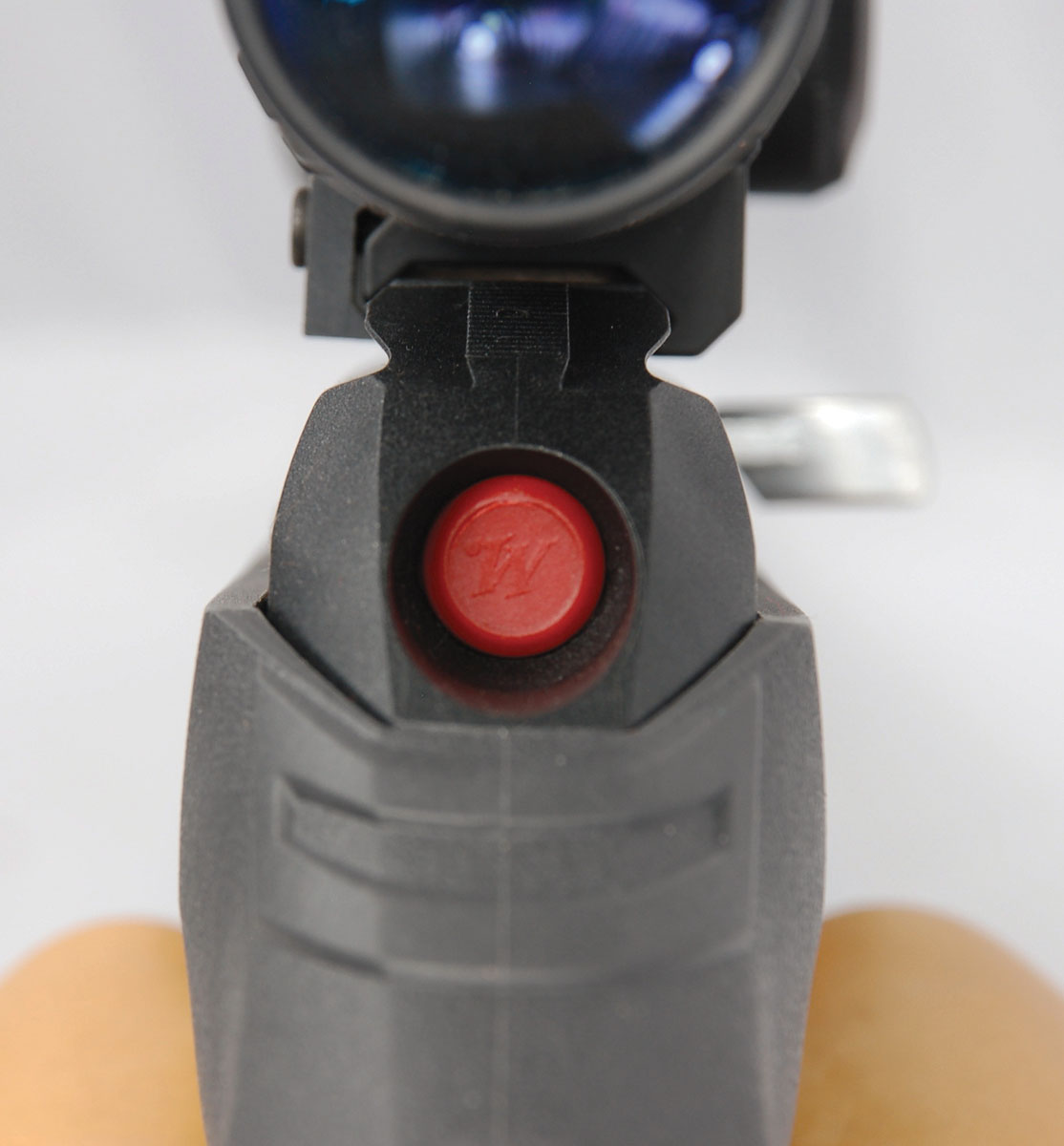
That brings me to cleaning the Wildcat. What the Winchester design team came up with is a stroke of pure genius. Ensuring that the rifle is completely unloaded, dry fire the rifle to release the mainspring force and then merely push in on the large red disassembly button located at the rear of the Wildcat’s upper receiver. The entire lower receiver assembly conveniently drops out of the bottom of the stock without having to remove the barreled action from the stock. No tools are required. Now, if that was not enough, here is the other trick. The hole located in the upper receiver for the disassembly button now serves as the access port for a real cleaning rod! Brilliant, absolutely brilliant!
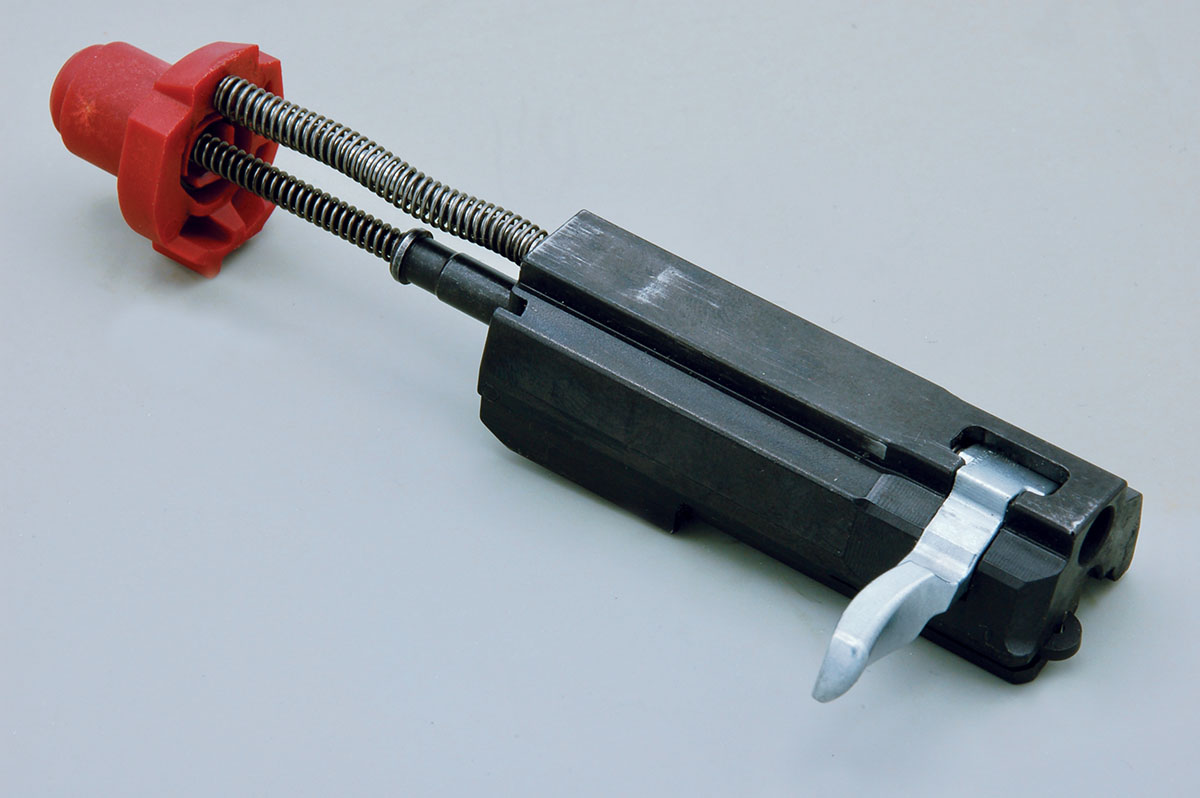
Unlike the 10/22, which is hammer-fired, the Wildcat utilizes a lightweight, high velocity, striker-fire system. Looking at the system, I thought the Wildcat may have a significant advantage in lock time. In conversation with the senior research and development engineer, it was determined that the lock time of the 10/22 and the Wildcat are similar.
While the upper receiver/barrel assembly need not be removed from the stock for normal maintenance, removing the two Allen head stock screws allows the stock and upper receiver/barrel assembly to be separated if the need should arise.
From the user’s perspective, there are only three screws of any real consequence on the Wildcat, the two Allen head stock screws, plus the smaller aperture rear sight windage and elevation adjustment screw. Now here is another neat feature. On the right-hand side of the lower receiver assembly, a pair of required Allen wrenches are securely stored and are easily accessible when needed.
When first handling the Wildcat, I had concerns about its light weight and the configuration of the pistol grip. Both fears were unwarranted, the weight of the bare Wildcat (4 pounds) and the Ruger 10/22 synthetic Carbine (model 1256 – 4 pounds, 4 ounces) are nearly identical and I see a lot of Ruger synthetics being used for rimfire varmint rifles. While I found the grip of the Wildcat very comfortable for my relatively small hand, I was concerned that larger hands may find it too small. Having passed the rifle around to many shooters, the greater majority think it fits and feels great.
Once again, I think, we have a .22 rimfire rifle worthy of the Winchester name and heritage. While it is pure speculation on my part, like the Ruger 10/22, I envision the Wildcat evolving over time with bull-barrel variants and possibly improved trigger/striker components for reduced trigger pull weight.
From my perspective as a design engineer and shooter, I think the Wildcat is an innovative and sophisticated rimfire rifle and a dandy ultralight varmint rifle. I can’t wait to see if Cathy will let me have a go at some of those gophers with her Wildcat!