220 Weatherby Rocket
Loads That Bring Out the Best in This Wildcat
feature By: Stan Trzoniec | October, 21
Everyone has their favorites, and I’m no exception. The 224 Weatherby Magnum chambered in the downsized Mark V action is my pet, and now that it is not being made anymore, it’s my go-to gun when chucking season comes around. The .240, and especially the 257 Weatherby, are steady companions when I go hunting out West. I like the .257 so much I have three guns chambered for it!
However, one Weatherby cartridge caught my attention, and being a varmint shooter, I had to dig into it deeper. It is not as famous as the present line of cartridges, but it does offer a lot of fun in working up loads with the added adventure in having a rifle custom made to fire it. Called the 220 Weatherby Rocket, it’s a cousin to the popular 220 Swift, which gets a shooter one step closer in placing a 220 Rocket rifle on the gun rack. How close you may ask? If you have a rifle in the 220 Swift that needs a new lease on life, all that is needed is to rechamber the gun to the Rocket.
With that in mind, now take the 220 Swift cartridge, fire it off and bingo – you have the makings for the Rocket fresh out of the chamber. Interesting to note is that the “new” Rocket comes out of the rifle with the length of the neck staying the same as the Swift, while a slight change in the body taper and shoulder area are most evident. Additionally, there are no cases to trim or neck down.
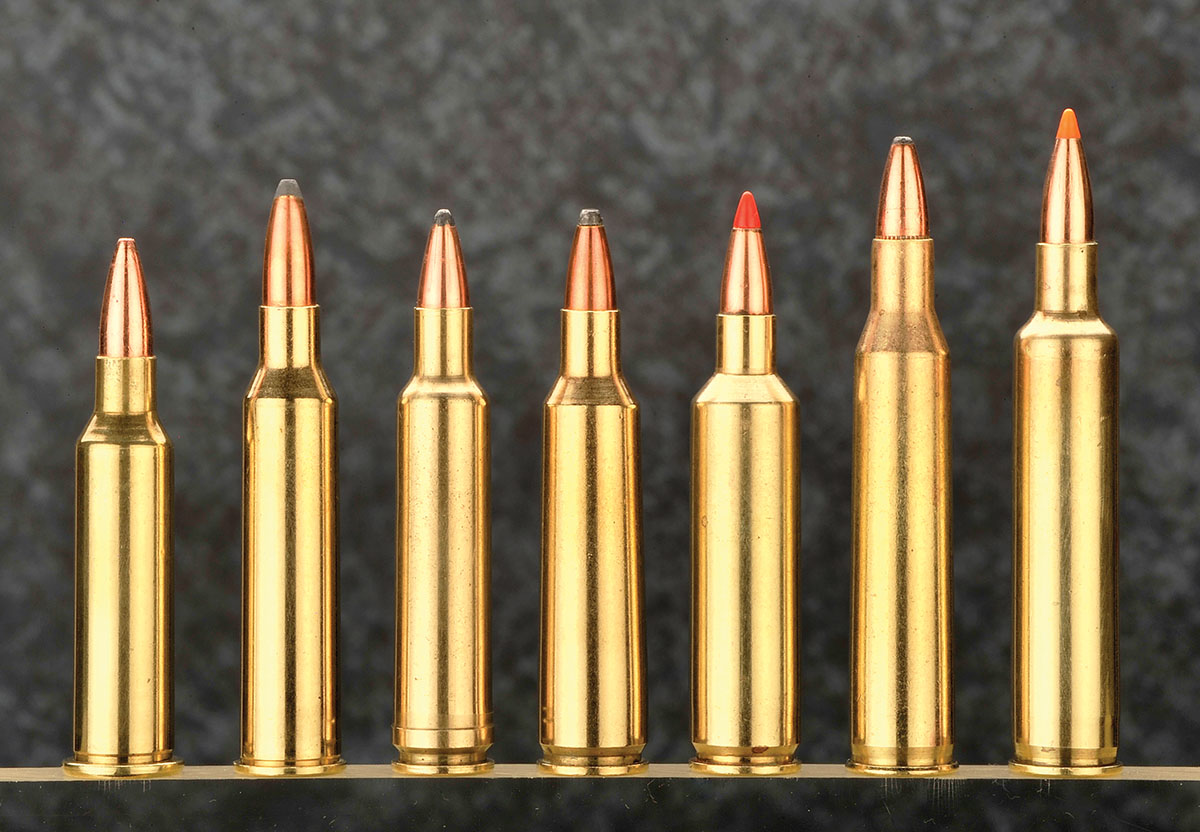
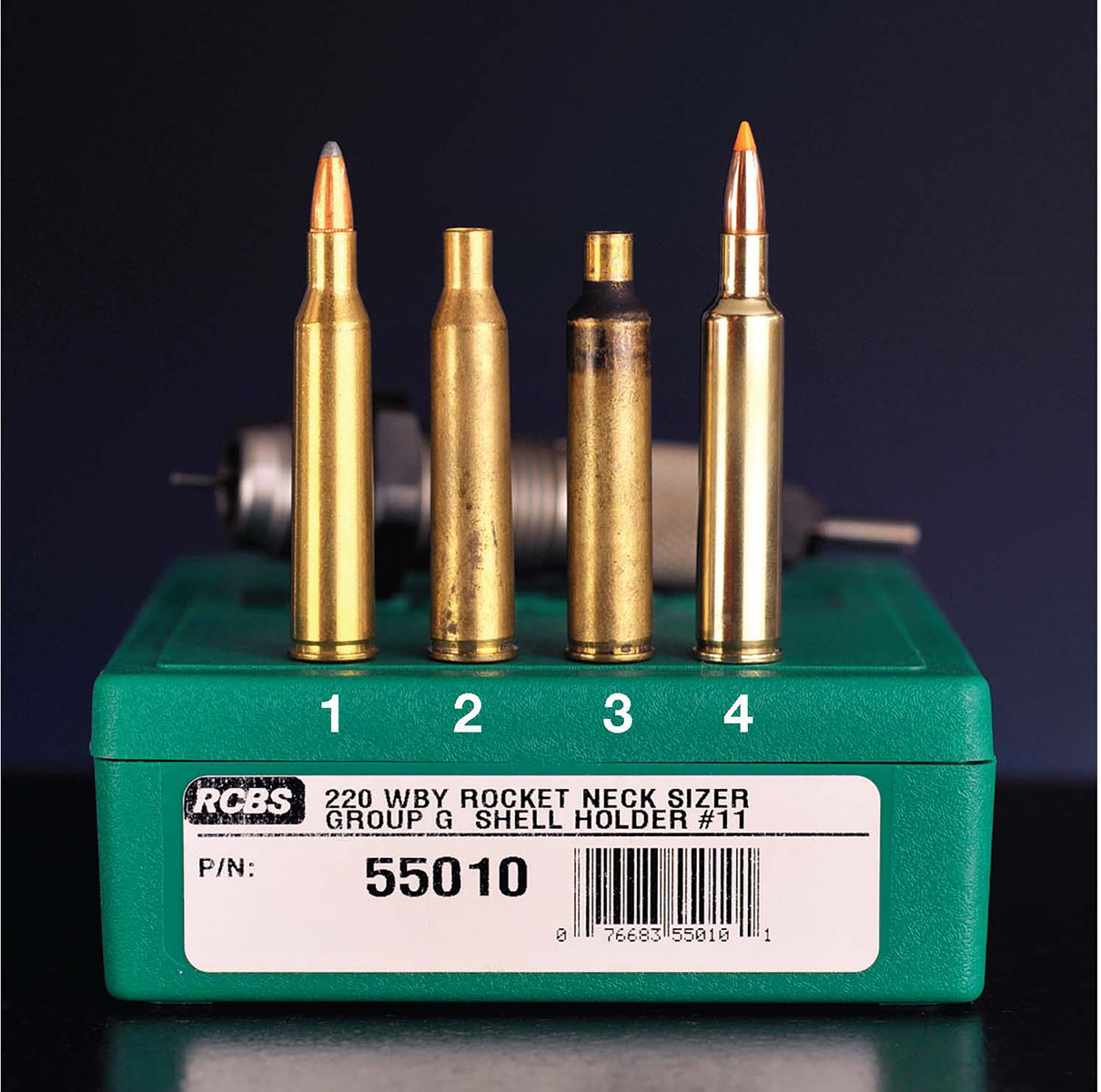
Developed between 1942 and 1945, and according to the Weatherby history books, it was introduced commercially in 1945. The Rocket did not have the current Weatherby cartridge profile of the double radius shoulder, but it had enough of a contour and gently-rounded shoulders so other gunsmiths could not copy it. On the other hand, when I had High Tech Customs rechamber my Ruger MKII Target rifle to the Rocket, I had the company add the double radius shoulder so it looked like a Weatherby. Since all the fired cartridge cases would be neck sized only, the shoulder did not matter and neither did the belted head noted on all other Weatherby cartridges.
With the Swift introduced to the public in 1935, it was obvious that Roy Weatherby was on a mission from the start. The Rocket was his first cartridge that he put under his “improved” heading. The parent 220 Swift, with credit due to the engineers of Winchester, who used the basic 6mm Lee Navy that had the same head dimensions as the now popular 30-06. Even when money might have been tight with the Great Depression going on, if someone invested in a .22-caliber barrel, they could have the Rocket riding right in the bolt face of their favorite hunting rifle. For the most part, the 220 Swift seemed to be riding on the coattails of the Rocket for longevity and with the rumors flying about shot-out barrels and such, Winchester canned the Swift in 1965.
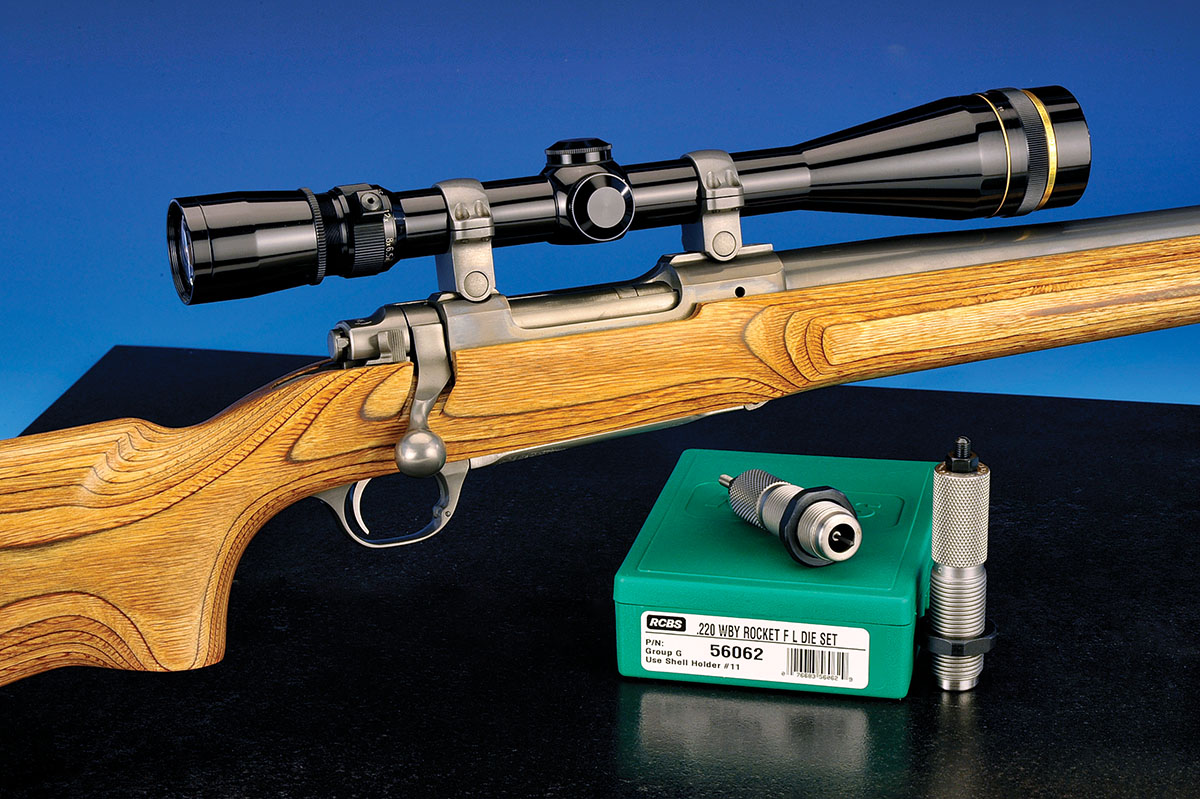
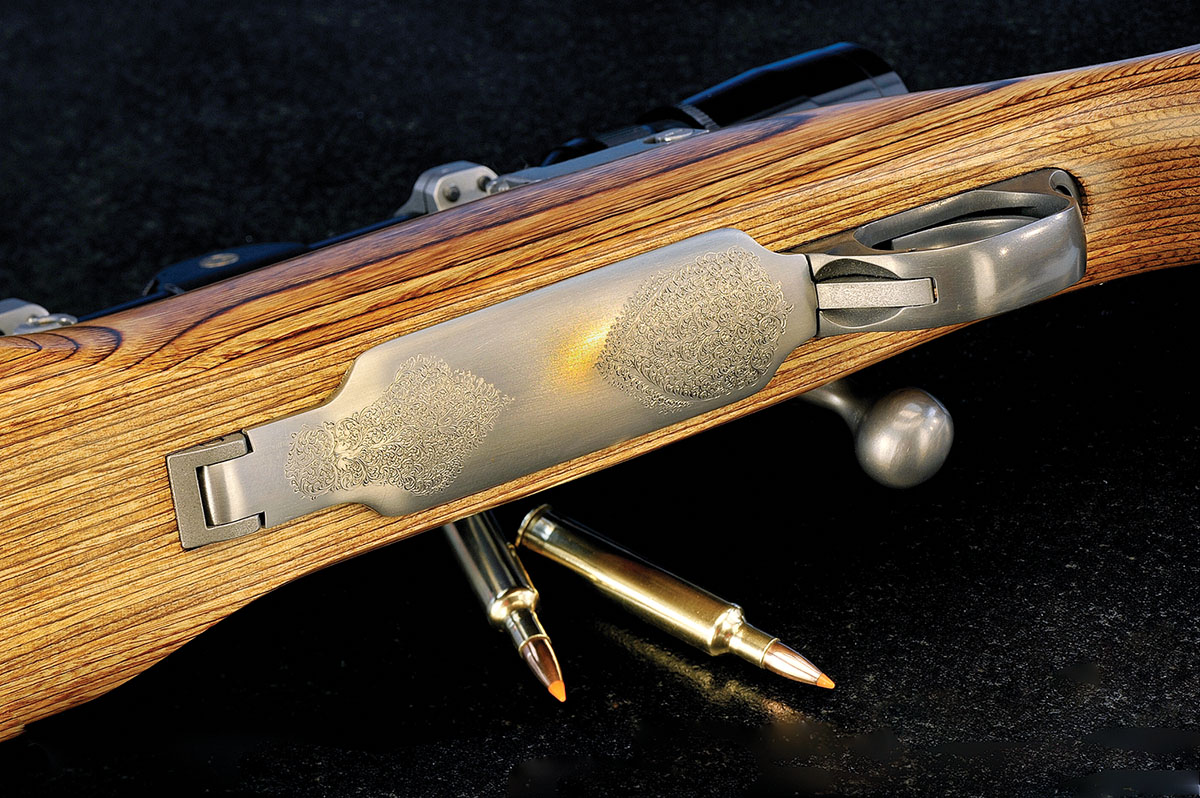
As a rifle for the Rocket, this Ruger was perfect for my needs. The action has the proprietary coating from Ruger, gray in color and smooth to the touch; it cleans up quickly and seems impervious to the elements. The trigger was more of a two-stage affair and broke at 3 pounds. Because of its wide forearm, the stock adapts to both benchrest and field use, and with a straight classic-type of comb, it allows the shooter to get down on the stock for a direct line of sight through the Leupold 6.5-20x scope. Finally, with a 26-inch barrel, I was sure to coax the most out of this cartridge when it came to velocity, and checking in at close to 11 pounds, it would be a perfect rifle to shoot from the bench or in the field.

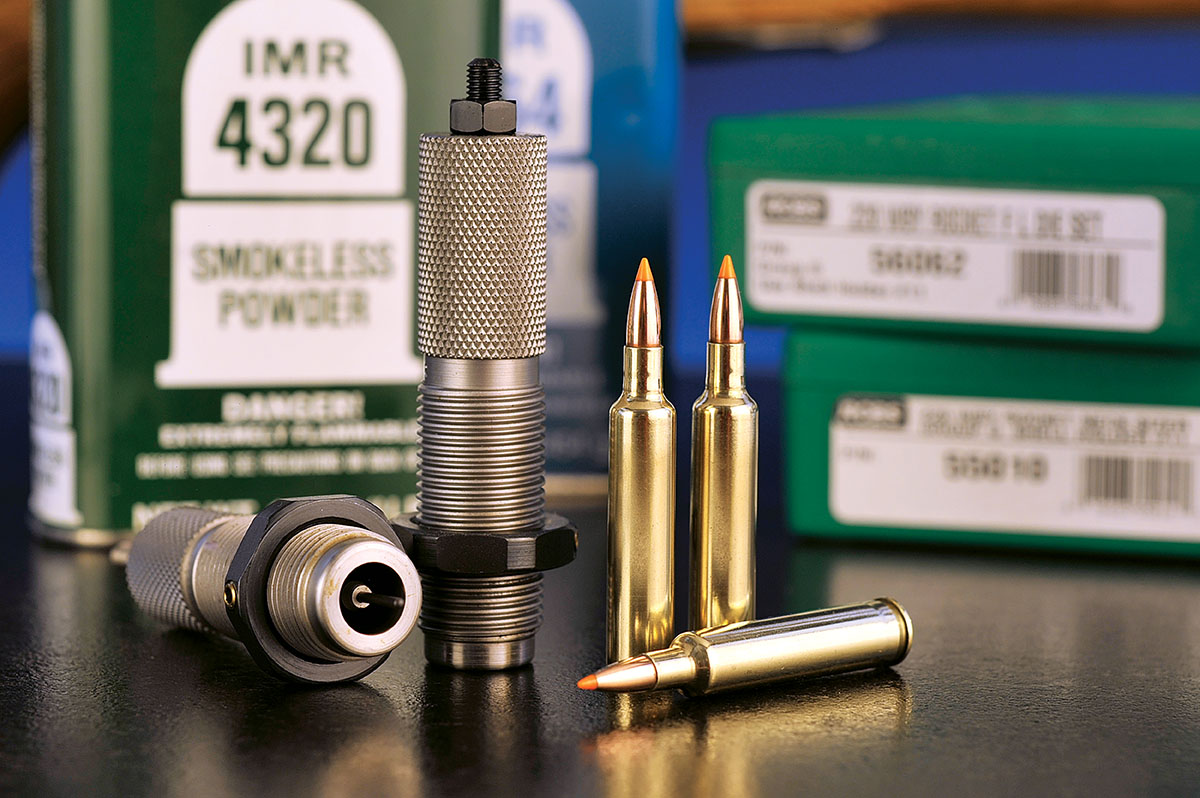
Assuming a reader has the dies for 220 Swift, all he needs is the neck die for the Rocket for neck sizing only. When working with this case, I found it better to place some lubricant between my fingers and rub it on the neck area to ease it into the die. For my use, I like using the RCBS 55010 neck sizer made for the Rocket. Setting up the die, I use a visual marker (candle soot, lipstick) to monitor the progress of the die going down the neck. When it reaches just about the neck/shoulder junction, I stop and try it in the gun for feeding, adjust as needed and lock down the die.
With the rifle ready to go, the best way to get started is to either use factory 220 Swift ammunition or purchase Swift brass, load it up with a mild charge for fireforming and have at it. I like to use around 38 to 40 grains of H-380 for this chore only because once set up, it flows through the powder measure without checking each charge. Later, of course, every load will be weighed before the bullet is seated for consistency. In the first round of firing Swift cases in the Ruger, I lost a few cases due to sidewall cracks. On this new batch of brass, the loss was zero.
When all is set and done, clean and inside chamfer all cases and then prime with large rifle primers, and use the benchrest type if you can get them – either CCI BR2 or Federal 210M. When it comes to priming, and especially with a cartridge like the Rocket, I like to do it all as a completely separate operation to set the primer in a uniform manner from the first to the last case.
From prior experience and shooting the Rocket, when it came to powders, there was quite a choice to get the most out of this cartridge. Although data is hard to find, it is out there, especially in the older books by Sharpe, Ness and even Weatherby, if you have copies of his book, Tomorrow’s Rifles Today.
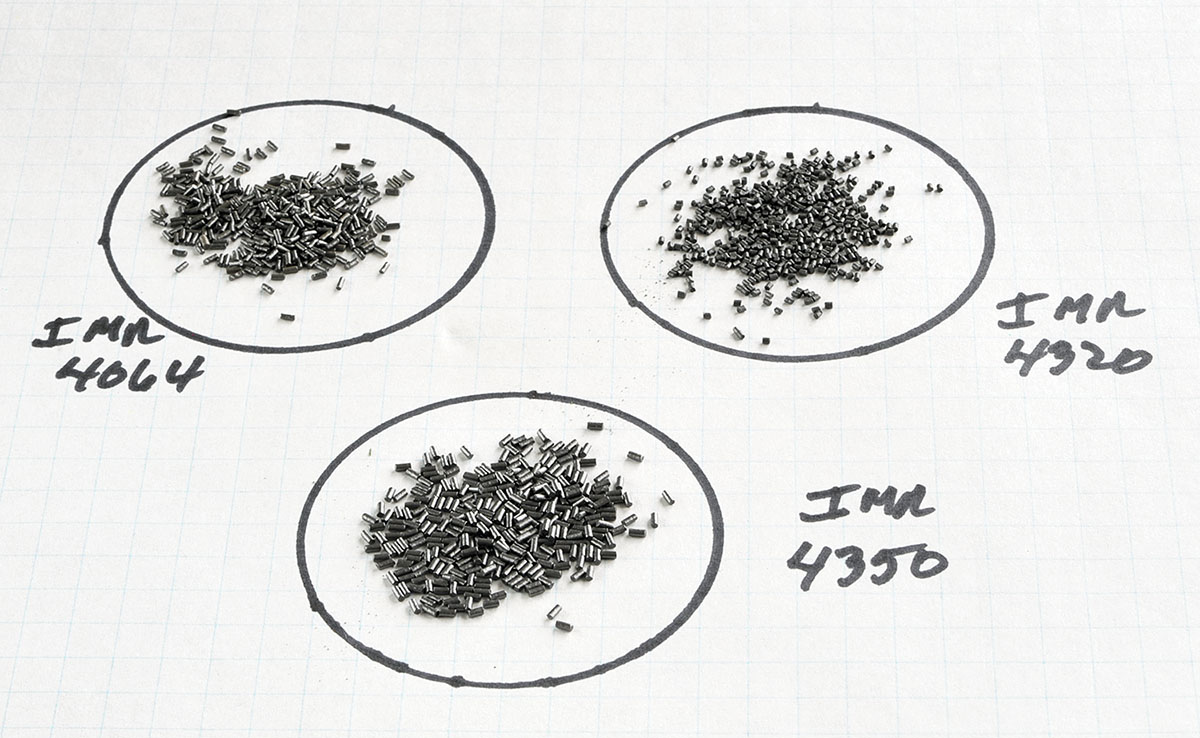
I picked IMR-4320, IMR-4064 and IMR-4350, all being old friends to my reloading bench over a wide variety of cartridges, big and small. I like IMR-4320 as a versatile powder in a host of cartridges and its finer grains allow metering, and once adjusted on the measure, is consistent in the drops with little trickling. On the other hand, IMR-4064 can give a handloader fits in the powder measure, with trickling to the final load not an option.
Lastly, the ever-popular IMR-4350 is one of those powders I simply can’t do without in any cartridge. Again, the Swift gave it some meaning, so I followed suit with the 220 Weatherby Rocket, and with 45 grains under a 55-grain bullet, groups under an inch were more normal rather than the exception with a variety of bullets.
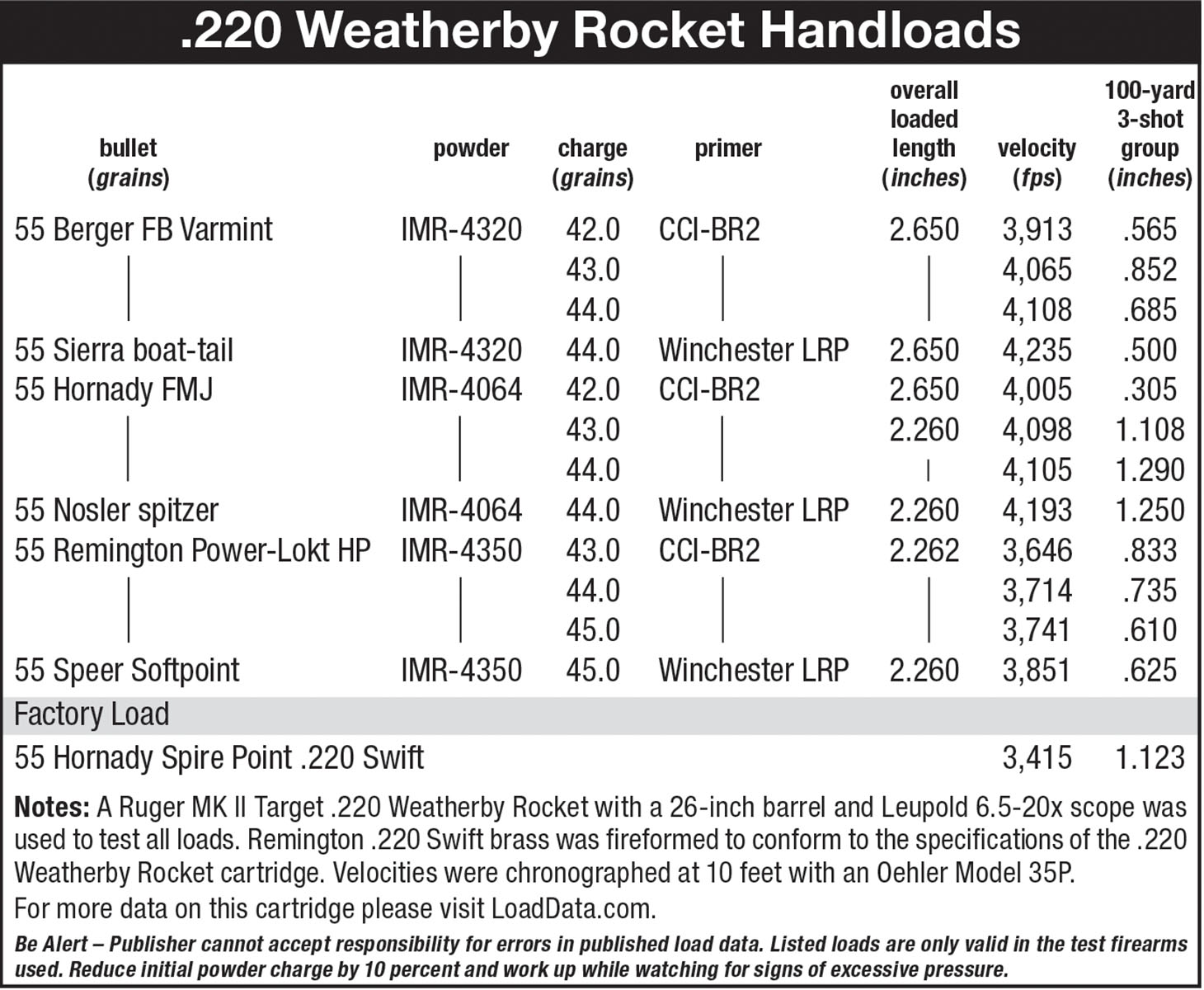
While I have been working with the 220 Rocket for a long time, enough of a span that I still consider this a wildcat cartridge, so when it came to an update, I thought I would try something different. What I have done is gather up some of my best loads, and using them as a base, I tried some with a different bullet, but with the same weight (55 grains) and powder, but varying the charge up or down from this load. In addition to adding more loads to my Rocket file, I wanted to see how the rifle reacted with any pressure signs, differences in velocity and of course, accuracy.
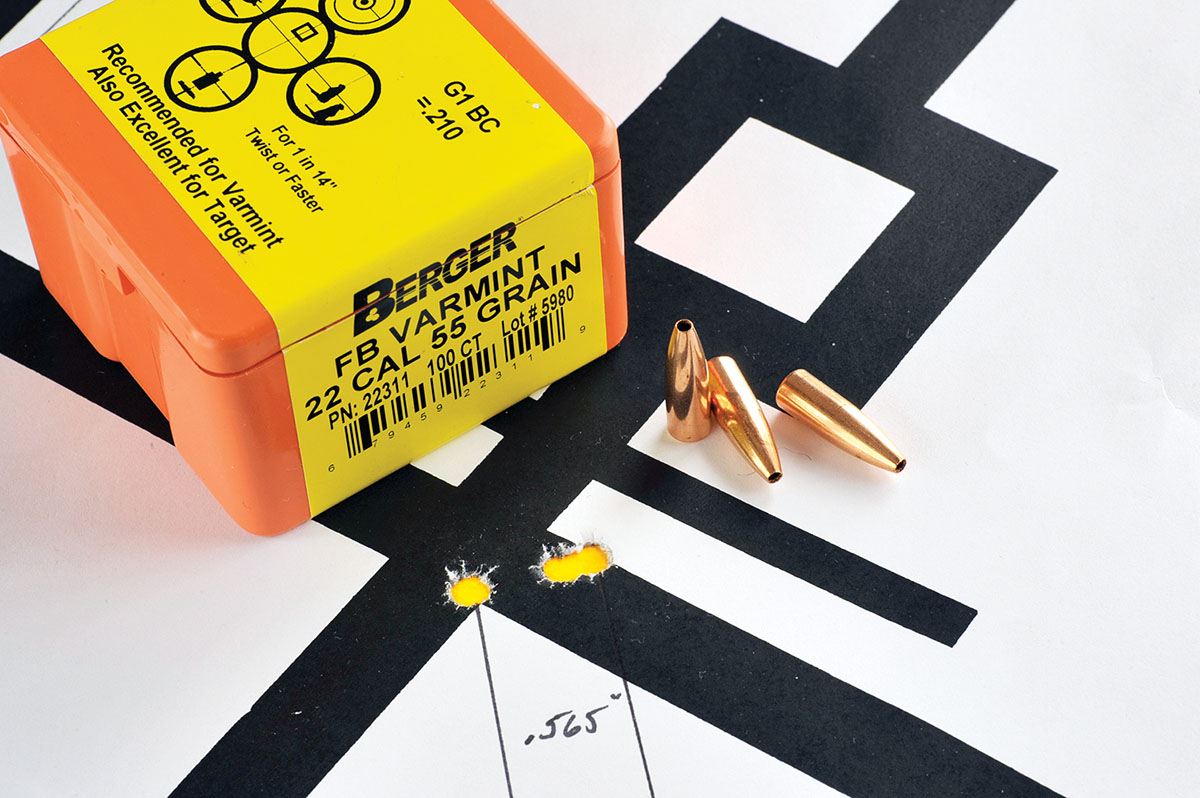
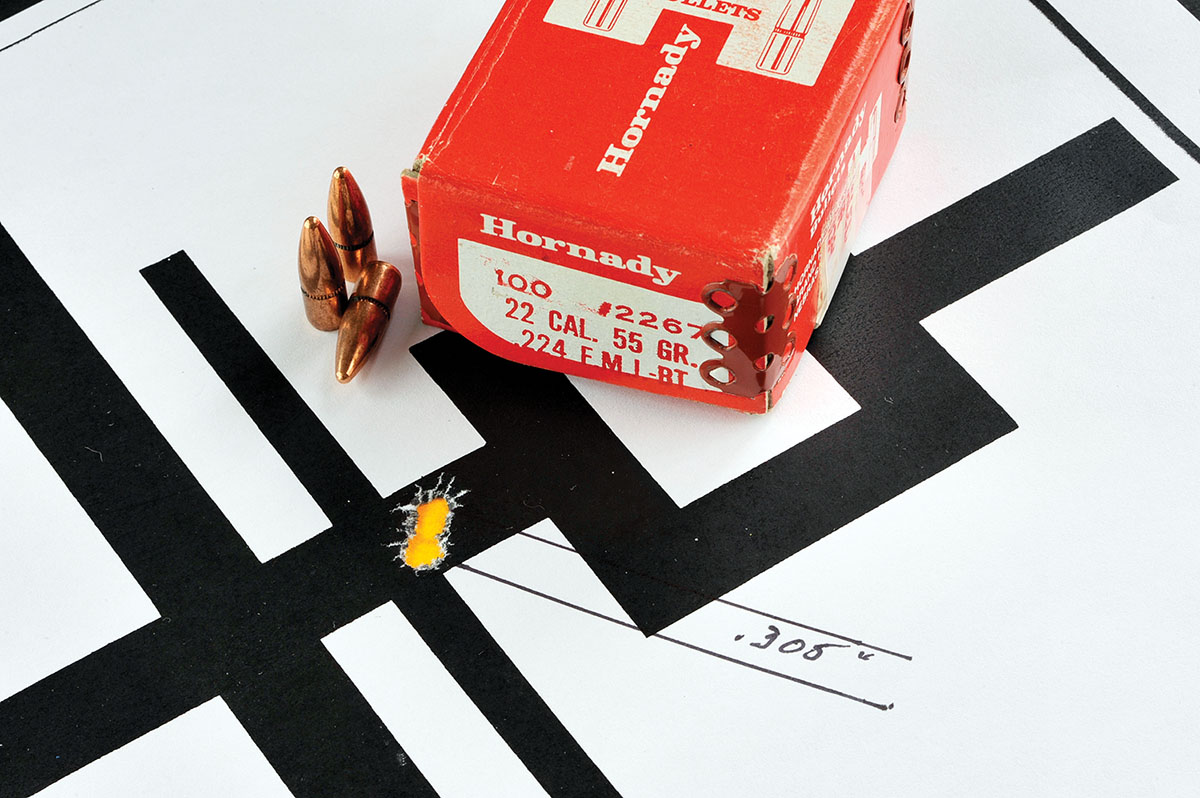
In the end, the 55-grain Hornady FMJ-BT came in with a very impressive three-shot group of only .305 inch with a velocity of 4,005 fps. Second place went to the 55-grain Berger with 42 grains of IMR-4320 for 3,913 fps, while the third place was Remington’s fine Power-Lokt HP with a group of .610 inch and a velocity of 3,741 fps. Tracking bullet performance is interesting, as noted with the surge in group size with the Hornady bullet from .305 to 1.290 inches as the powder charge increased. IMR-4064 gave the best velocities, with IMR-4320 second and IMR-4350 last.