Due to its mild report, the Volquartsen Firefly in 22 Short is ideal for close-distance shots at varmints in settled areas.
I love all types of varmint shooting, with high-volume days in prairie dog and Richardson’s ground squirrel towns at the top of my fun list. Flat-shooting, centerfire rifles take center stage, but when I grow weary of muzzle blast through double ear protection, I reach for a rifle chambered for a rimfire cartridge and enjoy the challenge of stalking closer prior to pulling the trigger. For that, my super-accurate custom Ruger 10/22s are just the ticket, and here are brief looks at them.
Volquartsen 10/22 Firefly, 22 Short
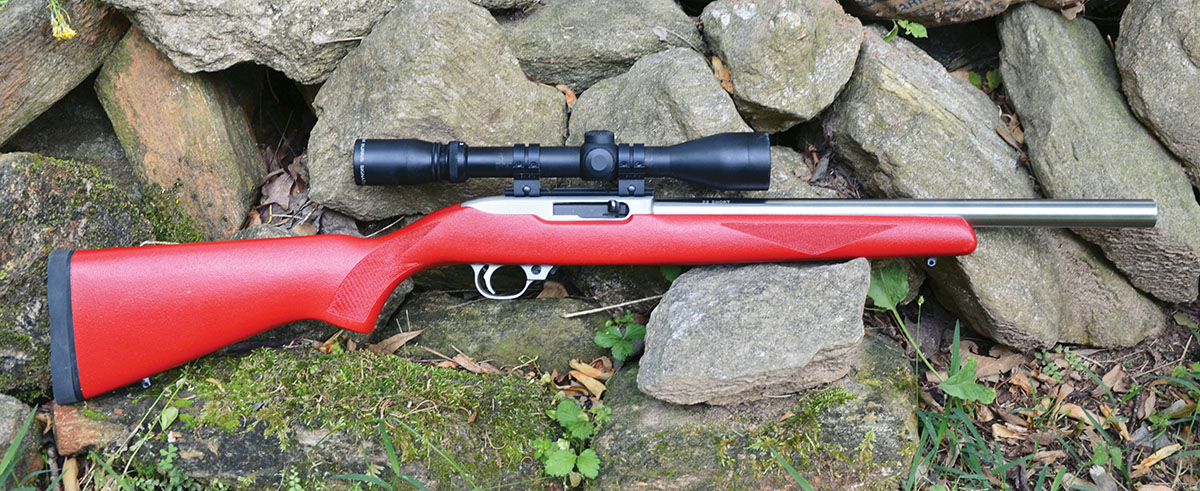
Shooters don’t see many Ruger 10/22s in 22 Short, but this Firefly, built years ago by Tom Volquartsen, is extremely accurate and allows Layne to relive fun days during his youth.
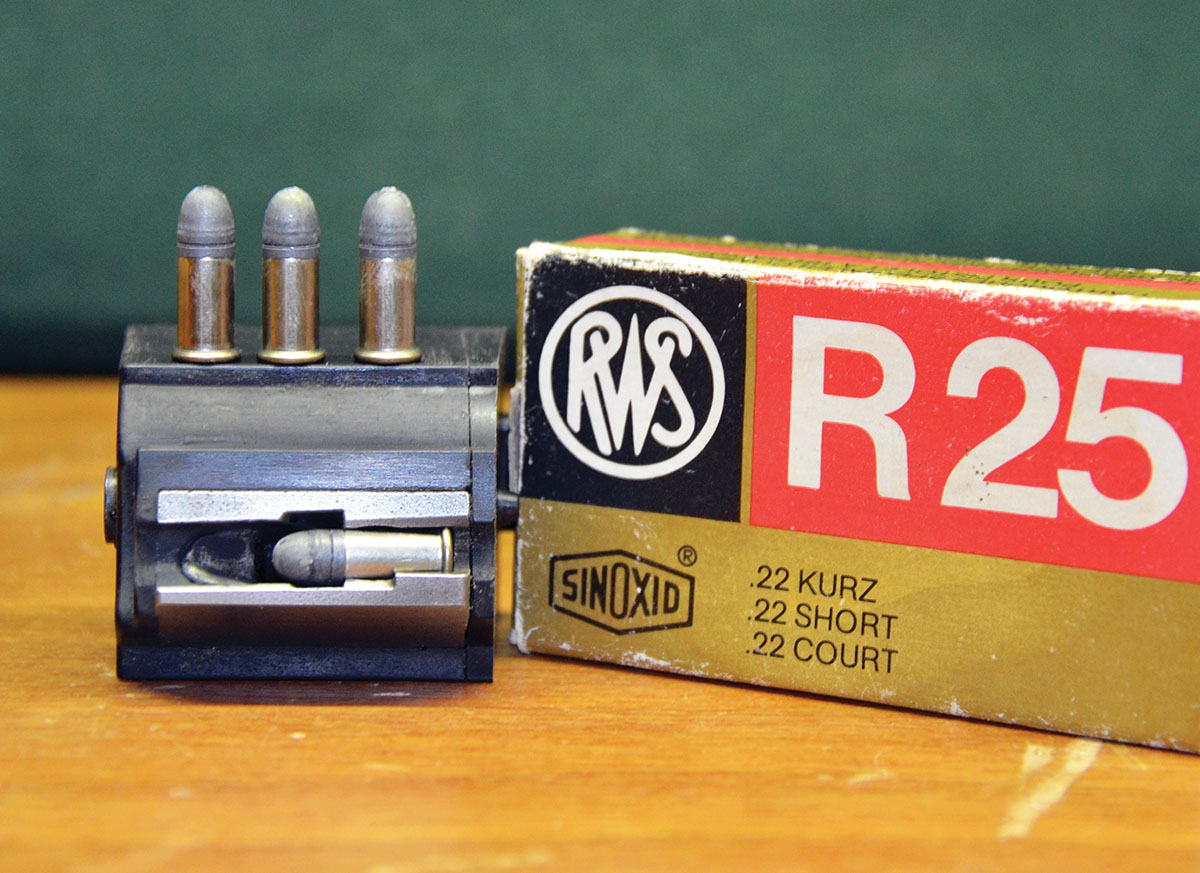
Probably the biggest challenge in building the Firefly was to make it reliably feed 10 22 Short cartridges from this modified 10/22 magazine. It has proven to be as reliable as the Ruger magazine in 22 Long Rifle.
I grew up on a farm and, like other boys in the area whose father’s also farmed, I was an avid hunter of cottontail rabbits and tree squirrels. Crows, starlings and various four-legged varmints also lived dangerously and any seven-stripe chipmunk foolish enough to trespass in my father’s vegetable garden was destined to fall victim to my trusty Marlin 39A Mountie.
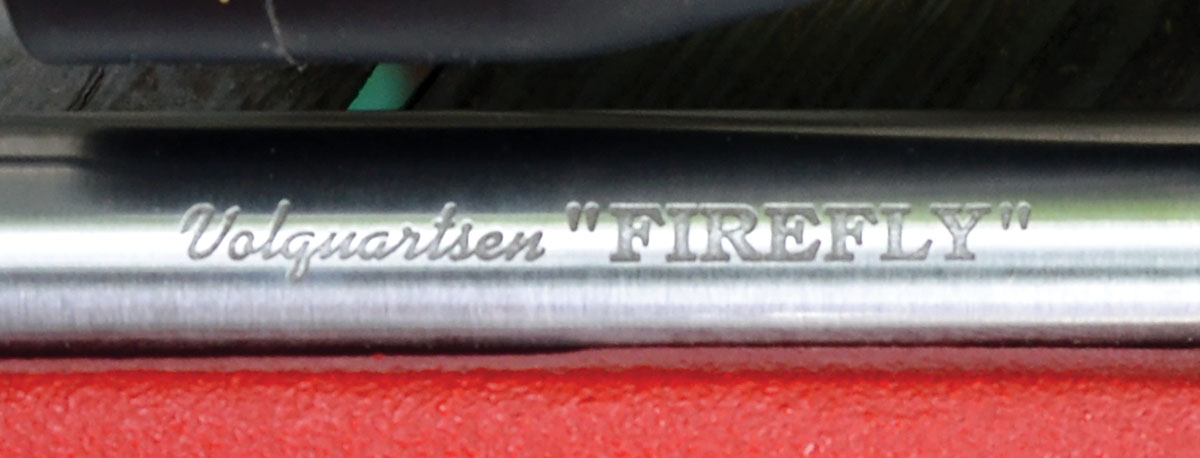
Professionally-applied barrel engraving on one of Layne’s favorite custom Ruger 10/22 rifles.
We used 22 Short ammunition exclusively because in addition to being cheaper than Long Rifle, it delivered a killing blow out to 25 yards, which was about as far away as most shots were taken. My fondness for the itsy-bitsy cartridge never faded and when, about 30 years ago, Tom Volquartsen mentioned converting the Ruger 10/22 for it, my heart was immediately filled with lust. Having extremely conservative taste in firearms, I requested fire engine red as the color for its McMillan fiberglass stock.
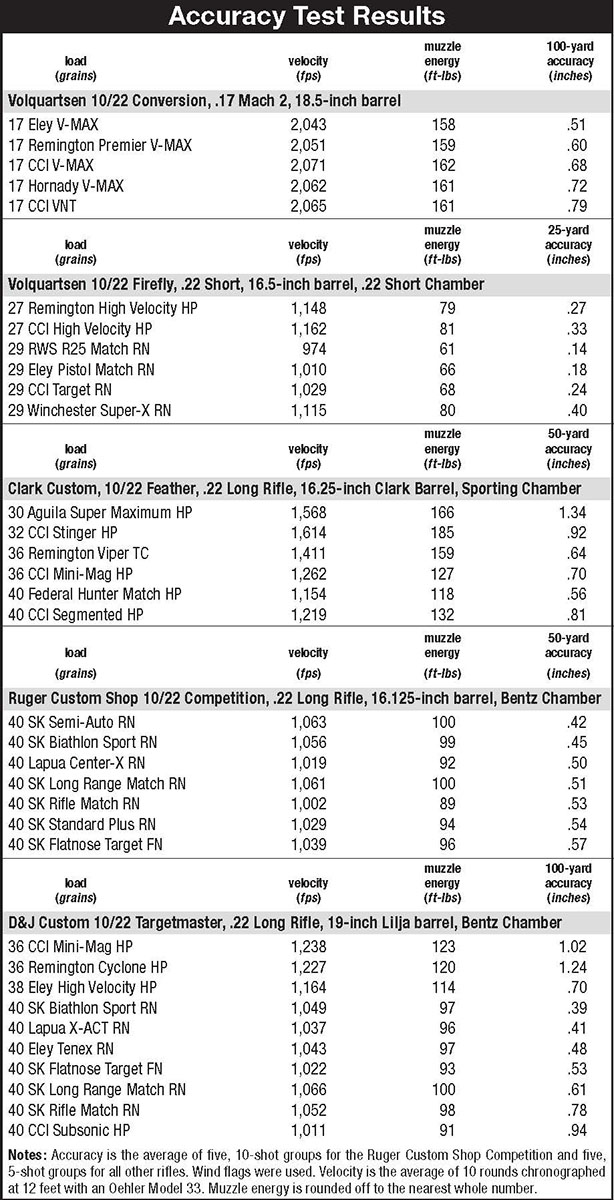
When a cartridge is fired in the 22 Short chamber of my rifle, the bullet does not free-travel as far as in a 22 Long Rifle chamber. That along with a match-grade, stainless steel barrel with a 1:22 rifling twist (instead of 1:16 as for the 22 Long Rifle) is why it delivers an uncommon level of accuracy for the 22 Short cartridge. During firing, the 22 Short does not deliver as much back thrust as the 22 Long Rifle, and the bolt was lightened to assure reliable functioning with a variety of loads. Probably the biggest challenge was modifying the 10/22 to feed 10 of those stubby cartridges. Slow-fire or rapid-fire, it never misses a lick. The soft report makes the Firefly ideal for close-distance sneak attacks on varmints in settled areas where nosey residents might complain about noise.
Many people do not realize that autoloading free pistols made by Pardini, Walther, Hammerli and others used by Olympians who participated in 25-meter rapid-fire competition were once chambered for the 22 Short. RWS, Eley and other companies offered match-grade ammunition. But a shooter does not have to be a medal contender in order to have fun shooting a favorite cartridge of my youth.
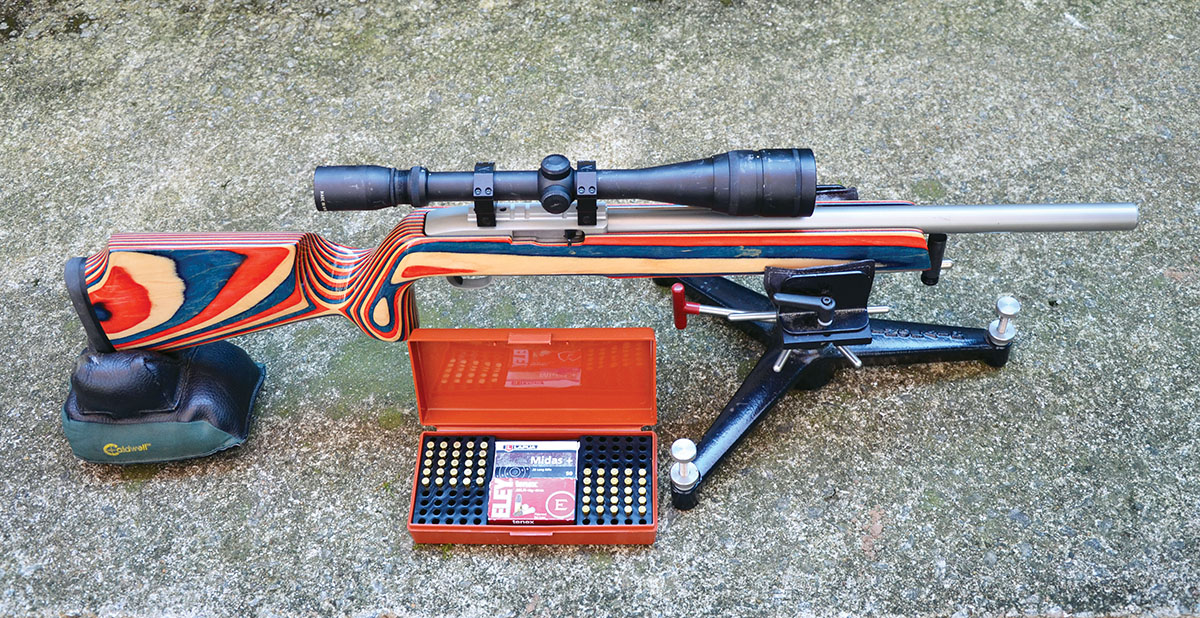
The heavy Lilja barrel on this 10/22 Targetmaster built by Don Fraley of D&J Custom is bedded solidly in the stock, while the action free-floats. It has a Bentz chamber and is incredibly accurate.
Volquartsen 10/22 Conversion, 17 Mach 2
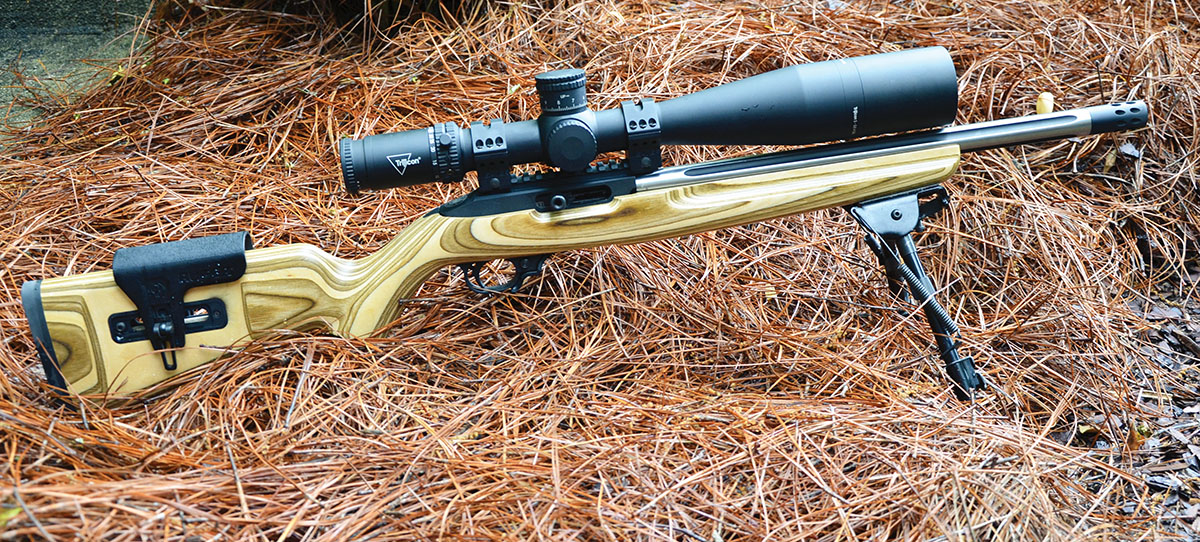
This Competition version of the 10/22 currently available from Ruger’s custom shop is the most accurately built rifle by the company. Its accuracy rivals that of top-quality custom 10/22 rifles.
Before he began building a rifle of his own design, Tom Volquartsen pioneered converting off-the-shelf Ruger 10/22 rifles into precision shooting machines. High up among my favorites is one of his masterpieces in 17 Mach 2, a cartridge I fell for on the day it was introduced years ago. Only the receiver and magazine are original to the rifle. The entire trigger assembly was made by Volquartsen, as was a heavier bolt required for the 17 Mach 2 cartridge. The stock is by McMillan and the 18.25-inch barrel is match-grade, replete with a single-chamber and a 32-port muzzle brake. Muzzle diameter is .925 inch. The rifle weighs 8.5 pounds with a Bushnell 6-18x Rimfire scope and it is head-shot accurate out to an honest 150 yards.
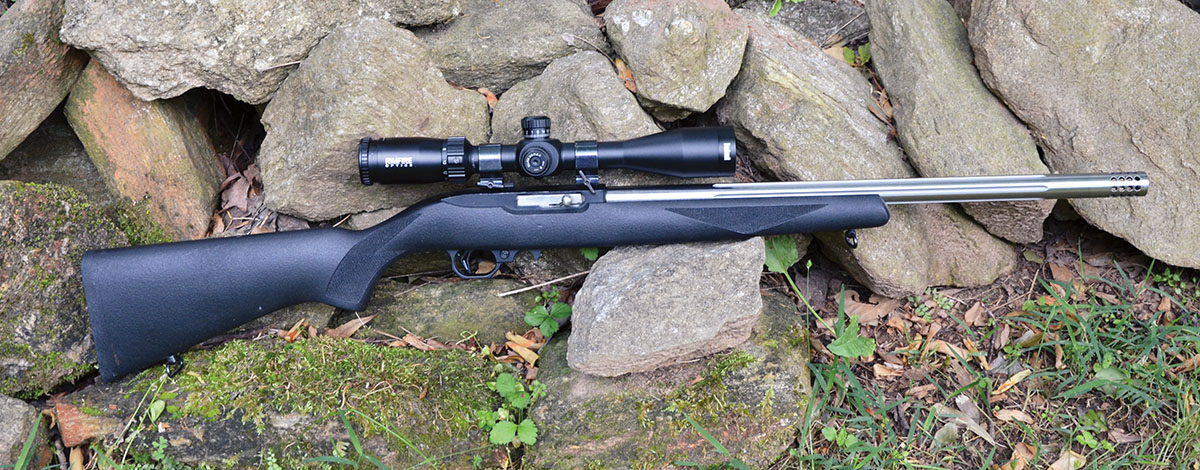
This 10/22 in .17 Mach 2 was built by Tom Volquartsen. It has a Volquartsen trigger, a match-grade barrel and a McMillan synthetic stock. The .17 Mach 2 requires a heavier breech bolt than on a 10/22 in .22 Long Rifle.
D&J Custom Targetmaster, 22 Long Rifle
Don Fraley of D&J Custom was one of the first gunsmiths to build super-accurate rifles around the Ruger 10/22 action and he continues doing so today. The Targetmaster he put together for me during the early 1990s is an example of his excellent work. After discarding the factory V-block barrel attachment system, Tom line-bores and threads the receiver for a heavy Lilja match-grade barrel measuring 18.5 inches long and .975 inch in diameter at
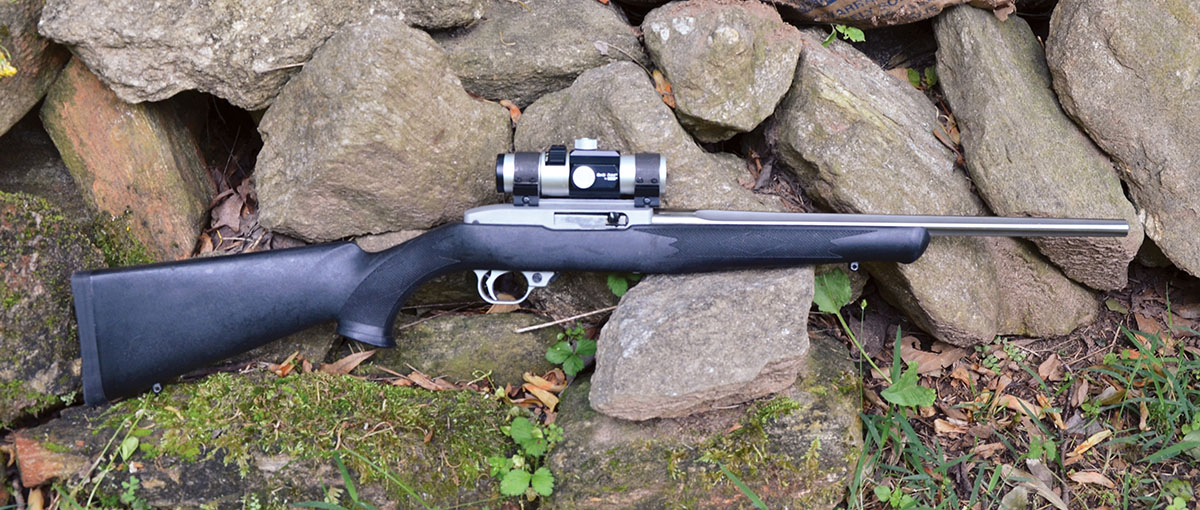
Weighing a mere 5 pounds with a Weaver Qwik-Point sight, this Feather version of the 10/22 was built years ago by the late Jim Clark Jr. of Clark Custom. It serves as proof that a custom 10/22 does not have to be heavy in order to be accurate.
the muzzle. The barrel has a Bentz chamber. Because the aluminum receiver of the 10/22 was designed to be used with a light barrel, it lacks the rigidity to support such a heavy barrel without warping slightly and having a negative effect on accuracy. Stress on the receiver is eliminated by bedding the barrel in the forearm of the stock and free-floating the entire action. With a Burris Signature 6-24x scope, the rifle weighs an ounce shy of 11 pounds. It has long been bad news for many flickertails and prairie dogs foolish enough to allow me to get inside the effective range of the 22 Long Rifle.
Ruger Custom Shop 10/22 Competition, 22 Long Rifle
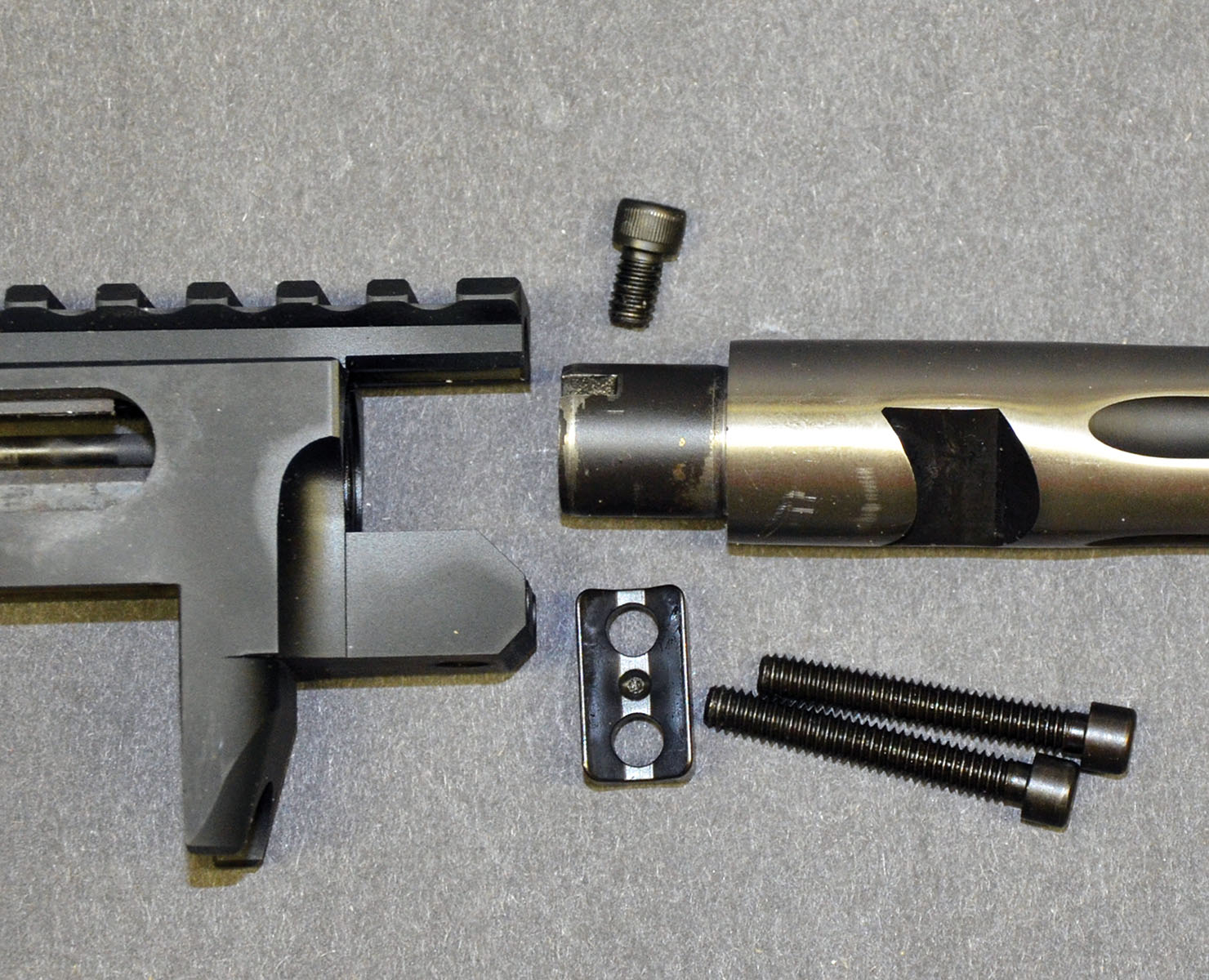
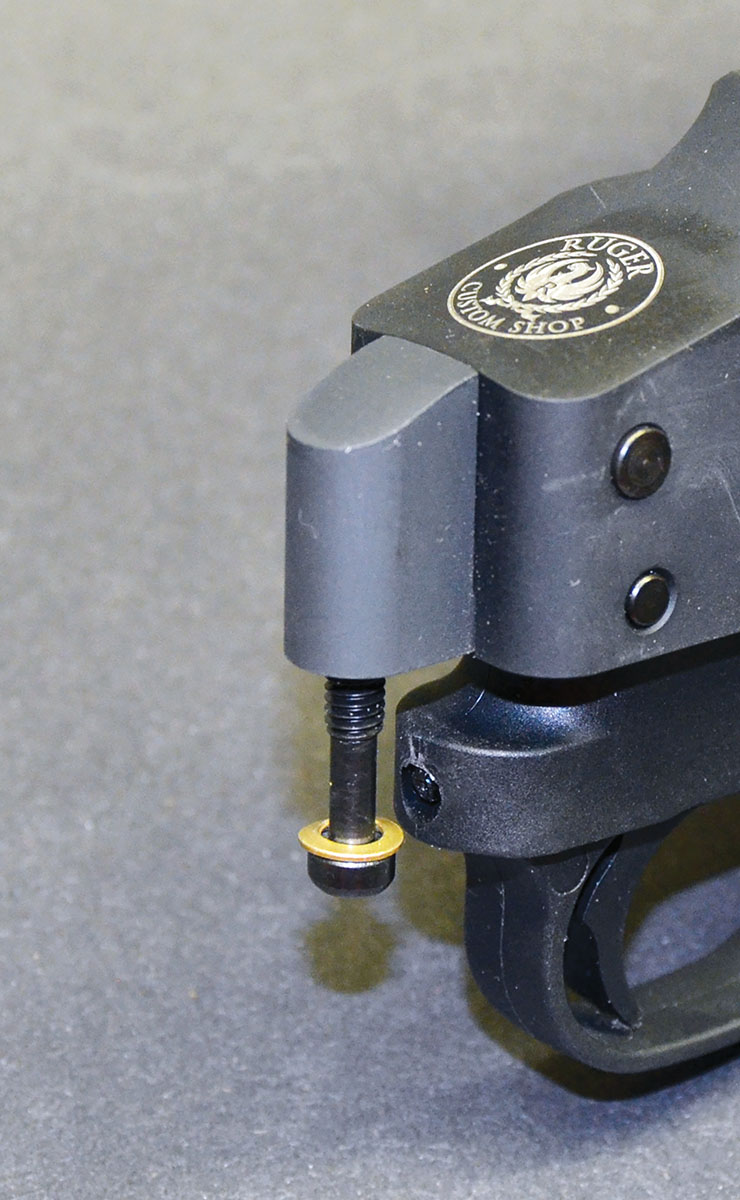
The aluminum 10/22 receiver was not designed to support a heavy barrel; and making the optic rail of the new Competition from Ruger’s Custom Shop an integral part of the receiver increased its rigidity. Equally important, it made room at the front of the receiver for the threaded hole of an additional upper barrel retainer screw. The screw is positioned parallel with the barrel and when tightened, the underside of its head bears on a small shoulder machined into the top of the barrel. Retention force is equalized by applying the same amount of force against the barrel as the V-block at the bottom of the barrel.
When designing the new 10/22 Competition, Ruger technicians considered following Don Fraley’s lead by free-floating the receiver but eventually decided to free-float the heavy barrel instead. Since the weight of the barrel placed too much stress on the opening of the aluminum receiver, they modified it in three ways. Making the optic rail an integral part of the receiver increased its
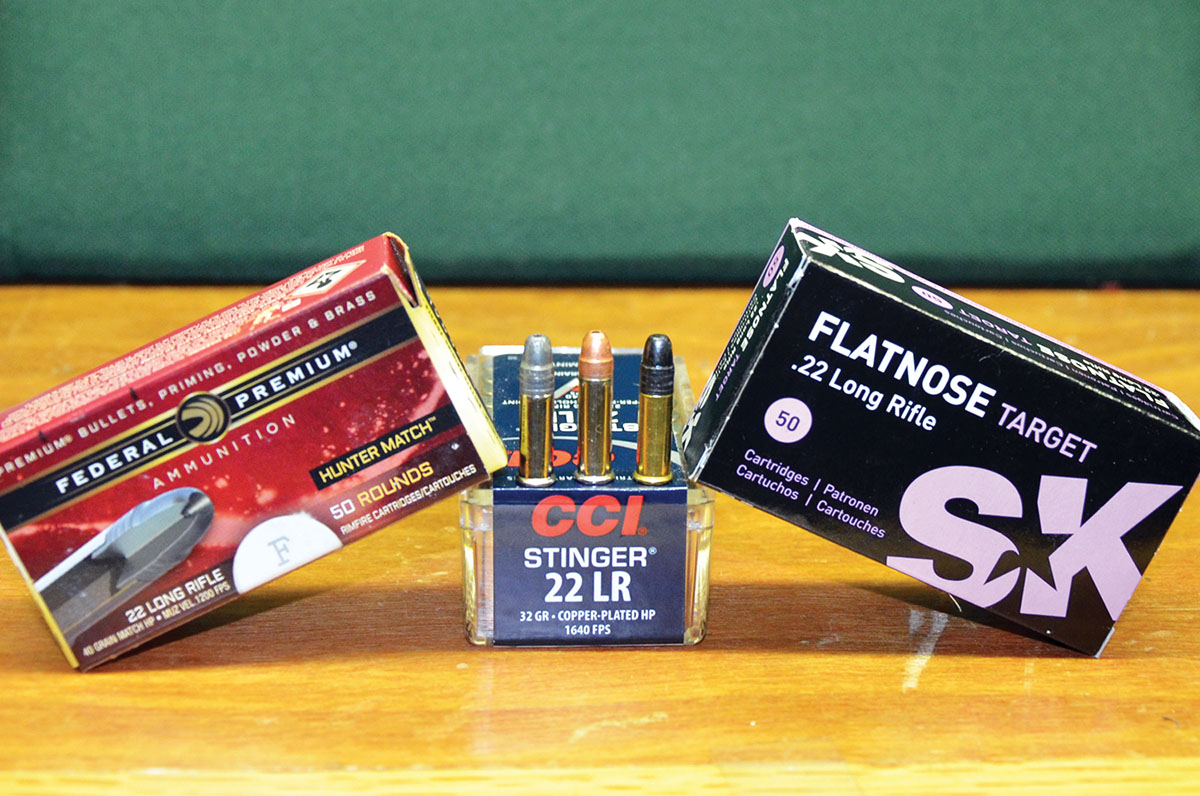
High-velocity ammunition loaded with hollowpoint bullets such as Federal Hunter Match and CCI Stinger is quite effective on varmints at reasonable distances. Standard velocity ammunition such as SK Flatnose Target is usually more accurate and also quite deadly due to the fairly large flat on the nose of its bullet.
rigidity and equally important, it created room for the threaded hole of an additional fastener called the “upper barrel retainer screw.” The screw is positioned parallel with the barrel and when tightened, the underside of its head bears on a small shoulder machined into the top of the barrel. Retention force is both increased and equalized by applying the same amount of force at the top of the barrel as the V-block applies at the bottom of the barrel.
One other modification was made. On the standard 10/22, a single bolt screwed into an extension at the front of the receiver holds the stock and barreled action together. Again, this is fine when a light barrel is used, but the installation of a heavy, free-floating barrel exerts a heavier downward load on the front of the receiver and tends to lever the rear of the receiver upward. That issue was addressed in the 10/22 Competition by attaching an aluminum bedding block to the rear of the receiver. A second action bolt reaches through the stock just behind the trigger guard and screws into the bottom of the bedding block. With the second bolt added, both ends of the receiver are pulled firmly into the stock. The 10/22 Competition has Ruger’s fairly new BX trigger and chamber dimensions are quite close to the Bentz. Don’t be deceived by its name; the rifle works equally well on varmints as far away as they should be shot with the 22 Long Rifle cartridge.
Clark Custom 10/22 Feather, 22 Long Rifle
Free-floating the heavy barrel of the 10/22 Competition required the addition of an aluminum bedding block at the rear of the receiver. A bolt (shown here in the bedding block) reaches through the stock and screws into the bedding block. Adding the second bolt allows both ends of the receiver to be pulled firmly into the stock.
As the name implies, my Feather version of the 10/22 built by the late Jim Clark Jr. of Clark Custom around 1993, was made for walking and through the years we have done plenty of that. With a match-grade barrel of about the same weight as the standard Ruger factory barrel, it serves as proof that a 10/22 does not have to be heavy in order to be accurate. In addition to being deadly on varmints, it is also my favorite 10/22 for hunting cottontails, grouse and other small game for the table. While being accuracy-tested for this report, it had a Weaver T16 scope, but when in the field, it’s topped with an old Weaver Qwik-Point with a red dot sight that can be adjusted to diameters of 4, 8 and 12 MOA. The Feather has a Butler Creek stock and weighs 5 pounds on my postal scale.
Choosing 22 Rimfire Ammunition for Varmints
As a rule, 22 Rimfire ammunition loaded with hollowpoint bullets is more effective on varmints than ammunition loaded with plain bullets of roundnose form. High-velocity is good while hyper-velocity ammunition, such as my longtime favorite, the CCI Stinger, is better due to the higher impact velocity of its bullet. On the other hand, standard-velocity ammunition is often more accurate and when the bullet has a wide meplat as on the SK Flatnose Target ammunition, it does a good job of anchoring ground squirrels and other small varmints. Better accuracy of standard-velocity ammunition also improves on-target bullet placement. While recently pestering rodents with a friend, I shot a box of his blue light special, standard velocity ammunition and found it to be quite effective on the wee critters. He had used a tool sold by Paco Kelly to slightly flatten the nose of the roundnose bullets.