

Wringing Out an Anschütz 1761 Rifle
An All-New 17 HMR
feature By: Patrick Meitin | October, 21
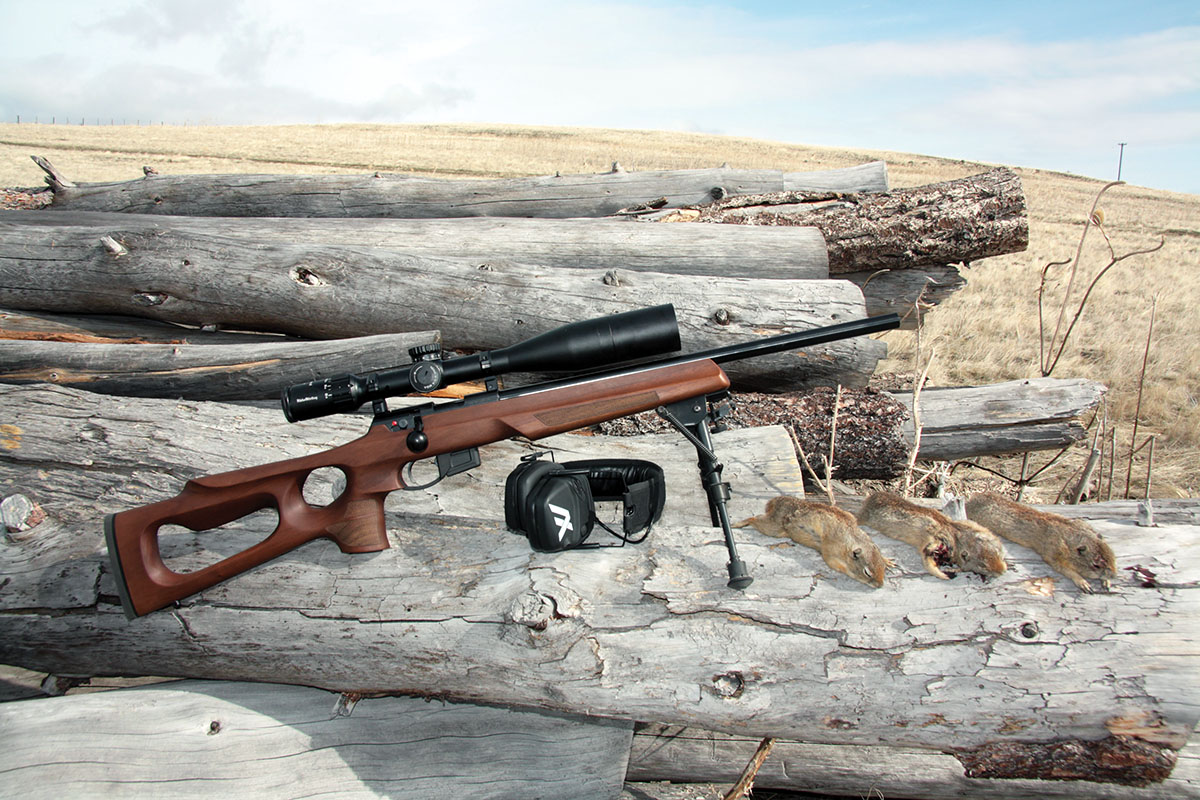
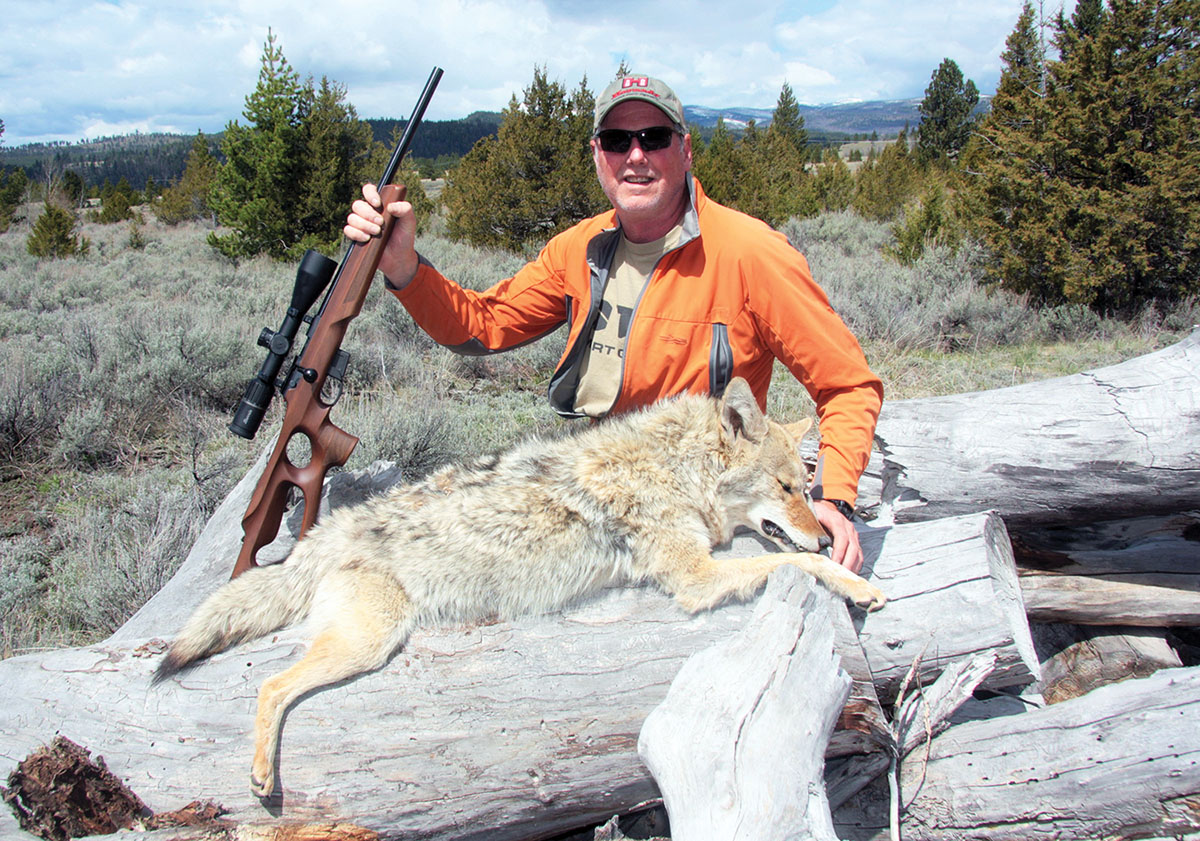
Anschütz, now in business 175 years, has begun offering an increasing number of sporting/hunting rifle models, in addition to its highly sought after target lineup. One of those is the Anschütz Model 1761 HB 20-inch 17HMR Thumbhole Single Stage Light Trigger, which I recently had the opportunity to thoroughly test.
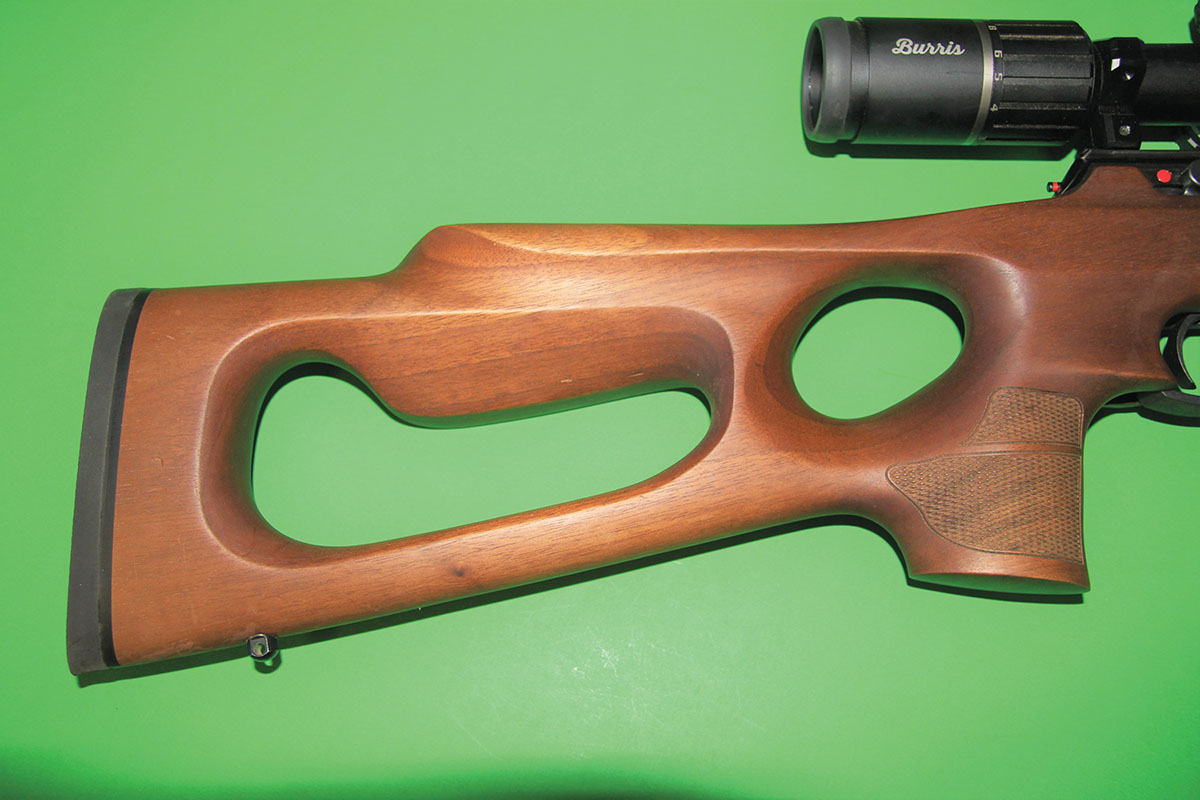
The rifle seemed an ideal fit for the serious burrowing rodent shooting that dominates my springs. The 1761 HB grabbed my attention because, well, it’s just so dang cool looking. It includes a highly-ergonomic, 29.3-inch thumbhole stock carved from walnut and given a flat oil finish. The stock includes a “skeletonized” buttstock that improves balance, a prominent rollover comb and a wide forearm ideal for taking a steady rest. Length of pull is 14.2 inches, including a subtle rubber buttplate. It is configured for right-handed shooters; left-handed models are not offered as far as I can determine.
The 17 Hornady Magnum Rimfire, or 17 HMR, has now reached classic status in the varmint-shooting world. The “Hummer,” of course, was created by necking the venerable 22 WRM, or 22 Magnum, down to .17 caliber and loading 15.5-, 17- and 20-grain bullets sent at 2,375 (20-grain Hornady XTP) to 2,650 fps (17-grain CCI VNT Varmint). Shooters will commonly encounter people who insist the 22 WRM hits harder and drifts less in the wind at common varminting ranges with its heavier 35- to 45-grain bullets, but this is unequivocally false. The 17 HMR, with its vastly superior velocities and ballistic coefficients, is the more effective cartridge at all viable small-game varmint ranges.
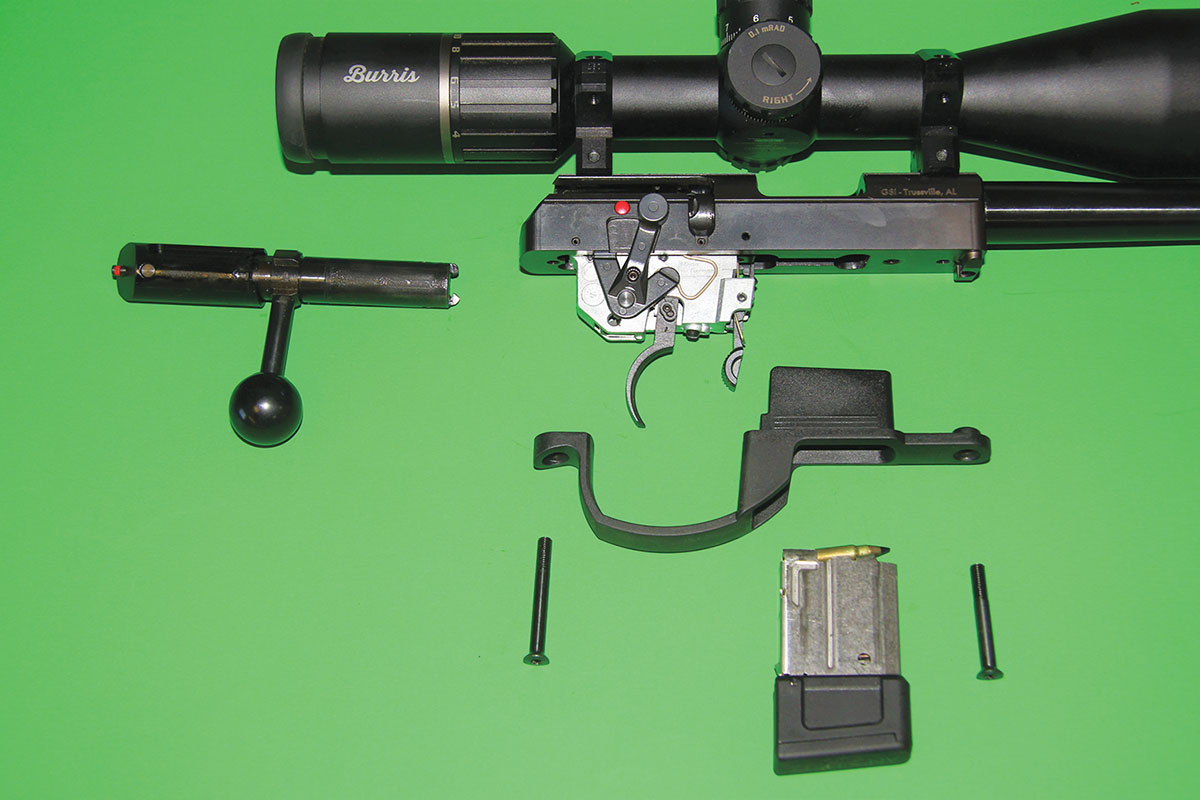
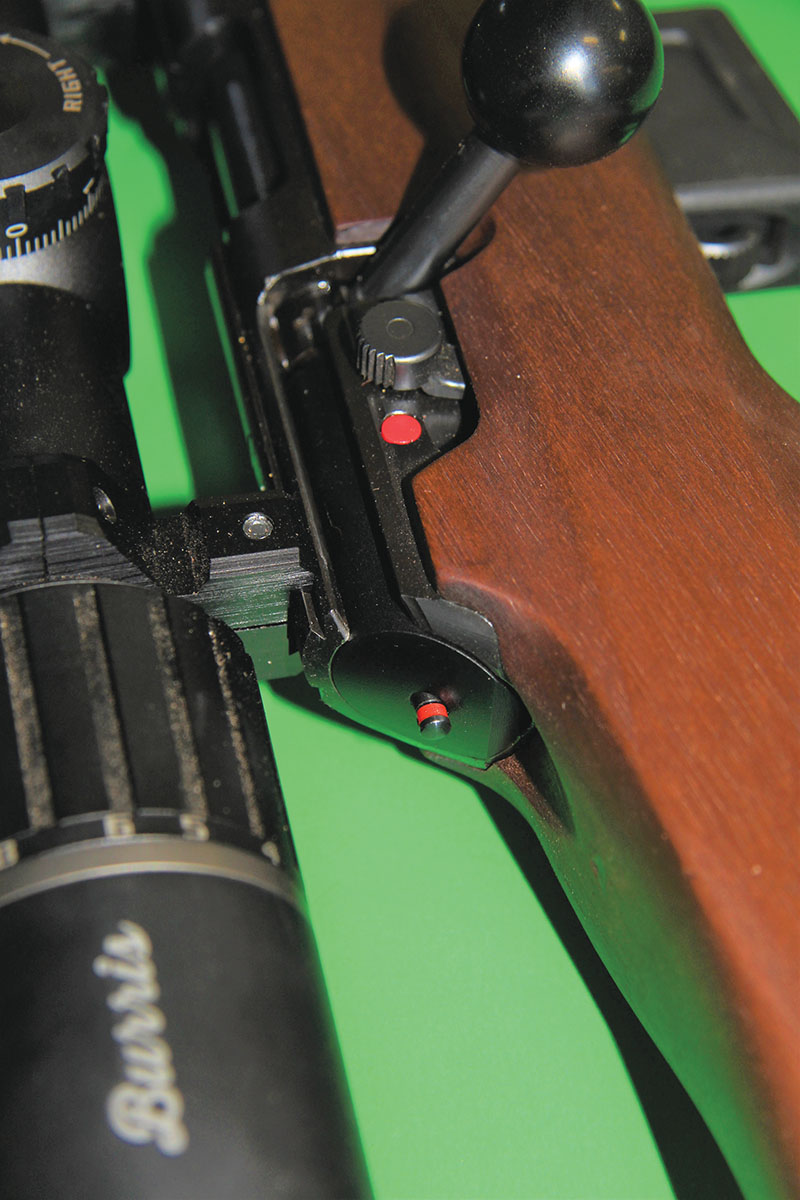
The bolt received what Anschütz labels a QPQ-Beshchichtung finish, and it includes an oversized ball-style handle. The safety is located on the right side of the receiver and is thumb activated – pulled back to engage the safety and pushed forward to “fire.” A red plastic tab is inset into the receiver metal to indicate when the rifle is ready to fire. The rear of the bolt also includes a red accented cocked-indicator stem. Engaging the safety does not block the trigger mechanisms, instead it completely disengages the sear. This caused some confusion during an initial varmint shoot. Squeezing off with the rifle on safe, the trigger bottomed out without results. Believing I had forgotten to reload after previous shots, I ejected live rounds. I would have to go through this routine several times before I caught on. The bolt can be worked, and the rifle unloaded while on safe. It is an extremely safe system.
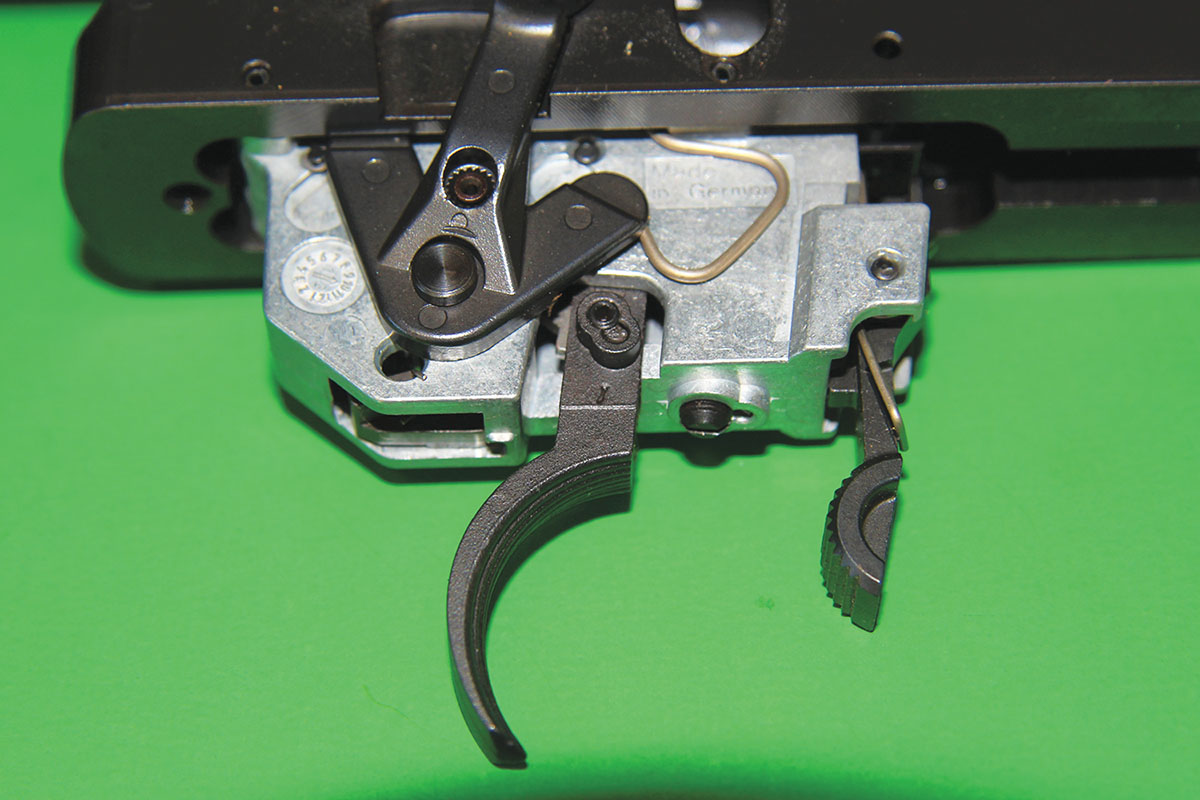
Mechanically, the 1761 includes a new approach from Anschütz, including engineering geared to improve ergonomics and reliability. The 1761 reduces the force required to cycle the bolt when compared to Match 54 actions. The shorter bolt lift requires a steep cam angle for cocking, introducing the potential for rougher cycling, so the bolt lift was changed from the 53-degrees found on 54 actions to a new 60-degree lift. This required moving the locking lugs from the rear to the middle of the bolt. The lugs were also switched from smaller eccentric lugs to a more robust 120-degree, three-lug system. This allowed adopting a shorter, lighter firing pin and single-spring striker system located at the rear of the bolt and creating a shorter overall bolt. The new cocking mechanism includes an added roller bearing placed between the firing pin and internal striker. During cocking, the bearing moves smoothly up the cocking ramp to reduce effort while also allowing a stronger spring to be used. Taken together, this creates very smooth cycling that requires no break-in.
New 1761 engineering also makes changing barrels easier, eliminating the need for gunsmith involvement while also providing more consistent and repeatable mating. This involves a dual V-block system. Two small V-blocks sit at the bottom/inside of the receiver, and are evenly spaced to properly align the barrel. Each V-block includes a small locking screw threaded from the bottom of the receiver to press the V-blocks into the barrel tenon. The system won’t mar the tenon like grub screws can, and evenly distributes tension for more repeatable results. A small pin is inserted into the tenon, corresponding to a slot in the receiver to ensure proper alignment for the extractor and holder slots.
The receiver was also completely redesigned, including a flat bottom milled from a solid billet of chromoly steel and including an integral front recoil lug. The new bolt system allowed shortening the receiver 1.57 inches (compared to Match 54 receivers), which also improved rigidity. The integral 11mm/3⁄8-inch scope ring dovetail eliminates the need to drill and tap the receiver for bases. A 3mm cross slot at the receiver rear allows adding aftermarket Picatinny rails without the fear of movement while using larger scopes. Anschütz said the receiver requires no glass bedding, as a wide, flat, surface area spreads action screw force evenly, and the wood stock effectively absorbs vibrations. The 1761 also includes Anschütz’s first Torx-head screws (15 and 20), providing less potential for marring or stripping.
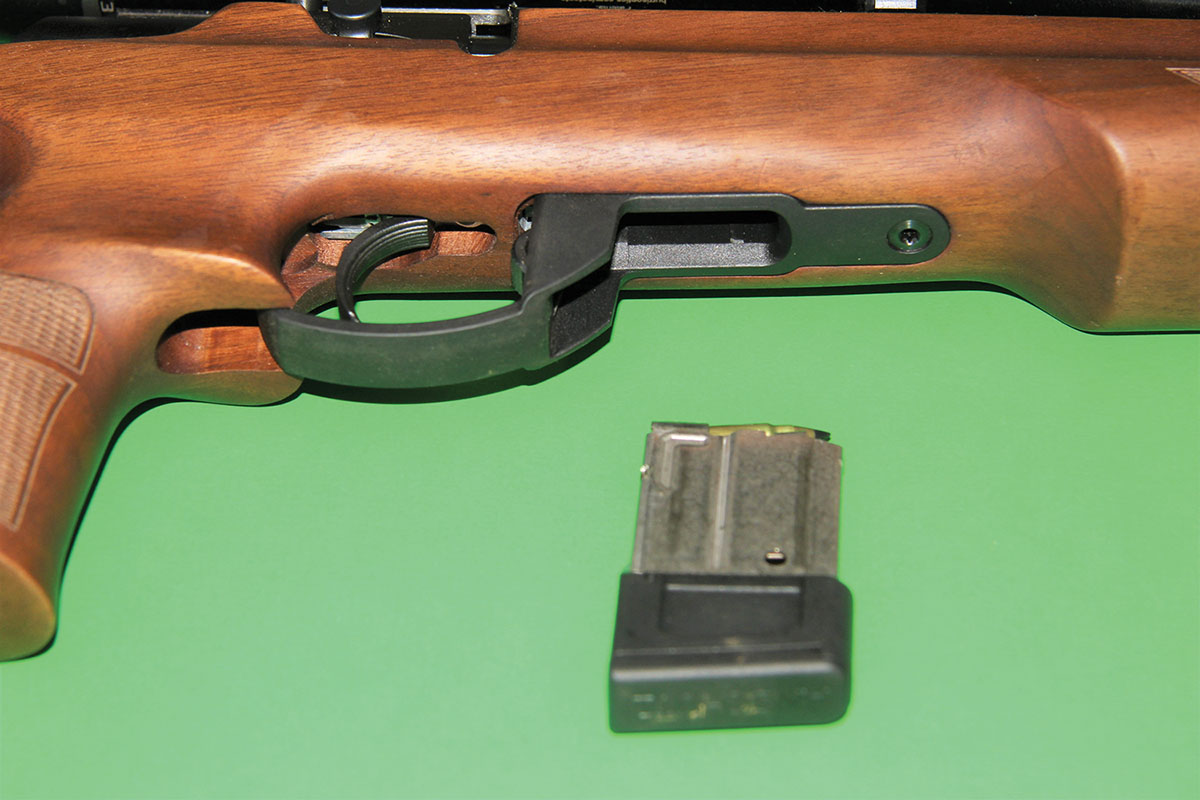
Magazines are fashioned for individual cartridges, though outside dimensions remain equal to allow them to be switched as easily as barrels chambered for different rounds without the need for multiple trigger-guard designs. These magazines are a mix of stainless steel and polymer for durability and a precision fit. The large polymer base helps center the magazine in the mag well/bottom metal. The 1761’s silent safety was also tweaked, including a larger surface area for surer grip while also requiring less effort to operate. The pivoting magazine release latch was moved inside the trigger guard and made longer for improved leverage.
I received the Anschütz 1761 Thumbhole late one evening before I was scheduled to hit the road early the next morning to meet friends for a varmint shoot. Anschütz had thankfully supplied 30mm Kelbly’s 3⁄8-inch-based rings. I grabbed the only loose varmint scope on hand (a Nikko Stirling Diamond LR 6-24x 50mm turreted model) and hurried to beat the setting sun. Sight-in, conducted off a wobbly swiveling portable bench to save setup time, resulted in some .75-inch, 100-yard groups. Two days later, I used the rifle to shoot Belding’s ground squirrels on eastern Oregon private ground. I can honestly say my first shot with the Anschütz, standing while resting over the top of a railroad-tie fence post, resulted in a flopping “rat” taken at about 125 yards. I would take more squirrels from 50 to 150 yards, some offhand, others while laying prone with a bipod. It was true love and started me seriously contemplating the $2,095 asking price.
For accuracy testing a Burris TR-15 3-15x 50mm FFP scope replaced the Nikko Stirling. This is a rock-solid, exposed-turret scope including a side parallax knob ideal for rimfire shooting. The crosshairs are super fine for precision varmint work (almost too fine in bad light!).
The obvious question when discussing any Anschütz is accuracy. I was pretty anxious to address that question myself. As far as I can discern, there are about 16 to 17 individual 17 HMR loads available today – or I should say usually available. Many of them are so similar in bullet design and velocity as to be essentially indistinguishable. But I quickly ran up against the current ammunition drought. I typically keep several thousand Hornady and/or CCI 17-grain V-MAX, polymer tipped rounds on hand, as my Marlin X-17 17 HMR gets along with those loads best. Some internet scrounging and trading with friends resulted in the addition of five more options for accuracy testing.
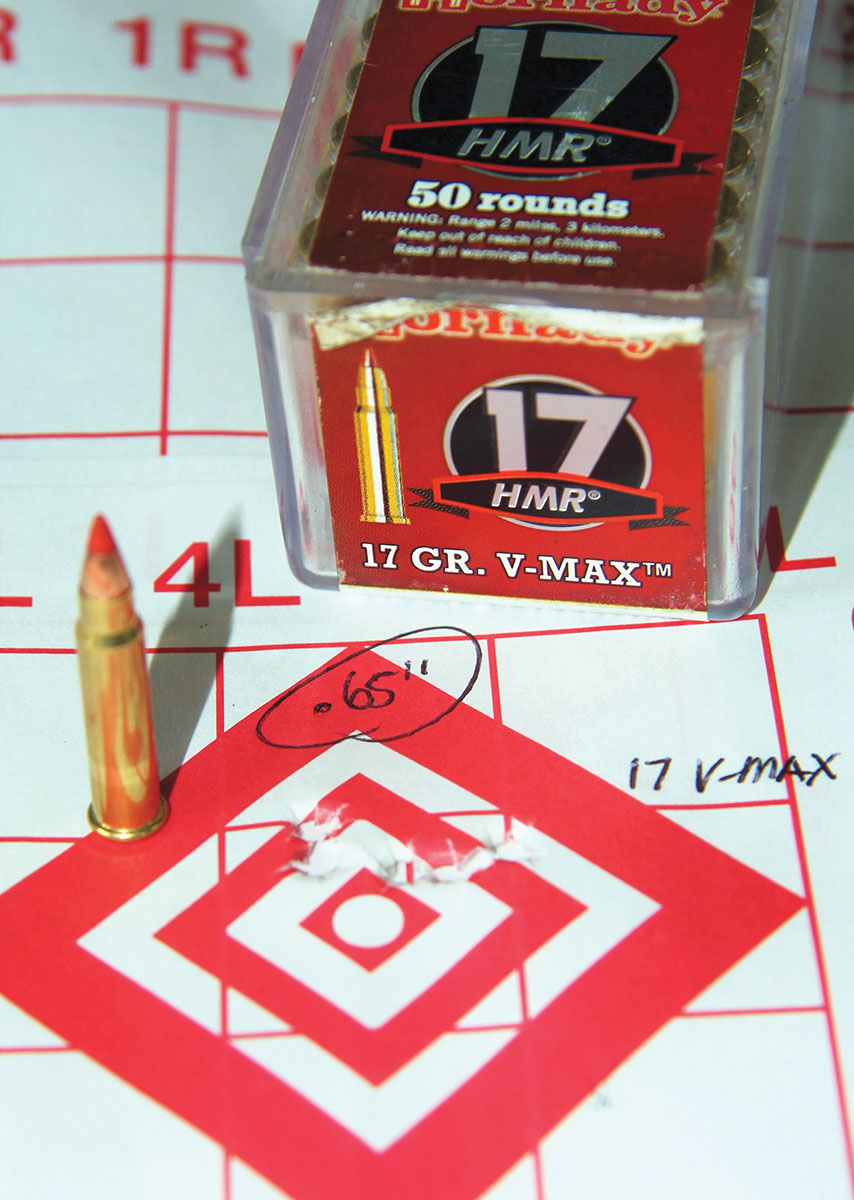
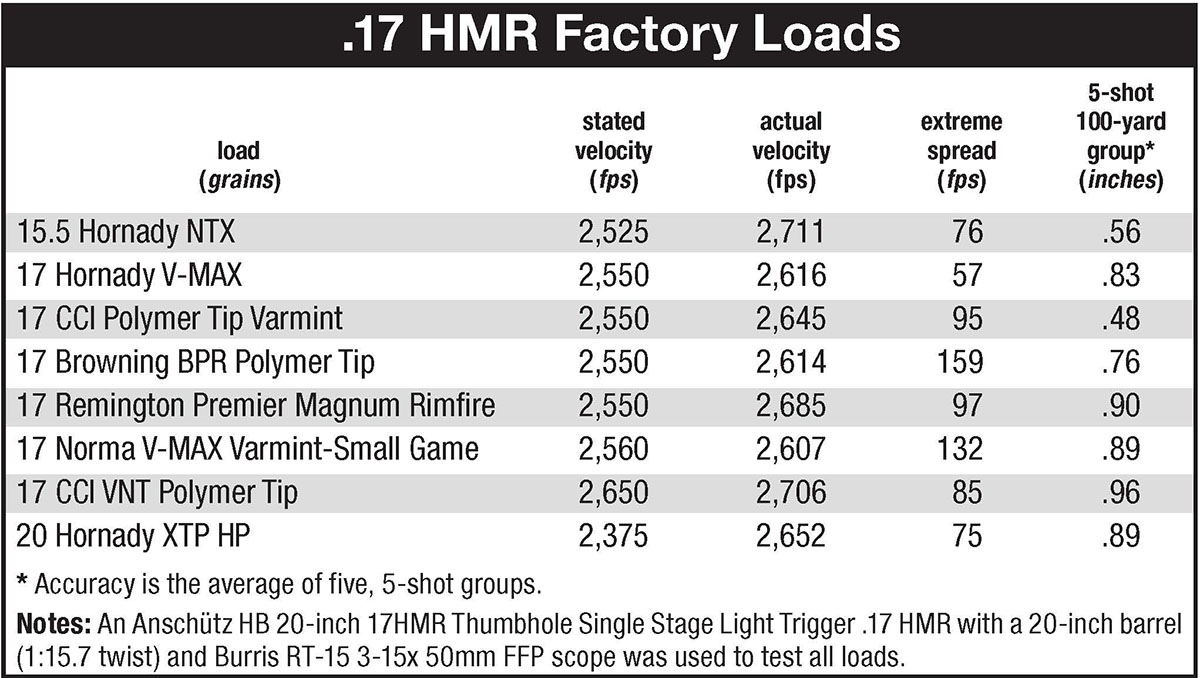
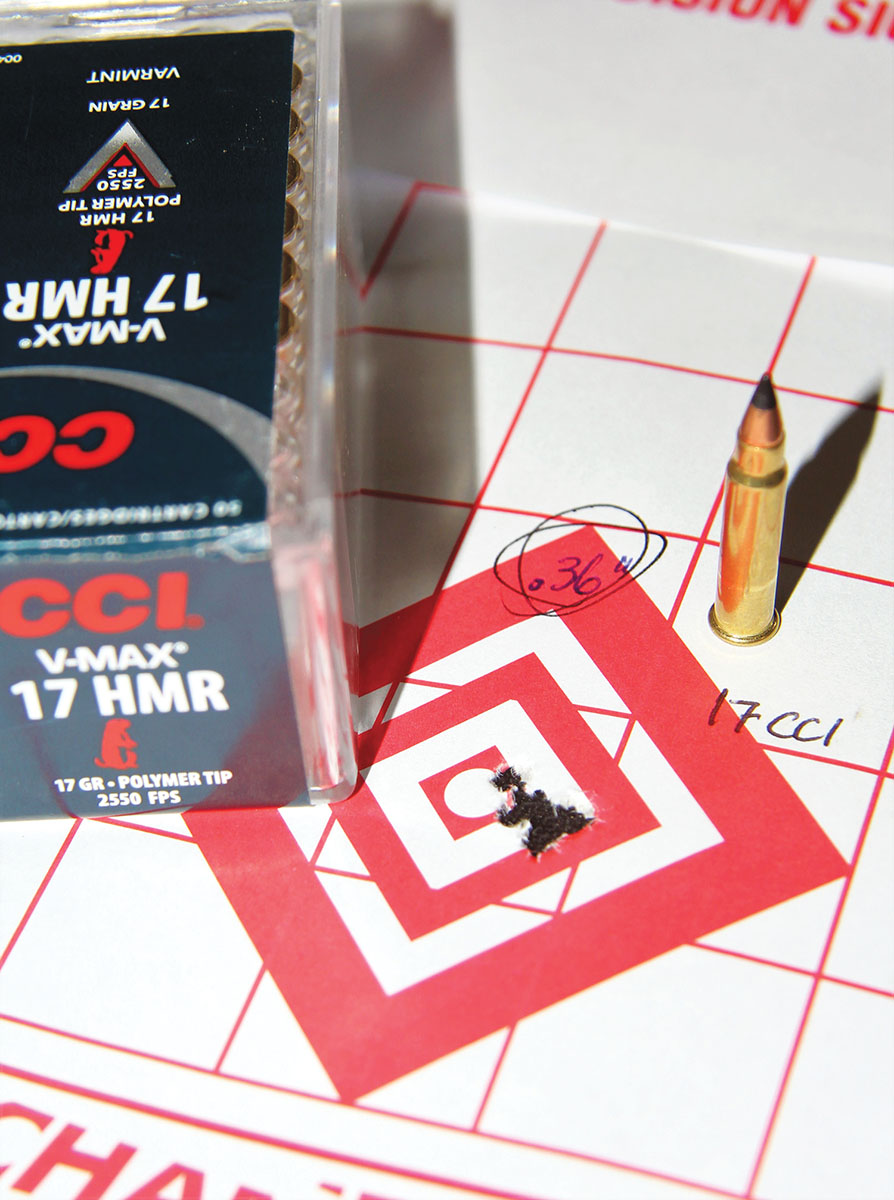
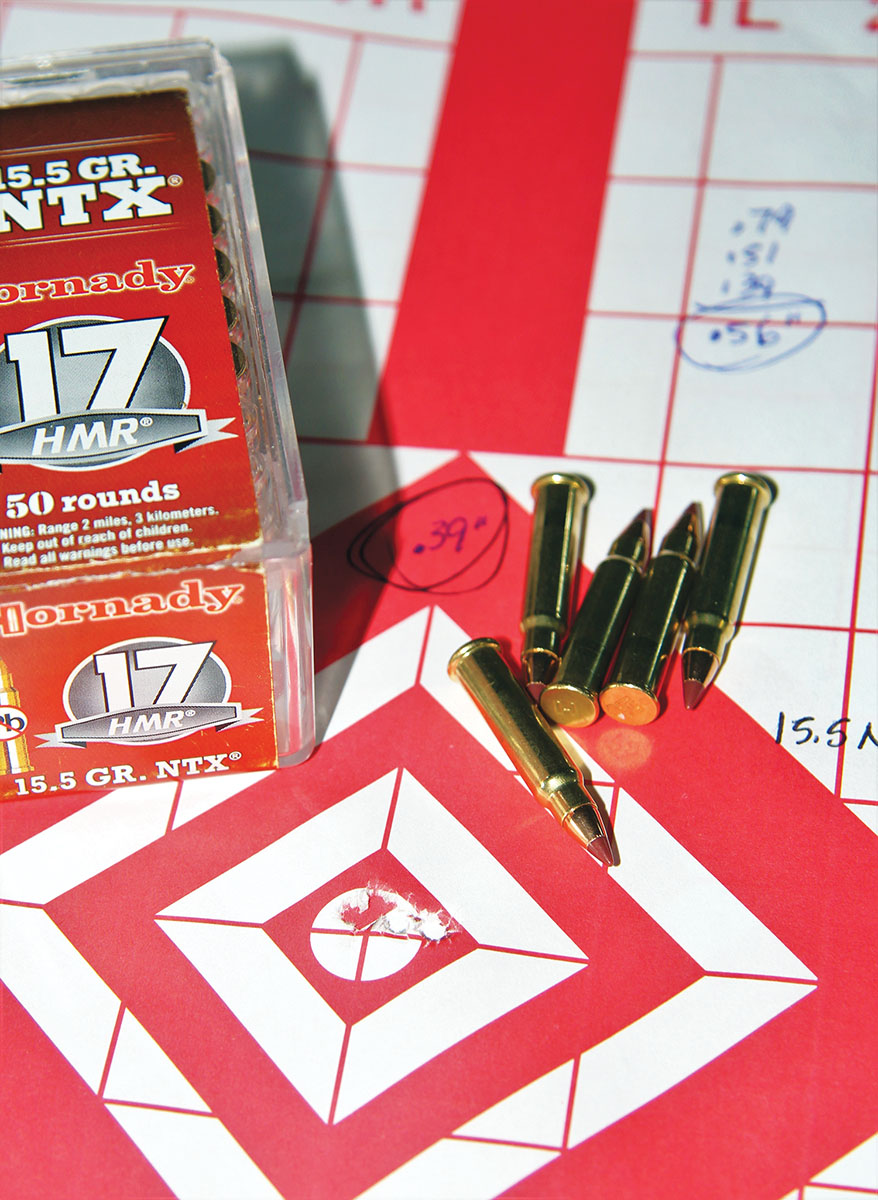
Overall, with all ammunition tested, the Anschütz averaged .78 inch through 200 total shots (including the Remington ammunition). The best overall group averages resulted from CCI 17-grain Polymer Tip Varmint (.48 inch), Hornady 15.5-grain NTX (.56 inch) and Browning 17 grain BPR (.76 inch), in that order. The best individual groups included .51 and .39 inch with Hornady’s 15.5 NTX, .45 and .36 inch with CCI’s 17-grain Polymer Tip Varmint and .49 inch with Browning’s BPR. Velocity in all cases exceeded advertised speeds from the 20-inch barrel, sometimes substantially. Due to the windy conditions experienced during testing (not present during the Remington testing), and because I was returning to the range to work on another project the following morning, I fired some single groups with each load on that calm morning. The results were much the same, so wind doesn’t appear to have been a factor.
Anschütz promises a growing number of accessories and options for the 1761 moving forward. It will be offering a number of barrel variations in multiple calibers, including different lengths, contours and muzzle threading, as well as two-stage target triggers, currently under development. Anschütz also said it will also be offering synthetic, chassis and a few laminate stock options. Higher capacity magazines are also in the offing, so stay tuned.