Ruger Model 77 Varmint 220 Swift
Testing Loads - and Two Scopes
feature By: Randy Bimson | October, 21
Each of the three are intrinsically unique, and revolutionary in their respective ways. Without the design and manufacturing expertise and marketing savvy of Bill Ruger Senior, the Ruger Model 77 rifle would have never evolved and the 220 Swift may not have undergone the revival it has enjoyed since being chambered in the Ruger Model 77.
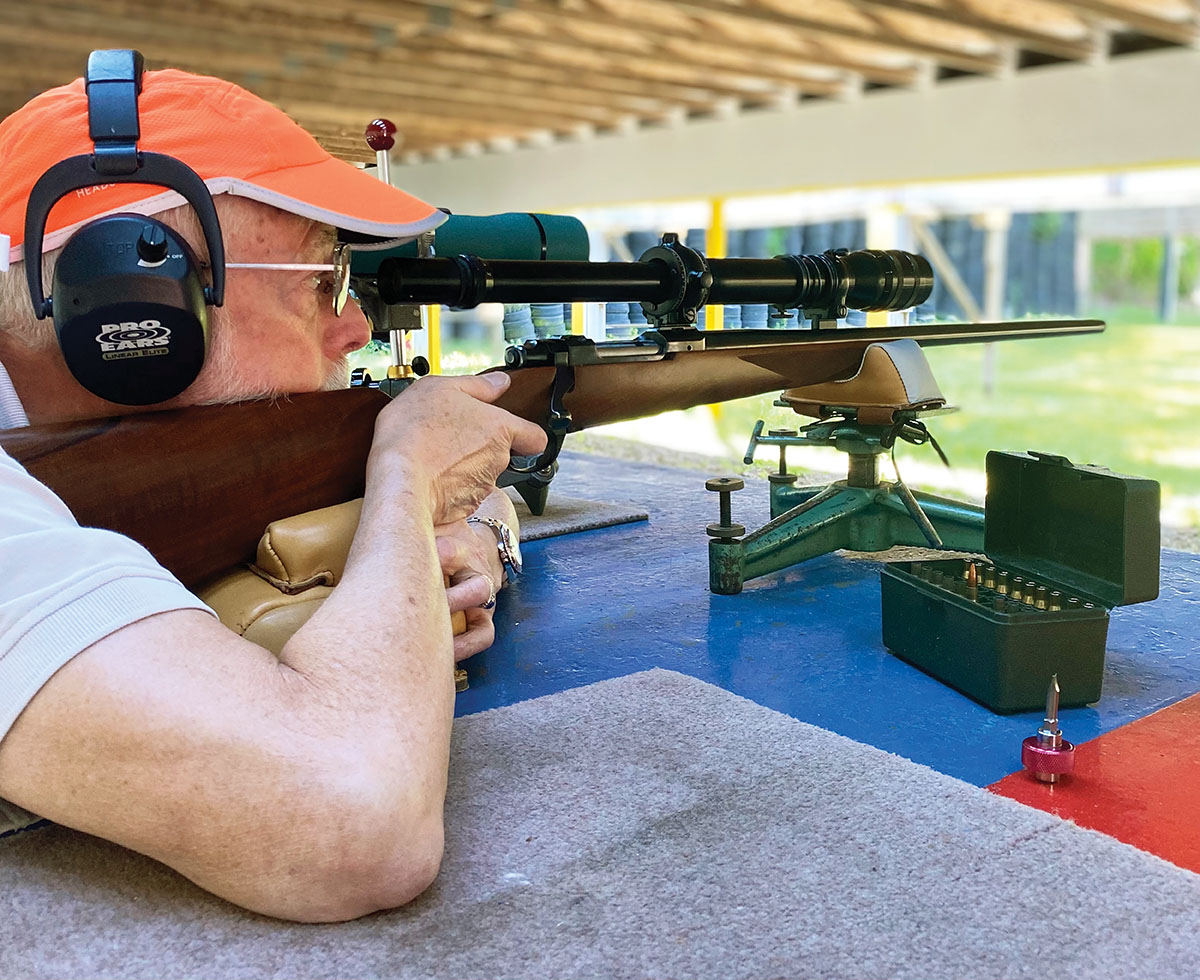
I have always wanted to own a Bausch and Lomb BAlvar 24 target/varmint scope, one of my bucket list items. To those unfamiliar, the BALvar 24 was a groundbreaking, big 6-24x variable-power target/varmint scope manufactured from 1956 through 1966. A barrel-mounted scope rather than a receiver-mounted scope, the BALvar 24 is a large rifle scope by any standard, 22 inches in overall length and weighing in at a hefty 36 ounces.
Why my interest in the BALvar 24? The BALvar was revolutionary for the time, the first rifle scope to have a range of magnification from 6x to 24x. At the time of the BALvar’s introduction, it sold for the princely sum of $160 when the Winchester Model 70 Super Grade sold for $179. To this day, the BALvar is considered to be of impeccable mechanical and optical quality, vaunted as being the equal of many of today’s top-line scopes.
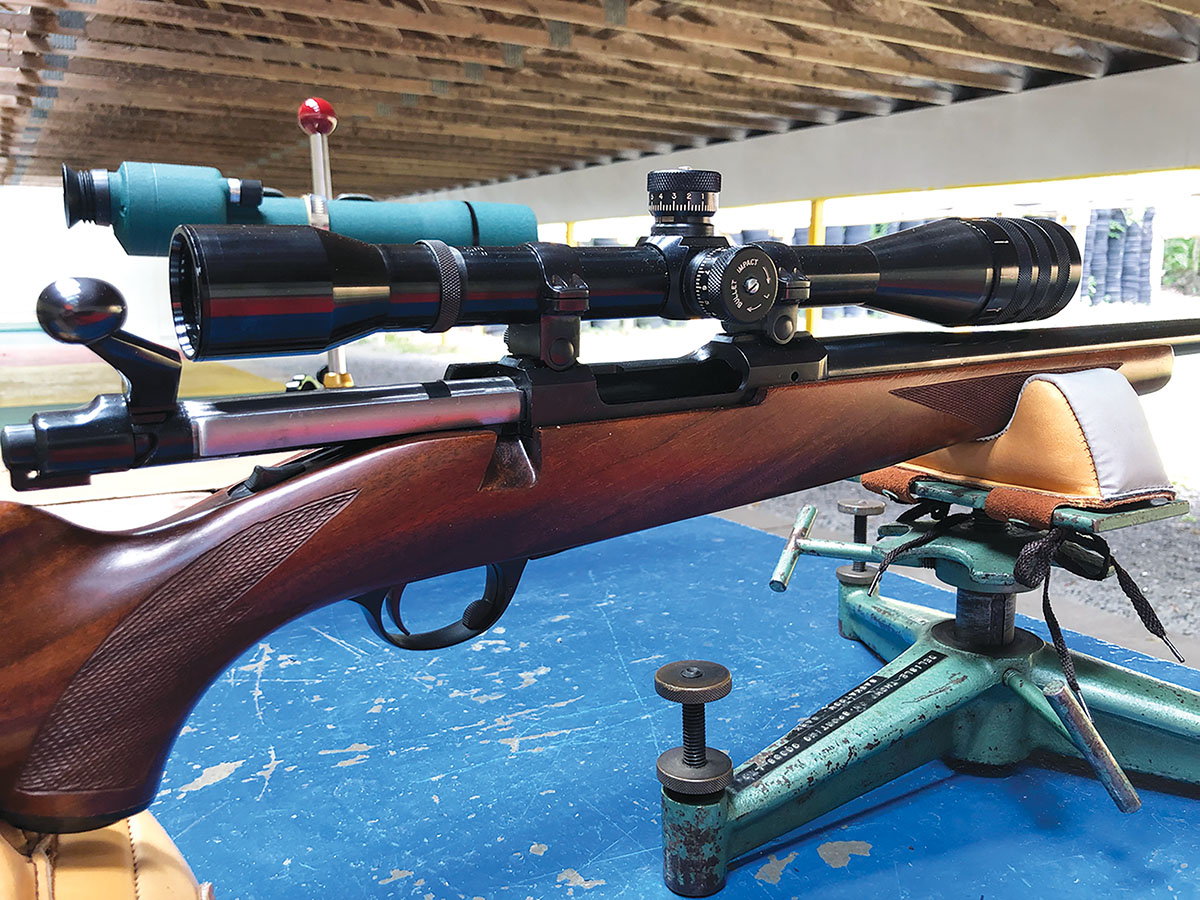
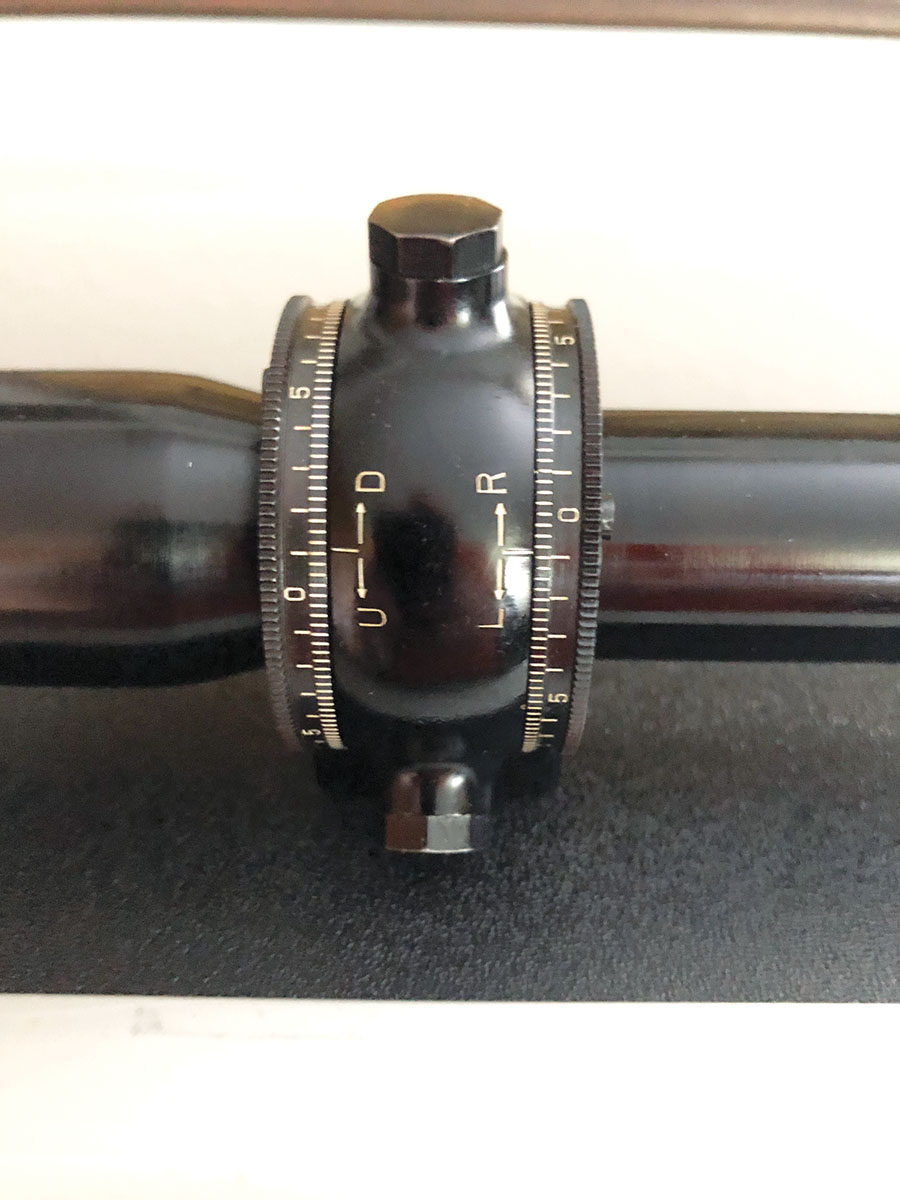
Next, the barrel-mounted scopes of this type traditionally have external windage and elevation adjustments (the Redfield 3200 is an exception), often referred to as “horned” windage and elevation adjustments because they stick out at right angles from the rear scope mount ring like horns. While this works satisfactorily for target rifles, it is less than ideal for varmint rifles used in the field. Bausch and Lomb engineers designed a unique, nearly projectionless circular “donut-type” windage and elevation-type mount more suited to use in the field while still retaining the precise and repeatable windage and elevation adjustments of a target scope.
Having had limited experience with any of these barrel-mounted target/varmint scopes, I was keenly interested to see to what degree, on the same rifle, the potential accuracy of the rifle was affected by a barrel-mounted scope like the BALvar versus a receiver-mounted target/varmint scope.
As fate would have it, at an estate auction in 2019, I became the proud new owner of a BALvar 24 in very nice condition. Early in 2020, I was fortunate to acquire a Ruger “flat bolt” Model 77 chambered in 220 Swift. The serial number placed it as being manufactured in 1973, one of a first-time run of 220 Swift M77 Varmint rifles Ruger built using Douglas Premium barrels to showcase the accuracy potential of the Ruger Model 77. A Cerrosafe cast of the Douglas barrel chamber put it at just .001 to .0015 over SAAMI minimum chamber specifications, a nice tight and extremely concentric chamber. The rifle came with the original box and paperwork and a still-in-the-box Weaver Micro-Trac T-16 receiver-mount target scope.
The first problem was to find a source for a set of scope mounting blocks to enable the BALvar to be fitted to the Model 77. Where barrel scope mounting blocks were common as hen’s teeth at one time, today, they are a rare bird to find. I was fortunate to be referred to Steve Earle of Steve Earle Products, (steveearleproducts.com). Steve is one of, if not the only, manufacturer still making target-type scope mounting “blocks,” a term Steve prefers over scope bases. Steve specializes in the manufacture of these target-type scope blocks and other related accessories. The quality of his product is impeccable and his workmanship is beyond reproach, as is evident in the included photographs.
After ordering a set of scope blocks the next order of business was to adjust the Ruger’s trigger pull to 2.5 pounds, creep free and with a minimum of overtravel. Other than torquing the guard screws, no other alterations or adjustments were made to the rifle as it came out of the box.
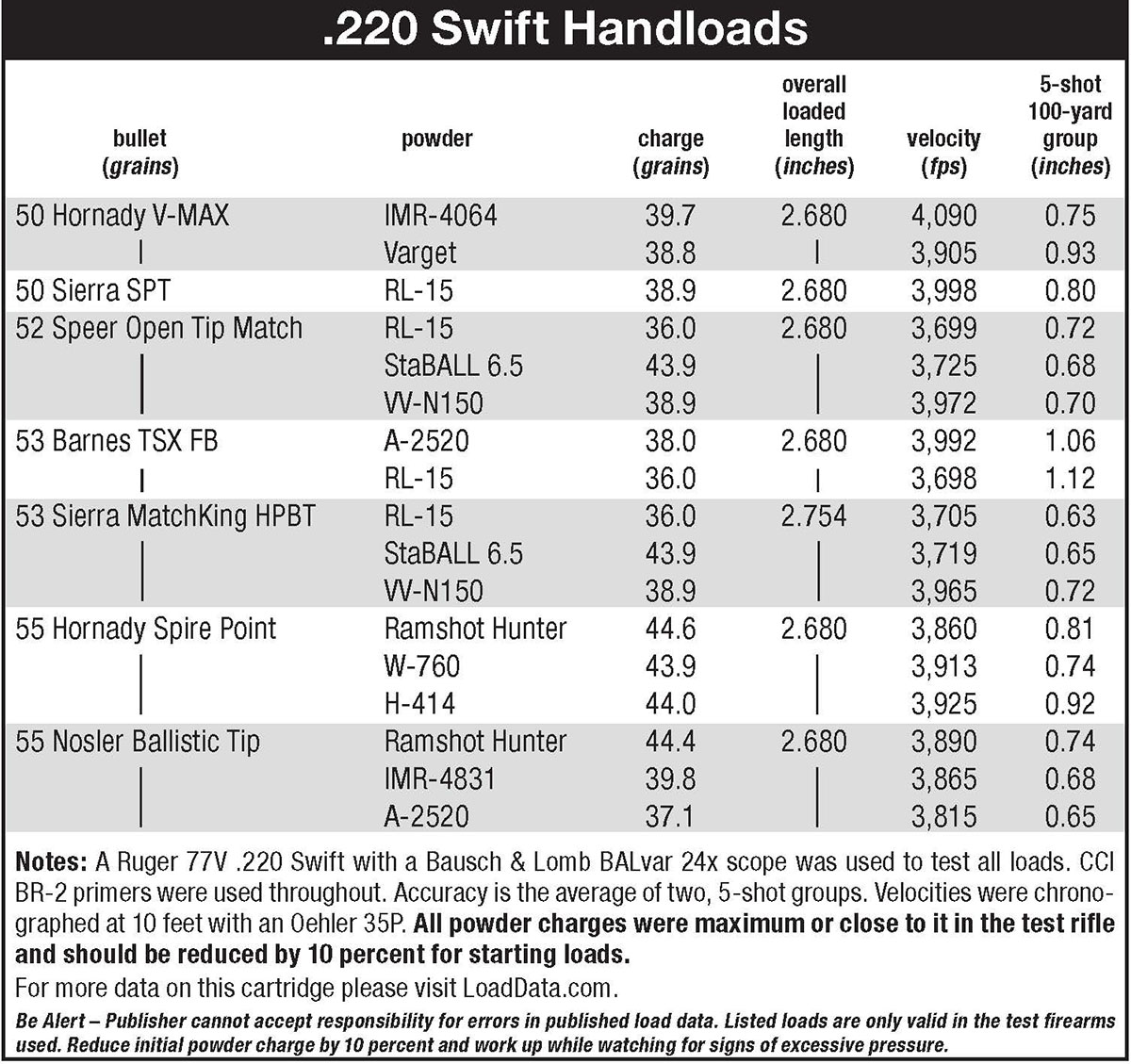
Next up, was load development and accuracy testing. The plan here was to set the receiver-mounted Weaver T-16 up on the Ruger, start load development and establish the best load by handloading at the range, followed by shooting the rifle for best groups first with the Weaver T-16, and next with the BALvar 24 with the same load, on the same day, under as similar conditions as the weather would allow.
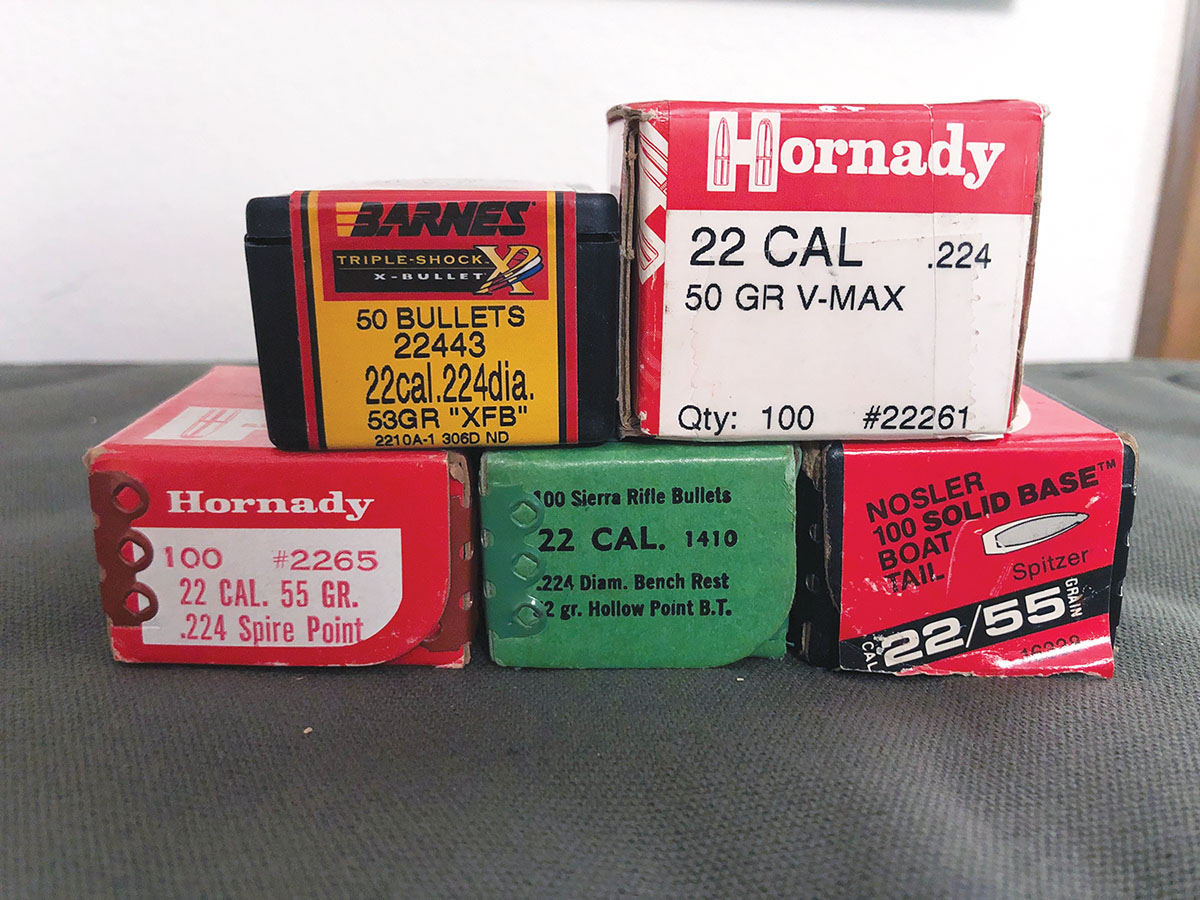
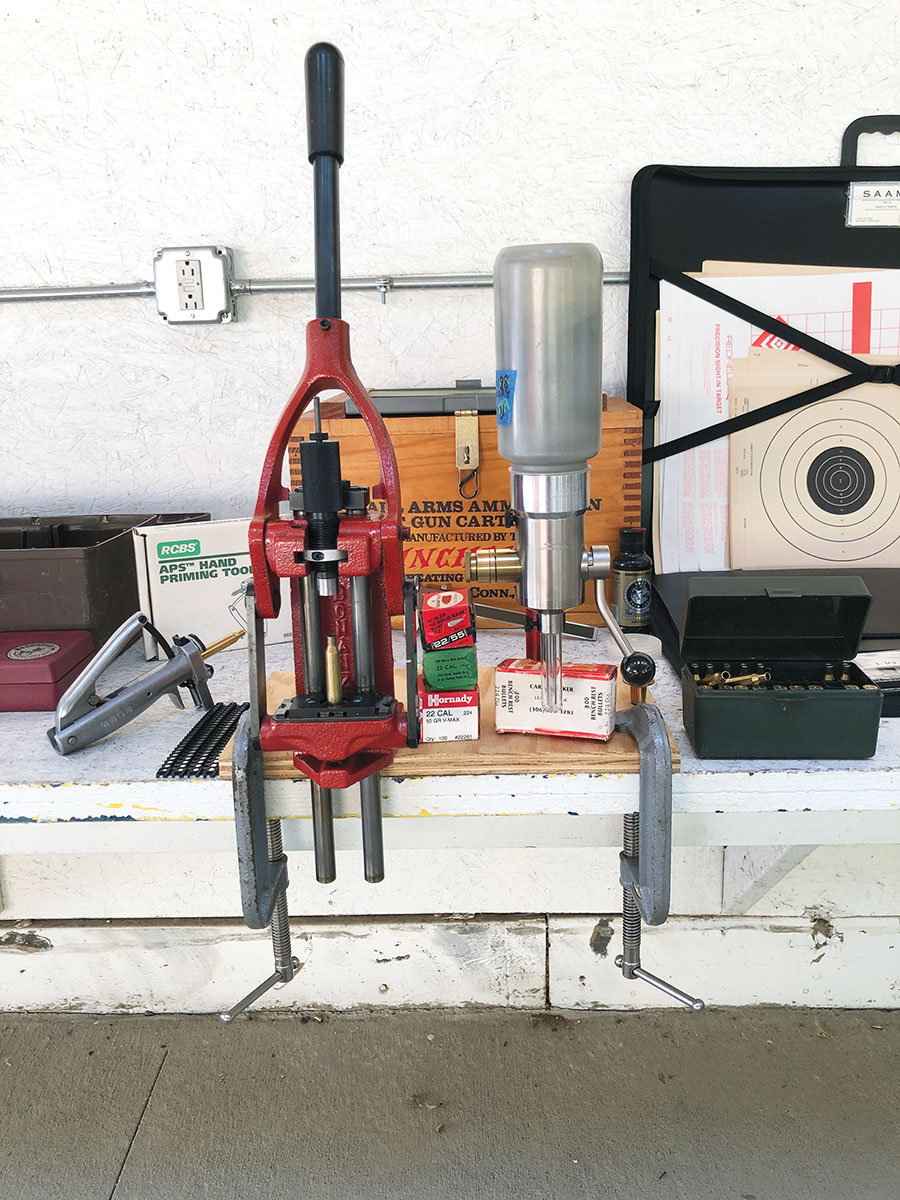
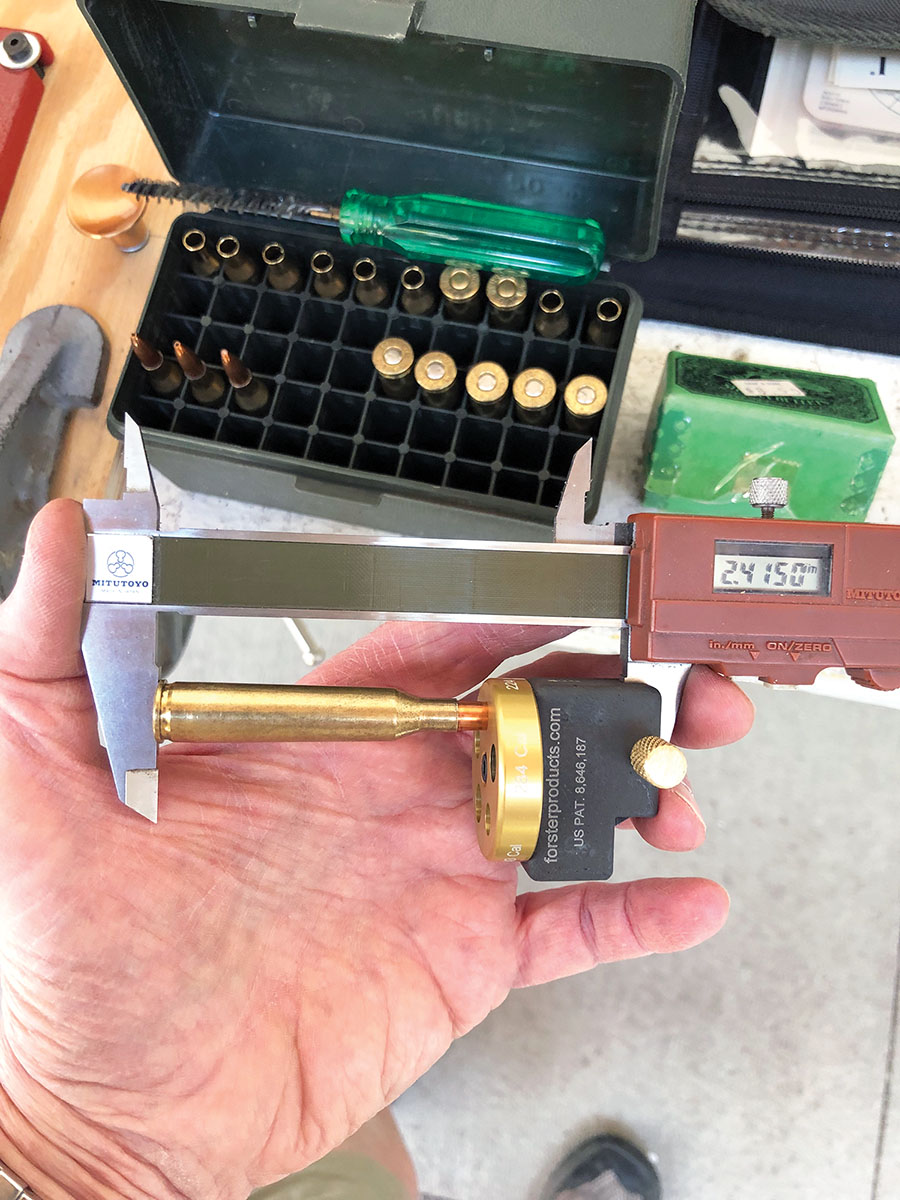
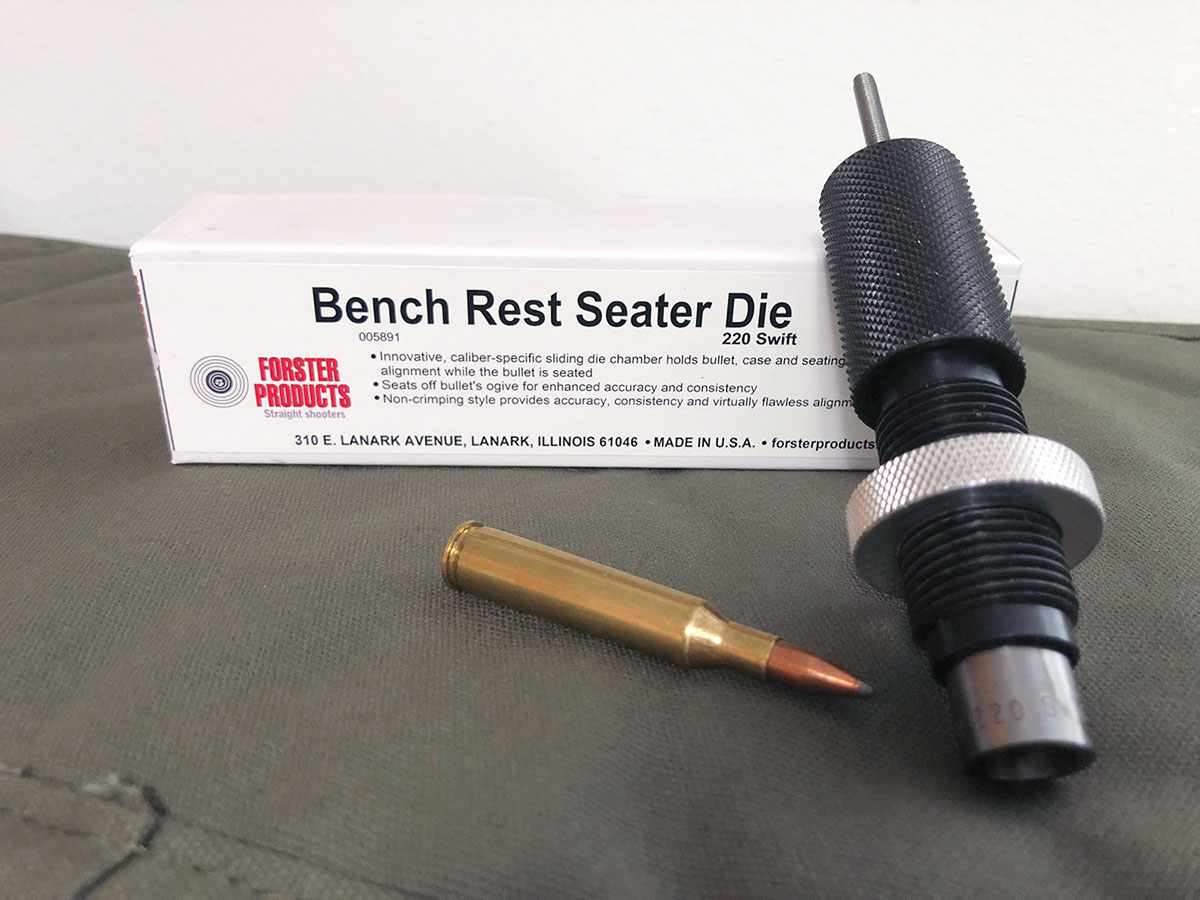
Prior to handloading at the range, all cases used in this test were trimmed to a uniform overall length, deburred, primer pockets uniformed and flash holes uniformed and deburred. Case necks were not turned. As a starting point, loaded cartridge overall length for each bullet was established using a Hornady Lock-N-Load overall loaded length tool. Gauging and subsequent adjustments to the cartridge overall length were established using the excellent Forster Datum Dial. My range handloading tool kit includes an 8x14-inch tool deck fitted with ¼-20 tpi. “T-nuts” that my Forster Co-Ax press and Forster powder measure quickly bolt to and can then be secured to a bench or table with two C-clamps. A Forster neck sizer die, a Neil Jones Custom Products Micro Powder Measure, a Forster Benchrest straight-line bullet seater die, an RCBS APS Universal Hand Priming Tool, the Forster Datum Dial kit, digital caliper, case neck cleaning brush and case neck lube complete the kit. All the above fit neatly into a compact 16x10x10-inch wooden box.
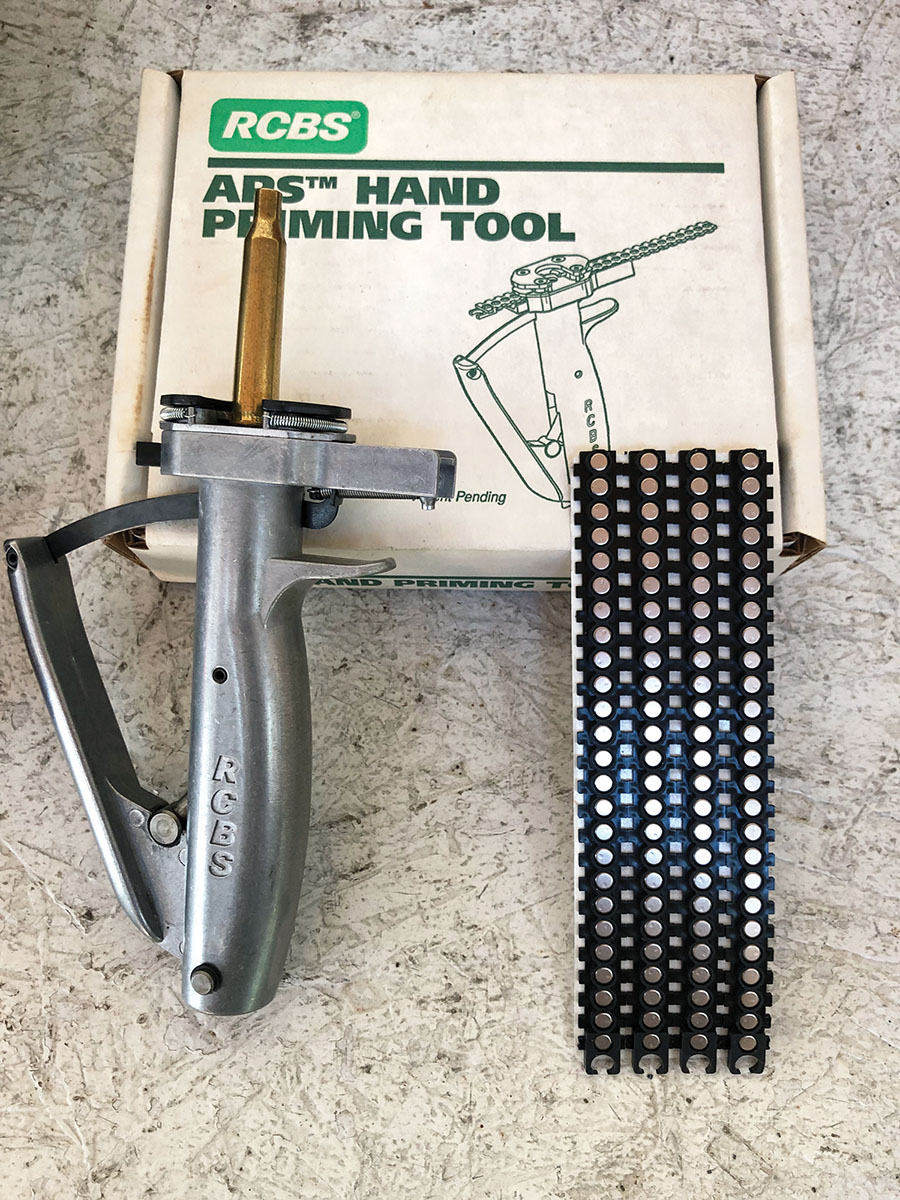
For readers who currently load or are thinking about doing your load development at the range, the two handiest pieces of equipment are the Jones Micro Powder Measure and the RCBS APS Universal Hand Priming Tool.
The Micro Powder measure eliminates the need for a scale and the issue with a scale, mechanical or electronic, with air drafts outdoors. After establishing a “calibration factor,” the charge weight change for each click graduation of the Jones Micro Powder measure for a particular powder and lot that can be dialed in without further need of a scale. Charges can be increased or decreased and returned to within 0.1 grain repeatably.
The APS Universal Hand Priming Tool utilizes a universal shellholder, much like the Co-Ax press, and eliminates the need for caliber specific shellholders. The beauty of the APS system is the color coded, reusable plastic strips that hold 25 primers each. There is no going to the range having to handle individual primers. You can purchase the APS strips preloaded with your favorite CCI primers, or empty, and load your favorite primer using the RCBS APS Primer Strip Loader.
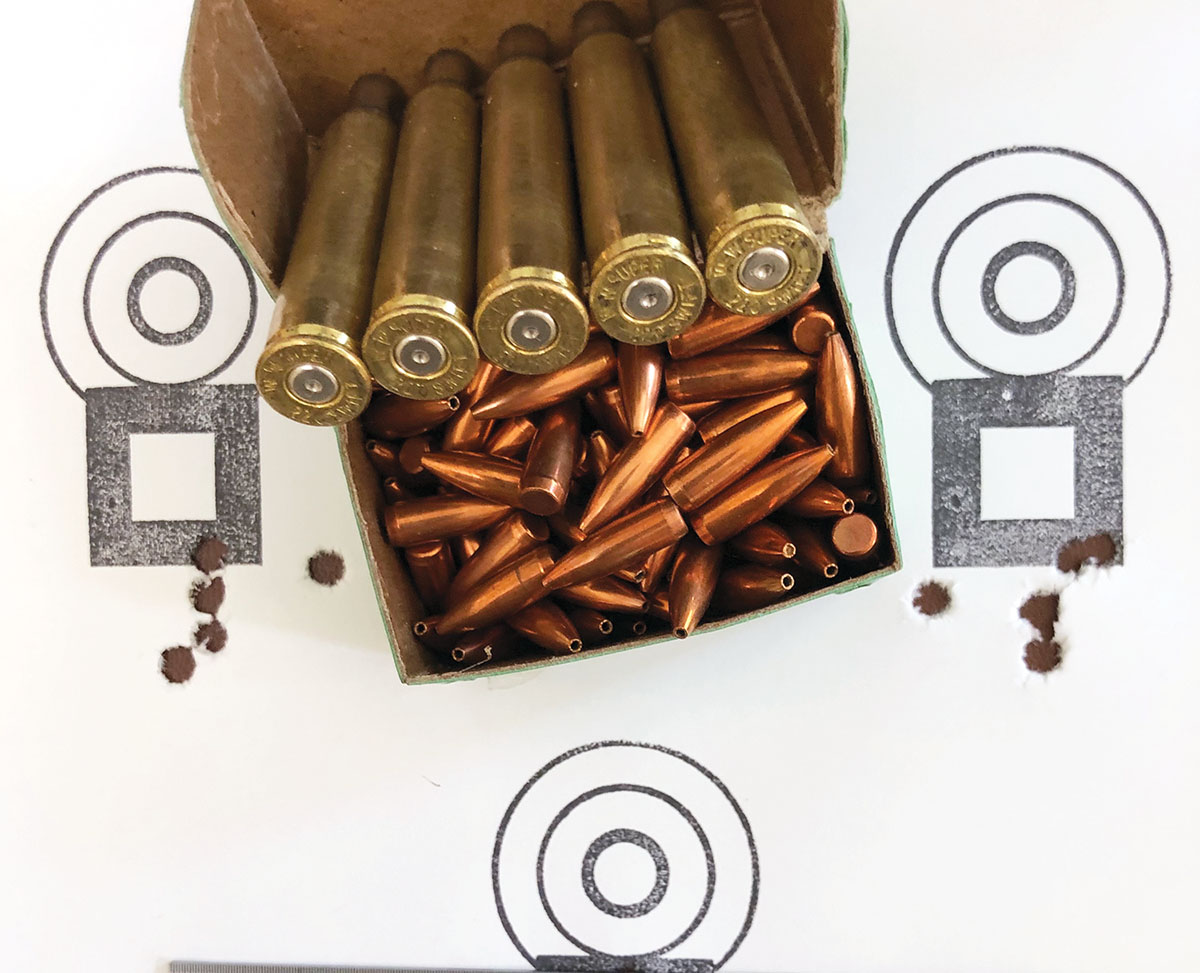
At the end of the day, this Ruger 220 Swift favored the load of 36 grains of Alliant Reloder 15 behind the Sierra .224-diameter, 52-grain hollowpoint boat-tail MatchKing bullet ignited by the CCI BR-2 primer over all other loads tried.
What did I learn about barrel-mounted target scopes versus a receiver-mounted target scope’s effect on accuracy? First, the spring weather in Iowa was totally uncooperative. During my testing, the best day was winds gusting from 15 to 20 miles per hour. While I did my best to read the wind flags and shoot during a similar condition as possible, I have no doubt it affected the accuracy results. So, with that in mind, let’s look at the results.
The average of the five, five-shot groups utilizing the big barrel-mounted BALvar was 1 inch. On first blush, there is quite a difference between the 1-inch group average and the .636-inch average posted with the Weaver T-16. But interestingly, these two best groups are nearly identical opposite-handed twins in group shape and, disregarding the flyer in each group, the four-shot groups both come in at .634 inch.
So, what do I surmise from this? It is an established fact that barrel-mounted optics typically contribute to larger groups with all other things being identical. From my testing, I would come to that conclusion. But what I wanted to know is how much difference it made and if it is significant to a shooter other than a world- class competitor? Disregarding the flyer on each of the two best groups shot using the BALvar, the groups exhibit a uniformity in group and shape size, which the groups shot with the T-16 did not quite exhibit, if that accounts for anything.
Whether the lone flyer in each group was shooter error or caused by a change in the gusting wind is open to speculation. Not only will the wind be pushing the bullet, the big BALvar has a lot of “sail” area for the wind to push on. Drop each of those flyers back into their respective four-shot groups and I would take the vertical string as something I could work with. It gives me a single vertical plane to content with as the range increases, rather than an in increase in both the horizontal and vertical planes.
In the end, both setups are worth exploring further when the weather is more cooperative. Will the big Bausch and Lomb BALvar find a permanent home on the Ruger 77 Varmint? I think that is a yes, unless further testing shows a decided difference in the groups. There is just something about the marriage of the 220 Swift, the Bausch and Lomb BALvar 24 and the Ruger Model 77 Varmint that speaks of renaissance!