The 17 (Hornady) Hornet
Small, but it Still Stings
feature By: Phil Massaro | October, 21

The 17 Hornet is a relatively new commercial cartridge, having been released by Hornady in 2012, but its roots can be traced back to the early 1950s. Charles O’Neil, who had partnered with Don Hopkins and Elmer Keith to create a series of OKH wildcat cartridges, had the vision to develop the .17-caliber cartridges, but it fell to famous gunsmith and wildcatter P.O. Ackley to bring the bore diameter to fruition. He swaged his own bullets from copper wire in order to feed his 17 PeeWee – a .17-caliber wildcat based on the 30 M1 Carbine cartridge – and then proceeded to begin experimenting with other cartridges, namely the 218 Bee and 22 Hornet. The Ackley version of the 17 Hornet used a 30-degree shoulder, and in his Handbook for Shooters & Reloaders (Vol. II), his load data suggests using a compressed charge of 12 grains of IMR-4198.
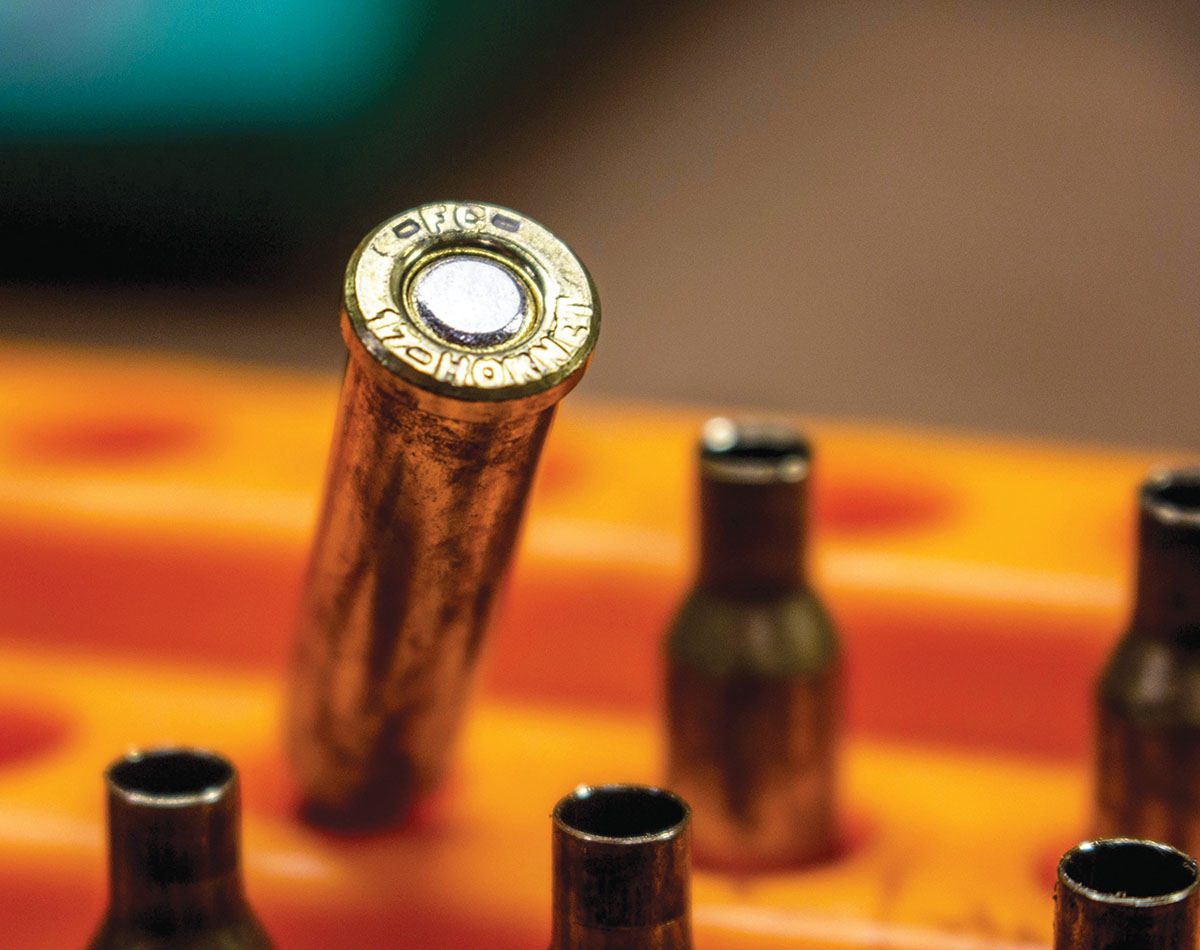
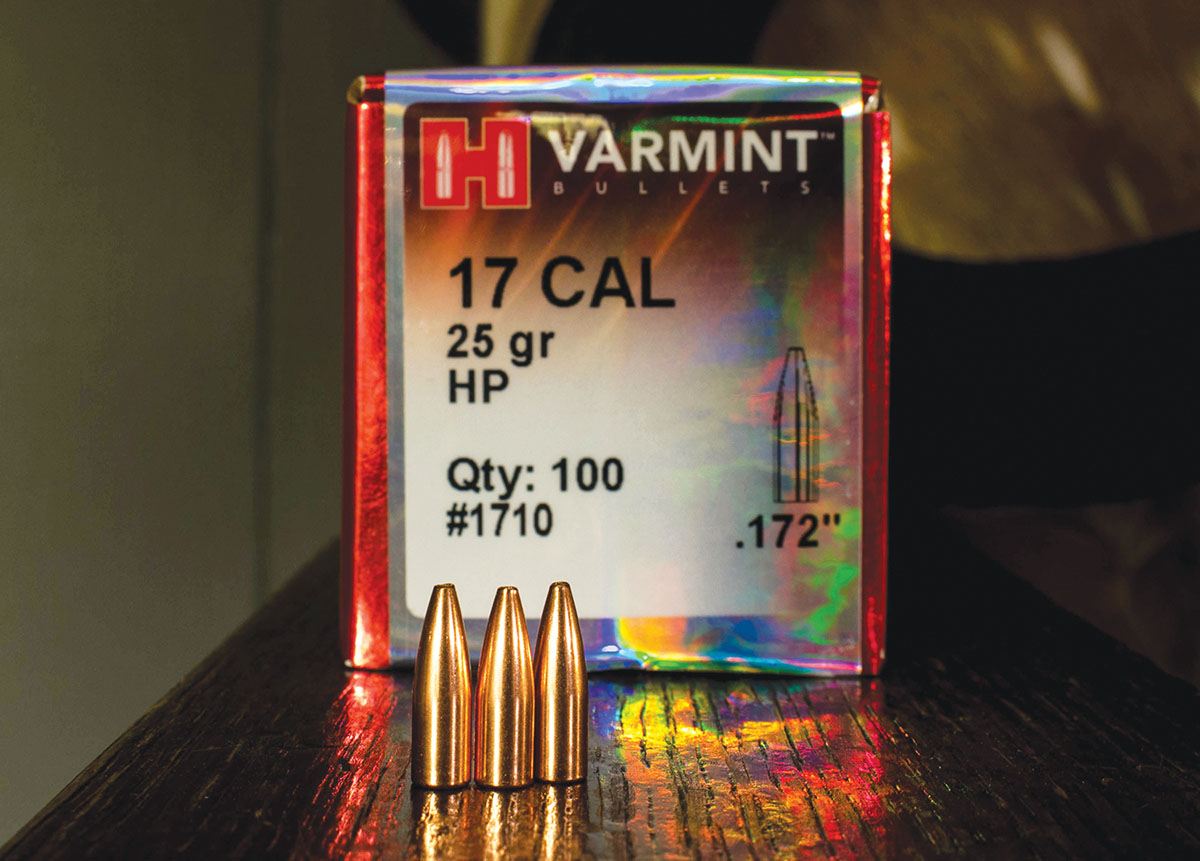
Like its parent, the 22 Hornet, the 17 Hornet uses a rim for proper headspacing. Whereas the Ackley version of this cartridge used a 30-degree shoulder, the Hornady (read SAAMI-approved) commercial version uses a gentler 25-degree shoulder, which eats up a bit of neck length in comparison. It retains the .350-inch rim diameter of its sire, yet with a shorter case length; where the 22 Hornet’s case measures 1.403 inches, the 17 Hornet measures 1.350 inches, yet both cartridges share an overall length of 1.723 inches. The .172-inch diameter bullets range in weight from the 15.5-grain Hornady lead-free NTX to the 20-grain Hornady V-MAX and Nosler Varmageddon, to the 25-grain Berger and Hornady hollowpoint slugs; all are flatbase bullets. These projectiles are all designed to give the near-explosive expansion and immediate energy transfer, which varmint and predator hunters so desire. A minimum of a 1:10 twist rate is preferred to stabilize these bullets.

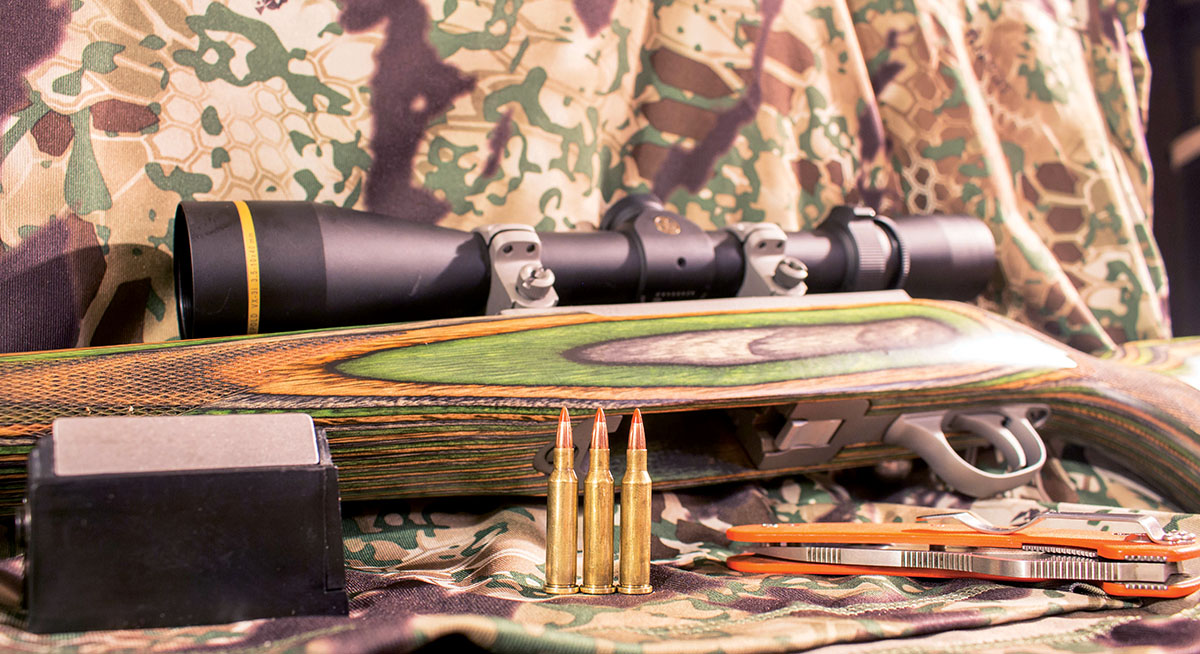
The steel receiver has cuts to accommodate the proprietary scope mounts (included with the rifle) and the affair is stocked in a Green Mountain Camo laminate stock. The detachable rotary magazine holds six rounds and sits flush with the bottom of the stock. A three-position safety allows for unloading the rifle in the middle position, forward is “fire” and the rear position blocks the trigger and bolt as well. The bolt has a 90-degree lift and a very short throw length; surprisingly, it seems to take considerable effort to raise the bolt, at least when the rifle is new, out of the box. The trigger has a bit of a “mushy” feel, though I must say it isn’t nearly as tough as the triggers on the old Model 77 MKII rifles. My Lyman digital trigger scale indicated that the 77/17’s trigger broke at 4 pounds, 10 ounces.
For a riflescope, I chose the Leupold VX-3i 3.5-10x 40mm scope with a simple Duplex reticle. It is a light, bright and rugged scope with .25-MOA adjustments (elevation and windage adjustments both under caps) and Leupold’s lifetime guarantee. It might be argued that a bit more magnification would be nice for a varmint rifle, but I like this scope for its clarity, light weight and the way it makes the smaller sporter-weight rifle balance properly.
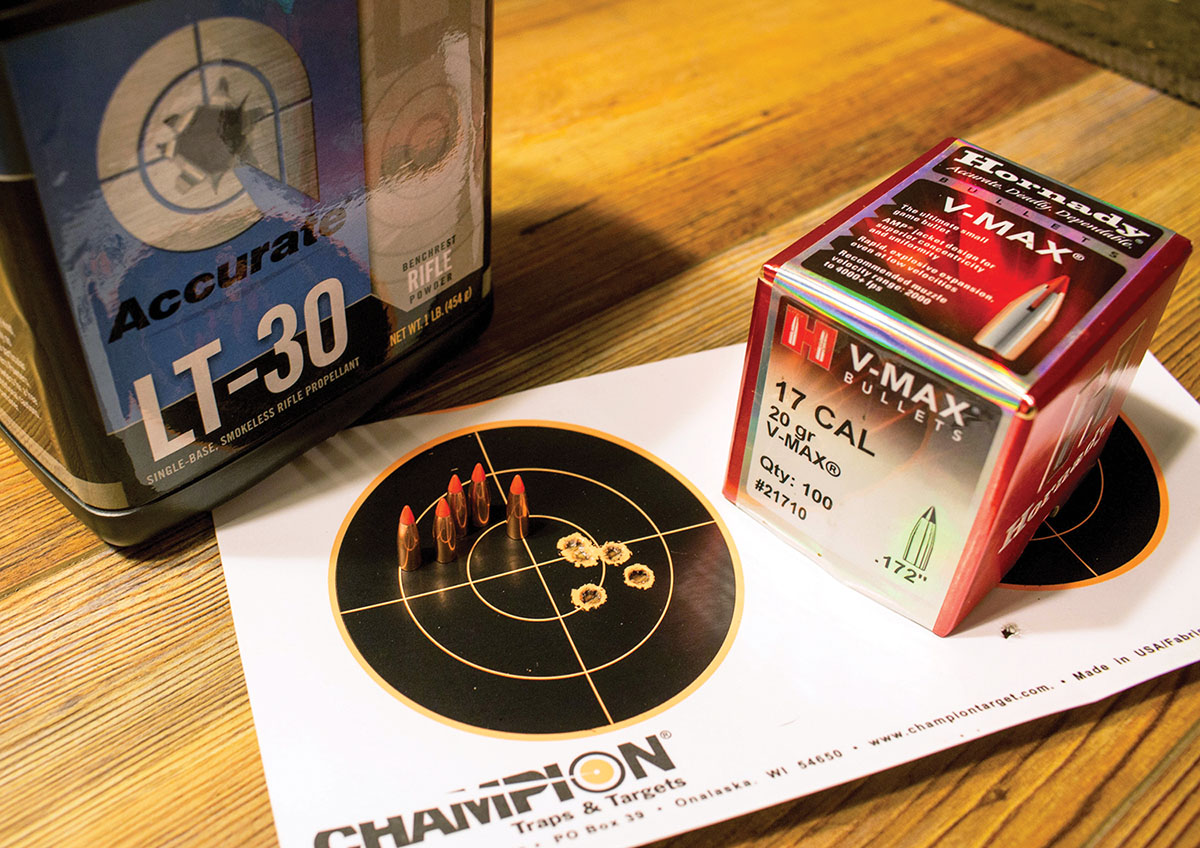
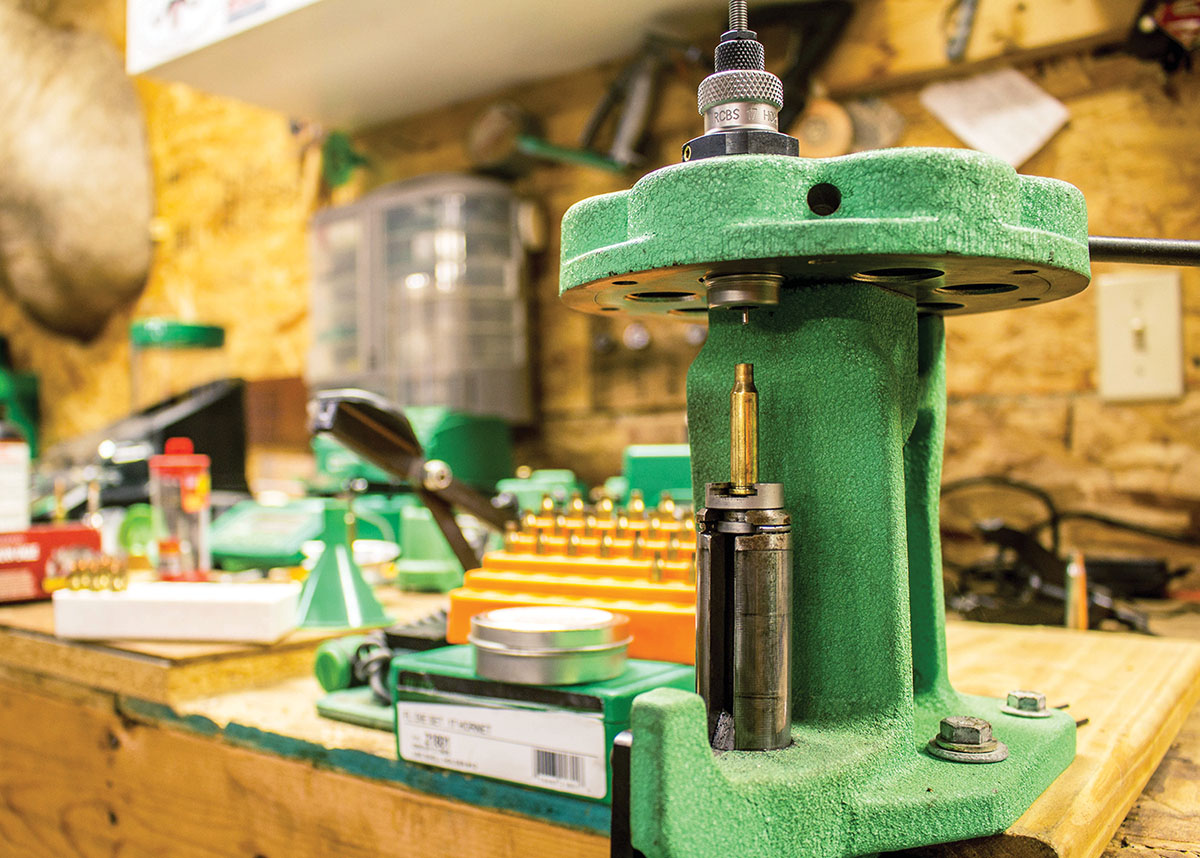
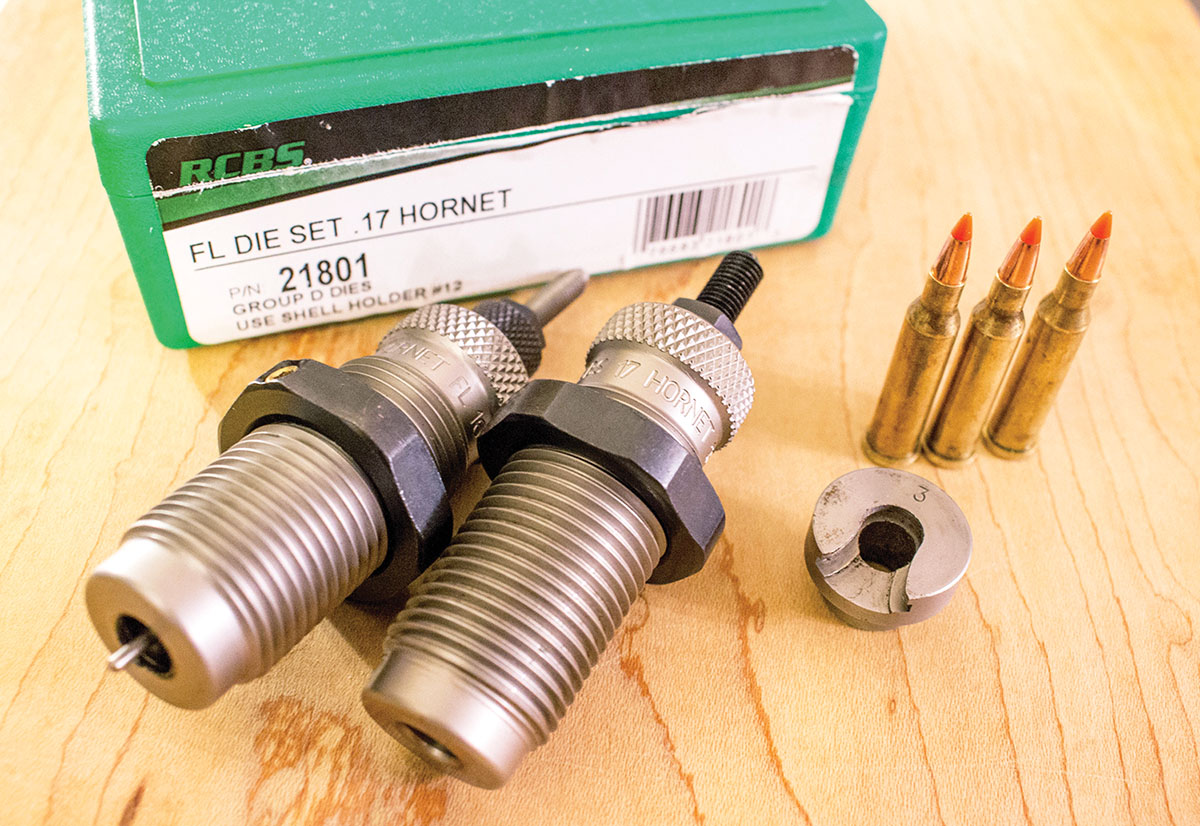
There is good load data available for the 17 Hornet from Hornady, Hodgdon (including IMR and Winchester Powders), Western Powders and Lyman’s reloading manual. Just be sure to look at data for the Hornady version, not the Ackley version. Just as Ackley had prescribed in his own development, IMR-4227 and IMR-4198 are central players in much of the reloading data. I also grabbed some different powders for this exercise, including Accurate 5744, LT-30, Norma 200, as well as Hodgdon’s H-110, that handgun powder which does so well in the magnum pistol cartridges. A set of dies from RCBS would be handling the resizing and seating duties, and its No. 12 shellholder will securely hold the Hornet family of cases. If I had any suggestions for the choice of die type, I’d recommend a seating die with a micrometer adjustment, as small variations in seating depth can make a big difference in the little gun, and a traditional-style seater die isn’t as easily manipulated as the micrometer variant.

The 17 Hornet is sparked by a small rifle primer such as the Winchester WSM, CCI 400 and Federal 205. As I had a healthy supply of them, the CCI 400 primer got the call for this job. Cases were once-fired Federal from that supply of American Eagle factory ammunition I had for sighting-in. Resizing was straight forward, with each case needing just the slightest amount of Imperial Sizing Wax, and my RCBS Universal Case Prep Center quickly cleaned the primer pocket, and kissed the case mouths inside and out.
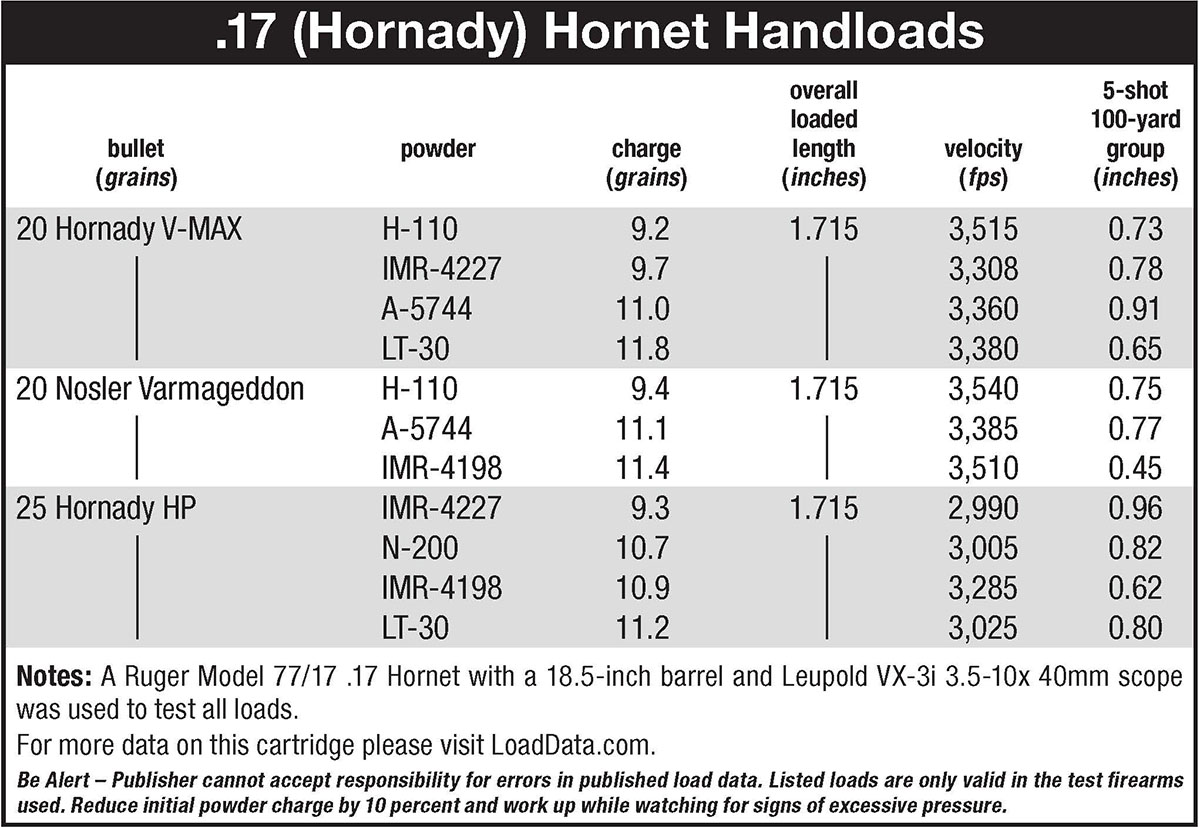
At the bench, the 17 Hornet proved to be happy with a diet of handloaded ammunition. In fact, it was happier than with the American Eagle factory stuff. I loaded up several test loads, and set up my trusty Oehler 35P chronograph to measure the muzzle velocities. IMR-4198 proved to be the best of the lot, but not by much. The famous stick powder has long been associated with varmint cartridges and straight-walled thumpers like the 45-70, and it was right at home in the 17 Hornet. Using 11.4 grains of IMR-4198 under a Nosler 20-grain Varmageddon bullet provided just over 3,500 fps consistently and printed five-shot groups averaging under a half-inch. This would probably be my go-to load for this particular rifle. With the 25-grain Hornady hollowpoint, group size opened to .62 inch, averaging 3,285 fps.
IMR-4227 – closely associated with magnum pistol cartridges – does double duty in the Hornet case, and the grain structure compresses nicely for this application. Though an extruded stick powder, the grain length is so small that there isn’t a lot of airspace, and as real estate is at a premium in the 17 Hornet case, IMR-4227 makes a solid choice. Velocities ran a bit slow in comparison to those of the IMR-4198, with the 20-grain Hornady V-MAX cruising at 3,308 fps and the Hornady 25-grain hollowpoint at just under 3,000 fps. Groups printed .75 MOA and just under 1 MOA, respectively.
Hodgdon’s H-110 is another of the powders that magnum pistol reloaders have come to rely on for producing excellent velocities. In the 17 Hornet case, H-110 gave great results, with the 20-grain V-MAX leaving the muzzle at 3,515 fps and the 20-grain Nosler just a bit faster at 3,540 fps. Group size was at or under .75 MOA, more than enough accuracy for varmints and predators.
Norma 200 is a powder I had hanging around for use in the 375 Holland & Holland Magnum with lighter bullets and it handles that job wonderfully. The small grain size is a great choice for the 17 Hornet, as 10.7 grains under the 25-grain Hornady hollowpoint produced a muzzle velocity of 3,005 fps. Five-shot groups measured .82 inch.
Accurate 5744 is a fast-burning powder I’ve long reached for when creating reduced velocity loads in the big safari cartridges like the 416 Rigby and 470 Nitro Express. The stick powder has proven to be very consistent in a number of applications, including the 17 Hornet. Burning slightly slower than IMR-4198, Accurate 5744 worked nicely with the 20-grain bullets, with charges of 11 and 11.1 grains driving the Hornady and Nosler bullets between 3,360 and 3,385 fps. Group size for the Nosler averaged .77 inch and the Hornady 20-grain V-MAX averaged .91 inch.

There are still more powder options available, including Alliant’s Reloder 7, Hodgdon’s Lil’Gun, Accurate’s 1680 and Vihtavuori N120, but due to the current market situation, I was unable to procure any for testing. I do, however, know many fans of the 17 Hornet who rely on these choices to fuel their rifle with great results, so if a handloader can get his hands on any of these powders for the 17 Hornet, don’t hesitate to use it.
Looking at the little cartridge, it makes a whole lot of sense for a hunter who wants a reloadable cartridge with the least amount of recoil, yet the ability to kill out to 250 or 300 yards. If someone wants new cases, Hornady is the only source at the moment, and component bullets are available from Hornady, Nosler, Berger and Lehigh Defense. Dies are available from RCBS, Redding, Hornady and Lee Precision. Factory ammunition is available from Hornady and American Eagle (Federal).
Economically, the case could certainly be made that a good old 223 Remington or 22-250 Remington will certainly save money in the long run – as the components and factory ammunition are much more plentiful and often more affordable in bulk. But there is also the fact that where a 22-250 runs on at least 30 grains of powder, the 17 Hornet uses between 9 and 11 grains of powder, so there are roughly three times the shots to the pound of powder. The 17 Hornet runs about 500 to 600 fps faster than the speediest .17 rimfire – 17 WSM – and while factory ammunition for the latter is a little over one-third the price of the Hornet, it isn’t reloadable. I like the balance of speed and striking power the 17 Hornet offers.