222 Super
A Very Special Custom Martini Cadet
feature By: Layne Simpson | October, 20

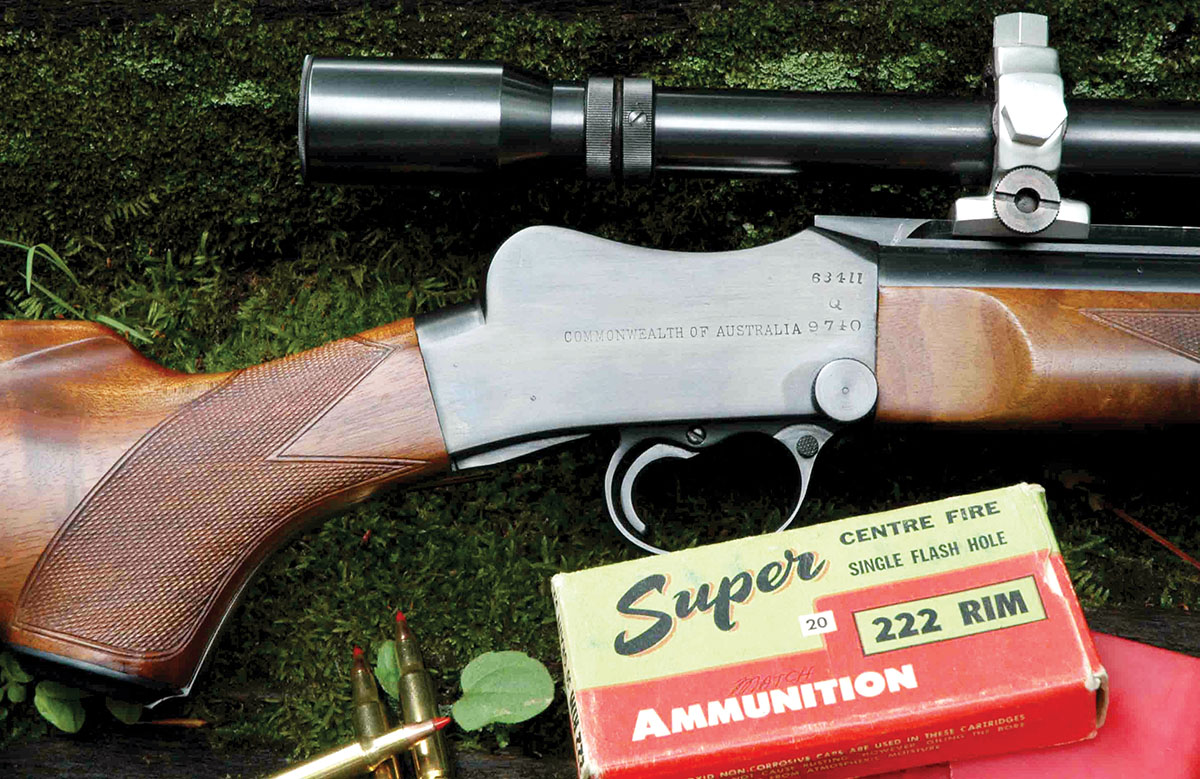
The Peabody-Martini single-shot rifle was designed by Henry Peabody of Boston, Massachusetts, in 1869 and later improved a bit by a Swiss engineer by the name of Martini. It was adopted by several military powers, most notably Great Britain and Australia. Its initial chambering, the .577/450, was eventually replaced by the 303 British. The rifles were too large and heavy to be comfortably used by young cadets in grade schools, universities and military academies, so a scaled-down or “miniature” version as described by its English maker was adopted by the Australian government. Approximately 60,000 were purchased and the little rifle is often described today as the 310 Martini Cadet.
With the exception of quick and easy removal of its internal parts for cleaning, the Cadet action is basically a scaled-down version of the larger Peabody-Martini action. It is marvelous in its simplicity. An inner frame containing the action parts is enclosed by a receiver, which is fitted with the barrel and a through-bolt for the stock. To remove the inner frame and its parts for cleaning, push out the split takedown pin in the side of the receiver, open the underlever, run a finger through the trigger guard and pull downward.
The Australian government withdrew all 310 Cadet rifles from active service in 1921 and replaced them with .303-caliber Lee-Enfield repeaters. The Cadet rifles remained in storage until reissued to the militia due to fear of a Japanese invasion during World War II. Following the war, Cadet rifles were declared obsolete, with many sold to Australian hunters and shooters. Others were exported to New Zealand and the U.S. Extremely fast lock time and a trigger easily fine-tuned for a smooth, light pull made the action a great candidate for a varmint rifle. In the unlikely event of a pierced primer or ruptured case, the fully enclosed receiver prevents propellant gas from reaching the shooter. Pushing its underlever forward pivots the front of the breechblock down, exposing the chamber for loading.
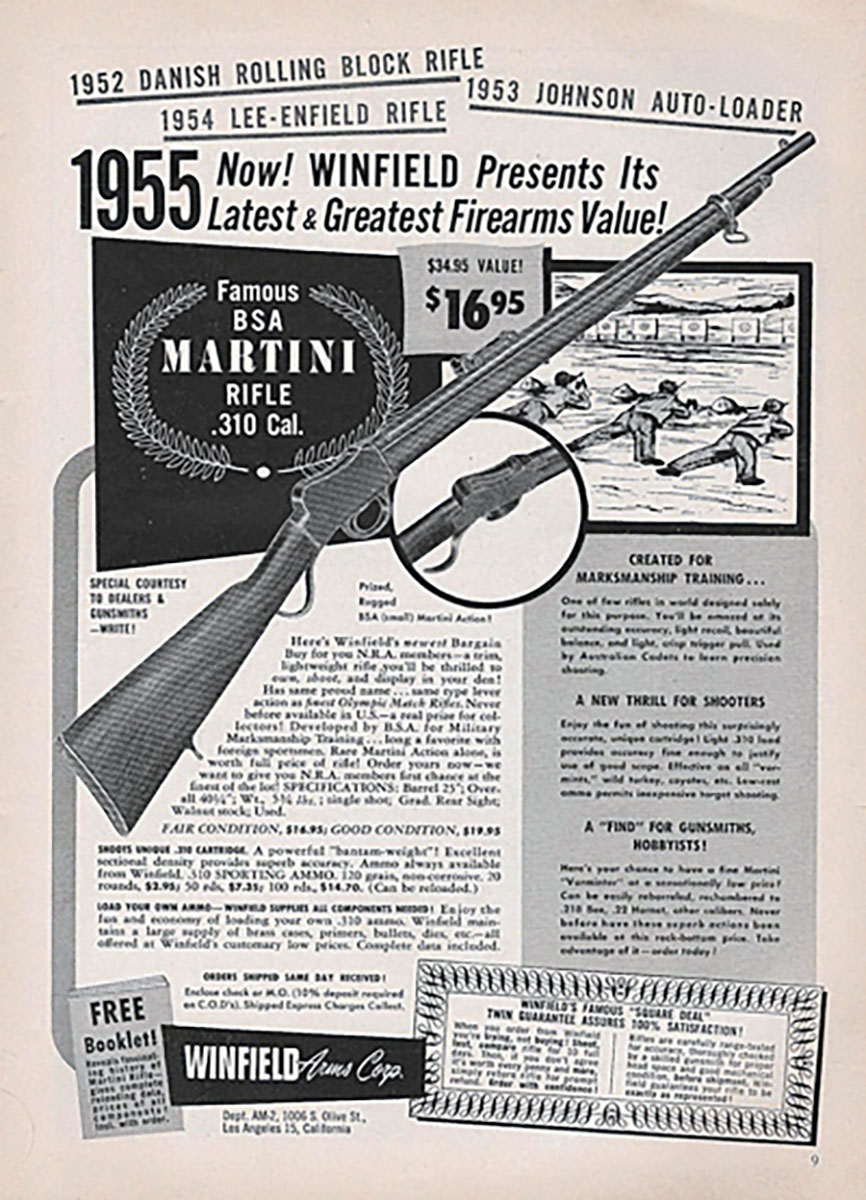
Believe it or not, each month during the 1950s, my high school library received several copies of American Rifleman. I first became aware of the little rifle in a 1955 advertisement from Winfield Arms Corporation, a popular American mail order firm specializing in military surplus arms. The rifle was initially priced at $16.95, and the action alone was $12. Those prices were eventually reduced to $12 for the rifle and $8 for the action. By the time I got around to buying an action, the going price was a mere $5. Web searches will turn up rifles and actions for sale, but those giveaway prices are long gone.
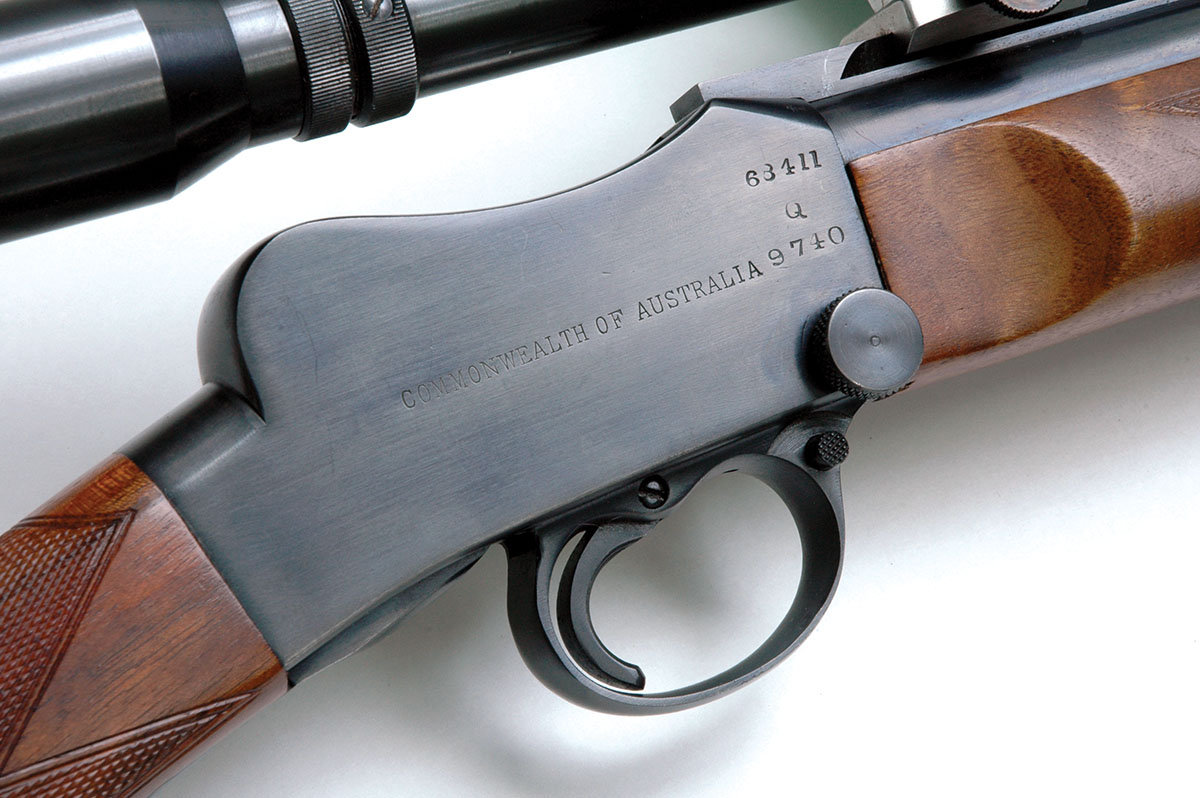
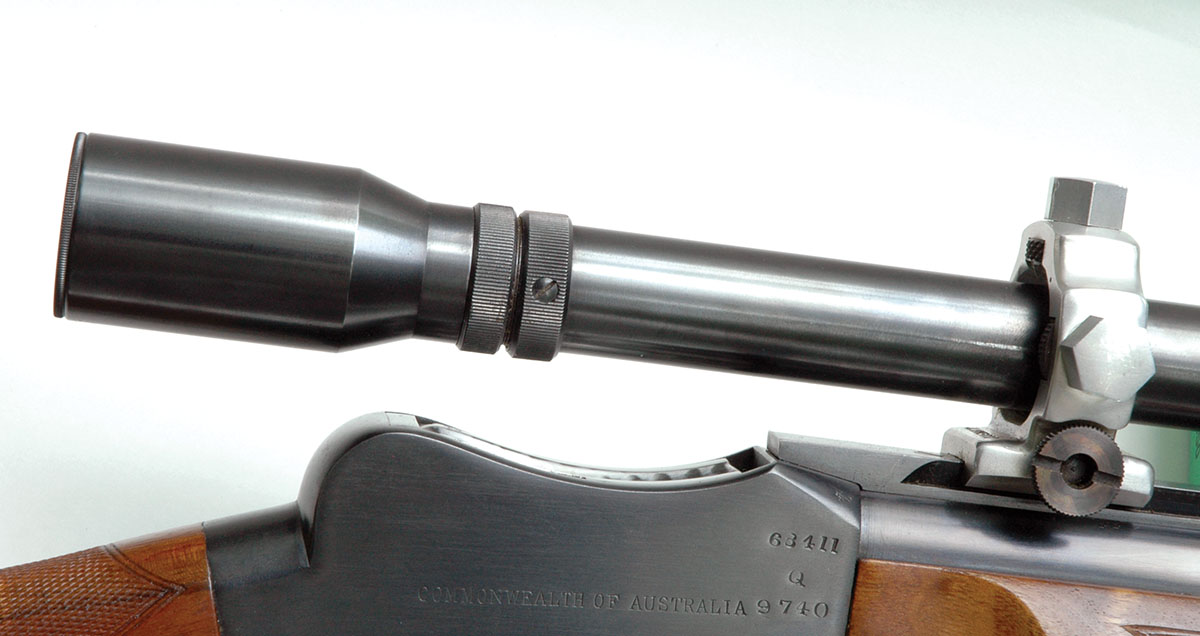
There was a time long ago when custom varmint rifles built on the Winchester Model 1885 single-shot action were quite popular, not only due to their availability and reasonable cost but also because an exceptionally accurate rifle could be built on one. The 219 Zipper was a popular chambering but many were chambered for various wildcat cartridges, with the 219 Donaldson Wasp one of the more popular. During my youth, those rifles were occasionally seen on the used gun market, and while I greatly admired them, I never had the pleasure of owning one. When buying the Martini Cadet action I knew it would eventually be used for building that type of rifle.
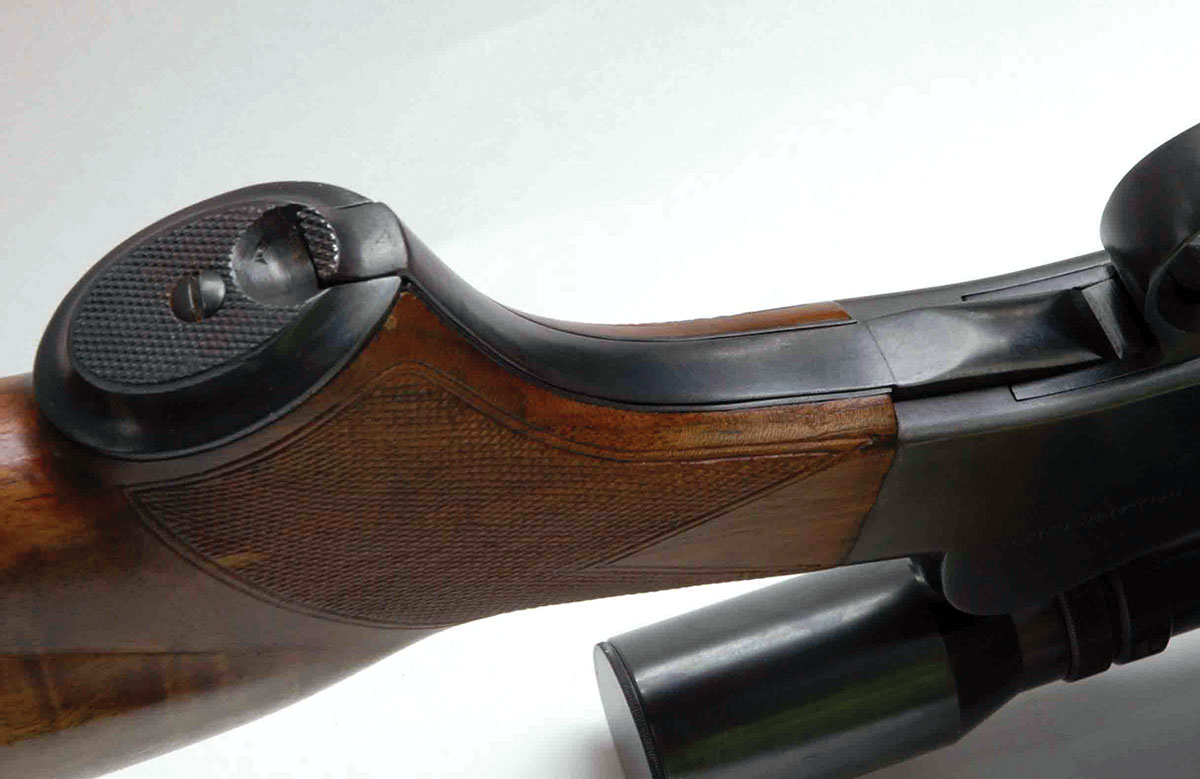
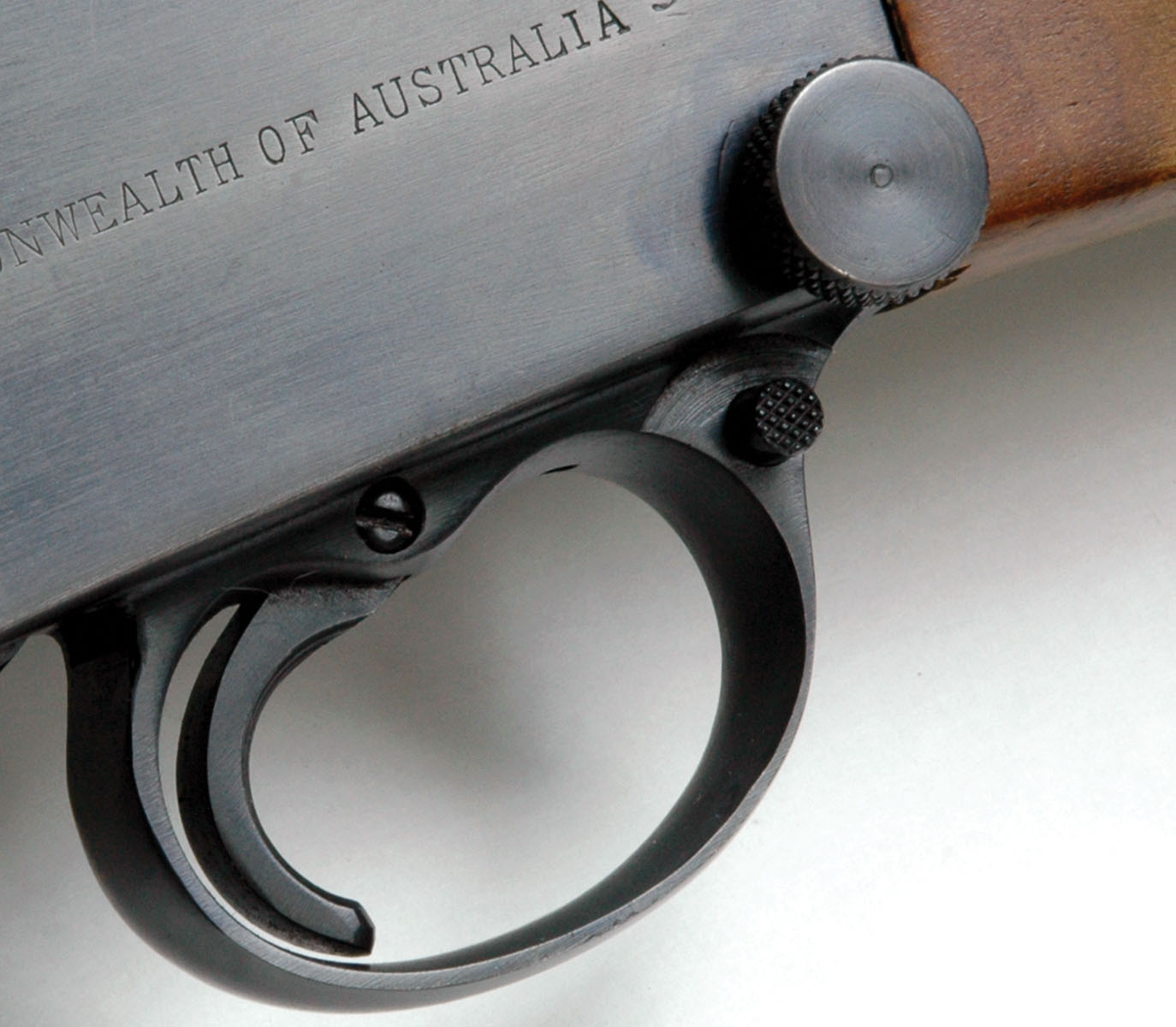
First came a few modifications to the Cadet action. If the action is subjected to pressures much higher than generated by the cartridges it was originally chambered for, primer flow into the firing pin hole of the breechblock can lock the action in its closed position. Should that happen, the only way to open the action is for one person to apply forward pressure to the underlever while another person uses a hammer and brass bar to pound on the top/front of the breechblock until the spent primer extrusion is sheared off. Reducing the diameter of the firing pin tip to .040 inch and installing a bushing in the breechblock, with its hole only slightly larger, eliminated that potential issue.
Installing a safety was Dave’s idea and he made all of its components. Pushing a transverse rod in the front of the trigger guard to the right cams a safety bar firmly against the trigger and prevents its movement. Pushing it to the left allows the trigger to be pulled. Spring ball detents discourage the safety from moving from either of its positions without being manually pushed. Careful honing produced a 34-ounce trigger pull with no creep or overtravel.
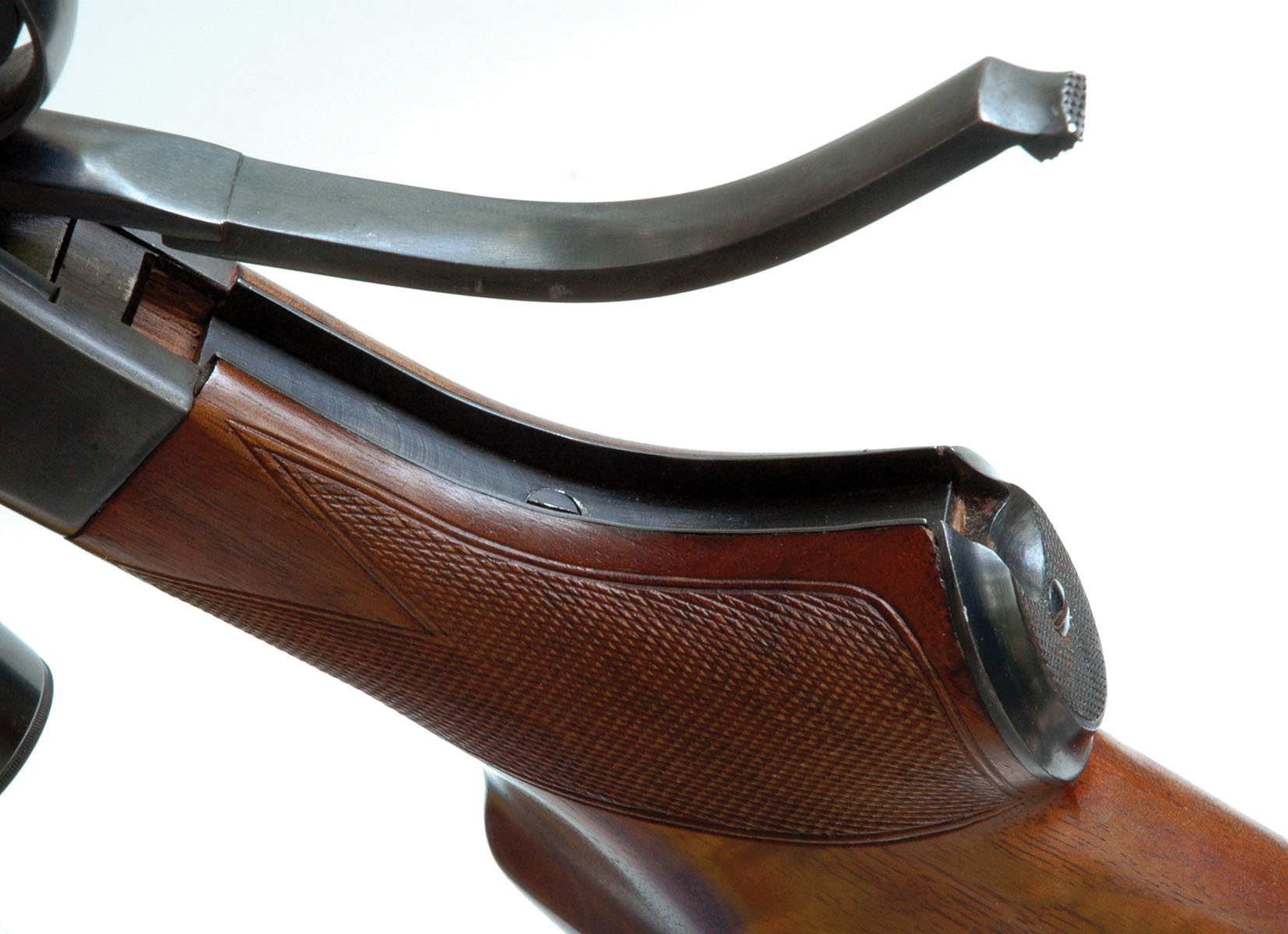
The original Martini Cadet rifle has a straight grip, and I wanted a curved grip. Talley machined a steel liner, inletted it into the front of the grip and staked it in place with wood screws. Then all but about 1.5 inches of the underlever was chopped off and a longer piece with a checkered thumb tab at its lower end was brazed onto the remaining stub. The new lever was shaped to fit precisely inside the liner with its front surface flush with the front of the grip of the stock. A checkered steel grip cap was relieved to accept the tab, and a light push on it starts the underlever on its way. It looks and feels as good as it is functional.
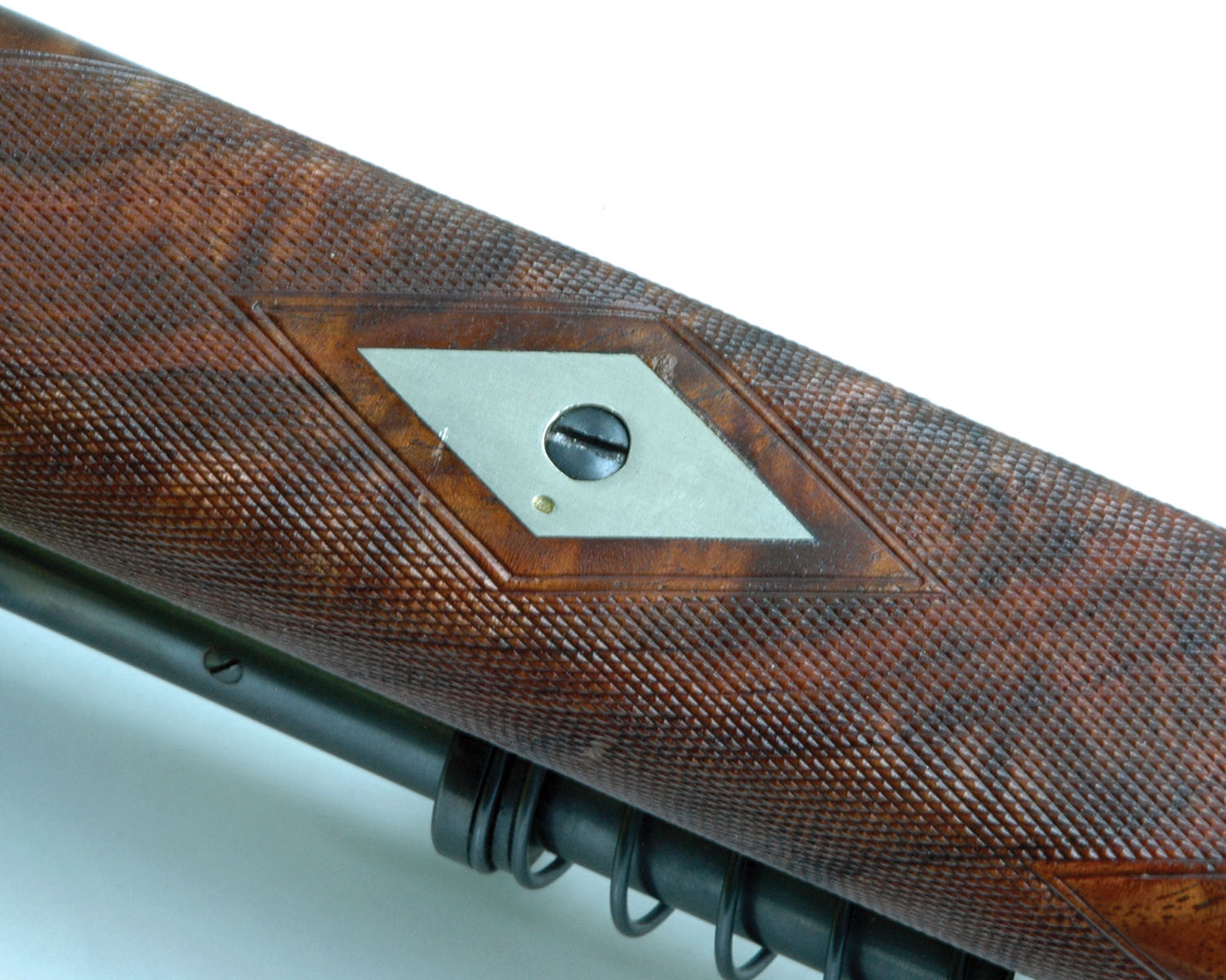
Accuracy sometimes suffered when the forearm of one of the old single-shot varmint rifles was attached to a light barrel. This is why many of them had heavy barrels. It is also why the forearm of the Ruger No. 1 is attached to a hangar extending from the receiver, rather than directly to the barrel. The forearm on my rifle would be attached to the barrel, so we went with a heavy, non-tapered contour with a diameter of .960 inch. Attachment is with a single screw with its head enclosed by a silver escutcheon. Made in Germany, the barrel is 24.5 inches long and has a 1:14 twist. After it was chambered with a standard 222 Remington reamer, a recess for the rim of the cartridge was cut into the breech face of the barrel.
Most of the old single-shot varmint rifles had target-style scopes attached to their barrels, and while they were still available from several companies, most were too large for a balanced look on a small rifle. The Unertl Varmint in 12x magnification with a 7⁄8-inch tube proved to be perfect. Even today, its optical quality will take your breath away. Talley machined a rib for the barrel and attached the scope to it. Even though the scope is mounted low on the rifle, its small ocular housing is positioned far enough toward the rear of the receiver to prevent interfering with loading a cartridge into the chamber or removing a fired case. The rib, the “disappearing” underlever and the beautiful stock are two details often commented on by someone who examines the rifle for the first time.
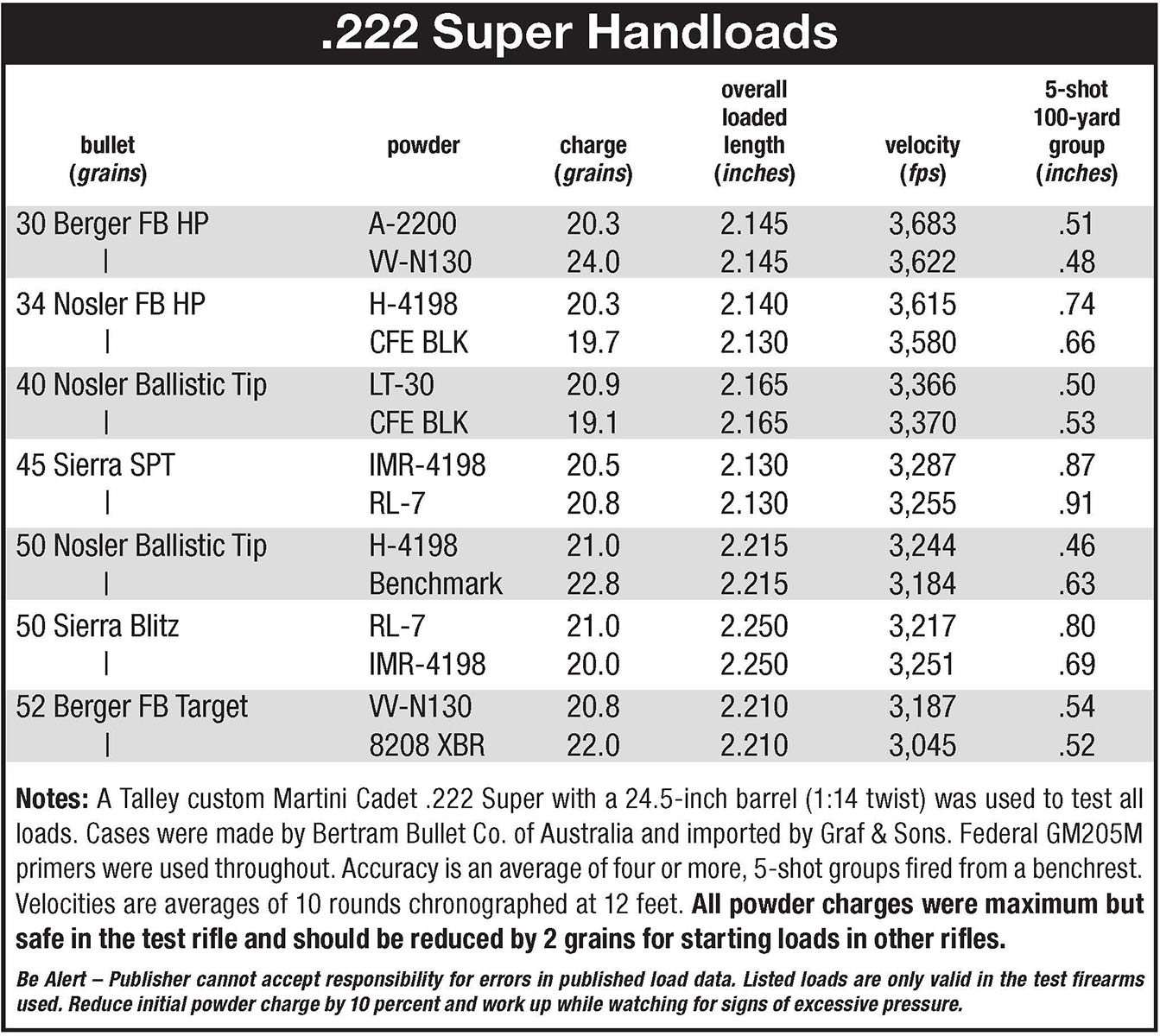
The stock and forearm are of nicely figured American walnut, both given a hand-rubbed oil finish and 24-line-per-inch checkering. The cheek rest of the stock is American Classic style. A Niedner-style checkered steel buttplate is a nice match for the grip cap. Quick-detachable sling swivel posts are fore and aft, with the front one also serving as an attachment point for a Harris folding bipod. While the rifle was being built, I was a bit concerned about how such a simple way of attaching wood to the barrel might have a negative effect on accuracy, but my fears were laid to rest when the very first five-shot group I fired with the completed rifle at 100 yards measured a very satisfying .552 inch. The handload consisted of the Sierra 50-grain Blitz seated atop 20 grains of IMR-4198. With scope, my rifle weighs 10 pounds, 5.3 ounces.
The action is quite strong for its size, but a barrel shank diameter of .659 inch limits it to cartridge cases with fairly small diameters. When one of those barrels was rechambered to 32 Special with its .421-inch body diameter, barrel shank wall thickness was reduced to .119 inch or so, and that’s not a big margin of safety. The 30-30 Winchester and 25-35 Winchester were also popular chamberings among American gunsmiths. A web search often turns up one of those rifles for sale, and the fact that I have never learned of problems can likely be attributed to fairly low chamber pressures to which those cartridges are commonly loaded.
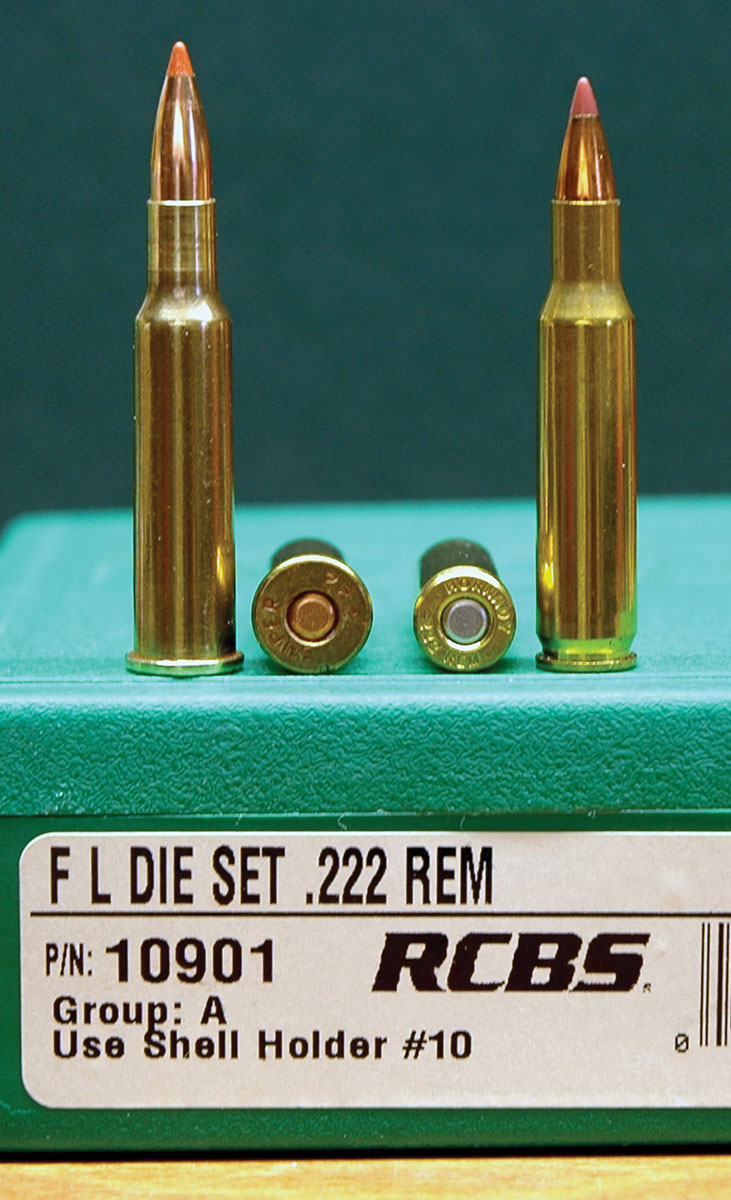
Some of the more popular chambering options both here and in Australia are the 22 Hornet, 22 K-Hornet, 218 Bee and 25-20 Winchester. The Bee was my initial choice, but just prior to ordering a chamber reamer, I learned that the Williams Gun Sight Company of Davison, Michigan, was importing a rimmed version of the 222 Remington case. Designed specifically for the Cadet action, no modification to its extractor was required. In addition to having more powder capacity than the 218 Bee, it seemed only fitting that I choose a cartridge designed in Australia for a rifle built around an action from that country. At the time, the case was being made by Super Cartridge Co. Pty. Ltd. of Maribyrnong, Victoria, Australia, and shooters there often called it the 222 Super. A 222 Remington die set works perfectly and the rim is a good fit for a 38 Special/357 Magnum shell holder.
The 222 Rimmed cases are now made by Bertram Bullet Co. Pty. Ltd. in Victoria, Australia, and imported by Graf & Sons of Mexico, Missouri, (grafs.com) and Huntington Die Specialties (huntingtons.com).
A change has been made. The flash hole of my 1970s cases is smaller than the American standard for the small rifle primer and about the same size as seen in the 6mm PPC case. The flash hole of cases made by Bertram is standard diameter and does not require a special decapping pin in the 222 Remington resizing die.
Due to a slightly thicker body wall, the 222 Super case is a bit stronger than the 222 Remington case, and that probably explains why those I bought back in the 1970s are still going strong. I have annealed their necks after each of four firings. But the thicker wall does reduce capacity a bit. When filled to the brim with water my old cases, as well as those recently acquired from Graf & Sons, hold an average of 26.4 grains. Respective average capacities of the 222 Remington cases from Remington, Nosler and Winchester are 27.2, 27.6 and 27.7 grains. While not a huge difference, it is enough to stay a bit below maximum powder charge weights published by various reliable sources for the 222 Remington. For long 222 Super case life, I stay about a grain below maximums for the 222 Remington for about a 100 fps reduction in velocity with a 50-grain bullet.
If I were building a custom varmint rifle on the Cadet action today, I would seriously consider one change. Soon after the actions started arriving in the U.S., gunsmith Robert Snapp, who for many years operated out of Snapp’s Gunshop in Clare, Michigan, started performing custom work on them. A drop-in rimless extractor made by him for the standard 222 Remington replaced the original extractor. I bought one after my rifle was completed, but since its installation would have required shortening the breech end of the barrel of my rifle for removal of the rim recess, I stayed with the rimmed case. I gave the extractor to a friend and it worked perfectly in his new varmint rifle.
Robert Snapp passed away in 2019, but the same extractor is available from gunsmith Peter Kay out of his shop in New South Wales, Australia, (Telephone No. 02-6882-0827). One of those extractors opens the door to numerous other cartridge possibilities for the Cadet action. They include all cartridges in the 222 Remington family such as 17 Remington Fireball, 17 Remington, 221 Fireball, 223 Remington, 223 Remington Magnum and the European 5.6x50mm Magnum. Then we have wildcats such as the 6x45mm and 7mm TCU on the 223 Remington case and the 6x47mm on the 222 Remington Magnum case.