

Rifle Talk
Browning-Turnbull BL-22
column By: Lee J. Hoots | October, 20
Shooters have never had it so good in that new handguns, rifles and cartridges seem to pop up on a regular basis these days. Not a year goes by without one, two or more cartridges being heralded as the “next best thing” since the previous “best thing,” even if it provides only a minor ballistic enhancement over its predecessors. This is all well and good, but it wasn’t always so easy. Few early rifles, or handguns for that matter, have come before the development of, or at least the inspiration for, a cartridge design. After all, what good is a gun without something to shoot from it?
In the early days of ammunition design, it sometimes took long years before a new cartridge was finalized and made available for public consumption. Even the 22 Long Rifle, the most purchased and most useful rimfire target and plinking/small-game cartridge in the world, had several predecessors that, over time, became antiquated and more or less forgotten or ignored. The same can be said for various and sundry rifles like the lever-action Browning BL-22. As such, it seems worthwhile to briefly highlight the history of important .22 rimfire cartridges. (Those .22-caliber rimfire cartridges that quickly fell by the wayside are not noted due to space.)
It is widely known that Smith & Wesson introduced the first successful .22-caliber rimfire cartridge. It was first called the Number 1, but rimfire enthusiasts know it today as the 22 Short. It was first chambered in the “tip-up” Number One, seven-shot revolver first produced around 1857, with other variants following (Standard Catalog of Smith & Wesson, Supica and Nahas, 2001).

The Number One revolver and its derivatives may not have been developed, however, if not for the fertile mind of Frenchman Louis-Nicolas Flobert (1819-1894), a firearms/cartridge designer who manufactured “gallery guns.” Sometime in the mid-1840s (or 1830s, references differ), Flobert’s 22 BB Cap (bulleted breech cap) cartridge was devised and recognized as the first self-contained metallic cartridge. It consisted of a percussion cap stuffed with a lead ball. Flobert’s CB Cap cartridge fitted with a conical bullet followed. It is said that Flobert continued to produce ammunition until 1847.
Following the 22 Short, the 22 Long cartridge showed up circa 1871. According to author Frank Barnes (Cartridges of the World, 1965, first edition), the 22 Long “in black powder loading had a slightly higher velocity than the 22 Short or Long Rifle, but this was not true of the later smokeless loads… The 22 Long is not as accurate as the Short or Long Rifle and has really outlived any useful purpose it might have had.”
When the 22 Long Rifle showed up in the 1880s (apparently a cooperative development between J. Stevens Arms & Tool and Union Metallic Cartridge Company), riflemen around the world never looked back. Fortunately, rimfire manufacturers occasionally provide limited runs of CB Cap, 22 Short, Long and 22 Winchester Rimfire (WRF) ammunition. This latter cartridge went more or less ignored once the 22 Winchester Magnum was introduced 60-some years ago.
As it goes with cartridges, so it goes with rifles, but listing all rimfire long guns would require a book, dozens of which have already been published. Nonetheless, it’s worth noting the Marlin 1891 was the very first lever-action rifle chambered to handle the 22 Short, 22 Long and the 22 Long Rifle. It was a breakthrough design, and the beginning of all sorts of leverguns that could reliably cycle all three cartridges. One such rifle is the Browning BL-22, first introduced in 1969. If I have my facts right, it was the first Browning gun made in Japan by Miroku. Several variants have come and gone, including a lineup of BL-17s, BL-22 Classics with high-grade walnut and rifles with maple or laminated stocks, to name but a few. Current models include the following: Micro Midas with a 16.25-inch barrel, Grade I with a 20-inch barrel, engraved Grade II with a 20-inch barrel and cut checkering, Field Grade I with a nickel finish and 20-inch barrel, engraved Field Grade II with a 20-inch barrel and an engraved Field Grade Octagon version with a 24-inch barrel.
When the BL-22 was brought to market, it had to stand up to many existing lever-action rimfire rifles, such as the Marlin 39A and the Winchester 250 Deluxe, not to ignore a number of bolt-action repeaters and other leverguns. The Browning, however, has remained in production for more than 50 years. It has obviously stood the test of time.
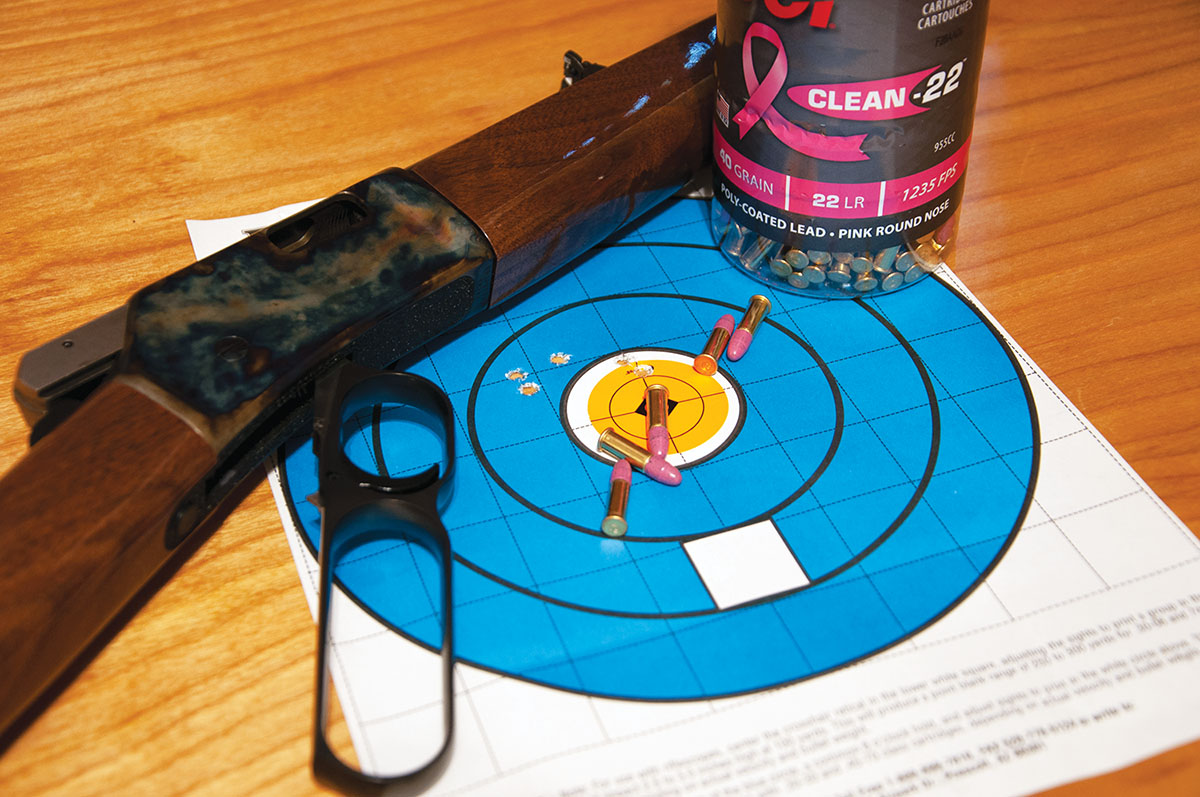
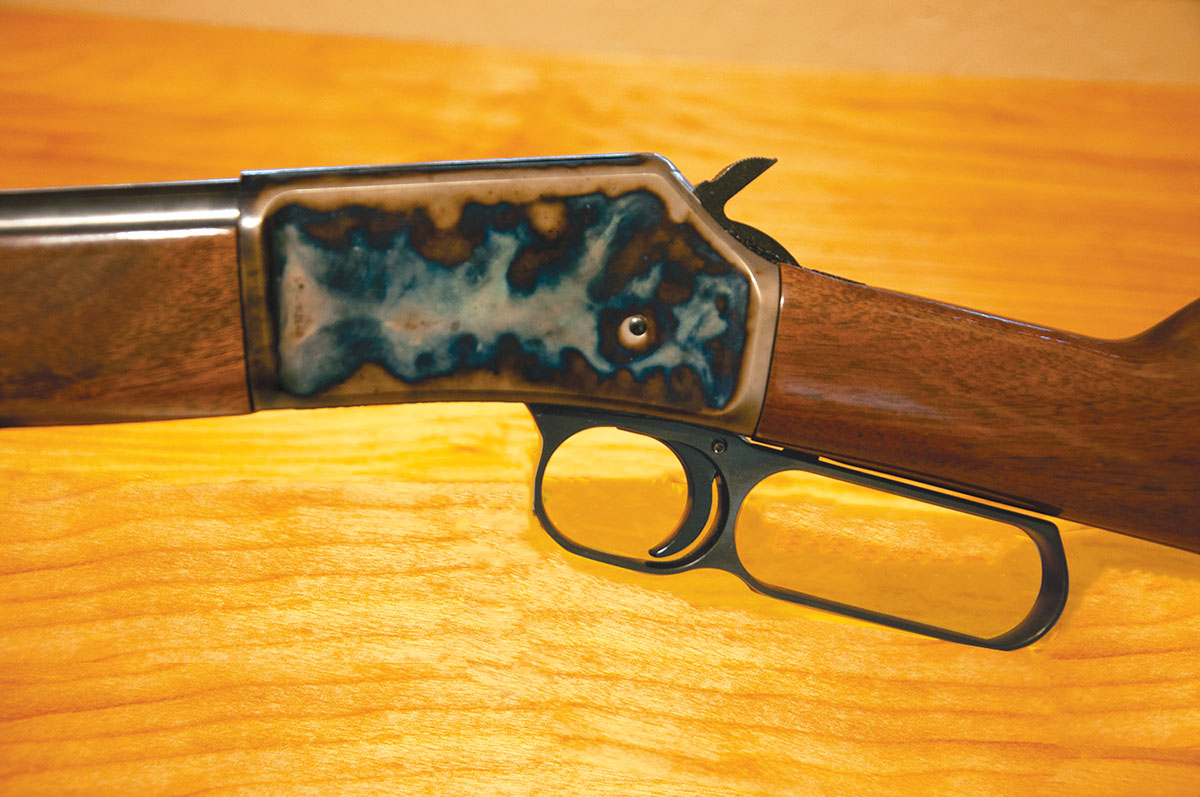
BL-22s I have seen in the past were all quite attractive (one exception being laminated stocks), but the rifle on hand came with a twist. Its receiver has been case hardened by Turnbull Restoration Company (turnbull restoration.com), which for some time now has been spiffing up otherwise “normal” pistols and rifles, and then selling them to consumers. I have witnessed and occasionally shot other BL-22s, and while Browning has always provided a good-looking product, the Turnbull treatment provides a touch of old-school class. Starting with a Grade I rifle, Turnbull “color case harden[s] the receiver with our signature bone charcoal methods, imparting the look of an instant classic.” Note the good-looking result in the photos.
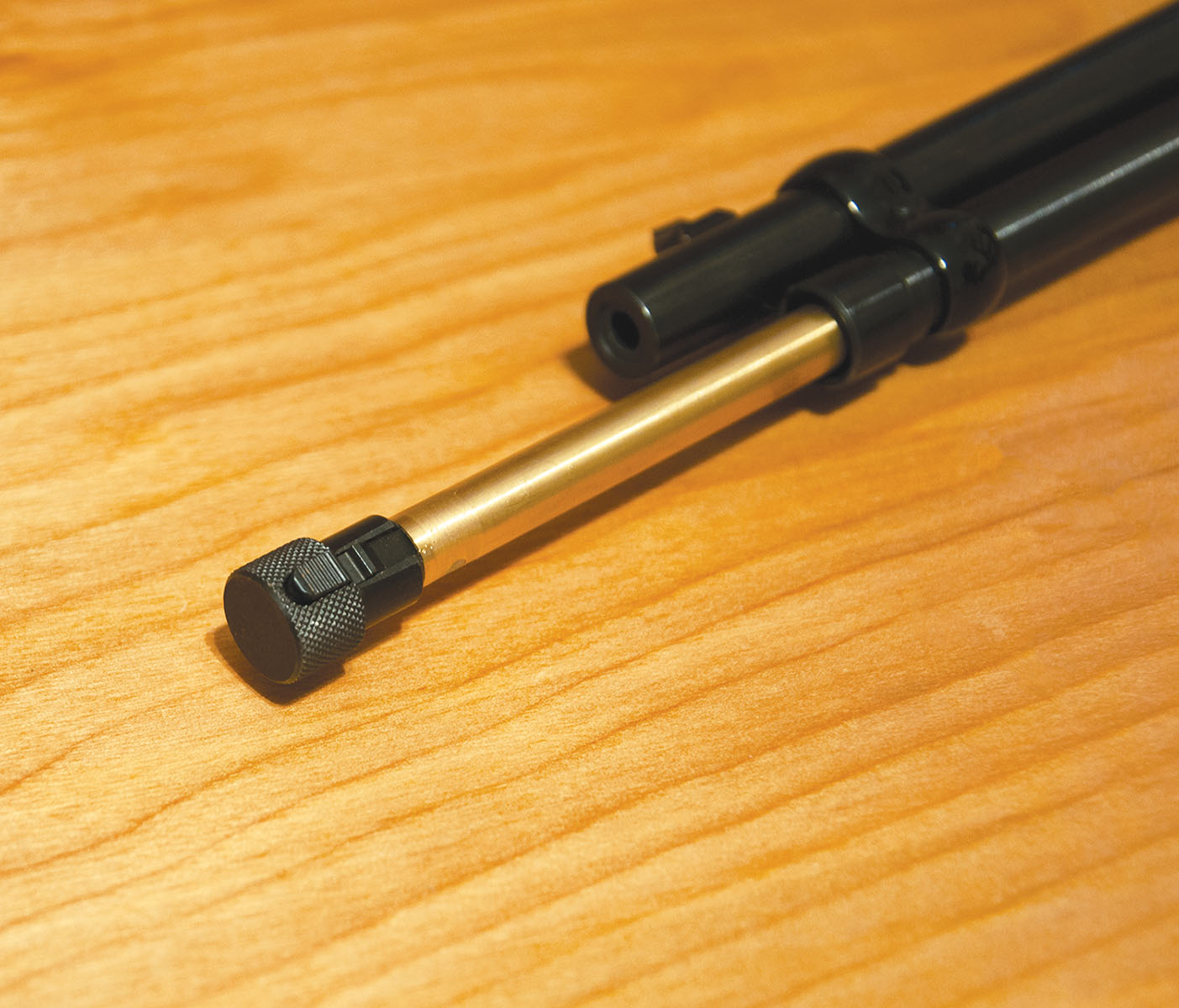
From there, the BL-22 is all Browning. It features the standard 33-degree lever throw, a 20-inch barrel and a full-length tube magazine that reliably cycles 22 Short, 22 Long and 22 Long Rifle loads interchangeably. I have shot this rifle only sparingly, and due to a lack of 22 Shorts and 22 Longs (not readily available in my neck of the Arizona highlands), it has only cycled 22 Long Rifle ammunition. These include dated Winchester Super-X Power-Point high velocity 40-grain hollowpoint loads with a listed velocity of 1,280 feet per second, 40-grain copper roundnose CCI Mini Mag loads (1,235 fps listed) and new polymer-coated 40-grain CCI Clean-22 ammunition (1,235 fps listed).
While testing loads at 50 yards, it was not a surprise to find that the rifle was a bit fickle. From experience, the Winchester loads either shoot “lights out” or all over the place; groups from this rifle were larger than I hoped. So too were the CCI Mini-Mag loads, but less so. CCI’s Clean-22, however, would hold tighter groups capable of minute-of-cottontail. I suspect the long magazine tube vibrates enough to influence group size, and that vibration probably changes as the tube grows empty. Conversely, well made bolt-action rimfire rifles usually vibrate more consistently. Accuracy with this rifle is dependent on the ammunition, as is the case of all guns.
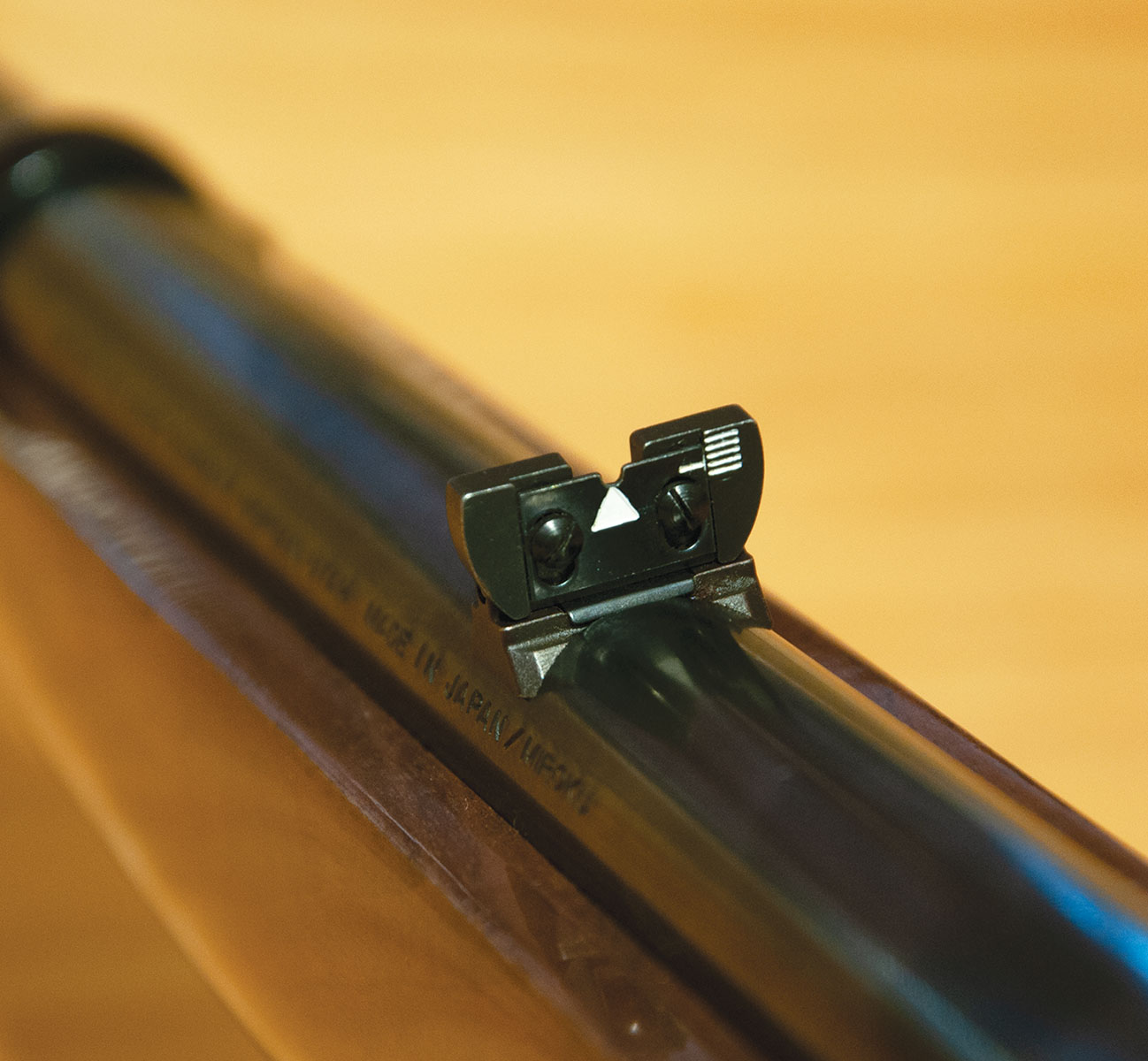
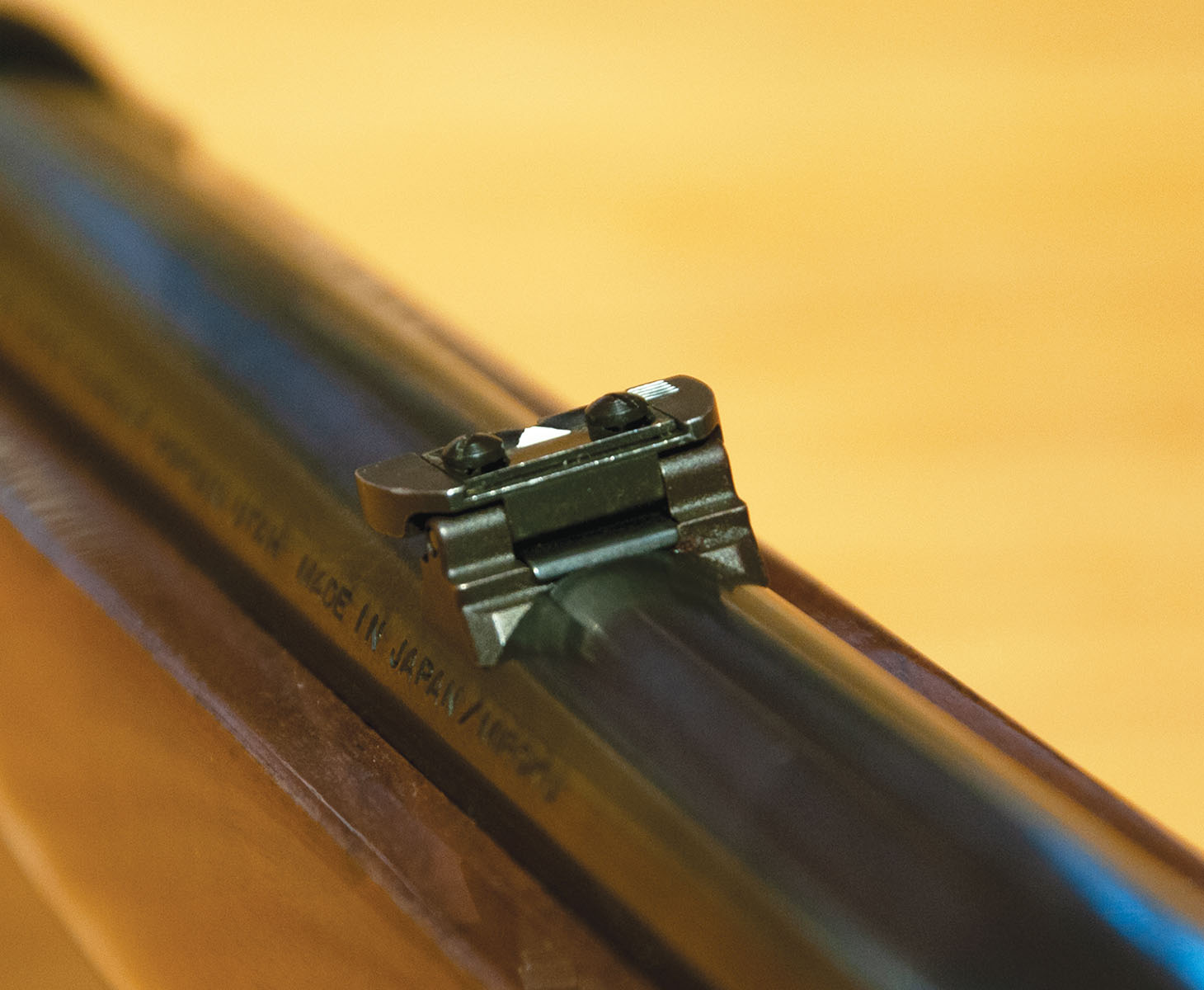
The Browning BL-22 was never made to compete with bolt actions. Instead it was offered as a classy rifle that would attract the eye of discriminating rimfire enthusiasts with a bent for rifles that are operated with the flick of a finger lever. If I could find one fault with the rifle, it would be the teeny, tiny rear flip-up sight. The one on the test rifle easily falls forward just by tipping the muzzle downward, a position it will often be carried in. As such, this rifle is destined for a blued Skinner Rimfire sight (skinnersights.com).