Lever-Action Fun
Versaile Handloads for Small Game
feature By: John Haviland | October, 20
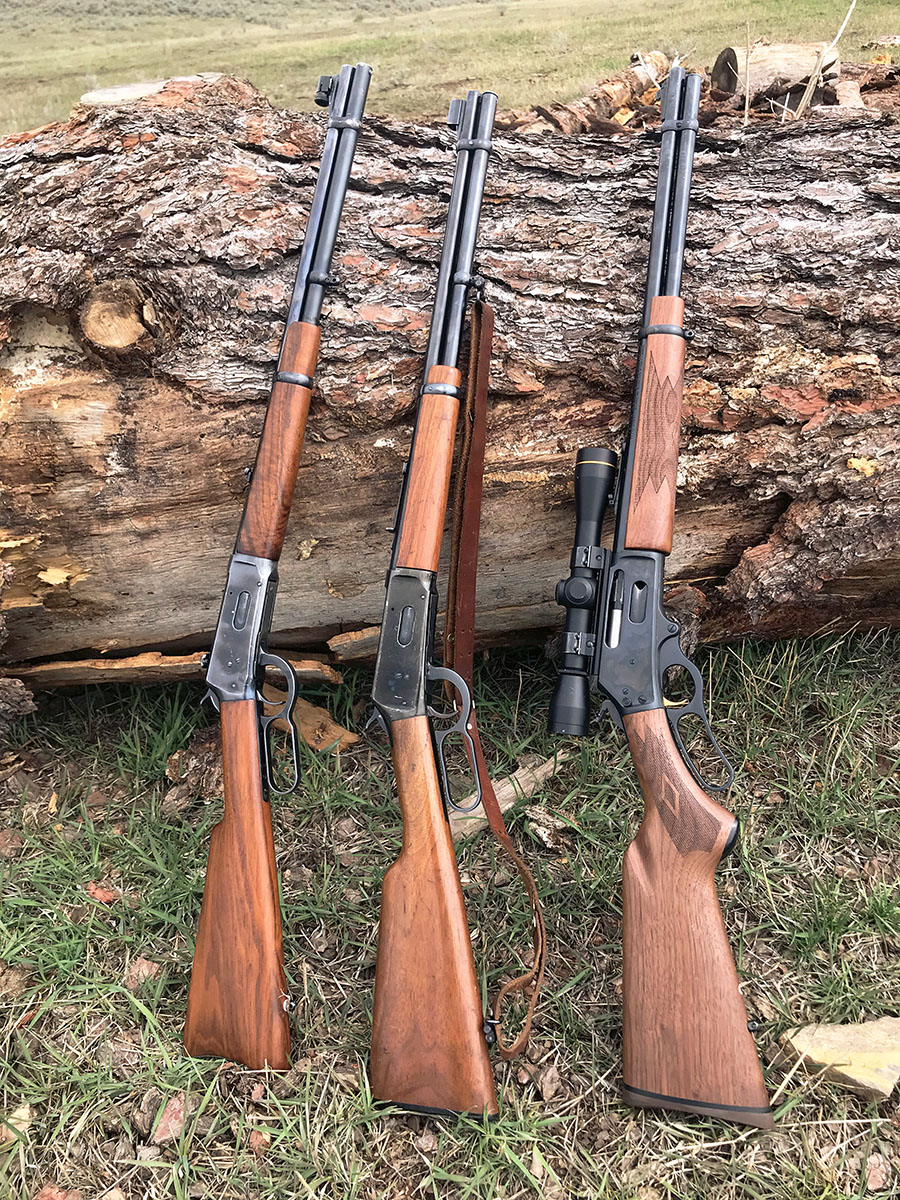
Some homework may be required to develop a suitable small-game load with a lighter-weight bullet for lever-action rifles. Keep in mind, a light bullet fired at a relatively higher velocity most likely hits higher than standard-weight bullets. A rifle with a rear aperture sight with plenty of vertical adjustment, or a scope, can easily be adjusted to compensate for that difference. Many older lever-action guns came with a rear sight that provided multiple sighting options, such as the Winchester three-leaf “express” or the Lyman Model 21 rear aperture sight on one of my Winchester Model 94 carbines. However, ordinary open sights may not have enough adjustment. Installing a taller front sight does lower bullet impact. But it is simpler to juggle bullet weight and also powder charge weight that can alter trajectory to mesh with open sights.
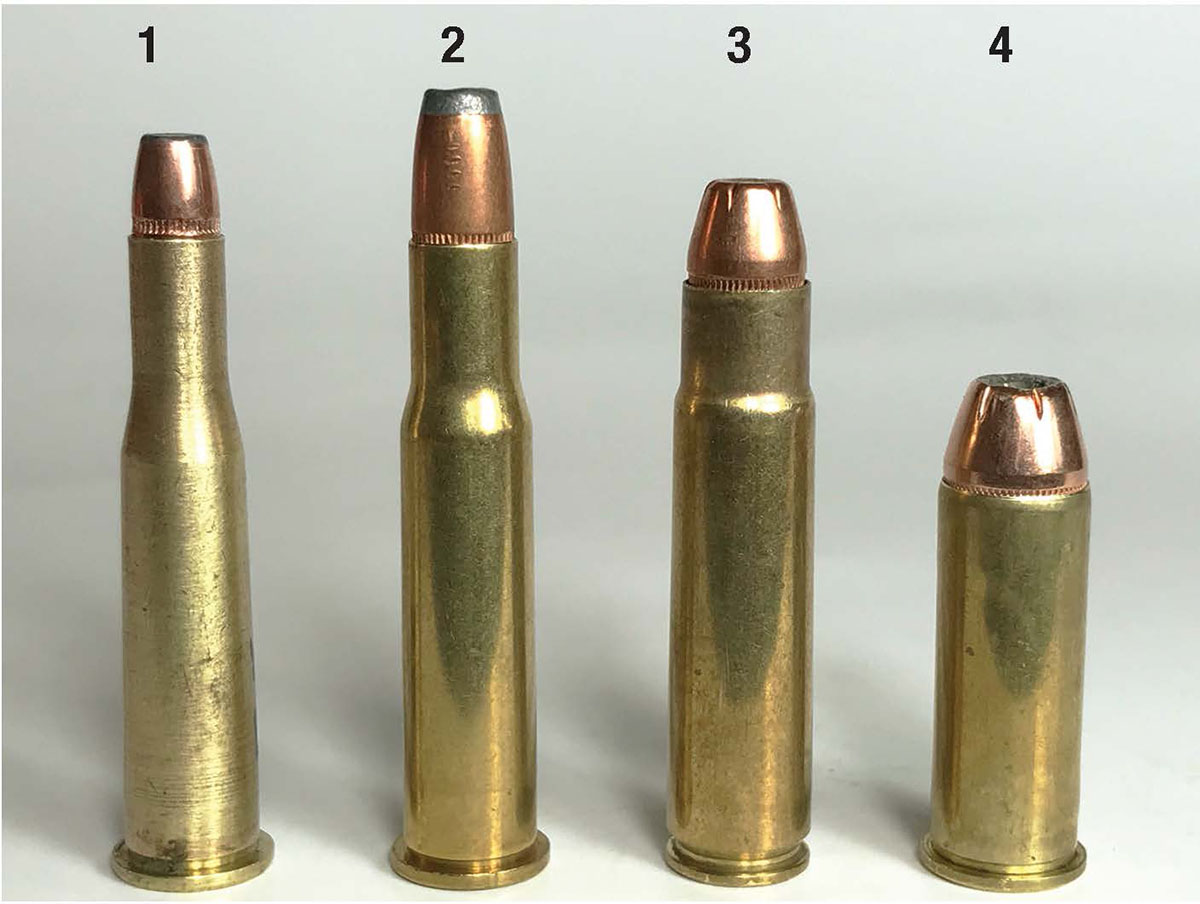
Let’s discuss handloading four cartridges linked to lever-action guns to see how they can be kept in the field and shooting all year.
25-35 Winchester
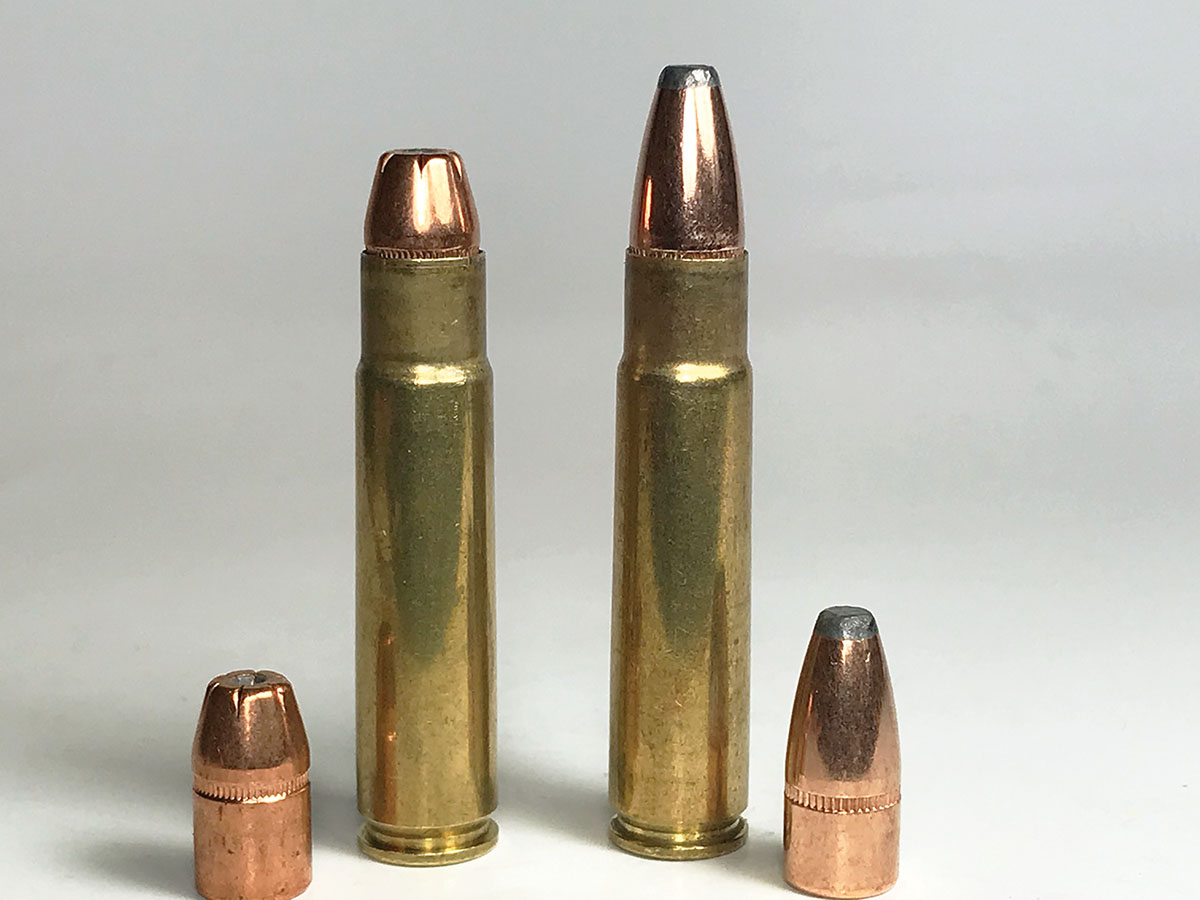
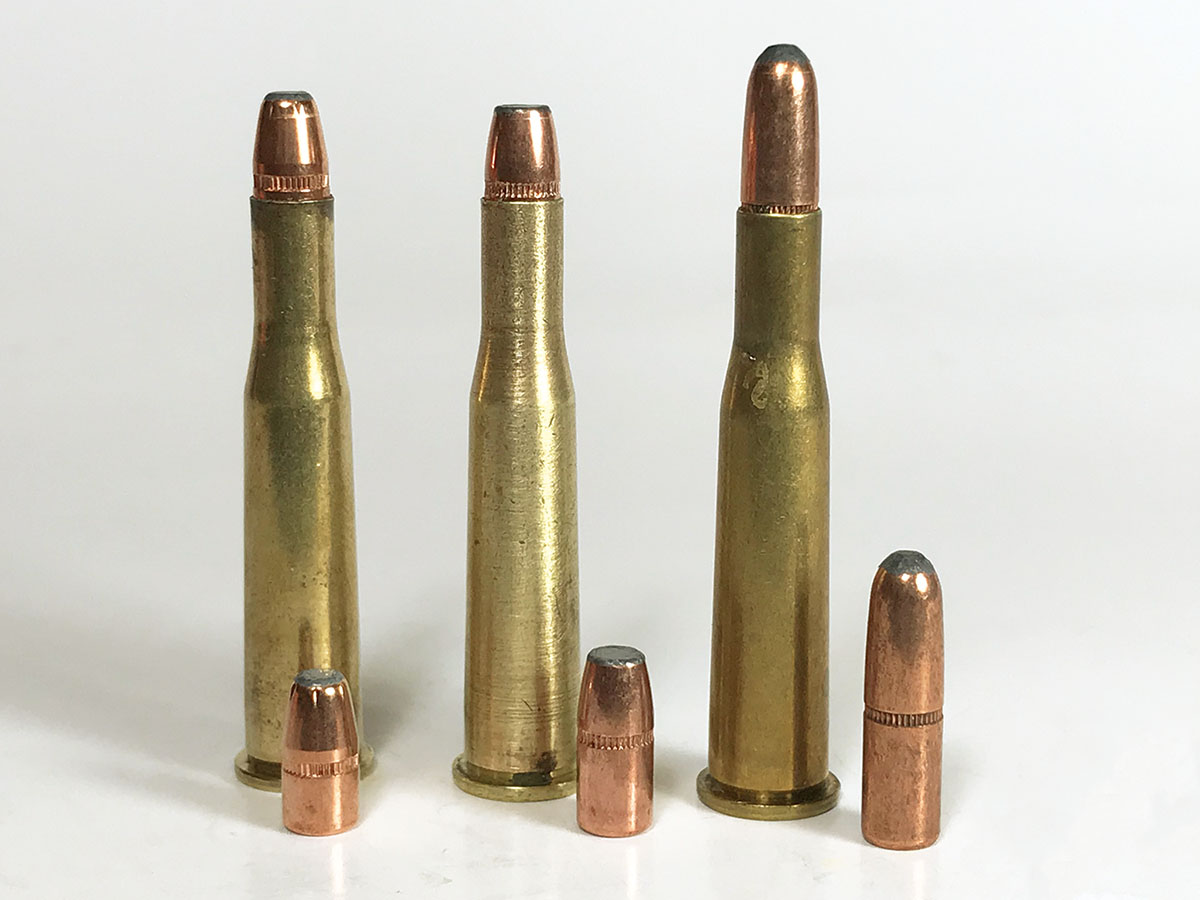
The rifle, though, is shot mostly at ground squirrels (gophers), and lighter bullets like the Hornady 60-grain FP and Speer 75-grain FN work best for that. These bullets are mainly intended for reloading the 25-20 Winchester, but they shoot great when loaded in the 25-35. I don’t crimp case mouths in the crimping cannelure of either bullet because recoil is so light the bullets did not move during recoil. Instead, both bullets are seated so most of their shank is inside the case neck. Both bullets are way short of contacting the start of the rifling in the Model 1894. Yet cartridges easily cycle from the magazine, chamber smoothly and produce good accuracy.
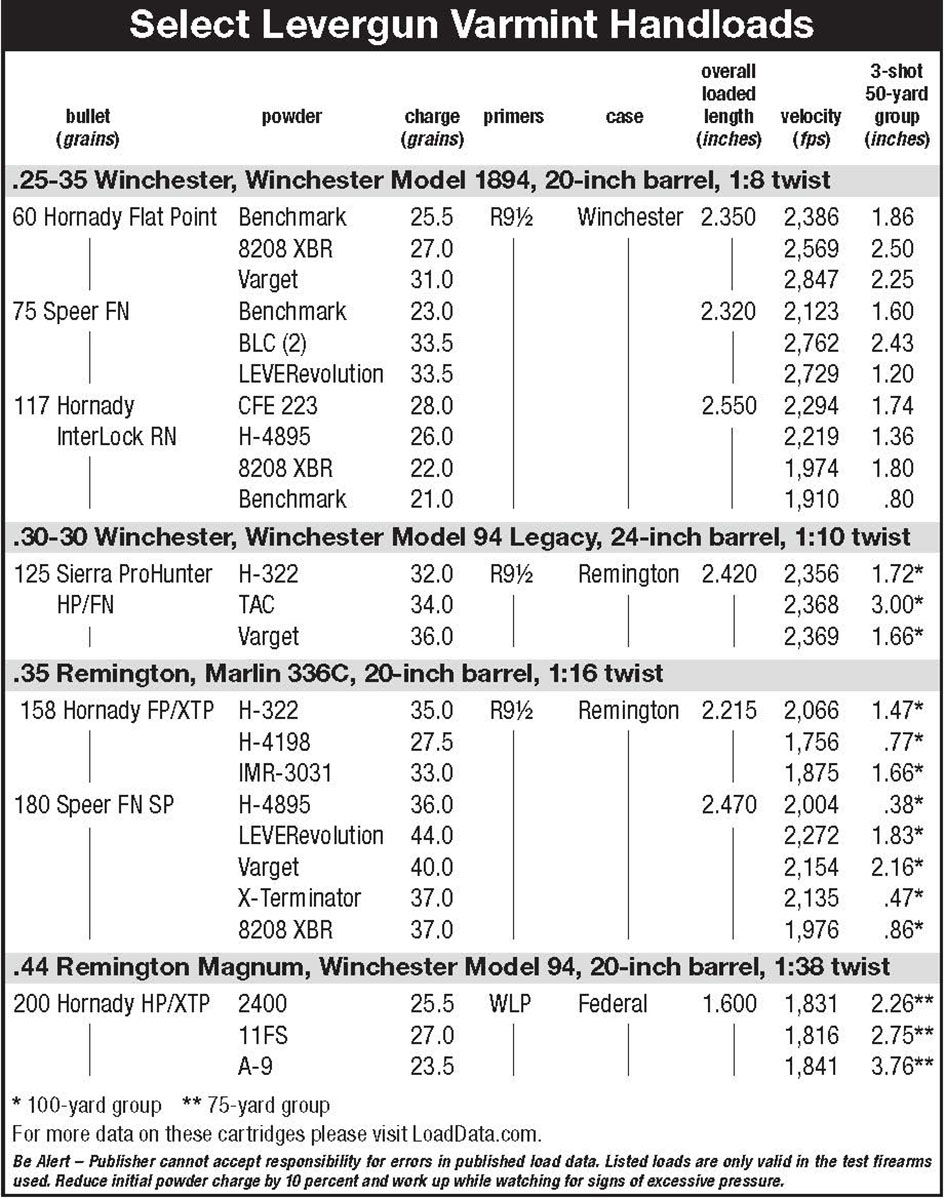
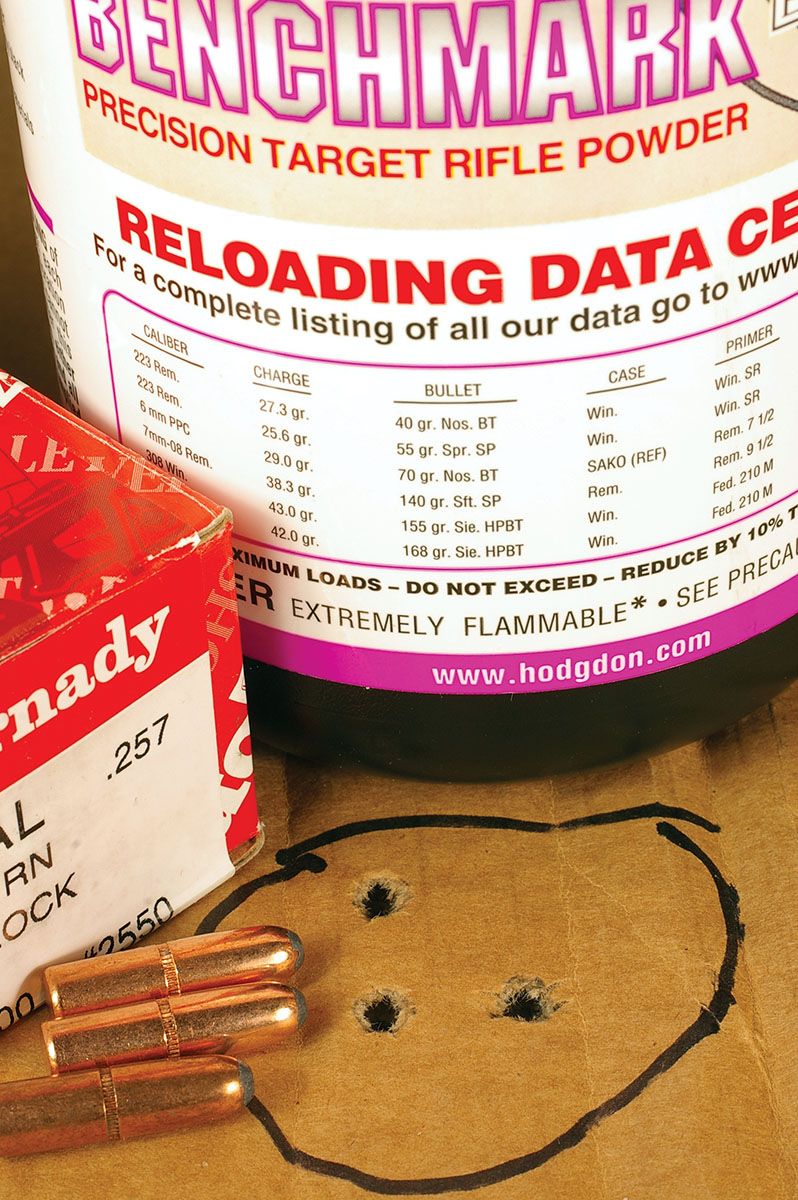
The Hornady 60-grain bullet shoots accurately with powders with burn rates from Benchmark on the fast side to IMR-4320 on the slow end. A favorite handload is 31.0 grains of Varget that fires the 60-grain bullet at 2,847 fps from the carbine’s 20-inch barrel. One summer day, I shot about a hundred of these handloads that sent gophers winging their way upward to that clover field in the sky.
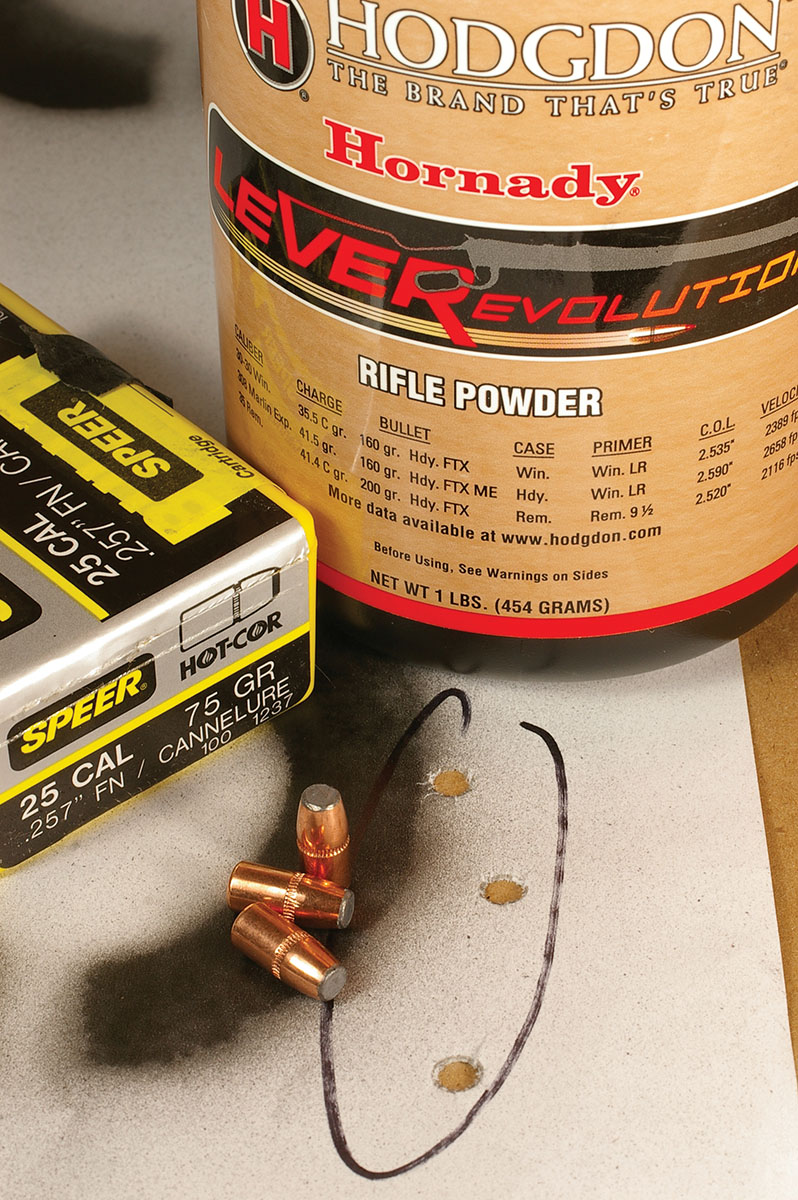
A convenient feature is how the 1894’s open sights mesh with the Speer bullet/LEVERevolution handload and Hornady 117-grain bullet and CFE 223. Hornady bullets hit right on aim at 50 yards with the rear sight set on the third notch up from the bottom of the elevator. Lowering the rear sight one step put the Speer bullet right on at 50 yards. Incidentally, each step on the elevator shifted bullet impact 3 inches vertically.
30-30 Winchester
I shoot more 30-30s than any other cartridge. Most of the shooting is with 150-grain plain-base bullets cast from an RCBS .30-150-CM mould and handloaded with 7.0 grains of Red Dot powder. Velocity is a relatively slow 1,285 fps from the 24-inch barrel of a Winchester Model 94 Legacy. One evening this past summer, I shot about 100 rounds, one right after the other. It’s fun to shoot ground squirrels with the cast bullets. Recoil is so mild I can see the bullets hit, and alas, miss. Bullets do tend to ricochet off the ground, so a tall backstop is essential.
The Nikon 1.5-4.5x scope on the Legacy has plenty of elevation adjustment to compensate for the slow bullet’s bowed trajectory. A Lyman Model 21 aperture rear sight on a Model 94 carbine also contains plenty of elevation correction, as it is nicknamed “Climbing Lyman” for a reason. The rear sight on another Model 94 carbine, though, does not provide anywhere near enough elevation adjustment to place the cast bullets on a target.
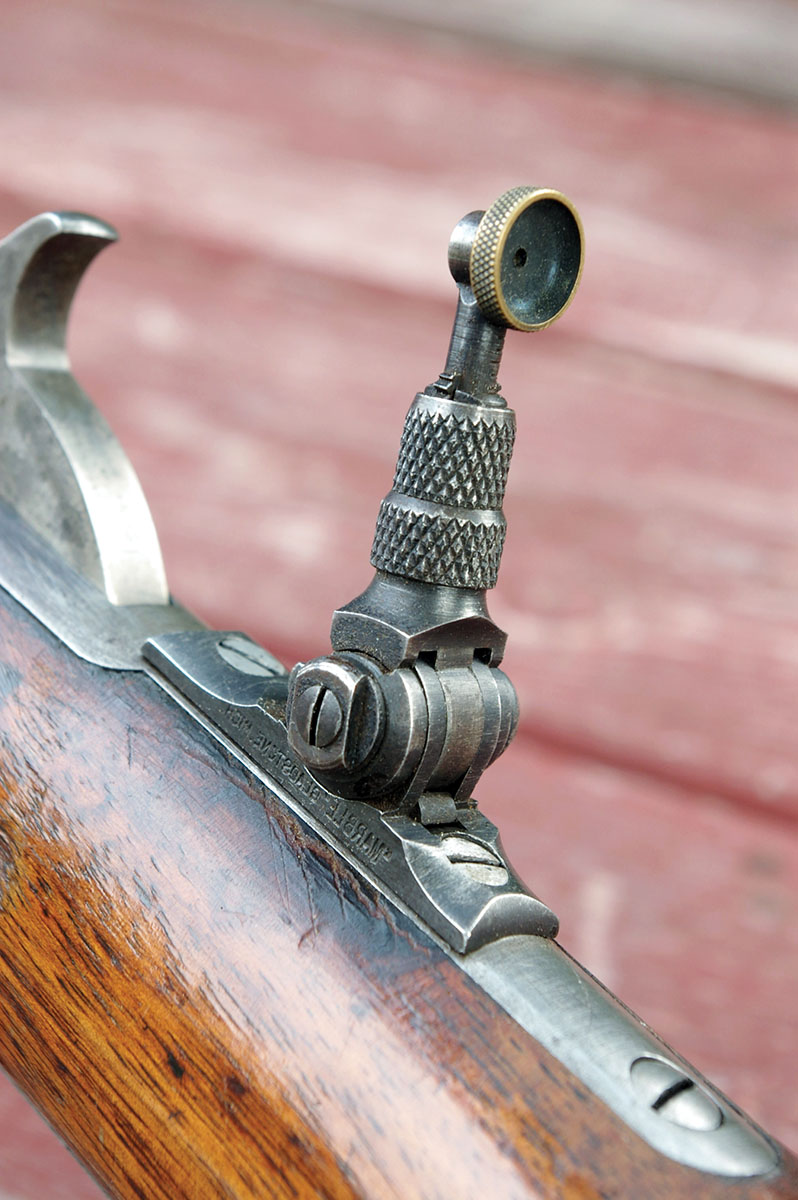
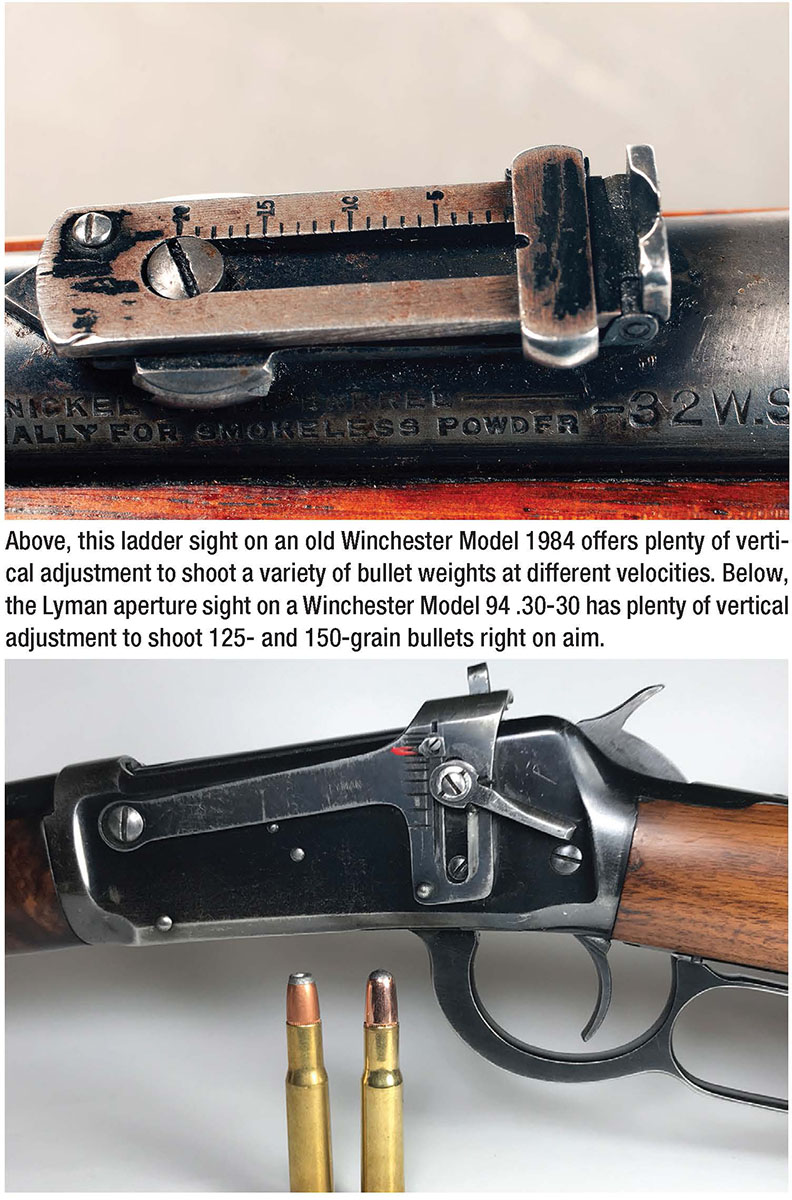
The Lyman aperture sight may have been the original rear sight on the Winchester as it came from the factory in 1936. Winchester also included a three-leaf express rear sight on many of its lever-action guns. Such iron sights with several sight options were common on rifles and carbines chambered in versatile cartridges like the 30-30 that were shot with different ammunition for a variety of game.
Out to 100 yards and some, the Legacy shoots Sierra ProHunter bullets accurately enough to knock the slim target of a ground squirrel off its mound. A ground squirrel running for its hole adds some challenge. Just like shooting a grouse on the wing, I start the rifle swinging from behind the gopher, swing through and pull the trigger as the crosshairs go past its nose. If I stutter on my swing and miss, additional shots are quickly ready to fire with the “click-slick” of the lever.
This past spring a few drifts of winter snow remained around the edges of a hayfield. Gophers running across the snow made irresistible targets. I walked into the field with a pocket full of 30-30 cartridges. Shots were 40 to 60 yards, and I connected on quite a few, or at least kicked snow in a gopher’s face.
I’ve shot spitzer bullets in the 30-30 in belief their trajectory was significantly flatter than flatnose or roundnose bullets. The capability of several fast follow-up shots was lost shooting these pointed bullets, because only one cartridge can be loaded in the magazine due to the danger of a bullet point setting off the primer of the cartridge in front of it in the magazine during recoil. Spitzer bullets do produce an ever so slightly flatter trajectory than blunt-nose bullets. Firing Sierra 125-grain HP/FN and 125-grain spitzer bullets at the same velocity, the pointed bullets drop half an inch less at 150 yards and 2 inches less at 200 yards than the flatnose bullets.
35 Remington
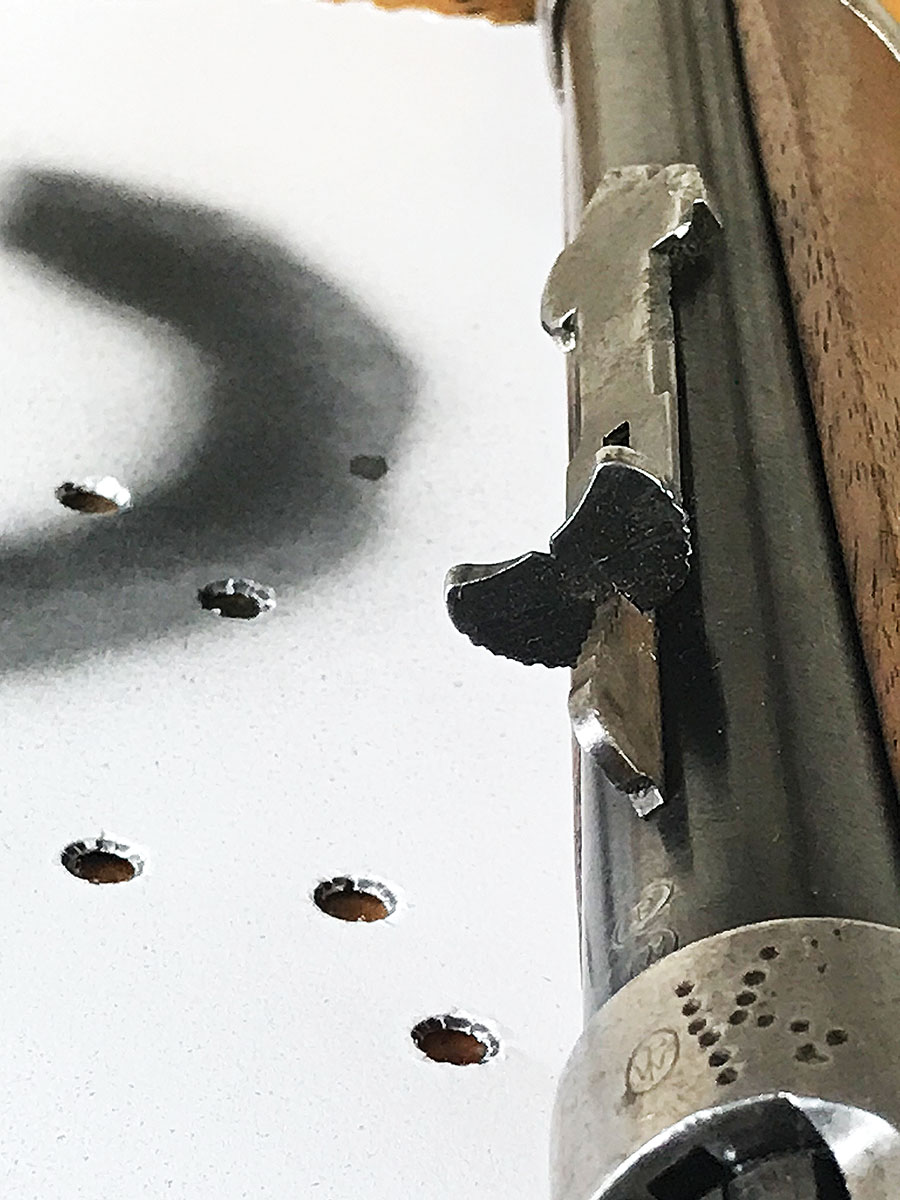
Lighter-weight bullets originally intended for handguns produce about a third less recoil than the heavier bullets. It might seem like I’m overly sensitive to recoil. The real reason, though, is gentle recoil allows me to see my hits through the Marlin’s 4x scope.
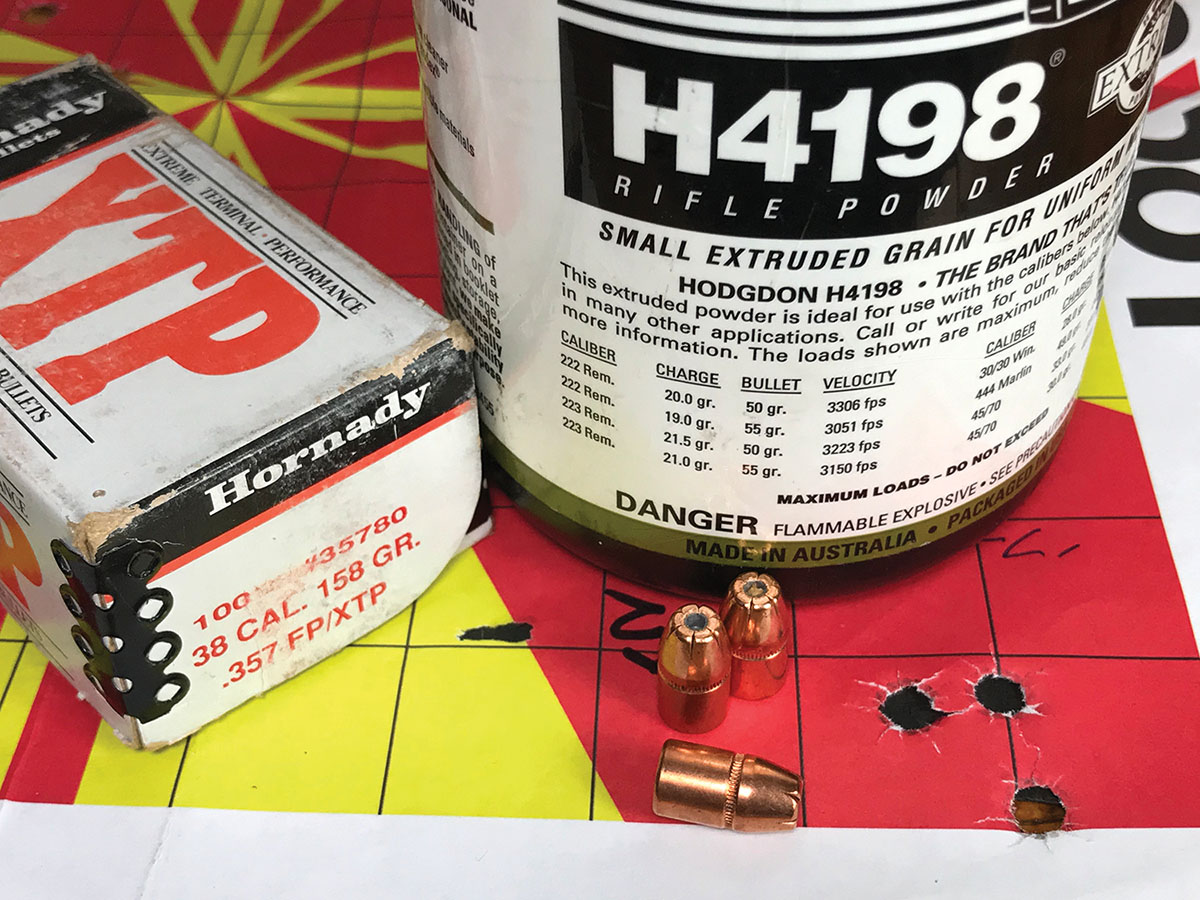
Hornady 158-grain FP/XTP bullets started out at 1,800 fps and hitting right on the money at 100 yards drop 5 inches by the time they plow through the air to reach 150 yards. That works out, as that’s about as far as I can clearly see a gopher through the scope. I might shoot 50 of these loads during an afternoon. The Marlin’s thick barrel takes quite a few shots to heat up and I keep firing and enjoying working the lever.
The Marlin 336 has dismissed the perception lever-action rifles are capable of mediocre accuracy, at best. The Marlin’s good accuracy may be a fluke. But that luck appears time after time. For example, three out of the five loads for the Speer 180-grain bullet listed in the load table grouped under an inch, and two loads with Hornady 158-grain FP/XTP bullets grouped in about 1.5 inches and one load under an inch.
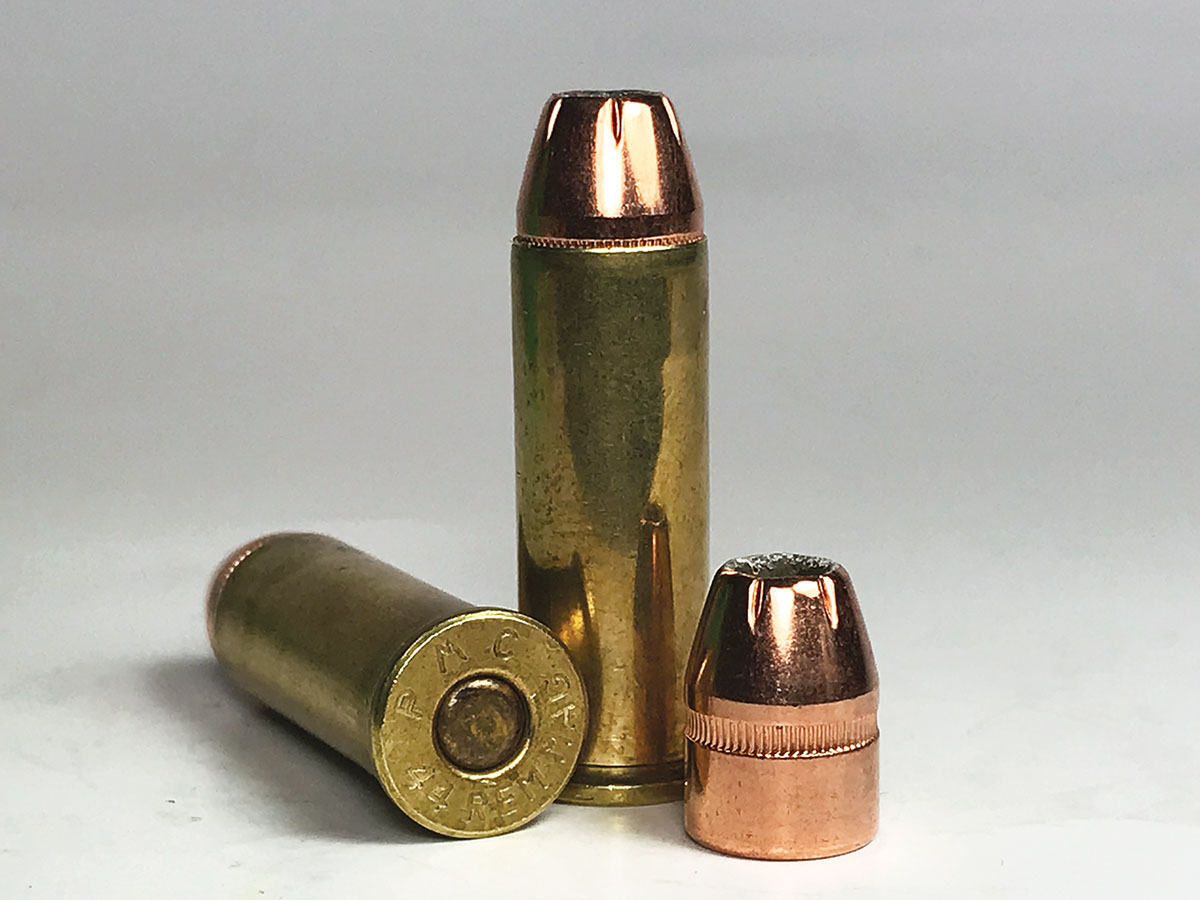
44 Magnum
Over the last few years, the open sights on my Winchester Model 94 .44 Magnum seem to appear somewhat blurry. Vanity does not allow conceding to the creep of age. So I keep my shots within about 75 yards and carry on.
Average extreme spread of velocity was 33 fps for the Hornady 200-grain bullets shot with the three powders listed in the load table. Accurate 11FS’s extreme spread was 15 fps. This powder is similar to Winchester 296, but with the addition of a flash-suppressant.
The Winchester balances the scale at a candy bar’s weight under 6 pounds. Recoil of the 200-grain bullets is a bit sharp due to the carbine’s plastic buttplate. But I’m game for 30 shots during an outing.
Last summer the rifle was carried along on a fishing trip to a creek in the mountains. Whistles of rockchuck marmots came from the hill above. I leaned my flyrod against a tree and walked directly back to the truck to fetch the .44. Up through the rocks and trees I crept, stalking the marmots like mule deer. A rockchuck sat sunning itself on a boulder and the .44 knocked it off its perch. I shot two more before the loud report of the shots sent the rest into hiding. I traded the .44 for my flyrod and returned to the mundane task of fishing.
Load development for the four cartridges discussed has kept them in the field and shooting all year. Working the lever to cycle their actions to bring another cartridge into play is a bonus.