Nosler's Ballistic Tip Varmint
Loads for Woodchuck and Prairie Dogs
feature By: Phil Massaro | October, 20
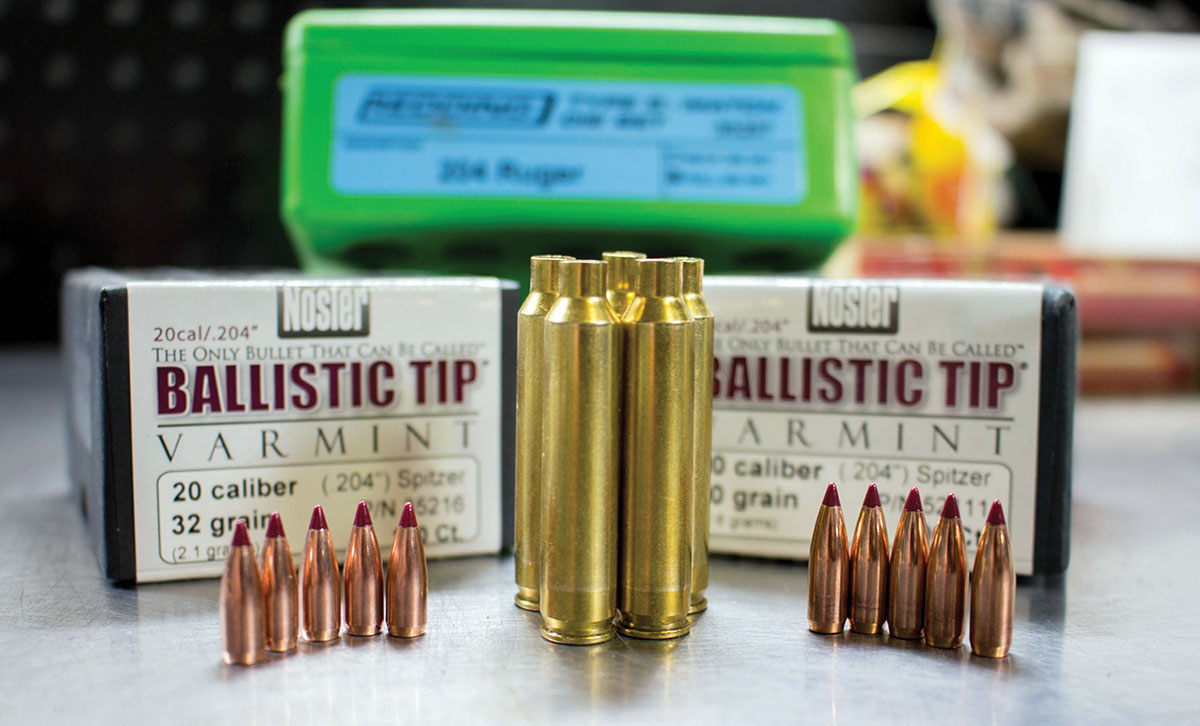
John Nosler was an avid varmint hunter and had a soft spot for the 22-250 Remington. He used varmint hunting as a great means of keeping sharp for the big-game seasons. Building on the success of his still fantastic Partition bullet, which solved so many problems for the big-game hunter, Nosler began working on a cup-and-core design focused on accuracy. His impact extrusion process revolutionized bullet manufacturing, and John soon had 1965’s Zipedo bullet. Then he implemented the technique for the Partition in 1967, finally releasing the Solid Base bullet in 1972. Shortly thereafter, his excellent bullets became available to those who didn’t handload their own ammunition, when in 1974 Federal Cartridge Company included Nosler’s bullets in its Premium line. However, 1984 saw a huge addition to the Nosler lineup, the introduction of the Nosler Ballistic Tip bullet.
While the Ballistic Tip Hunting line, which is designed for deer, pronghorn antelope and similar-sized game and features a jacket thick enough to expand rapidly (at least in comparison to premium bonded core projectiles) yet give a bit of penetration in order to reach the vital organs and create a wide wound channel, the Ballistic Tip Varmint is the opposite. It is borderline explosive.
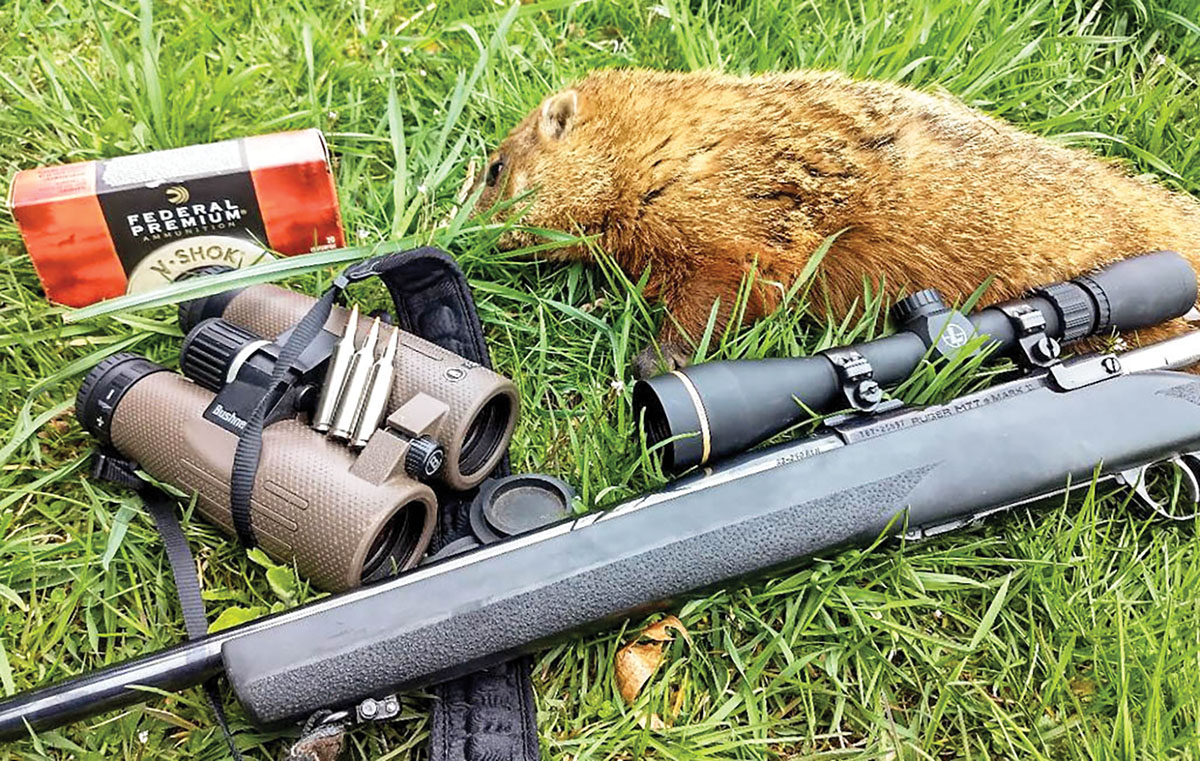
My father and I are business partners – we own a land surveying company – and our office is in the basement of his home. He lives in a very rural setting, so we have a 100-yard rifle range just out the back door, and he has his vegetable garden, which he takes very seriously. Living in a quiet, country setting affords many freedoms and also draws many nuisance animals. A vegetable garden, along with a healthy flock of laying hens, attracts all sorts of game, from foxes to raccoons to coyotes to red squirrels to the “Scourge of the Squash Patch,” the woodchuck.
It became a bit of a legend, the “Pilferer of Peppers,” the “Tomato Terrorist,” and its cunning is still talked about at family dinner. I mean, a woodchuck can be one of the most stupid creatures God put on the planet, and sometimes they possess the cunning of a master thief, with ninja-like skills and an apparent sixth sense. The “Cucumber Cutthroat” earned the respect – and infuriation – of my father as it ran roughshod over last year’s garden. It could hear a vehicle approaching from the next zip code, and forget about getting a crack at it on foot; if a blade of grass blew the wrong way, the woodchuck was gone. It’s hole – the closest one anyway – was positioned so it wasn’t visible until you were on top of it, and he’d hear you coming a long way off.
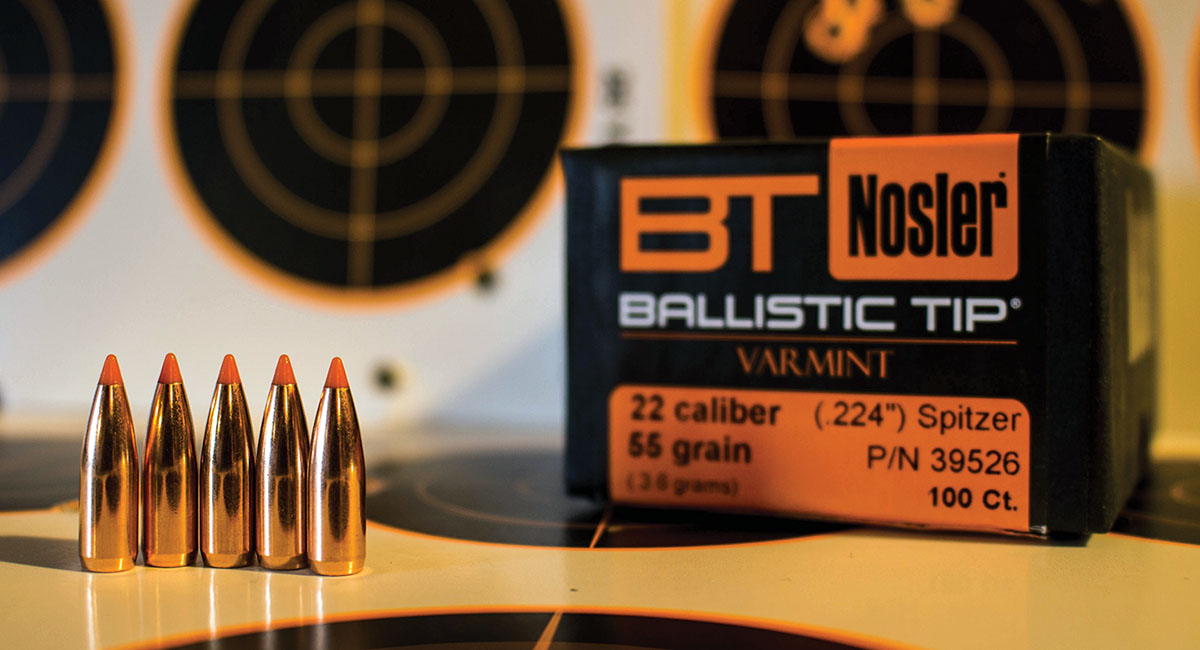
A mild winter and an early spring had Dad putting the garden in a bit early this year, and just after the first rows were planted, he showed himself, and the war was rekindled. I’m happy to report it was me who shot him, though it turned out to be at a weird time of day and a chance meeting. Long story short, the “Garden Ghost” screwed up and was found out in the open, mesmerized by some fresh onion sets, and I sorted him out with a Nosler 55-grain Ballistic Tip Varmint delivered from my old Ruger 22-250 Remington at just over 125 yards. That frangible bullet ended the garden raiding days in an instant, and the smack of that bullet brought my father out of the office for a brief moment of celebration.
Ballistic Tip Varmint Line
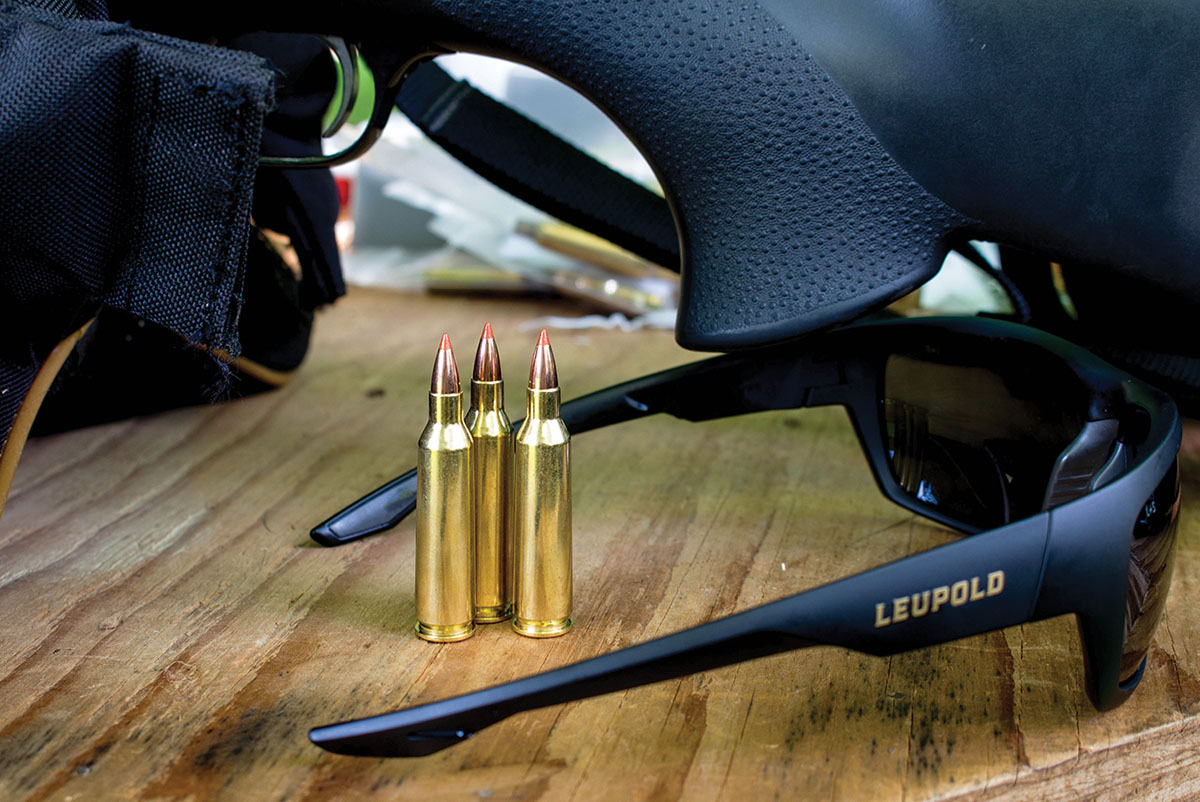
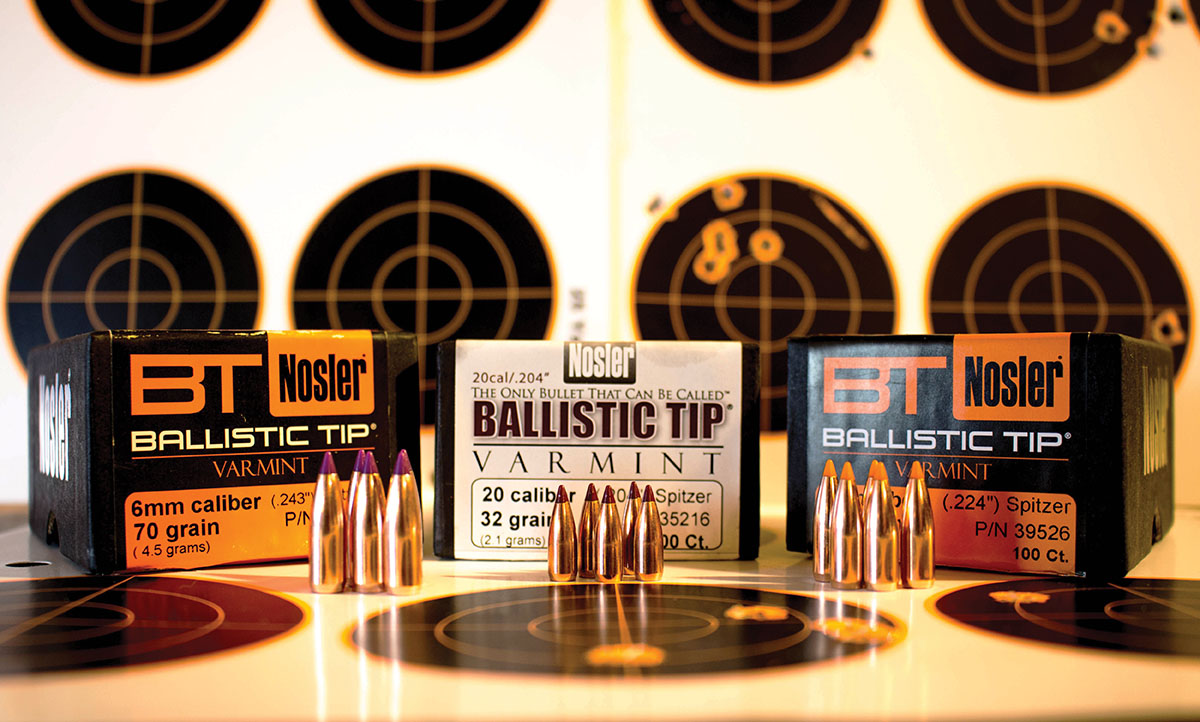
Like the entire Ballistic Tip line, the varying bullets are color coded, with maroon for the 204, orange for the 224, purple for the 6mms and blue for the .25 caliber. So, with my own rifles and some from a couple of buddies, we headed to the reloading bench and the rifle range to test the Ballistic Tip Varmint line.
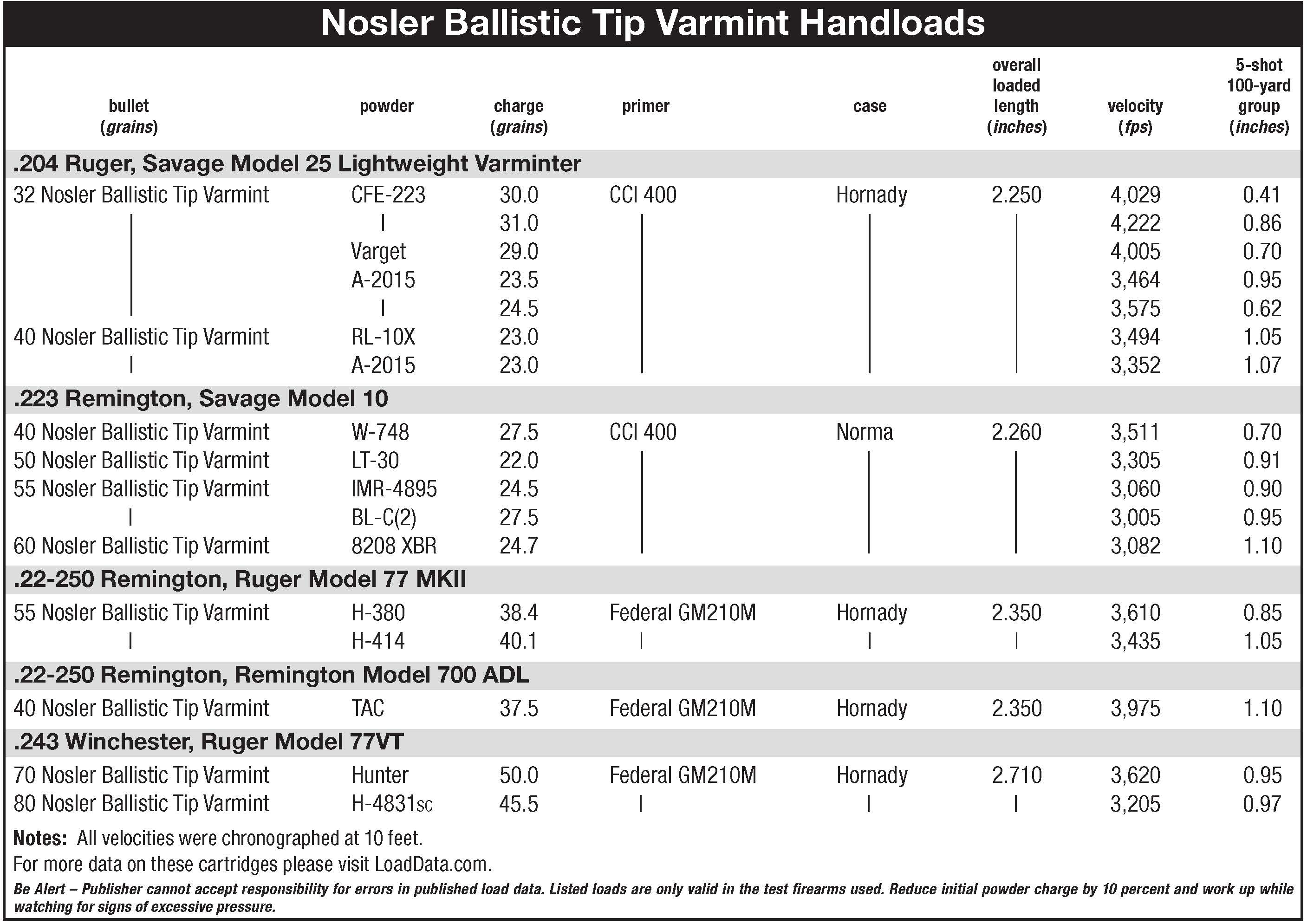
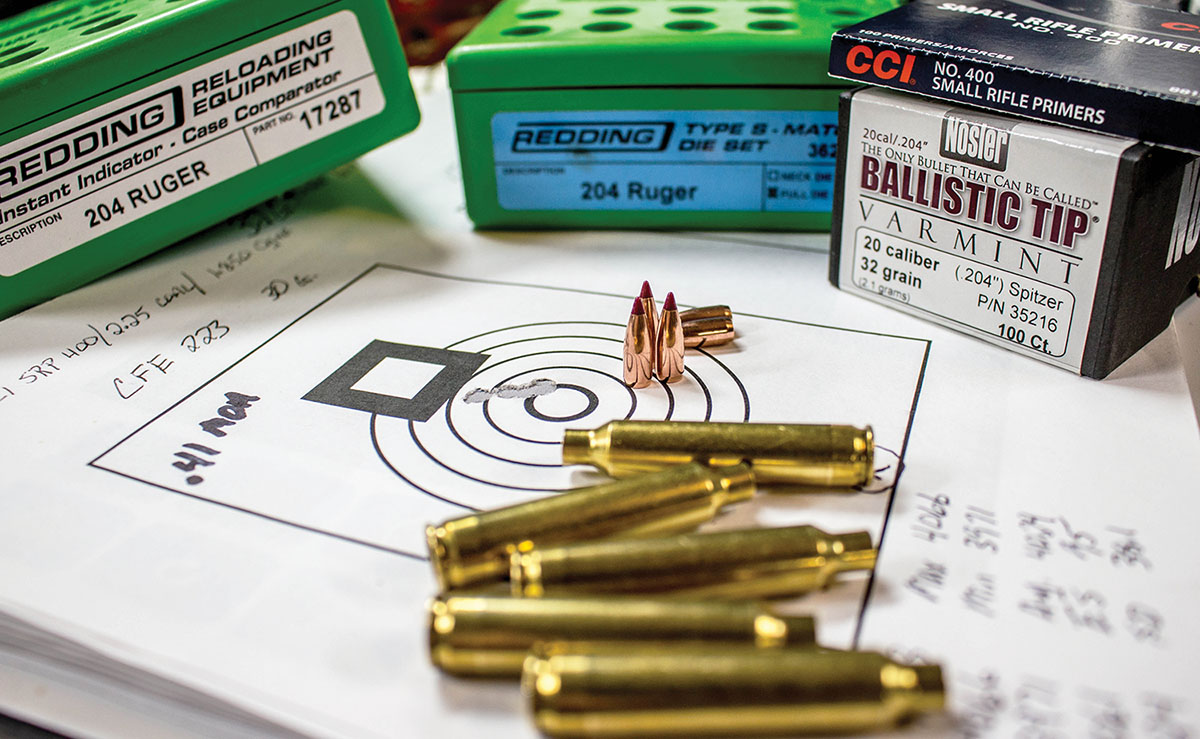
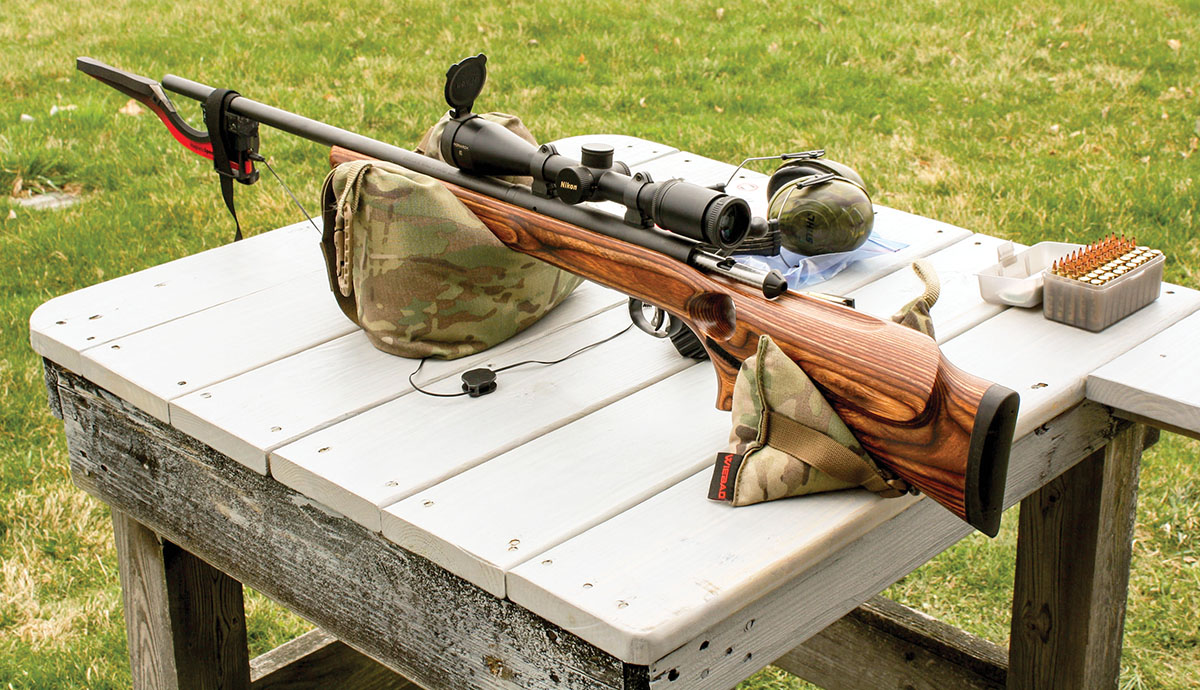
Starting at the smallest of the lot – the .20 caliber – I called my good pal Mike Buser, who is a huge proponent of the 204 Ruger. His Savage Model 25 Lightweight Varminter accompanies him often throughout the year, whether it’s for woodchucks in the summertime or coyotes and foxes throughout the fall and winter – Mike enjoys the little cartridge for target shooting as well. Topped with a Nikon Monarch 4-12x scope, the rifle shows an affinity for match grade bullets but also fares well with the hunting bullets. We grabbed some of the usual suspects for powder choices, including Hodgdon’s Varget, H-322 and CFE-223, Alliant’s RL-10X and Accurate’s 2015, loaded them into Hornady cases fitted with CCI 400 Small Rifle primers. Nosler offers the 32- and 40-grain bullets in the Ballistic Tip Varmint line, and undeniably, that Savage showed a definite preference for the lighter weight bullets. Mike’s rifle also showed that there seemed to be a “sweet spot” for each powder, and slight variances would open up the group size. There was also evidence of a flyer within many of the groups, tarnishing what could have potentially been a great string. The rifle liked Hodgdon’s CFE-223 best, followed by Varget and RL-10X.
The 204 Ruger, with a 1:12 twist rate, isn’t known for liking the longer 40-grain bullets, and we struggled to find a sub-MOA load, but finally got it with Reloder 10X. At the distances we typically shoot here in the northeast, both Mike and I feel that the 40-grain bullet would suffice, yet the definite accuracy advantage goes to the 32-grain bullet, and that has been the case with other brands of projectiles as well. We were both pleased with the accuracy of the bullets.
I used Norma brass and CCI 400 primers for all the loads, and a set of Redding’s Premium dies with the sweet micrometer seating die, and both full-length and neck sizing dies. I adhered to the maximum overall loaded length of 2.260 inches for all four bullets. The 40-grain BTV over Winchester 748 powder provided five shots in a group averaging 0.7 inch at 3,510 fps. This combination is deadly at medium hunting ranges, though the lesser ballistic coefficient (BC) may have trouble in the winds of Wyoming. The 50-grain BTV grouped well over Accurate Powder’s LT-30 and Hodgdon’s BL-C(2), and the 55-grain bullet worked just fine over IMR-4895, with all three giving groups in the 0.9-inch range. The heaviest of the lot, the 60-grain BTV with cannelure, printed just over one inch when charged by 24.7 grains of IMR’s 820 8XBR at just under 3,100 fps, making for a great choice for shooting in windy conditions.
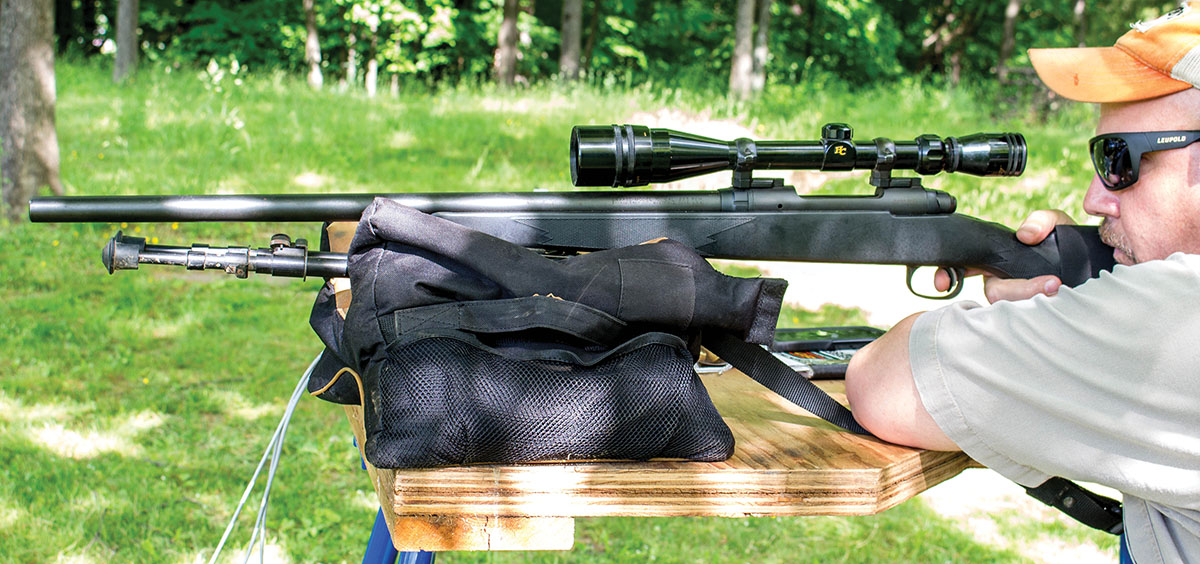
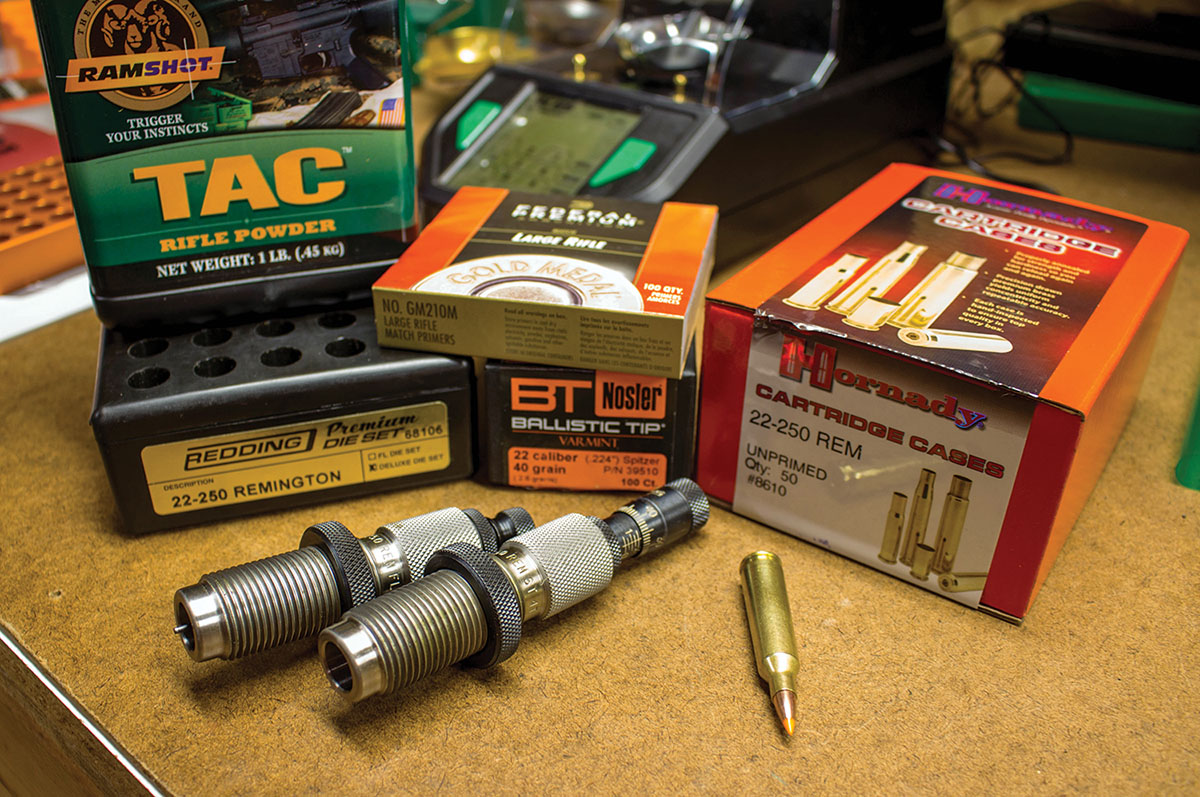
The pair of 22-250 Remingtons both have sporter barrels. One is a Ruger Model 77 MKII with a 22-inch barrel, and the other is my father’s Remington Model 700 ADL, a 1970s vintage rifle from what I can tell. Both are wonderfully accurate when a load is tuned to the rifle. For these rifles, I used Hornady brass and Federal Gold Medal Match GM210M primers. My Ruger can be a bit finicky, and it was with this rifle that I started to see a pattern regarding barrel heat and the Nosler Ballistic Tip Varmint bullets. This rifle will put five Nosler 55-grain BTVs – loaded in Federal’s older V-Shok line – into a group measuring just over an inch at 100 yards, depending on the temperature outside. It certainly performs better in cooler weather, and in retrospect, I wish I’d have purchased a bull barrel to better dissipate heat, though I’ve made so many memories with this rifle I doubt I’ll change it now. My go-to load for this rifle is built around Hodgdon’s H-380 powder. The powder was named for Bruce Hodgdon’s pet load for the 22-250 wildcat loaded with 38 grains and a 53-grain match bullet.
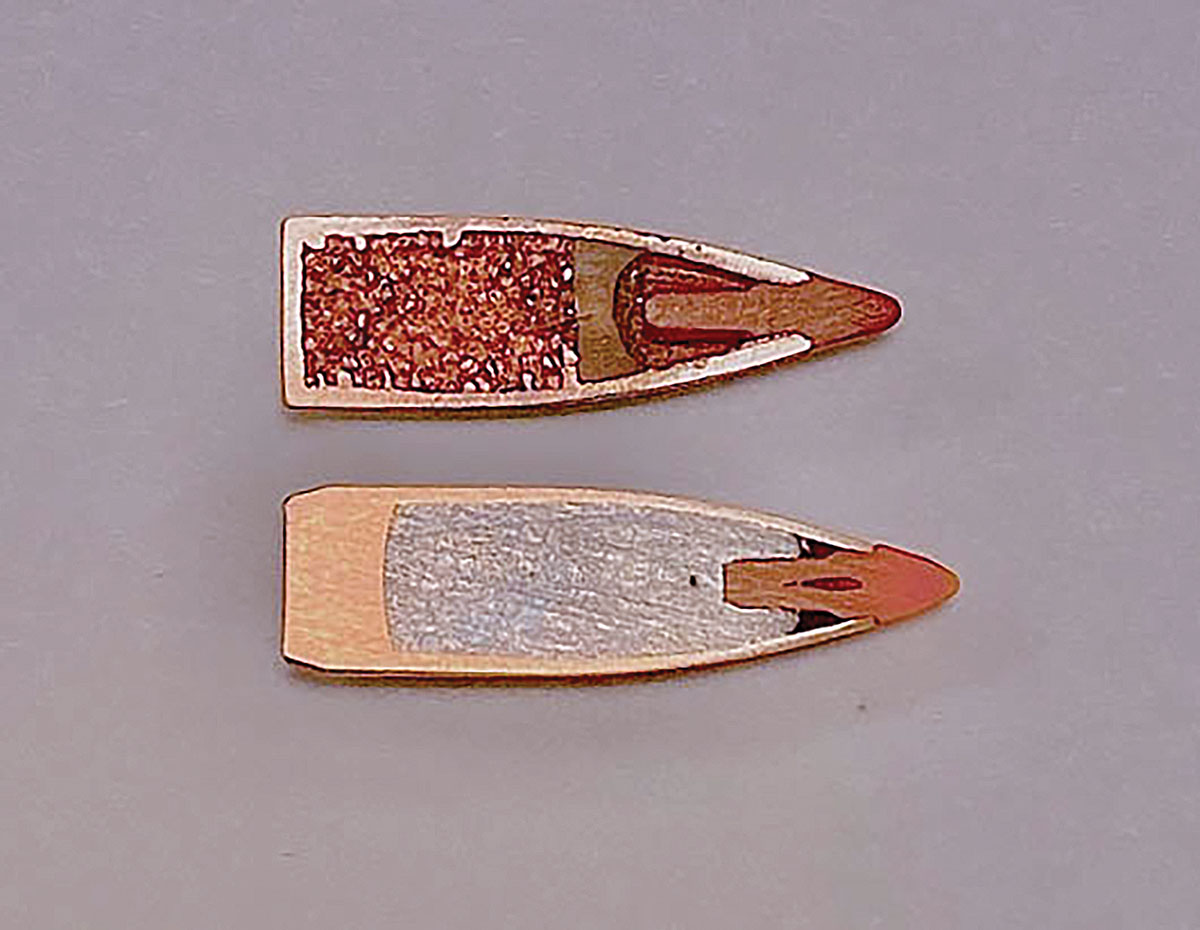
A very similar load of that powder and a Nosler 55-grain BTV gave a 1-inch spread for five shots, if I let my barrel cool. If not, I’d get three within .75 inch, and the next two would walk on me, opening the group to as much as 1.75 inches. At one point, I thought I was having a bad day at the shooting bench until I switched rifles and proved it wasn’t me, at least not on that day. My father’s Remington 700 showed the same trait, though his rifle really did like the 40-grain Nosler BTV over Ramshot TAC powder – a problem-solver a good number of times – at 3,975 fps. My Ruger got along with a load of Hodgdon’s H-414 powder and the 55-grain BTV, at least in the accuracy department, as they landed in a group measuring just over one inch. However, the velocities ran a bit low, at 3,435 fps. But my barrel heat theory was pretty much validated (at least in my mind) with these two sporter-weight barrels. I suspect that the ultra-thin jacket on the BTV is affected by barrel heat, and that’s why many of the loads shot well with the first three shots, and then groups opened up.
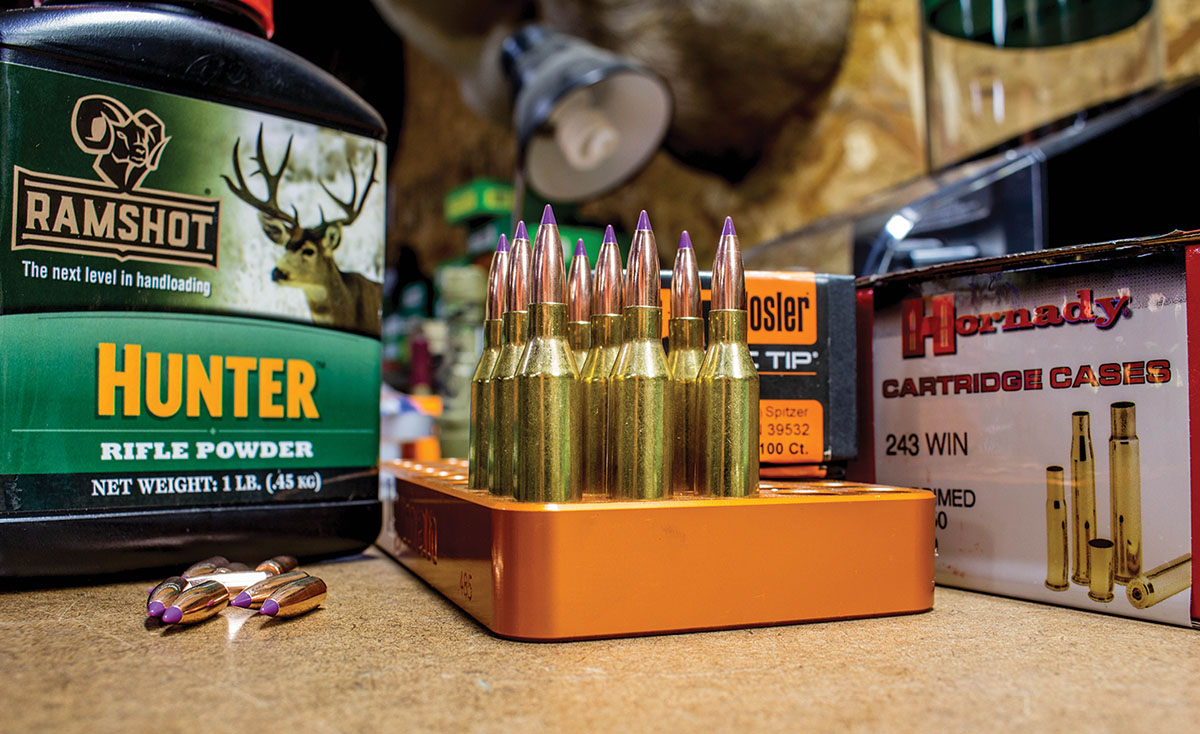
For the 6mms, I grabbed a Ruger M77VT in 243 Winchester and loaded up some 70- and 80-grain BTVs in Hornady brass with Federal GM210M primers. The 70-grain bullet over Ramshot Hunter – a great spherical powder with a burn rate in the range of IMR-4350 – gave sub-inch results at an average muzzle velocity of 3,620 fps. The slightly heavier 80-grain bullet did equally well when fueled by H-4831sc, but the muzzle velocities dropped off to just over 3,200 fps. Personally, I would sacrifice a bit of BC in the 80-grain bullet for the higher muzzle velocity of the 70-grain bullet. There were other loads I tried, using powders like RL-19 and Accurate 4350, but the accuracy just wasn’t there.
Like the Ballistic Tip Hunting bullet, the Ballistic Tip Varmint is a great blend of accuracy and wicked terminal performance. That polymer tip – used to initiate expansion on so many bullets today – was a genius move on Nosler’s part so long ago. I believe my experience with barrel heat in the thinner barrels might worry some of the long-range prairie dog shooters, but for those who occupy their time with coyotes, foxes, woodchucks and other species when the shooting is less fast and furious and barrels stay cooler, the Ballistic Tip Varmint is a solid choice.
For hunters who are forced by law to use lead-free ammunition, or for those who are simply proponents of lead-free projectiles, Nosler offers the Ballistic Tip Lead-Free with a proprietary Fragmenting Copper Core that gives immediate and destructive expansion. My Ruger 22-250 launches the 35-grain bullet at over 4,100 fps.
In all of the years I’ve experimented with varying types, makes and models of projectiles on applications from steel plates to varmints to deer-sized game to the largest of dangerous game, I’ve never been disappointed by a Nosler product.