Login


Wolfe Publishing Group
    Menu

    Hunting with Suppressors

    Taming the Loud Boomers

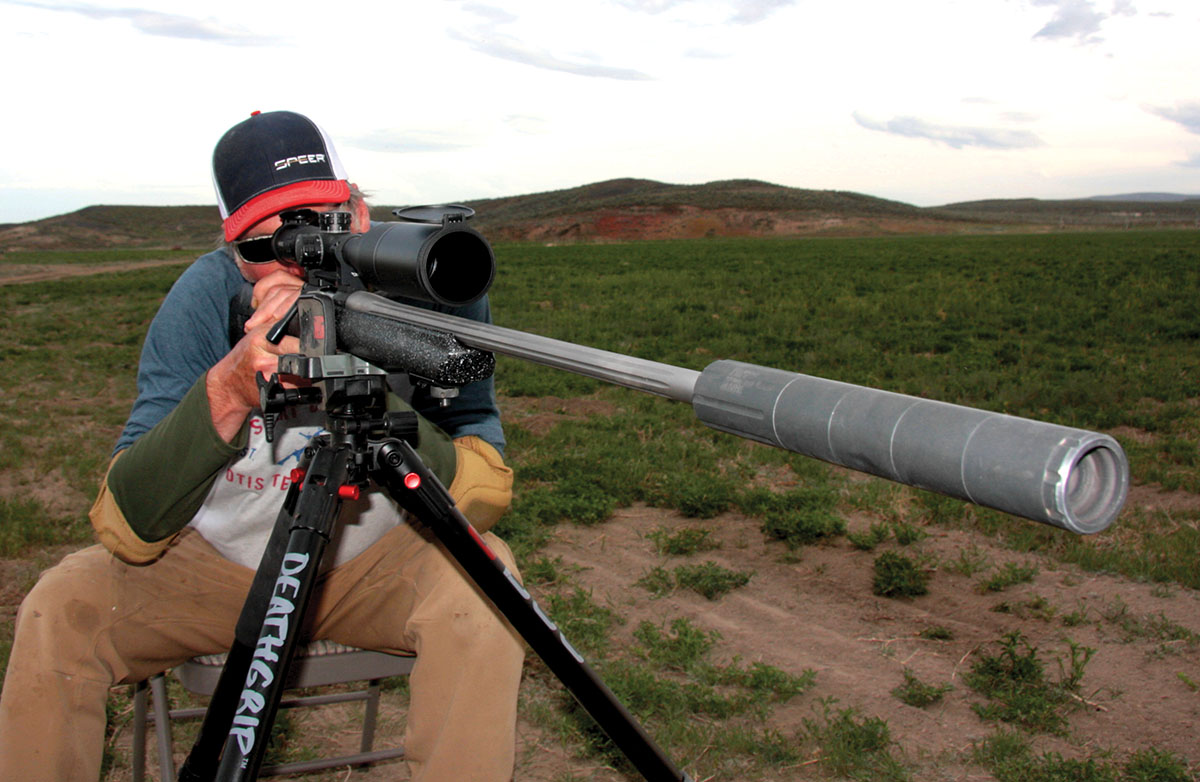
    Using a Hawke Frontier 5-30x 56mm scope on Browning’s X-Bolt Max LR in 6mm Creedmoor required a muzzle brake to reliably spot shots, making it obnoxiously loud. A Rebel SOS Hunter provided quieter shooting.
    Using a Hawke Frontier 5-30x 56mm scope on Browning’s X-Bolt Max LR in 6mm Creedmoor required a muzzle brake to reliably spot shots, making it obnoxiously loud. A Rebel SOS Hunter provided quieter shooting.
    During a hot and heavy varmint shoot, suppressors become smoking hot. Though they are rated for automatic fire, Patrick takes regular breaks to allow them to cool off.
    During a hot and heavy varmint shoot, suppressors become smoking hot. Though they are rated for automatic fire, Patrick takes regular breaks to allow them to cool off.
    Not so long ago, it was common to encounter even decided shooters who believed suppressors were illegal. Today, more shooters are investing in suppressors and enjoying hearing-protection-free shooting. First-time buyers soon discover intentional hurdles have been tossed in their paths. Large among these is a $200 “tax stamp” added atop the retail price of an already expensive suppressor.

    Why $200? When the 1934 National Firearms Act (NFA) was enacted by Democrats, this sum represented about $3,850 adjusted to 2020 inflation. This was devised to monetarily discourage ownership, ironically allowing only bootleggers and organized crime figures to afford them; characters the legislation was purportedly devised to thwart.
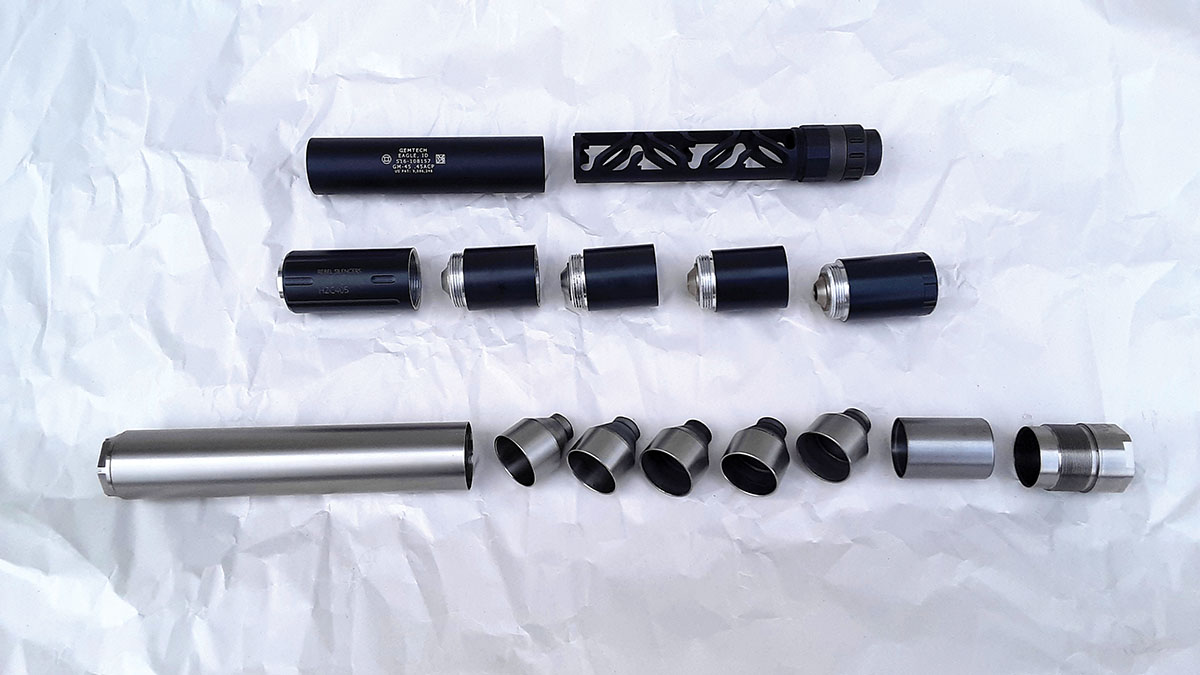
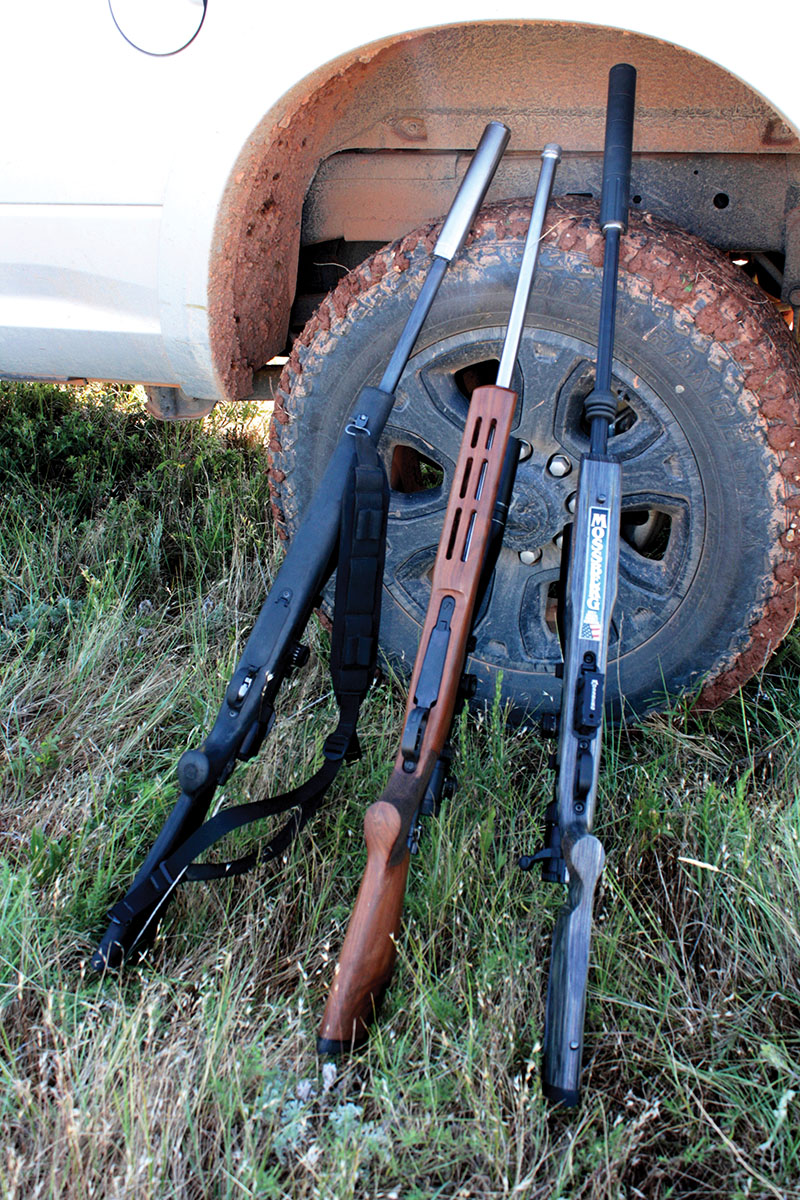
    Suppressors operate through a series of various cooling designs. Three of the most popular include (top to bottom) mono-cores (Gemetech), segmented chambers (Rebel Silencers) or stacked “funnels” (Huntertown Arms).
    Suppressors operate through a series of various cooling designs. Three of the most popular include (top to bottom) mono-cores (Gemetech), segmented chambers (Rebel Silencers) or stacked “funnels” (Huntertown Arms).

    I’ll not waste space covering procedural details here, as your dealer will walk you through each step. In basic terms, you’ll first purchase your suppressor from a federally-licensed dealer, as its serial number is required on federal paperwork. The “can” remains in the dealer’s safe after submitting your application. Paperwork includes Form 4 filled out in triplicate, three passport photos, official fingerprint cards (produced by your county sheriff) and a check for $200, payable to Federal Bureau of Alcohol, Tobacco, Firearms and Explosives (BATF). You then await approval. By any reasonable metric in a computerized world, this would require a month to complete. In the universe of federal bureaucracy, nine to 14 months is required. Suppressors can also be placed in a trust, allowing transfer between assigned trustees, who must also pass background checks.

    Suppressors are currently legal in 42 states. The nine excluded from the list are dominated by politicians inclined to restrict Constitutional rights – California, Hawaii, Illinois, Massachusetts, Minnesota, New Jersey, New York, Rhode Island and Vermont. There were recent rumblings of making suppressor ownership no more difficult than passing a gun purchase National Instant Criminal Background Check Systems (NICS) check. Sadly, bill-friendly congressional RINOs (Republicans in Name Only) developed cold feet following the mass shooting in Las Vegas in 2017 and the mainstream media’s labeling the legislation “The Assassin’s Bill,” in the same way AR’s became “weapons of war.” There weren’t enough votes to justify moving the bill forward and it quickly faded away.

    Fact & Fiction
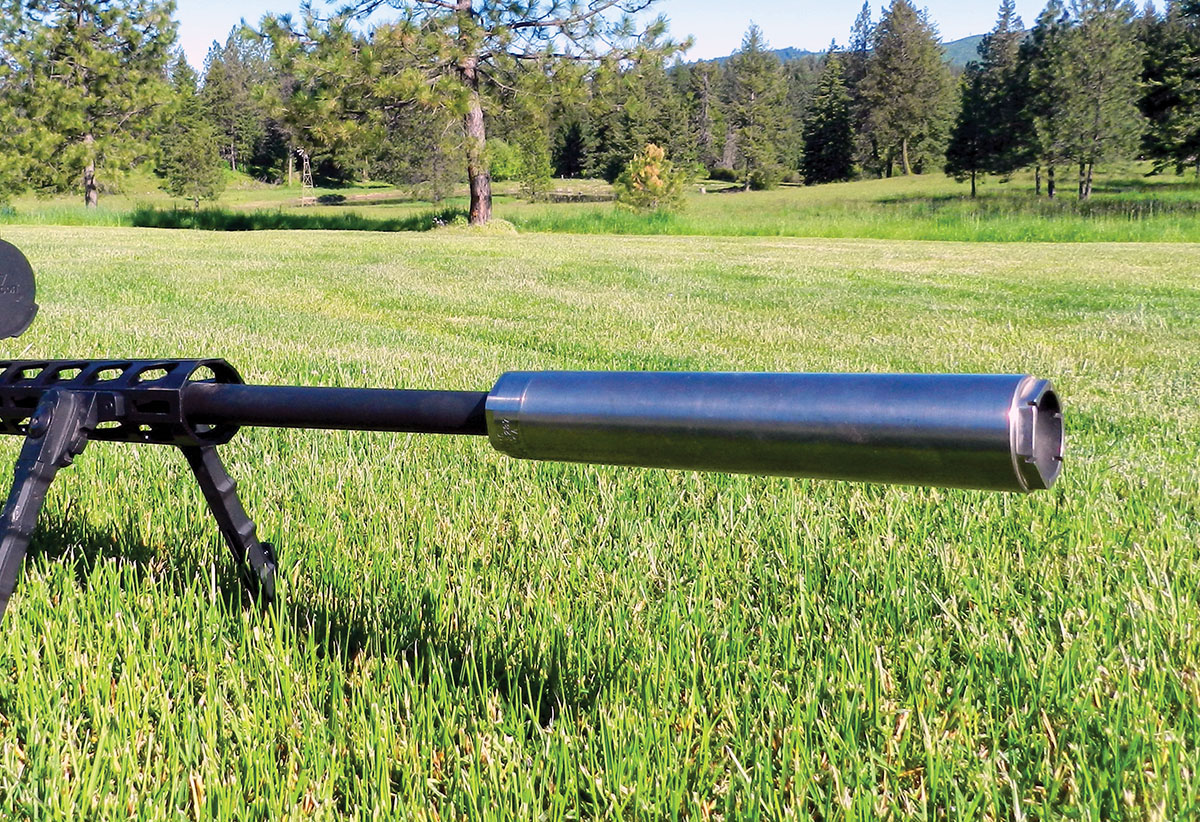
    Huntertown Arms’ Chameleon .308 is constructed from titanium, providing an overall weight close to aluminum models with strength more closely resembling heavy steel.
    Huntertown Arms’ Chameleon 308 is constructed from titanium, providing an overall weight close to aluminum models with strength more closely resembling heavy steel.
    Suppressors aren’t silencers. They are more accurately mufflers, invented by the same fellow who brought us auto mufflers, Hiram Percy Maxim. Don’t expect James Bond-level silencing, though subsonic ammunition comes close, which few serious varmint shooters use due to rainbow trajectories. Quality suppressors muffle powder combustion but have no influence over the distinctive crack resulting when bullets break the sound barrier, which normally occurs 50 to 80 yards away from the shooter, making it less irritating. The real-world implication is that shooting loud varmint rifles requires, at most, plug-in “foamies” instead of sweaty ear muffs or expensive gel plugs.

    My varmint rifles typically featured muzzle brakes due to my penchant for high-magnification scopes. Even tiny degrees of muzzle jump made marking shots difficult. Brakes tame scope movement but also introduce obnoxious muzzle blast. My 6mm Remington rockchuck rifle and bottleneck-cartridge T/C pistols, in particular, induced migraines after shooting too many rounds. Suppressors provide muzzle brake action (about 65/75 percent effect of best-quality brakes) while eliminating head-crushing muzzle blast.

    Concerns

    The ability to disassemble suppressors for cleaning is vital with rimfire “cans,” as 22 LR powders, in particular, are downright dirty. Even with centerfire cans, I prefer segmented designs or removable baffles/mono-cores to better facilitate eventual cleaning.
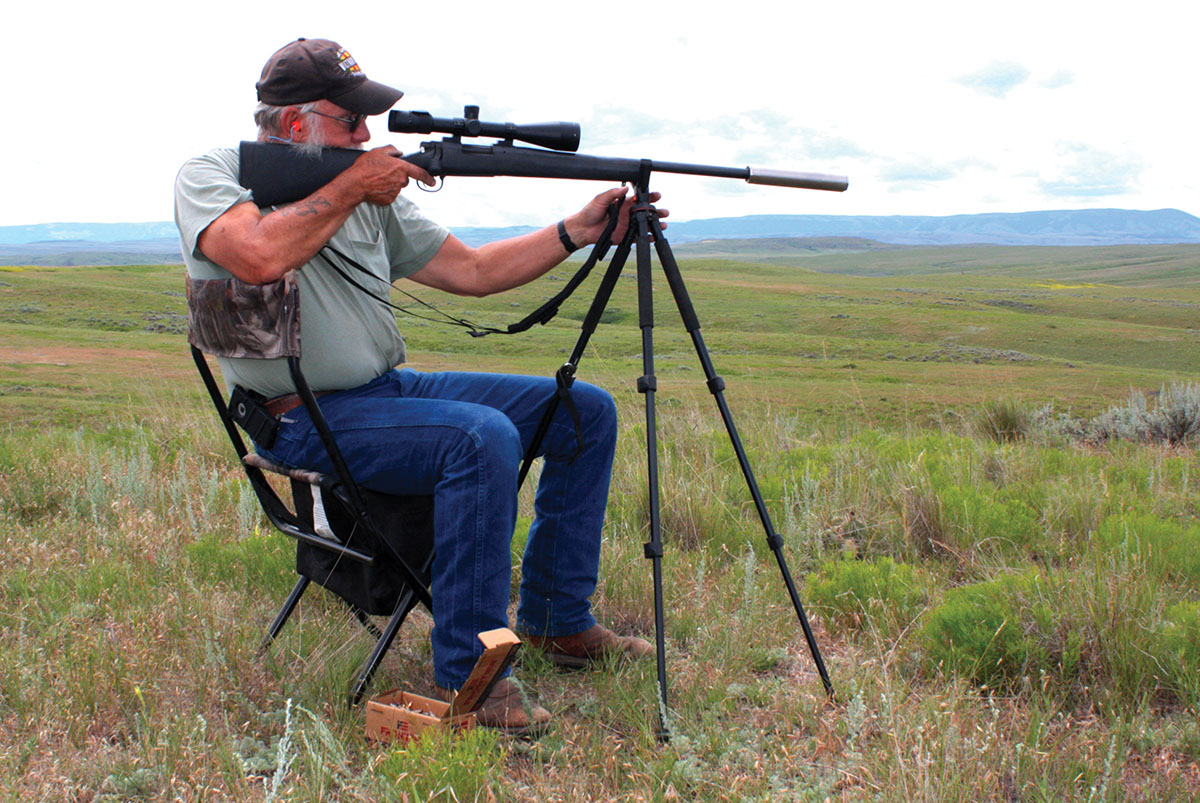
    Shooting a quality suppressor typically requires nothing more than cheap foam ear plugs, though with many rifle/cartridge combinations Patrick wears no hearing protection at all.
    Shooting a quality suppressor typically requires nothing more than cheap foam ear plugs, though with many rifle/cartridge combinations Patrick wears no hearing protection at all.

    Bulk and weight are another consideration. Aluminum is lightweight, for instance, but more care is required to avoid galling threads. Applying high-quality grease to all aluminum threads is a good precaution. Titanium includes similar mass and is obviously stronger, but also expensive, while steel automatically adds weight but proves indestructible. If you can afford only one suppressor, standard 308 centerfire models are a sound choice. While .224 to 6.5mm caliber-specific cans are offered (sometimes more affordably), 308 options prove most versatile, as most are rated to 300 Winchester Magnum, should you find the need.

    An obvious apprehension after receiving my first suppressor was whether it would alter harmonics and point of impact on established rifle/handload combinations. My initial suppressor experiences, shooting prairie dogs in eastern Montana, erased any accuracy worries. Still, for this article I gathered a variety of suppressors and tested them for accuracy with a variety of proven varmint rifles and loads, from 22 LR to 6mm Creedmoor.

    During that first suppressor-equipped Montana foray I also noted that not all suppressors are created equal. The friend who shared that trip owns a suppressor retailing for twice as much as my Rebel Silencers SOS Hunter model, but mine was conspicuously quieter. So, for this article I used a smartphone decibel meter app (undoubtedly not dead-nuts accurate, but offering apples to apples comparisons) to quantify actual noise reduction measured from the shooter’s position, starting with an unmuffled rifle and then shooting various suppressors and ammunition and noting noise reduction.

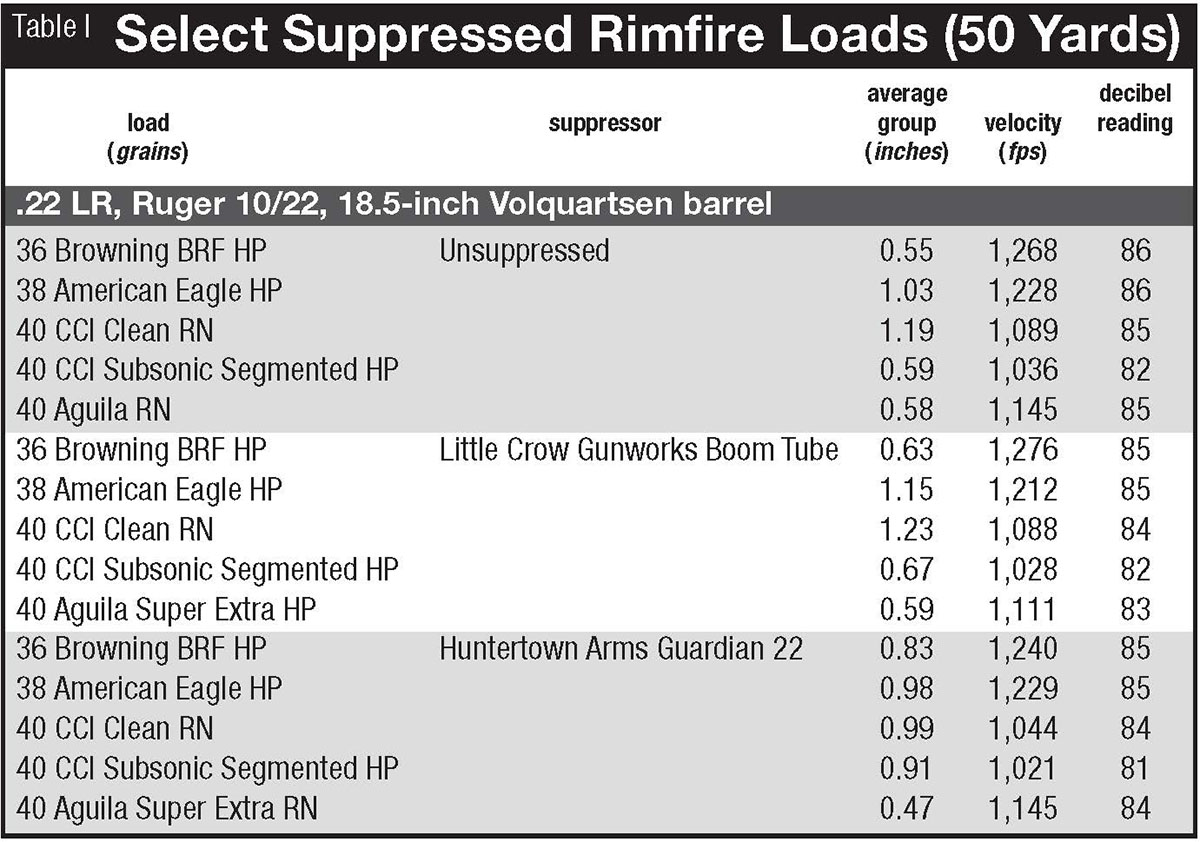
    It should be noted that the decibel scale is based on orders of magnitude on a logarithmic scale and is decidedly nonlinear, making it a bit confusing. For instance, if total silence is 0 dB, a sound 10 times louder is 10 dB, a sound 100 times louder is 20 dB and a sound 1,000 times louder is 30 dB, and so on. By this system human conversation, at 60 dB, and a jet fighter taking off 100 feet away, about 130 dB, are separated by only 70 dB despite the latter being 1,000s of times louder. From the shooter’s position behind an unsuppressed rifle, an average 22 LR round shot from an 18.5-inch barrel produces around 85 dB, or only 5 dB louder than a busy restaurant. This also means the difference between an unsuppressed 85/86 dB rifle report and an 80/81 dB suppressed shot is more significant than would appear on paper. Keep that in mind while perusing the accompanying table.

    Testing
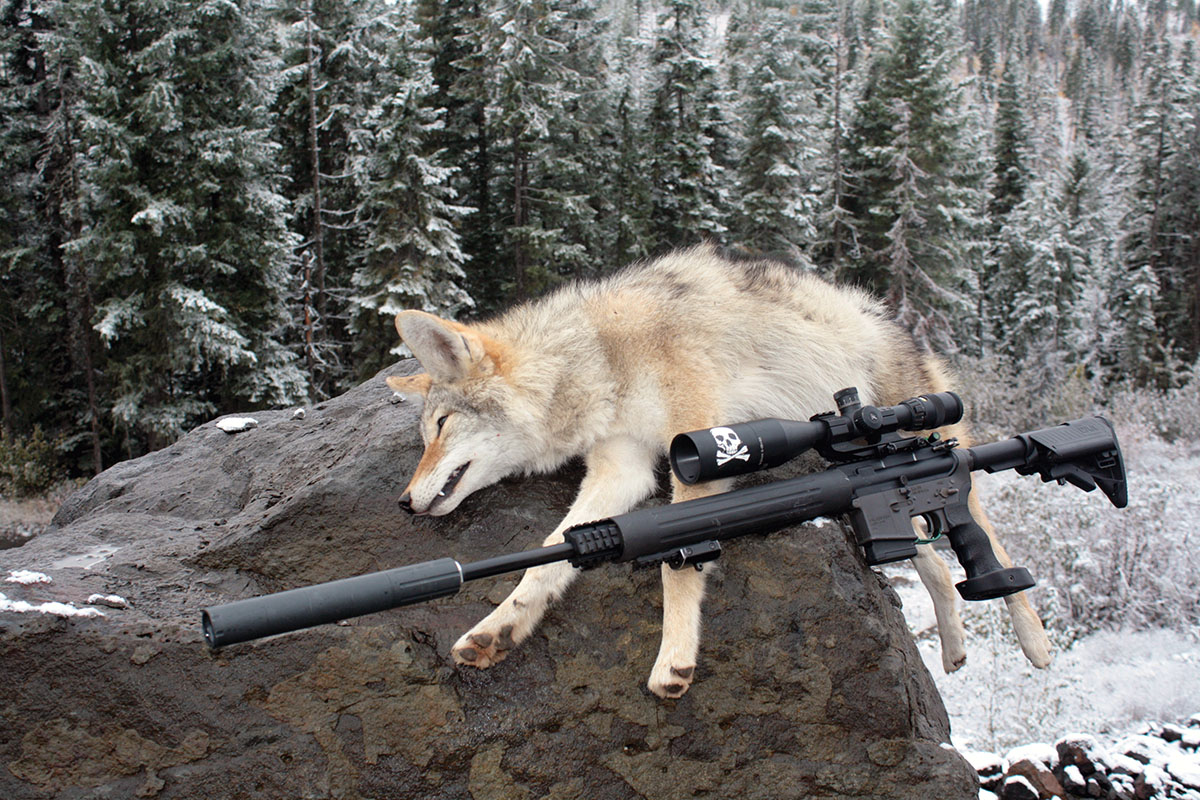
    Suppressors and predator calling make an ideal combination.
    Suppressors and predator calling make an ideal combination.
    Adding various suppressors did not affect velocity to any measurable degree, all variations noted being well within standard extreme velocity spread deviations. Regarding resulting accuracy, differences in group size were observed between unsuppressed, Boom Tube (when applicable) and various cans, sometimes fairly substantially, at least in relation to varmint round expectations. This is no doubt part shooter error (follow-up groups often resulted in markedly different results), part harmonics and perhaps even some bullet turbulence tossed into the mix. In the field, I haven’t noticed a conspicuous reduction in hit-to-miss ratios after adopting suppressors, including shots past 500 yards. That said, some load tweaking may be necessary to maintain groups a rifle was printing pre-suppressor, depending on barrel thickness and how well a rifle is bedded.

    With my heavy barreled 22 LR average groups were .79, .85 and .84 inch for unsuppressed, Little Crow Gunworks Boom Tube and Huntertown Arms Guardian 22 suppressor, respectively – which actually represents pretty consistent 22 LR performance. With my custom AR, average groups measured .93 inch unsuppressed, .96 inch with the Boom Tube, .93 with a Rebel SOS Hunter Suppressor, .96 with a Huntertown Arms Chameleon 308 titanium can and .79 inch with Gemtech’s Trek-II.
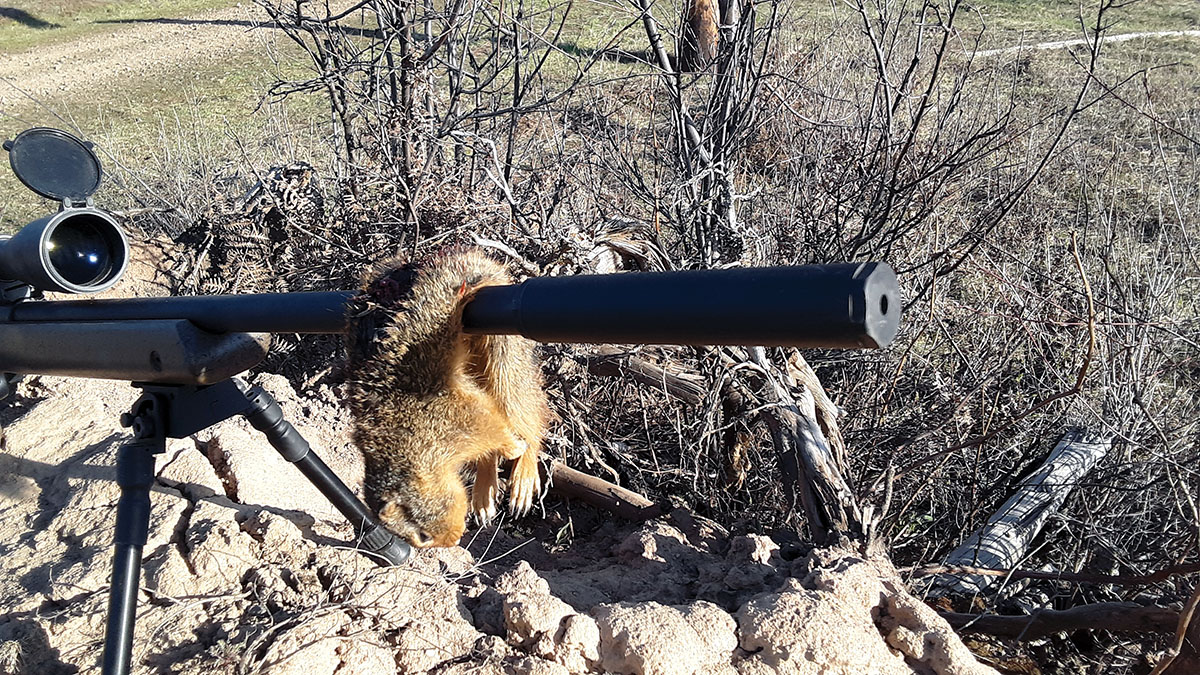
    Rimfire cans are especially useful, allowing shooting without any hearing protection and nearer civilization without disturbing anyone. Patrick uses a Huntertown Arms Guardian 22 on his 22 LRs.
    Rimfire cans are especially useful, allowing shooting without any hearing protection and nearer civilization without disturbing anyone. Patrick uses a Huntertown Arms Guardian 22 on his 22 LRs.
    Accuracy results from my heavy-barreled 22-250 with an Xtreme Hardcore Slotted/Hybrid brake, Rebel SOS, Gemtech Trek-II and Huntertown Chameleon measured .91, .69, .69 and .91 inch, respectively. The 6mm Creedmoor’s groups went from a .65-inch average unsuppressed to .76 inch with the Rebel suppressor and .62 with a Huntertown Chameleon 308 model.

    Noise Reduction

    Varmint shooting with a suppressor results in less noise and prolonged shooting, as varmints like ground squirrels and prairie dogs stay topside much longer after shooting starts.
    Varmint shooting with a suppressor results in less noise and prolonged shooting, as varmints like ground squirrels and prairie dogs stay topside much longer after shooting starts.
    Noise reduction is really what we’re looking for here, so let’s delve into that aspect. First up was my customized Ruger 10/22, with an 18.5-inch threaded Volquartsen match-chamber barrel. Ammunition included CCI Subsonic 40-grain Segmented HP, American Eagle 38-grain copper-plated HP, CCI Clean 40-grain poly-coated RN, Browning BRF 38-grain copper-plated HP and Aguila Super Extra 40-grain copper-plated RN loads. Somewhat predictably, decibels were tied directly to velocity, with unsuppressed ammunition recording from 82 dB for CCI Subsonic rounds at 1,036 fps to 86 dB for the American Eagle and Browning BRF loads at 1,228 and 1,268 fps, respectively.

    Adding Little Crow Gunworks’ ½x28 Bang Tube, in general, resulted in 1 dB noise reduction (3 dB with Aguila loads). The Bang Tube is not a suppressor, so doesn’t involve Type 4 paperwork. Instead it’s an open-ended, milled-aluminum tube that threads to the muzzle and funnels muzzle blast downrange. It proves remarkably effective when recording decibels from the shooter’s perspective, and costs only $50. Surprisingly, it created much the same effect as my $250 Huntertown Arms Guardian 22 rimfire suppressor.

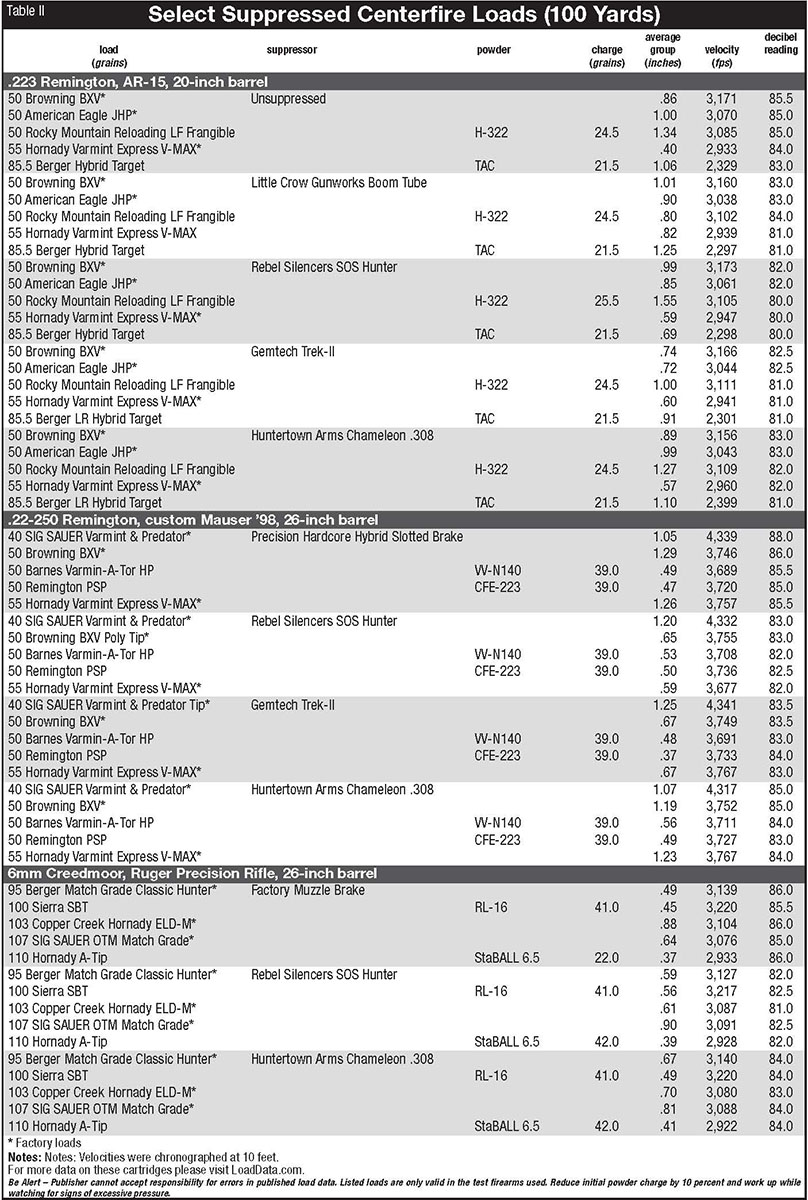
    I chose my parts-build AR-15 in 223 Remington instead of my threaded 223 bolt rifle because ARs are notoriously noisy. Though, with its fairly heavy 20-inch barrel, this AR produced about the same perceived noise – from the shooter’s position – as my 22 LR. Loads included Browning BXV 50-grain Varmint Expanding, American Eagle 50-grain JHP, Hornady Varmint Express 55-grain V-MAX, handloaded 50-grain Rocky Mountain Reloading lead-free frangible (24.5 grains of H-322, CCI BR-2 primers and PMC brass) and handloaded Berger 85.5-grain Long Range Hybrid Target bullets (21.5 grains of Ramshot TAC, Federal AR Match primers and Winchester brass).

    The Little Crow Boom Tube produced worthwhile results with the AR, reducing decibels 2.5 dB with the Browning ammunition, 2 dB with the American Eagle load and Berger-bullet handload, 3 dB with Hornady’s load and only 1 dB with the 50-grain load. Again, pretty impressive for a $50 item requiring no tedious paperwork or long approval times.
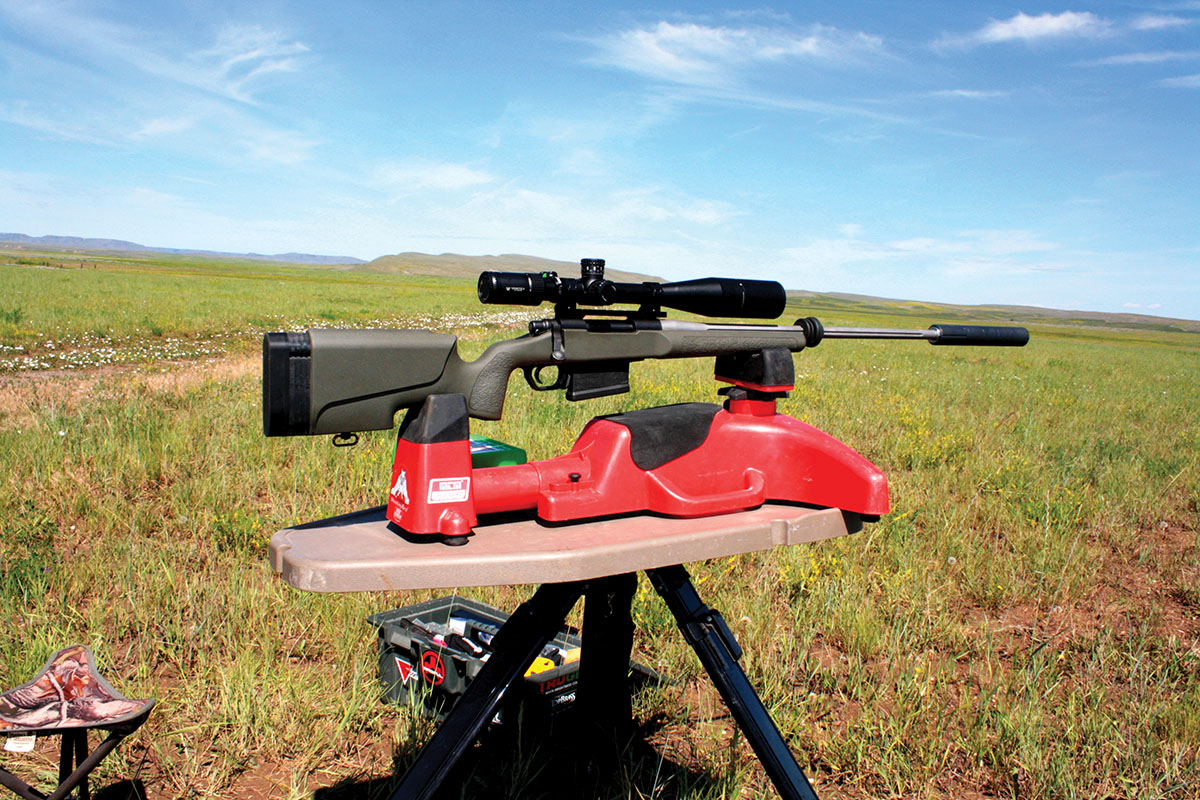
    A Rebel Silencers’ SOS Hunter suppressor made Patrick’s favorite extreme-range varmint rifle, a fast-twist 6mm Remington with a high-magnification scope, much more enjoyable to shoot.
    A Rebel Silencers’ SOS Hunter suppressor made Patrick’s favorite extreme-range varmint rifle, a fast-twist 6mm Remington with a high-magnification scope, much more enjoyable to shoot.
    As expected, my Rebel Silencers SOS Hunter performed excellently, reducing Browning ammunition decibels 3.5 dB, American Eagle and handloaded Berger noise 3 dB, Hornady 4 dB and the 50-grain handload 5 dB. The Rebel SOS Hunter came with a $350 price tag and includes five threaded segments/chambers for easy cleaning. This feature also allows adding/subtracting segments as needed for noise reduction with small (.17 Hornet) to large rounds (6mm Remington). In this test I used all five segments.

    A compact Gemtech Trek-II, engineered specifically for .223 ARs, resulted in 3 dB noise reduction with Browning and Hornady loads, 4 dB reduction with a 50-grain handload, 2.5 dB reduction with American Eagle loads and a 2 dB reduction with the Berger handload. The titanium Huntertown Chameleon didn’t do quite as well, resulting in muzzle noise 2.5 dB quieter with Browning ammunition, 2 dB quieter with the American Eagle, Hornady and the Berger handload and 3 dB quieter with the 50-grain handload.
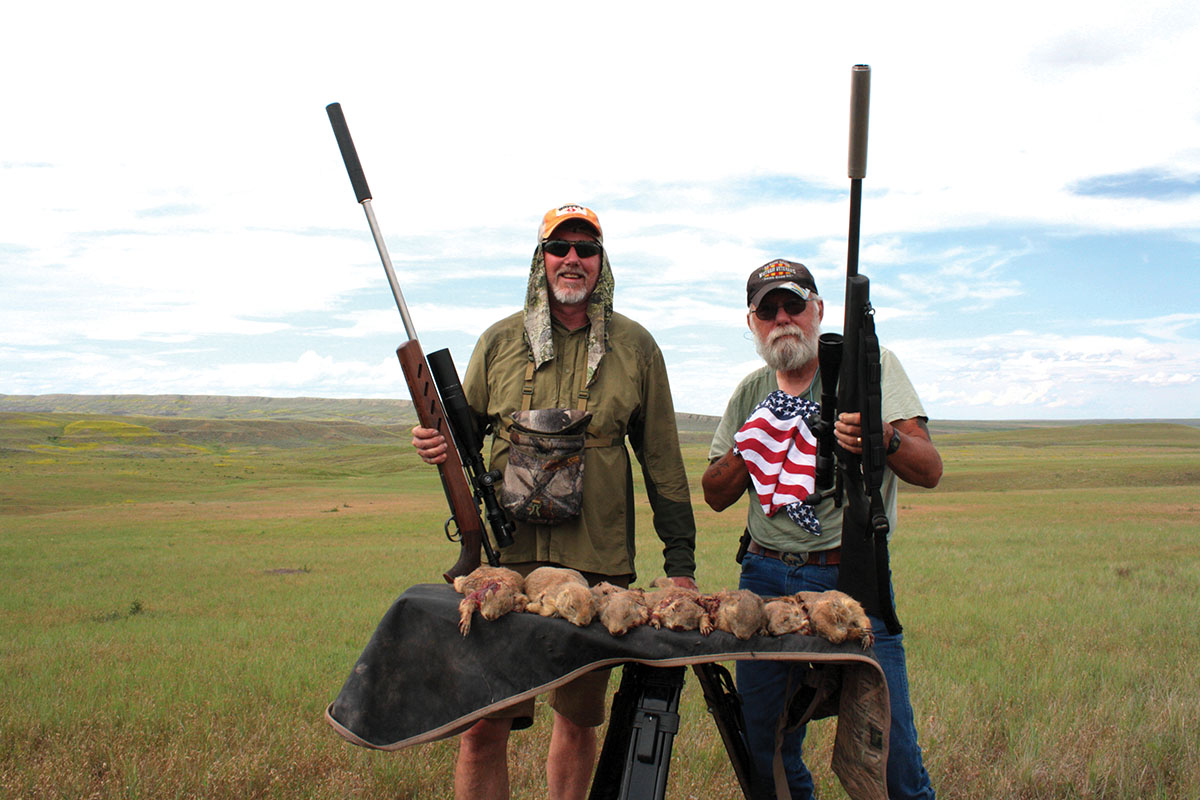
    It was once rare to see varmint shooters using suppressors. It is now becoming more common.
    It was once rare to see varmint shooters using suppressors. It is now becoming more common.
    My 22-250 Remington – an extensively-customized ’98 Mauser with heavy 26-inch barrel – is where serious noise begins. Fitted with a highly-effective Precision Hardcore Gear Hybrid Slotted Muzzle Brake, the rifle produced reports 3 to 4 dB louder than the unsuppressed/un-braked 223 Remington (85 to 88 dB from the shooter’s position). Yet adding the Rebel SOS Hunter suppressor resulted in dB levels only 1 to 2 dB louder than the .223 fitted with the same can – from 83 dB with 40-grain SIG SAUER and 50-grain Browning loads to 82 dB with my handloads (Barnes 50-grain Varmin-A-Tor/39 grains of Vihtavuori N140 and Remington 50-grain PST/39 grains of Hodgdon CFE-223, both at around 3,800 fps). The Gemtech, despite being designed specifically for .223 ARs, did an acceptable job, resulting in noise reduction only 0.5 to 1.5 dB off the larger Rebel SOS. The titanium Huntertown can hushed shots from 2 to 4 dBs compared to unsuppressed shots.

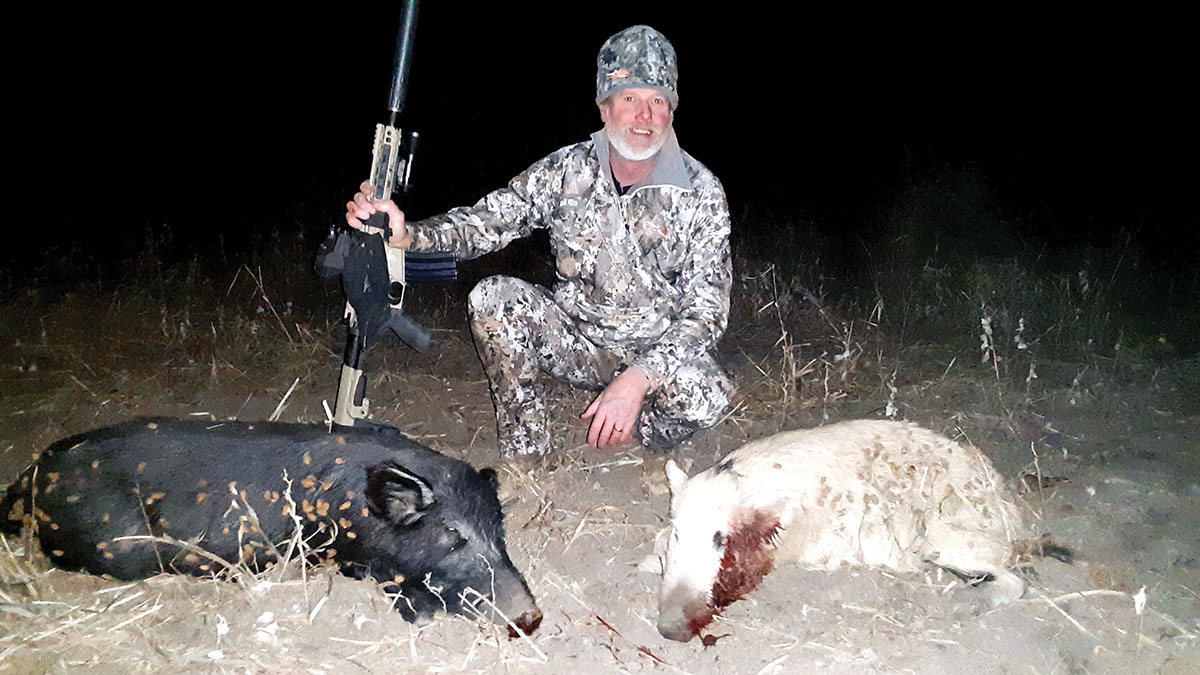
    Varmint shooters have few occasions to use subsonic ammunition, but a 30-caliber can combined with an Alexander Arms’ 300 AAC Blackout Highlander pistol and subsonic ammunition allowed taking multiple hogs from a single sounder.
    Varmint shooters have few occasions to use subsonic ammunition, but a 30-caliber can combined with an Alexander Arms’ 300 AAC Blackout Highlander pistol and subsonic ammunition allowed taking multiple hogs from a single sounder.
    A Ruger Precision Rifle 6mm Creedmoor with a 24-inch barrel fitted with Ruger’s proprietary Hybrid Muzzle Brake proved a bit less obnoxious than the 22-250, producing 86 to 85 dB unsuppressed. Adding the Rebel SOS suppressor resulted in a 4 dB noise reduction across the board when shooting Berger 95-grain Classic Hunter, Copper Creek 103-grain Hornady ELD-Match, Sig 107-grain Match Grade and two tailored handloads (Sierra 100-grain SBT/41 grains of Alliant Reloder 16 and Hornady 110-grain A-Tip/42 grains of Winchester StaBALL 6.5) at velocities from 3,104 to 2,933 fps. The Huntertown Arms’ Chameleon 308 offered a 2 to 3 dB advantage over unsuppressed shooting – or enough to allow comfortably shooting without major hearing protection.

    I now own three cans and have a couple more awaiting approval. I have also been keeping my gunsmith busy threading the barrels of my favorite varmint rifles as finances permit. The aforementioned Montana prairie dog shoot, accompanied by my very first suppressor, convinced me that – if it can be helped – I will never shoot another varmint without a suppressed rifle.


    Wolfe Publishing Group