6mm Creedmoor
Lightweight Bullets in the Newest ".243"
feature By: Jim Matthews | April, 18
Grumpy old shooters will argue that if the ancient 243 Winchester was loaded to the same pressures as the Creedmoor, and you screwed on a barrel with the same fast twist rates as the Creedmoor, the 243 Winchester would effectively be the same cartridge, but with the sagging shoulders that seem to come with age.
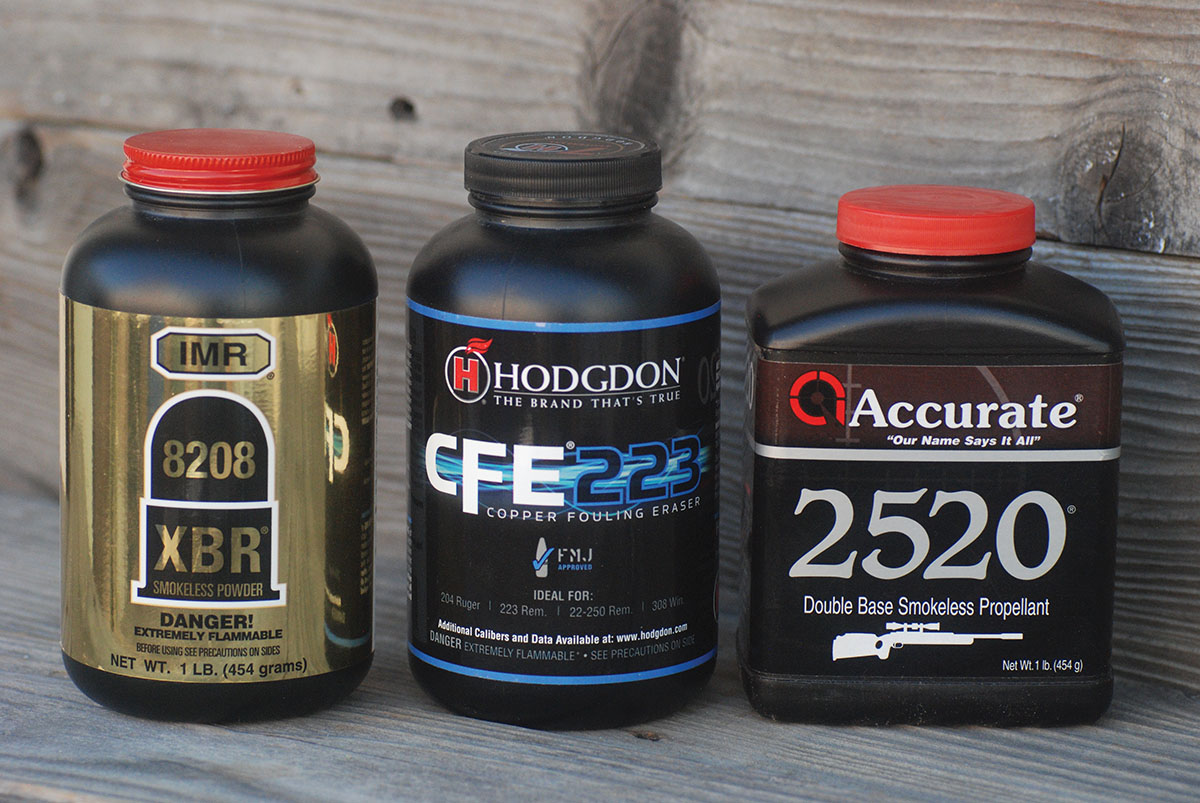
Ballistically, there is not much difference between the two cartridges. An inch or two of barrel length will have more of an impact on velocity than the difference in case capacity. Several pieces of Hornady 6mm Creedmoor brass held an average of 53.25 grains of water while the same number of Federal 243 cases held an average of 54.25 grains of water. The nearly 2 percent difference isn’t enough to sneeze about. A handloader will see that difference between brands and lots of brass for any cartridge.
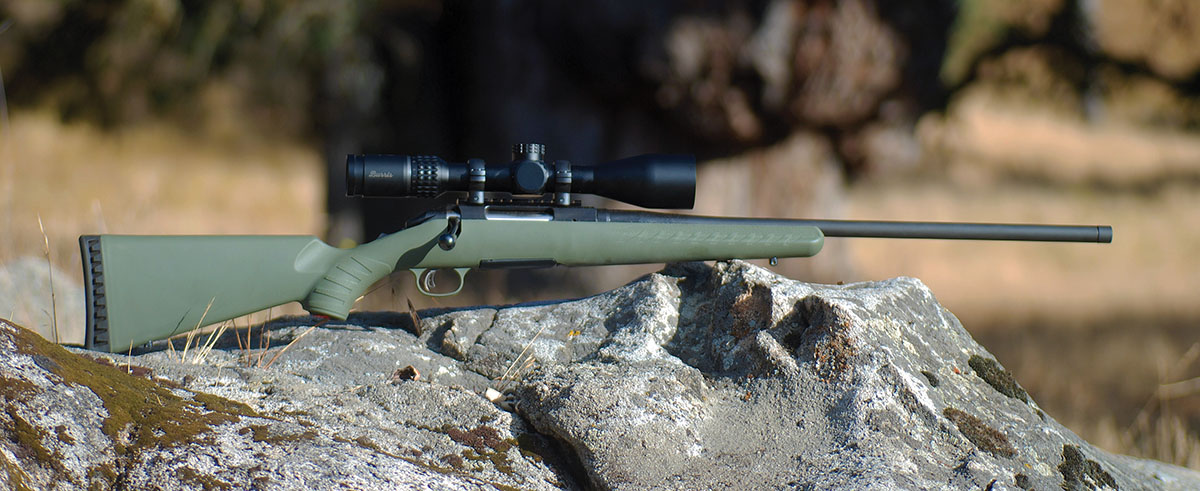
So what is the point of the 6mm Creedmoor if it’s really just a shorter, sharper-shouldered 243? There is one primary answer to that question: barrel twist. The Ruger American Predator 6mm Creedmoor, one of the first major factory rifles available for the new 6mm round, was used for hunting and load development for this story. It has a 1:7.7 twist rate. Pouring over catalogs, it was impossible to find anyone chambering the 6mm Creedmoor with anything slower than a 1:8 twist, and some manufacturers were even using 1:7 twist rates or faster to stabilize bullets like the Berger 115-grain VLD Match or Sierra 110-grain MatchKing.
Those twist rates are not common for the 243 or 6mm cartridges that have been kicking around for decades. When the 243 Winchester was introduced in 1955, it was introduced with a 1:10 twist because Winchester rightly assumed that it would become a popular deer rifle with the relatively stubby 100-grain bullets of that era. Those non-very-low-drag bullets needed only a 1:10 twist rate to stabilize them. Remington, which came out with its 244 Remington at about the same time, decided to use a 1:12 twist rate for its new 6mm round. Remington saw its then-new cartridge as primarily a varmint option, mostly shooting bullets of 80 grains or less. That was a big mistake, because the 1:12 twist didn’t stabilize the longer, heavier deer bullets. Remington finally came to its senses, renamed the 244 to the 6mm Remington and switched to the 1:10 twist, but by then the 243 Winchester had already become the 6mm round to use, and the Remington 6mm faded into the sunset. Even the factory 240 Weatherby Magnum only uses a 1:10 twist barrel.
The industry also learned from the mistakes made with the 244 Remington. Imagine the problems that would have ensued if companies had simply used the standard 243 Winchester or 6mm Remington cartridge and screwed barrels with 1:7 twists on them? Everyone would be promoting the “new” 243 loads with the long 105- and 110-grain bullets for long-range shooting, and the owners of older rifles with 1:10 twist barrels would buy (or load) the high-BC bullets for their rifles, which I have done. The result would be bullets going through the target sideways, which I have experienced first hand. It would have caused no end of nightmares for the industry.
So the solution was a new cartridge and fast-twist barrels. It would also make sense to have the new round function both through AR-style rifles and traditional bolt guns. With the wildly popular 6.5mm Creedmoor already filling that same niche, it was a wise marketing choice to neck down this cartridge for a 6mm version. Many industry insiders have said the 6mm Creedmoor will replace the 243 Winchester over time, just as the 243 replaced the 250 Savage and 257 Roberts rounds, even though it didn’t offer much ballistically over the older .25 calibers.
The bottom line for contemporary shooters is simply that the 6mm Creedmoor is a highly evolved cartridge that can kill varmints way out there. It can also serve double duty as a deer and pronghorn rifle. The Ruger American Predator is a lightweight carry rifle that might not be the best tool for 400-yard-plus shooting (about the distance high-BC bullets really come into their own), but its accuracy and ease of handling make it ideal for a lot of other varmint chores. Plus, it is one of the most affordable rifles on the market, perfect for varmint hunters on a budget.
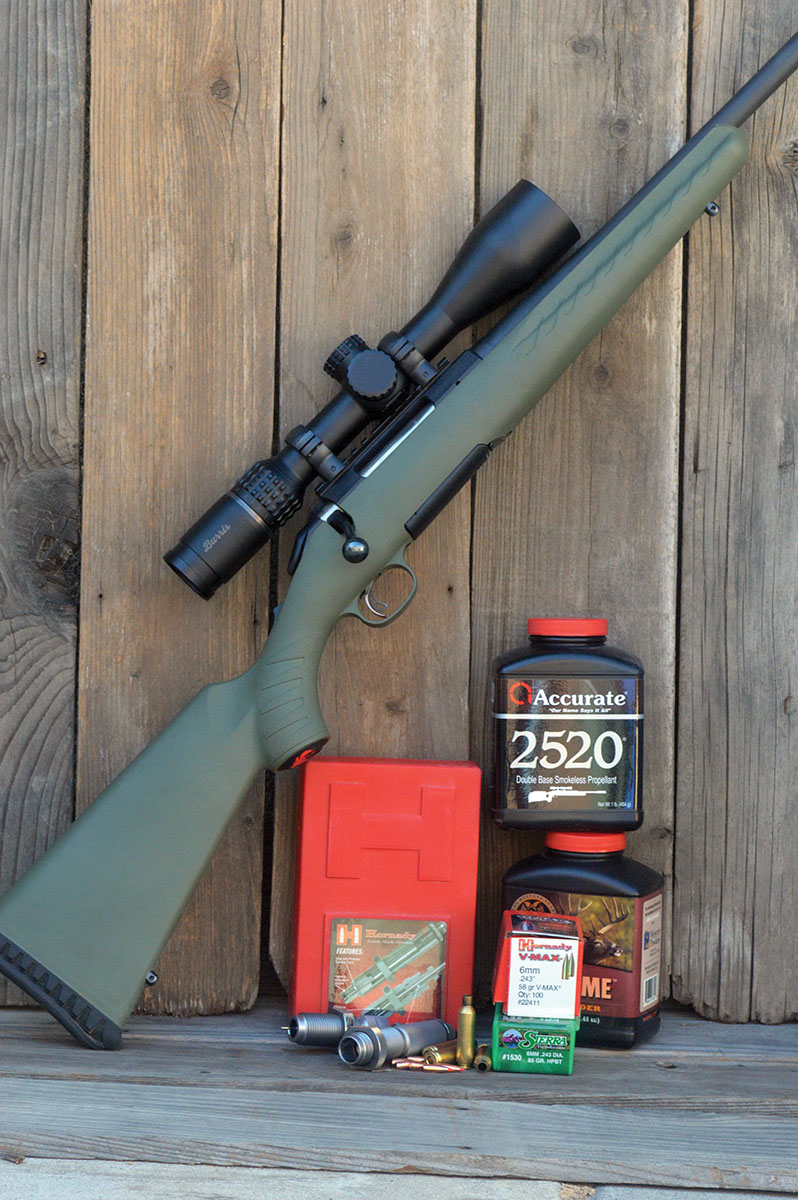
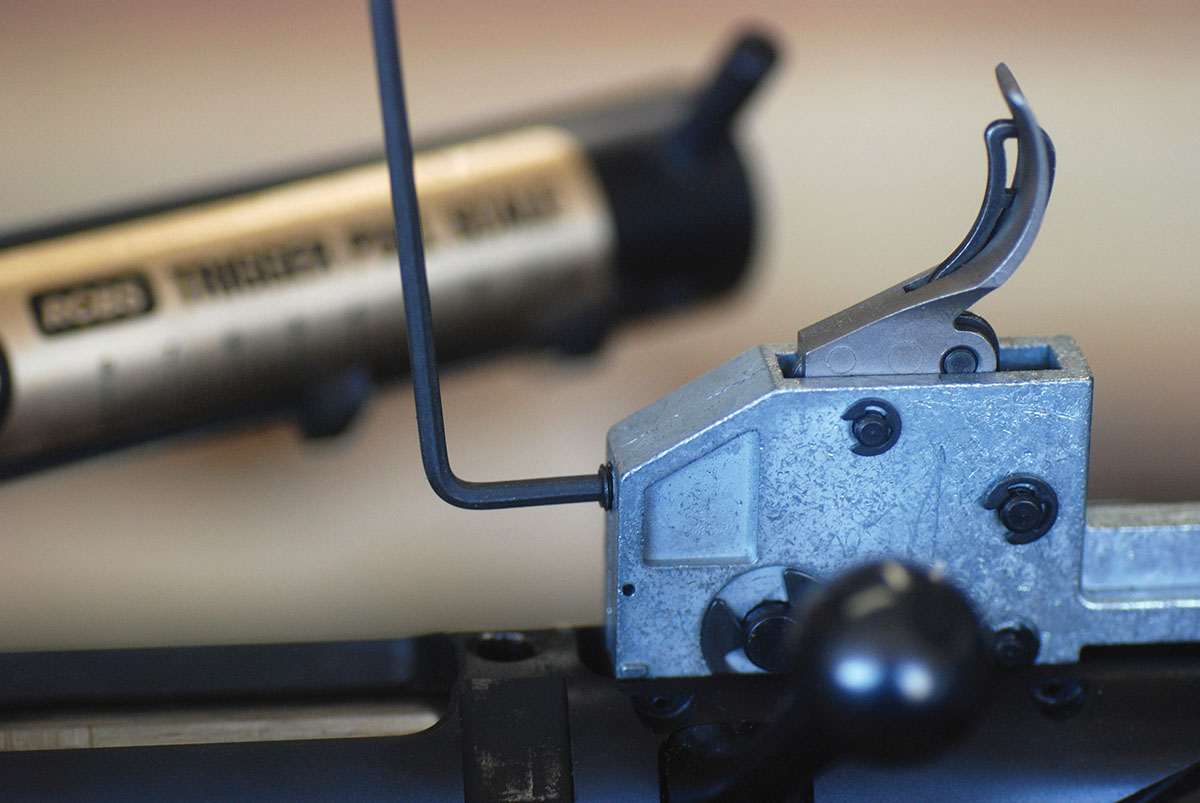
With a retail price of about $530, the Ruger American Predator doesn’t give up features. First, it comes with Ruger’s adjustable Marksman Trigger. Out of the box, the test rifle’s trigger broke crisply at just over 4.25 pounds when weighed with an RCBS spring trigger pull scale. The stock must be removed from the barreled action to adjust the trigger, and a single Allen-head setscrew on the front of the trigger housing is turned in quarter or half turns to increase or reduce pull weight. I tinkered with the pull and went up to 5 pounds, then went the other direction until it was breaking at 3.5-pounds, and called it good. Ruger says the adjustment range is 3 to 5 pounds.
With the stock off, a simple pair of V-shaped steel bedding blocks that are molded into the green synthetic stock can be seen. This design draws the action into the steel blocks as the bedding screws are tightened, forming a very secure and stable platform. The 22-inch, cold hammer forged, five-groove barrel is free floating the entire length of the stock. (It comes with a threaded muzzle with a standard 5⁄8x24 thread to fit many barrel accessories.) The stock is flexible enough, however, that pressure can be applied to the barrel at the tip of the forend with only a modest amount of pressure – like leaning it against the side of a tree or when using a tight sling. This could change the point of impact.
The compact, detachable box magazine holds three rounds in a narrow rotary box design. The magazine snaps in and out of the action with a simple lever on the front of the box that is recessed, so it is flush with the bottom of the rifle. Feeding from this magazine is not butter-smooth, but it is reliable. The bolt throw is a short 70 degrees thanks to three bolt lugs, and the bolt is a single piece of steel with dual cocking cams that make for easier cycling.
The rifle’s action comes with a Weaver-style scope base installed (instead of Ruger rings that fit onto the top of the action). It can be swapped out with No. 46 bases. A Burris Veracity 3-15x 50mm 30mm scope was mounted in Burris Z-Rings on the factory-supplied bases for test shooting.
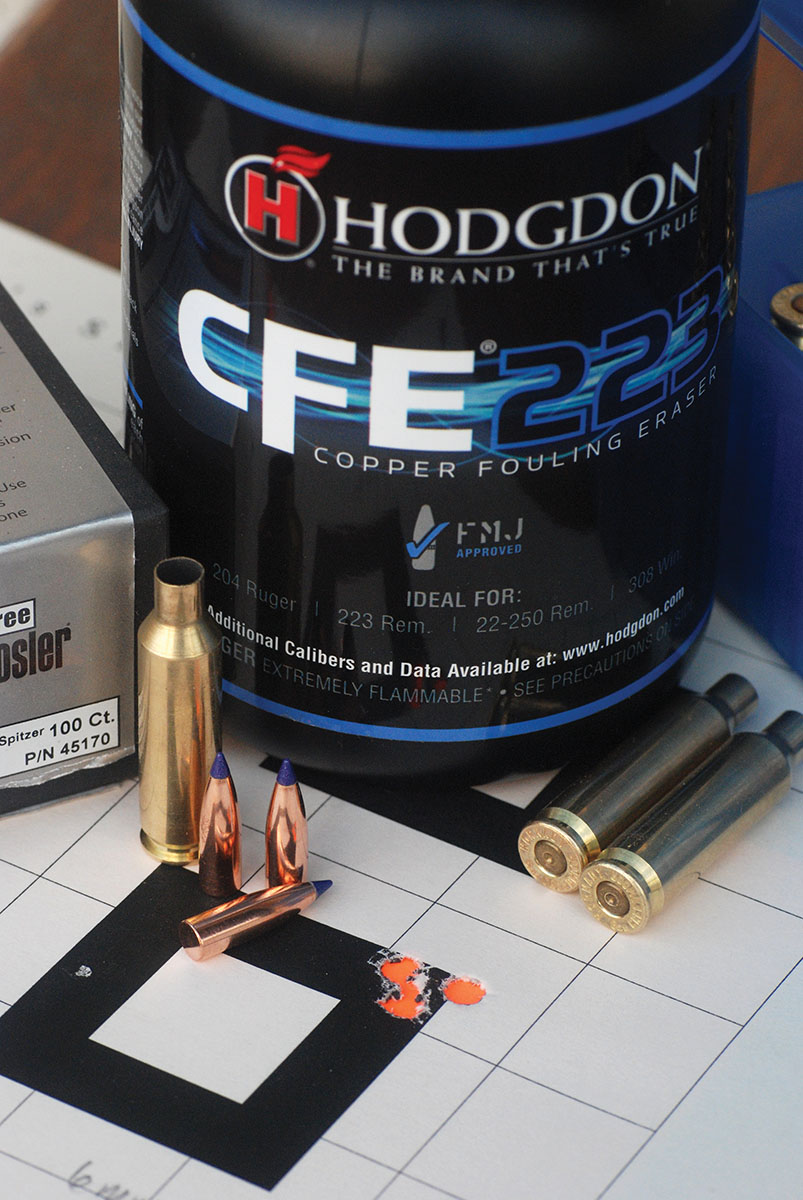
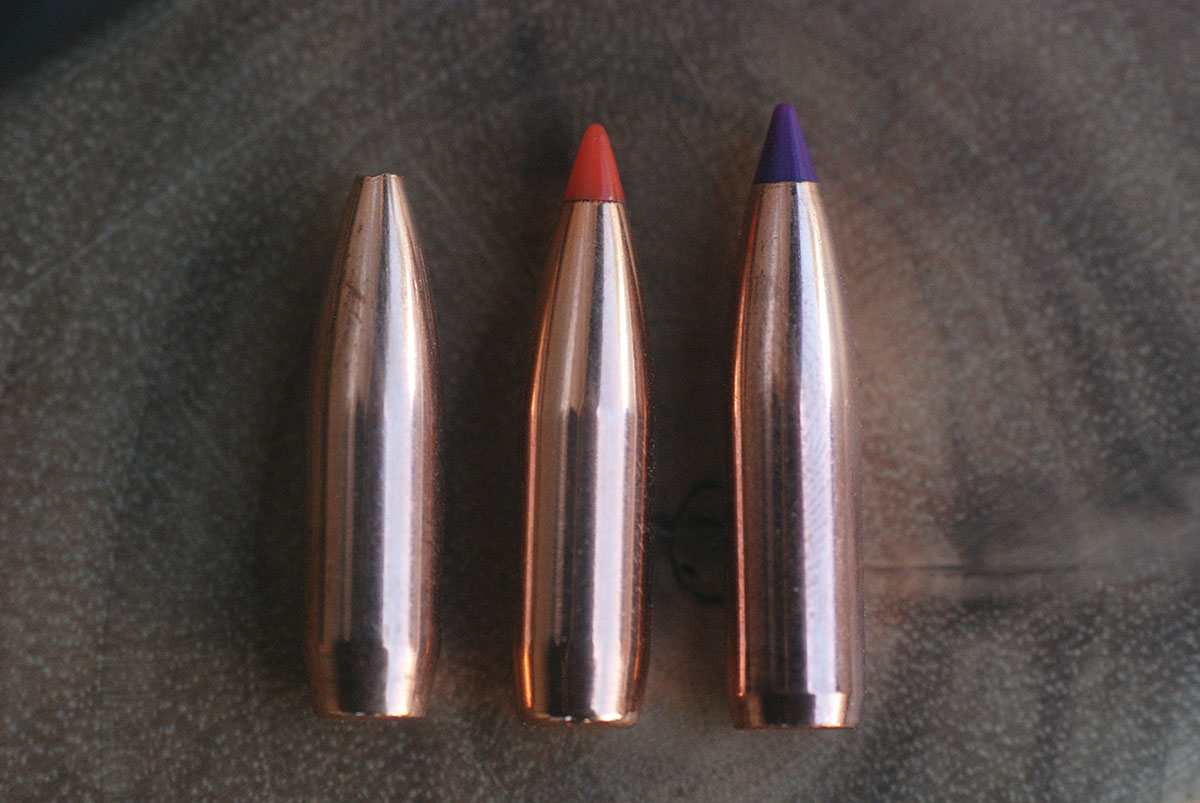
I had read of the incredible accuracy that other writers were achieving with their Ruger Predators, and was disappointed rather quickly. I picked up the rifle just as I was leaving on a ground squirrel hunt on a private ranch in the foothills of the Sierra Nevada. The Burris scope was quickly mounted and we sighted-in with handloads – using Nosler 55-grain Ballistic Tip LF (lead-free) bullets to be compliant with the California requirement for no lead in “the condor zone.” The initial groups were so-so – about 1.5 inches at 100 yards – but certainly good enough for shooting ground squirrels out to 200 yards or so with the little rifle.
After returning home, another round of loading and a trip to the range, the mediocre accuracy continued, degrading to poor with the next loads. It was at this point I discovered that the scope was literally rattling around in the base mount that comes attached to the Ruger. It all became clear: In my haste to go hunting, I hadn’t tightened the scope mounts firmly. A few trips rattling around in my truck made the issue worse each jaunt. (Please, there is no need to call me names or comment on my intelligence, I did that enough for both of us.)
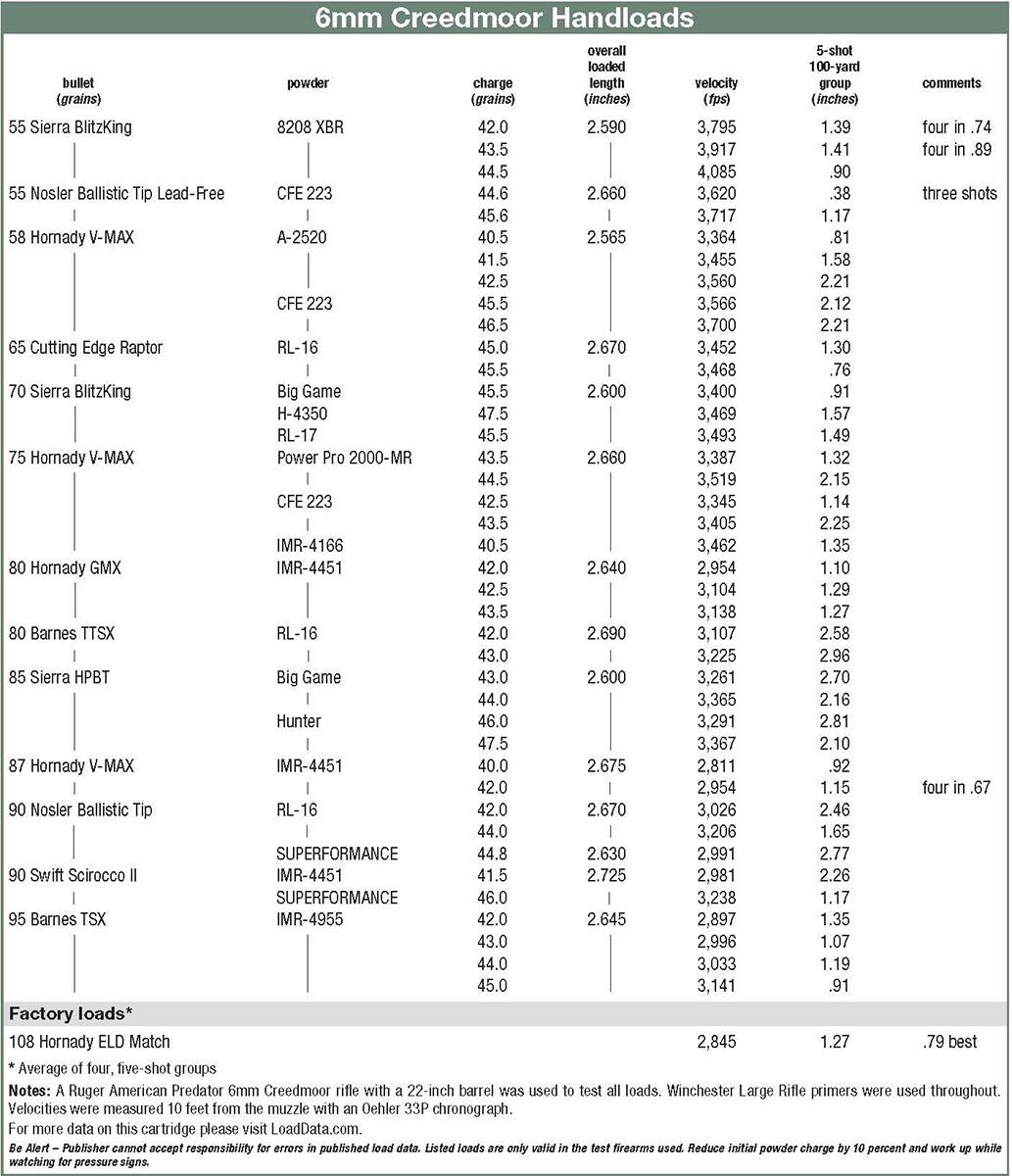
I tightened down everything – securely this time – and went back to the range multiple times. I reshot my early loads, and added a number of other combinations while looking for specific combinations to use on ground squirrels, jackrabbits and coyotes. In all, 13 different bullets from 55 to 95 grains were shot with 13 different powders.
As can be seen by the accompanying table, the Ruger I have is not a spectacular shooter with everything, but it really liked some loads a lot, shooting sub-one-inch groups – pretty reasonable for a sporter-weight rifle.
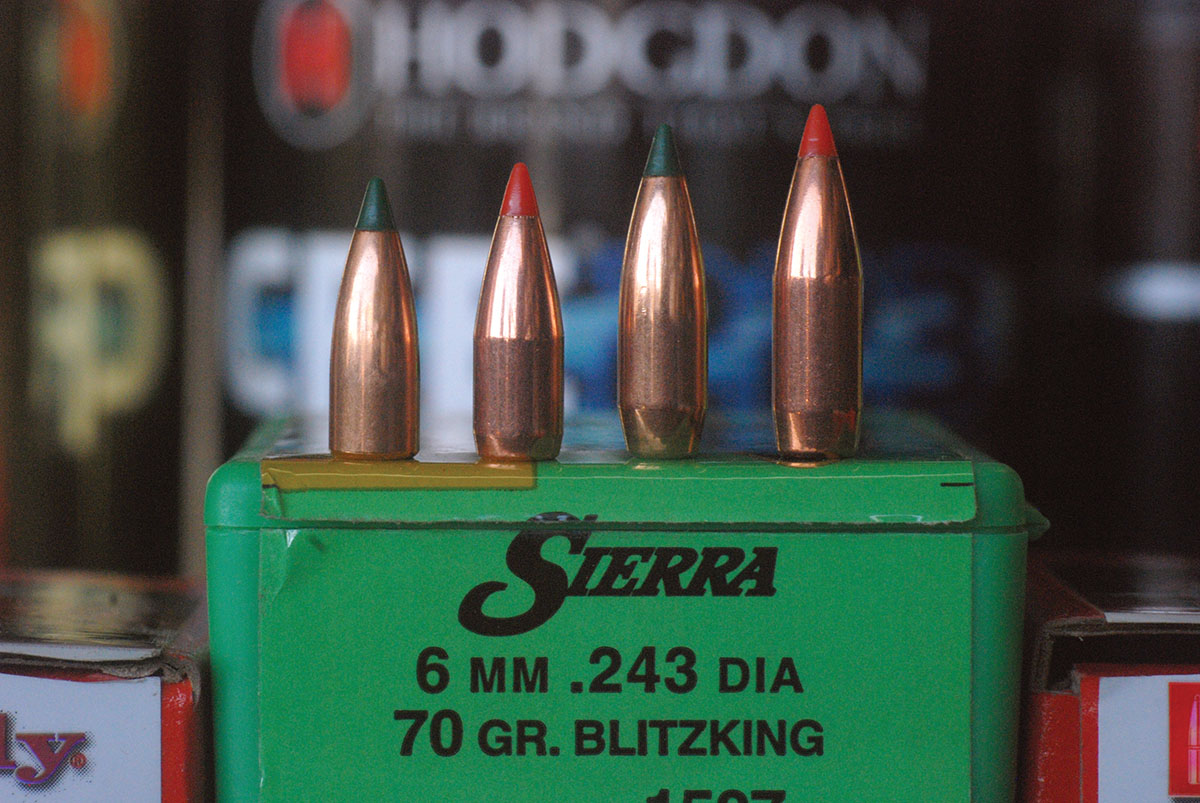
Most of the early loading data published for this cartridge has been with match bullets weighing 100 grains or more for long-range target shooting, but most loading focused on lighter varmint bullets that more suited the rifle’s “walkabout” suitability. Besides, while those heavier bullets kill varmints fine, they just don’t do it as explosively or decisively as lighter bullets going extremely fast. I also wanted to see if the fast twist rate on the barrel would have a negative impact on the accuracy of the short bullets.
My general impression was that the twist rate didn’t seem to affect the accuracy of the short bullets as much as the inability to seat them far enough out in the case to get them reasonably close to the rifling. But as can be seen in the accuracy table, even that wasn’t much of an issue with the Ruger.
The length of the magazine limits the cartridge overall length to about 2.850 inches. Some of the high-BC bullets may have to be set a distance from the rifling if you don’t want to shoot them singly, but all loads I shot both fit and fed reliably. The issue with the shortest bullets was getting them set in the case neck far enough for sound purchase, but still close enough to the rifling for good accuracy.
By the time I was wrapping up the range work, Hodgdon, Hornady and Sierra had all published data (available on their respective websites) for this round, and all of my loads are below listed maximum loads. Some are pushing the warmer end of the scale, and some of my starting loads were more accurate loads for some powder and bullet combinations, while warmer loads were better for others.
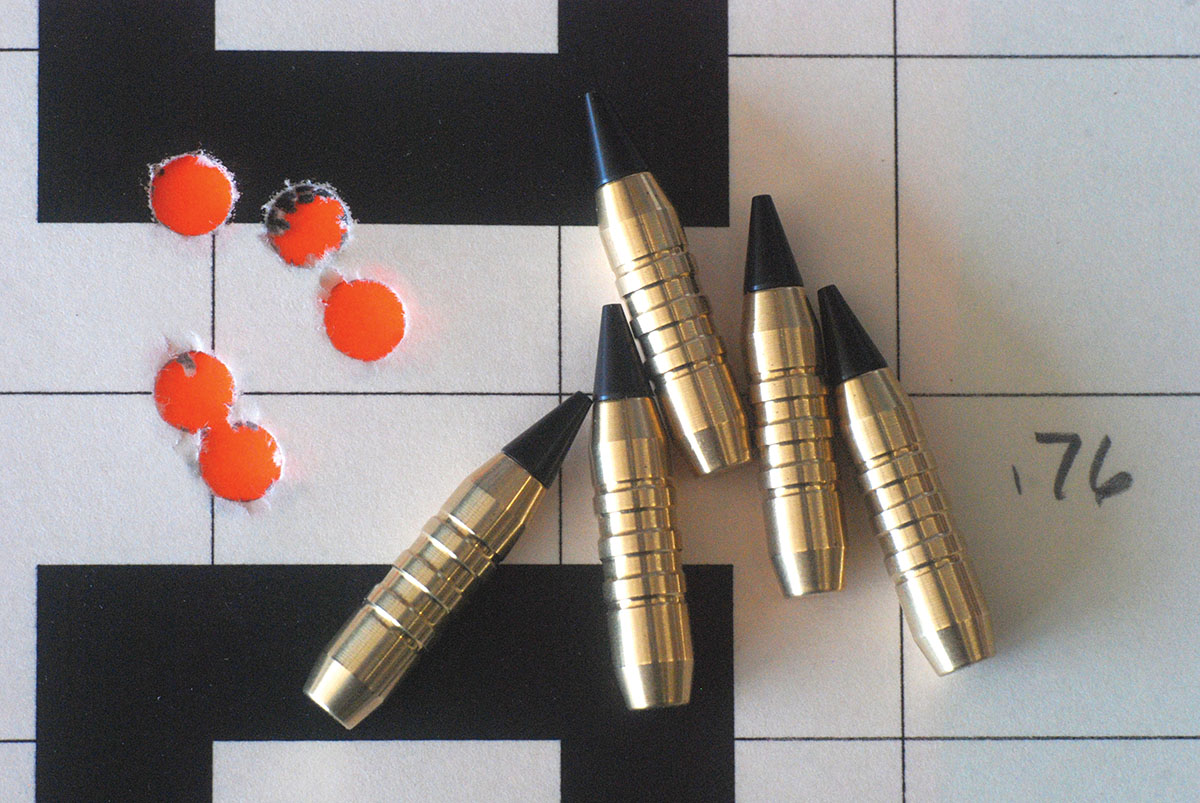
Most bullets would shoot the first three shots into an inch or less from a cool, fouled barrel, and then the last two shots would start to walk out as the barrel warmed up. The best groups were shot with bullets of 65 grains or less, or bullets weighing 87 grains or heavier, shooting a number of sub-MOA groups at each end of the spectrum. The best individual five-shot group was a .76-inch cluster with the Cutting Edge 65-grain ESP Raptor, but one five-shot group with Hornady’s factory 107-grain ELD Match load was just .79 inch.
The Barnes 95-grain Triple Shock bullets listed in the table were part of a short run made by the company several years ago, but they were too long to stabilize in 1:10 twist rifles. They shot through targets with oblong holes from a 243 Winchester I had at the time. I included them in this piece hoping Barnes might bring them back out. They shot well and are ideal for the 6mm Creedmoor.
The Ruger American rifle reminds me of the old Remington Model 788 that shot well beyond what you would have expected for its price. Not surprisingly, one of the most popular cartridges in that old Remington was the 243 Winchester, and it wouldn’t surprise anyone if the 6mm Creedmoor is a big hit in the Predator.
My first centerfire rifle as a 14 year old was a 243 Winchester. That rifle was stolen when I was in my 20s. A succession of 243s came and went, but I always knew that another one would eventually find a permanent home in the gun safe. I’m thinking this 6mm Creedmoor might be that rifle.