Perfect 22-250 Remington Powders
Alliant, IMR, Hodgdon and Western Powders Propellants
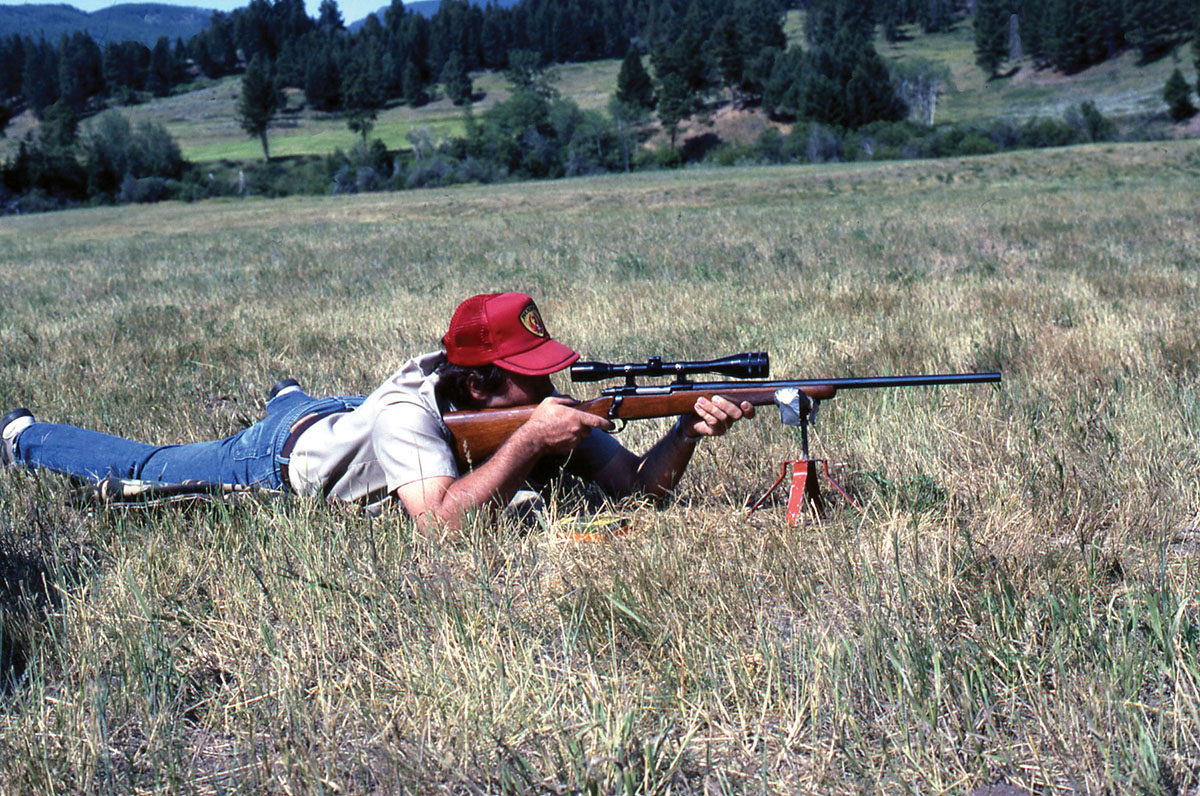
feature By: John Haviland | April, 18
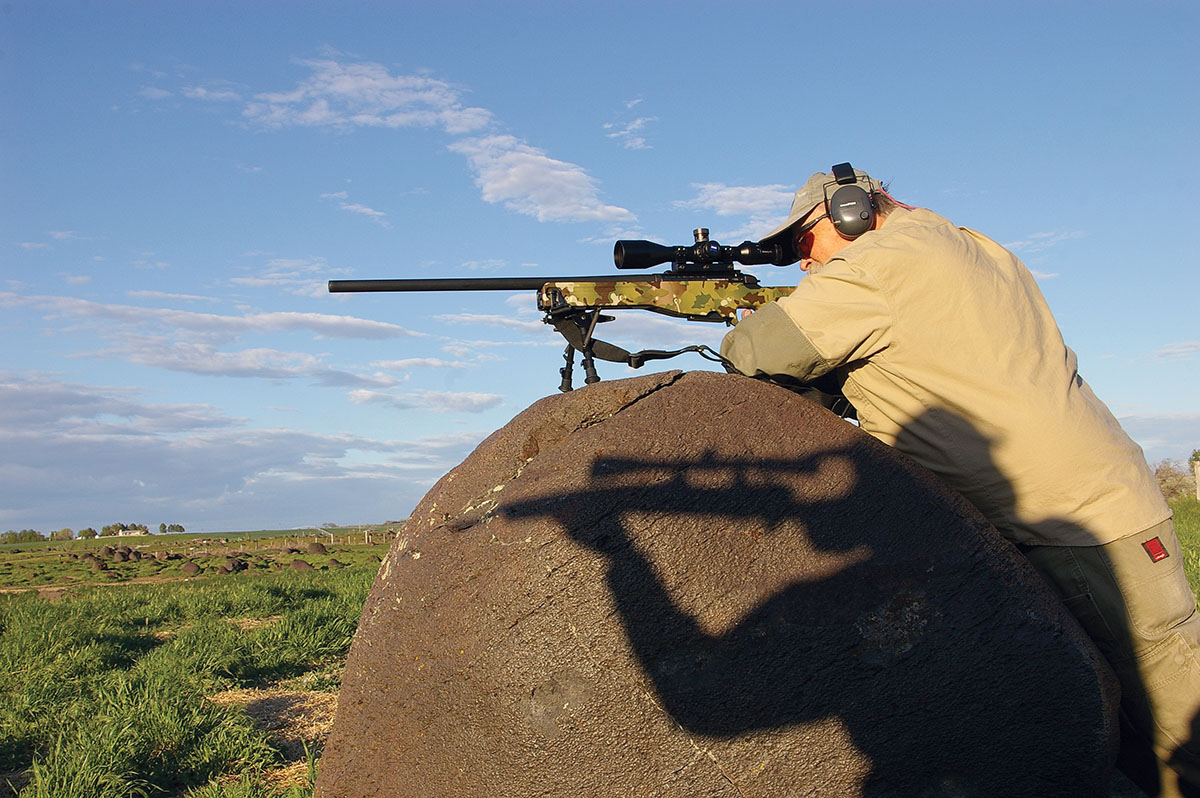
When I started handloading the cartridge in the 1980s, I read Jim Carmichel’s 1975 book The Modern Rifle, where he noted his favorite 22-250 handload was 38.0 grains of IMR-4320 loaded with 52- or 53-grain bullets. “This goes close to 3,800 fps in a 26-inch barrel and will usually squeeze out the last dollop of accuracy any rifle has to offer,” he wrote. Several reloading manuals of the time suggested upward of 36.0 grains of IMR-4320 as maximum for 52-grain bullets. That amount of powder fired Speer 52-grain HP bullets at 3,539 fps from my new Ruger M77V 22-250. Groups at 100 yards with this combination averaged .75 inch. IMR-4320’s short kernels also allowed dispensing a precise amount of powder from my powder measure. That saved a lot of time at the loading bench because over the next few years, I shot pound after pound of IMR-4320 through the Ruger’s barrel.
I eventually pulled my head out of the IMR-4320 can and in the ensuing years saw there were plenty of other powders, some of them new, that gave the 22-250 a boost in velocity, and with great accuracy.
Alliant
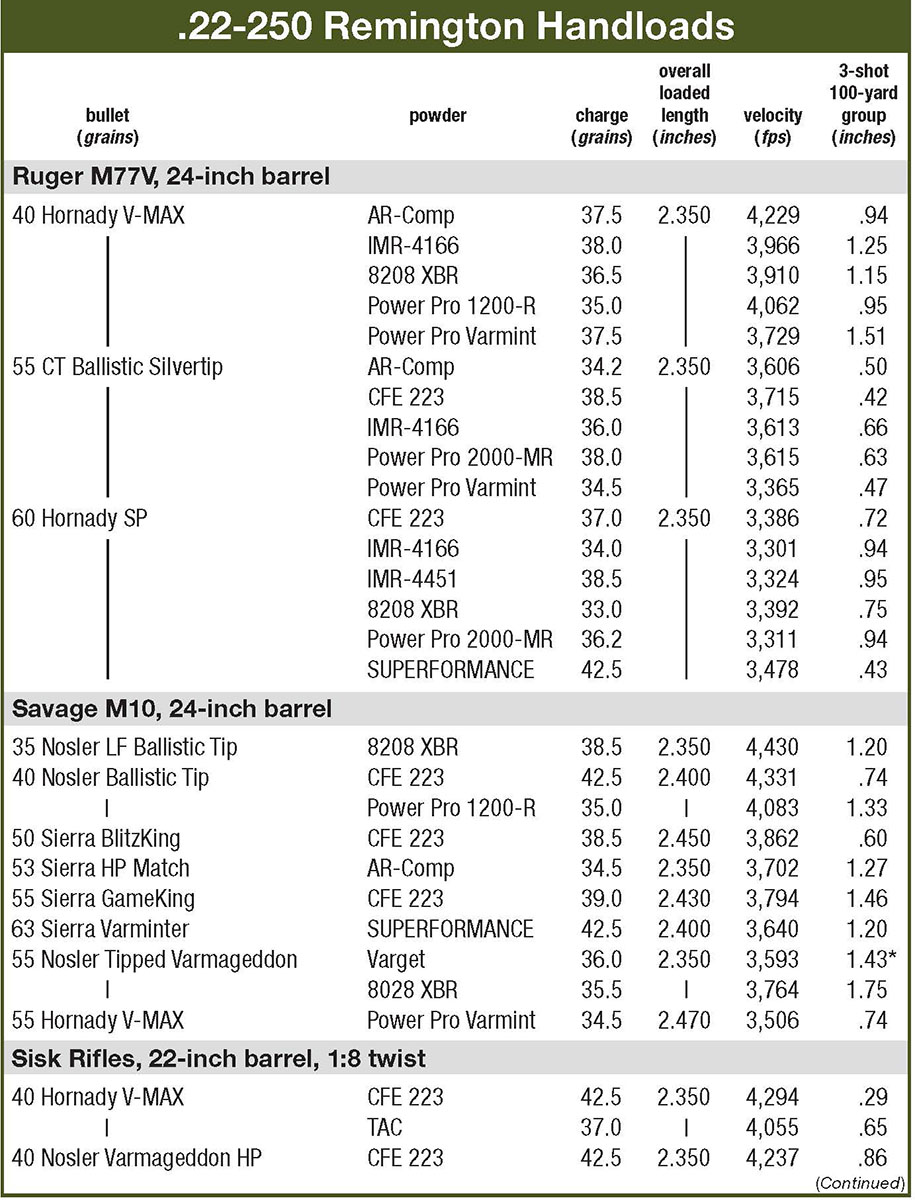
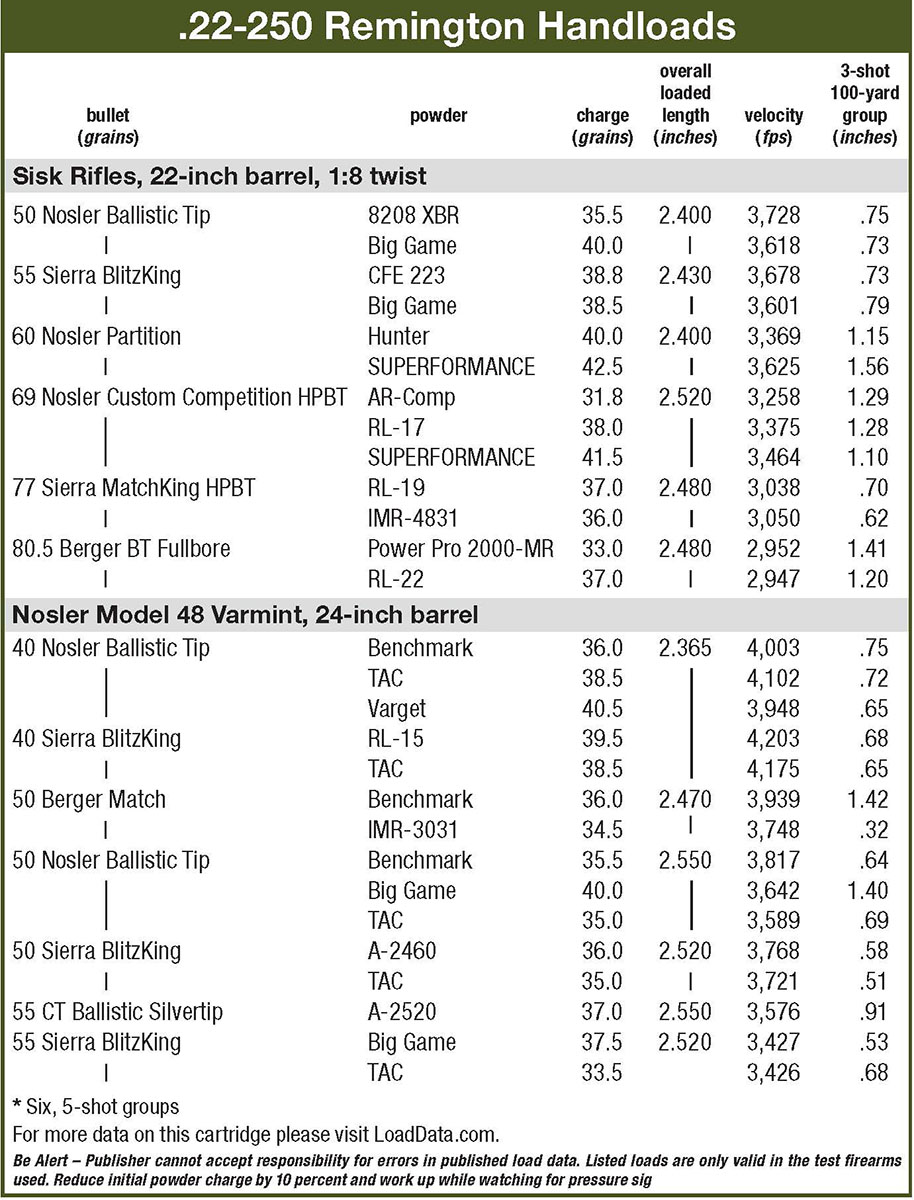
Several of Alliant’s Reloder and Power Pro powders, as well as AR-Comp, are suitable for reloading the 22-250 Remington. Reloder 10X works best loaded with lightweight bullets, while Reloder 15 works well with bullets up to 69 grains. All Reloder powders are made with cylindrical grains. Reloder 10X and RL-15 drop precise charge weights through a powder measure. Dropping 35.0 grains of Reloder 15 (which is about 5 grains below maximum) directly in cases, seating Berger 40-grain FB Varmint bullets and firing the cartridges resulted in an extreme velocity spread of only 60 fps for five shots. Velocity spreads hovered around 20 fps with heavier charges of the powder when shooting 55-grain bullets.
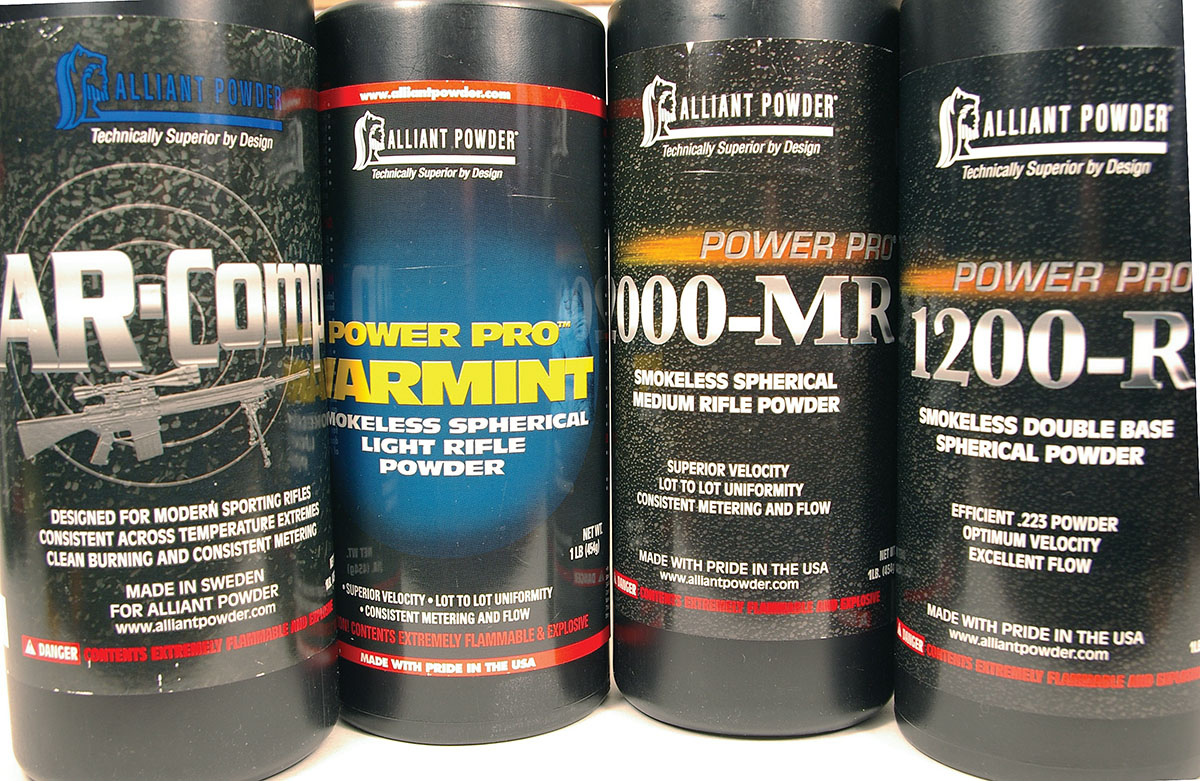
Alliant’s newer AR-Comp is an extruded powder while Power Pro Varmint, 1200-R and 2000-MR are spherical powders. AR-Comp’s short and thin kernels pour precisely through a measure, and charge weights varied only .2 grain over five thrown charges. Charge weights of Varmint remained exactly the same as dropped through a measure. The same weight of 2000-MR dropped through a measure four times, while the fifth charge weighed .1 grain lighter.
AR-Comp works well with bullets from 40 to 80 grains in the 22-250. It produced top velocity results shooting 40-grain bullets and close to the fastest velocities shooting 55-, 60- and 69-grain bullets. Accuracy was also fine. Maximum charge weights of Power Pro 2000-MR filled a 22-250 case to about the bottom of the neck, and seating 55- and 60-grain bullets kept powder charges firmly in place. The result was extreme spreads hovering around 20 fps, good accuracy and high velocities with those bullet weights.
Hodgdon
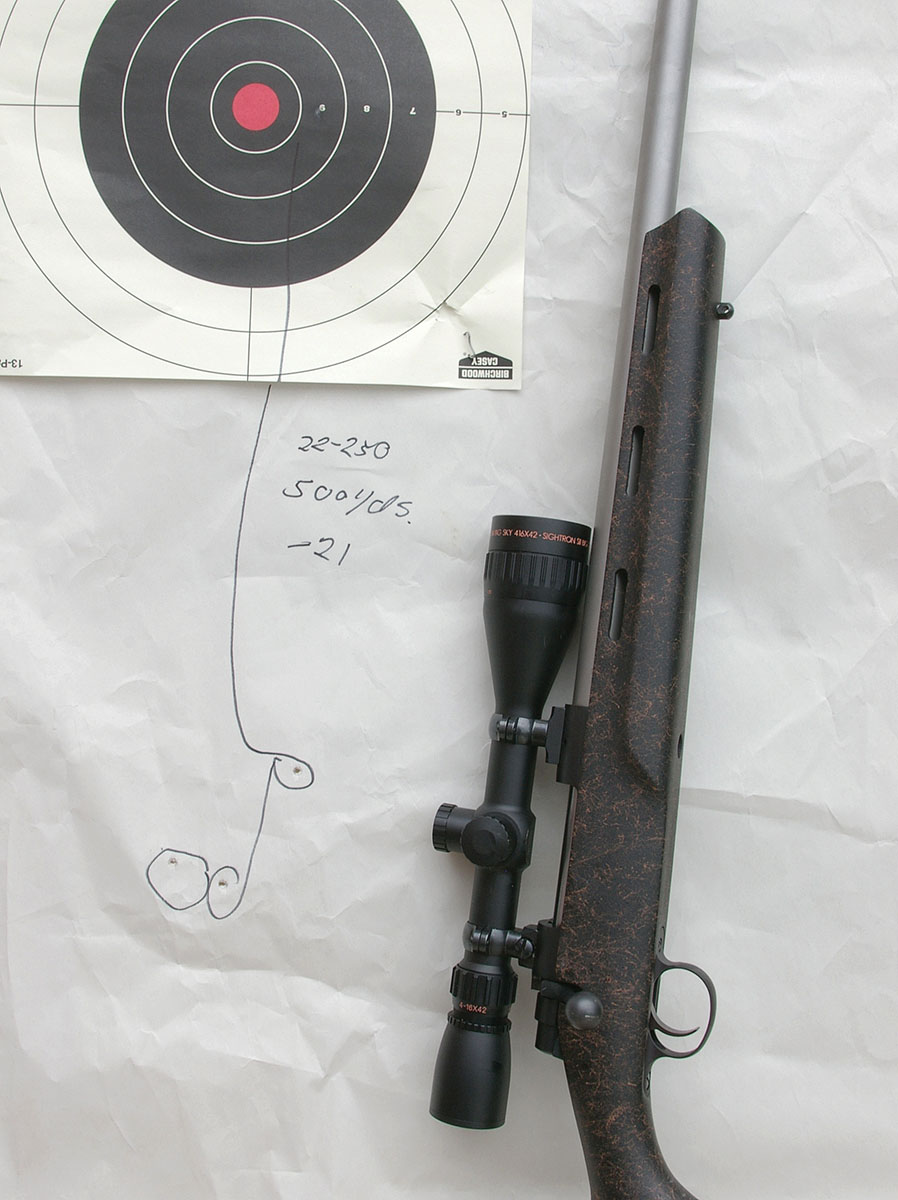
One late winter day I was bored, so I loaded 35 22-250 cases with 36.0 grains of Varget under Sierra 53-grain MatchKing bullets. I shot the cartridges five at a time through a lightweight Sisk Rifles 22-250 Remington based on a Stiller’s Precision Firearms Predator action. Seven five-shot groups fired at 100 yards ranged in size from .44 to 1.46 inches. Extreme velocity spread was 60 fps over 35 shots. Varget also produces top velocities fairly well, and it would be difficult to find a better powder to shoot 40- to 55-grain bullets in the 22-250.
Benchmark’s burn rate is toward the faster end of powders suitable for the 22-250. The powder pushes 40- to 50-grain bullets right up there in velocity when compared with about any powder, and does it with excellent accuracy. Benchmark’s small extruded kernels flow smoothly through a powder measure. Ten charges of 33.0 grains of Benchmark varied .2 grain at the most, with most right on the mark.
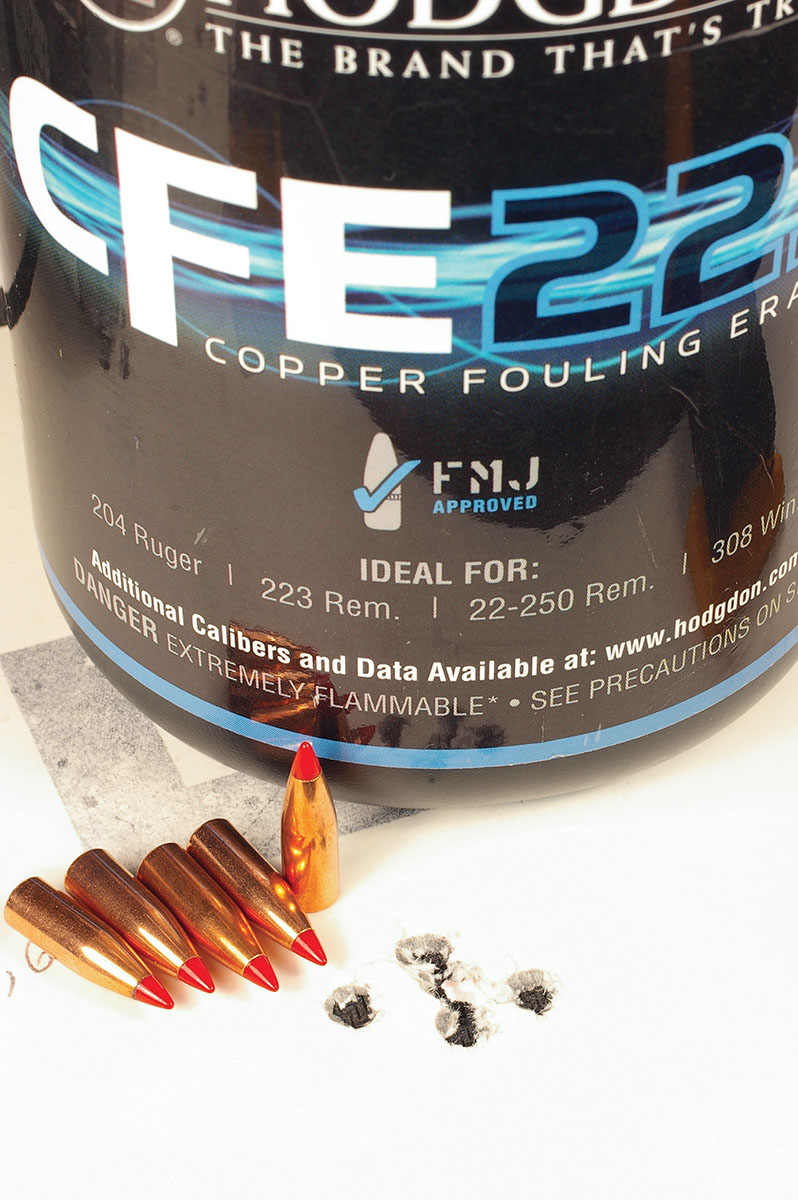
CFE 223 contains a copper fouling eraser component that lessens copper fouling. The powder needs it as it fires 40- to 55-grain bullets a step ahead of other powders loaded in the 22-250. Powder charges of near maximum are required to create this velocity, as reducing powder weight 1.0 grain drops velocity about 100 fps. CFE 223 fired 40-grain bullets nearly 4,300 fps, 50-grain bullets almost 3,900 fps and 55-grain bullets 3,800 fps. Sometimes velocity spread was rather high when using the powder with 40-grain bullets. However, velocities were fairly even when shooting heavier, 55-grain bullets.
IMR
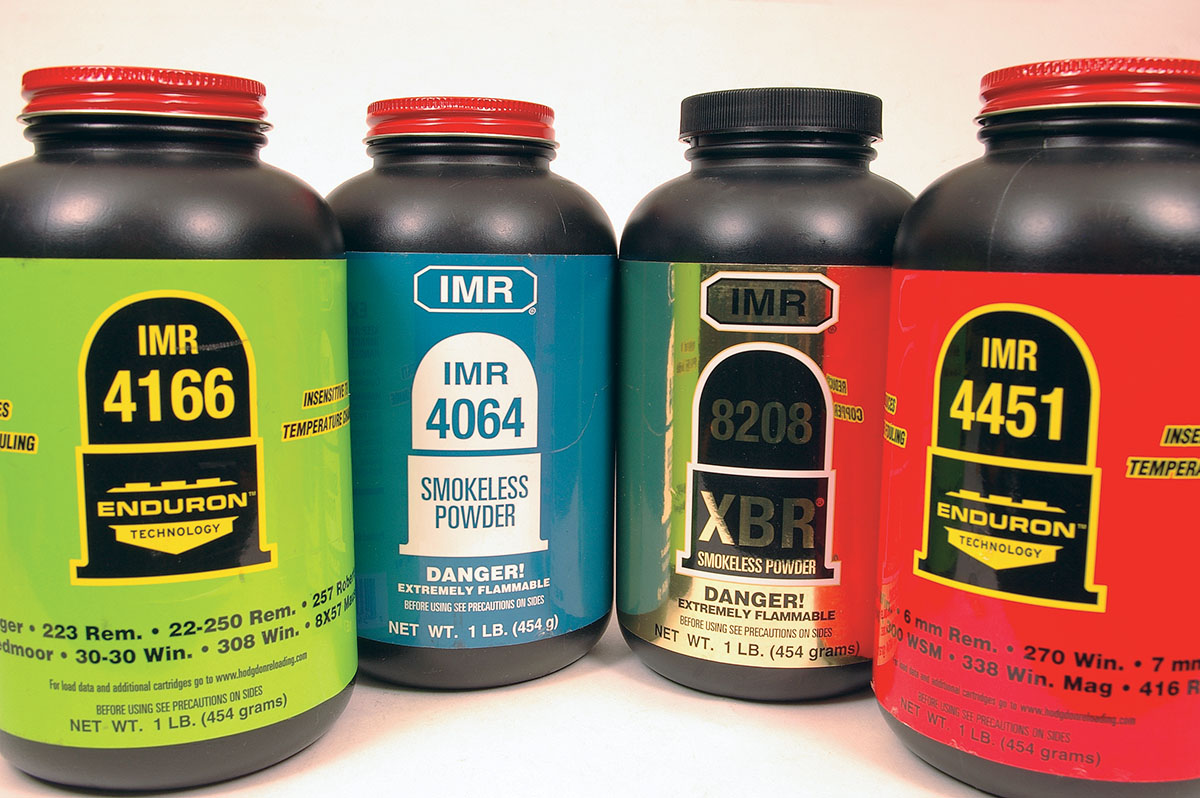
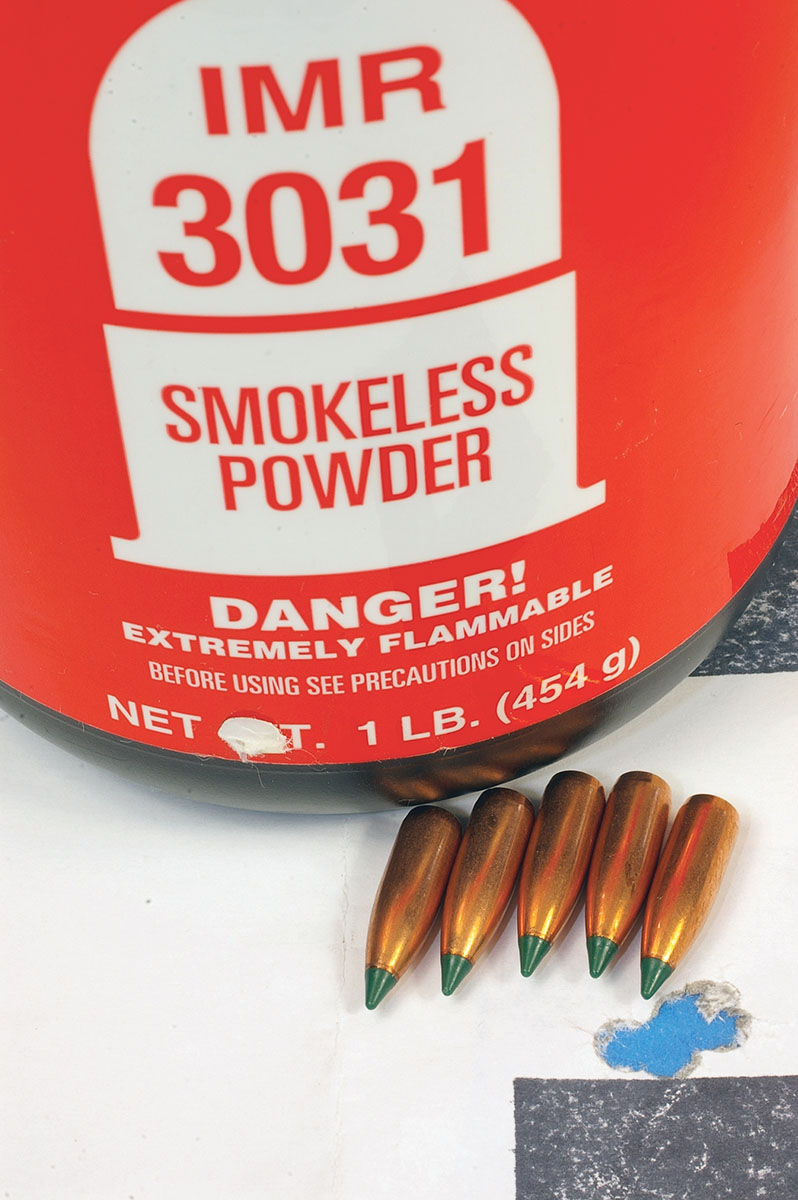
IMR was stuck in a rut for years with its 3031, 4320, 4064 and 4895 powders for the 22-250. Those powders remain good choices. However, Hodgdon developed several better powders after taking over IMR. First up was 8208 XBR, followed by IMR-4166 and IMR-4451.
Ron Reiber, Hodgdon’s product manager and diehard shooter of everything that burns powder, said 8208 XBR is his favorite powder for the 22-250. “This powder has the least sensitivity to extreme temperatures and meters like a dream,” he said. Paired with Winchester Large Rifle primers or Federal 210M primers, the powder produces low standard deviations and top velocity.
My coyote load the last few years has been 35.5 grains of 8208 XBR combined with Nosler 55-grain FB Tipped Varmageddon bullets at 3,744 fps from a 22-inch barrel. The load is also deadly accurate on marmots sunning on boulders far in the distance.
IMR-4166 is manufactured with Enduron Technology that incorporates a copper fouling eliminator and makes it insensitive to temperature extremes. Extreme velocity spread hovered around 30 fps from several loads with IMR-4166.
Western Powders
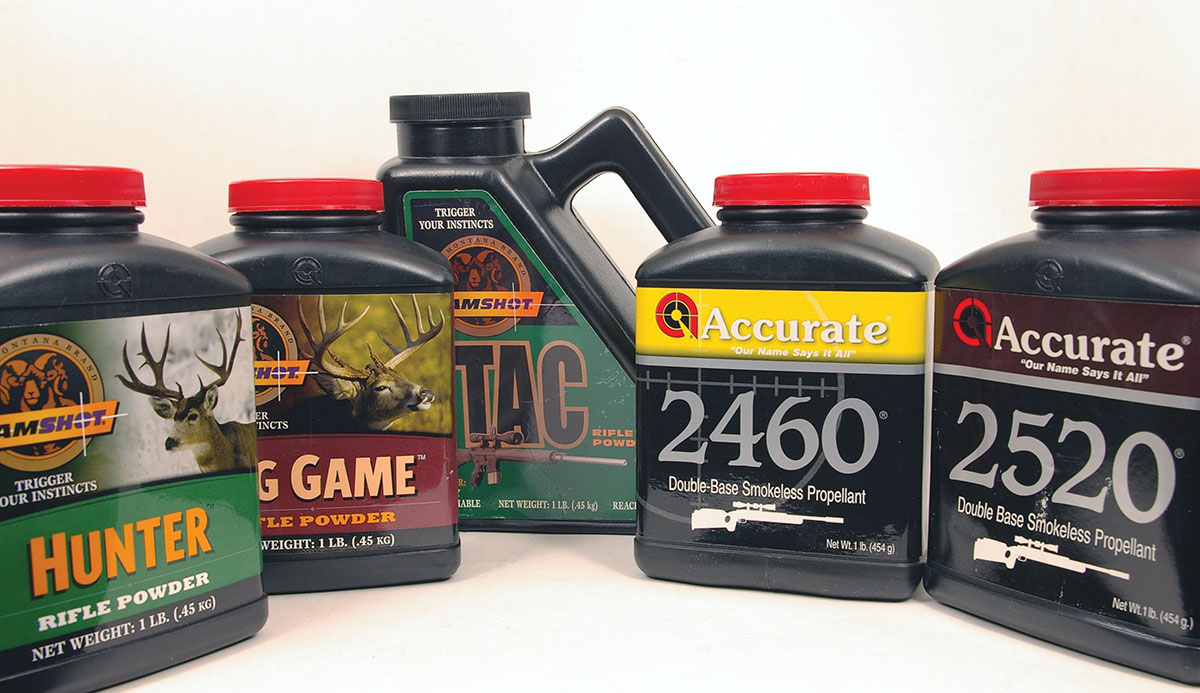
Several of Western’s Accurate and Ramshot powders are suitable in the 22-250 Remington. Ramshot TAC combined with 40- and 50-grain bullets provided impressive velocities. Accuracy was also good, and velocity spreads were relatively low when shot from a Nosler Model 48 Varmint rifle. Reduced amounts of TAC also provided good accuracy. From a Cooper Firearms Model 22, 31.5 grains of TAC fired Berger 50-grain FB Target bullets at 3,267 fps. Four, five-shot groups averaged .76 inch at 100 yards.
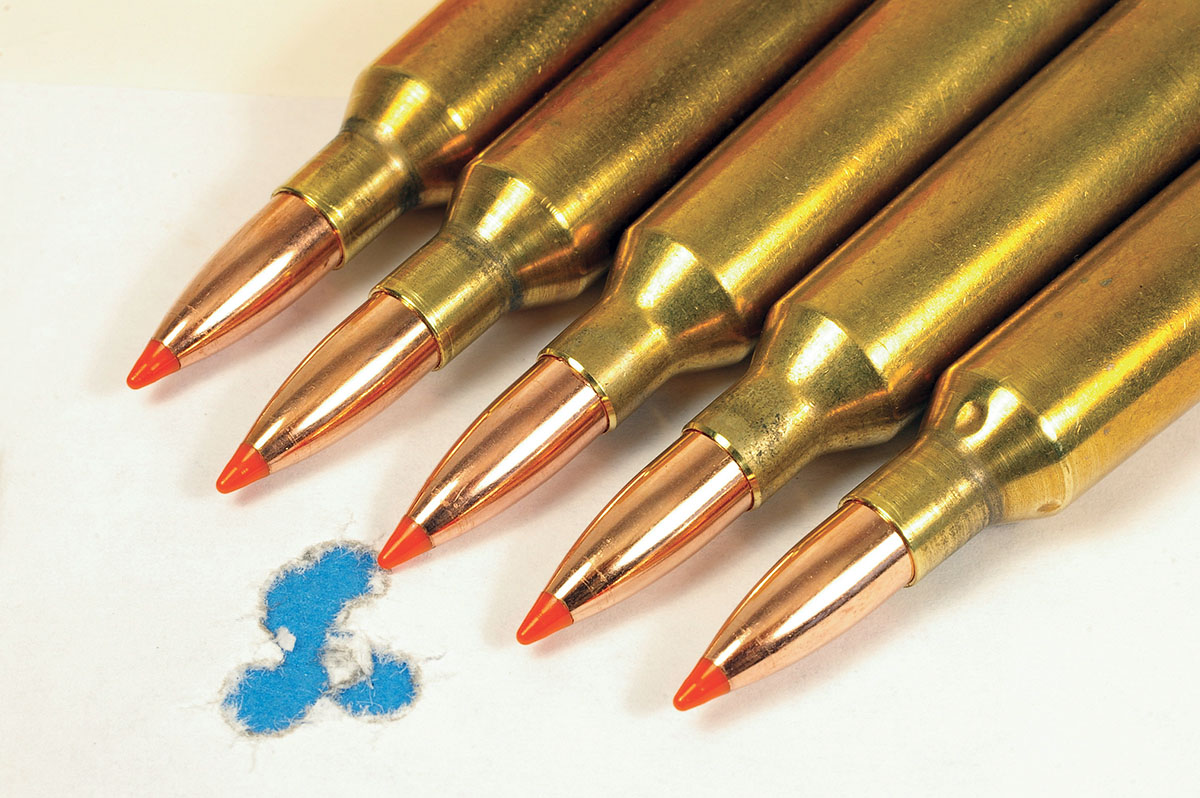
Western Powders’ Rob Behr said Ramshot Big Game is probably the best powder for the 22-250. “This spherical powder stacks well in a 22-250 cases, and most loads with it are close to compressed, which leads to even velocities,” he said. Thumbing through my records, various loads with Big Game had velocity spreads of about 40 fps for five shots.
Accurate 2460 is an American made, double-base spherical powder. It works well with 40- to 55-grain bullets in the 22-250.
U.S.-made A-2700 is a double-base, spherical powder. It may be a bit too slow-burning for the 22-250. Still, 55-grain bullets reached a touch over 3,600 fps with groups close to half an inch.
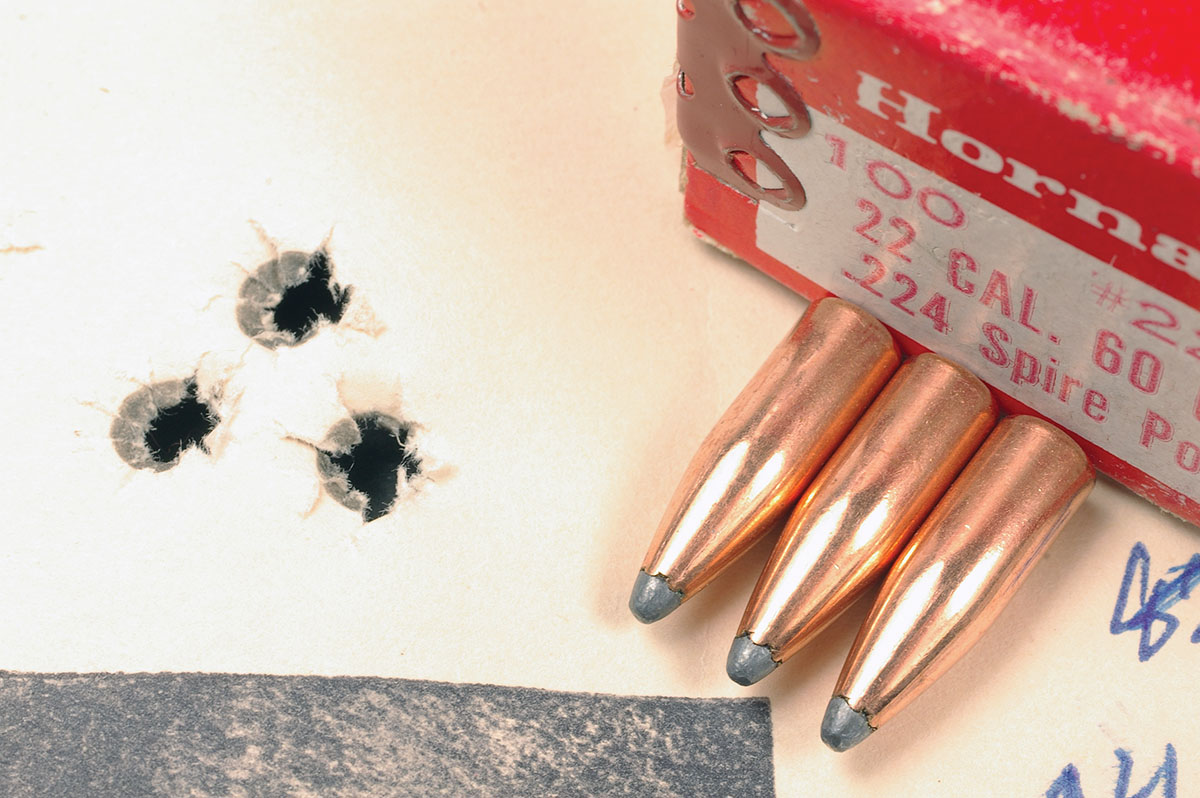
I recently wiped the dust off the old Ruger M77V rifle to test it with some newer powders in preparation for the ground squirrel campaign this spring. A look in the rifle’s bore with a Lyman Borecam Digital Borescope showed the first half inch of the rifling lands were completely worn away, and the rifling ahead of that was somewhat eroded. The worn rifling was kind of a shock – but to be expected from decades of shooting. I fired three-shot groups to treat the Ruger’s bore reasonably kindly.
Five groups averaged 1.16 inches with Hornady 40-grain V-MAX bullets. Groups averaged .54 inch shooting Combined Technology 55-grain Ballistic Silvertip loads, and .86 inch shooting Hornady 60-grain bullets. The old 22-250 Remington rifle still has it.